-
-
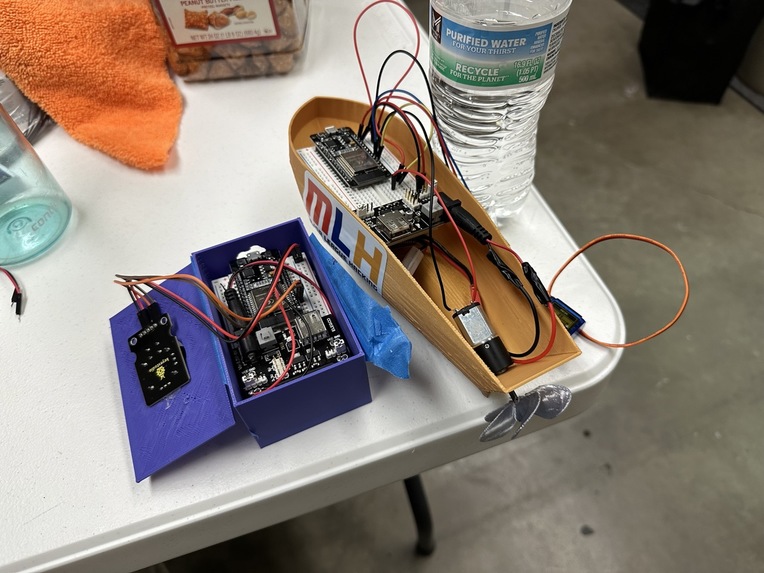
Inside

Inspiration
When we opened up the Arduino kits and noticed the propeller and other sensors we realized that we had enough to make a boat.
What it does
Using a remote control, you are able to fully control the boat in water. This includes thrust, and yaw.
How we built it
Started with 2 ESP32's, one configured as a wireless access point and the other as a client. Then set the access point to take in data from a joystick and transmit that to the client ESP32. The client then interoperated the joystick values from the access point and converted it to Servo and digital data to be passed to the individual motors that control the boat.
Challenges we ran into
There were many, but the main few that stick out were; communication errors, lack of documentation on the specific library's and general wiring mistakes.
Accomplishments that we're proud of
Being able to wirelessly transmit the data was a huge win. Also making the craft waterproof and still maintain functionality was amazing. Finally completing the project before the deadline was something we were very proud of
What we learned
Learned a lot of about how data is handled on the ESP32's/Arduenos and how to debug and troubleshoot issues that arise. Also got a better understanding of C++ along the way.
What's next for USS Speedster
USS Speedster is going to enjoy her time on the open seas, hopefully with a sturdier, and more organized, interior.


Log in or sign up for Devpost to join the conversation.