Inspiration:
The inspiration behind our project stems from the critical need to advance surveillance systems beyond the limitations of existing technologies. Traditional methods like facial recognition, gait analysis, and iris scanning have inherent constraints, requiring optimal conditions such as high-resolution images or proximity. Our inspiration arises from a commitment to overcome these challenges, ensuring security solutions are effective in diverse scenarios.
What it Does:
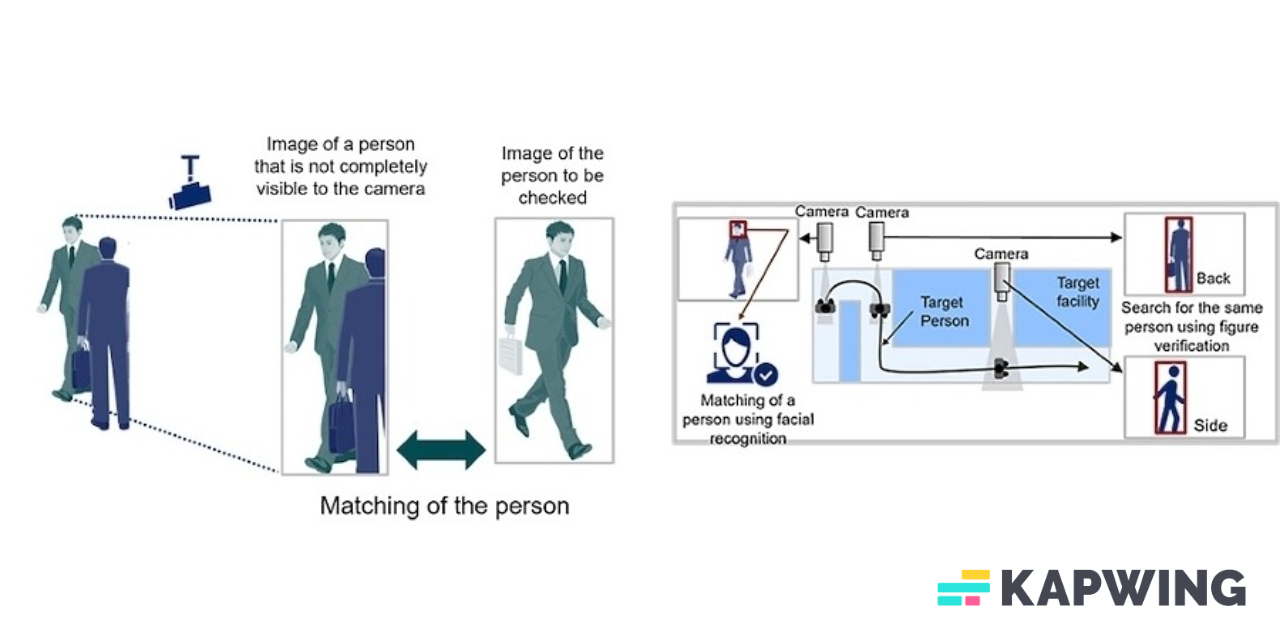
Our project, named 'ReID Secure,' is a cutting-edge web application that harnesses the power of Person Re-Identification (ReID) technology. Unlike conventional methods, our system considers a holistic set of factors, including body shape, clothing, and gait patterns, ensuring robust identification even in situations where facial visibility is compromised.
Powered by Transformer-based models, 'ReID Secure' excels in capturing intricate patterns beyond facial recognition, enhancing accuracy and reliability. The application allows users to re-identify individuals seamlessly through videos, live cameras, and multiple camera views.
Hosted on the Google Cloud platform, the system guarantees scalability and reliability. The front end, developed using ReactJS, ensures a user-friendly interface, making advanced surveillance accessible to everyone. 'ReID Secure' not only identifies individuals but also traces their paths, providing a comprehensive solution for security and surveillance needs.
How We Built It:
Building 'ReID Secure' involved a multi-faceted approach, combining deep learning, computer vision, and web development expertise. Here's a glimpse into our methodology:
Conceptualization: We meticulously defined the project scope, outlining the need for a web application using Person Re-Identification technology. Extensive research informed our decision to employ Transformer-based models for their success in natural language processing and recent applications in computer vision.
Technological Stack: The backend was crafted using FastAPI, a high-performance web framework, ensuring asynchronous operations for efficiency. ReactJS, a popular JavaScript library, formed the foundation of our front end, ensuring a seamless and responsive user experience.
Deep Learning Integration: Leveraging Transformer models, we developed algorithms capable of capturing and analyzing complex patterns, surpassing traditional facial recognition methods.
Cloud Hosting: Google Cloud's robust infrastructure became our choice for hosting, ensuring scalability and reliability.
Communication Channels: APIs facilitated efficient communication between the front end and backend, enabling seamless data exchange for ReID algorithms.
User-Friendly Design: A priority was placed on creating an intuitive and user-friendly interface, allowing individuals, irrespective of technical expertise, to navigate the application effortlessly.
Testing and Optimization: Rigorous testing phases ensured the system's robustness and identified areas for optimization.
Challenges We Ran Into:
Building an innovative solution is never without its challenges. Throughout the development journey, we encountered and addressed various hurdles:
Algorithmic Complexity: Designing and implementing Transformer-based models for person re-identification posed intricate challenges, demanding in-depth understanding and optimization.
Integration of Components: Harmonizing the frontend and backend components, along with seamless API integration, required meticulous attention to detail.
Data Privacy and Security: Addressing concerns related to data privacy and security demanded the implementation of stringent measures to protect user information.
Real-time Processing: Achieving real-time processing for live camera feeds and multiple camera views presented challenges in optimizing performance without compromising accuracy.
Accessibility: Ensuring the application's accessibility for users with varying technical backgrounds prompted us to refine the user interface continuously.
Training Data Variability: Dealing with the variability in training data for person re-identification models necessitated robust data preprocessing techniques.
Accomplishments That We're Proud Of:
Holistic Re-Identification Approach: Developing a web application that goes beyond facial recognition, considering body shape, clothing, and gait patterns, is a significant accomplishment. 'ReID Secure' offers a more comprehensive solution to surveillance challenges.
Transformer Model Implementation: Successfully implementing Transformer-based models for person re-identification showcases our commitment to leveraging cutting-edge technologies. This achievement enhances the system's capability to capture intricate patterns.
User-Friendly Design: Creating an intuitive and user-friendly interface ensures that 'ReID Secure' is accessible to a wide range of users. The incorporation of features like image and video upload, along with a history feature, enhances usability.
Google Cloud Integration: Hosting the application on the Google Cloud platform provides scalability and reliability, crucial for the success of a surveillance system. The seamless integration showcases our proficiency in cloud infrastructure.
Overcoming Algorithmic Challenges: Addressing algorithmic complexities associated with person-identification models demonstrates our team's expertise in navigating challenges and achieving robust solutions.
What We Learned:
Optimizing Deep Learning Models: The project provided invaluable insights into optimizing and fine-tuning deep learning models, especially Transformer-based architectures, for real-world applications.
Interdisciplinary Collaboration: Collaborating across disciplines, including deep learning, computer vision, and web development, enhanced our team's ability to create cohesive and innovative solutions.
User-Centric Development: Prioritizing user-friendly design taught us the importance of making advanced technologies accessible and usable for individuals with varying levels of technical expertise.
Data Privacy Considerations: Addressing data privacy and security concerns highlighted the critical importance of implementing robust measures to protect user information.
Real-World Applications of AI: Applying AI for practical purposes, such as enhancing surveillance, provided a hands-on understanding of the potential and challenges associated with deploying AI in real-world scenarios.
What's Next for Using AI to Re-Identify Individuals in Surveillance Footage:
Enhanced Accuracy and Scalability: Continuous refinement of the deep learning models to enhance accuracy, especially in challenging scenarios, and scalability to handle increasing volumes of data.
Integration of Additional Features: Implementing features like real-time notification alerts, advanced analytics, and collaborative functionalities to extend the capabilities of the surveillance system.
Expanded Use Cases: Exploring and implementing the application in diverse scenarios, such as public spaces, transportation hubs, and large-scale events, to address a broader range of security challenges.
Community Collaboration: Engaging with the community to gather feedback and insights, fostering a collaborative approach to further improve and refine the application.
Partnerships and Deployments: Exploring partnerships with security agencies, law enforcement, and organizations involved in public safety to deploy the technology in real-world environments, contributing to enhanced security measures.

Log in or sign up for Devpost to join the conversation.