-
-
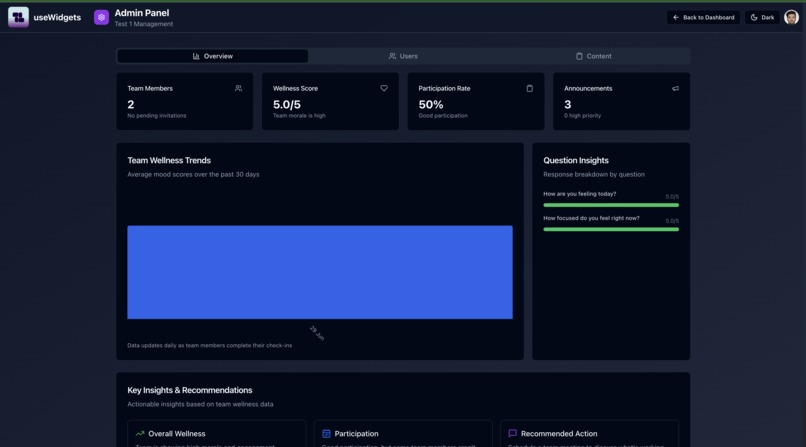
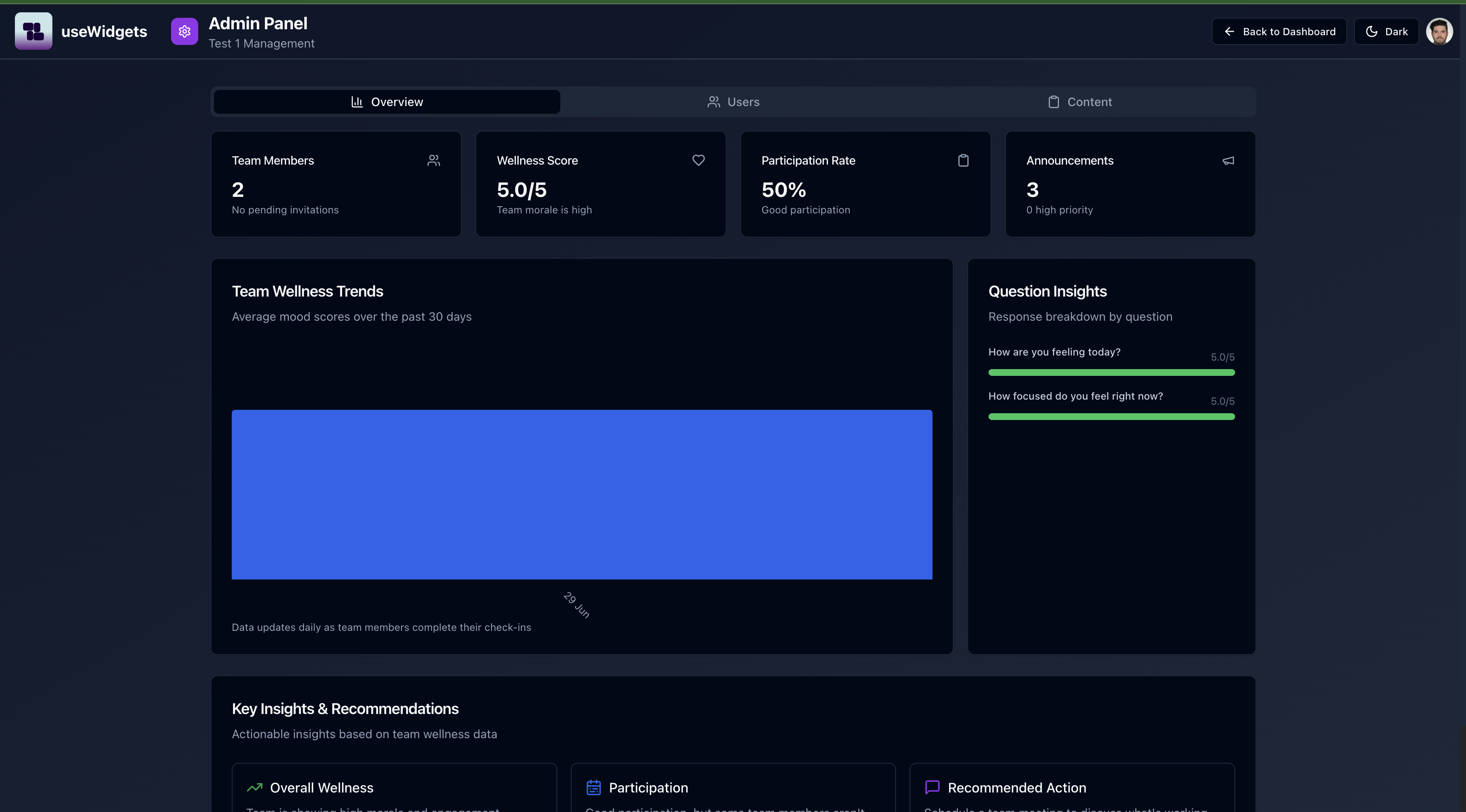
Team Wellness Analytics Dashboard
-
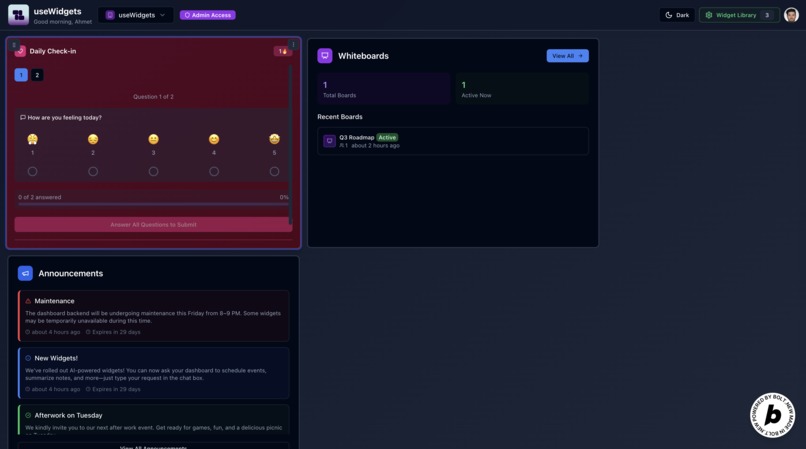
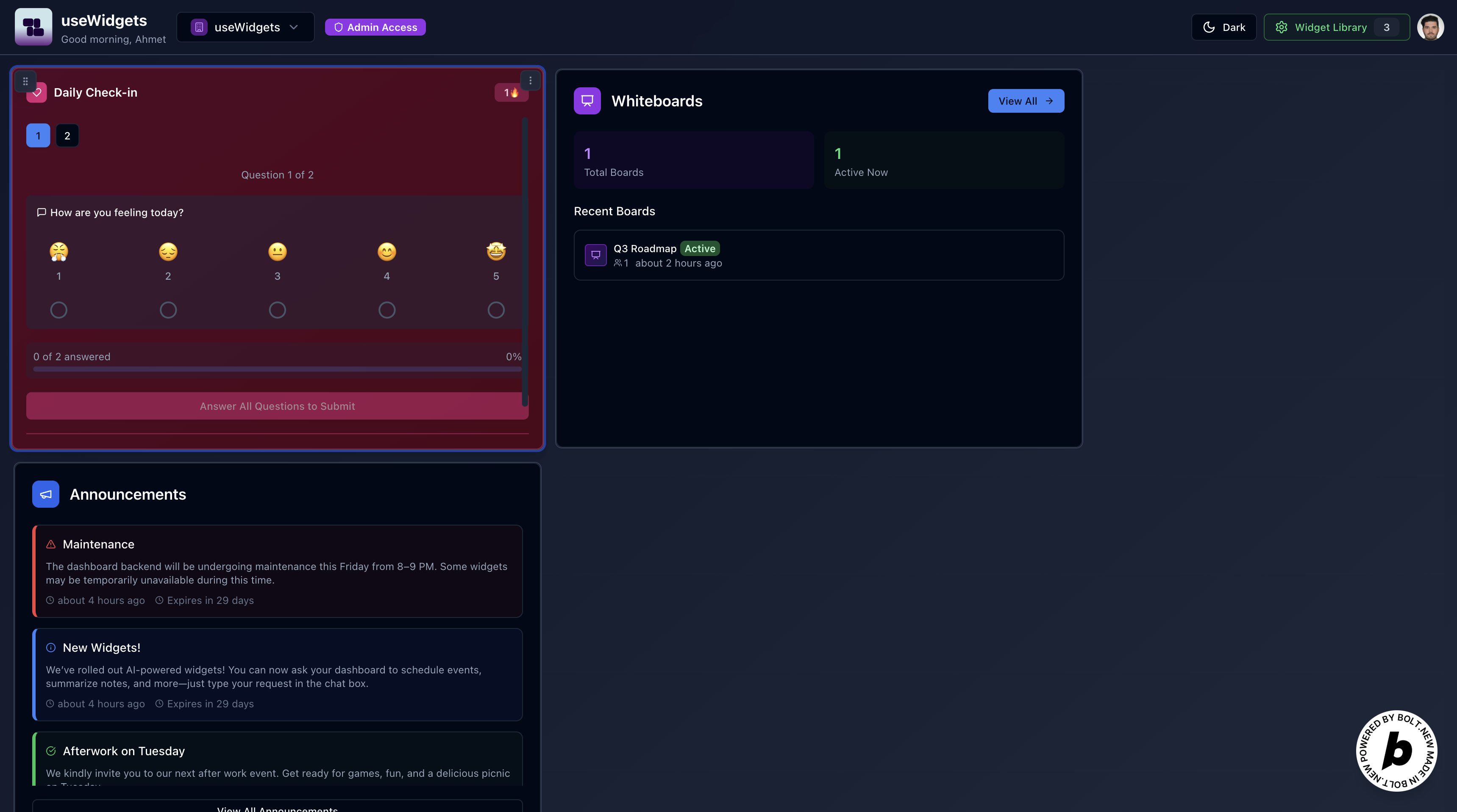
Team Dashboard
-
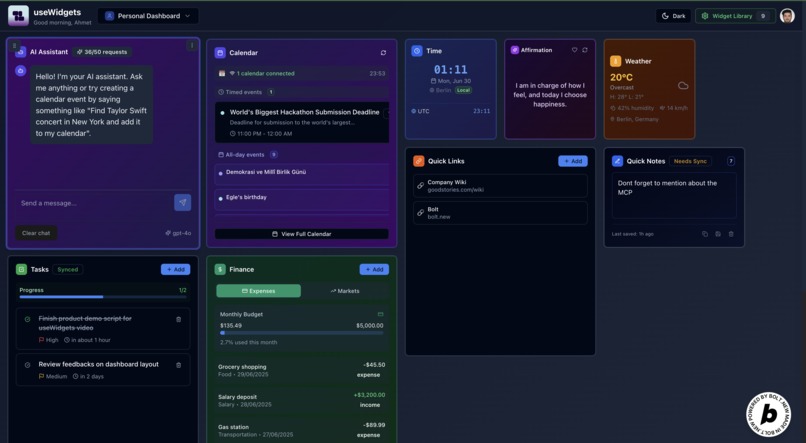
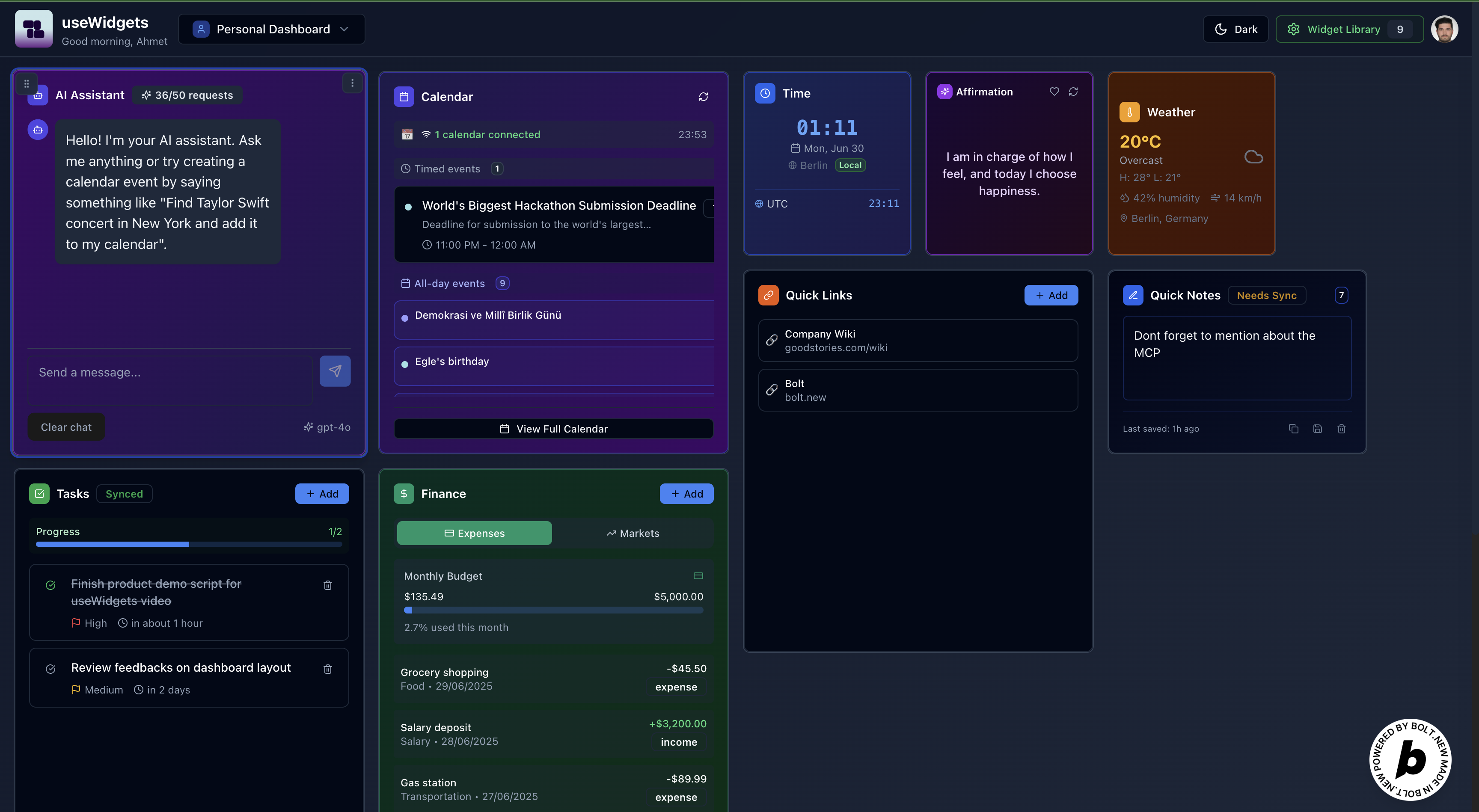
Personal Dashboard
-
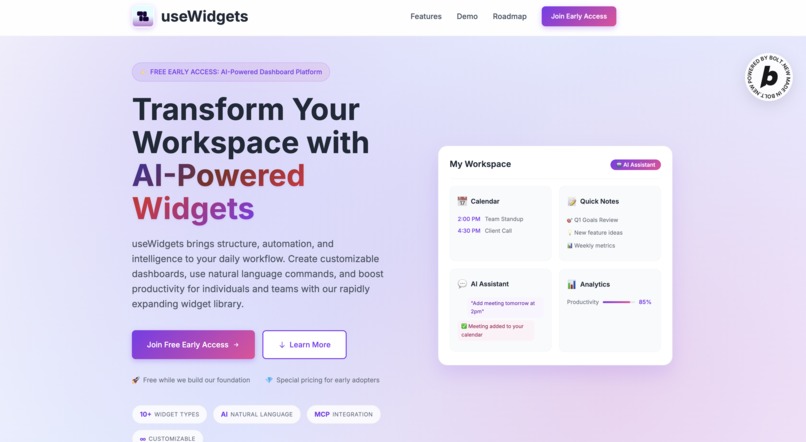
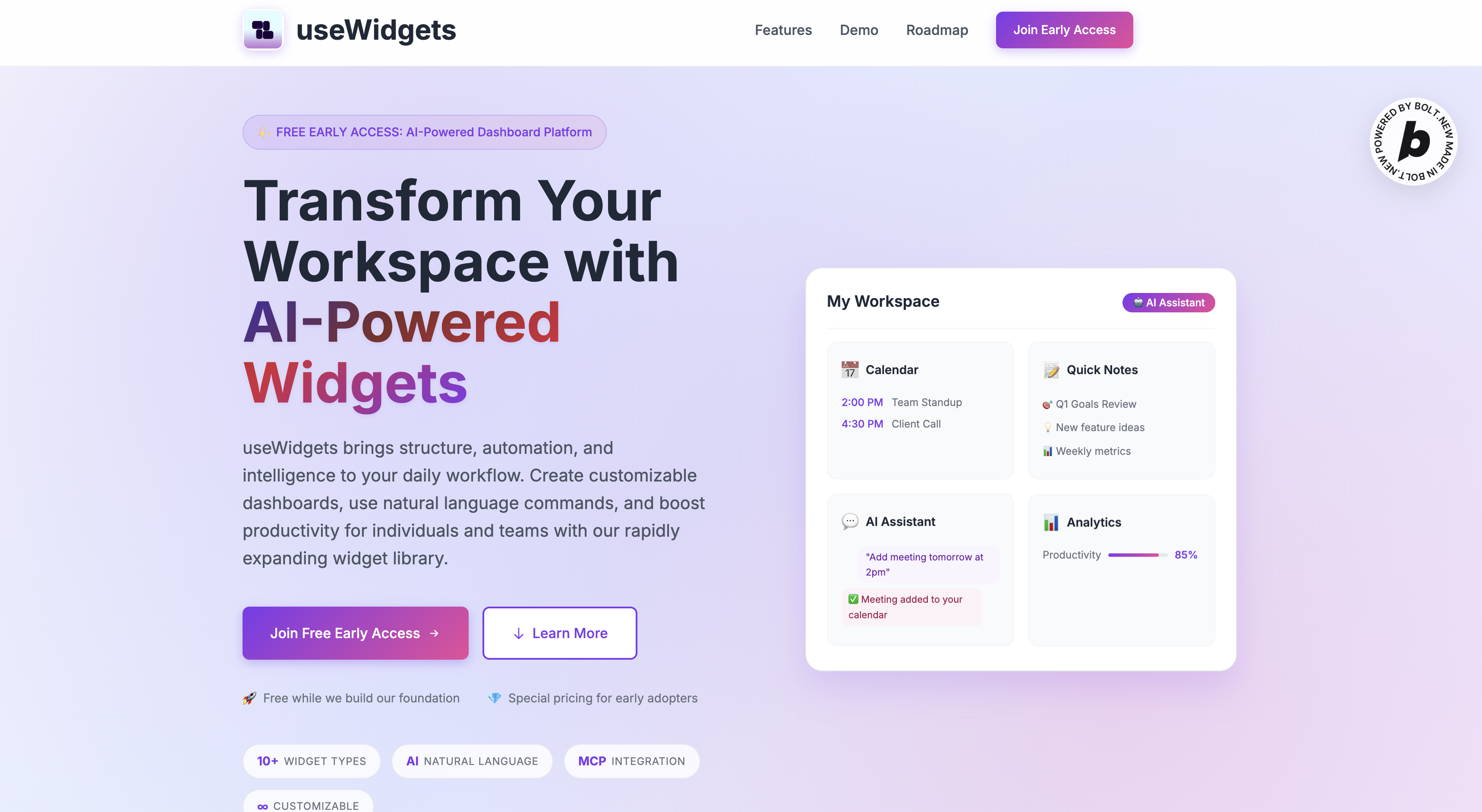
Landing Page
Inspiration
The idea for useWidgets began during a conversation with a colleague. They mentioned how helpful it would be to have one place where all company-related tools—like whiteboards, announcements, wellness trackers, and quick links—could live together. That simple thought sparked the vision for a fully customizable dashboard that serves both individuals and teams. A place to organize, collaborate, and even automate everyday work through AI. That’s how useWidgets came to life.
What it does
useWidgets is a customizable, AI-powered dashboard that lets users create their own workspace using modular widgets. From personal tasks and calendars to shared whiteboards and team announcements, everything is organized in one place. With built-in AI and Model Context Protocol, it can also understand natural language commands and turn them into real actions—like adding events to your calendar or pulling in updates from connected tools.
How we built it
We built useWidgets using bolt.new for the frontend, paired with a NestJS backend and MongoDB for flexible data storage. The app integrates powerful external services like OpenAI for natural language processing, and Google and Microsoft Calendars for seamless scheduling features. The architecture is designed to support a growing library of widgets and AI-driven workflows through Model Context Protocol (MCP).
Challenges we ran into
One of the biggest challenges was designing a database structure flexible enough to support limitless, customizable widgets—without bloating the system with unnecessary collections or slowing down performance. We had to carefully balance scalability with simplicity to ensure the platform stays fast, clean, and adaptable as more widgets and integrations are added.
Accomplishments that we're proud of
One major milestone was successfully integrating the Model Context Protocol for the first time. It allowed us to turn natural language prompts into real backend actions—like creating calendar events or fetching external data. It was something we had never done before, and pulling it off not only made the app smarter, but also made the process genuinely fun. We're excited to keep building more connections from here.
What we learned
We learned how to build a flexible and scalable architecture that can support limitless customization without sacrificing performance. We also gained hands-on experience integrating AI with real-world tools using the Model Context Protocol. Most importantly, we discovered how powerful and intuitive a workspace can become when it's shaped around the user, not the other way around.
What's next for usewidgets
We're working to open the platform to third-party developers, allowing trusted contributors to build and publish their own widgets. This will turn useWidgets into an open, ever-expanding ecosystem. Alongside that, we're building deeper integrations with tools like Jira, Slack, and Notion, and exploring fun use cases—like tracking your video game stats. Our goal is simple: if it matters to you, it can be a widget.
Beyond business tools, we’re exploring wild integrations—like a Easports FC Clubs stats widget for gamers to track their club’s performance. The goal is to make useWidgets a dashboard for all your passions.


Log in or sign up for Devpost to join the conversation.