About the Project
Giving Customer Feedback a Memory
Customer feedback is everywhere — support messages, reviews, surveys, and direct complaints. The problem is that feedback is often analyzed one interaction at a time. A team may understand today's complaint, but lose the connection to similar complaints from weeks or months ago.
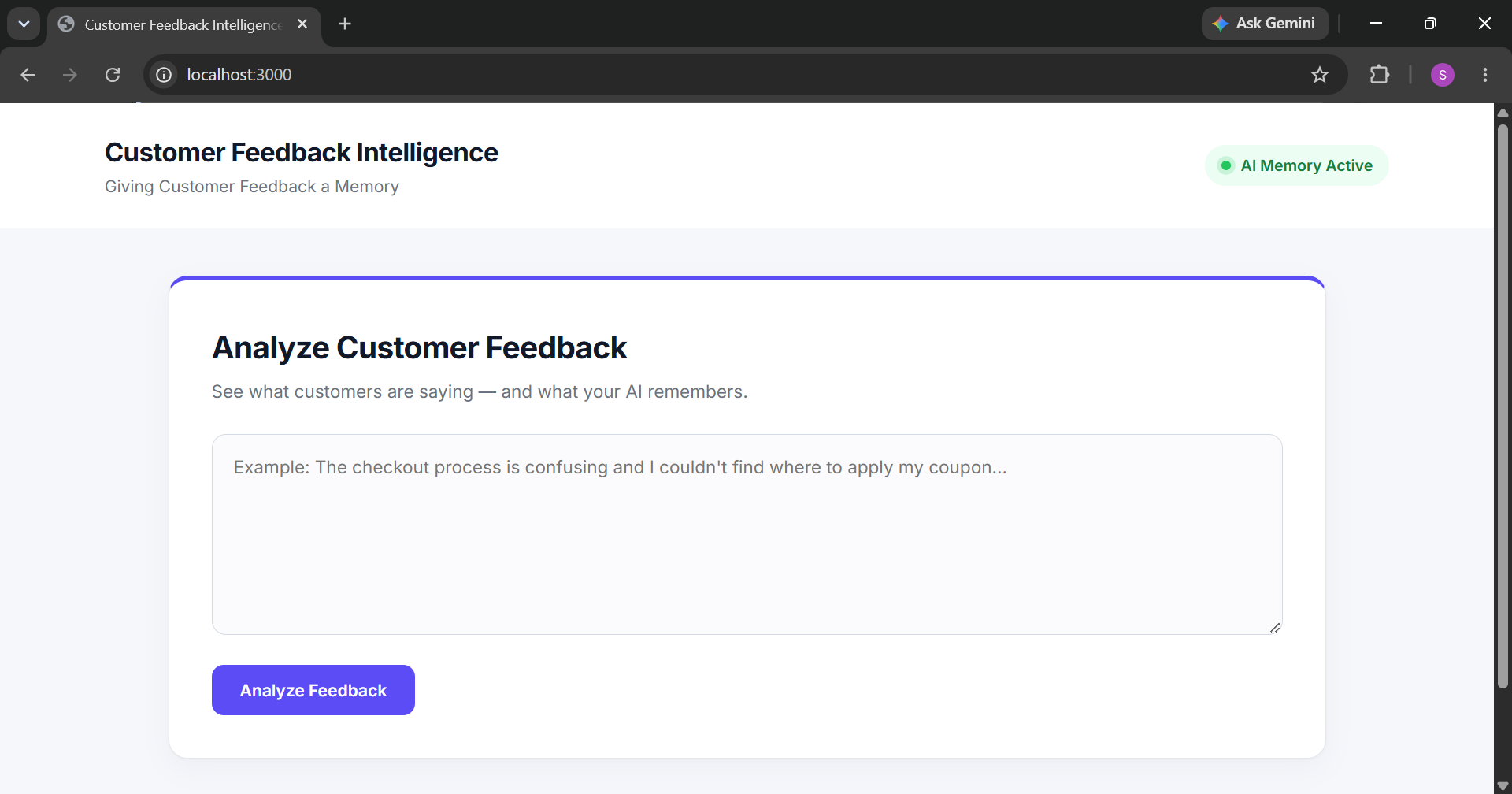
We built Customer Feedback Intelligence, an AI agent that gives customer feedback a persistent memory.
Instead of simply performing sentiment analysis, our system remembers previous customer feedback, retrieves relevant historical experiences, identifies recurring patterns, and turns those patterns into actionable product insights.
What Inspired Us
We were inspired by a simple question:
What if an AI could remember what customers complained about yesterday, last week, and last month — and use that memory when analyzing today's feedback?
A single complaint may look isolated. But when an AI connects it with similar historical feedback, it can reveal a much larger product problem.
For example, one customer saying:
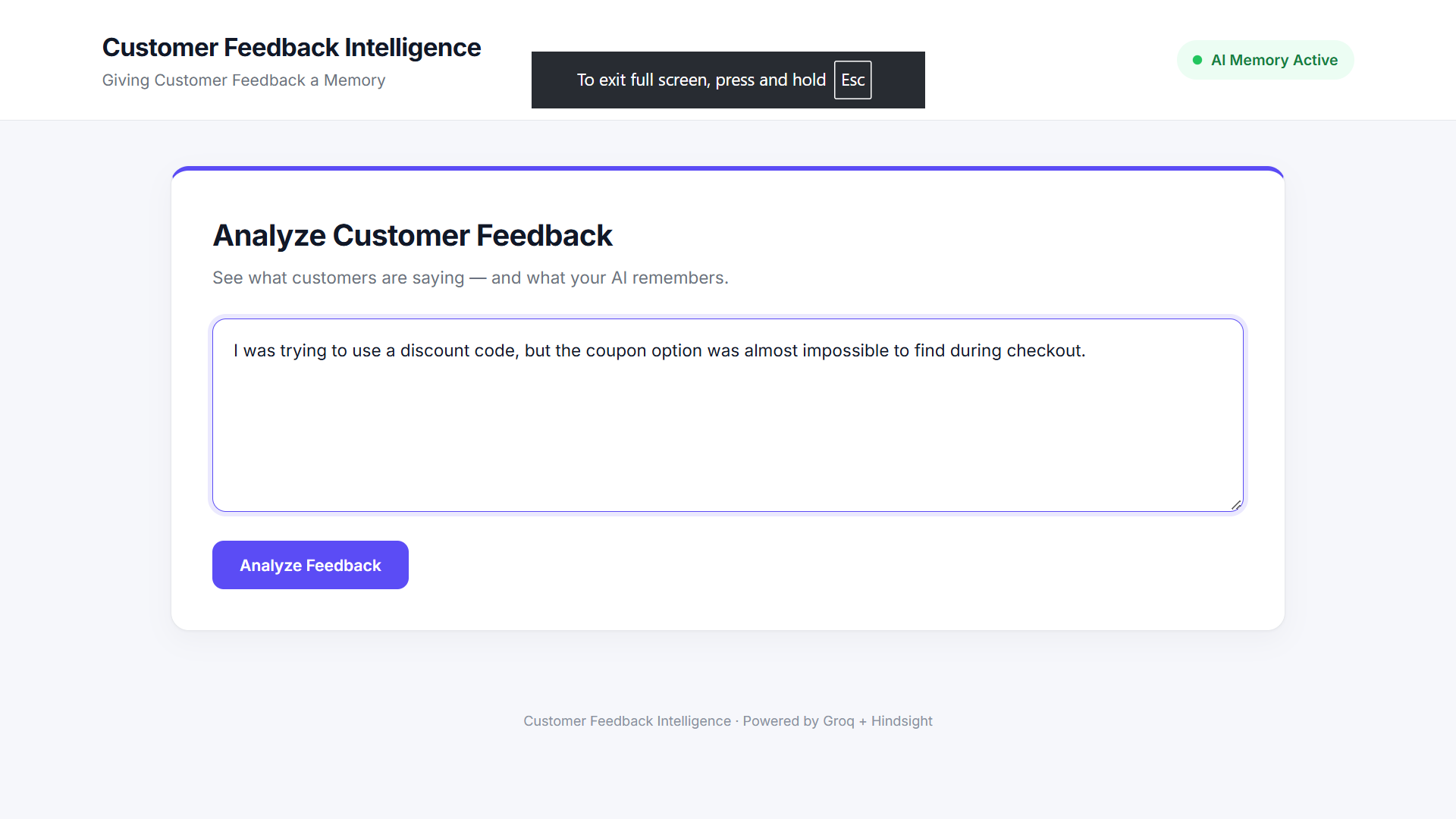
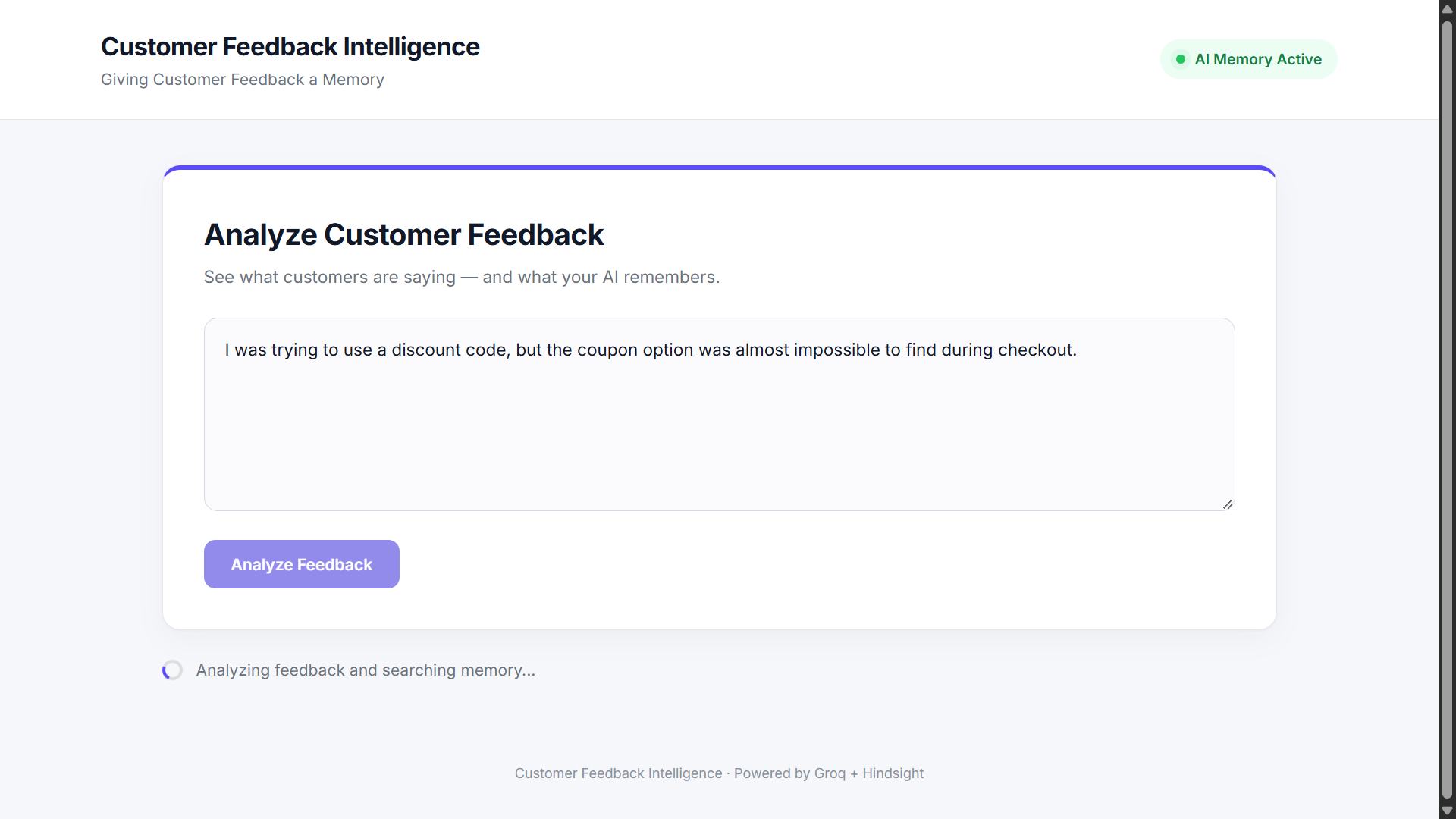
"The coupon option was almost impossible to find during checkout."
might not seem critical on its own.
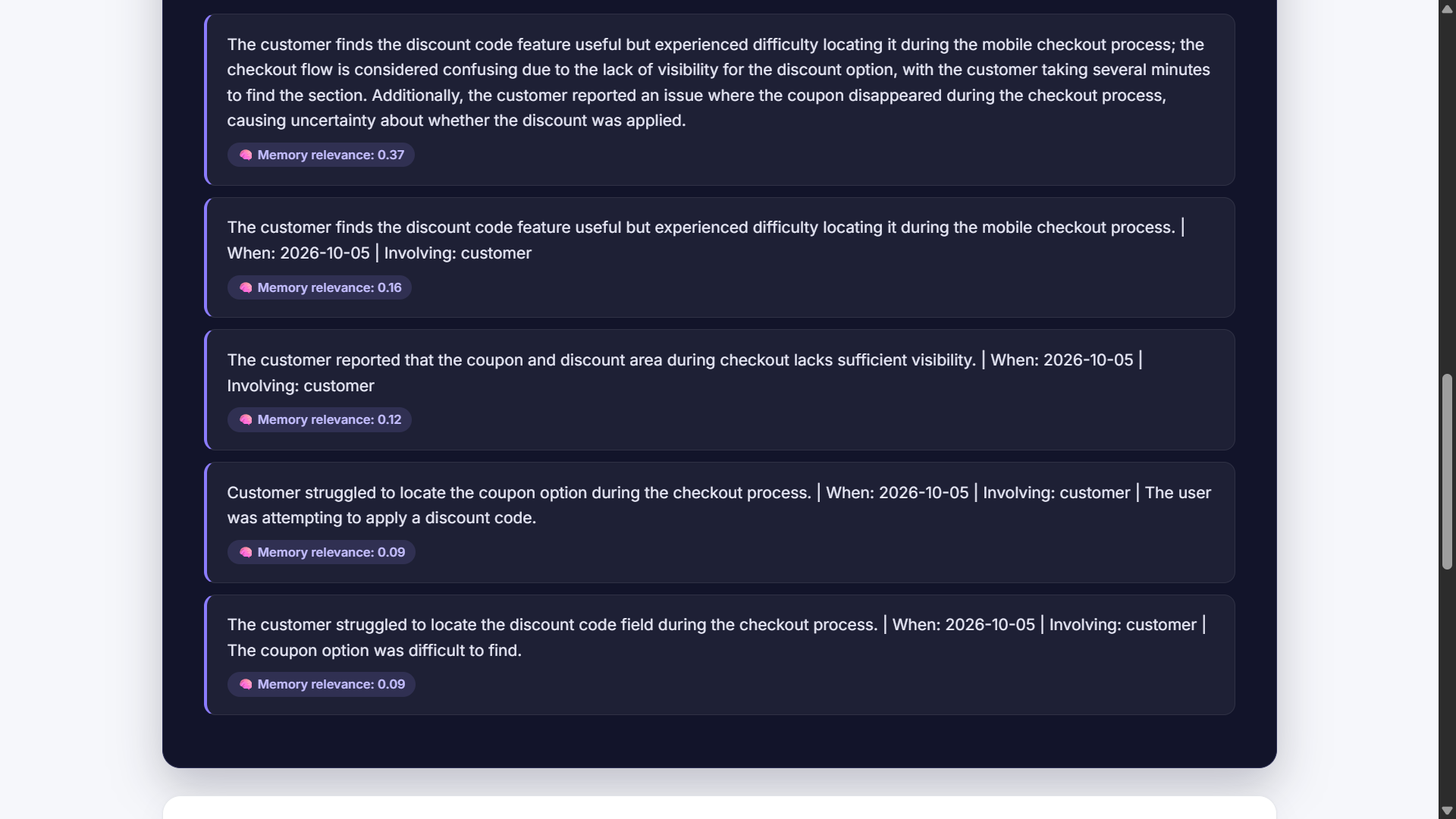
But if the system remembers several similar complaints about coupon visibility, checkout confusion, and discount-code discovery, the product team can recognize that this is probably a recurring usability issue rather than an isolated complaint.
How We Built It
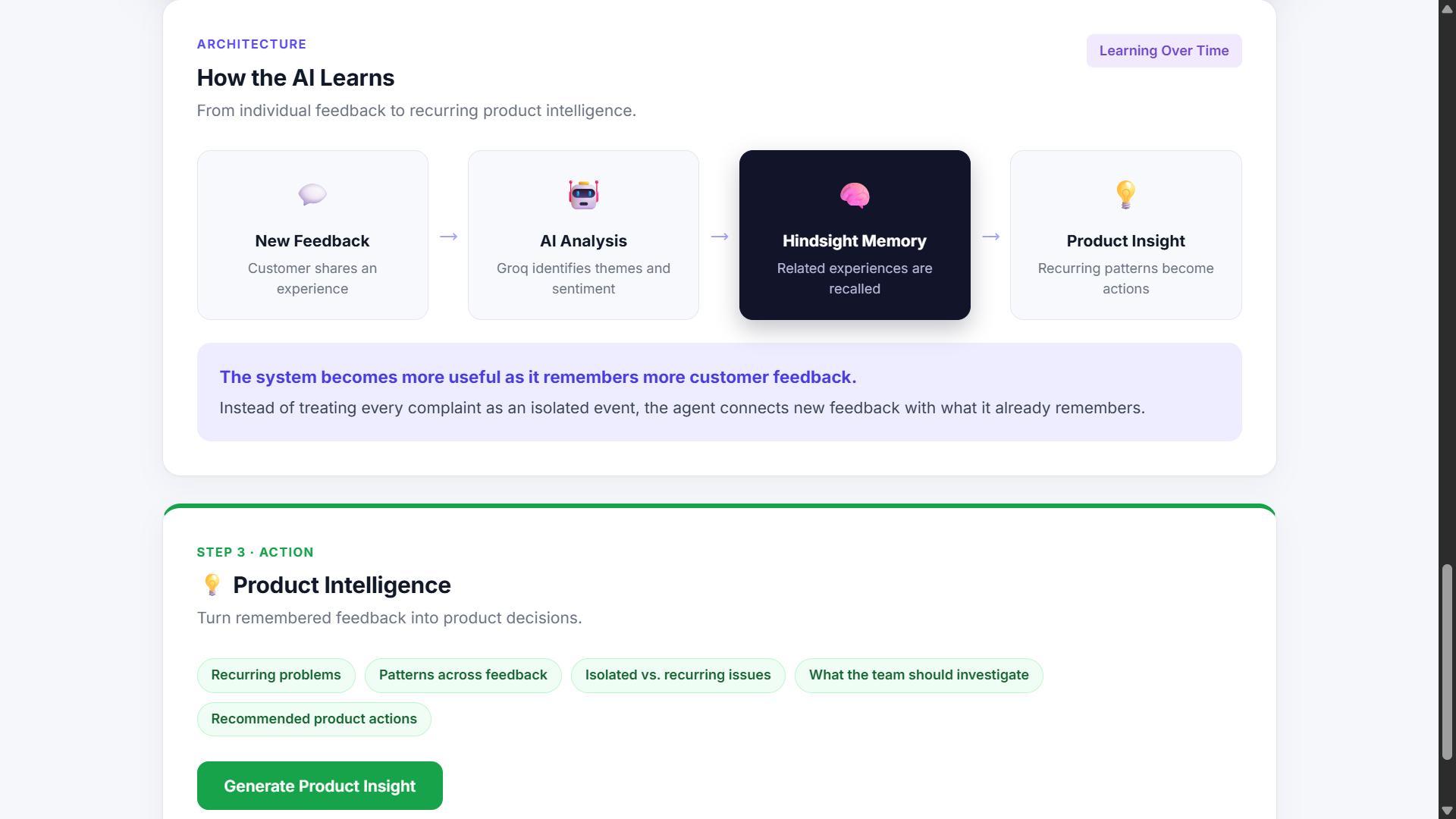
Our system combines Groq for feedback analysis with Hindsight as the persistent memory layer.
The workflow is:
Customer Feedback → AI Analysis → Hindsight Memory → Historical Recall → Product Insight
When new feedback is submitted:
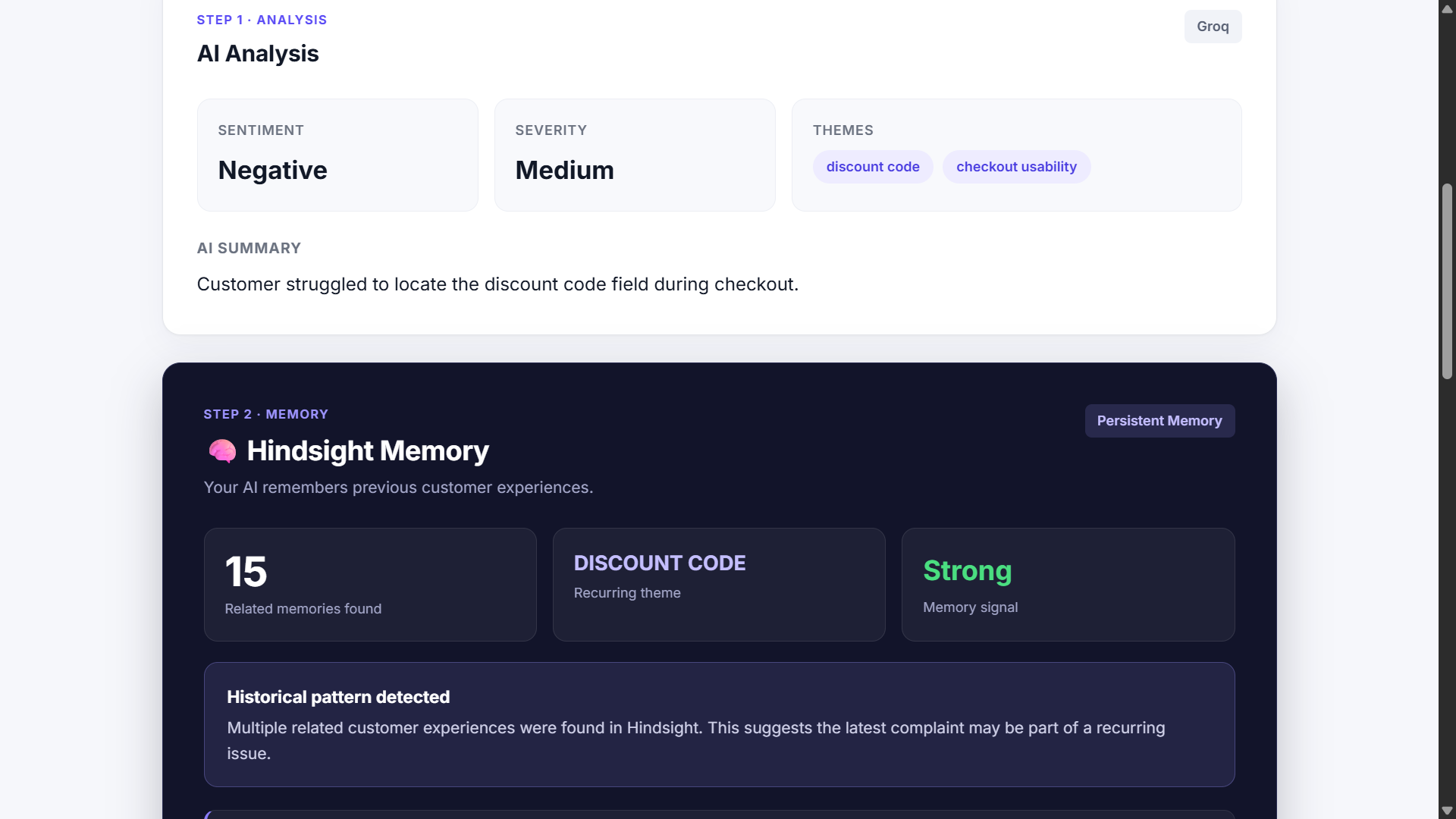
Groq analyzes the feedback
- Sentiment
- Severity
- Themes
- Summary
The analyzed feedback is stored in Hindsight
The feedback becomes part of the system's long-term memory.
- Hindsight recalls related historical feedback
Instead of looking only at the current complaint, the system searches its memory for semantically related customer experiences.
- The system identifies recurring patterns
Related memories are surfaced with relevance scores, allowing the product team to see whether the latest issue has historical context.
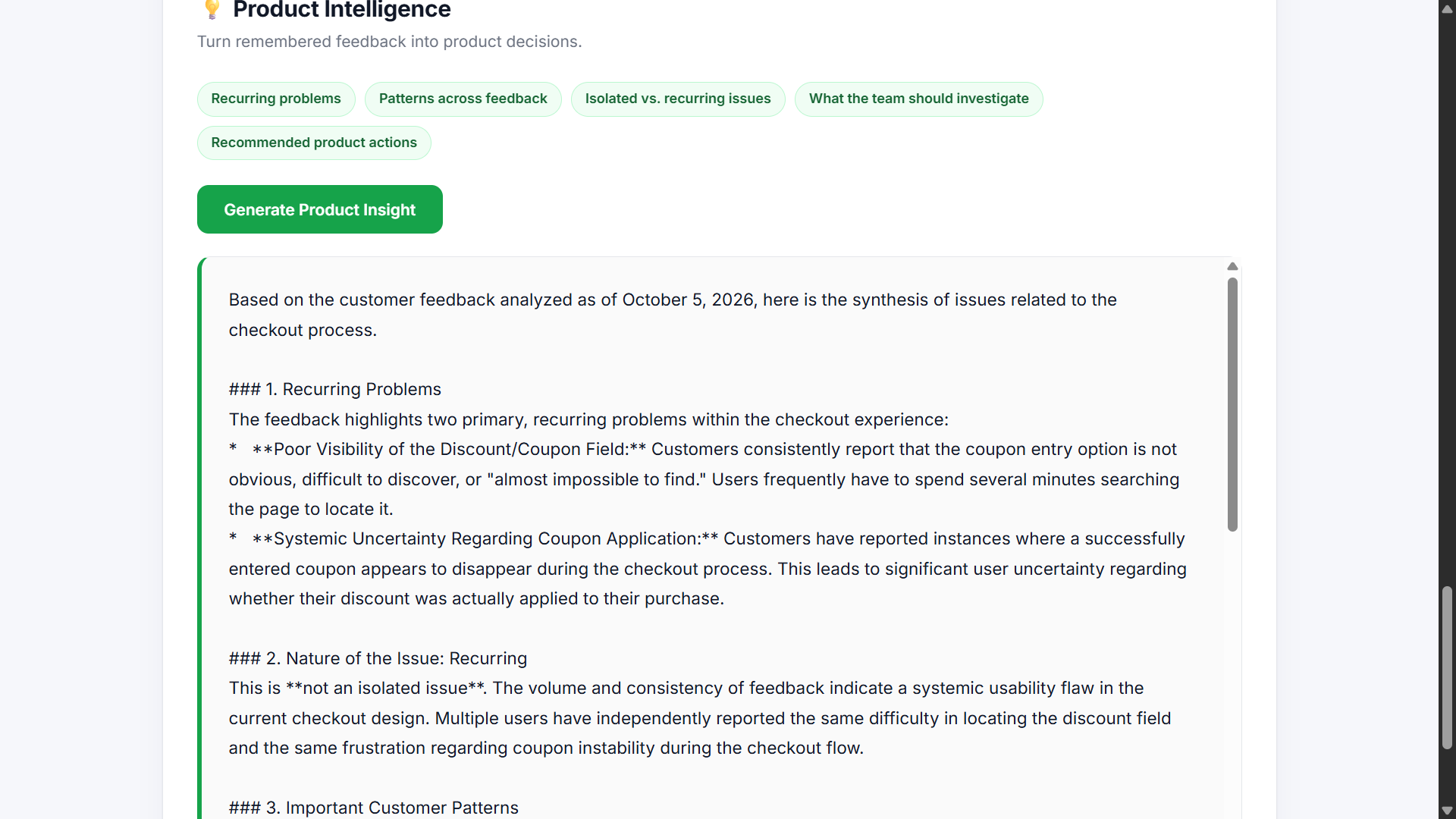
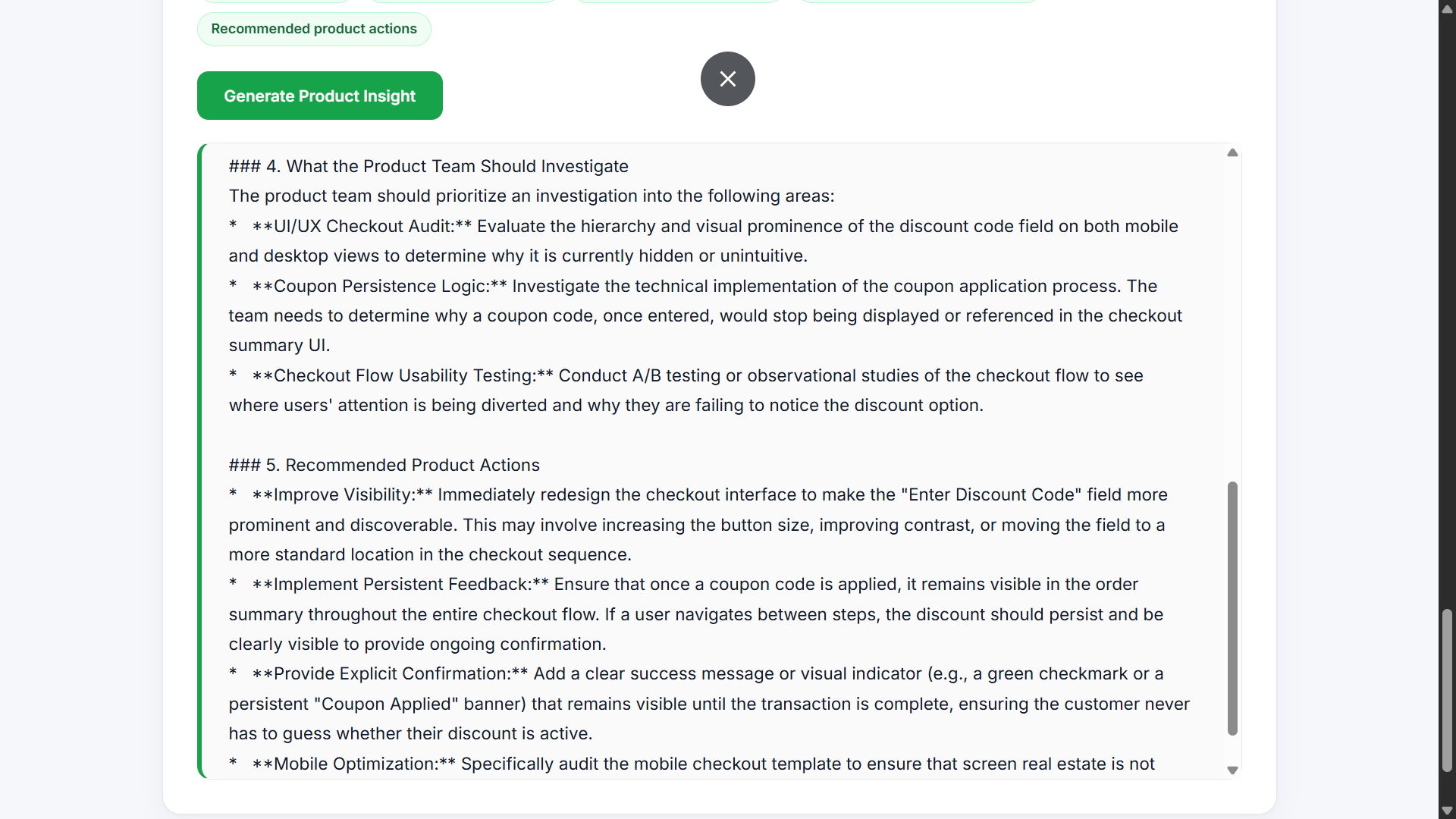
- Product Intelligence generates an insight
Hindsight's accumulated knowledge is used to identify recurring problems, important customer patterns, areas to investigate, and potential product actions.
Why Hindsight Is Central
Hindsight is not being used as a simple database in our project.
It is the core mechanism that allows the AI to learn from accumulated customer experiences.
Without memory, the system can analyze:
"This customer is frustrated with checkout."
With memory, it can discover:
"Similar checkout and coupon-visibility problems have appeared repeatedly in previous customer feedback."
That difference is the core of our project.
What We Learned
Building this project taught us that adding memory changes the role of an AI system.
A normal AI analysis pipeline answers:
"What does this feedback say?"
A memory-enabled AI can answer:
"What does this feedback mean in the context of what customers have told us before?"
We also learned how semantic memory retrieval can surface related experiences even when customers use different wording to describe the same underlying problem.
Challenges We Faced
One of our biggest challenges was designing the system so that memory actually contributed to the product decision rather than simply storing previous feedback.
We had to make sure that:
- feedback was meaningfully analyzed before being stored;
- related historical experiences could be retrieved;
- the UI clearly demonstrated the difference between current analysis and historical memory;
- memory relevance was visible to users;
- the system did not confuse the number of retrieved memories with the number of customers.
Another challenge was presenting the concept clearly. We wanted judges to immediately understand that this is more than a sentiment-analysis application.
What Makes It Different
Most basic customer-feedback tools answer:
"What are customers saying right now?"
Customer Feedback Intelligence aims to answer:
"What have customers been saying over time, what patterns are emerging, and what should the product team do about them?"
The system becomes more useful as its memory grows.
What's Next
We intentionally focused this prototype on demonstrating the core memory-driven feedback intelligence workflow.
Future improvements could include:
- Connecting feedback from multiple channels
- Tracking sentiment and themes over longer periods
- Visual trend dashboards
- Linking recurring feedback to specific product releases
- Automated product-team recommendations
- Customer-segment analysis
- More advanced feedback clustering
- Continuous monitoring of emerging product issues
Our goal is to move from simply analyzing customer feedback to building an AI product intelligence layer that continuously learns from what customers have experienced.
Customer Feedback Intelligence
Giving Customer Feedback a Memory.
Built With
- agents
- ai
- api
- artificial
- css
- customer
- express.js
- feedback
- generative
- groq
- hindsight
- html
- intelligence
- javascript
- node.js
- product
- rest
- search
- semantic

Log in or sign up for Devpost to join the conversation.