Inspiration
The people who most need a drone are the ones who can't fly one. A firefighter at a burning building has the best view of what's happening, but their hands are on a hose, a ladder or a person. When they need to see the second floor, they can't put everything down and pick up a controller. We wanted them to be able to just say "rise, look at the second-floor window, take a photo" and keep working. The same goes for search and rescue, paramedics at a crash scene, or a utility crew checking a line after a storm: people with full hands, a clear view and no time.
What it does
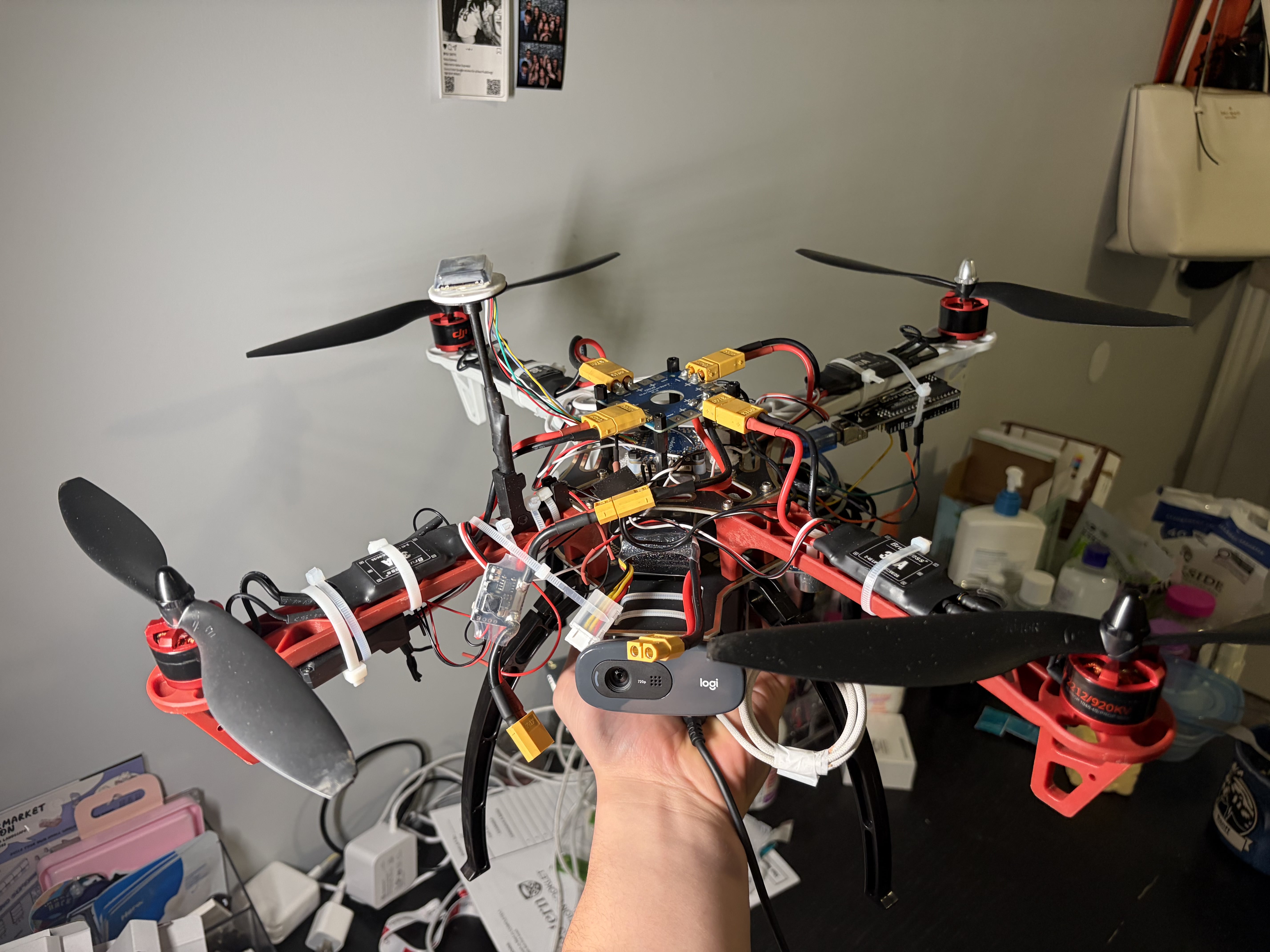
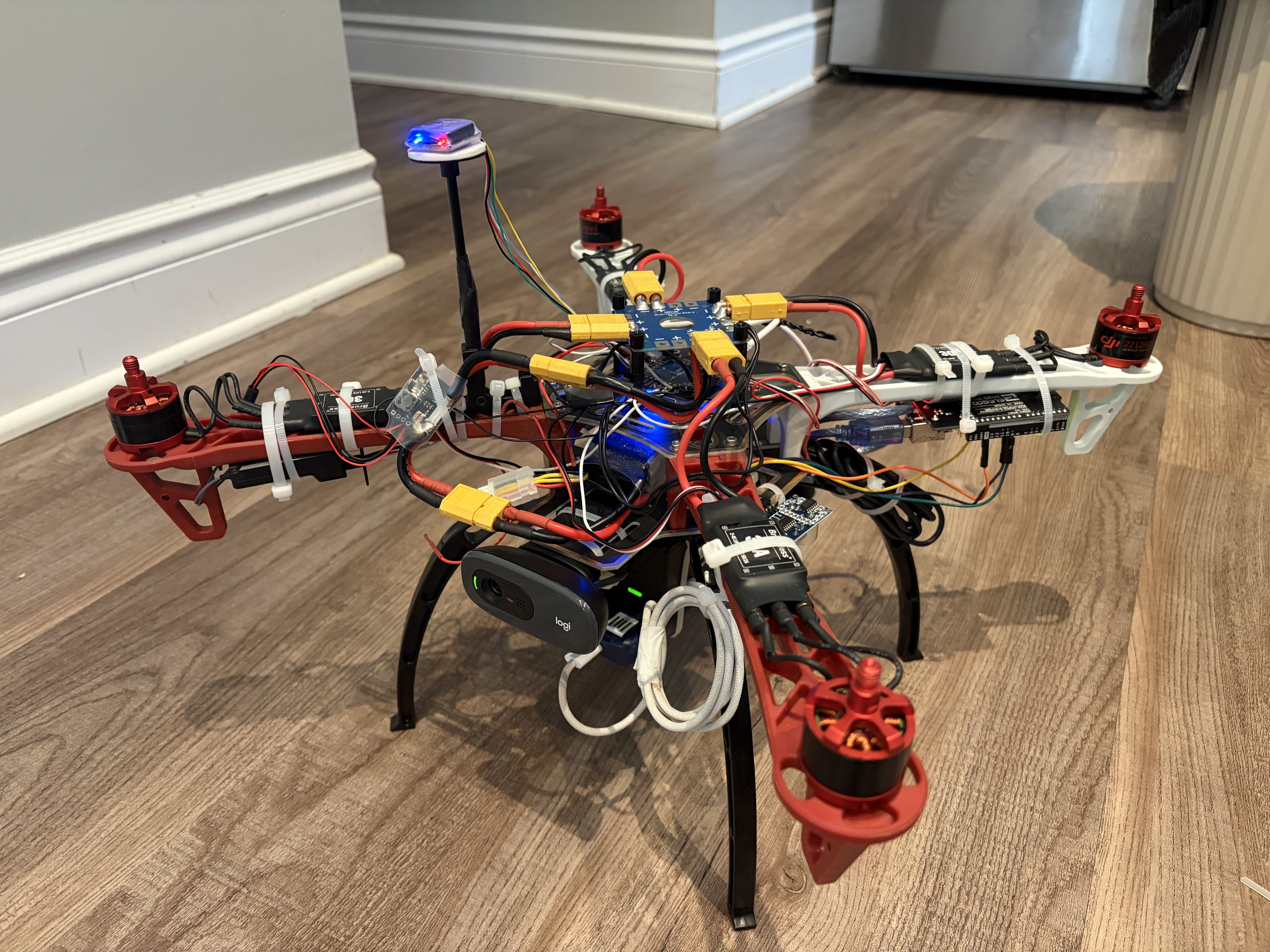
Hope is a drone you fly with your voice. Hold a button, say what you want ("rise and do a 360", "go two metres to the left and take a photo", "land"), and Jarvis, our sarcastic AI co-pilot, plans it, tells you what it's doing, and the drone flies it. It takes photos, can read or describe what its camera sees, and listens mid-flight: "land" or "stop" interrupts anything.
Because it's built for critical situations, it's allowed to say no. Every command is checked on the drone before the motors move. It refuses to fly toward a person (it sees them with on-board AI), above its ceiling or on a weak battery, and it lands itself if it starts sinking, loses its sensors or loses the link. A live dashboard shows the camera with people boxed in red, what you said, what Jarvis planned, what the safety system decided, and the drone's height and battery.
How we built it
Edge for reflexes, cloud for intelligence.
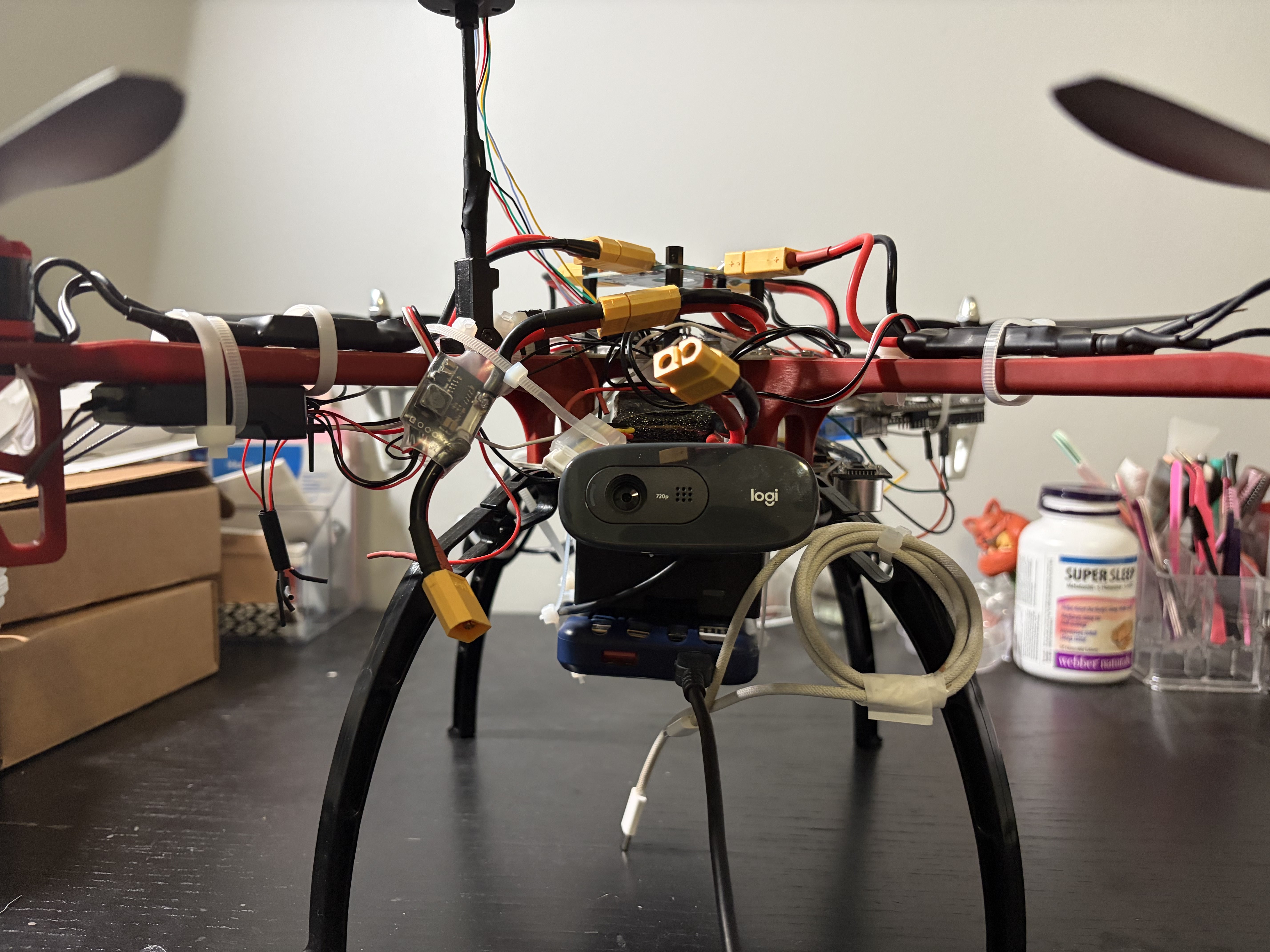
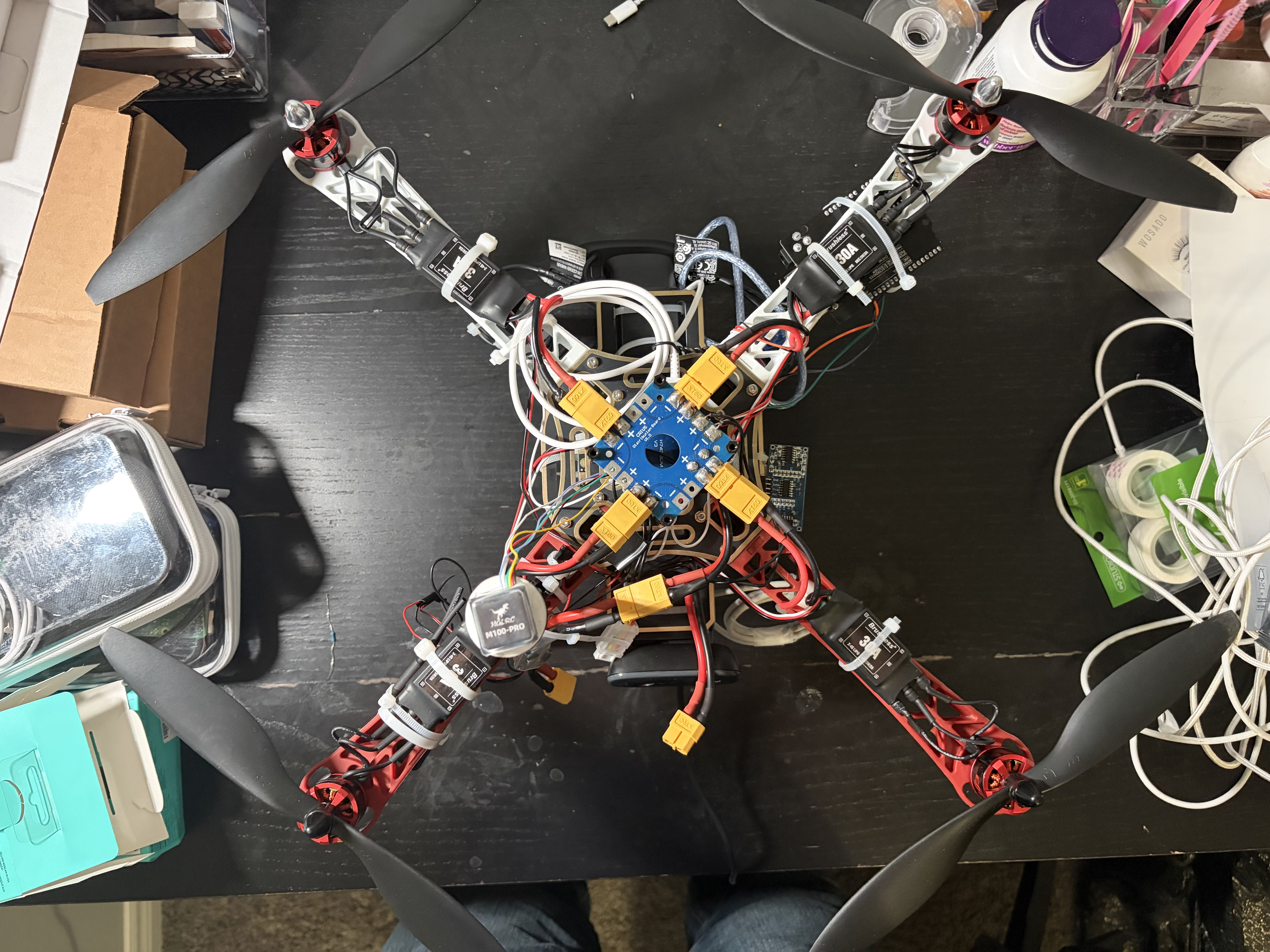
- On the drone: QNX. A Raspberry Pi 5 running QNX 8 rides on the drone as its flight computer. It runs both cameras, optical flow (OpenCV, QNX port), an on-board person detector (TensorFlow Lite, QNX port), a safety gate that checks every command, a C watchdog, and a MAVLink link to an ArduPilot flight controller over USB. Safety-critical processes run at real-time priority above QNX's own drivers and the AI runs below them, so heavy compute can never starve the safety loop.
- In the cloud: Vultr. Speech-to-text (Whisper), the planning brain (GLM with tool calling) and vision (Qwen) run on Vultr Serverless Inference. The cloud app also serves the dashboard and relays live video and telemetry. ElevenLabs gives Jarvis his voice.
- On the laptop: the station. A planner turns Jarvis's plan into safe flight primitives and holds height from the rangefinder.
- Protocol. A small JSON protocol connects laptop and drone; every command gets an "accepted" or "refused, because…" back from the drone.
Challenges we ran into
- Knowing how high we are. This was the hardest problem. We have two height sensors and each one fails in the opposite place. The barometer works well higher up, but close to the ground the prop wash bouncing off the floor fools it into thinking the drone is much higher than it is. The downward distance sensor (ultrasonic) is accurate near the ground but gets unreliable the further up it goes. So we had to decide which number to trust at which height and blend between them: the rangefinder below about \( 1.4\,\text{m} \), the barometer above. Takeoff and hover are decided by the rangefinder, because that's exactly where the barometer lies most. GPS made it worse outdoors: its vertical speed reported the drone climbing while it sat on the ground, so height now comes from the height sensors only.
- Real-time priorities. Our first plan gave the cameras and AI high real-time priority, and they starved QNX's own USB and Wi-Fi drivers until the camera service crashed. We redesigned it: safety above the drivers, compute below.
- A 433 ms stall in a real-time loop. Our watchdog wrote its log to the SD card, and a busy card froze it. Moving logging to a lock-free buffer drained by a low-priority thread brought the worst case under 1 ms.
- No driver for the flight controller on QNX. We talk to its USB port directly through libusb.
- Battery sag. The drone needs about 80% throttle to hover, and the pack drops nearly 2 V under that load, which tripped our own battery limits mid-flight. We re-tuned them for voltage under load.
- Field networking. A phone hotspot gave the laptop no IPv4 address, so we carried the flight link over an SSH tunnel on the drone's IPv6 address.
Accomplishments that we're proud of
- A drone that takes off, turns, moves, takes photos and lands from plain speech, and refuses when it should.
- Real-time numbers measured on the drone itself: a watchdog with a worst case under 1 ms, a crashed AI process restarted in 73 ms, and a frozen safety core caught in 260 ms while the flight controller kept flying.
- Safety in layers, where nothing, including the AI, is trusted on its own: Jarvis, the planner, the safety gate on QNX, the on-board person detector, the watchdog, the flight controller's failsafes, and finally the pilot's switch.
- A full stack in one weekend: cloud, voice, LLM, vision, dashboard, planner, protocol and embedded safety system, all flown on real hardware.
What we learned
- Sensors disagree in the real world in ways they never do in simulation. Pick a source of truth for each quantity at each operating point, and guard it.
- Real-time isn't just "high priority": if your compute outranks the OS's drivers, you break the OS.
- Never block a real-time loop on I/O, not even to write a log line.
- For voice control, most of the latency is speech-to-text, and the fastest LLM call is the one you skip: common commands are parsed instantly, and the AI handles the rest.
What's next for Hope
- A lighter frame or bigger battery, for longer flights and more headroom.
- Wiring up the forward obstacle sensor, so walls and objects are refused like people are.
- Hand gestures on QNX: palm to stop, point to go.
- Missions to named things ("fly to the red door and read the sign") and visual memory ("where did I leave my keys?"), building on pieces we already have.
- Trials with the people who'd actually use it, like firefighters and search-and-rescue teams, to shape the commands around how they talk on the job.

