-
-
-
SPLASH SCREEN
-
-
-
-
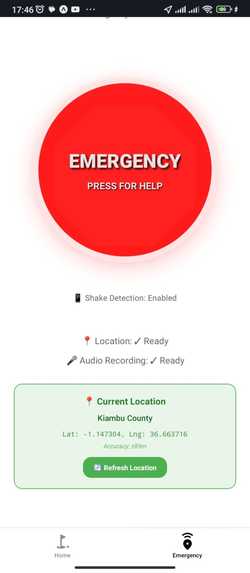
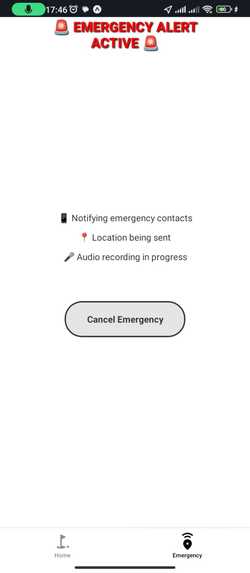
EMERGENCY BUTTON PAGE
-
-
-
-
-
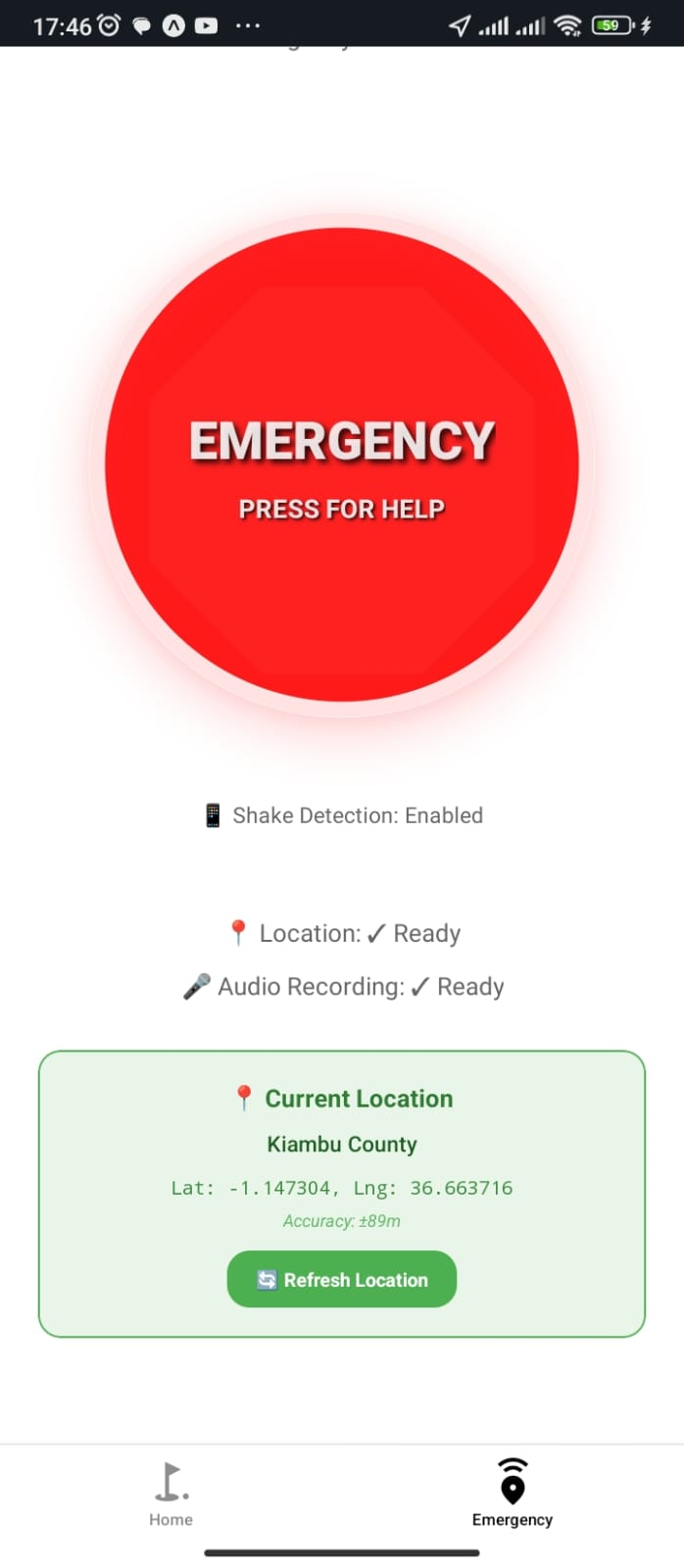
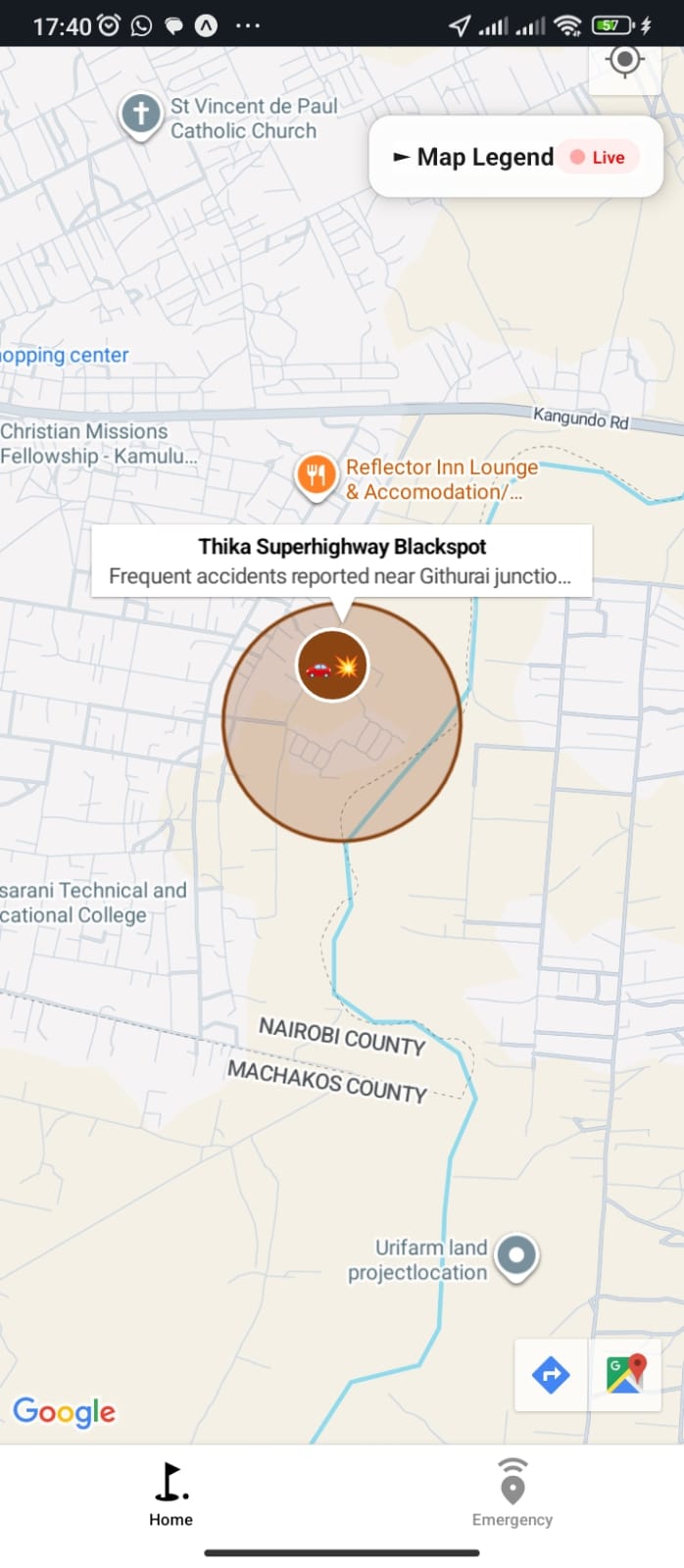
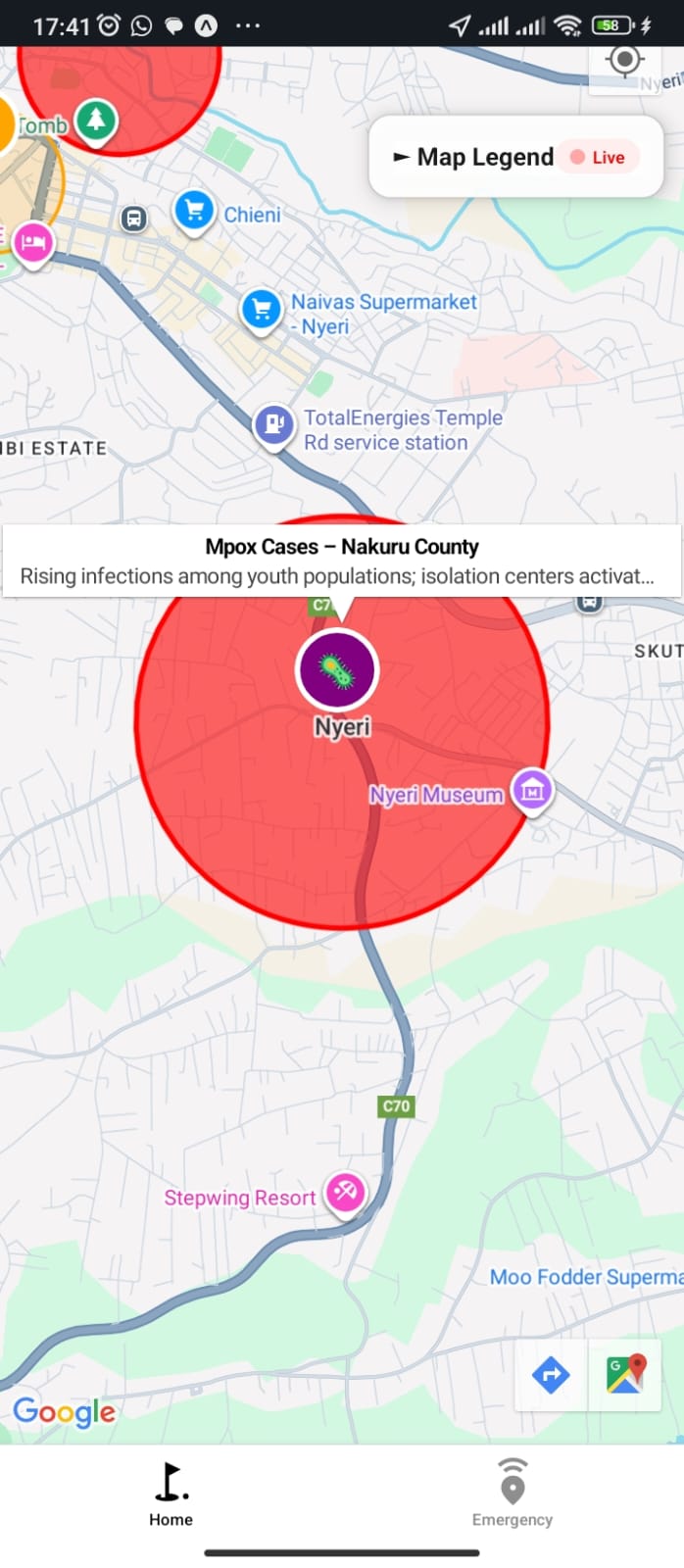
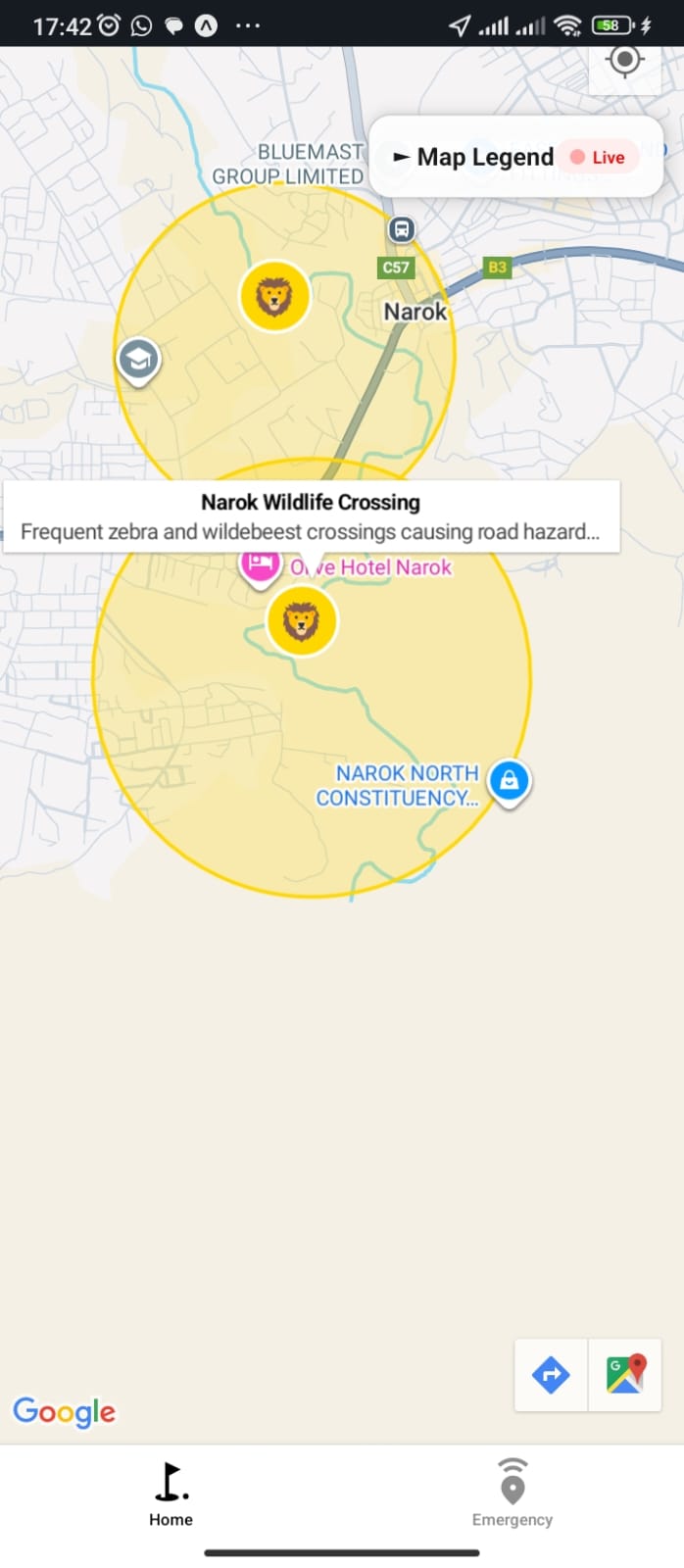
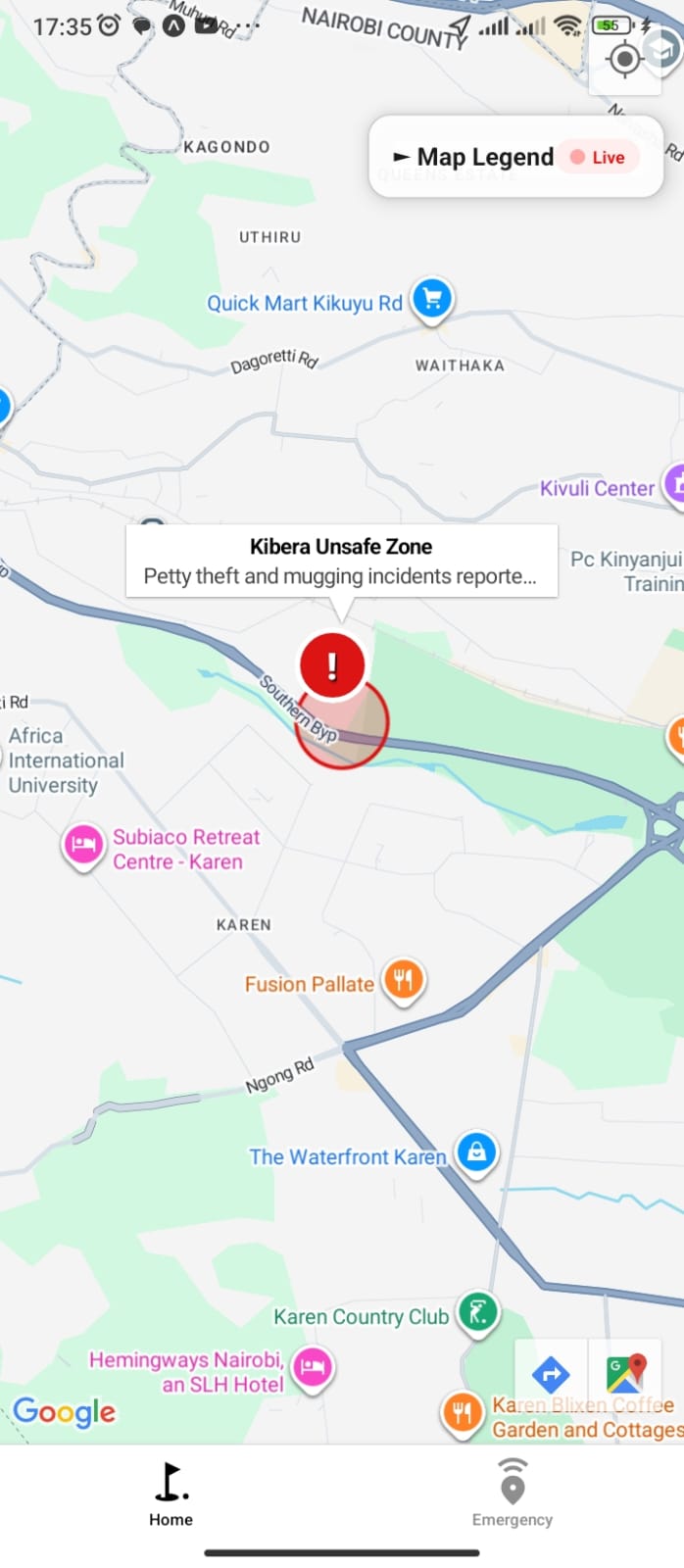
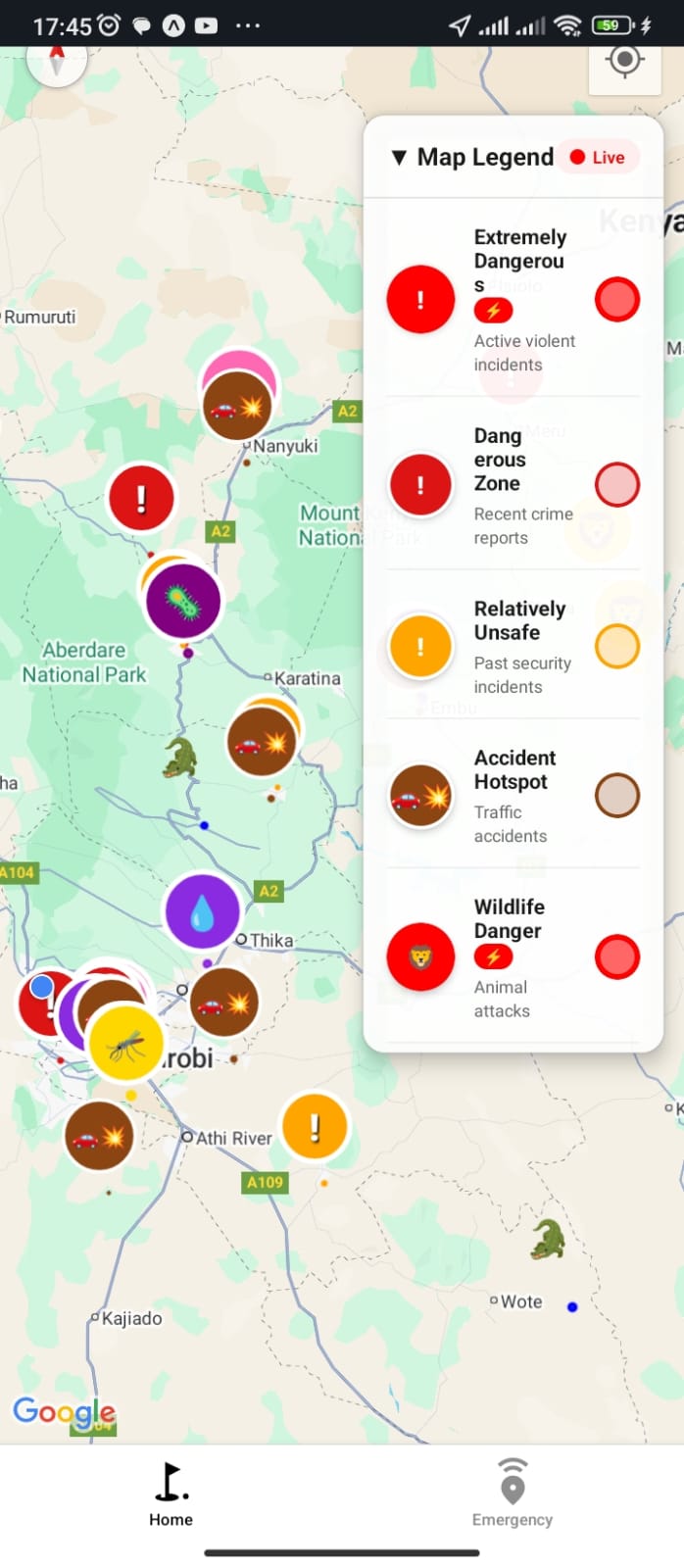
Inspiration Emergencies strike without warning, and every second counts. Many people in distress struggle to reach help quickly or communicate their exact location. Inspired by this gap in emergency response and the rising number of insecurity cases, accidents, and health outbreaks, we built Usalama Wangu (My Safety) — a smart guardian that uses technology to protect lives through instant alerts, intelligent monitoring, and seamless communication between users, responders, and authorities.
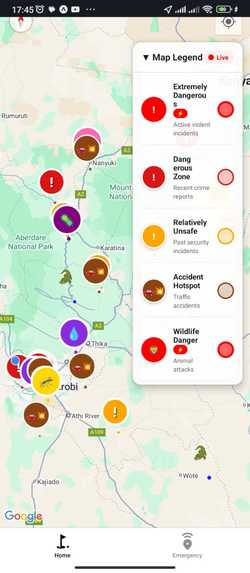
⚙️ What It Does Usalama Wangu is an intelligent, IoT-powered safety and emergency response application that connects users to help instantly. With just one tap or a simple shake of the phone, users can trigger a distress signal that sends their live GPS location, timestamp, and a 30-second audio recording to registered contacts and nearby authorities via SMS and email. The app’s wearable integration (smart bracelet or necklace) ensures safety even when the phone is out of reach. Beyond personal alerts, it maps danger zones, disease outbreaks, and accident hotspots, sending proactive notifications to warn users before they enter risky areas. It also offers data visualization and analytics tools for agencies to monitor incidents, detect trends, and make data-driven decisions — turning safety into a shared, intelligent ecosystem.
🏗️ How We Built It
We developed the system using a combination of IoT, Artificial Intelligence, and Geospatial Technology:
Frontend: React Native (Expo) for cross-platform mobile functionality.
Backend: Django with Firebase for real-time data handling.
IoT Integration: Bluetooth Low Energy (BLE) and MQTT protocols to connect wearable devices.
AI Component: Web scraping to detect and map real-time safety alerts or outbreak data.
GPS & Mapping: Real-time location tracking with updates every 5 minutes.
Notification System: SMS, email, and push notifications for instant alert delivery.
Challenges We Ran Into
Ensuring real-time reliability in low-network or rural areas.
Maintaining secure communication between the wearable device and mobile app.
Optimizing battery usage during continuous GPS tracking and audio recording.
Integrating AI web scraping safely and efficiently without false alerts.
Balancing privacy with the need for continuous monitoring and data collection.
Accomplishments That We’re Proud Of
Successfully built a working IoT-powered alert system with location tracking and audio capture.
Achieved seamless wearable-to-app communication via BLE/MQTT.
Developed an AI-powered safety map that visualizes danger zones and outbreaks in real-time.
Created a privacy-first design, ensuring users control what data is shared and when.
Built a solution that can save lives — empowering users and communities to act faster in emergencies.
📚 What We Learned
The importance of low-latency design in life-critical systems.
How IoT and AI can complement each other to enhance public safety.
The need for data privacy and ethical AI use in emergency technologies.
How community-centered design improves adoption and trust among users.
🚀 What’s Next for Usalama Wangu (My Safety)
Launching pilot programs in campuses and local communities.
Adding voice command activation for hands-free emergency alerts.
Partnering with health agencies to expand real-time outbreak tracking.
Developing a centralized web dashboard for authorities to monitor alerts and respond faster.
Integrating machine learning models for predictive safety analytics and risk detection.
Expanding to more regions — making Usalama Wangu a continental safety network that ensures everyone can access help with one tap.
Details about the project Usalama Wangu is an intelligent, IoT-powered safety and emergency response application designed to protect lives through real-time alerts, smart monitoring, and rapid communication. The app combines artificial intelligence for web scraping, GPS tracking, and wearable technology to detect danger, notify users, and coordinate immediate response actions. It empowers users to stay informed and protected during emergencies such as road accidents, disease outbreaks, unsafe areas, or physical distress situations.
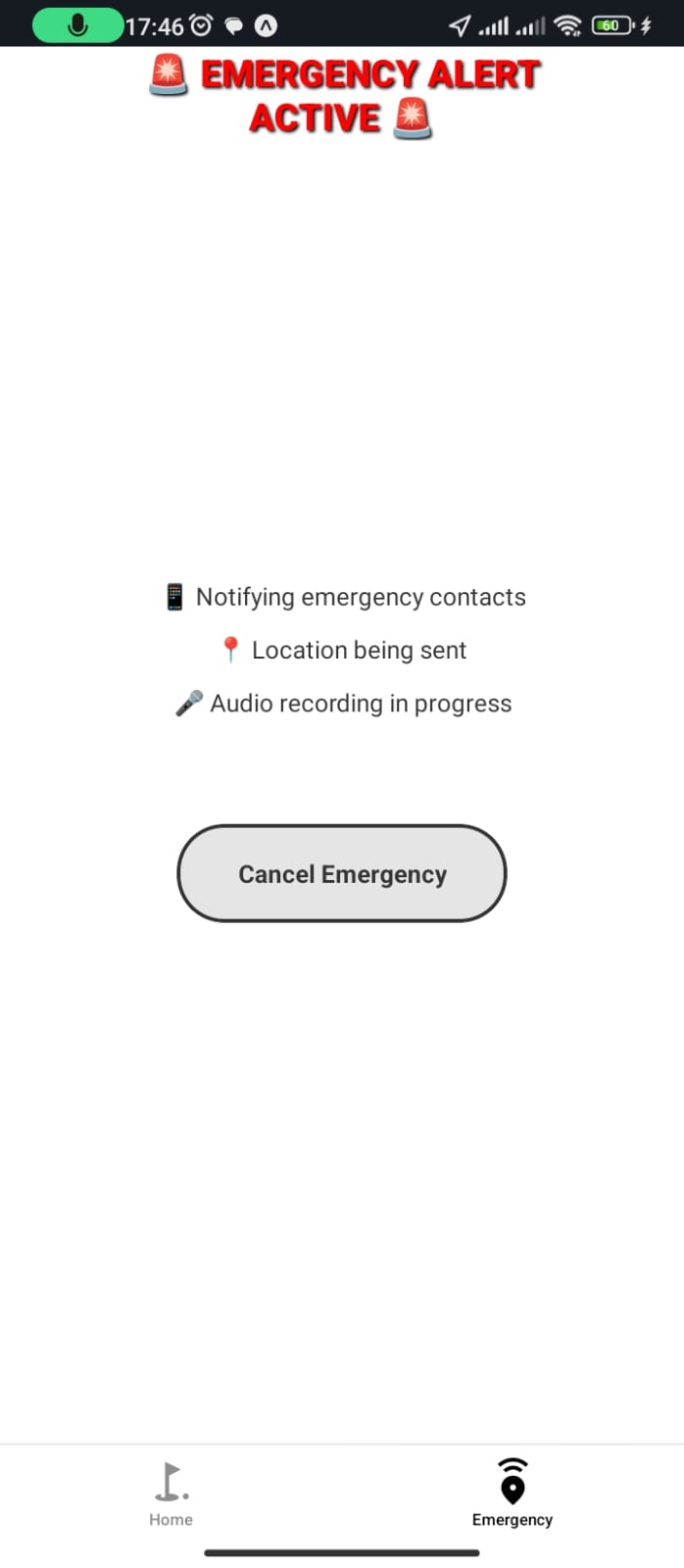
At the core of the system is a real-time emergency alert feature that empowers users to trigger distress signals using either a simple panic button or shake detection. Once activated, the app instantly sends an alert message containing the user’s live location, timestamp, and a 30-second audio recording to registered emergency contacts and nearby authorities via SMS and email. To provide reassurance, the user’s phone vibrates for 10 seconds as a tactile confirmation that the alert has been successfully sent. After the initial alert, the system automatically updates the user’s current location every 5 minutes for the next hour, allowing emergency contacts and responders to continuously track the user’s movement and respond effectively.
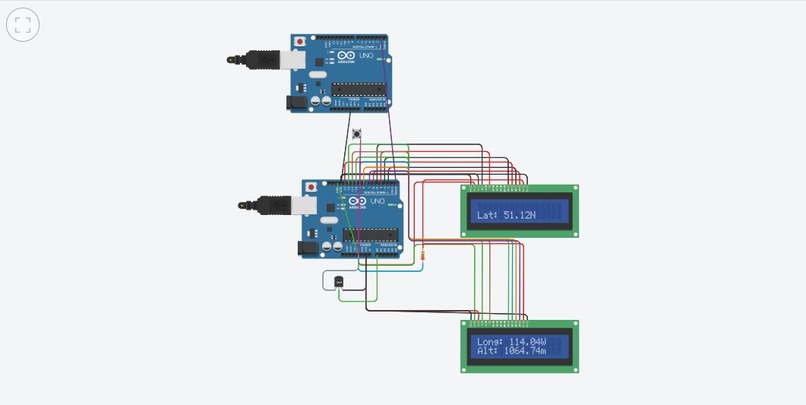
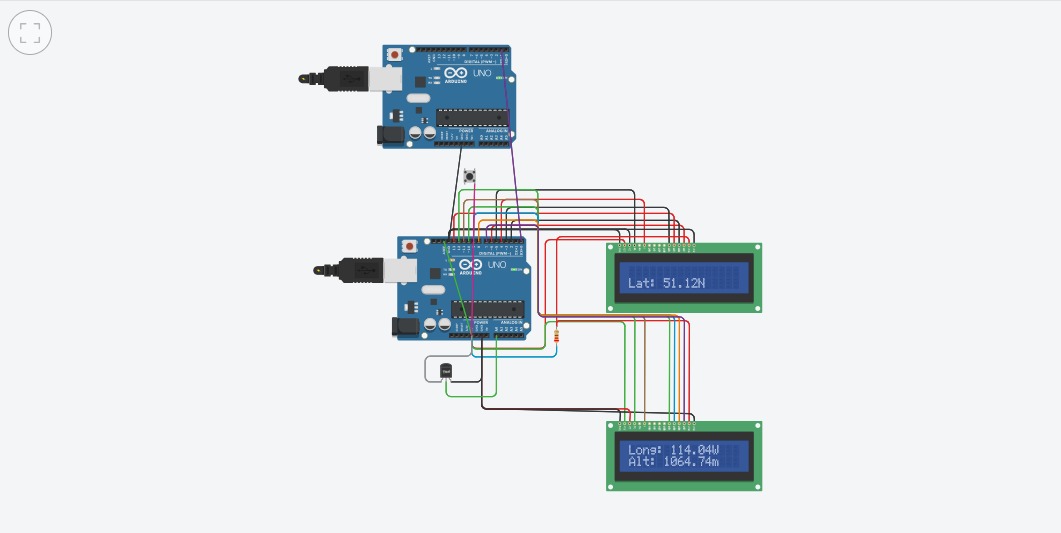
Usalama Wangu seamlessly integrates with a smart bracelet or necklace equipped with a hidden panic button, designed for use when the user’s phone is out of reach. When pressed, the wearable activates the same emergency alert workflow as the mobile app sending a 30-second audio recording, timestamp, and live location to registered emergency contacts and authorities via SMS and email. Just like the app, it continues to transmit the user’s current location every 5 minutes for the next hour, enabling real-time tracking until help arrives. The wearable connects to the app using Bluetooth Low Energy (BLE) or MQTT protocol, ensuring reliable and secure communication even in critical situations.
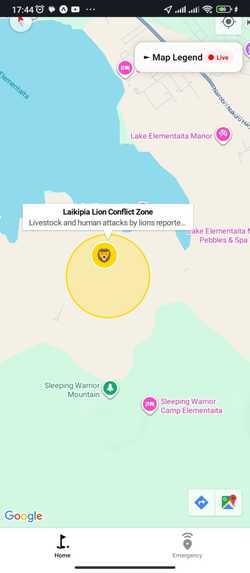
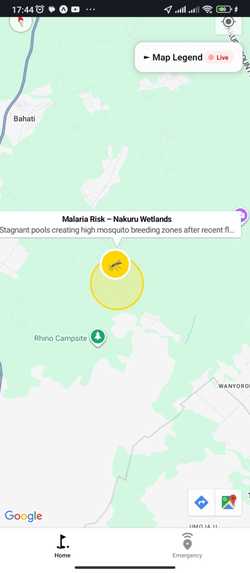
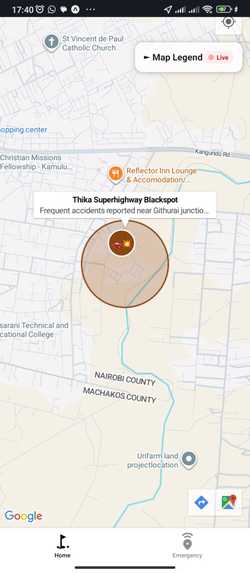
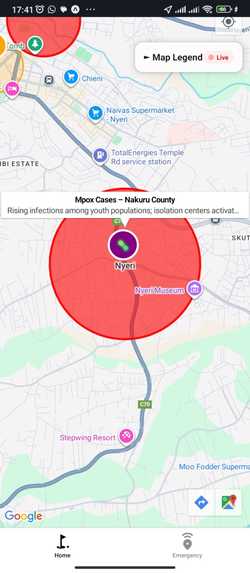
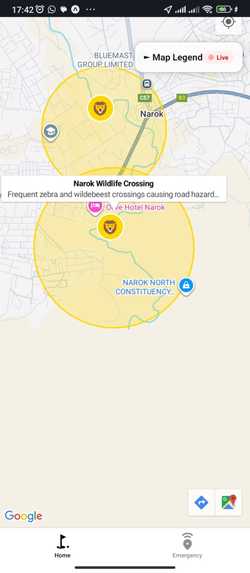
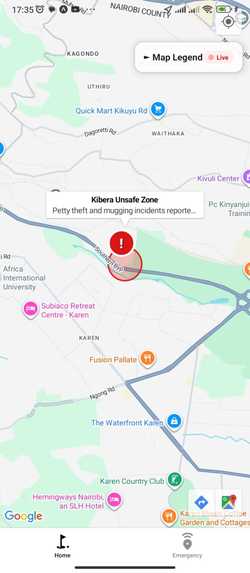
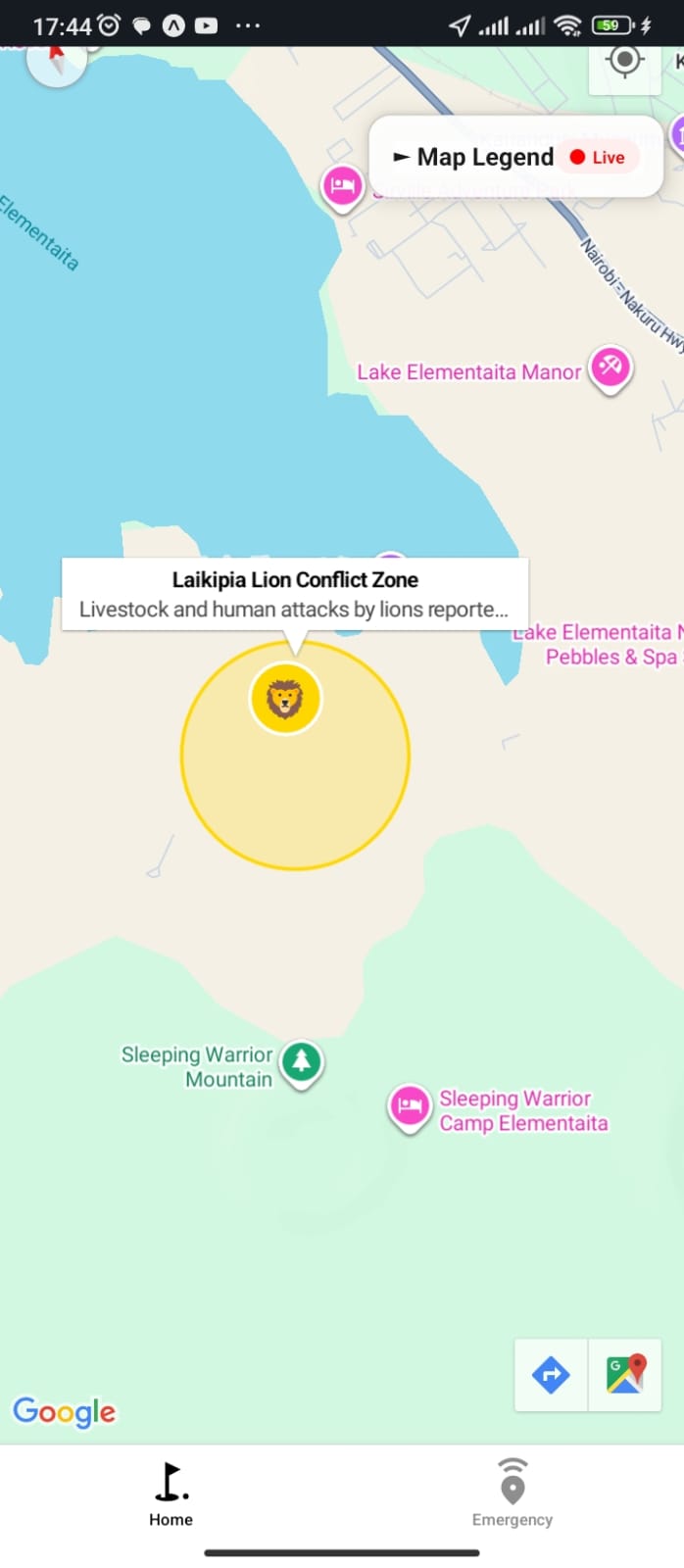
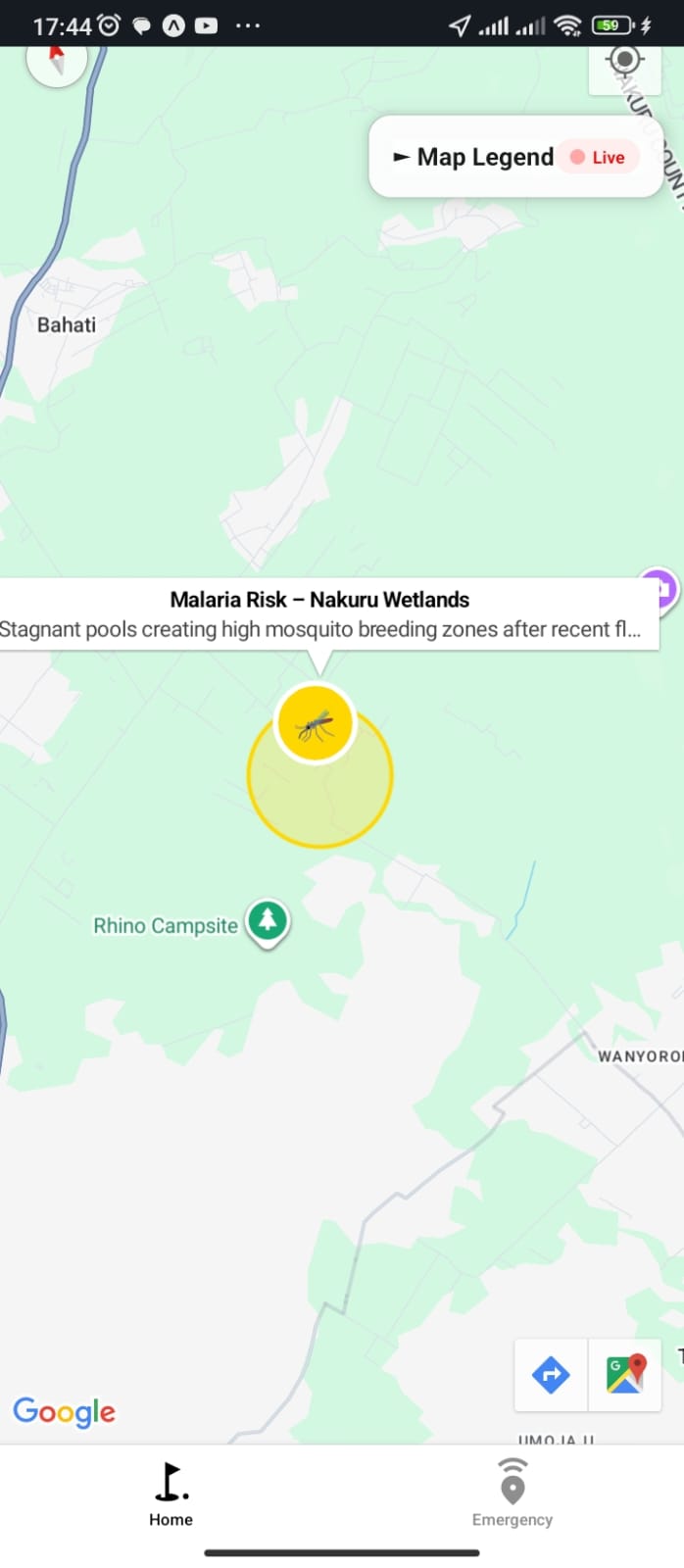
Beyond personal emergencies, Usalama Wangu also acts as a community safety network. It maps and monitors dangerous zones, including crime-prone areas, accident hotspots, and disease outbreak locations such as cholera, malaria, tuberculosis, and mpox. When users approach these zones, they receive instant push notifications and vibrations warning them of potential risk. If they enter the area, the system automatically informs their emergency contacts of their live location enhancing both personal and public safety awareness.
The app also integrates data visualization and analytics, allowing health agencies and safety authorities to track incidents, detect patterns, and make data-driven decisions to prevent future emergencies. Its continuous update mechanism ensures that users receive accurate, location-specific alerts in real-time.
In essence, Usalama Wangu is more than just an app it’s a smart guardian, using technology to save lives. By combining IoT, AI, and geospatial intelligence, it transforms emergency response from a delayed reaction into a proactive, life-saving ecosystem that protects individuals, supports communities, and strengthens national safety infrastructure.


Log in or sign up for Devpost to join the conversation.