-
-
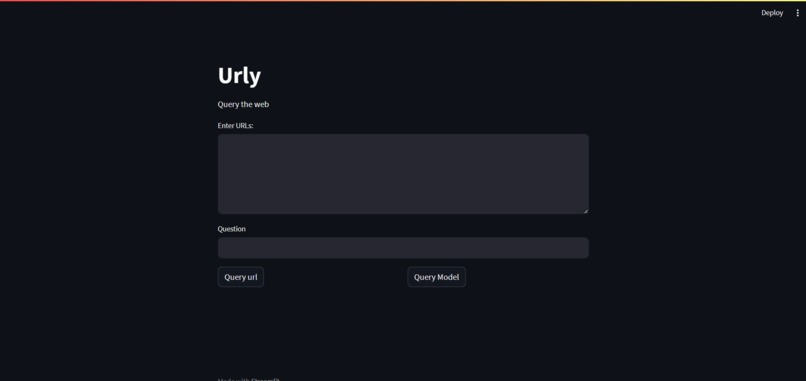
Main
-
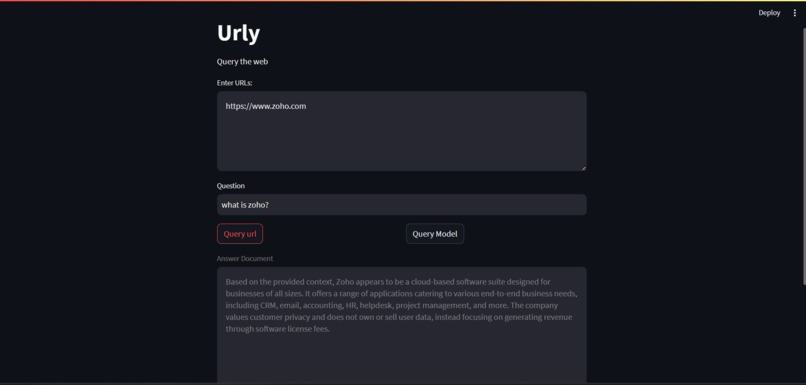
query_url
-
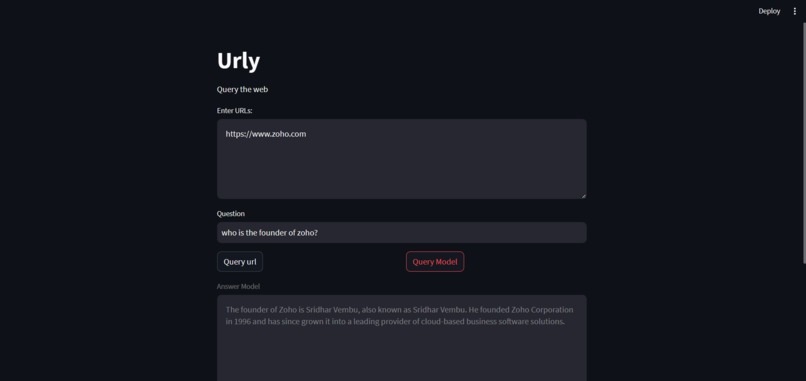
query_model


Inspiration
URLY draws its inspiration from Google Search, a tool integral to modern information retrieval. The idea emerged from contemplating how search functionality could be revolutionized if it were powered by advanced language models (LLMs). Traditional search engines like Google excel at indexing vast amounts of information and retrieving relevant results based on keywords and algorithms. However, integrating LLMs into this process offers a transformative potential.
LLMs, such as those developed by OpenAI, are designed to understand and generate human-like text based on vast datasets. They can comprehend context, interpret nuances, and provide more conversational and contextually appropriate responses. By leveraging the capabilities of LLMs, URLY aims to enhance the search experience, making it more intuitive, interactive, and user-centric.
Imagine a search experience where instead of merely sifting through a list of links, users engage in a dialogue with the search engine. The LLM can understand the intent behind queries, ask clarifying questions, provide concise summaries, and even generate in-depth responses on complex topics. This approach not only saves time but also provides a richer and more tailored search experience, akin to having an expert assistant at your disposal.
URLY aspires to bridge the gap between traditional keyword-based search and the dynamic, conversational abilities of LLMs, thus offering a more seamless, intelligent, and user-friendly way to access and interact with information.
What it does
Automatic Data Retrieval: URLY navigates through URLs to gather relevant information for your queries. Instead of giving you a list of links, it pulls out the key details you need.
Retrieval-Augmented Generation (RAG): Using RAG, URLY combines the best of search engines and language models. It first retrieves relevant documents and then generates clear, context-aware responses from that data.
Contextual Understanding: URLY understands the context and nuances of your questions, allowing it to handle complex queries and provide accurate answers. It can also ask clarifying questions if needed.
Conversational Interaction: You can interact with URLY in natural language, making the search process feel like a conversation. This makes finding information more intuitive and user-friendly.
Challenges we ran into
Data Gaps: Often, the URLs did not contain the specific information needed to answer certain queries. This required our system to identify these gaps and handle them effectively.
Contextual Mismatch: Ensuring the context of the query matched the context of the retrieved information was tricky. Sometimes, the information found in the URLs was related but not directly relevant to the user's specific question.
Generating Accurate Responses: When the information wasn't available, the language model had to avoid generating inaccurate or misleading responses. This involved refining the model to recognize its own limitations and provide useful alternatives or clarifications.
What's next for URLY
URLY has exciting potential for future applications, particularly in the realm of business chatbots. Here’s what we envision:
Business Chatbots: Companies can use URLY to power their chatbots. By simply providing the URLs of their website, businesses can enable their chatbots to answer customer queries based on the information available on their site, eliminating the need for manual data uploads.
Automated Customer Support: With URLY, customer support systems can become more efficient. Chatbots can pull relevant information from a company’s website to provide accurate and immediate responses to customer inquiries, improving customer satisfaction and reducing response times.
Content Updates: As companies update their websites, URLY will automatically adapt, ensuring that the chatbot always has the most current information. This dynamic capability means businesses don’t have to worry about their chatbot falling out of sync with their latest content.
Scalable Solutions: For businesses with extensive or frequently updated content, URLY offers a scalable solution that keeps their automated support systems accurate and up-to-date without the need for constant manual intervention.
Built With
- langchain
- python
- snowflake
- streamlit

Log in or sign up for Devpost to join the conversation.