Inspiration
The internet connects people to opportunities, education, and essential services, but suspicious links can expose users to phishing, scams, and deceptive websites. Many people struggle to recognize warning signs before clicking a link.
We built URL Sentinel to make basic link-safety checks more accessible. Our goal is to help people understand potential URL threats, recognize suspicious patterns, and make more informed decisions before visiting unfamiliar websites.
What it does
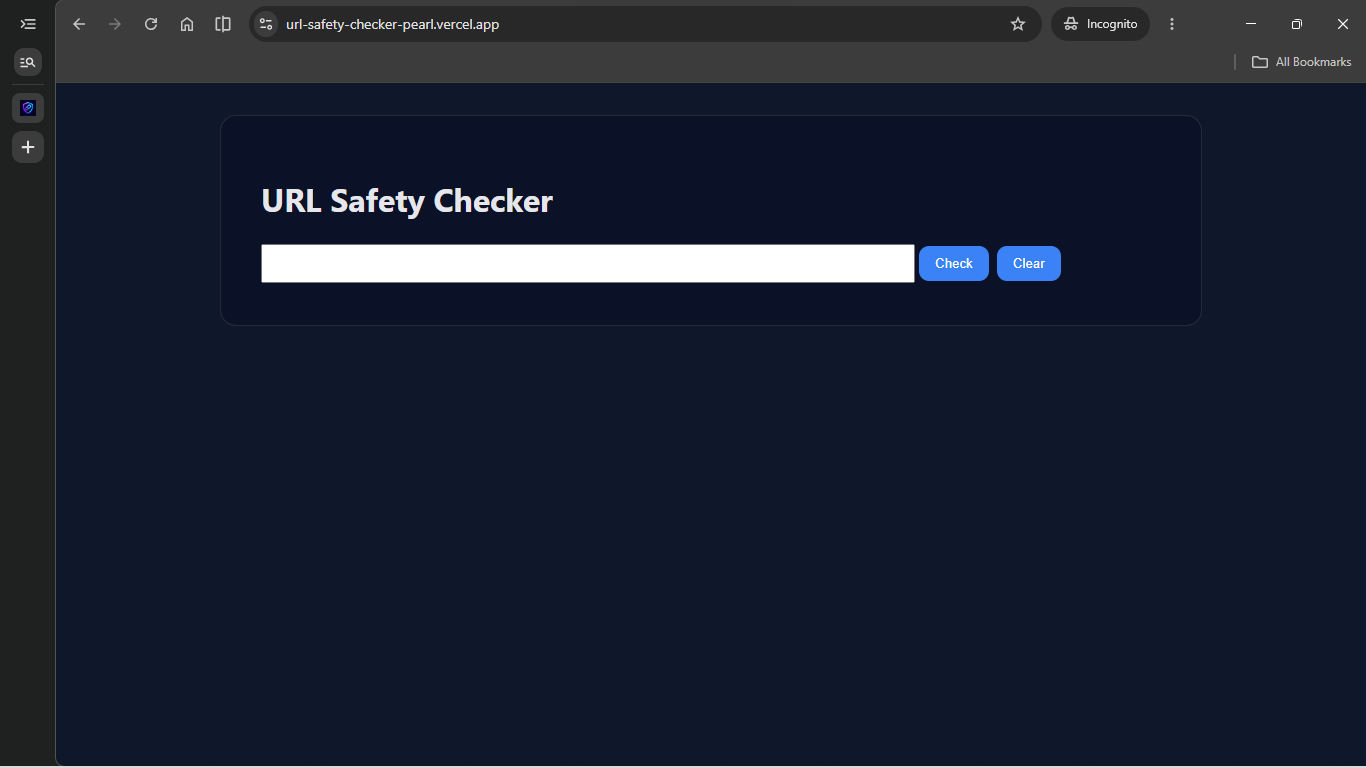
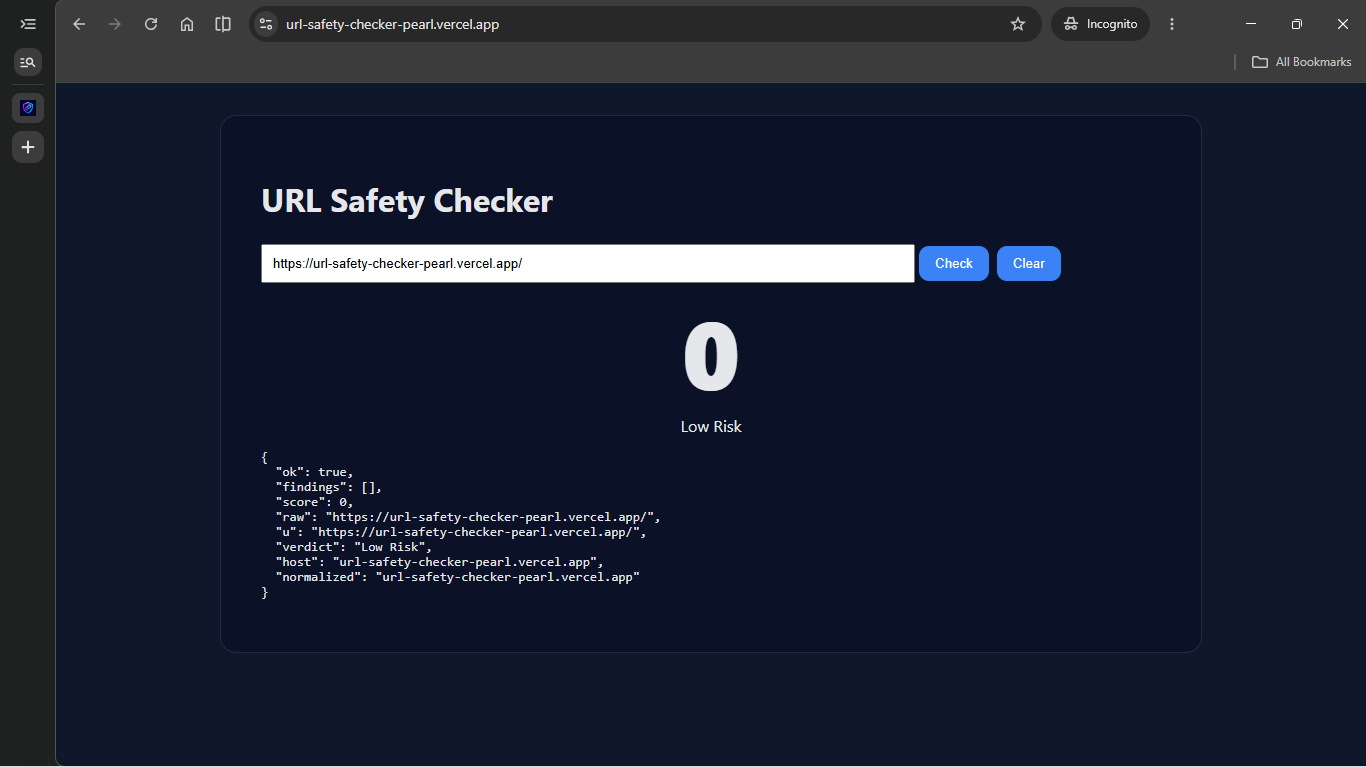
URL Sentinel is a browser-based tool that analyzes URLs and highlights characteristics that may indicate a security risk.
Key features include:
- URL analysis: Examines a submitted link for suspicious characteristics.
- Risk assessment: Presents a risk score or classification based on the implemented detection rules.
- Explainable results: Helps users understand which URL characteristics triggered warnings.
- Privacy-first design: Performs analysis in the browser without requiring users to create an account or provide an AI API key.
- Accessible interface: Makes basic URL checks approachable for users without a cybersecurity background.
URL Sentinel is designed to support safer browsing decisions. Its results are indicators of potential risk, not a guarantee that a URL is safe or malicious.
How we built it
We built URL Sentinel using HTML, CSS, and JavaScript to create a lightweight web application that can run directly in a browser.
JavaScript handles URL parsing and the local detection logic, while HTML and CSS provide the interface for submitting links and understanding analysis results. The project is deployed on Vercel, making the tool accessible through a web browser.
Our approach prioritizes simplicity, transparency, and accessibility. By using local analysis rules instead of requiring a paid external AI service, we keep the application lightweight and usable without an API key.
Challenges we ran into
One of our main challenges was determining how to identify suspicious URL characteristics without incorrectly labeling ordinary links as dangerous.
URL structures can be deceptive. Unusual subdomains, encoded characters, IP-based hosts, and misleading URL formatting can complicate analysis. We needed to consider these patterns while avoiding a system that treats every unusual URL as malicious.
Another challenge was balancing a simple user experience with useful security information. We wanted users to understand why a warning appeared rather than receive an unexplained score.
We also prioritized keeping the application lightweight and minimizing dependencies so that it would remain straightforward to run and maintain.
Accomplishments that we're proud of
We are proud to have developed and deployed a working browser-based cybersecurity project that people can access without installing software.
We focused on making URL analysis approachable, reducing reliance on external services, and communicating potential warning signs in a way that ordinary users can understand.
We are also proud of the project's potential to encourage more thoughtful browsing habits and introduce users to practical cybersecurity concepts.
What we learned
Building URL Sentinel helped us better understand URL parsing, common indicators of suspicious links, and the limitations of rule-based security analysis.
We learned that cybersecurity tools need more than a score: they need understandable explanations, careful handling of uncertain results, and clear communication about what they can and cannot detect.
We also gained experience building and deploying a lightweight web application and making design decisions around privacy, usability, and maintainability.
What's next for URL Sentinel
Our next steps are to strengthen the detection engine, expand our test cases, and improve how the application communicates uncertainty.
We plan to explore additional URL validation rules, improve protection against deceptive domain patterns, and add a safe demonstration mode with clearly labeled example URLs.
Future improvements could include optional threat-intelligence integrations, multilingual explanations, and more comprehensive testing against known benign and malicious URL samples.
Our long-term vision is to make URL Sentinel a more reliable, transparent, and accessible first line of defense that helps people pause, inspect, and think before clicking.
Built With
- css
- cybersecurity
- html
- javascript
- url-parsing
- vercel
- web-security

Log in or sign up for Devpost to join the conversation.