-
-
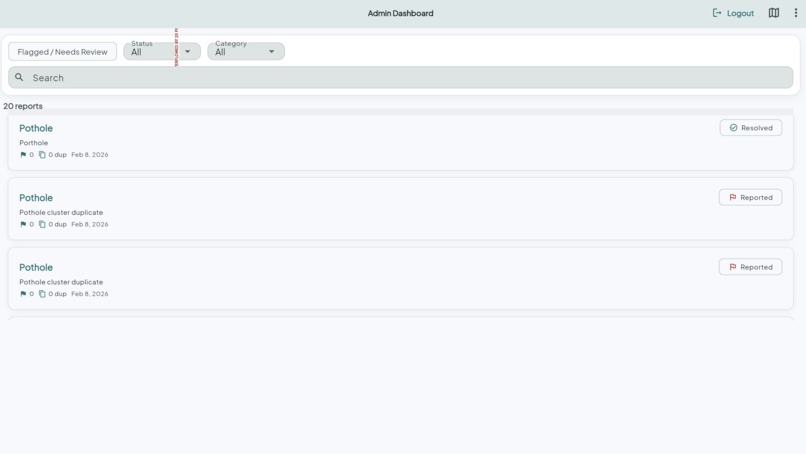
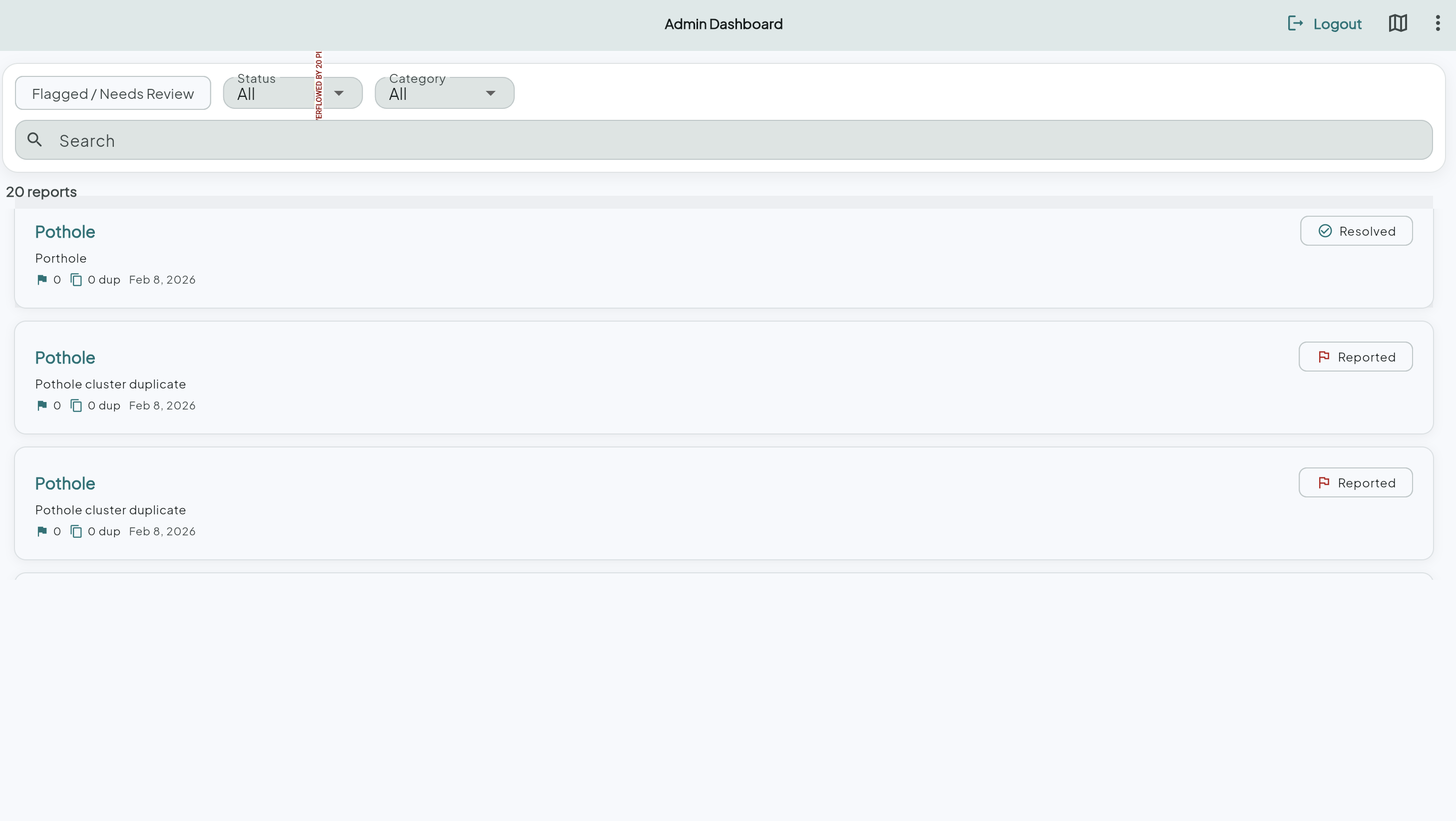
AdminDashboard
-
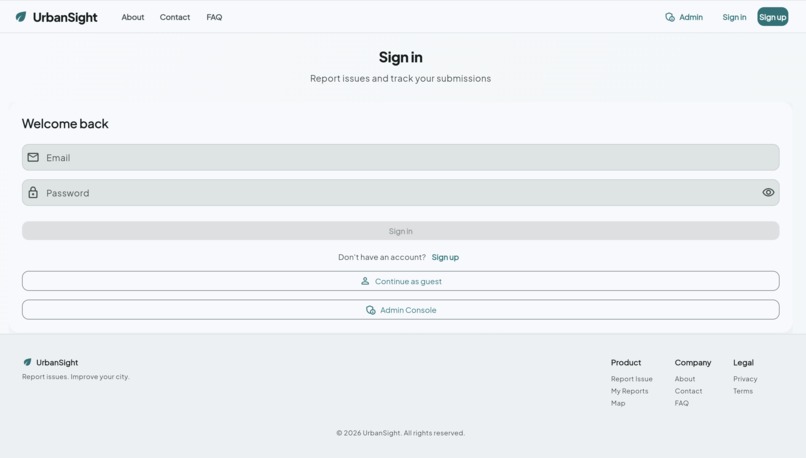
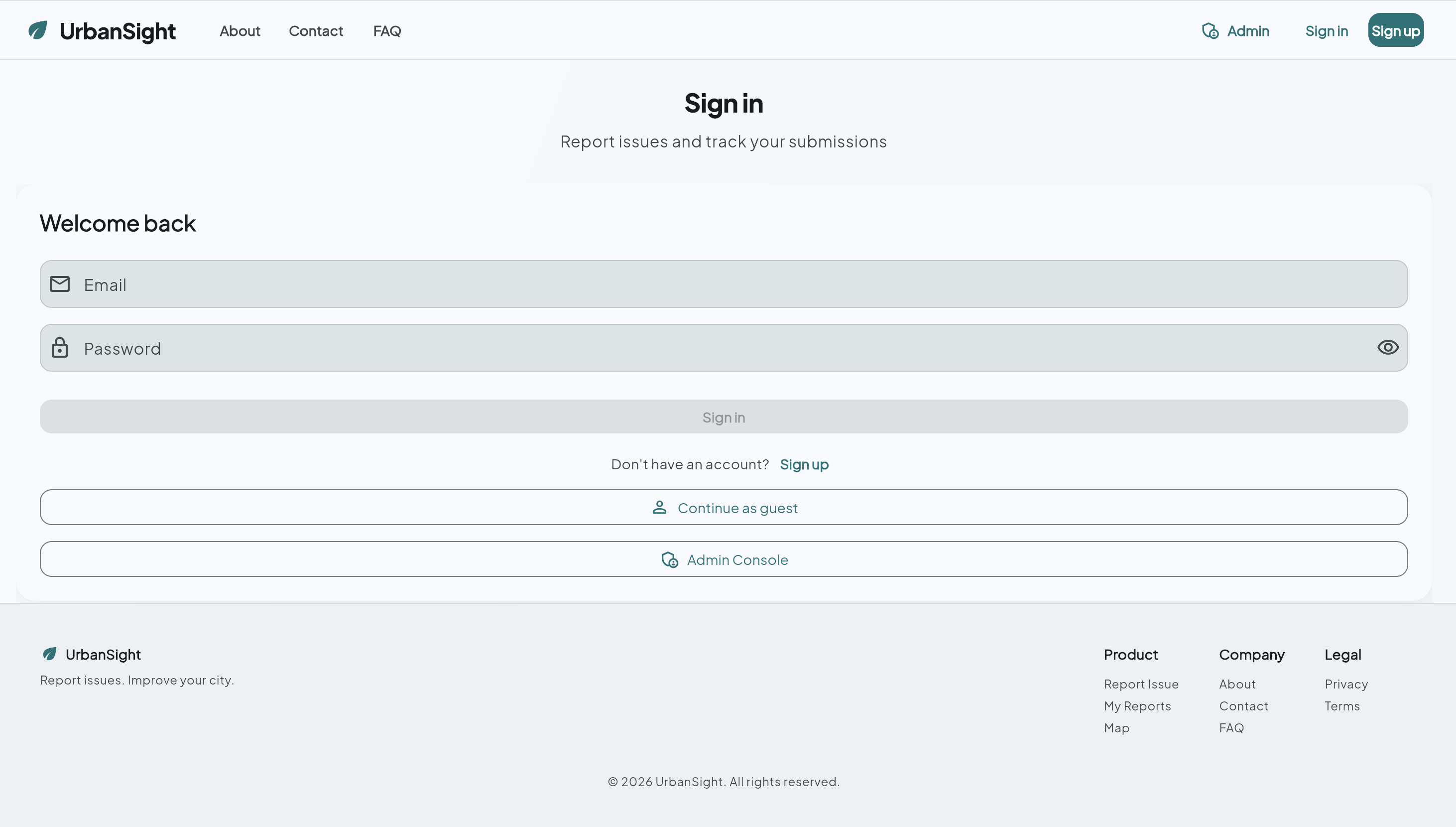
SigninSignupPage
-
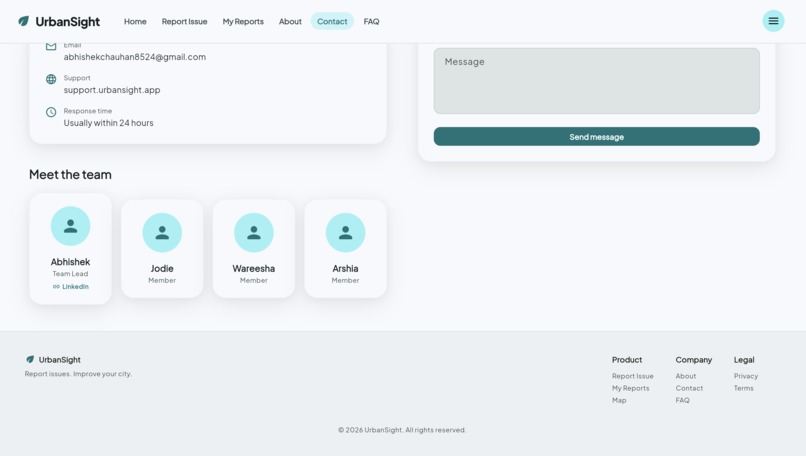
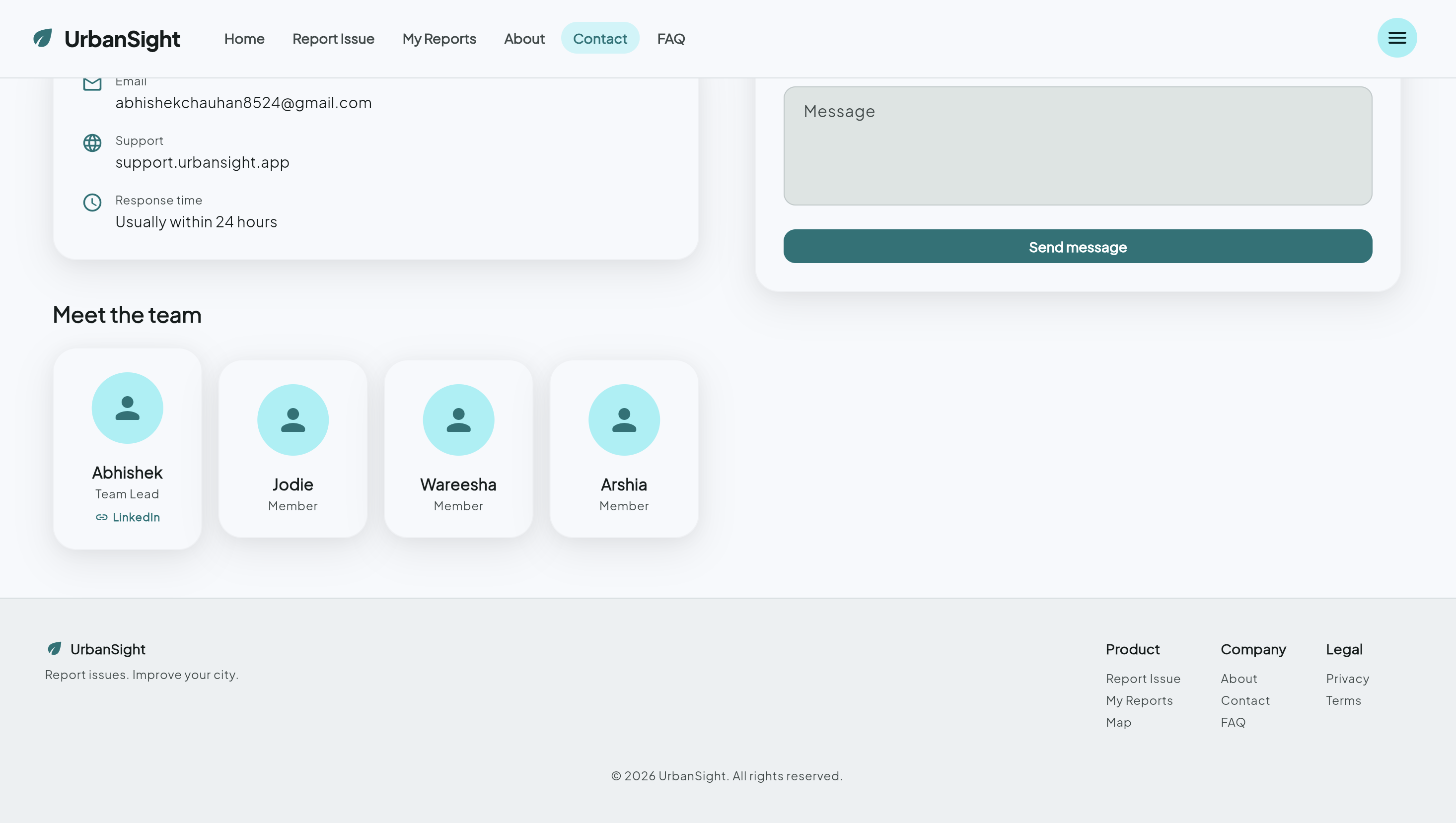
About Team
-
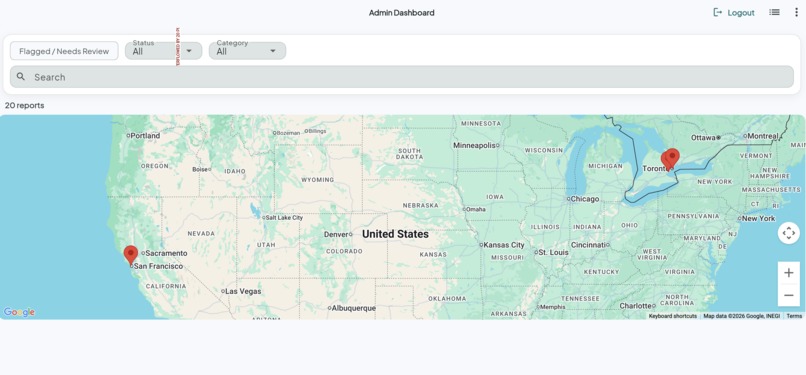
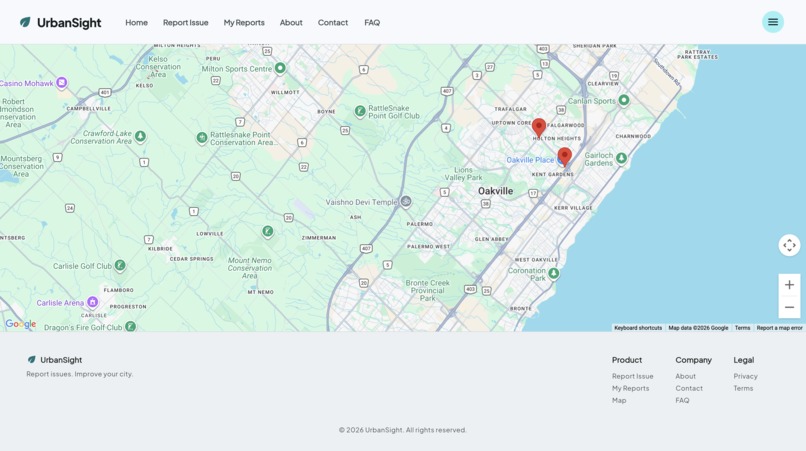
AdminMapView
-
App Interface
Inspiration
Urban infrastructure issues like potholes, broken streetlights, and unsafe public spaces are things citizens notice immediately, yet reporting them is often slow, confusing, and ineffective. Existing systems are fragmented across emails, phone calls, and outdated portals, and citizens rarely receive feedback after submitting a complaint.
We were inspired to build UrbanSight to close this gap between citizens and municipalities. Our goal was to create a single, transparent platform that empowers people to report issues easily while giving cities clear, actionable data to respond faster. This directly supports UN Sustainable Development Goal 11: Sustainable Cities and Communities.
What it does
UrbanSight is a smart city issue reporting platform that enables citizens to report urban infrastructure problems quickly and accurately.
Citizens can:
- Submit issues with photos as proof
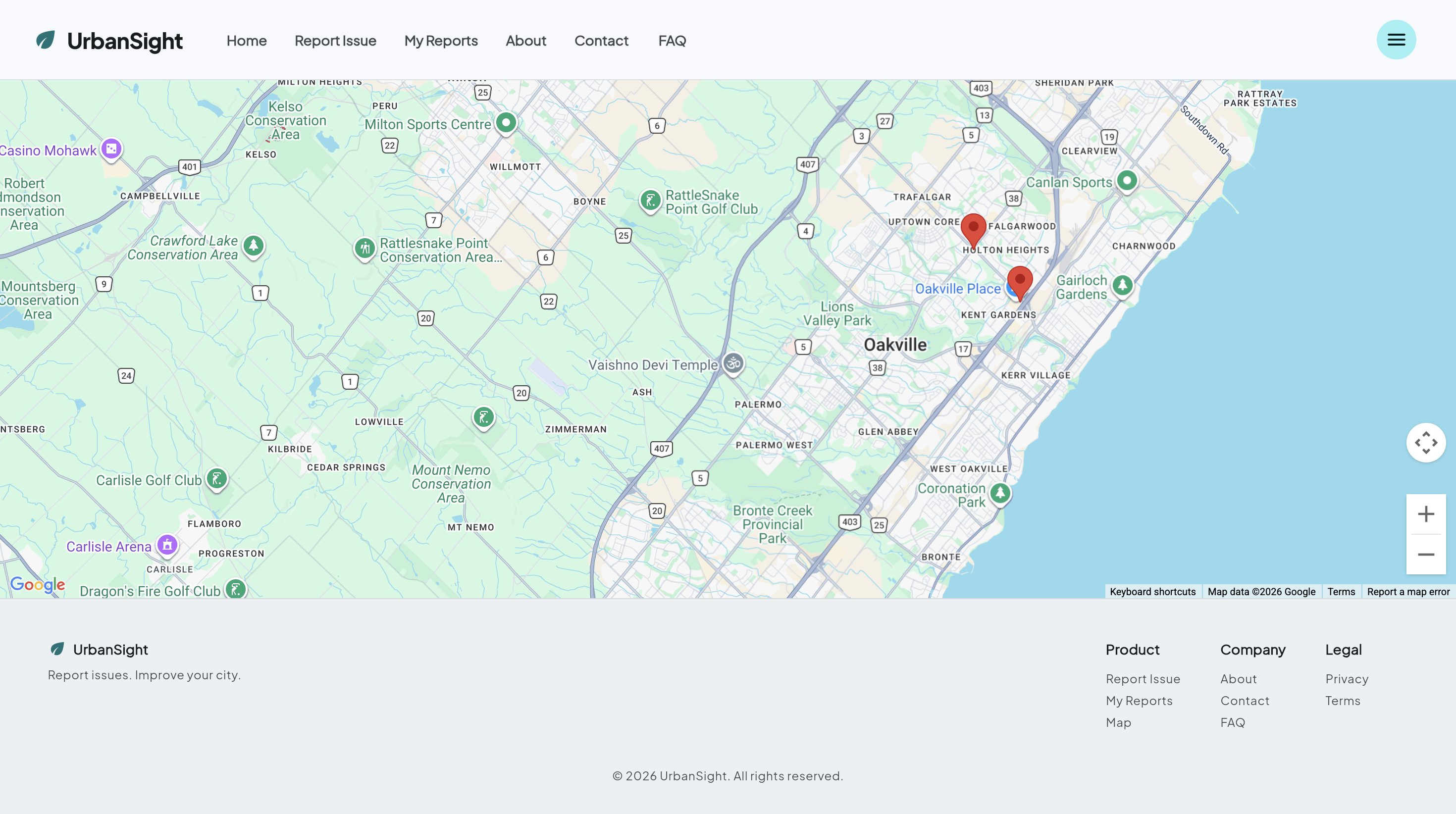
- Pin the exact GPS location on a map
- Select the issue category
- Track real-time status updates
City administrators can:
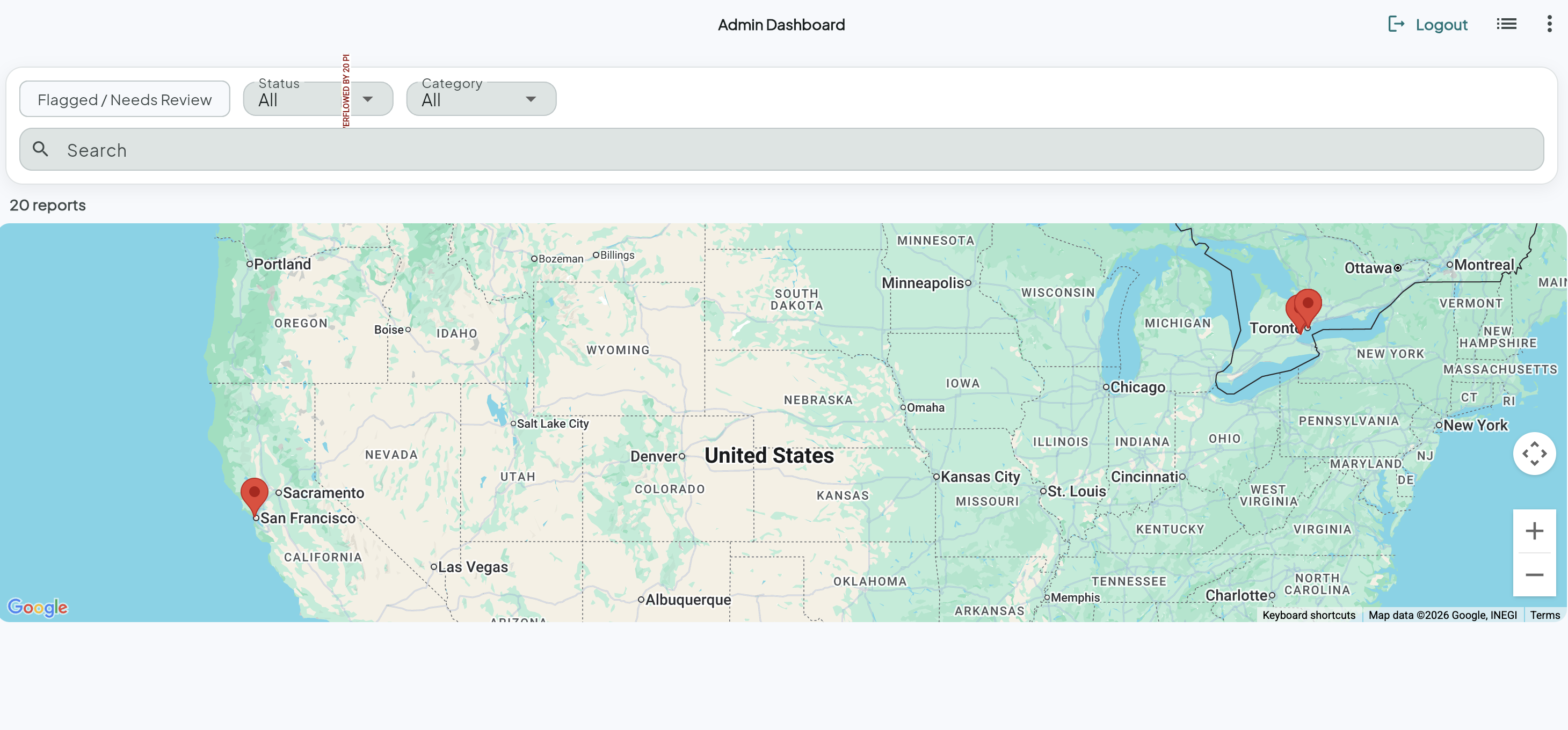
- View all reports on a centralized dashboard
- Filter and prioritize issues by category, location, and urgency
- Assign issues to relevant departments
- Update progress transparently so citizens stay informed
The platform also helps reduce noise by identifying duplicate or irrelevant reports and highlighting high-priority safety concerns.
How we built it
UrbanSight was built as a scalable, cross-platform application using modern cloud technologies:
- Flutter for a unified web and mobile user experience
- Firebase Authentication for secure and anonymous user access
- Cloud Firestore for real-time data storage and updates
- Firebase Storage for handling image uploads
- Google Maps API for precise, location-based reporting
- An AI-ready architecture designed for moderation, categorization, and prioritization
The system is designed to be fast, reliable, and suitable for real-world municipal use.
Challenges we ran into
One major challenge was ensuring compatibility across platforms, especially handling image uploads and previews on both web and mobile. Integrating real-time updates with authentication and cloud storage within a limited hackathon timeframe also required careful planning.
Another challenge was designing moderation logic that balances openness with data quality, ensuring valid reports are prioritized while minimizing spam or irrelevant submissions.
Accomplishments that we're proud of
- Building a fully functional, end-to-end smart city reporting platform
- Successfully integrating real-time maps, photo uploads, and live status tracking
- Creating a system that balances citizen accessibility with municipal data quality
- Designing a solution that aligns closely with real government and smart city needs
What we learned
Through this project, we learned how to design technology for public systems, not just individual users. We gained hands-on experience with cloud-native architectures, real-time databases, and cross-platform development.
Most importantly, we learned how thoughtful design and transparency can build trust between citizens and public institutions.
What's next for UrbanSight
Future enhancements include:
- Advanced AI-based issue classification and severity scoring
- Analytics dashboards for long-term city planning
- Department-level workflows and response-time metrics
- Mobile push notifications for status updates
- Integration with existing municipal systems
UrbanSight has the potential to evolve beyond a hackathon project into a real smart city solution.
Built With
- cloud
- firebase
- firebasestorage
- firestone
- flutter
- google-cloud
- google-maps

Log in or sign up for Devpost to join the conversation.