Inspiration
The idea for this project comes from a really sad event called the Bhopal gas tragedy. It happened in 1984 when a pesticide plant accidentally released poisonous gases into the air. This disaster caused thousands of people to die and left many others with serious health problems. It showed how dangerous gas leaks can be and why it's so important to find ways to stop them from happening. Our Projects gives Real-time monitoring of gas levels, pressure, and temperature. Automatic detection of gas leaks and prompt alerts. Integration with IoT technology for remote monitoring and control. Data analytics for predictive maintenance and optimization. Recognizing that homes are not immune to risks and potential dangers, such as gas leaks, we were motivated to develop a solution that could provide timely warnings to mitigate these threats. The desire to empower individuals with the means to protect their homes and loved ones from harm served as the primary motivation for undertaking this study.
What it does
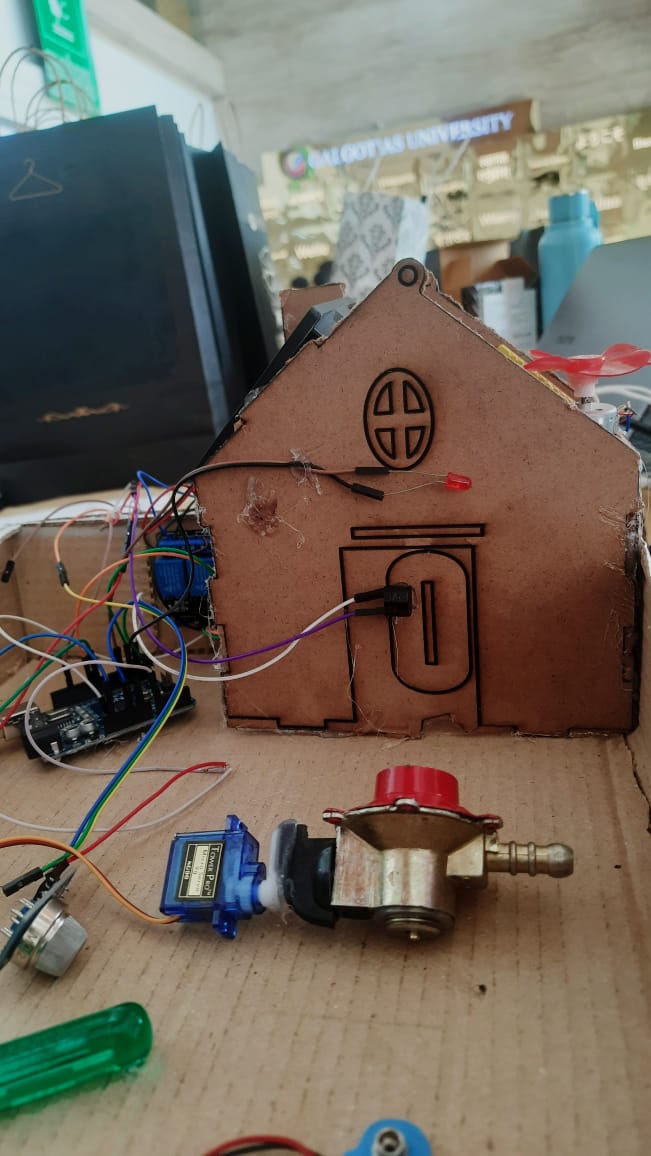
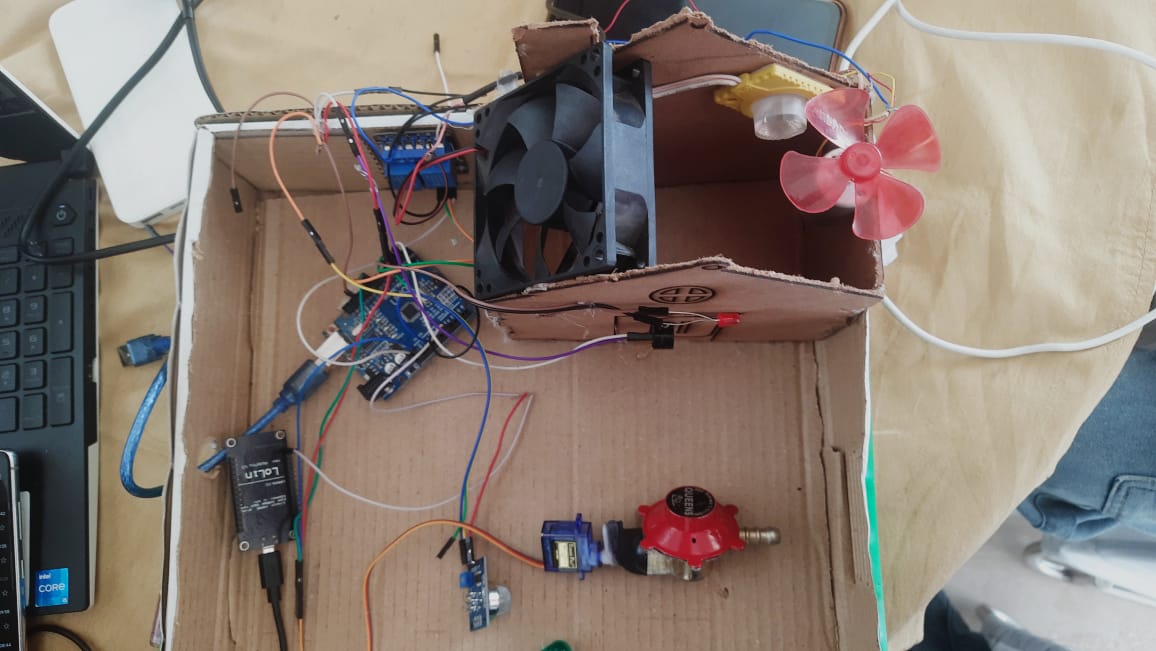
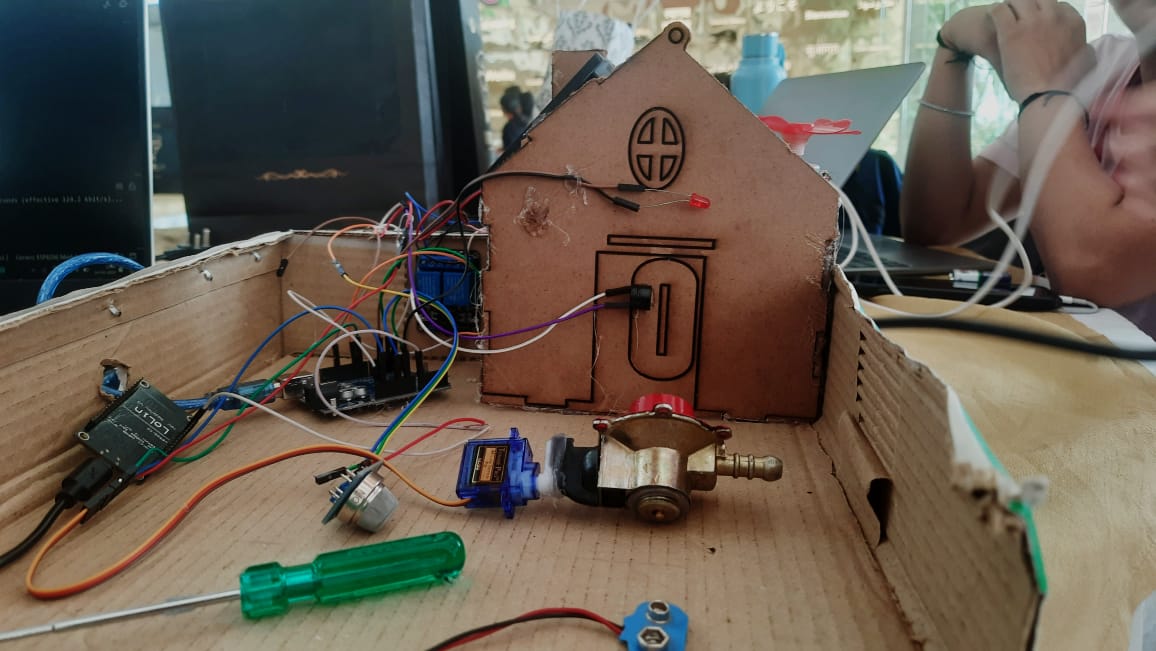
This study focuses on the development of a Gas Leak Detector System that integrates an LPG Sensor Detector, Microcontroller, and SMS Gateway Module. The system aims to provide a low-cost, quick-response, and easy-to-use solution for monitoring gas leaks in homes. It operates by continuously monitoring the parameters of LPG leaks using a gas sensor. The data collected by the sensor is transmitted to a central control unit (microcontroller), which processes the information. If the microcontroller detects the presence of gas, it triggers warning messages and alerts via SMS Gateway and an alarm to notify users of the potential danger. The alarm remains active until the gas sensor detects no further gas leaks in the air. This gas leak detector system contains two features, this includes the SMS Gateway Module. Moreover, his gas leak detector system contains two features, this includes the SMS Gateway feature for only sending warning information regarding the gas leak to user, and the Alarm for the warning alert. There is some improvement which can be applied for the future work, such as regarding the SMS Gateway, it need to enhance with feature such as notifying the user whenever the remaining credit balance is insufficient. Another thing which can be enhanced is regarding the sensor, the sensors in this module do not include somewhat notification for notifying the user whenever the sensor not working properly or not connected to the microcontroller for some cases, therefore, it is recommended to add this kind of features in the future work for better refinement.
How we built it
This background is the major motivation behind this study and the development of the warning information system to help people or residents monitoring. This study is to develop a technology system that integrates the LPG Sensor Detector, Microcontroller, and SMS Gateway Module. Moreover, this study will develop a low cost, quick response, easy to use and implement and low maintenance gas leak prototype. The Gas Leak Detector System was constructed through a series of carefully planned procedures. Firstly, we selected and integrated a reliable gas sensor capable of detecting LPG leaks effectively. The sensor's output parameters were then transmitted to a central microcontroller unit for processing and analysis. Upon detecting the presence of gas, the microcontroller triggered the SMS Gateway and alarm system to notify users promptly. The system was designed to be low-cost, user-friendly, and easy to implement, requiring minimal maintenance for long-term use.
Use Cases
- Home Appliances: Gas leaks in stoves, ovens, water heaters, and furnaces due to faulty connections or damaged pipes.
- Industrial Settings: Equipment malfunction or pipeline damage in industries using methane, propane, or hydrogen.
- Transportation: Leaks in vehicles powered by natural gas or propane caused by damaged fuel lines or faulty valves.
- Natural Gas Pipelines: Corrosion or excavation damage in underground pipelines leading to hazardous leaks.
- Chemical Plants: Equipment failure or human error in facilities handling hazardous gases.
LPG Tanks: Leaks in residential or commercial LPG storage tanks due to overfilling or corrosion
Challenges we ran into
During the development process, we encountered various challenges that required creative solutions. Ensuring the accuracy and reliability of the gas sensor readings was a primary concern, as fluctuations in environmental conditions could affect its performance. Additionally, integrating the hardware components and establishing seamless communication between them posed technical hurdles that needed to be overcome. Through collaboration and experimentation, we were able to address these challenges and refine the system to achieve optimal performance and reliability.
Accomplishments that we're proud of
Despite the challenges faced, we're proud to have successfully developed a Gas Leak Detector System that addresses the critical need for home safety. Our system provides users with a reliable means of monitoring gas leaks in their homes, enabling them to take prompt action to mitigate potential risks and dangers. We're especially proud of the system's low-cost, quick-response, and user-friendly design, making it accessible to a wide range of users. Additionally, we're proud of the collaborative effort and innovative solutions that went into building this system.
What we learned
Developing the Gas Leak Detector System provided valuable insights into the complexities of ensuring home safety. We learned about the importance of accurate sensor readings, effective communication between hardware components, and the significance of user-friendly design in ensuring system usability. Additionally, we gained a deeper understanding of the technical and practical considerations involved in developing low-cost, quick-response solutions for real-world applications.
What's next for Gas Leakage Detection
Looking ahead, there are several avenues for further development and improvement of the Gas Leak Detector System. One potential area of focus is the integration of additional sensors to detect other types of gas leaks, such as carbon monoxide. Additionally, we aim to enhance the system's connectivity by exploring options for wireless communication and remote monitoring capabilities.
Expanding to Different Applications: We plan to adapt this gas leak detection system for various uses, not just in homes but also in other places like factories or even in self-driving cars. By making it versatile, we can help more people and prevent accidents in different situations.
Developing Smart LPG System: Our goal is to create a smarter and more efficient system for detecting gas leaks using LPG (liquefied petroleum gas). This new system will be affordable, faster, and more accurate than existing ones, making it a better option for keeping people safe from gas leaks.
Integration with Local Areas: We're working on making our system usable even in areas where there's no Wi-Fi available. By integrating it with local networks or using other communication methods, we can ensure that everyone, regardless of their location, can benefit from our gas leak detection technology.
Improving Efficiency: Overall, our aim is to make our system more efficient and effective in preventing accidents caused by gas leaks. By focusing on these broader aspects, we can create a solution that helps protect more people and property from the dangers of gas leaks.
Built With
- adapter
- algorithms
- analysis
- arduino
- buzzer
- data
- iot
- led
- microcontroller
- powerbank
- register
- regulator
- relay
- sensor


Log in or sign up for Devpost to join the conversation.