nspiration 💡
Cities generate enormous amounts of data, but that information is often fragmented across weather, air quality, geospatial, demographic, and historical sources. Government departments need more than dashboards—they need intelligence that helps them understand where a problem is emerging, why the risk is increasing, and where action should be prioritized.
This inspired us to build UrbanIQ* around one question:
What if cities could identify emerging problems before they become crises?
Our goal is to help Lahore move from reactive response toward proactive, data-driven decision-making.
What it does 🏙️
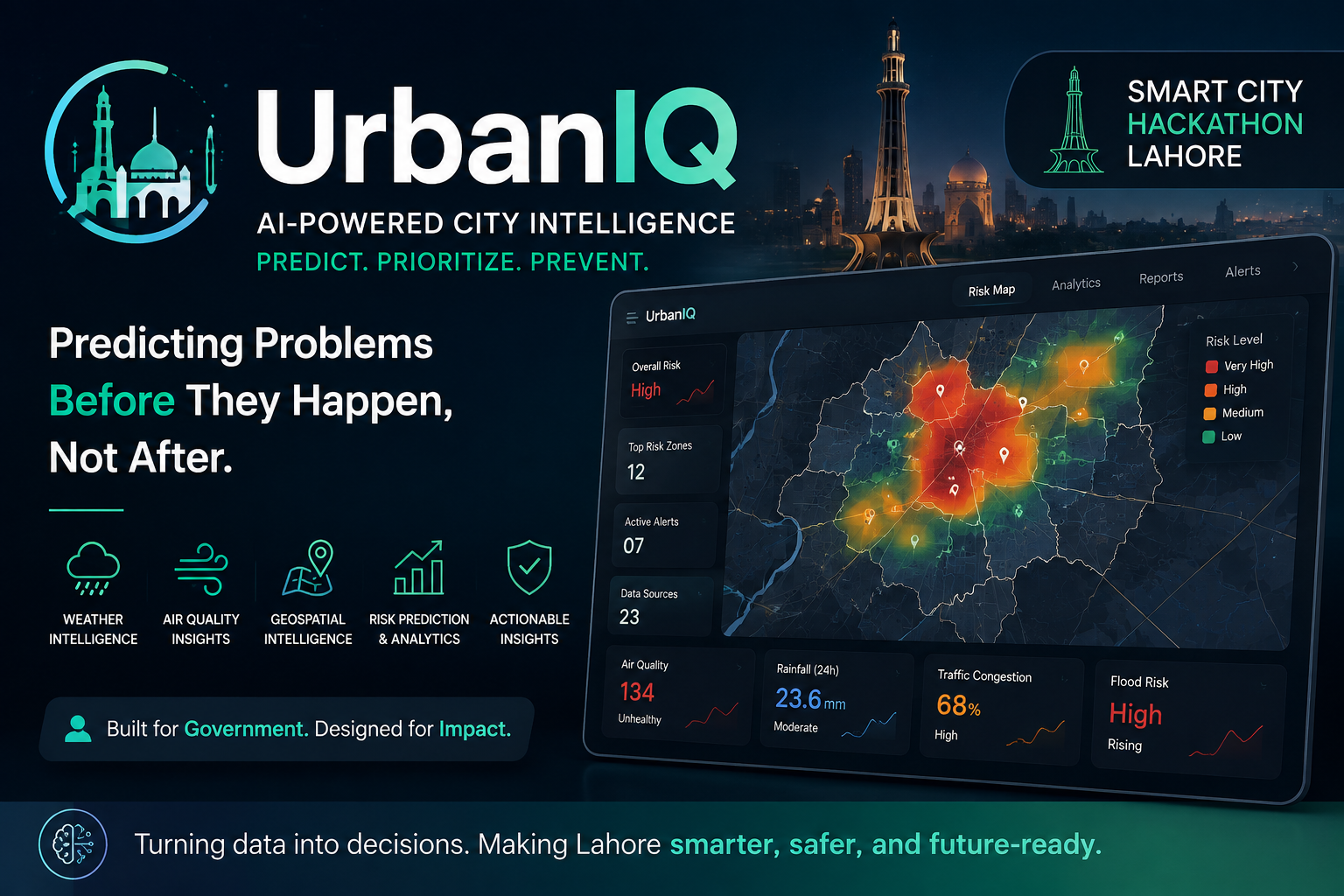
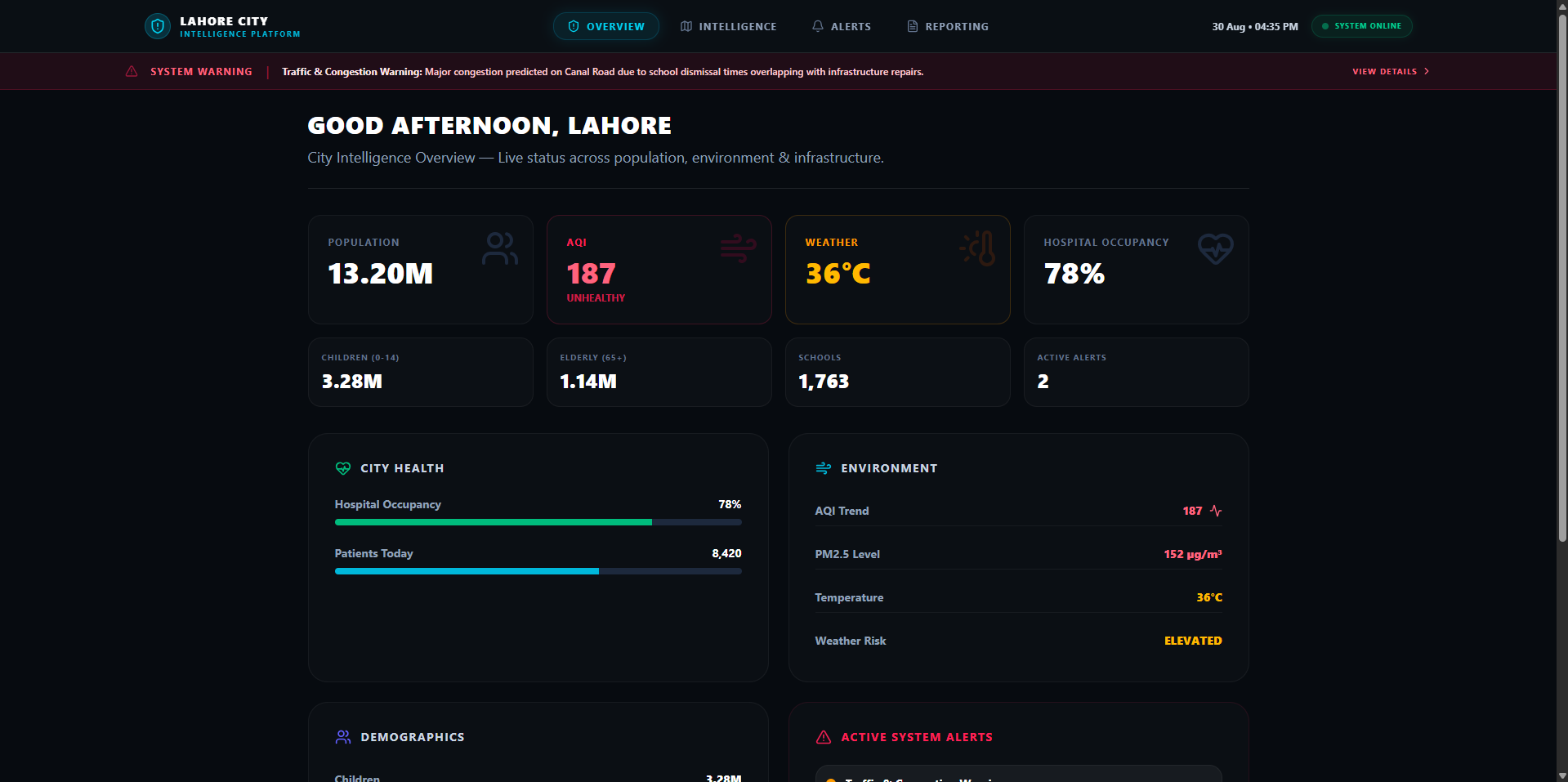
UrbanIQ is an AI-powered City Intelligence and decision-support platform for Lahore.
It combines multiple urban data sources into a unified, map-first interface that provides:
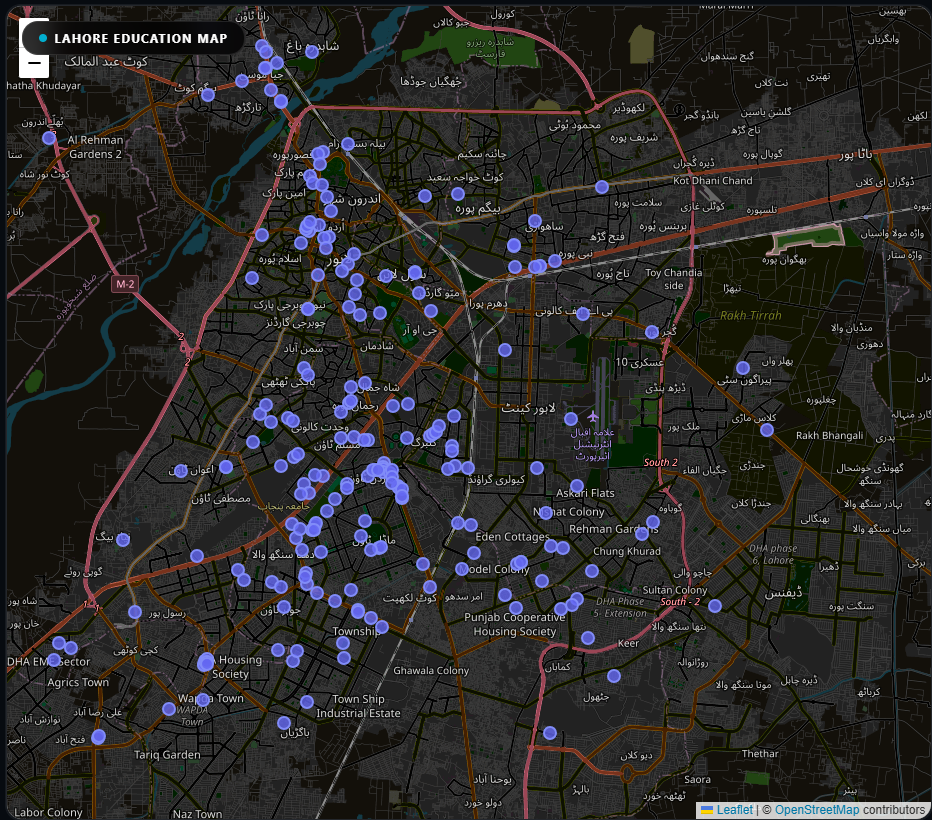
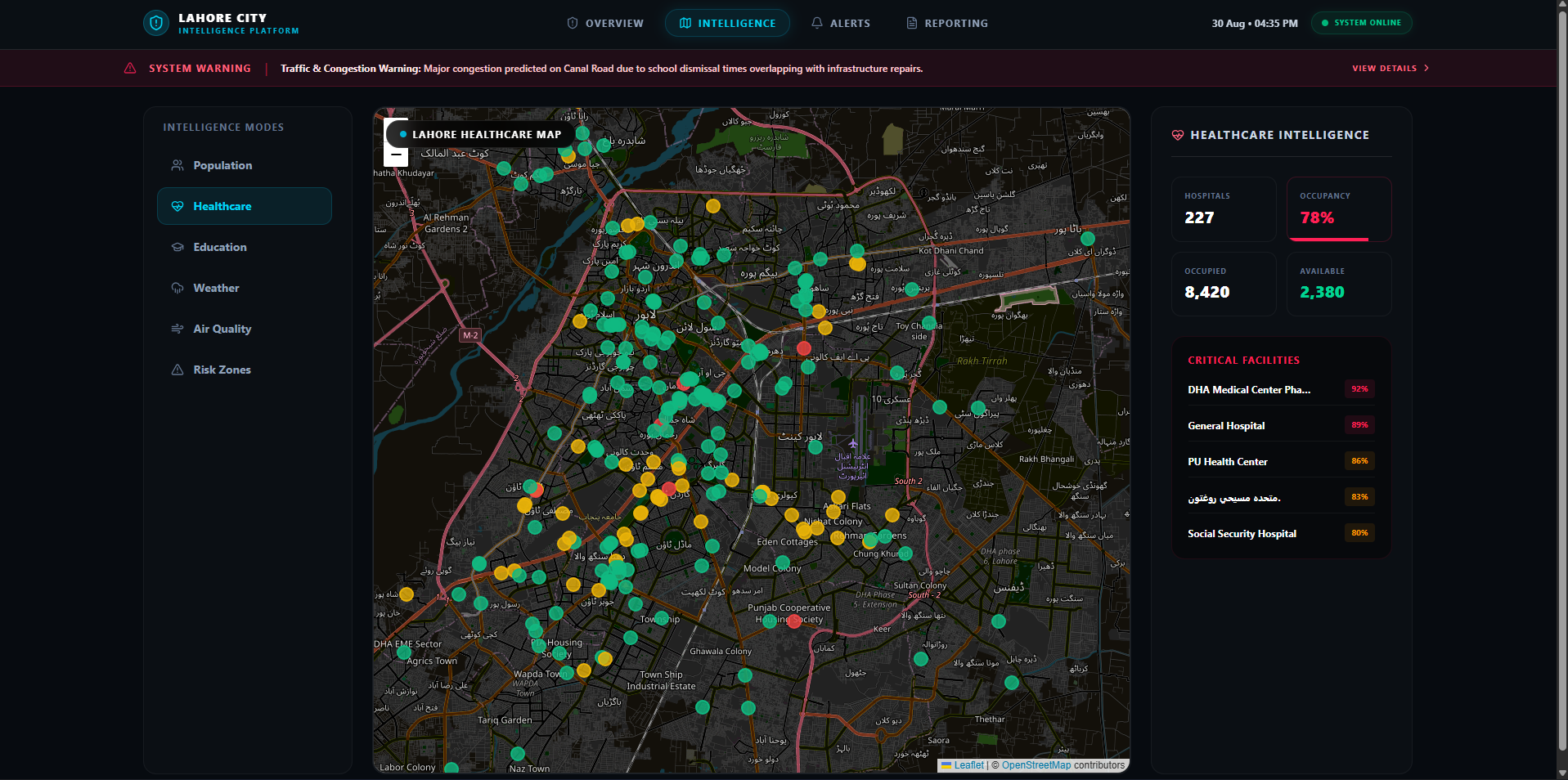
🗺️ City-wide risk mapping 🌦️ Weather intelligence 🌫️ Air-quality intelligence 📍 Geospatial context, including roads, hospitals, and schools 📊 Risk scoring and prediction where suitable historical data exists ⚠️ Prioritized high-risk areas and alerts 🔍 Data-source health and provenance 🤖 AI-generated explanations of structured risk results 🧑🤝🧑 Optional citizen reports
Instead of simply showing what is happening now, UrbanIQ is designed to identify where risk is developing, what factors are contributing to it, and which areas require attention first.
How I built it ⚙️
We built UrbanIQ using a layered architecture:
Next.js and Tailwind CSS for the web dashboard FastAPI for the backend API and business logic PostgreSQL + PostGIS** for spatial and time-based data Python, Pandas, and scikit-learn** for data processing and machine learning Leaflet/MapLibre** for interactive mapping External sources including weather, air-quality, OpenStreetMap, statistical, and other open datasets
Our data pipeline collects external data, validates it, normalizes it into a common schema, connects records to Lahore zones or a defined grid, generates predictive features, and produces risk indicators or ML forecasts where appropriate.
The dashboard then presents these results through an interactive risk map, evidence, trends, contributing factors, and decision priorities.
We also designed the architecture with caching, source-health monitoring, and degraded-mode support so the core demonstration does not depend entirely on live external APIs.
Challenges I ran into 🚧
One of our biggest challenges was data fragmentation. Different providers use different formats, timestamps, coordinates, units, and data structures. We had to normalize these sources while maintaining provenance and traceability.
Another major challenge was limited historical labelled data. A prediction is only meaningful when there is a measurable target and appropriate historical data for validation. Instead of overclaiming AI capabilities, we designed UrbanIQ to use a transparent prototype risk index when validated ML data is unavailable.
We also had to account for API outages, rate limits, inconsistent providers, map performance, satellite-processing delays, and potential AI hallucinations. Our architecture addresses these through caching, validation, source-health monitoring, spatial aggregation, and bounded AI prompts.
Accomplishments that I'm proud of 🏆
We are proud that UrbanIQ goes beyond being a conventional visualization dashboard.
We created an architecture capable of bringing multiple urban data sources into a common spatial-temporal intelligence layer, while keeping data provenance and prediction limitations explicit.
We are particularly proud of:
Building a map-first city intelligence experience Designing a transparent risk-scoring approach Separating evidence, prediction, and AI explanation Creating a government-focused decision-support workflow Designing the system to support future official feeds and IoT data Building the architecture with scalability beyond a single hackathon demo in mind
Most importantly, we focused on making predictions defensible rather than simply impressive.
What I learned 📚
Our biggest lesson was that AI prediction must be backed by evidence.
We learned that having an ML model is not enough. A credible prediction requires a measurable target, suitable historical examples, proper validation, and protection against data leakage.
We also learned that generative AI should not replace the underlying intelligence pipeline. In UrbanIQ, the LLM is designed to explain structured results rather than invent numerical predictions.
This project also taught us how challenging—and valuable—it is to transform fragmented real-world data into something that can actually support operational decisions.
What's next for UrbanIQ 🚀
UrbanIQ is designed to evolve beyond Lahore and beyond the hackathon.
Our long-term vision is to create a scalable City Intelligence layer for Punjab that continuously ingests data, detects anomalies, forecasts risks, explains why risks are increasing, and helps government departments prioritize interventions.
Our next steps include:
Integrating official government feeds and historical incidents Adding IoT and sensor data Expanding satellite and environmental intelligence Introducing automated alerting Supporting multi-department workflows Expanding from Lahore to other cities
UrbanIQ — Predict problems before they happen, not after.

Log in or sign up for Devpost to join the conversation.