Inspiration
Living in a cramped city apartment, I’d always dreamed of growing fresh herbs and veggies – but my tiny windowsill and zero gardening experience made it feel impossible. I noticed friends and neighbors faced the same struggle: urban spaces limit growing potential, and beginner-friendly guidance was hard to find. That’s when I realized: urban gardeners need a tool tailored to small spaces, busy lives, and real-world climate realities. I wanted to make homegrown produce accessible to everyone, no yard required.
What it does
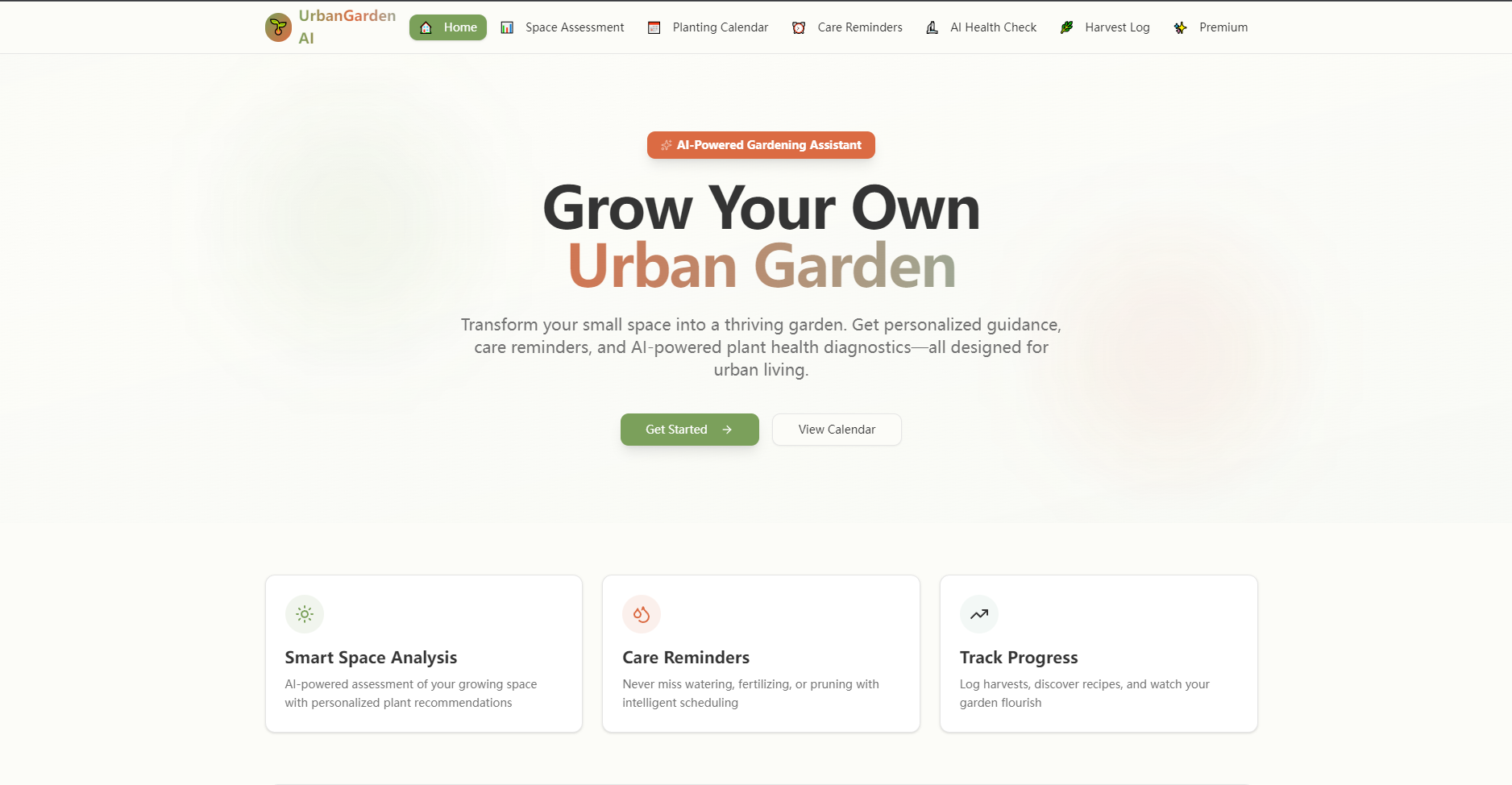
UrbanGarden AI empowers urban gardeners to thrive in small spaces (balconies, windowsills, patios). It assesses your growing space (sunlight, capacity, climate), delivers seasonal planting calendars, sends timed care reminders (watering, pruning), diagnoses plant health via photos, tracks harvests, and suggests recipes using your homegrown produce. A premium tier unlocks ad-free access and advanced AI insights.
How we built it
We started with user research to map core pain points (space limitations, forgetful care, plant health worries). We designed a mobile-first UI focused on simplicity (1-2 taps for key actions), integrated geolocation to align with regional climate zones, built AI models for plant health analysis, and set up a Stripe integration for premium subscriptions. We prioritized real-world utility – every feature ties back to solving urban gardening’s unique challenges.
Challenges we ran into
Calibrating space assessment to match diverse European/US climate zones was tricky – we had to balance regional standards (USDA vs European) without overcomplicating the user experience. Ensuring AI health diagnosis was accurate for common urban plants (herbs, cherry tomatoes) required iterating on image recognition models. We also struggled to design reminder logic that was helpful, not overwhelming – too many notifications risked user burnout.
Accomplishments that we're proud of
We created a tool that’s truly user-centric: every feature solves a specific pain point urban gardeners face. The space assessment tool delivers actionable insights (e.g., “2ft windowsill fits 4 herb pots”) instead of generic advice, and the recipe recommendations turn harvests into tangible meals – making gardening feel rewarding. We also built a sustainable monetization model that keeps basic features free (ad-supported) while offering premium value for power users.
What we learned
Building for real-world users means prioritizing simplicity over complexity. We learned to validate every feature with target users (25-45yo urban dwellers) – early feedback scrapped “fancy” tools that didn’t solve core problems. We also gained hands-on experience with AI image analysis and geolocation integration, and how to balance technical functionality with intuitive UX. Most importantly: urban gardening is about joy, not perfection – the app had to reflect that.
What's next for this project
Next, we’ll integrate real-time weather data to refine planting calendars and care reminders, expand our plant database to include more urban-friendly varieties, and add affiliate links for sustainable planters/seeds (creating passive revenue while supporting gardeners). We also plan to test localized recipe collections (e.g., Mediterranean herbs for Southern Europe, Midwest veggies for US heartland) and refine AI diagnostics with more plant health data. Finally, we’re exploring a community feature for urban gardeners to share tips – because growing together makes it better.

Log in or sign up for Devpost to join the conversation.