-
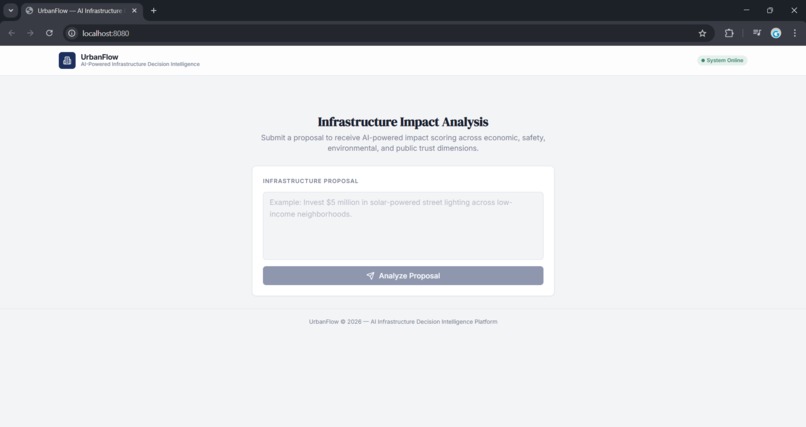
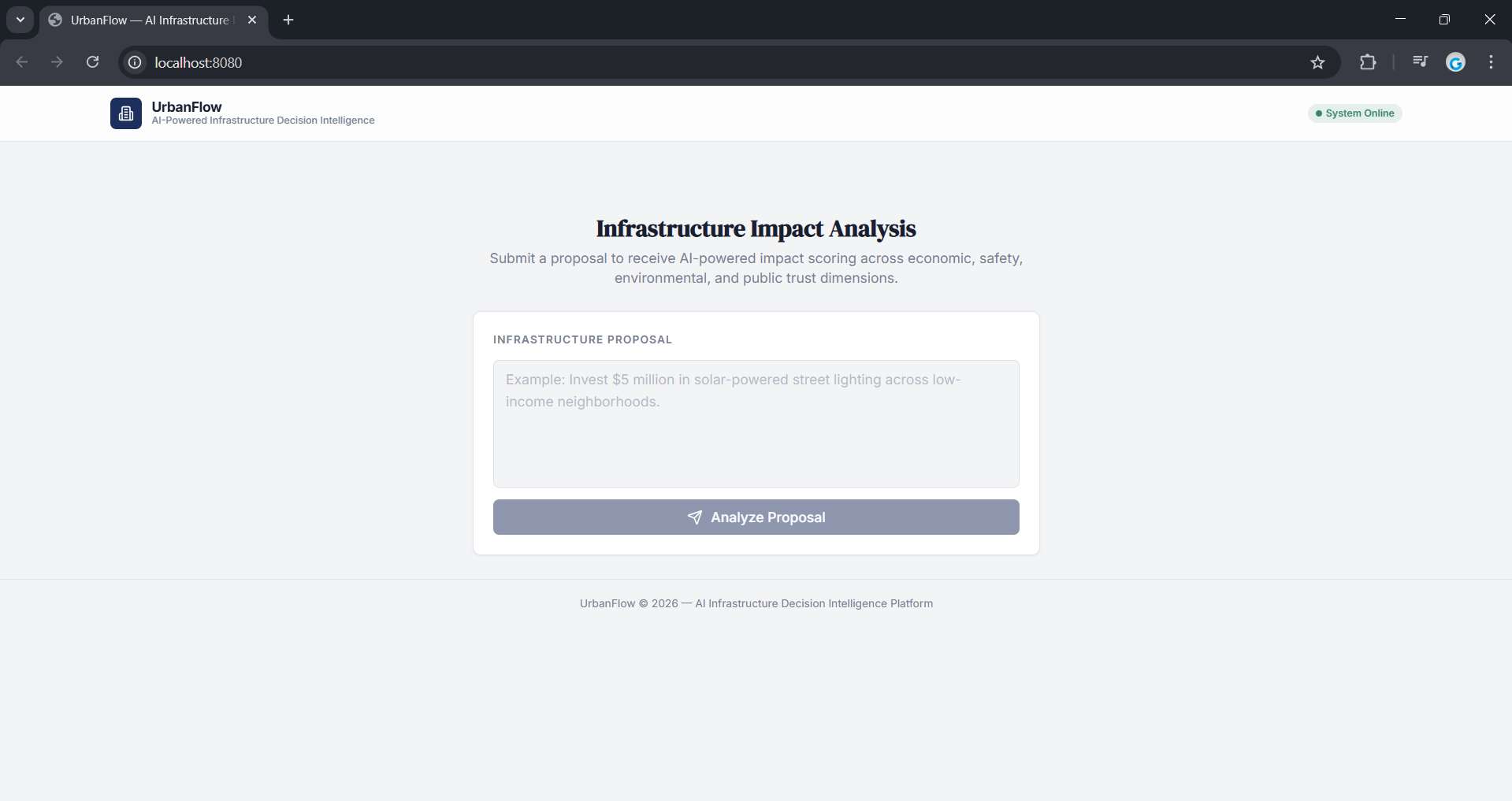
Home page, this is where you type the policy and in the next page it gives about the effectiveness of that policy.
Inspiration
Urban infrastructure decisions often rely on complex policy documents that are difficult to interpret. I was inspired by the idea of using AI to translate these proposals into clear, structured impact insights. Aligned with Sustainable Development Goals 11 (Sustainable Cities and Communities) and 16 (Peace, Justice, and Strong Institutions), UrbanFlow aims to improve transparency and smarter decision-making in urban planning.
What it does
UrbanFlow analyzes infrastructure proposals using AI and converts them into measurable impact metrics, including economic growth, environmental sustainability, public safety, institutional trust, risk assessment, sectoral distribution, and timeline impact. The results are visualized through a professional, easy-to-understand dashboard designed for policymakers and stakeholders.
How we built it
UrbanFlow was built as a full-stack AI-powered web application. The frontend was developed using React and TypeScript to create a modular dashboard with dynamic charts and real-time impact visualization. The backend was built using Python and Flask, which handles proposal processing and communicates with the Featherless AI API (DeepSeek model). When a user submits an infrastructure proposal, the backend sends a structured prompt to the AI model, receives quantified impact scores across multiple dimensions, and returns a formatted JSON response to power the interactive decision dashboard.
Challenges we ran into
Designing unique, non-repetitive data visualizations Structuring AI prompts to return consistent JSON Ensuring the dashboard remained clear for non-technical users Managing full-stack development within limited hackathon time
Accomplishments that we're proud of
Successfully built a full-stack AI-powered infrastructure analysis platform within a limited hackathon timeframe. Designed a structured AI prompt system that reliably returns clean, multi-dimensional JSON outputs for dynamic visualization. Developed a professional policy-grade dashboard with distinct analytical sections (core impact, risk profile, sectoral distribution, timeline impact, and budget allocation). Ensured the platform is understandable for non-technical stakeholders while still being technically robust. Integrated real-time AI analysis instead of static scoring, making UrbanFlow adaptive and intelligent.
What we learned
I learned how to integrate AI into real-world decision-support systems, structure model outputs effectively, and design data visualizations that communicate insights clearly and responsibly.
What's next for UrbanFlow- AI Infrastructure Impact Intelligence Platform
Integrate real municipal datasets (budget data, emissions statistics, crime rates, census data) to ground AI analysis in live city data. Add comparative scenario analysis, allowing policymakers to evaluate multiple proposals side-by-side. Implement historical tracking to measure projected vs. actual impact over time. Introduce explainable AI layers to show how each score is derived for greater transparency. Deploy the platform as a cloud-based public civic tool to improve community engagement and institutional accountability.


Log in or sign up for Devpost to join the conversation.