Inspiration
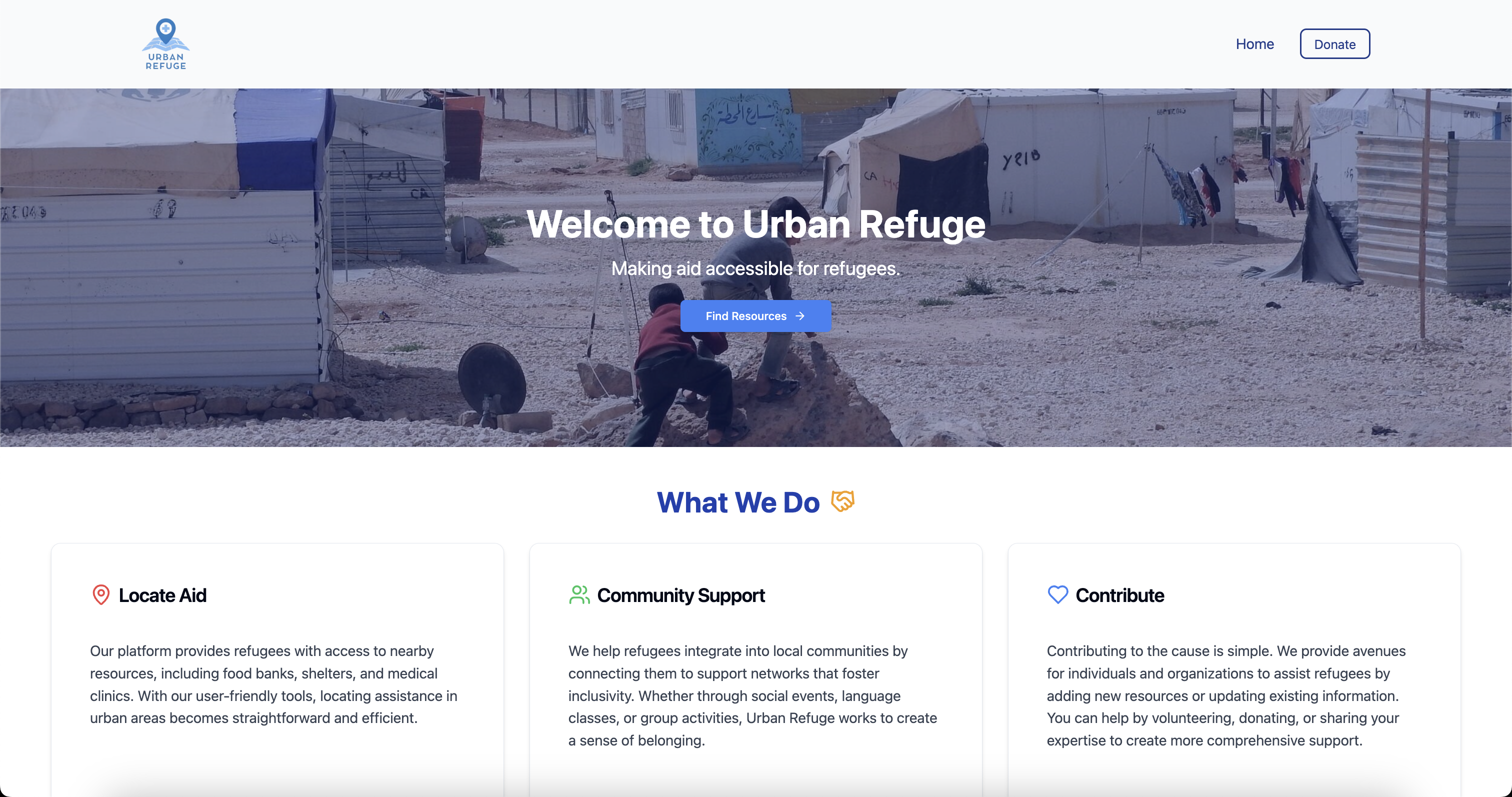
Inspired by the Urban Refuge team, we noticed that when refugees arrive in urban areas, they often face significant challenges in accessing essential services like housing, healthcare, education, and employment opportunities. With this in mind, we wanted to create a platform that bridges the gap between the refugees and the resources they need to rebuild their lives.
What it does
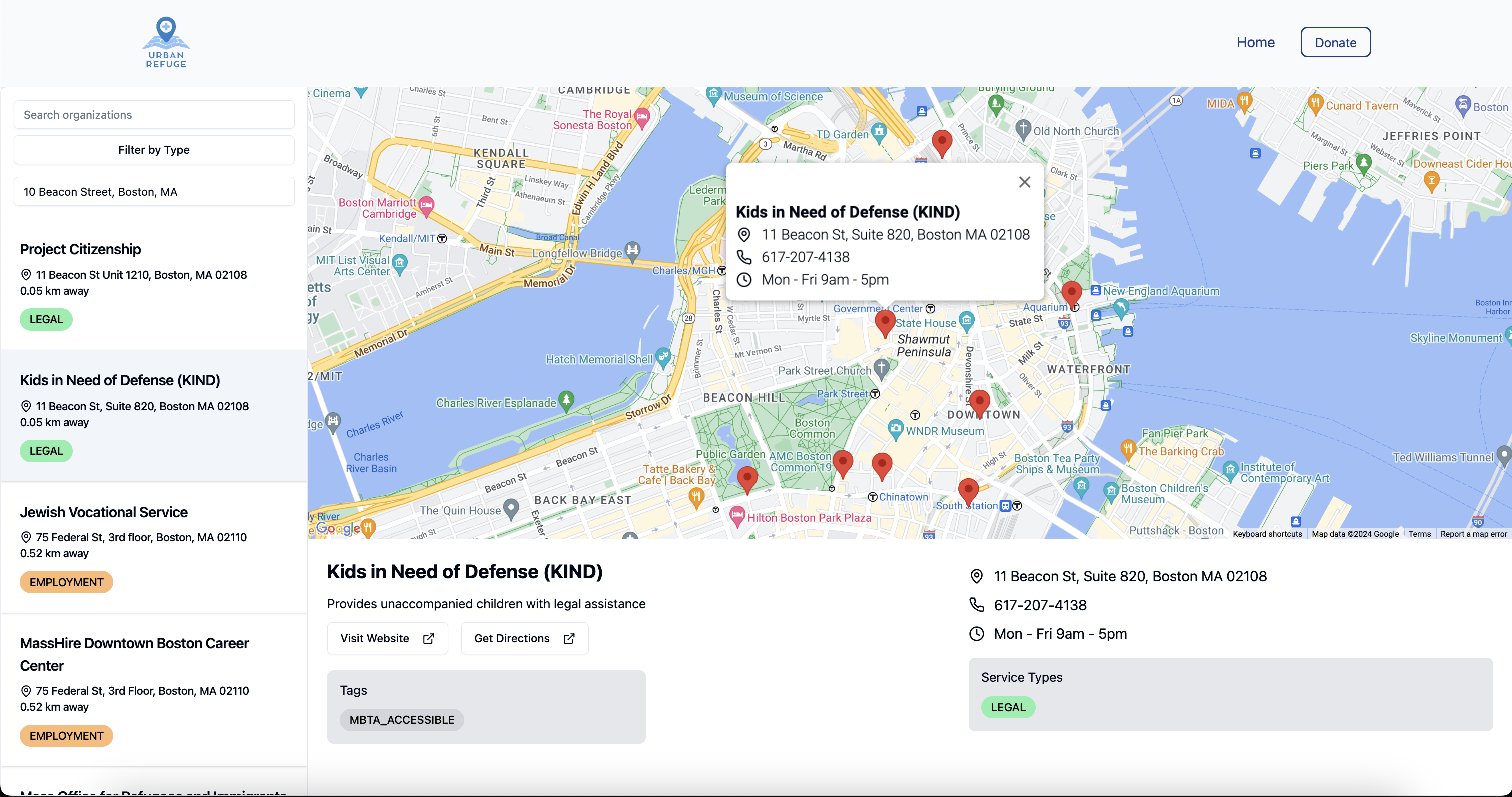
Urban Refuge is a comprehensive web platform designed to connect refugees with local organizations and services that cater to their specific needs. The platform offers:
• Service-Directory: A searchable database of verified organizations providing services such as legal aid, medical assistance, language classes, job training, and more.

• User-Friendly Interface: An intuitive design that allows users to easily find and access resources without language barriers.

• Privacy Guarantee: Users aren't tracked in anyway, so identities remain anonymous.
How we built it
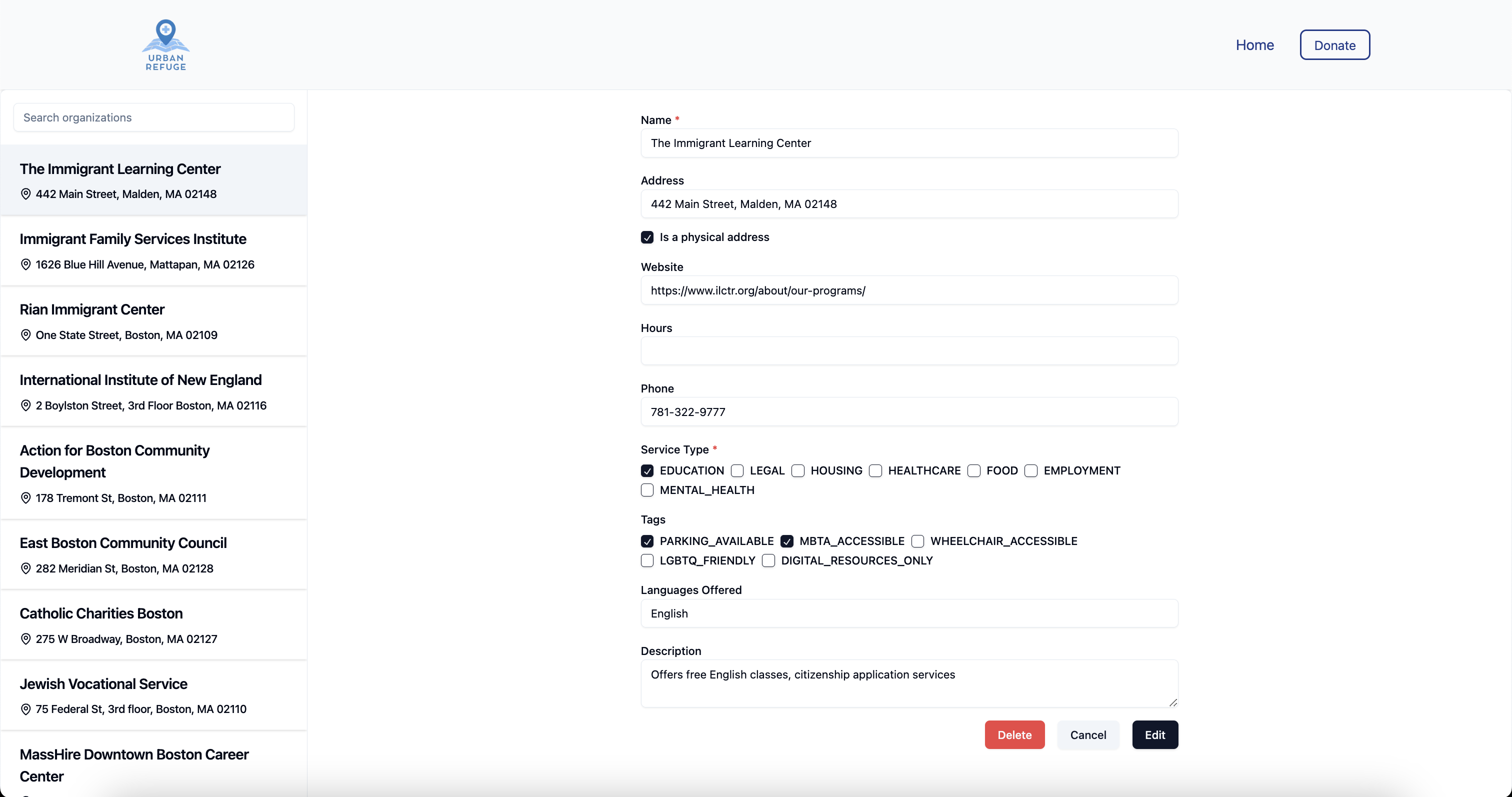
We built our website using a combination of frontend and backend technologies. On the frontend, we used React and Tailwind, and for the backend, we used Express.js, Prisma, and PostgresQL. For the backend, we integrated a relational database to easily manage organization information, and used the Google OAuth protocol to allow users to sign in with their Google accounts without using a pre-built app that handles the state management of the back and forth between the client, server, and Google.
Challenges we ran into
With a limited timeline, it was challenging to implement all the features we envisioned for the platform. We had to carefully prioritize features that would have the highest impact and ensure they were fully functional, which required efficient time management and adaptability.
Accomplishments that we're proud of
We're proud that we created a tool that has the potential to make a real difference in the lives of refugees by facilitating access to essential services.
What we learned
In the process of building Urban Refuge, we not only improved our technical skills but also deepened our understanding of the challenges faced by urban refugees and displaced communities worldwide. Researching and curating resources made us acutely aware of the vast issues that refugees face beyond relocation—such as cultural adaptation, accessing essential services, and navigating local legal systems.
What's next for Urban Refuge
We plan on adding multi-language functionality, ensuring that any user, no matter what language they speak, are able to access the resources that they need. Another possibility could be a potential LLM-powered virtual assistant, where users could ask for suggestions on where they should go based on nearby resources. Finally, we also want to expand our database so that refugees, outside of Boston, are also able to find the resources that they need.

Log in or sign up for Devpost to join the conversation.