-
-
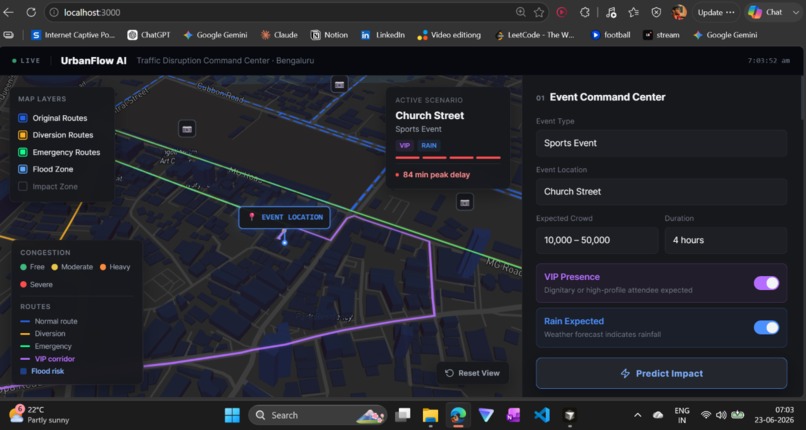
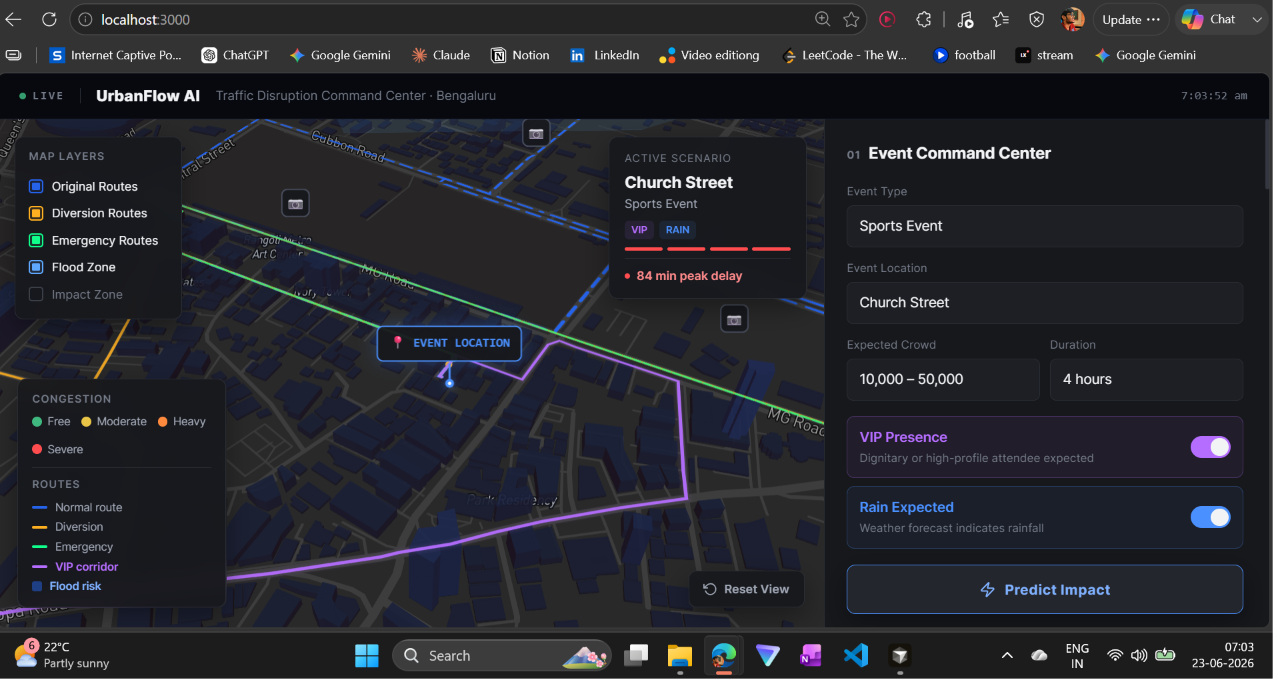
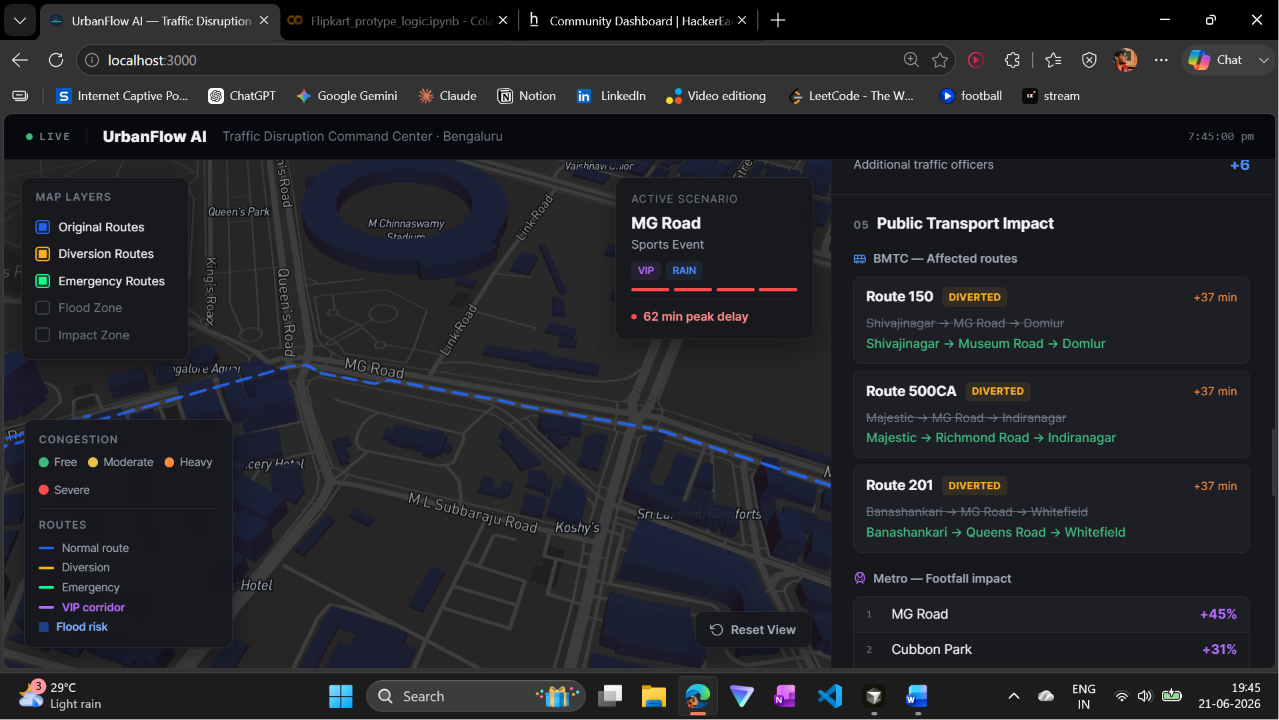
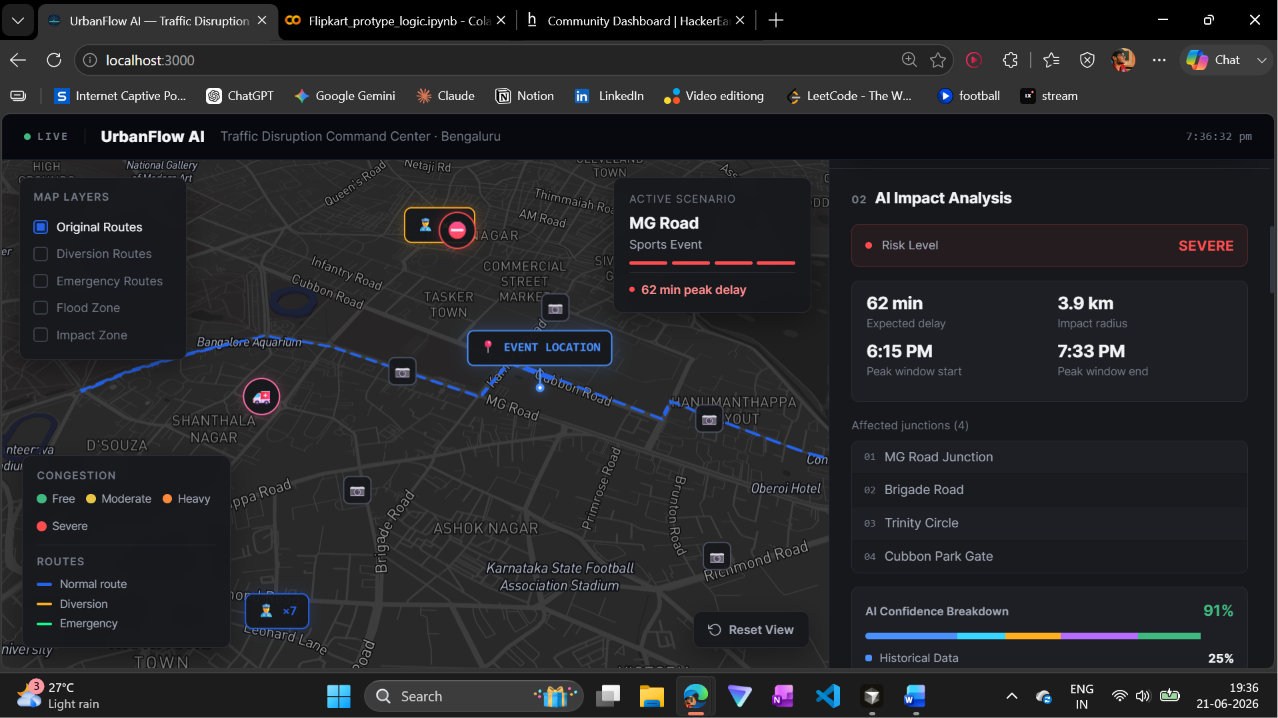
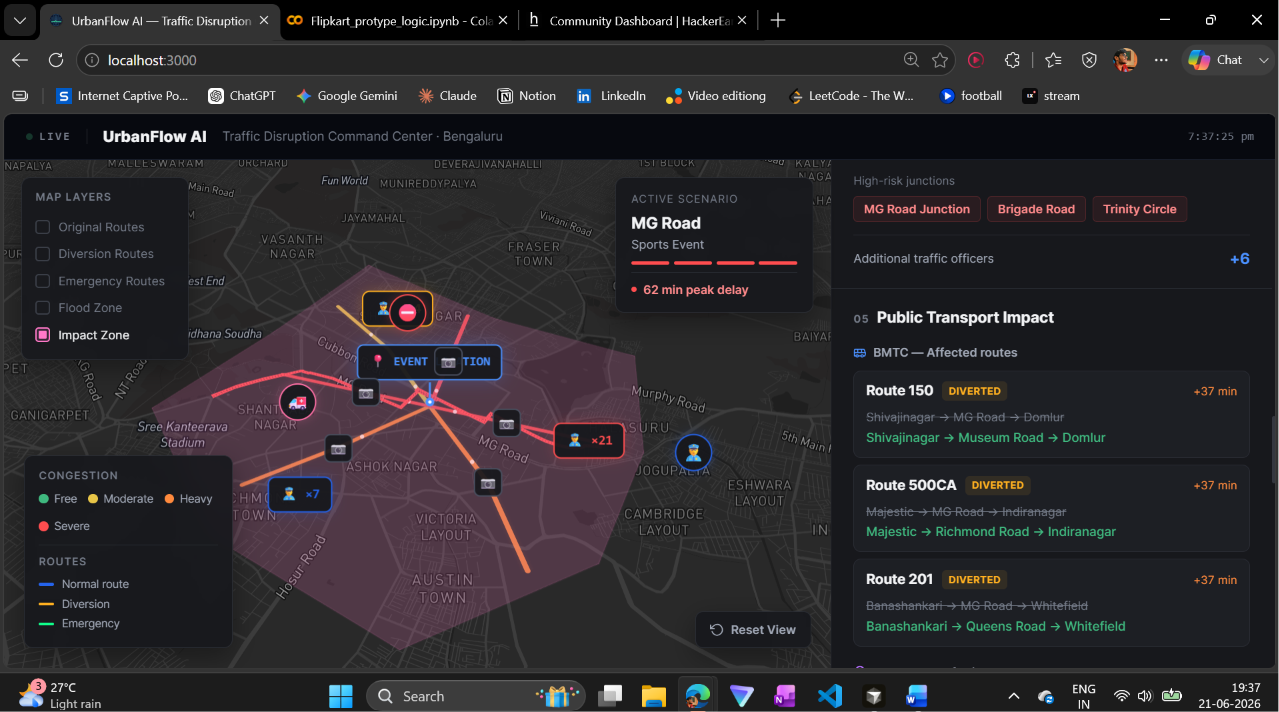
dashboard
-
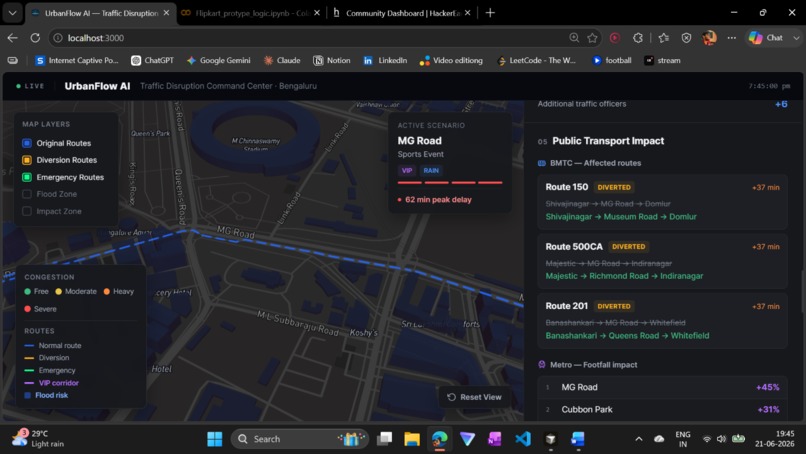
real map shows , no fake map
-
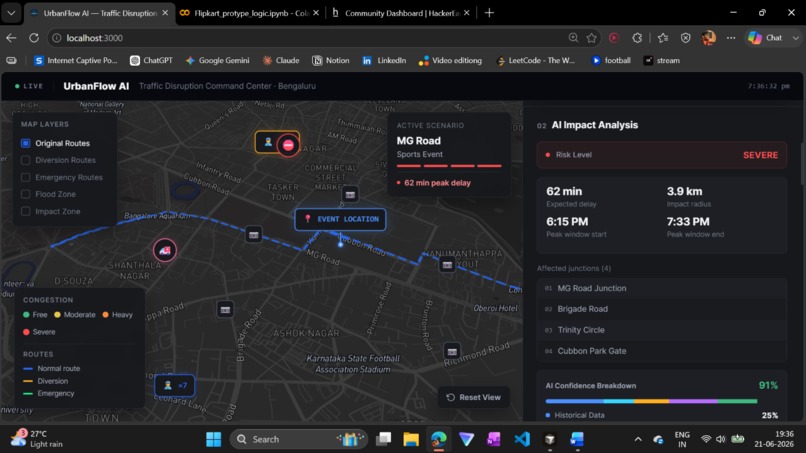
analytics used in the project
-
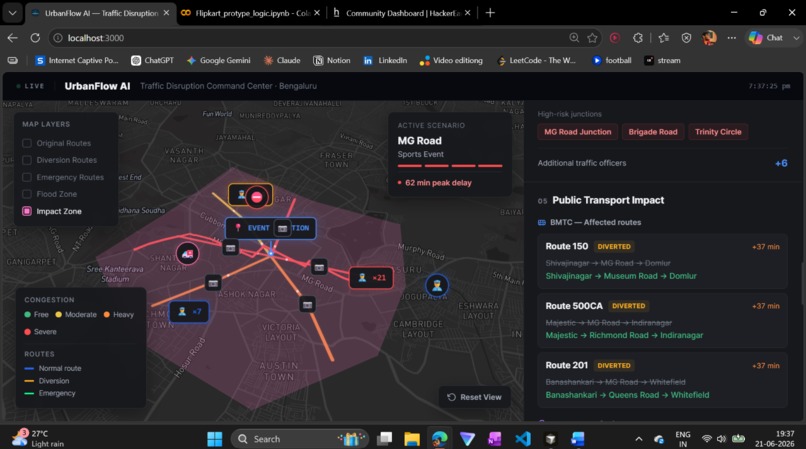
insights that is the most imp features used ai to give insights
UrbanFlow AI – AI-Powered Traffic Disruption Command Center
Inspiration
Urban traffic management today is largely reactive. Authorities often respond only after congestion has already spread, resulting in longer travel times, delayed emergency response, fuel wastage, and economic losses. Cities like Bengaluru, where a single incident at major junctions such as Silk Board or KR Circle can disrupt traffic across multiple corridors, highlighted the need for a proactive solution.
We wanted to build an AI-powered platform that predicts disruptions before they escalate and helps traffic authorities make faster, data-driven operational decisions.
What it does
UrbanFlow AI is an AI-powered Traffic Disruption Command Center that enables authorities and logistics teams to monitor, predict, and respond to urban traffic incidents in real time.
Key capabilities include:
- 🚦 Predicts congestion hotspots using historical traffic incident data.
- 🤖 Uses AI to estimate disruption severity and expected clearance time.
- 🗺️ Visualizes incidents on an interactive 3D city map.
- 📊 Provides live operational dashboards with analytics and trends.
- 🚑 Prioritizes high-impact incidents for quicker response.
- 📈 Generates actionable insights to improve long-term traffic planning.
Instead of simply showing where traffic exists, UrbanFlow AI recommends where attention should be focused first.
How we built it
Our system combines machine learning, geospatial visualization, and modern web technologies into a unified platform.
Data Processing
- Cleaned and analyzed over 8,000+ real traffic incident records.
- Engineered features such as event type, priority, location, and historical patterns.
Machine Learning
- Built predictive models to estimate congestion risk and disruption severity.
- Generated hotspot intelligence from historical incident trends.
Backend
- FastAPI for APIs and AI inference.
- Python for data preprocessing and model execution.
Frontend
- Next.js for the web application.
- Mapbox GL JS for interactive 3D visualization.
- Recharts for operational analytics dashboards.
AI Layer
- GPT was used to generate intelligent summaries and operational insights from traffic events, helping transform raw incident data into actionable recommendations.
Challenges we ran into
One of our biggest challenges was working with real-world traffic data, which contained inconsistent entries, missing values, and varying event descriptions. Considerable effort went into cleaning and standardizing the dataset before meaningful predictions could be made.
Designing a dashboard that balanced rich analytics with usability was another challenge. We iterated multiple times to reduce clutter while ensuring critical information remained immediately visible.
We also had to optimize rendering performance for thousands of map points without sacrificing the responsiveness of the user interface.
Finally, integrating AI-generated insights with predictive analytics in a way that remained useful rather than overwhelming required careful prompt engineering and interface design.
Accomplishments that we're proud of
- 🚀 Built a complete end-to-end working prototype within the hackathon timeline.
- 🧠 Successfully combined AI, machine learning, and geospatial visualization into one platform.
- 📍 Developed an interactive 3D traffic command center instead of a traditional dashboard.
- 📊 Converted historical incident data into predictive operational intelligence.
- 🎯 Designed a solution with practical relevance for smart cities, emergency response teams, and logistics operations.
What we learned
This project taught us that building AI systems involves much more than training models.
We learned how critical high-quality data preparation is, how to integrate machine learning into production-ready web applications, and how geospatial visualization significantly improves decision-making. We also gained valuable experience balancing model accuracy, user experience, system performance, and real-world usability under tight hackathon constraints.
Most importantly, we learned that AI delivers the greatest value when it supports human decision-makers with timely, actionable insights rather than simply generating predictions.
What's next for UrbanFlow AI
Our vision is to evolve UrbanFlow AI into a city-scale intelligent traffic management platform.
Future enhancements include:
- 🚗 Real-time traffic ingestion from cameras and IoT sensors.
- 📡 Integration with navigation platforms for dynamic rerouting.
- 🚑 Automatic emergency vehicle route optimization.
- 🌦️ Weather-aware traffic prediction models.
- 📱 Mobile applications for field traffic officers.
- 🤖 Multi-agent AI system that autonomously monitors incidents, recommends actions, and continuously learns from operational outcomes.
- 🏙️ Expansion into a digital twin of the city for simulation, planning, and what-if traffic analysis.
Ultimately, we envision UrbanFlow AI becoming an AI-powered operating system for smarter, safer, and more efficient urban mobility.
Built With
- fastapi
- next.js
- python
- react
- typescript


Log in or sign up for Devpost to join the conversation.