-
-

UpNext: No more wait times
-
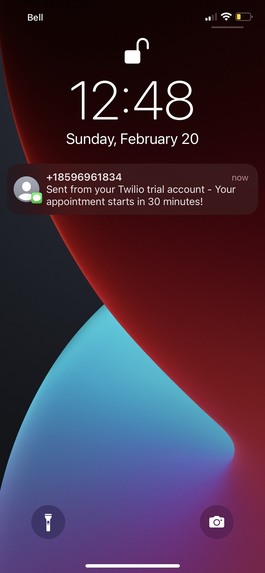
Twilio message warning
-
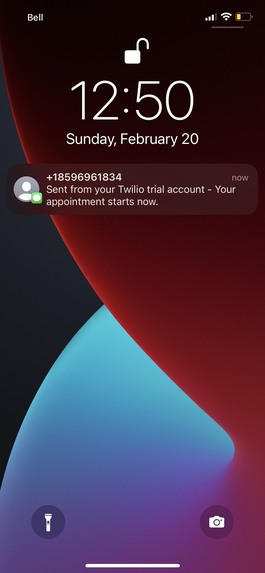
Twilio appointment message

Inspiration
One of the biggest deficiencies of the healthcare system in Canada is the long lines that patients have to wait before checking in and finally seeing their doctor. Countless horror stories of frantic parents having to wait twelve or more hours into the night to give their ill child a chance at receiving medical attention. Not only do long wait times induce physical fatigue but it can also cause an overwhelming amount of emotional and mental stress.
UpNext
This is why, for the CalgaryHacks Hackathon 2022, our group decided to create a hospital waitlist website, named UpNext, that enables users to login and wait in a queue, without having to worry about going to the front-desk.
What it does
Functionalities:
As a user:
- Page where you can fill out form (it will then be sent to the admin page where the administrator; usually the front desk receptionist, can see the forms that are in queue)
- Login to your user account
- See your position in queue (as a number)
As an admin:
- Can view the forms filled out by each patient and call them back in before the appointment.
- Admin have three options for each form;
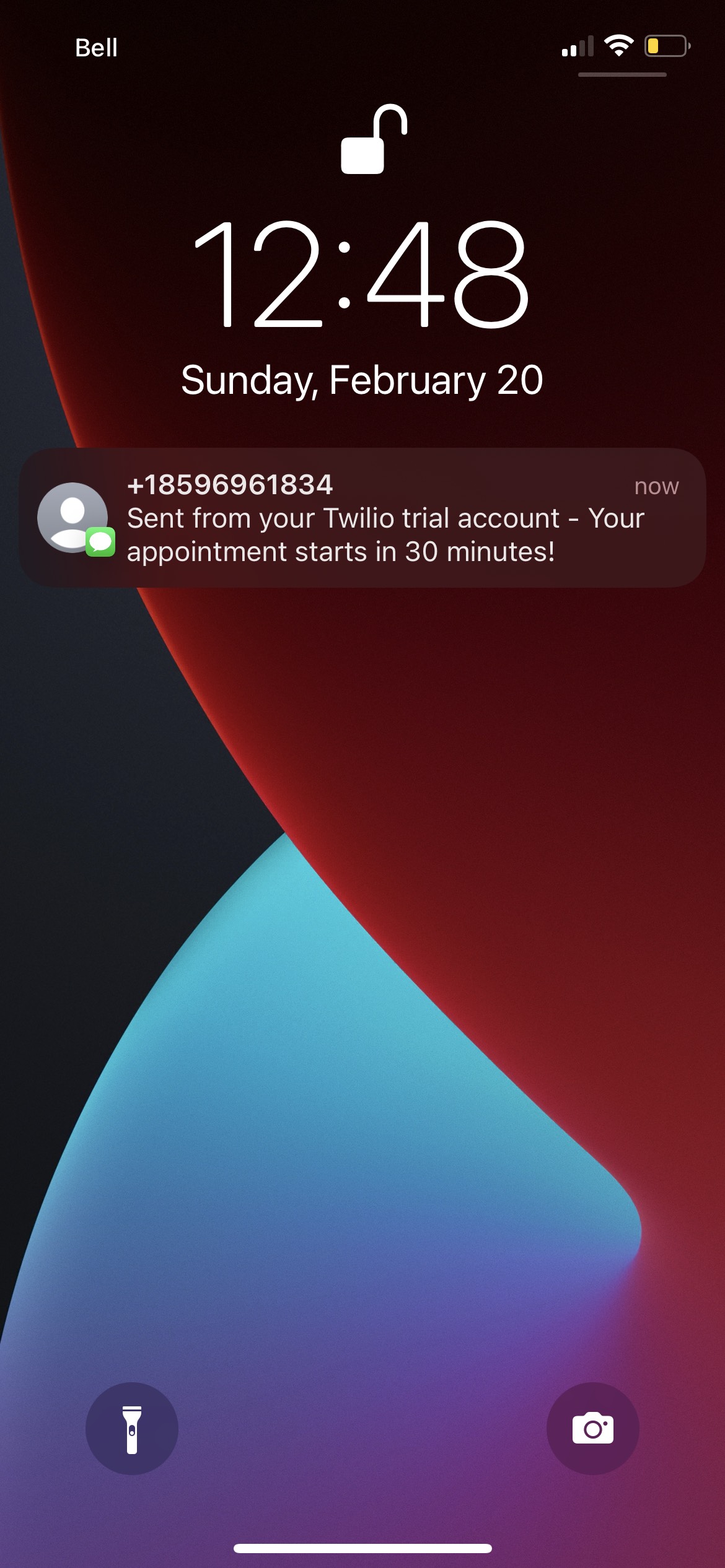
- a 30 warning before the patient is expected to be administered
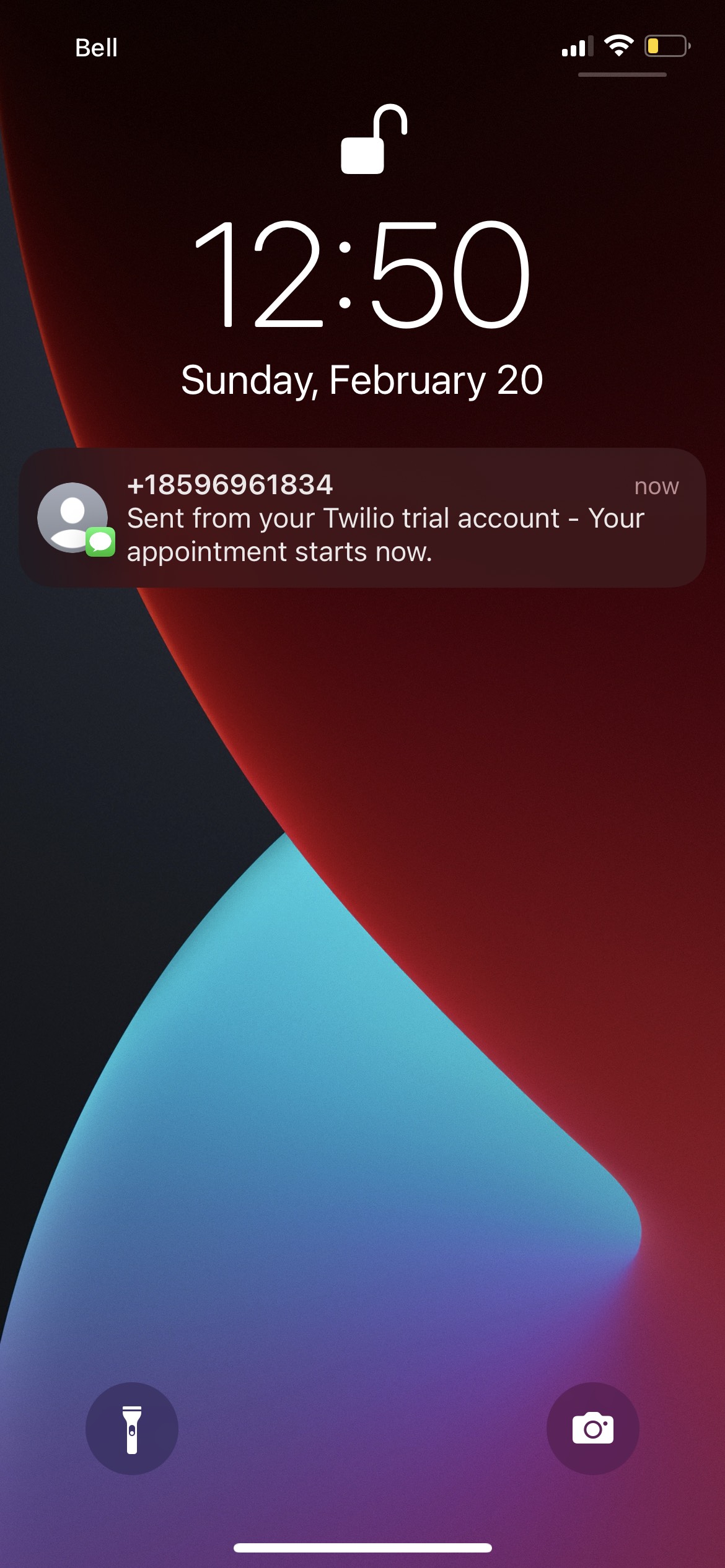
- An instant time warning
- Delete the form if it is invalid
How we built it
The website was implemented using flask, SQLAlchemy, Twilio, HTML, and CSS.
A database was also used to store all the user objects and their respective personal information, and is passed into the admin page, where the user’s name and phone number will be displayed to the administrator. Flask helps implement separate functions for the home, client, and admin page. Our HTML web pages are styled using the Bootstrap package and CSS stylesheets.
Challenges we ran into
The biggest issue we ran into was figuring out a way to redirect a user to a landing page that told them what place they were in a queue. In the initial stages of developing the application, whenever a user tried to log in from the home page, the site would just refresh. But, we were able to implement a separate landing page which the user would be redirected to and see their spot in the current queue. By the same token, time management was one challenge we ran into since the window of the competition was so limited. On the flipside, that was also what pushed us to work efficiently, build teamwork and achieve a high result, which we are extremely proud of.
Accomplishments that we're proud of
For most of us, this is our first time participating in a professional hackathon. We all have different levels of experience in coding and had never known each other prior to this hackathon, but, managed to collaborate and create, what we believe to be, a meaningful application that can greatly help hundreds of thousands of people.
What we learned
The most important thing we learned was implementing different functionalities in a website. For example, our application currently uses the Twilio API to send a text message to a user, alerting them that their appointment is in 30 minutes or starting right now. Many of us also did not have prior experience with some of the technology we ended up using. We still managed to pick up the basics and learned just enough to be able to implement it in our project but we do realize there is still room to learn and grow but this hackathon has definitely encouraged us to step out of our comfort zone, challenge innovative ideas and build a satisfying end product.
What's next for UpNext
In the near future, we would love to implement more features that would enhance the user experience of the web application. This means adding more features, functionalities, and tools, for both users and administrators. And after that, we hope to reinforce the security of the application so that it can be logged into and used remotely, so that users need not be within a hospital to book a spot in the queue.
We also believe UpNext is a scalable product, it had a tremendous potential to be implemented in areas other than the health care industry. Wait times are a very common problem in many real world situations. Imagine a carnival with a never-ending lineup or a local famous restaurant with plenty of customers-- namely any event which must accommodate a large volume of people. UpNext will not only improve the lives of hospital patients, but also the lives of many others in the world. It would help smaller organizations be more efficient and help larger businesses be more organized. It is cost-effective, sustainable and most importantly, it saves the time of customers and administrators. The future is bright for UpNext.


Log in or sign up for Devpost to join the conversation.