UpLink
Simple, Spontaneous, Socializing
UpLink Application GitHub Repository: https://github.com/ancheypeng/bigredhacks2021
Inspiration
We are currently living through a crisis on our college campuses. Across our nation’s campuses, students are suffering the effects of poor mental health more so than ever before. Yale studies report that “three out of five students experienced overwhelming anxiety, and two out of five students were too depressed to function.” College students, faced with the stress of courses, social pressure, and competitive settings, often forget to prioritize their mental health in the manner that they should.
UpLink is an innovative app designed to lower the effort barrier associated with certain activities. The effort of convincing oneself to go to the gym, getting ready and actually going there, is reduced to the effort of pressing a simple button.
With a tap of the button, a user can broadcast that they are currently doing something that others might want in on. Examples might include a hike, a study session, or a pickup ultimate frisbee game that a user might want to invite their friends to.
Broadcasting your activity to other people creates a sense of commitment: one would avoid telling everyone they are going to the gym just for their friends to find out that it was all a bluff.
This sense of commitment together with the motivation of performing activities in a group, promote the app’s 4 areas of focus:
- mental health
- convenience
- socialization
- physical health.
Mental health is promoted by facilitating friend meetups, which has been proven to better mental state. It is further promoted through the app by frequently suggesting healthy activities such as exercise or time in nature. Secondly, the app provides its users with convenience. Instead of texting or calling multiple people to invite them to an unplanned event, they will be notified with the press of a button. Thirdly, the app facilitates social interaction by encouraging people to meet up to enjoy activities together. These activities are commonly exercise-based, which in turn promotes physical health, the app’s fourth area of focus.
What it does
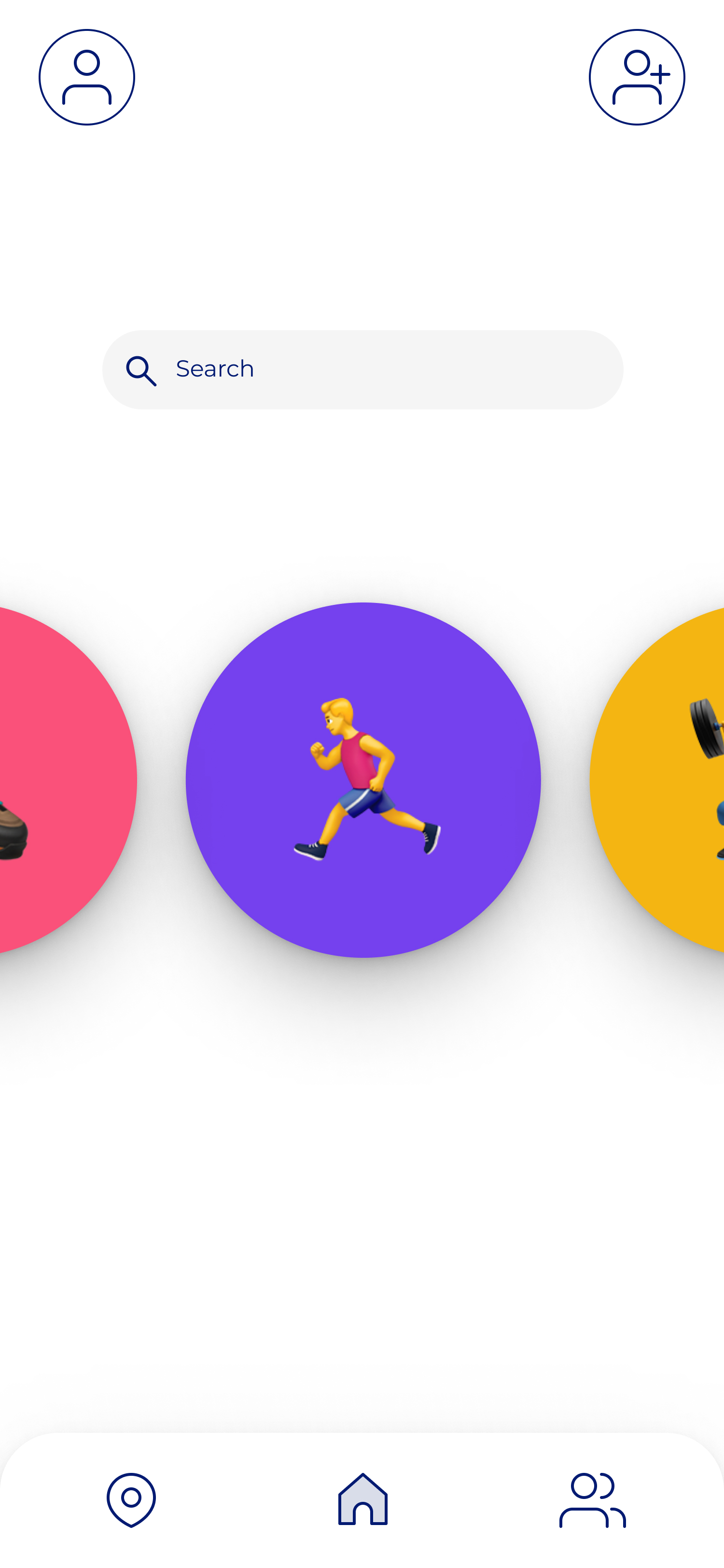
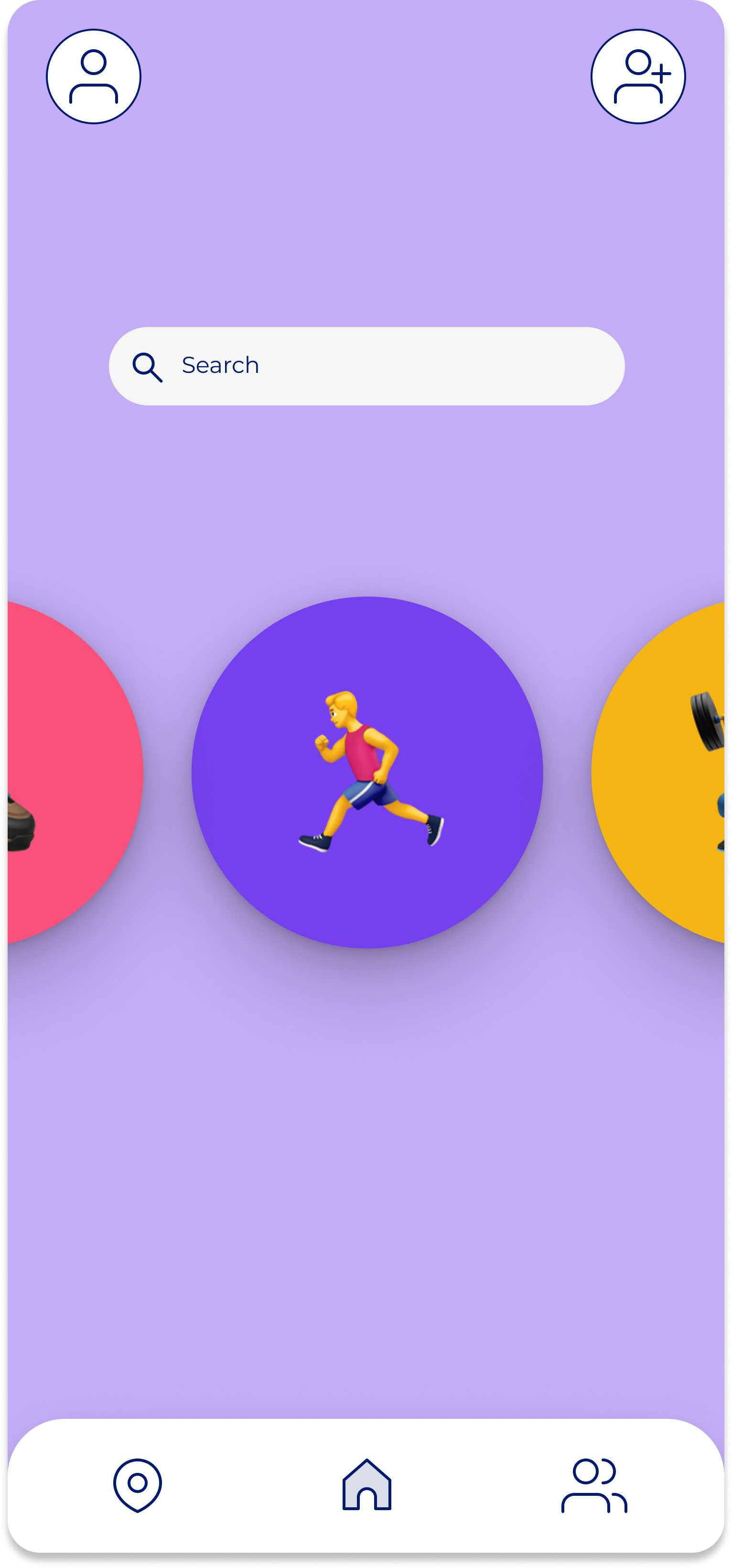
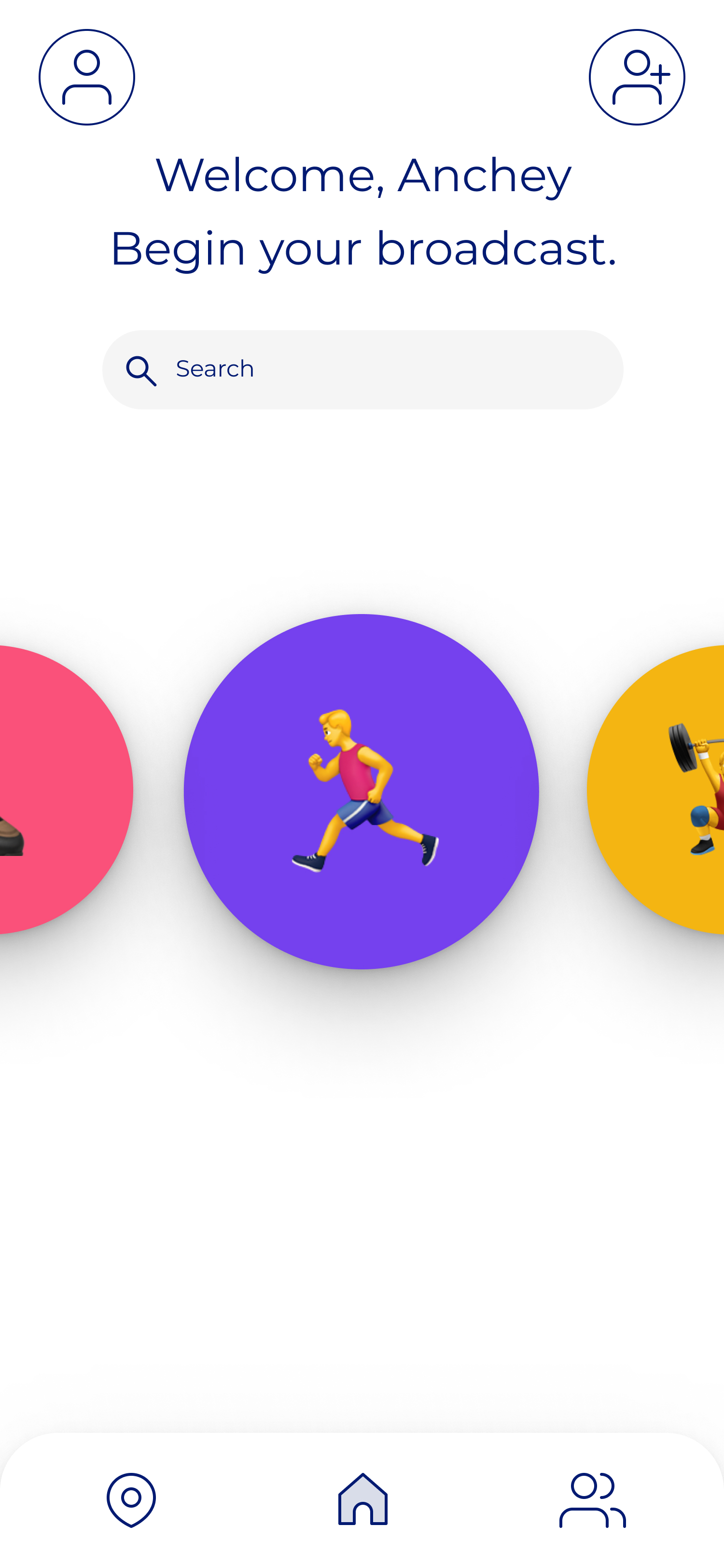
We designed our app with simplicity as the focus, with a basic user interface. A central button takes up most of the screen. The app’s purpose is to simplify a rather long-winded process, so we wanted our UI to reflect that as a result.

UpLink’s design revolves around a single button. While this button is not the only element of the app, it is the heart of it. With a tap of the button, a user can broadcast that they are currently doing something that others might want in on. Examples might include a hike, a study session, or a pickup ultimate frisbee game that a user might want to invite their friends to.
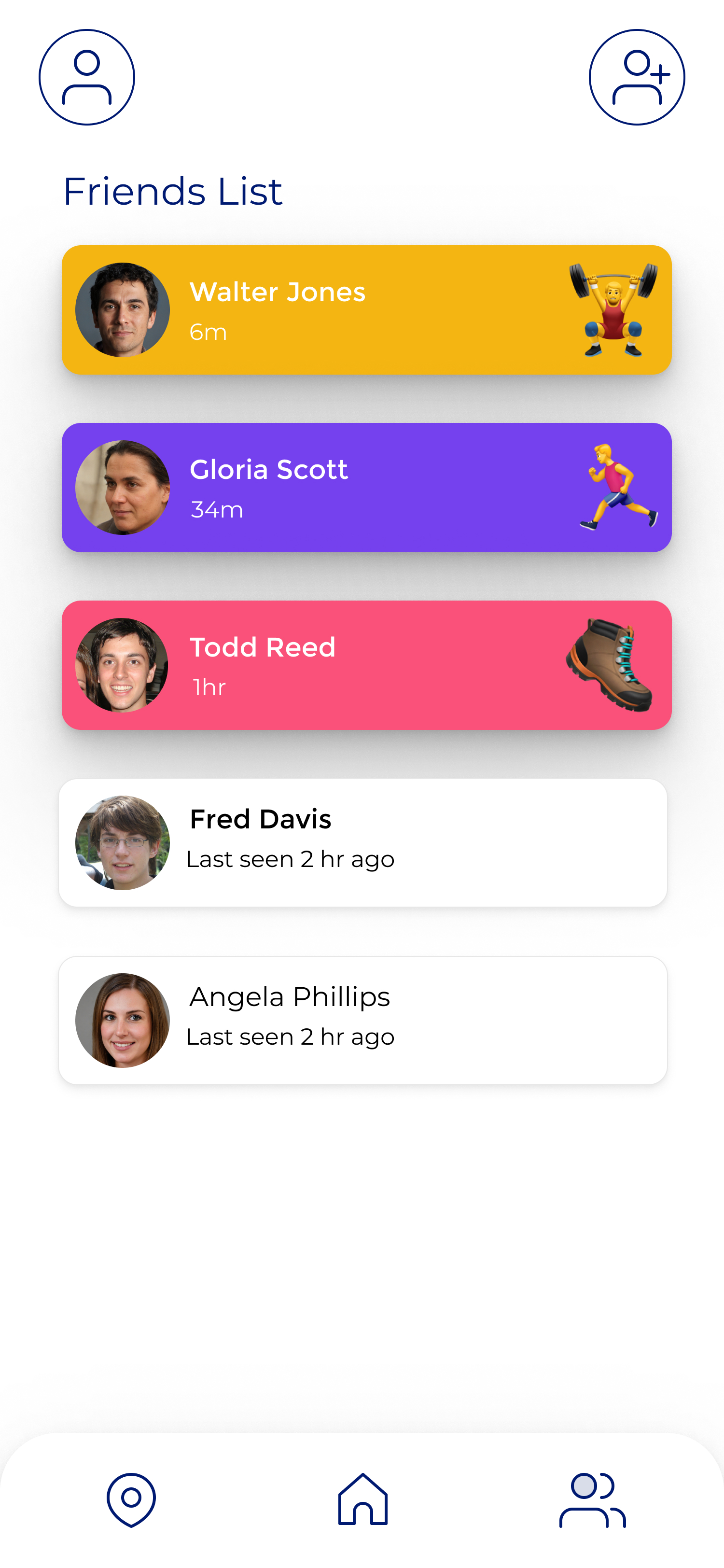
Furthermore, activities are given a specific color that stimulates a given behaviors or mood among the user's age and gender cohort (e.g. yellow stimulates spontaneity and can be associated to the hiking activity in males over the age of 30).

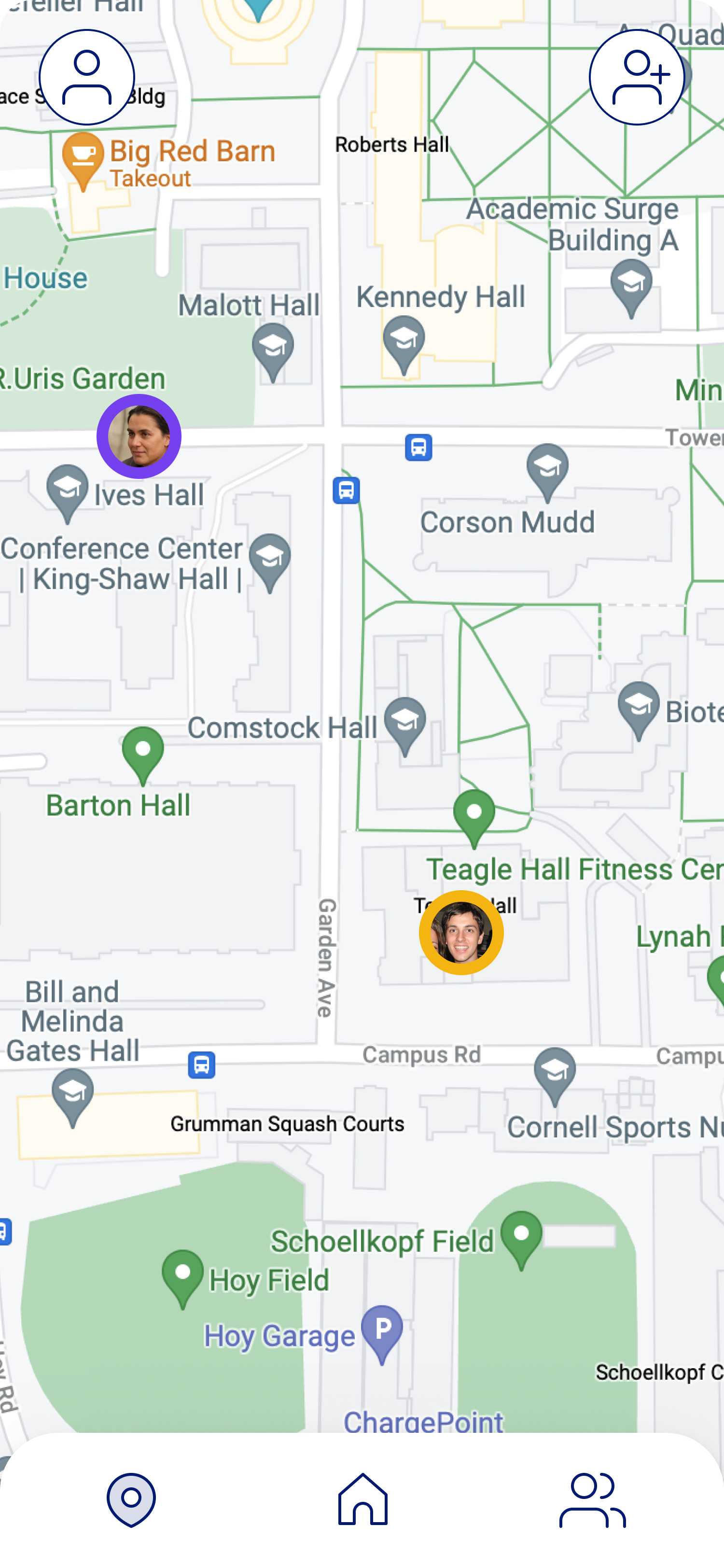
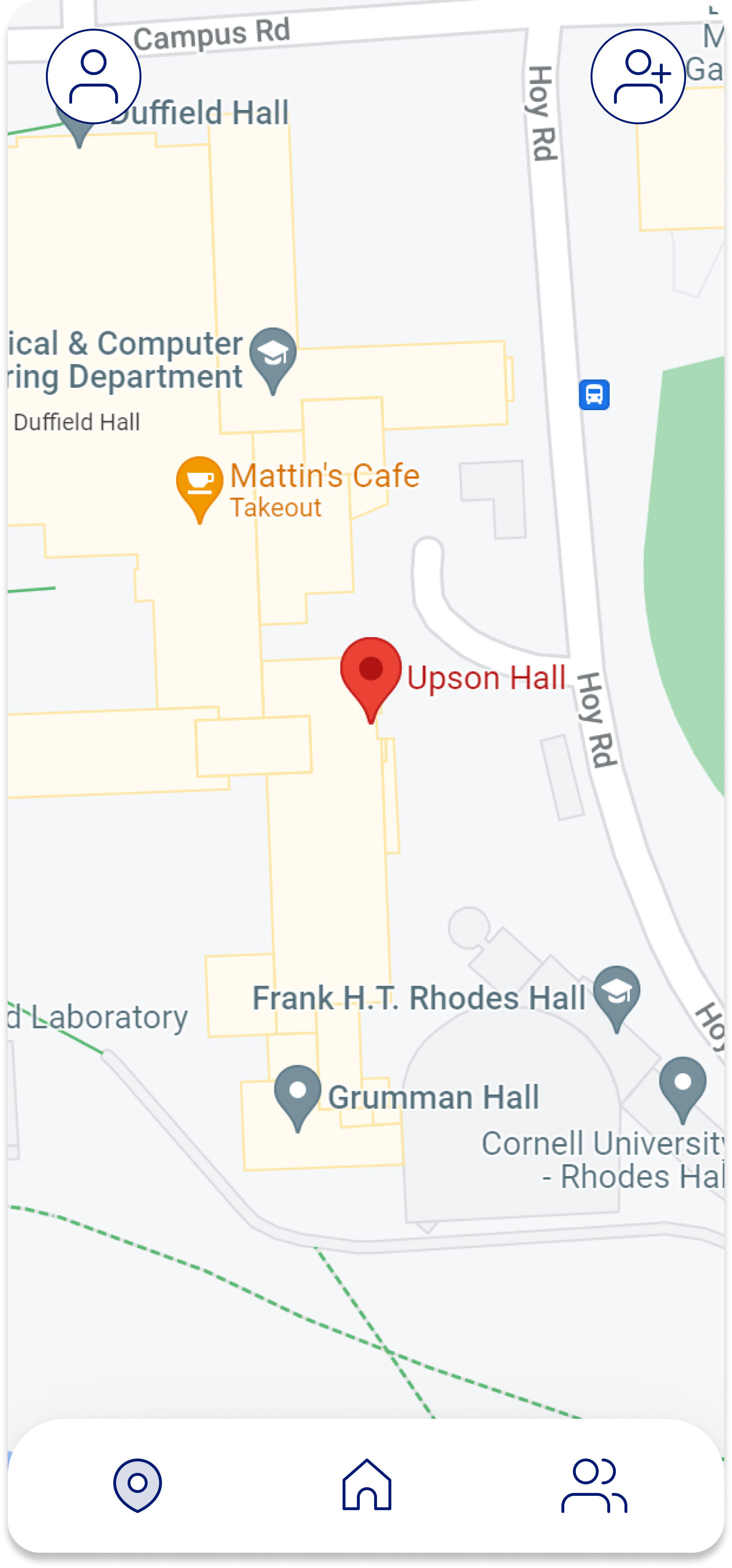
Users can view their friends' ongoing activity in two manners: in a list or on a map.


They can then decide whether to join ('link up') ongoing activities.
How we built it
We began brainstorming ideas on a whiteboard and visualized them using Figma. The collaborative environment together with the intuitive and specific tools in Figma allowed us to quickly develop our initial idea.

Once our graphic design was complete, we began the front-end development of our application. In order to do this, we employed Flutter: an open-source UI software development kit created by Google. Flutter's simple language (Dart) together with the extensive documentation provided by Google allowed us to quickly develop the front-end for our cross platform application (Android and iOS).

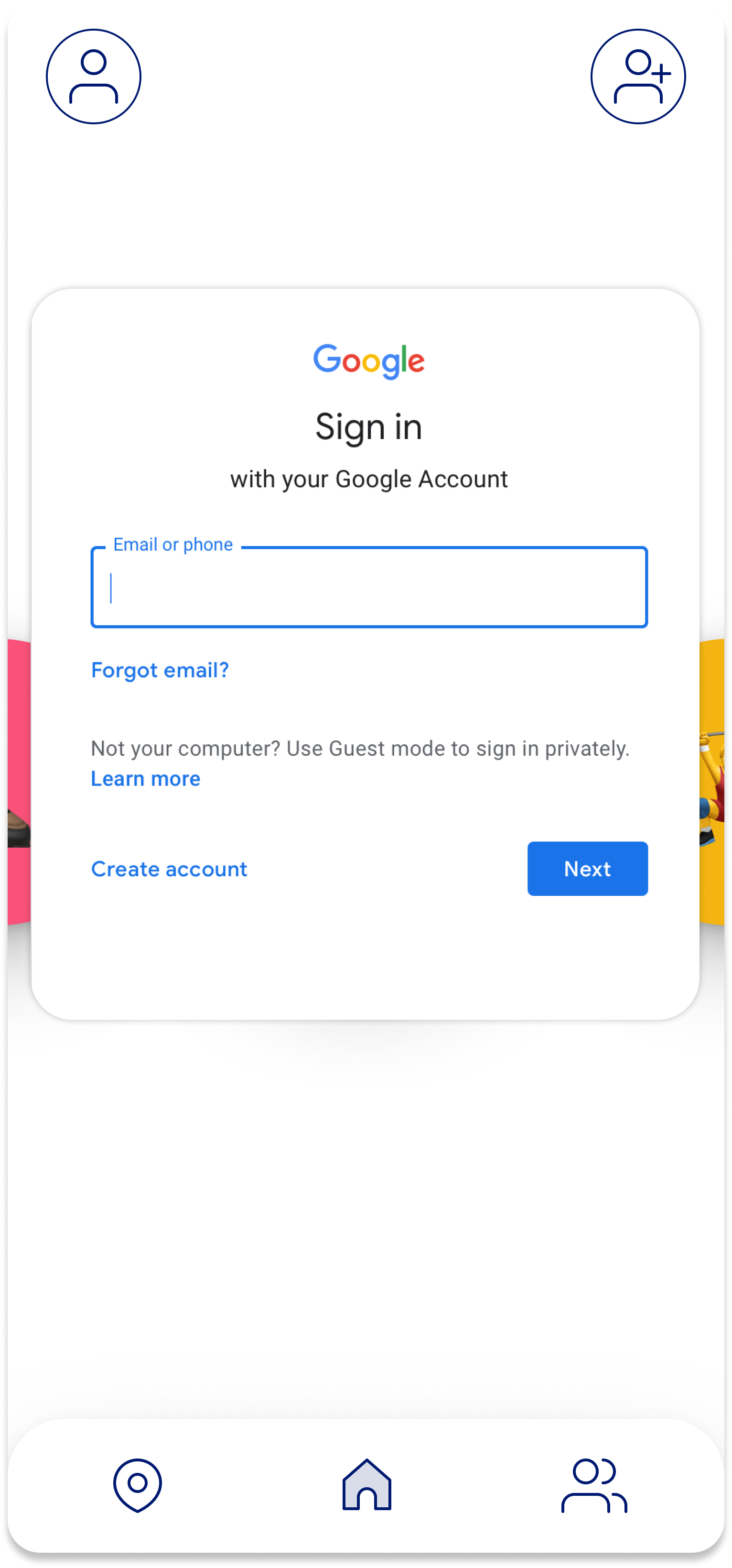
After setting up the front-end of UpLink, we began designing the architecture of our back-end. Firebase (powered by Google Cloud) allowed us to store and sync data between users in real time. Firebase's extensive documentation and their free account (granted through the Big Red Hacks Hackathon) enabled us to use ready-made UI libraries to authenticate users to our app (Firebase Authentication). Furthermore, the process of storing, analyzing, and synchronizing data was simplified with the use of Google Cloud's Firebase and Cloud Firestore.
Challenges we ran into
Having limited app development experience made the learning curve extremely steep at the start. However, with the help of Google's thorough documentation and our highly detailed Figma designs, we were able to eventually overcome this obstacle.
Furthermore, the time constraint together with some virtualization errors midway through the app development didn't allow us to fully implement all of the functions we would have wanted.
Accomplishments that we're proud of
Developing a fully functional app in under 2 days without proficient knowledge of the tools employed.
What we learned
- Picked up a new coding language from scratch (Dart)
- Developed our knowledge on back-end architecture of cross-platform applications (Firebase)
- Worked in a collaborative environment under pressure and a limited time constraint
- Improved our prototyping and graphic design skills
What's next for UpLink
We believe that there exists a potential market of users for UpLink and therefore we are looking forward to continuing its development. However, we want to ensure that all our existing functionalities work without any bugs.
Once we've established a solid front and back-end foundation we plan to continue developing the app while adding new features such as:
- gathering data and predicting activity trends
- allowing users to view their friends’ activity trends throughout the week
- monetizing our data/application to create a revenue stream

Log in or sign up for Devpost to join the conversation.