-
-
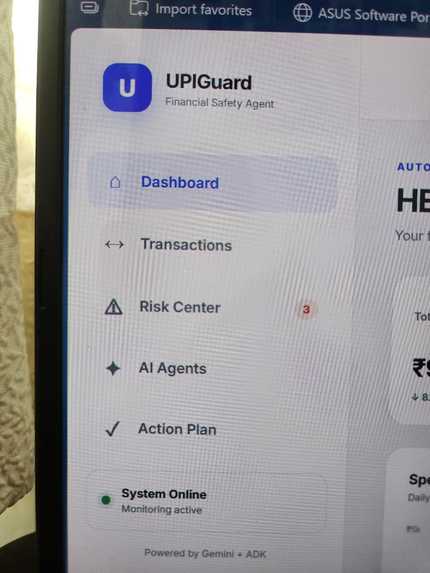
supported with google gemini
-
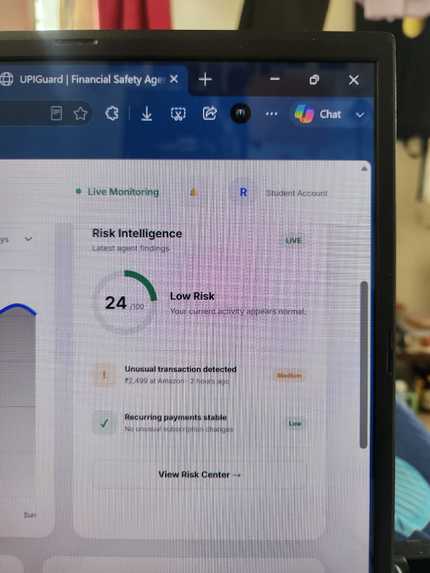
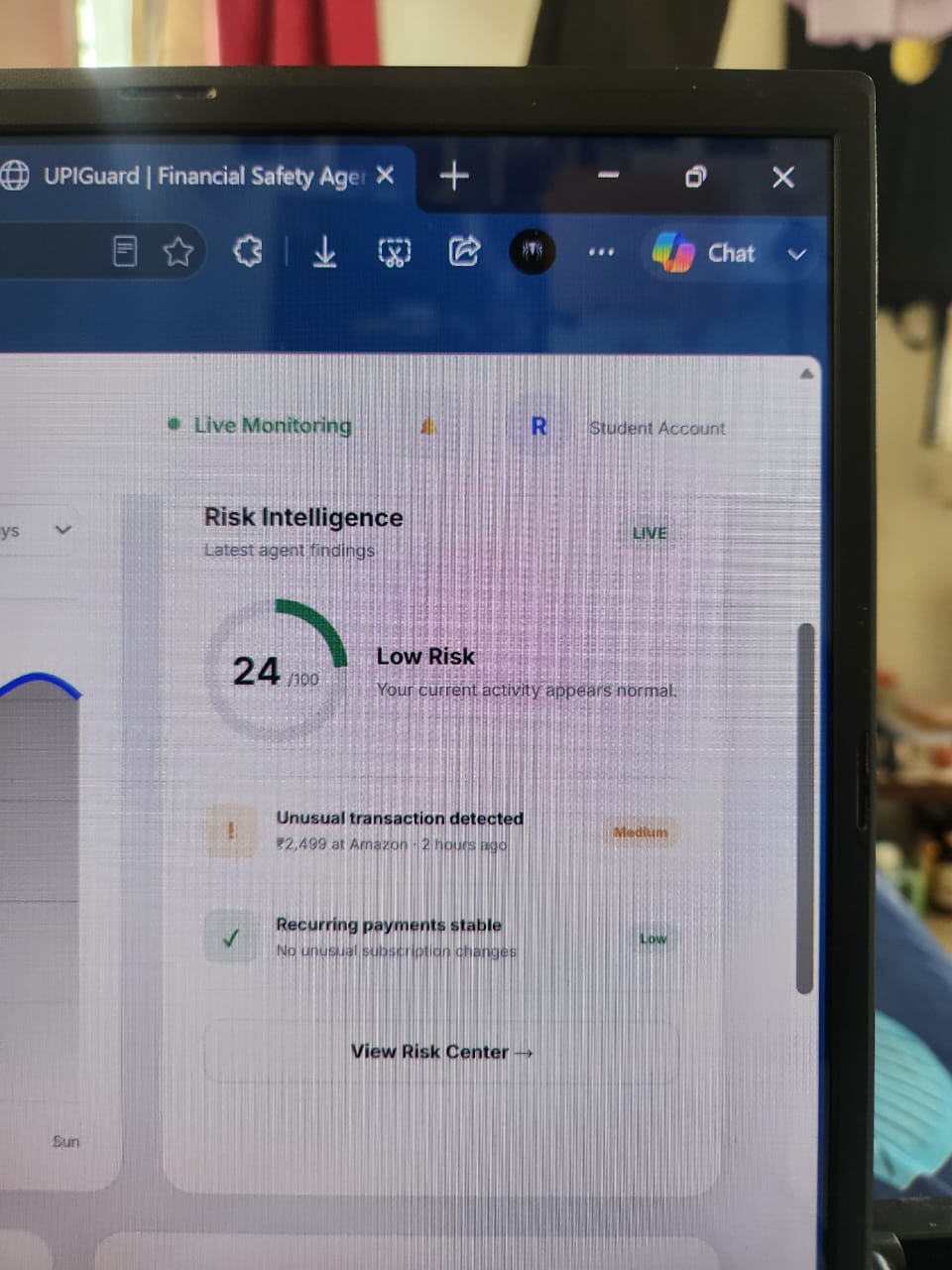
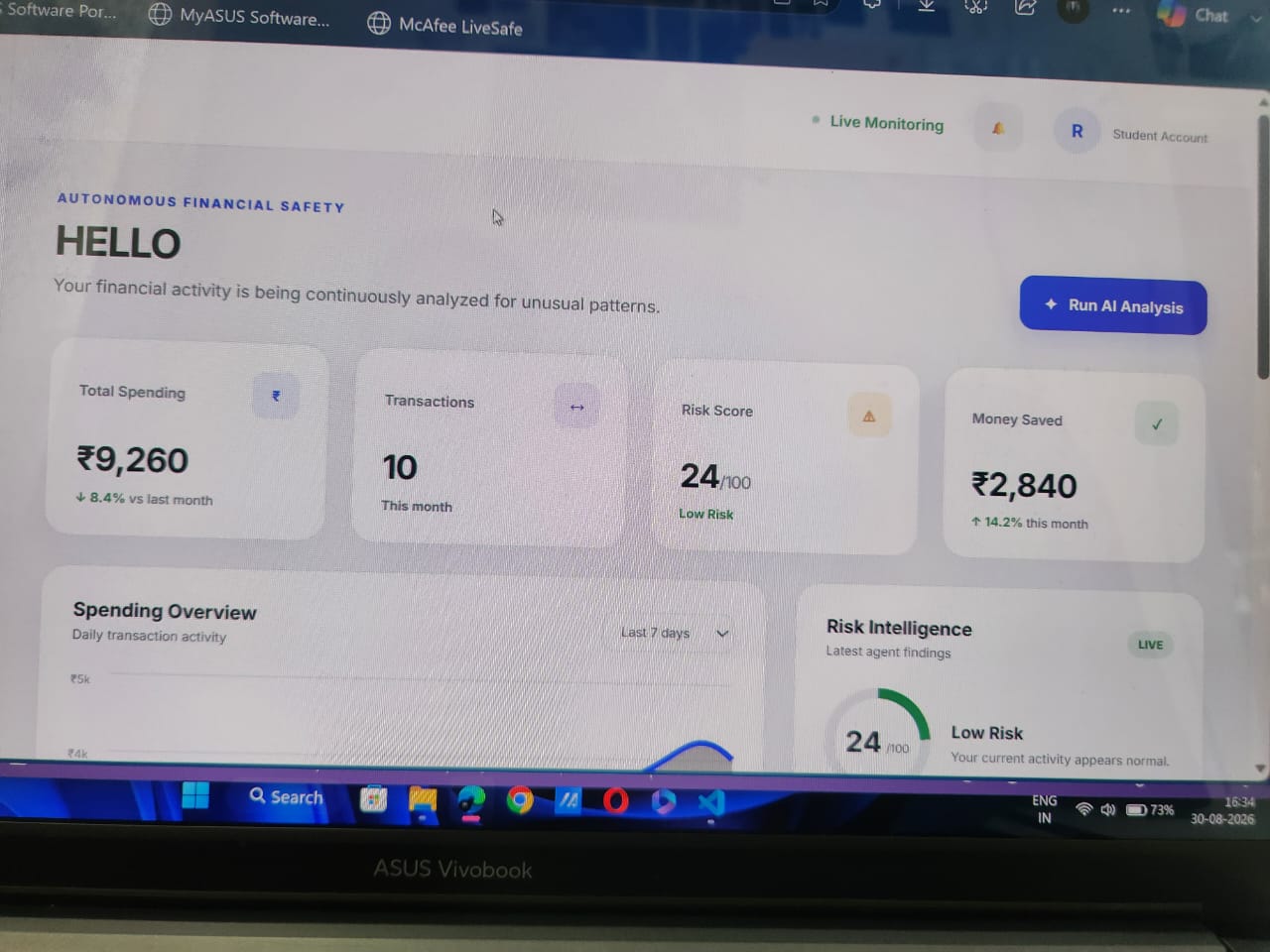
risk analysis
-
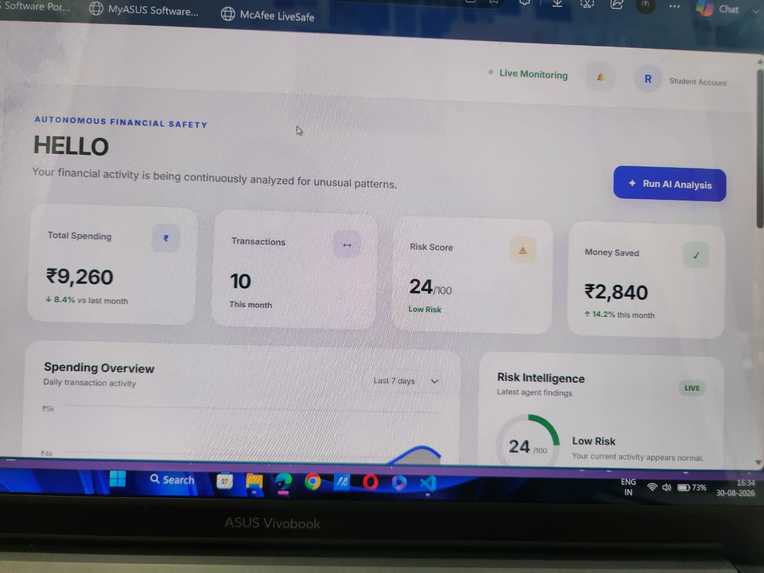
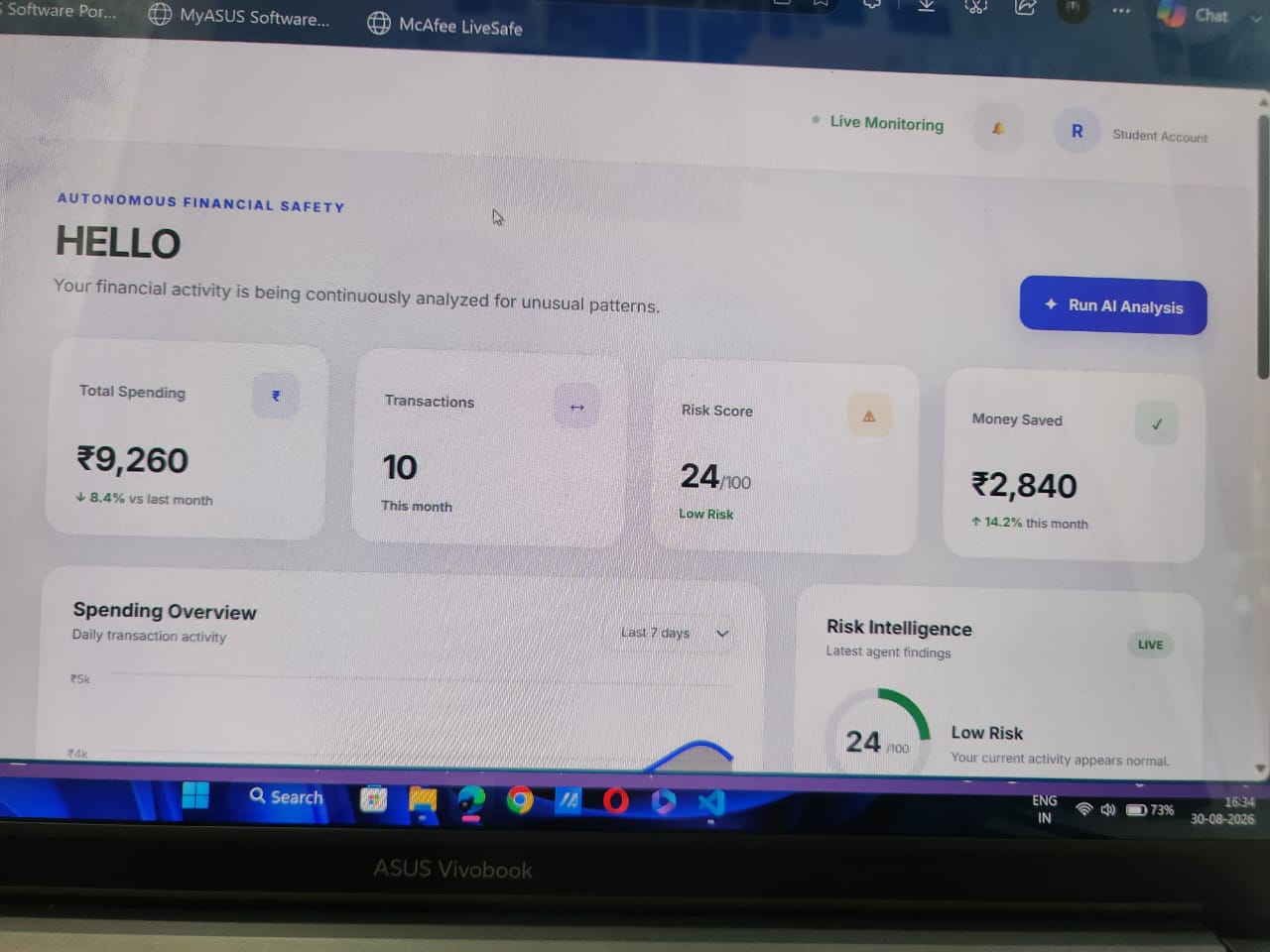
dashboard
-
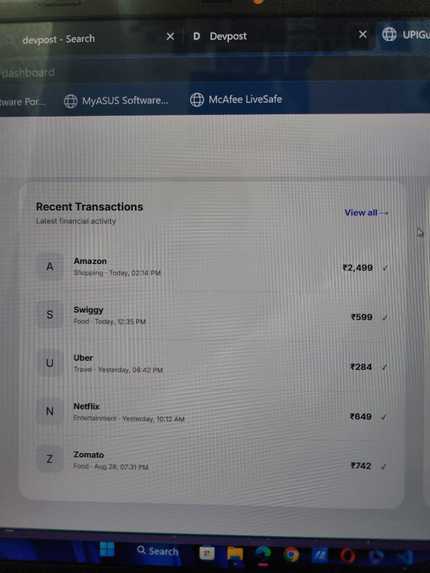
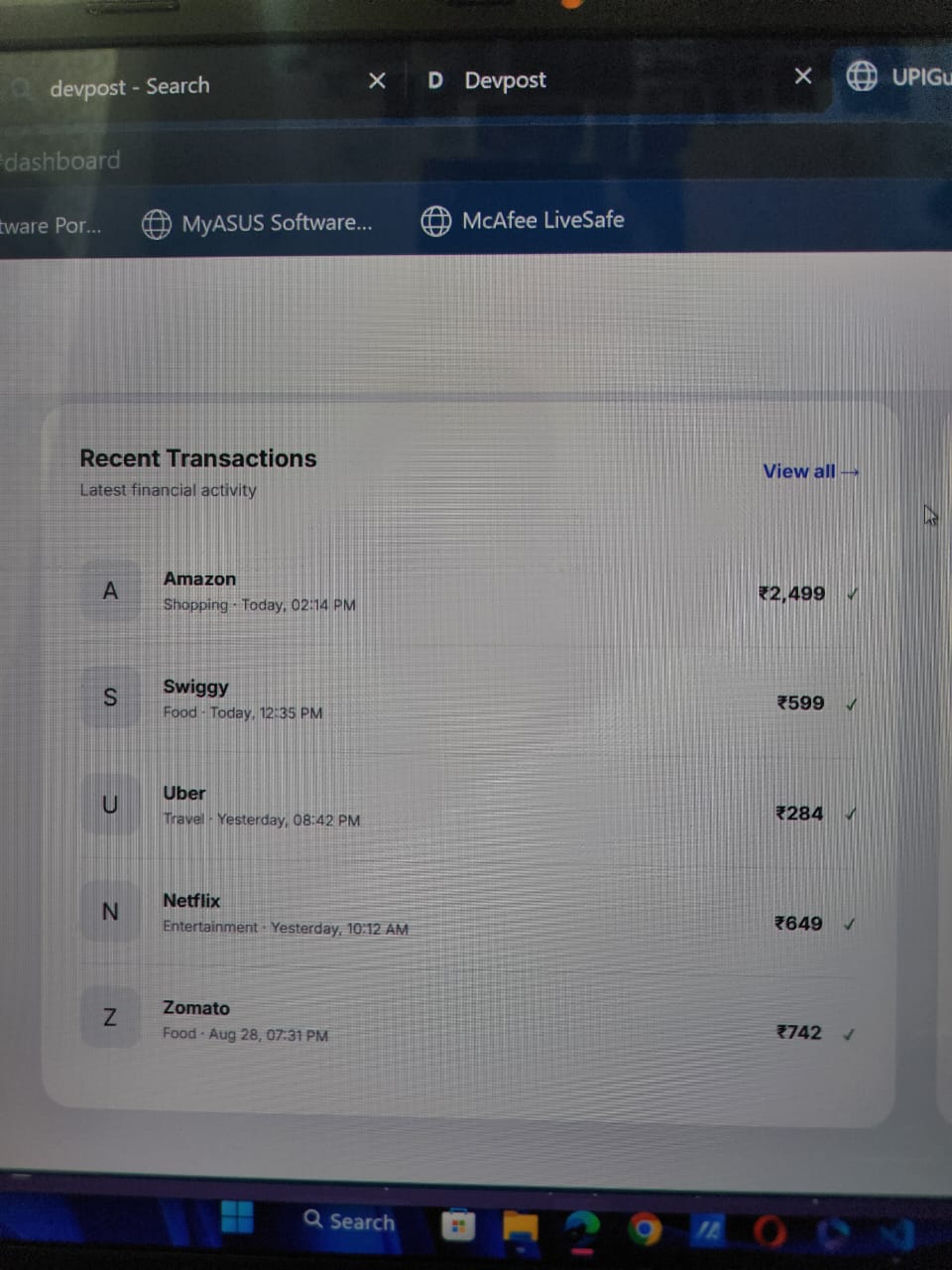
list of trasactions/history
-
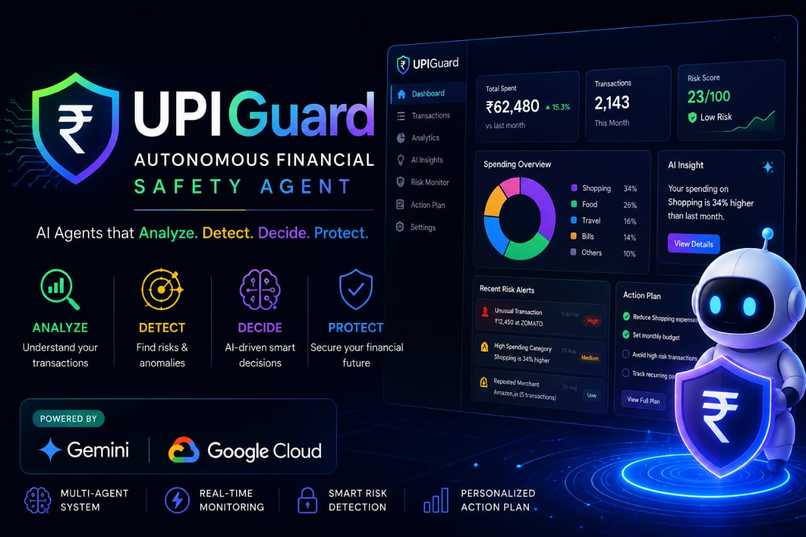
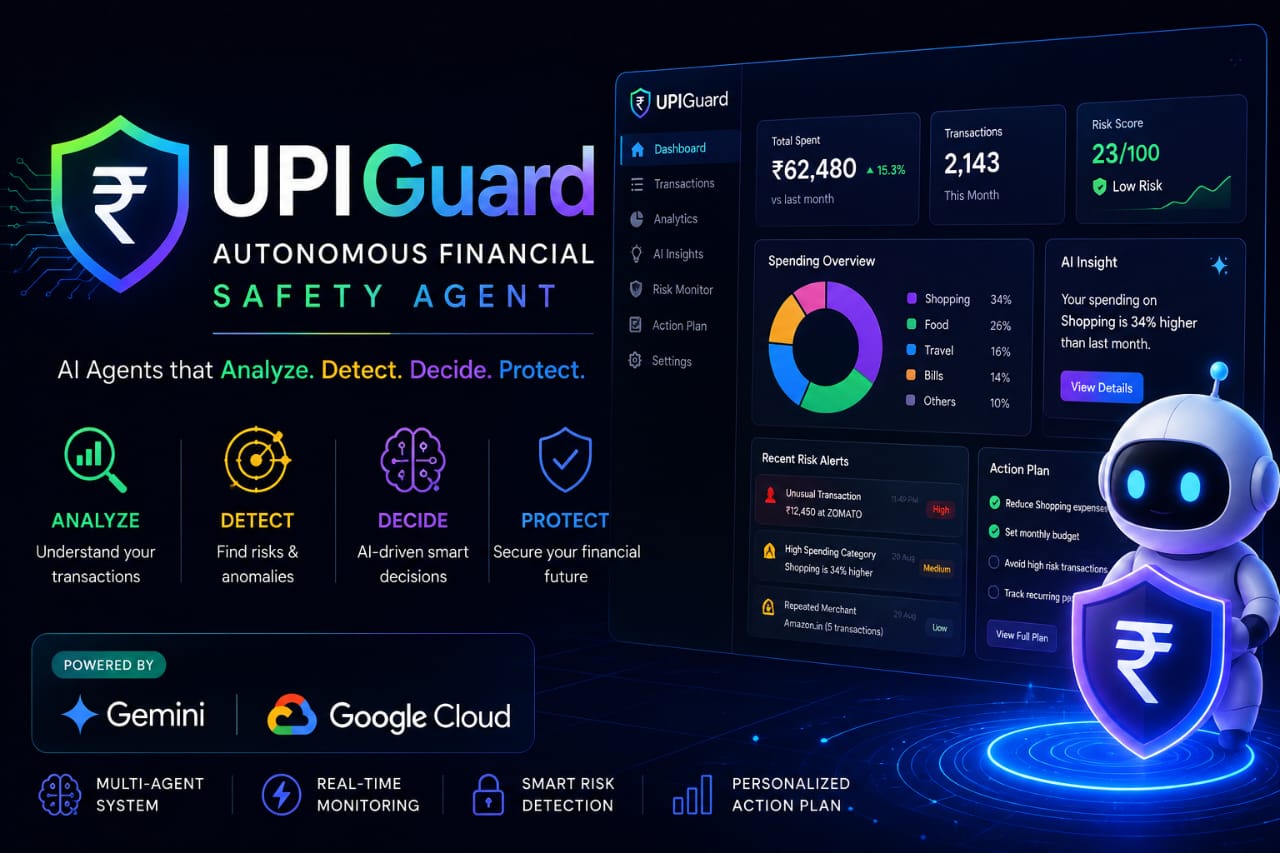
UPIGAURD
-
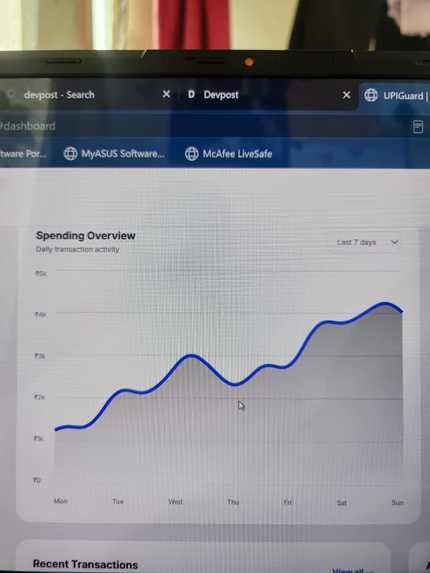
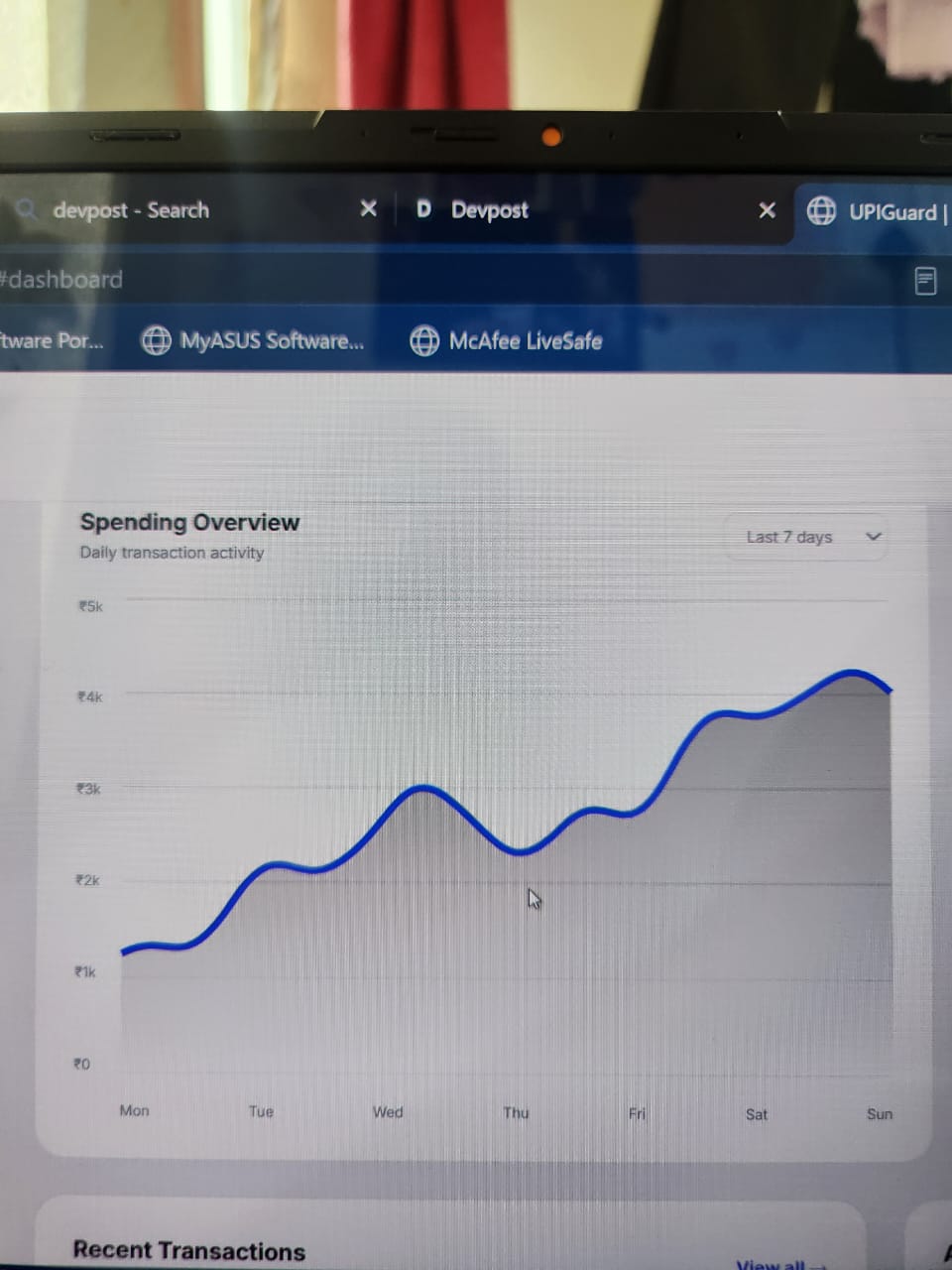
graph
-
run AI analysis
-
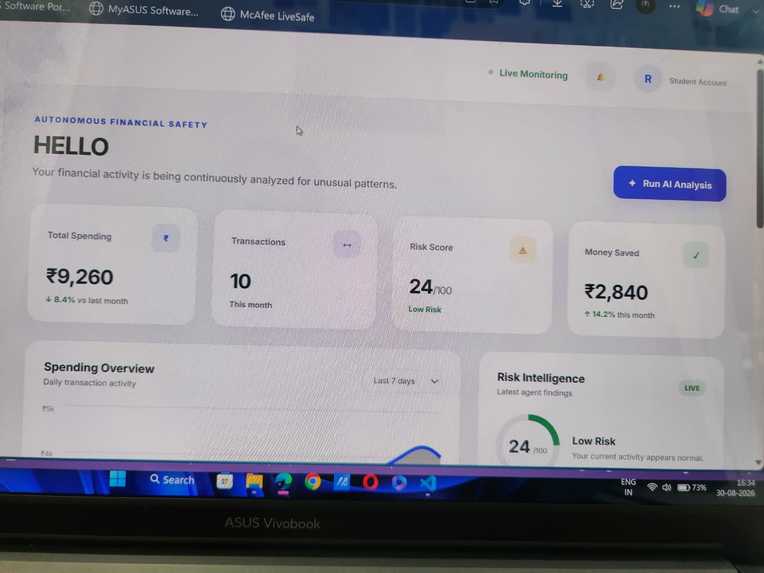
overview
-
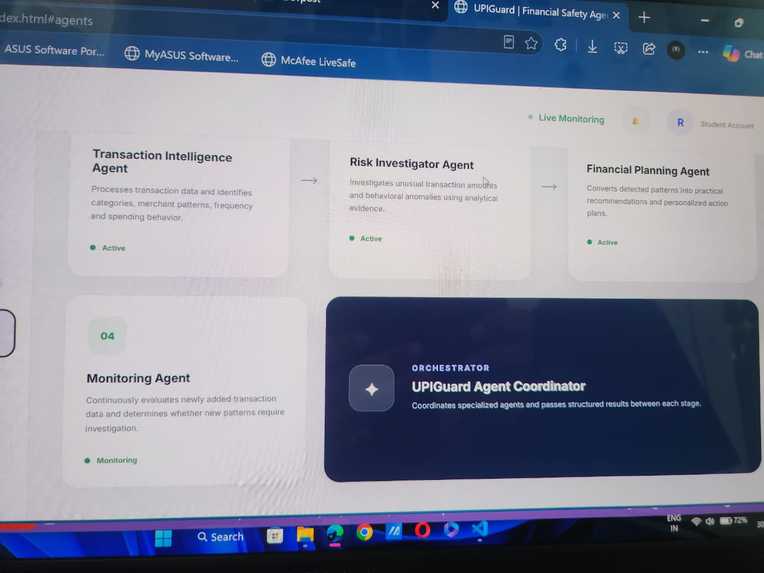
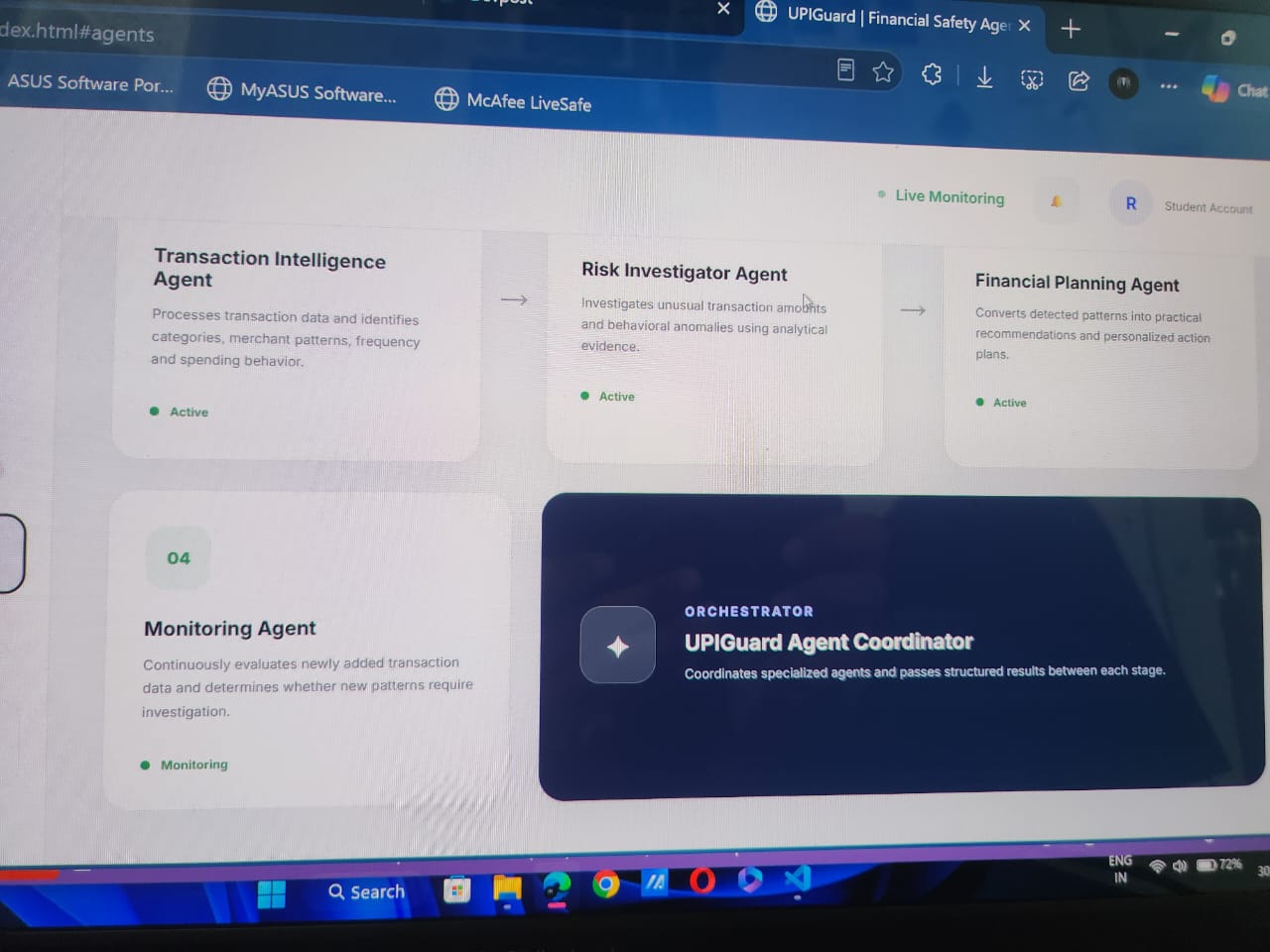
ai agents
-
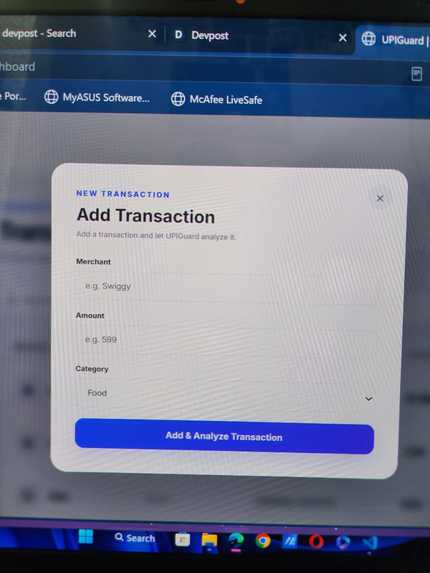
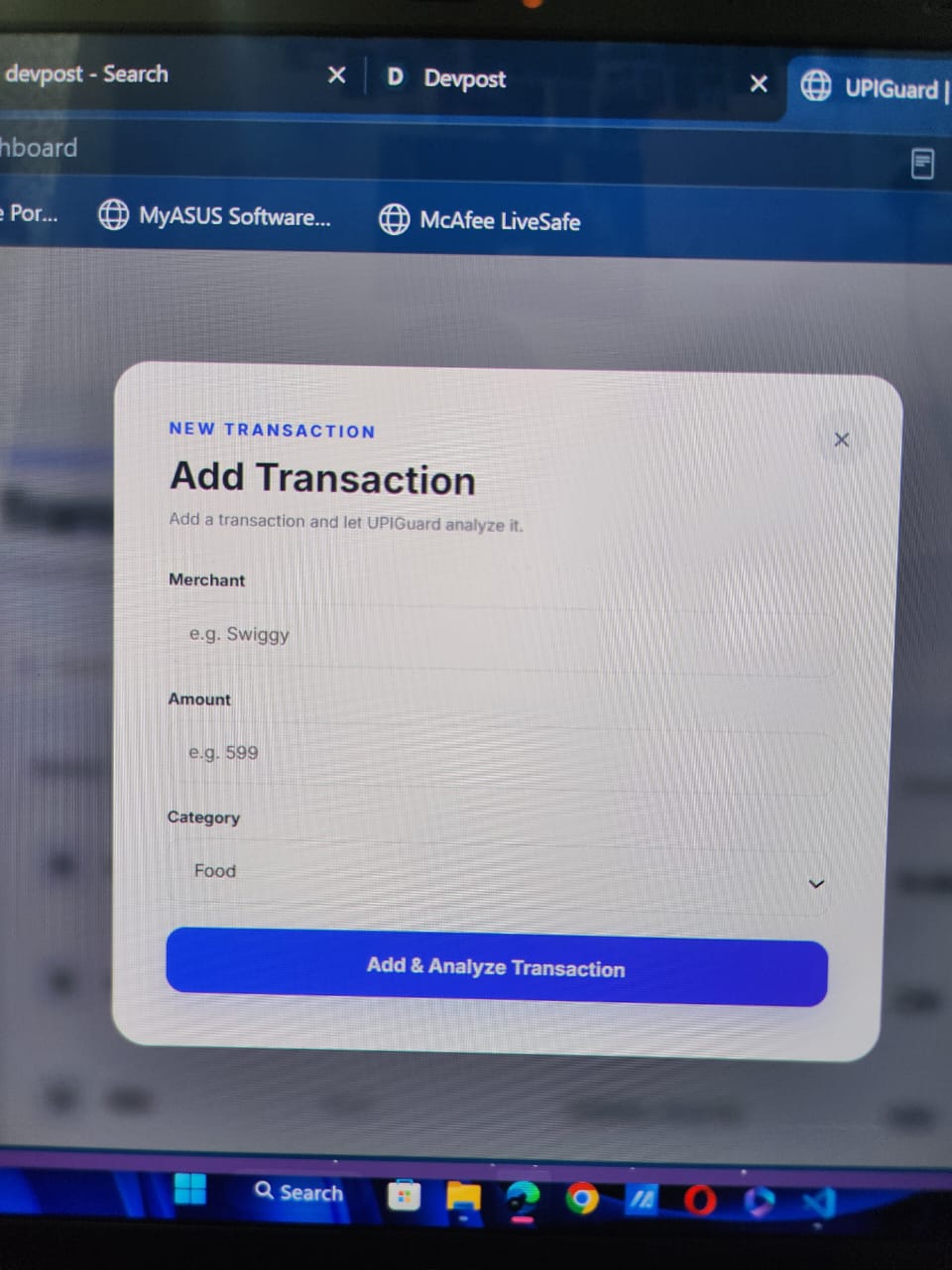
add transactions
Inspiration
Digital payments make everyday transactions fast and convenient, but transaction histories can become difficult to understand. Students and young users may not notice unusual spending, repeated merchant activity, or changes in their spending behavior until the problem becomes significant.
We wanted to build a system that does more than display financial charts or answer questions. UPIGuard was created as an autonomous financial safety agent that can analyze transaction data, investigate behavioral risks, and turn its findings into concrete actions.
What UPIGuard Does
UPIGuard transforms transaction data into an autonomous financial safety workflow.
The system:
- Analyzes and summarizes transaction behavior.
- Detects unusual transaction amounts and behavioral patterns.
- Investigates detected risks using transaction evidence.
- Generates personalized financial action plans.
- Continuously evaluates newly added transaction data.
- Presents the agent's decisions and supporting evidence through an interactive dashboard.
The key idea is simple:
Analyze → Detect → Investigate → Decide → Act
Instead of requiring the user to manually inspect hundreds of transactions, UPIGuard performs the multi-step investigation automatically.
Agent Architecture
UPIGuard uses specialized agents with clearly separated responsibilities:
Transaction Intelligence Agent
Processes transaction data and identifies spending categories, merchant patterns, transaction frequency, and overall spending behavior.
Risk Investigator Agent
Investigates unusual transaction amounts and behavioral anomalies. It uses analytical evidence rather than generating unsupported warnings.
Financial Planning Agent
Converts the detected patterns into practical recommendations and a personalized action plan.
Monitoring Agent
Evaluates new transaction data and determines whether a new pattern requires investigation.
Orchestrator
Coordinates the workflow and passes the results between specialized agents.
This separation allows each agent to focus on a specific responsibility instead of relying on a single generic chatbot.
How We Built It
UPIGuard is built in Python using Google's Agent Development Kit (ADK) and Gemini. Pandas is used for deterministic transaction analysis, while Plotly and Streamlit provide the interactive visualization layer.
The agent workflow combines deterministic data processing with Gemini-powered reasoning:
Transaction Data → Analytics Tools → Specialized Agents → Risk Investigation → Action Plan → Dashboard
Google Cloud is used for deployment of the agent application.
What Makes It Different
UPIGuard is designed around autonomous execution rather than a conventional chat interface.
A user can provide transaction data and let the system perform the investigation workflow. The system identifies patterns, investigates potential risks, and produces an action plan without requiring the user to manually perform each analytical step.
This makes the project useful as a practical example of an agent handling a multi-step workflow over structured data.
Challenges
One of our biggest challenges was preventing the AI from producing generic financial advice.
We therefore separated numerical analysis from AI reasoning. Transaction statistics and anomaly signals are calculated using deterministic Python tools, while Gemini is responsible for interpreting those results and communicating them clearly.
Another challenge was coordinating multiple specialized agents while keeping their responsibilities clearly separated.
What We Learned
Building UPIGuard showed us that an effective AI agent is not simply an LLM inside a user interface.
A useful agentic system needs:
- Specialized tools
- Clear agent responsibilities
- Structured data
- State and workflow coordination
- Evidence-based reasoning
- Actionable outcomes
We also learned how to combine deterministic data analytics with Gemini reasoning and deploy an ADK-based agent application on Google Cloud.
Future Scope
UPIGuard can be extended with real-time transaction streams, stronger behavioral anomaly detection, notification workflows, financial goal tracking, and additional Google AI capabilities.
The long-term goal is to evolve UPIGuard from a transaction analysis system into a proactive financial safety layer that can identify meaningful changes in financial behavior and help users act before problems grow.


Log in or sign up for Devpost to join the conversation.