Inspiration
Women’s safety is still a major concern, especially when someone is travelling alone, returning home late, or facing an unexpected emergency. Existing safety solutions often depend on the user manually pressing an SOS button after a dangerous situation has already occurred.
We wanted to build something more proactive than reactive.
This inspired us to create RAKSHIKA AI — an AI-Powered Women’s Safety & Guardian Ecosystem that can continuously understand safety signals, detect potential danger, and connect the user with trusted guardians when help may be needed.
What it does
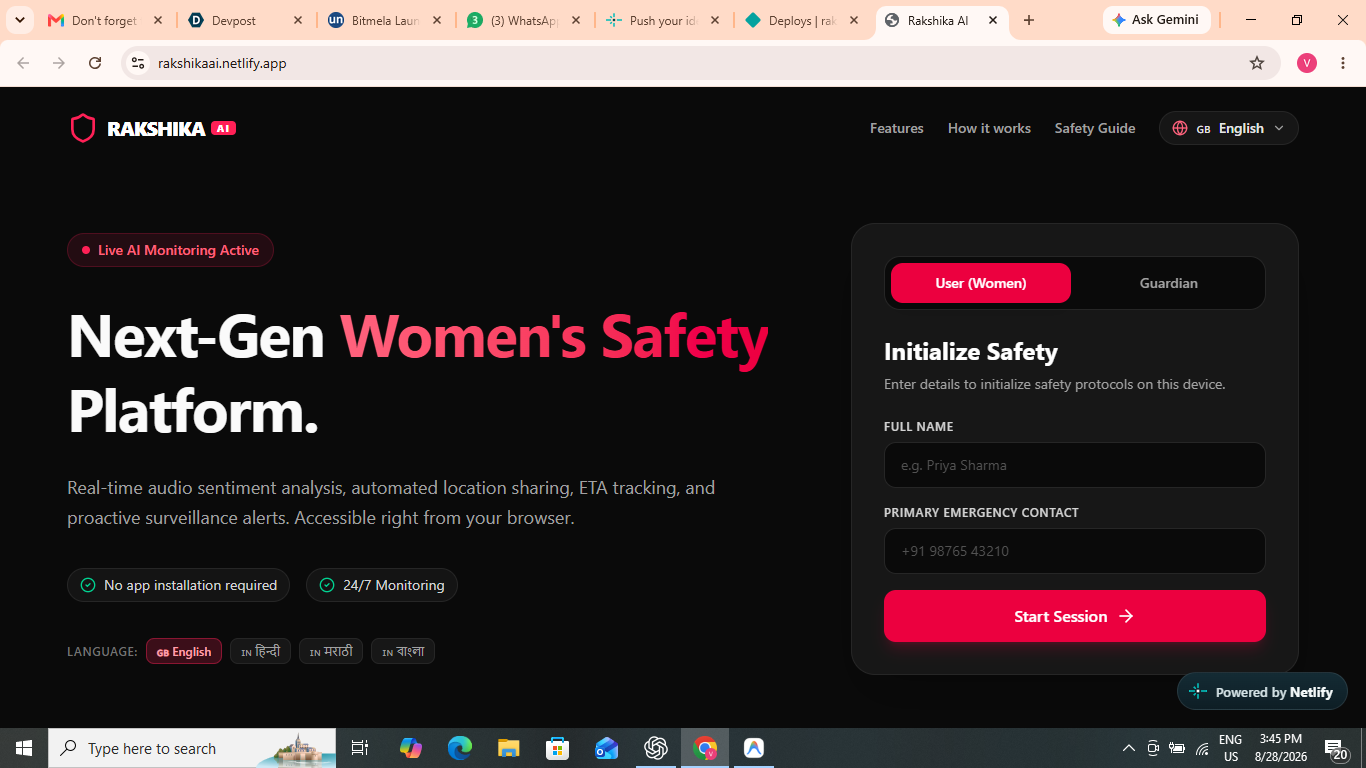
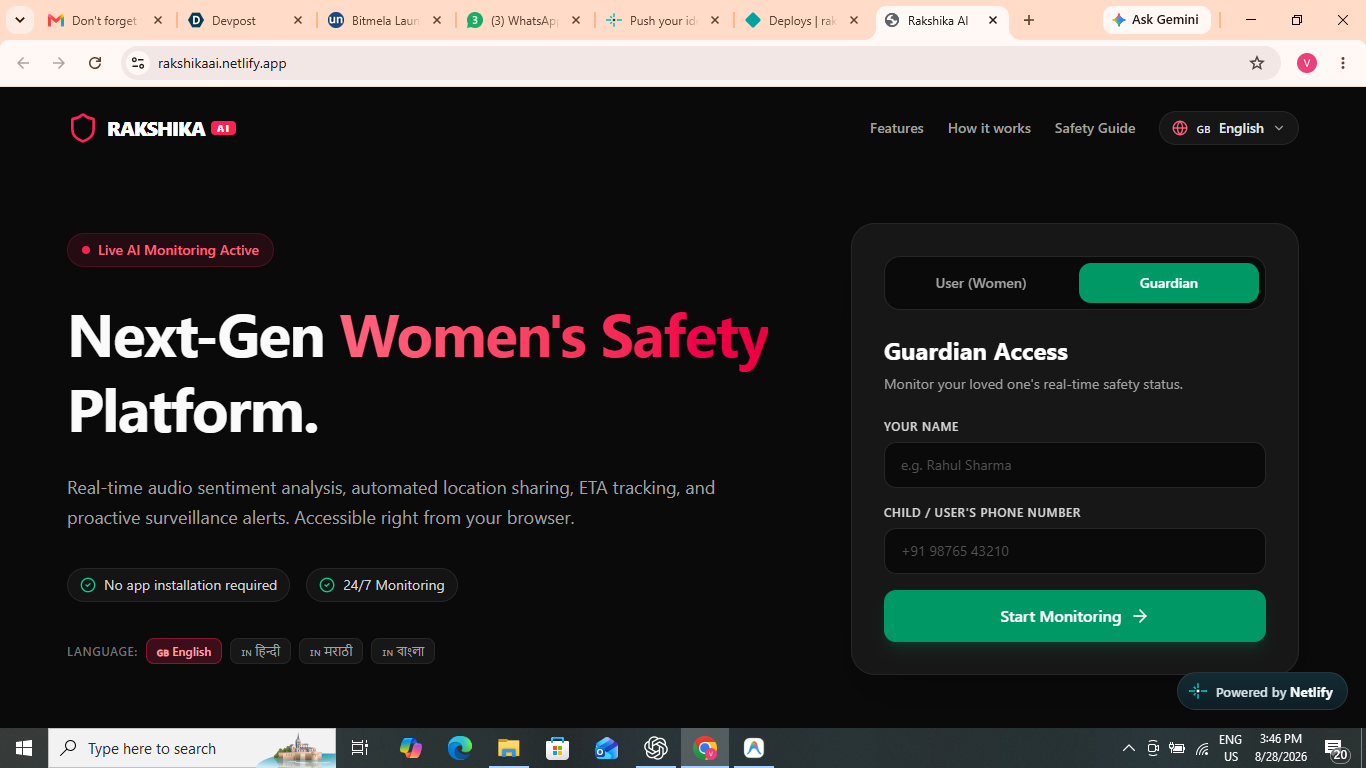
RAKSHIKA AI is a single application with two connected modes:
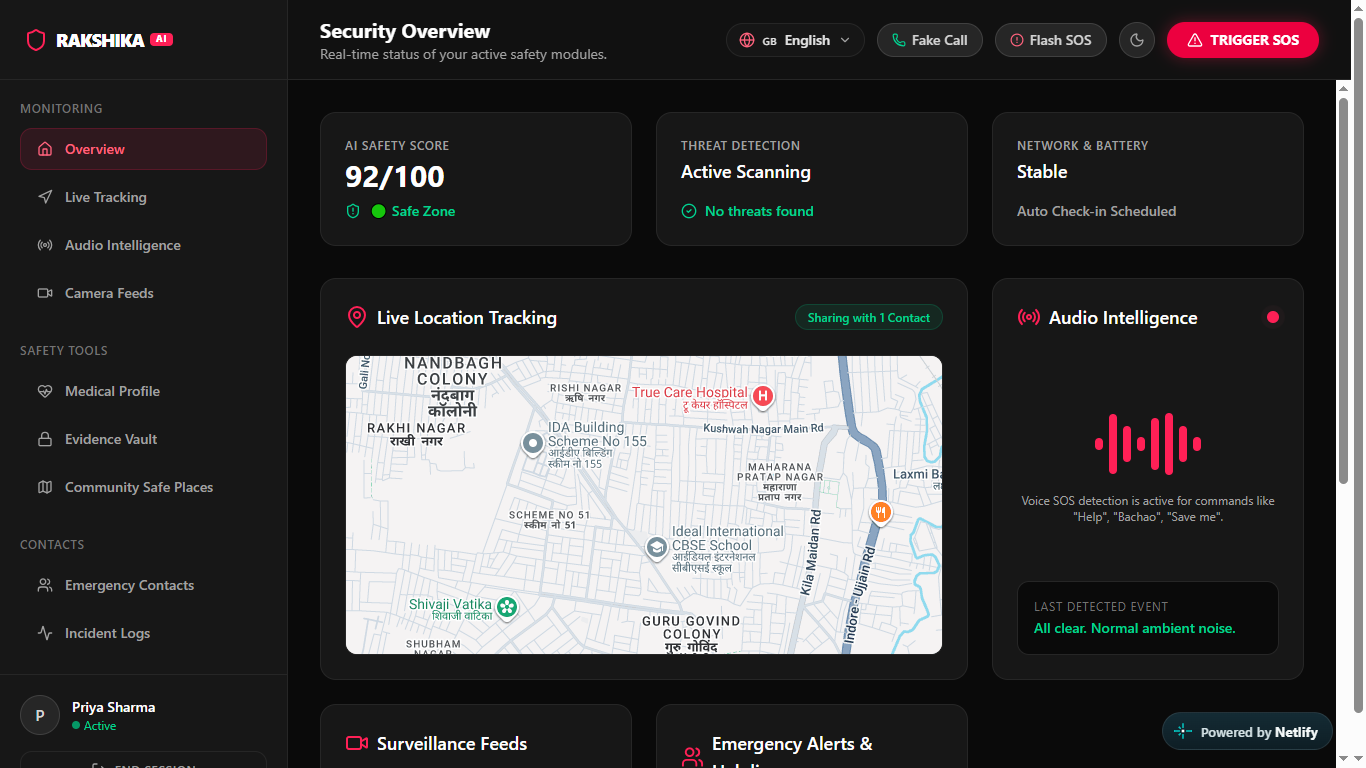
👩 Women’s Mode
Designed for the person carrying the device.
Key features:
One-tap SOS emergency alert
Live location sharing with trusted contacts
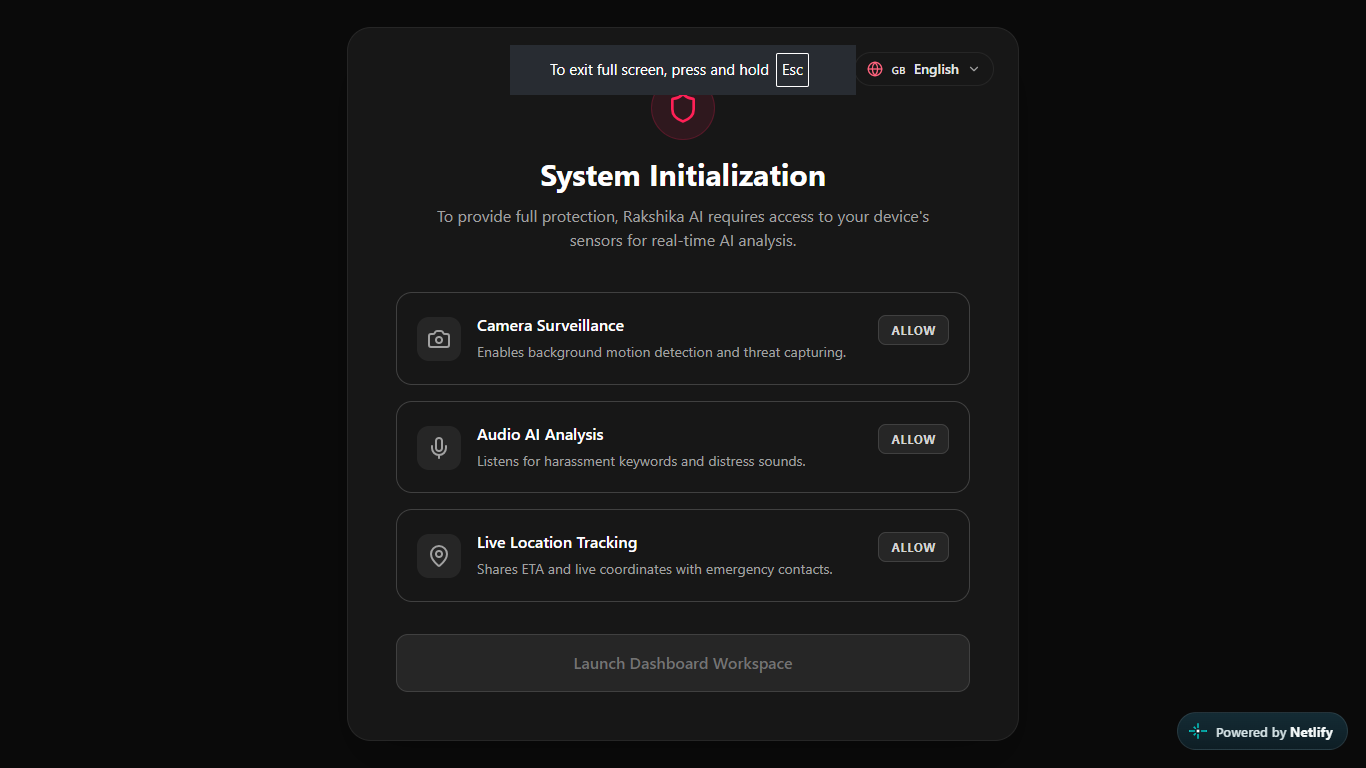
AI-powered danger-word/audio detection
Camera and motion-based emergency detection
Automatic emergency evidence capture
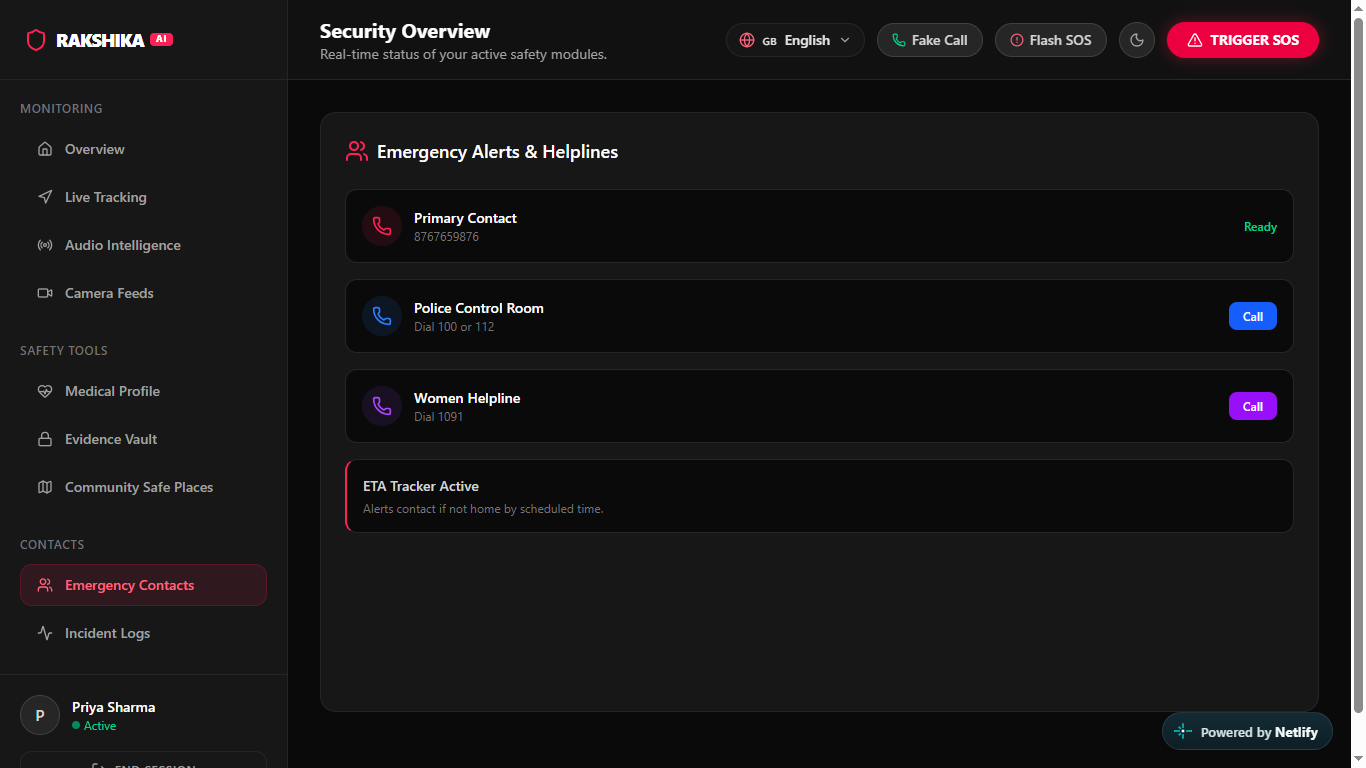
Trusted emergency contacts
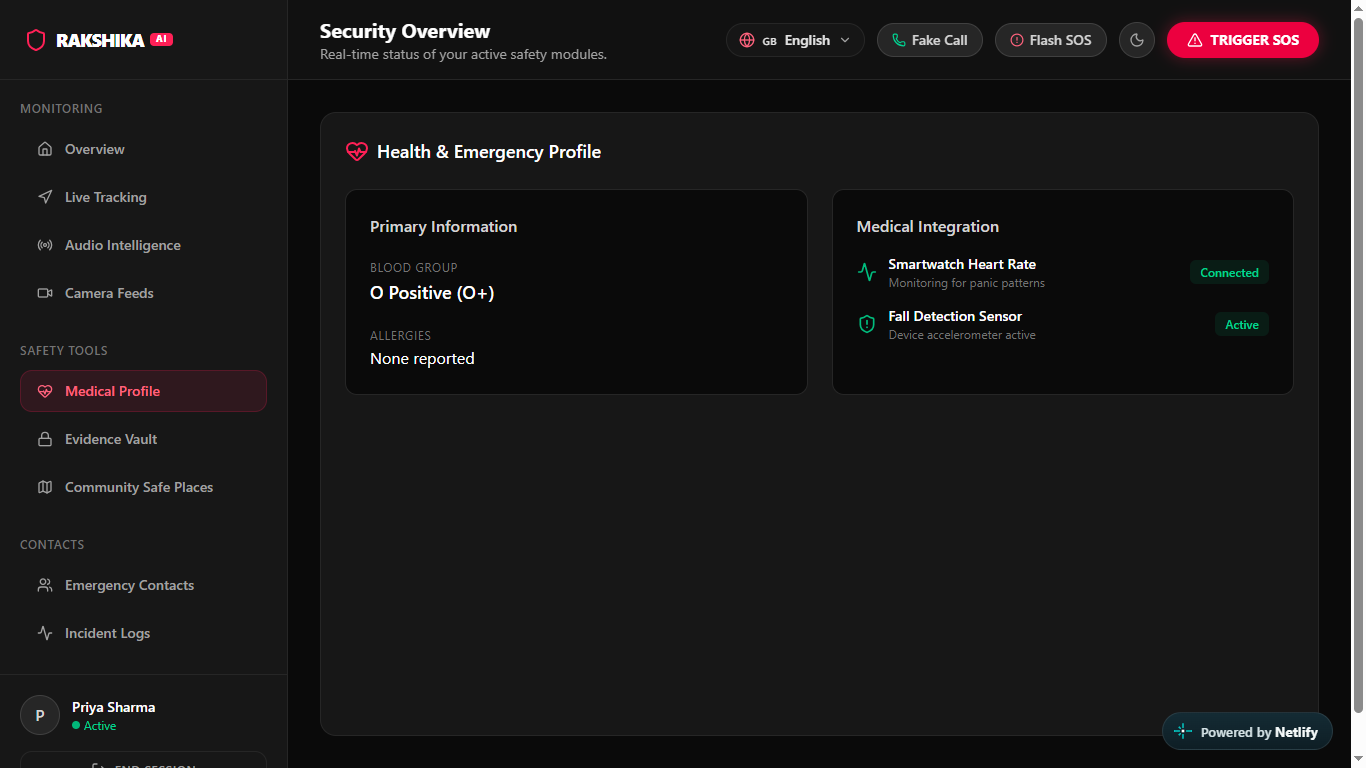
Safety status and active protection monitoring
Quick emergency calling and messaging
🛡️ Guardian Mode
Designed for trusted family members or guardians.
Guardians can:
View shared live location
Receive emergency alerts
Monitor safety status
Receive AI-generated risk notifications
Access emergency information shared by the user
Respond quickly during a potential emergency
The core idea is to create a connected safety ecosystem instead of just an SOS button.
How we built it
RAKSHIKA AI was designed as a modular, mobile-first safety platform.
The system consists of:
User Layer → Women’s Mode and Guardian Mode
AI Safety Layer → Audio/danger-word detection, motion analysis and risk assessment
Emergency Layer → SOS, location sharing, emergency contacts and alerts
Guardian Layer → Real-time safety updates and emergency response
Privacy Layer → User-controlled permissions, consent-based location sharing and controlled access to sensitive information
We focused on creating a simple interface so that emergency actions can be performed quickly, even under stress.
Challenges we ran into
The biggest challenge was designing a system that could be powerful enough to detect potential danger while remaining simple and reliable during emergencies.
Major challenges included:
Detecting potential danger without generating too many false alarms
Designing AI-based audio and motion detection for real-world situations
Creating fast emergency communication and location sharing
Making the interface usable during stressful situations
Balancing continuous safety monitoring with user privacy
Ensuring that sensitive information is only shared with authorized guardians
Designing both Women’s Mode and Guardian Mode as one connected ecosystem
Making the concept practical for real-world deployment rather than just a demonstration
Accomplishments that we're proud of
We are proud that RAKSHIKA AI goes beyond traditional emergency applications.
Our key accomplishments include:
Built a dual-mode safety ecosystem with Women’s Mode and Guardian Mode
Designed proactive AI-based danger detection
Integrated live location sharing
Created an emergency SOS workflow
Added audio/danger-word detection concepts
Added camera and motion-based emergency detection
Created connected guardian notifications
Designed a privacy-focused permission model
Created a simple, emergency-friendly user interface
Connected multiple safety signals into a unified risk-assessment concept
Most importantly, we transformed the idea of women’s safety from “press SOS when something happens” into “detect risk early and connect help faster.”
What we learned
While building RAKSHIKA AI, we learned that technology for safety must prioritize reliability, simplicity and privacy over unnecessary complexity.
We learned:
AI detection must be designed around real-world false positives and false negatives.
Emergency interfaces should require minimum interaction.
Privacy and user consent are essential when handling location, audio and camera data.
A safety application becomes more useful when it connects the user with a trusted support network.
AI should assist humans rather than completely replace human judgment in critical situations.
Real-world safety products need strong testing across different environments and scenarios.
The biggest lesson was:
“In an emergency, technology should reduce the time between detecting danger and receiving help.”
What's next for RAKSHIKA AI
Our long-term vision is to transform RAKSHIKA AI into a proactive personal safety ecosystem.
Phase 1 — Smarter Detection
Improved AI audio detection
Better motion and activity recognition
Context-aware risk scoring
Reduction of false alarms
Phase 2 — Faster Emergency Response
Automated emergency escalation
Trusted guardian networks
Emergency response coordination
Location-based emergency assistance
Phase 3 — Privacy & Security
On-device AI processing wherever possible
Stronger consent controls
Encrypted emergency data
Temporary access to sensitive information
Privacy-preserving safety monitoring
Phase 4 — Intelligent Safety Assistant
An AI safety companion that can understand context such as:
“I’m travelling alone.”
“My route suddenly changed.”
“I haven't reached my expected destination.”
The system could then provide proactive safety recommendations or escalate to trusted contacts based on user-defined policies.
Phase 5 — Wider Ecosystem
RAKSHIKA AI could eventually integrate with:
Wearable devices
Smartwatches
Public safety infrastructure
Transportation platforms
Emergency services
Campus safety systems
Verified community responders Final Vision:- RAKSHIKA AI aims to become more than an emergency app — it aims to become an intelligent, privacy-conscious safety companion that helps detect risk early, connect trusted people quickly, and give women greater confidence to move freely.
Built With
- ai
- css3
- html5
- javascript
- qrickit-qr-code
- react
- tailwind
- typescript
- vite


Log in or sign up for Devpost to join the conversation.