-
-
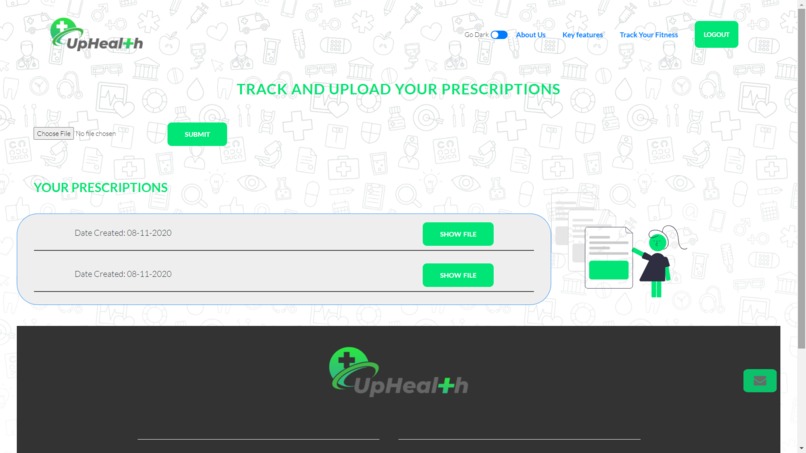
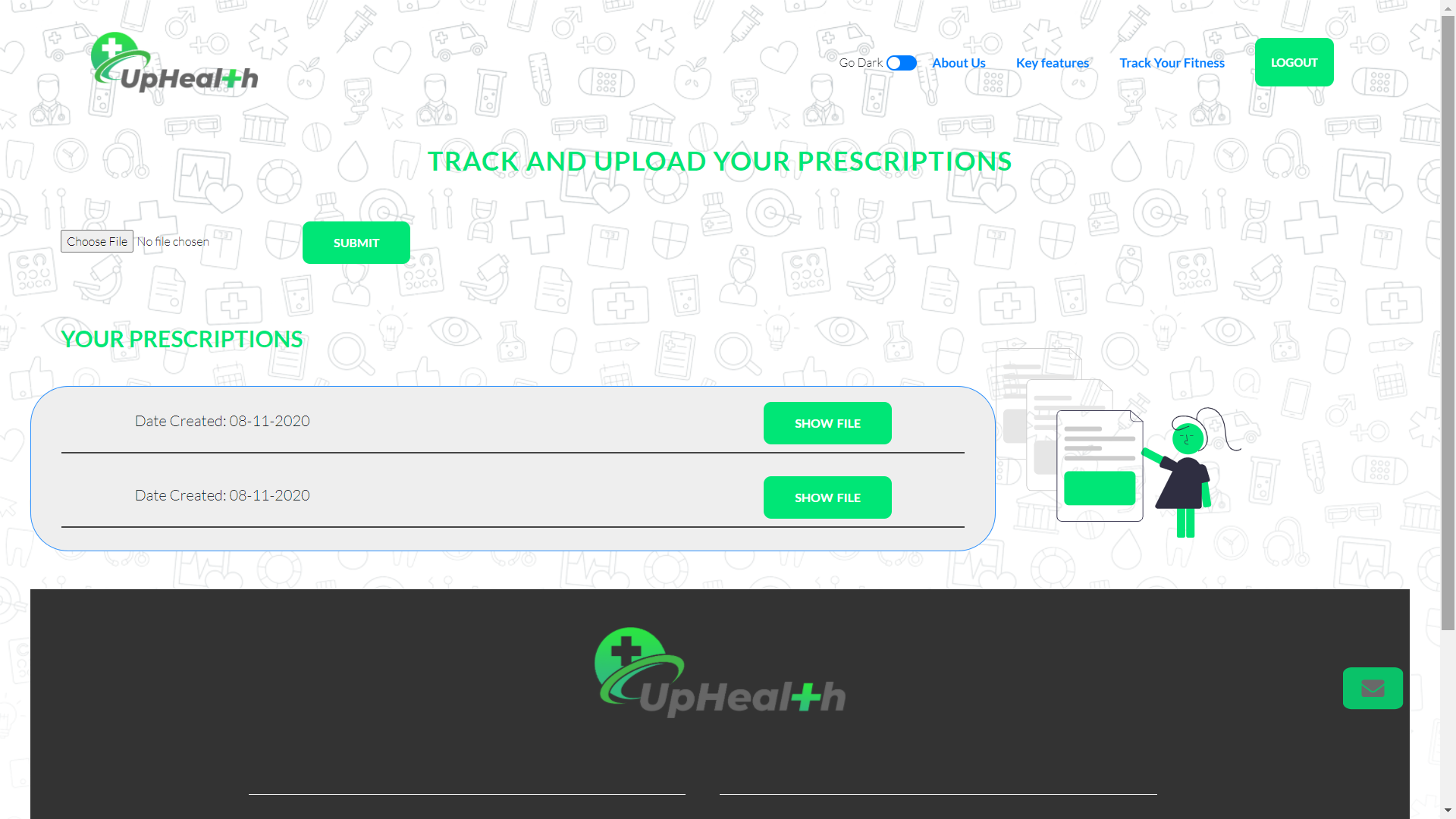
Upload docs
-
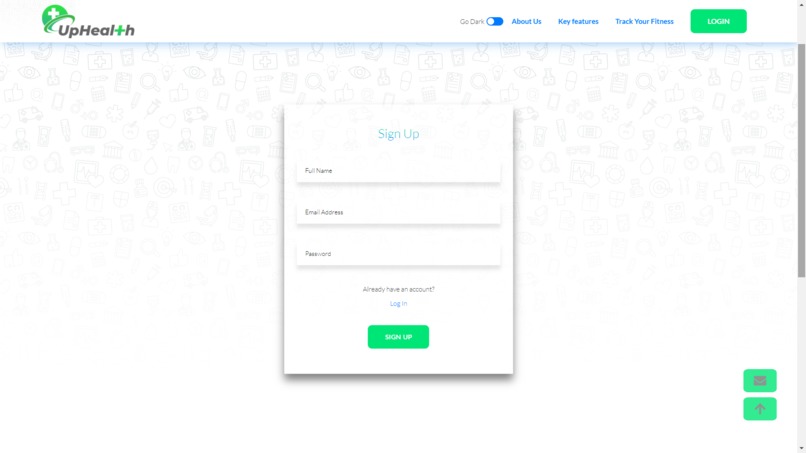
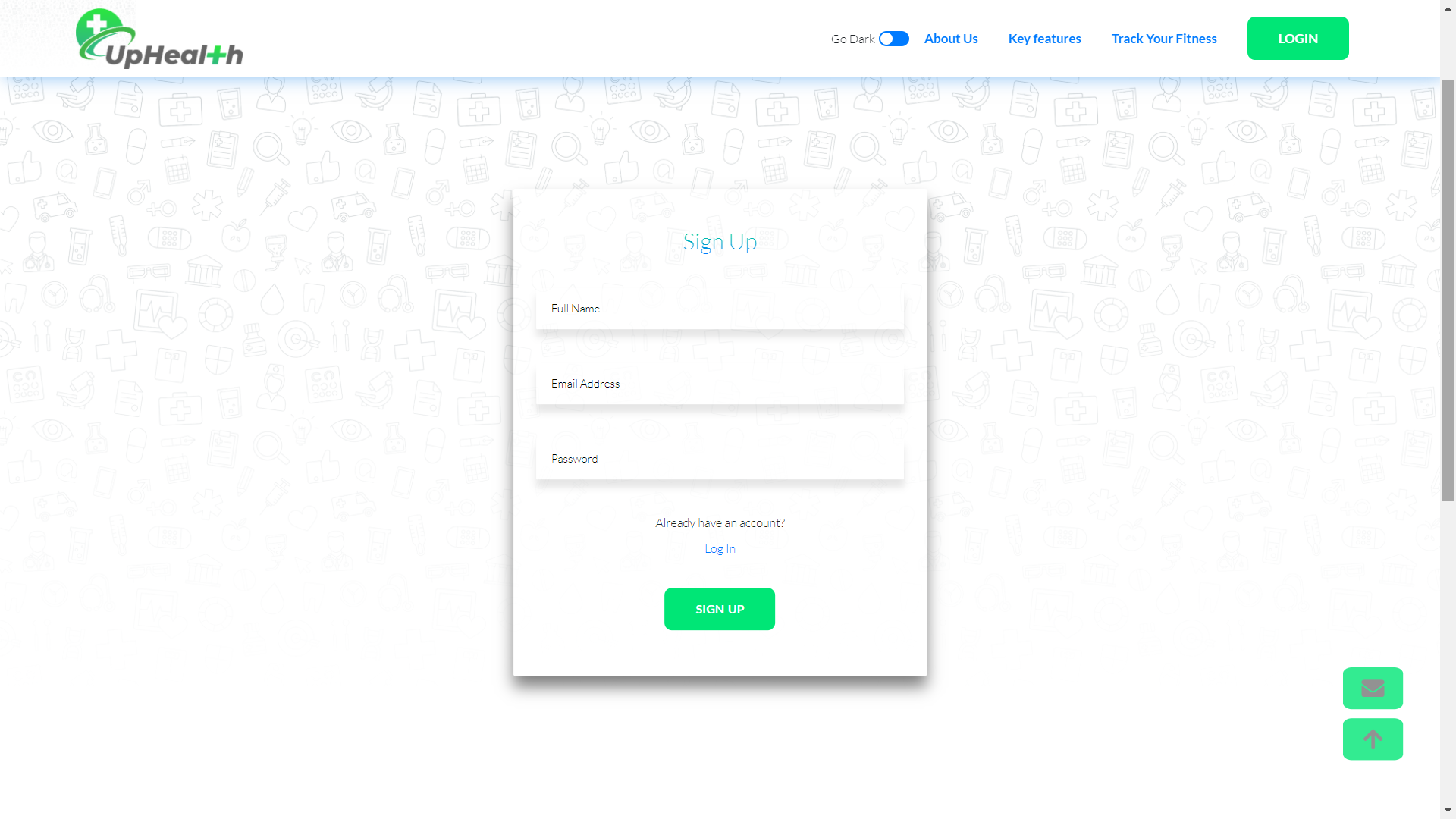
login page
-
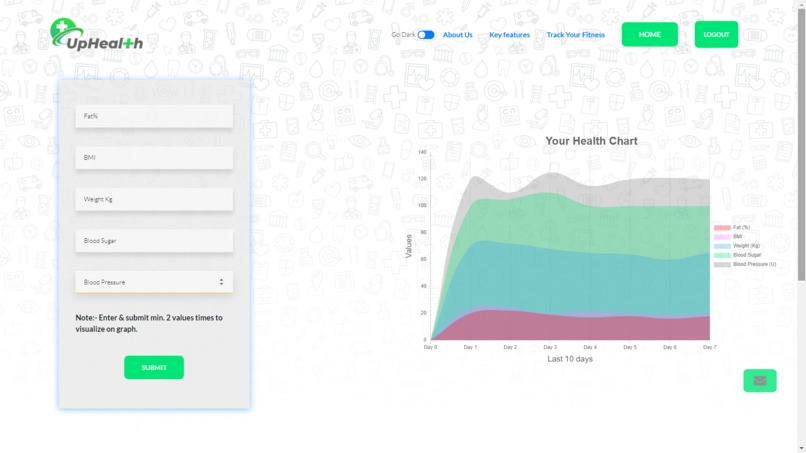
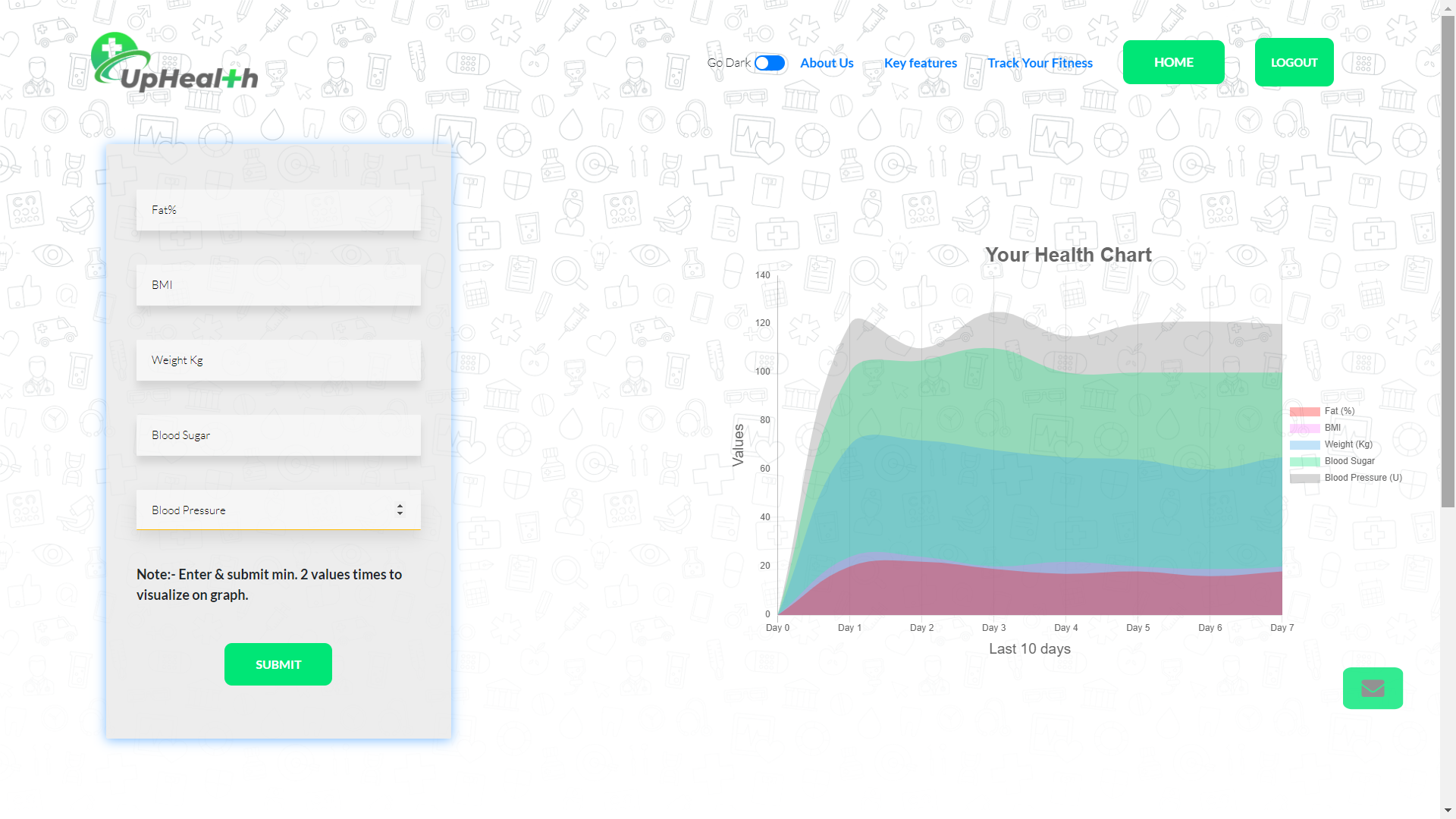
graphs
-
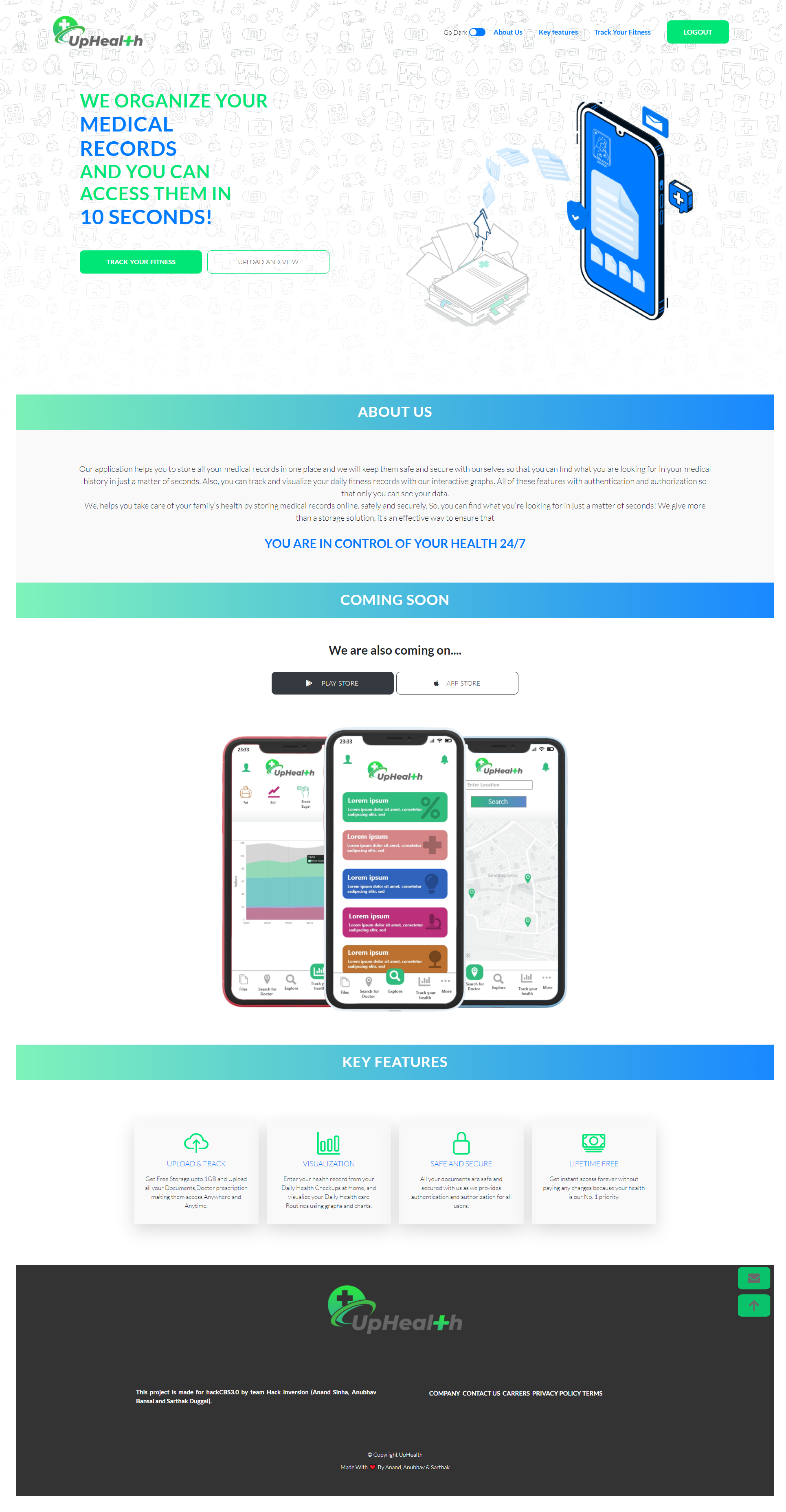
Home Page
-
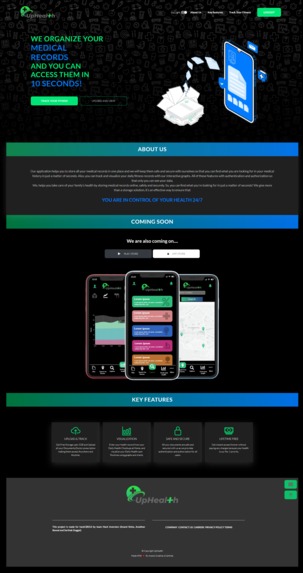
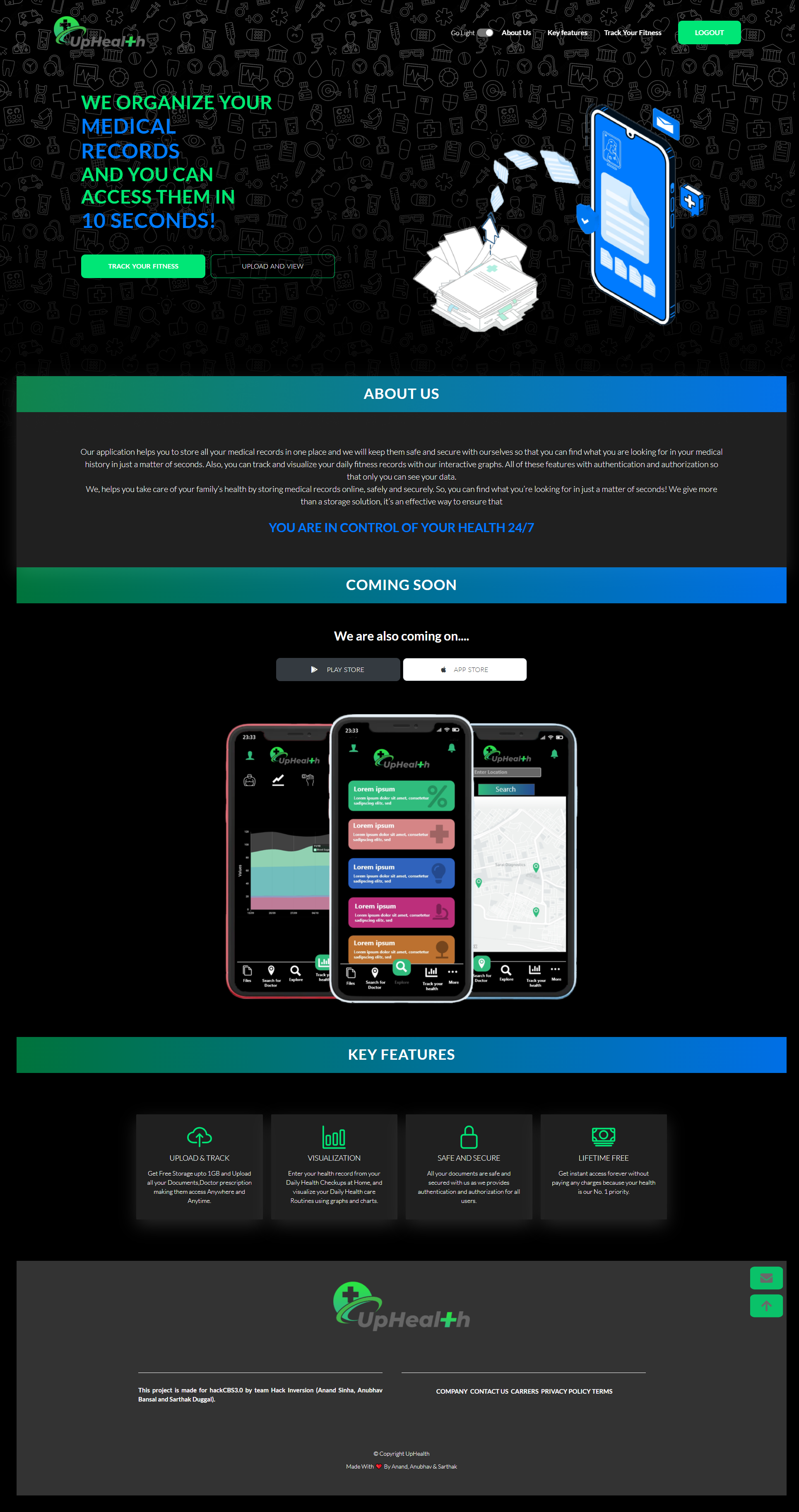
Home Page - Dark Mode
Inspiration
During these difficult times, health is our primary concern and our prior medical history is very important, it is very difficult to track a patient’s medical history, especially in cases when he/she changes cities, doctors, etc. You take care of all your legal and personal documents but when it comes to medical documents they don't get the same importance. Having precise knowledge about a patient beforehand can drastically improve how the patient’s treatment is done. It is a known fact that regularly updating and maintaining healthcare records and patient medical history is an exhaustive and expensive process.
What it does
Our solution intends to fulfill the need to create and carry a physical data folder to hold onto your medical records whenever and wherever need be. Within a few clicks your entire medical history will be displayed in front of you, ready for an update. Also these smart health records that help connect doctors, healthcare practitioners, and patients to improve research, care delivery, and public health. Also, one can track and visualize their daily fitness records with our interactive graphs. All of these features will be setup with authentication and authorization so as to keep everyone’s data safe and only under their security. Doctors will be able to forecast future symptoms that might occur to a patient by tracking down his/her medical history. Not only doctors but other different clients such as Medical Insurance companies could view the patient’s medical history with the patient’s consent and further have a basic vision of all health related problems that could come up for our patient. A major impact our idea can have in people’s life is to change their way of keeping a track of their medical history. Not just for a person, but for the doctors who can within minutes have a whole overview of their patient’s medical cycle. With our scalable approach, ML algorithms will narrow down a person’s symptoms to specific or fewer issues, reducing the mess.
How we built it
This project was build using the latest tools and techniques in web development. Firstly, two of our team members completed the frontend of this project. The frontend was done using SCSS ( CSS pre-processor ), with some advanced jQuery plugins for transitions and smooth-animations. After completing the frontend, several API endpoints were created with Node.JS and various npm packages. Also, we used MongoDB as a database. Then, we connected our frontend with our backend by making several API calls using Axios. The other-two team-members did the backend part of the project. Onto the deployment part, we deployed our website on Heroku by using Github CLI. So, in this way, we completed our whole project.
Challenges we ran into
While creating the controller function for logging-out the user, we ran into a problem on how we can destroy the JWT cookie that was meant to authenticate whether the user was logged in or not. Firstly, we were changing the expired time of the JWT cookie, but that was not working on all the webpages as it was giving some error like- JWT Malformed but after spending an hour or two, we finally took the shortcut, and instead of changing the expired time, we cleared the whole cookie** instead and by that, we logged-out the user from any page.
Accomplishments that we're proud of
We believe we brought up an effective solution to get rid of the problem of carrying our medical documents everywhere and possessing the risk of losing them. With the ease of implementation using web frameworks, anyone with the internet can access their documents from any corner of the world. We believe it will an effective way to move one more step forward to becoming fully digital.
What we learned
We learned about various new technology we tried to study machine learning models but due to time constraints, we were not able to attach to our web. We learned about express and various other new concepts. For idea validation, we have circulated google forms and learned about what we can improve in our idea so we added the track your fitness feature with interactive graphs.
What's next for UpHealth
Currently, our project focused on providing ease to patients and somehow to the doctors but without any use-case of advanced Machine Learning or AI concepts. But, we are planning on doing that by adding the feature of an advanced AI model for predicting the type of disease a patient might have and based on that we will recommend the doctors and medication to the patients. This feature also has another use-case and i.e, it can help doctors in identifying rare diseases by the records of previous patients who showed the same symptoms.


Log in or sign up for Devpost to join the conversation.