Inspiration
AI skills change faster than traditional course catalogues. The important decisions are practical: choosing the right level of intelligence, supplying useful context, checking evidence, recovering from failure, and verifying an output before shipping. I wanted those habits to feel like a world you can enter, not another page of videos.
The concept was reviewed and appreciated internally by upGrad leadership, including the CEO, and I received permission to submit it individually for OpenAI Build Week.
What it does
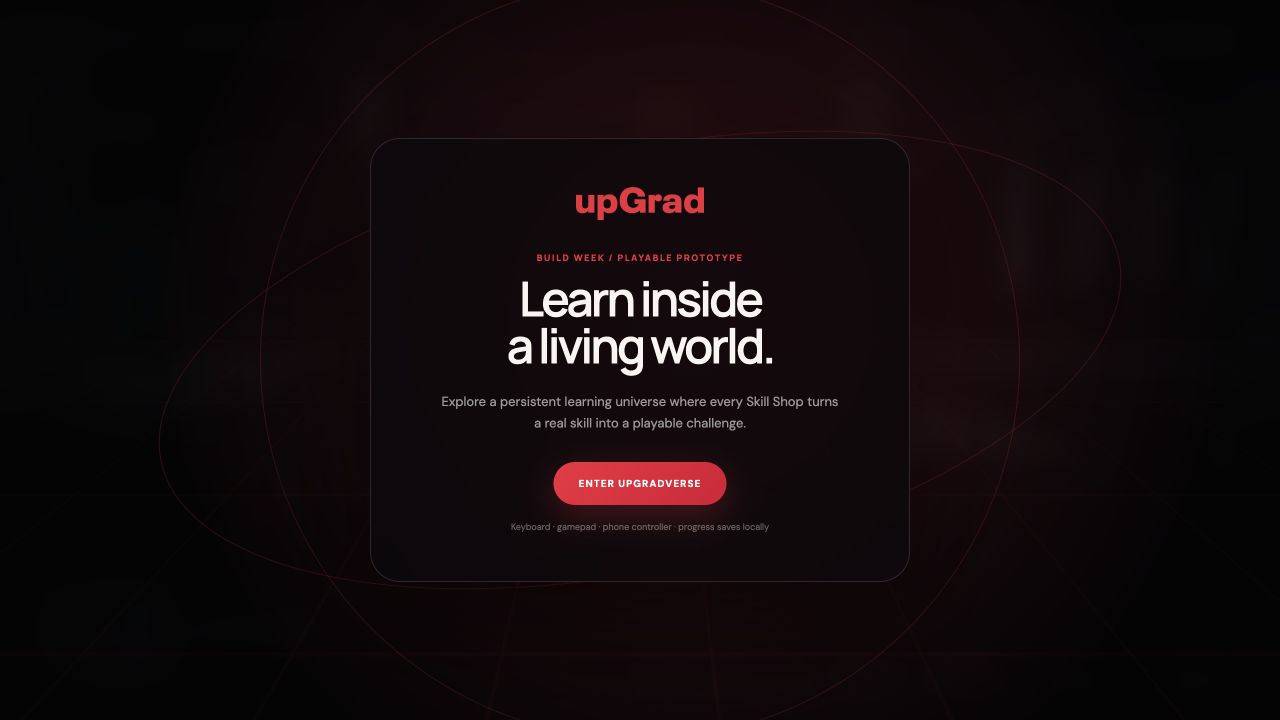
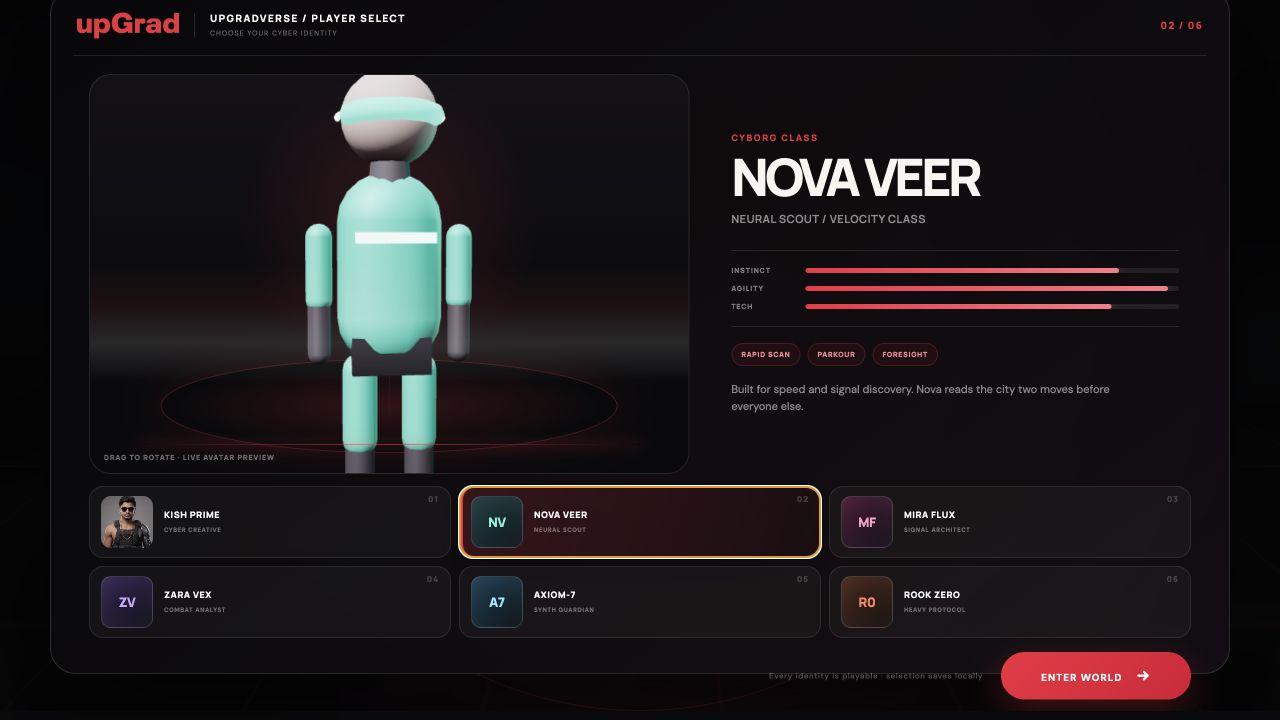
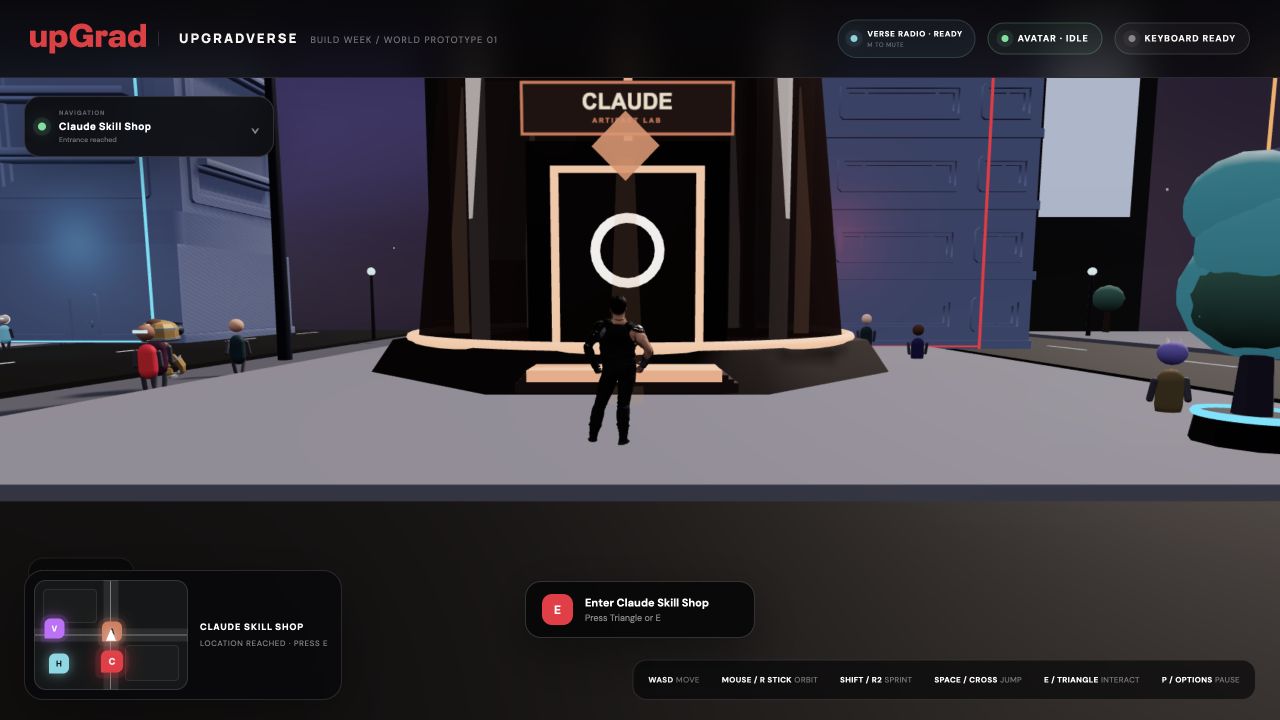
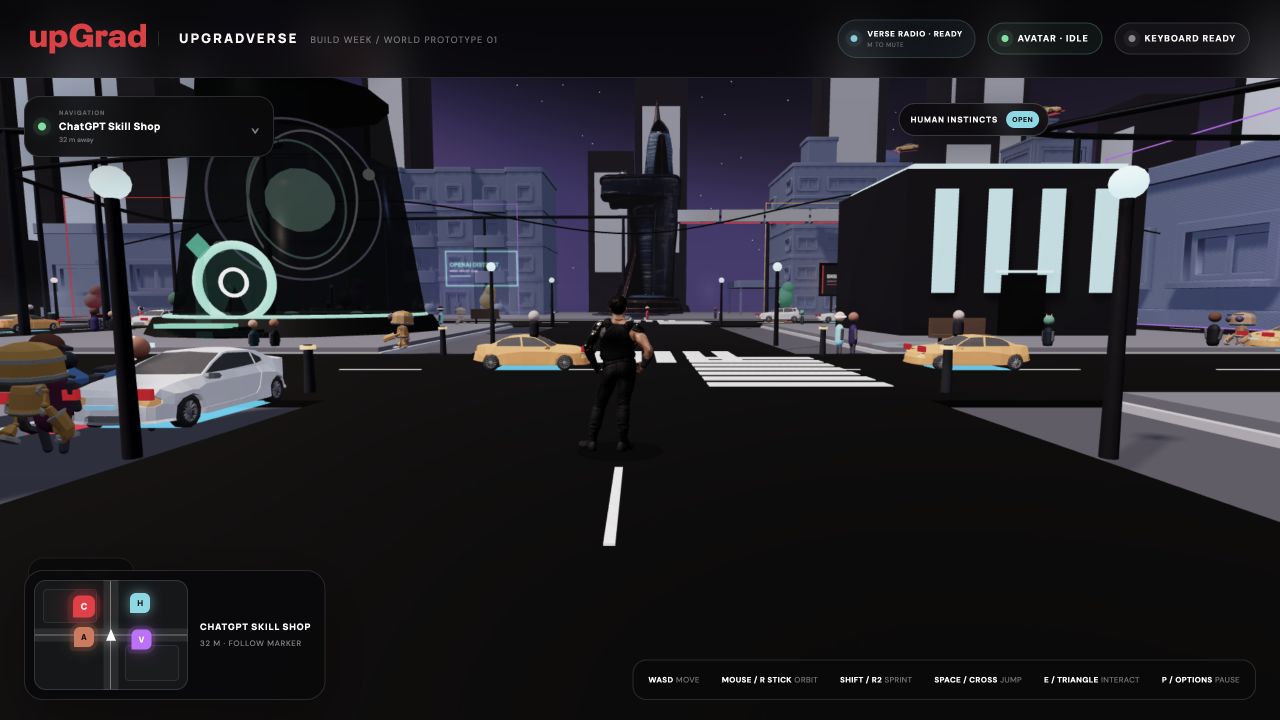
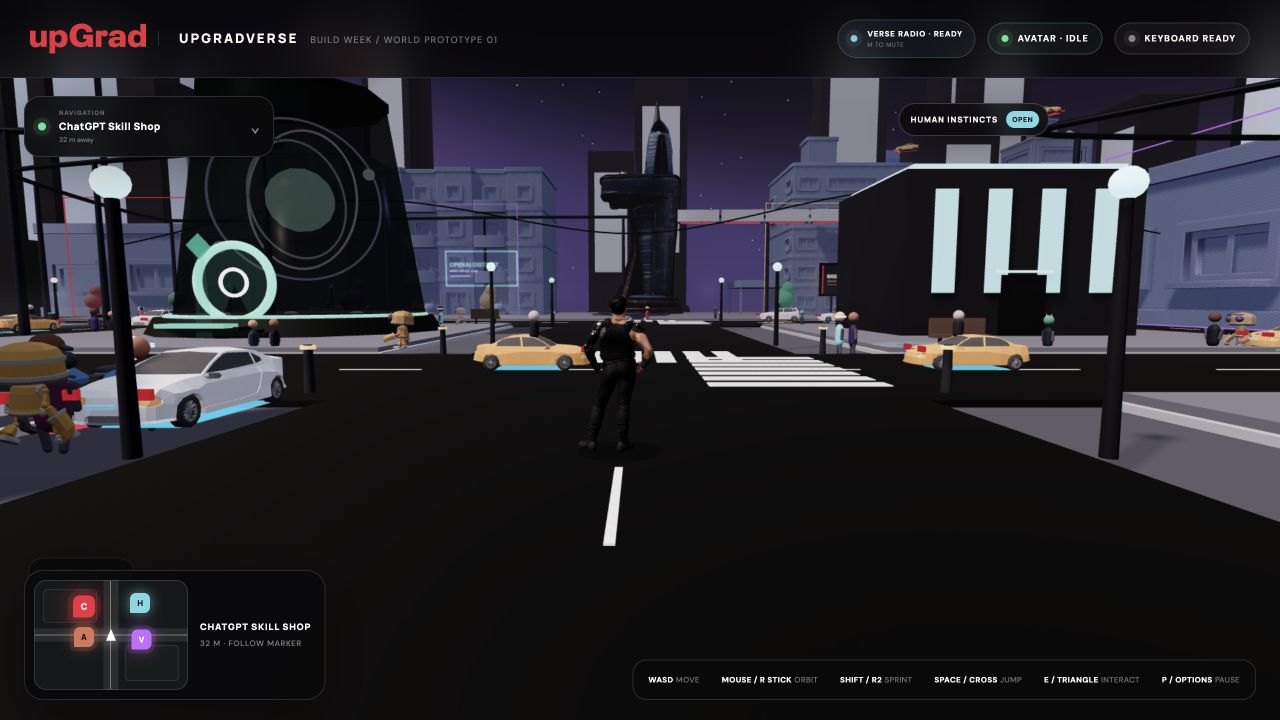
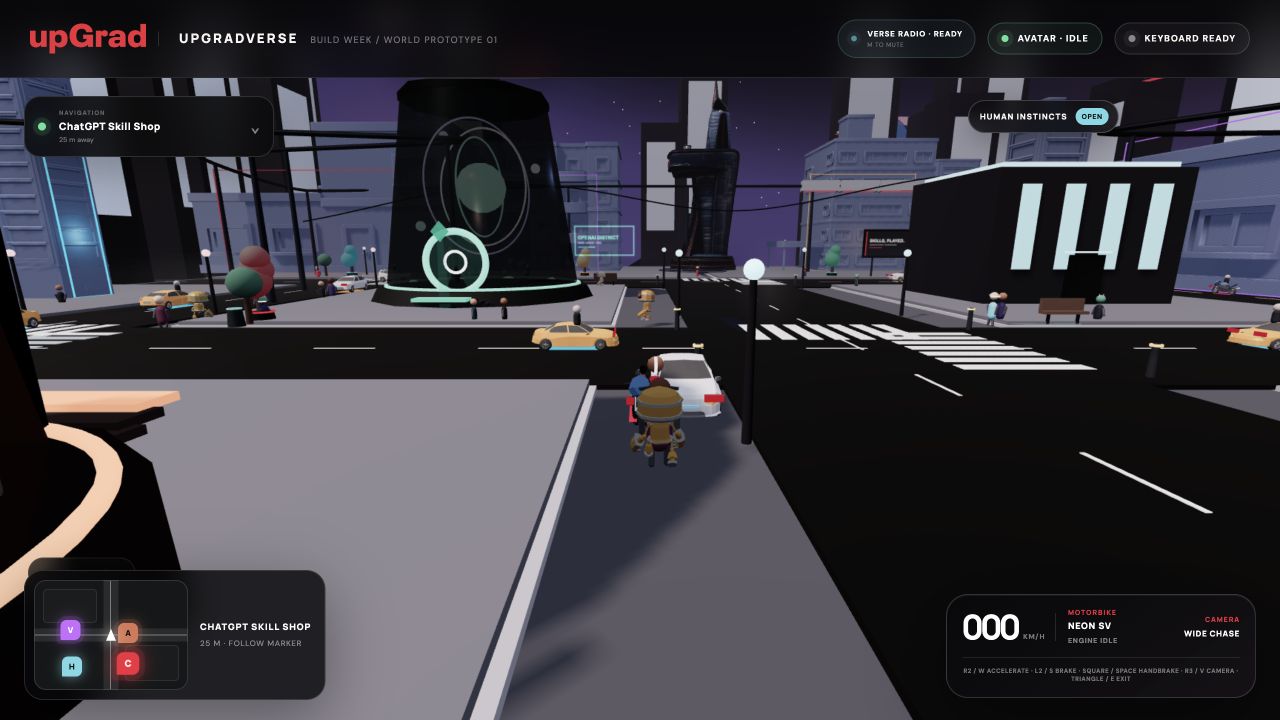
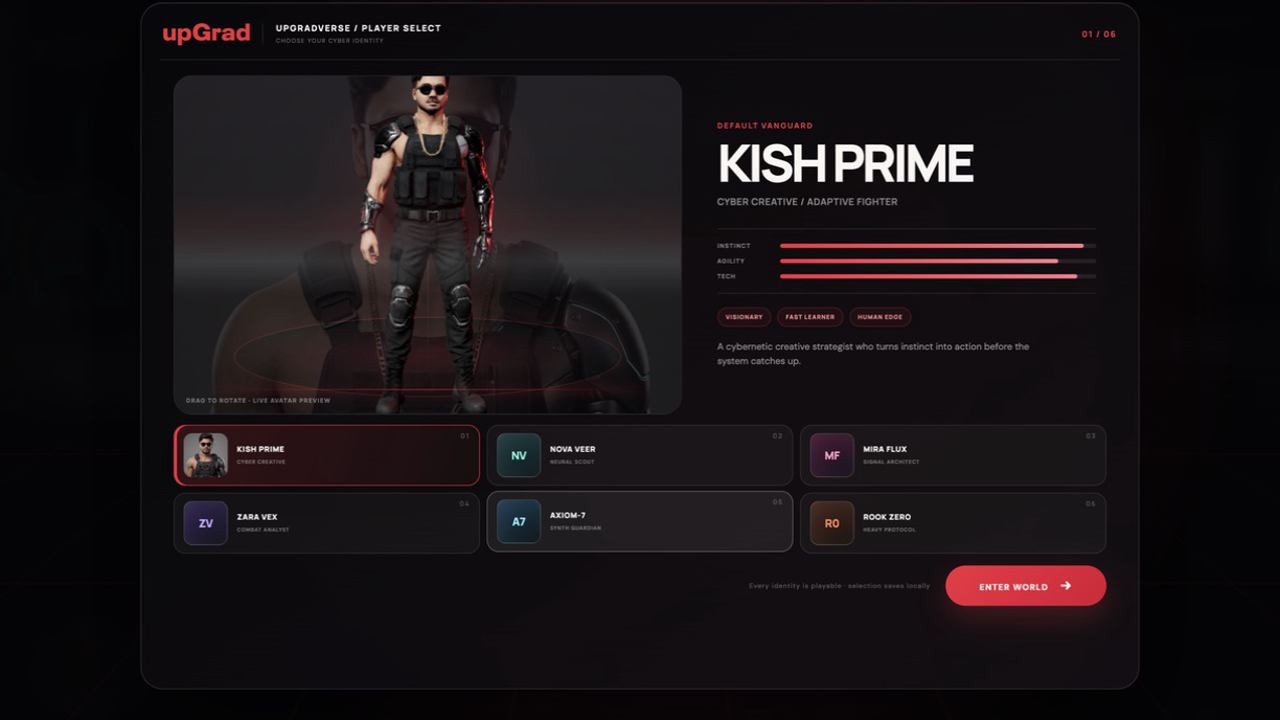
upGradVerse is a browser-native 3D learning world where AI skills become places, missions, and repeatable practice. Players explore a cyber-city, select one of six characters, drive cars and motorcycles, use a DualSense controller or keyboard, and enter modular Skill Shops.
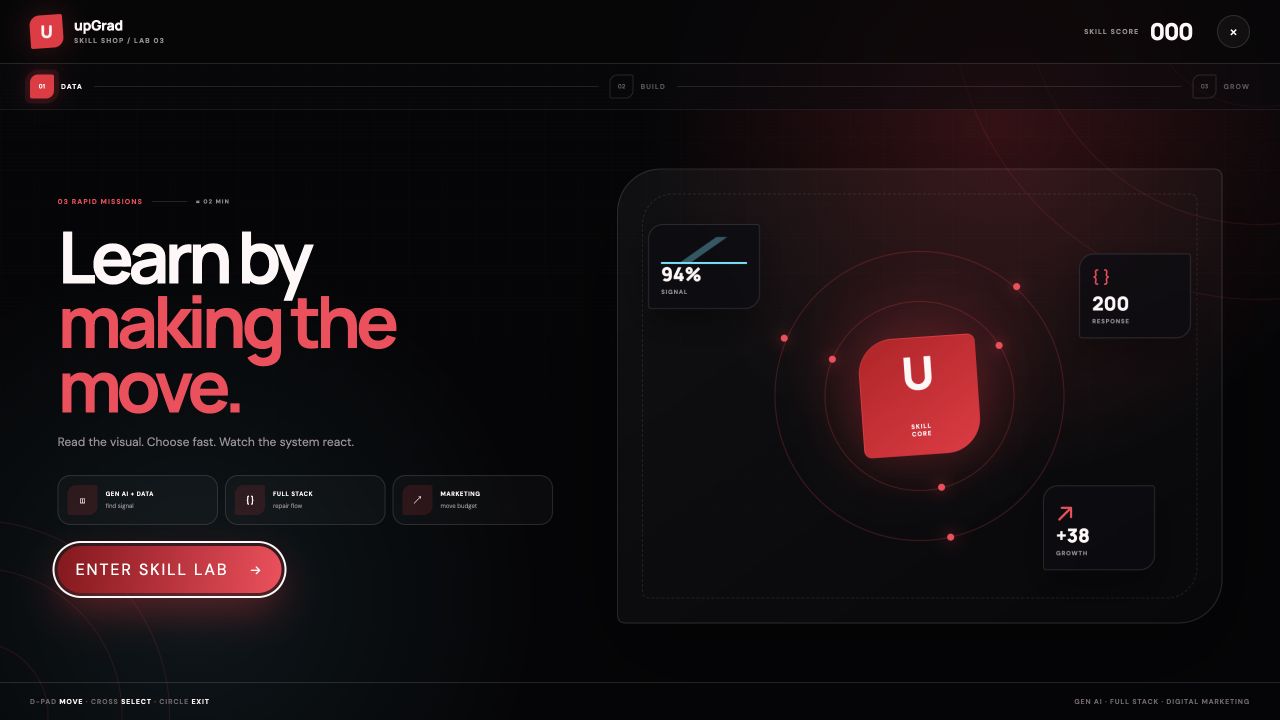
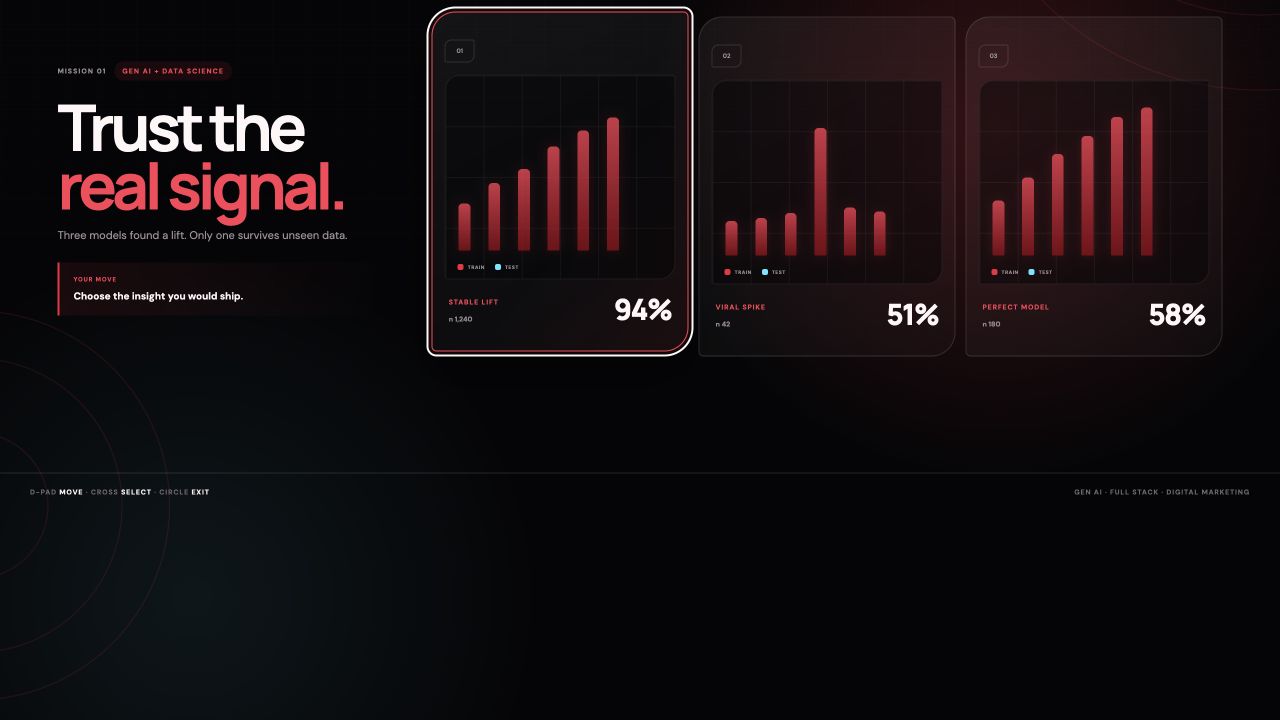
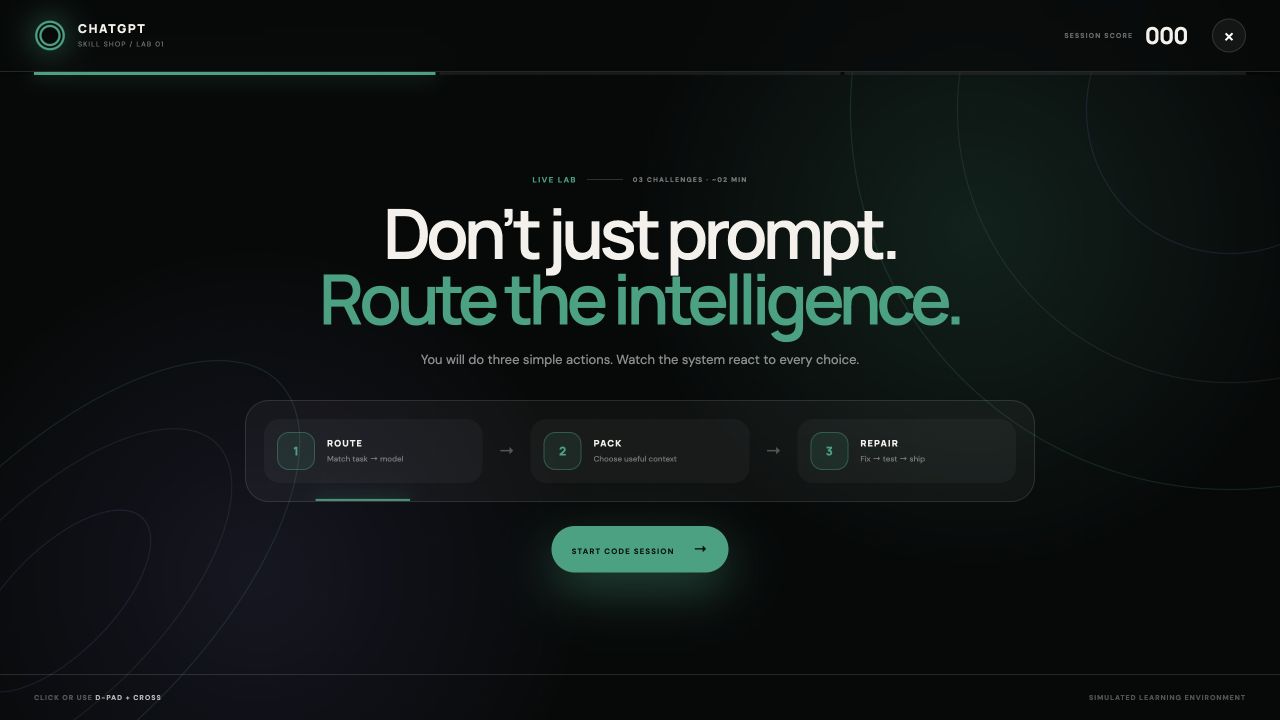
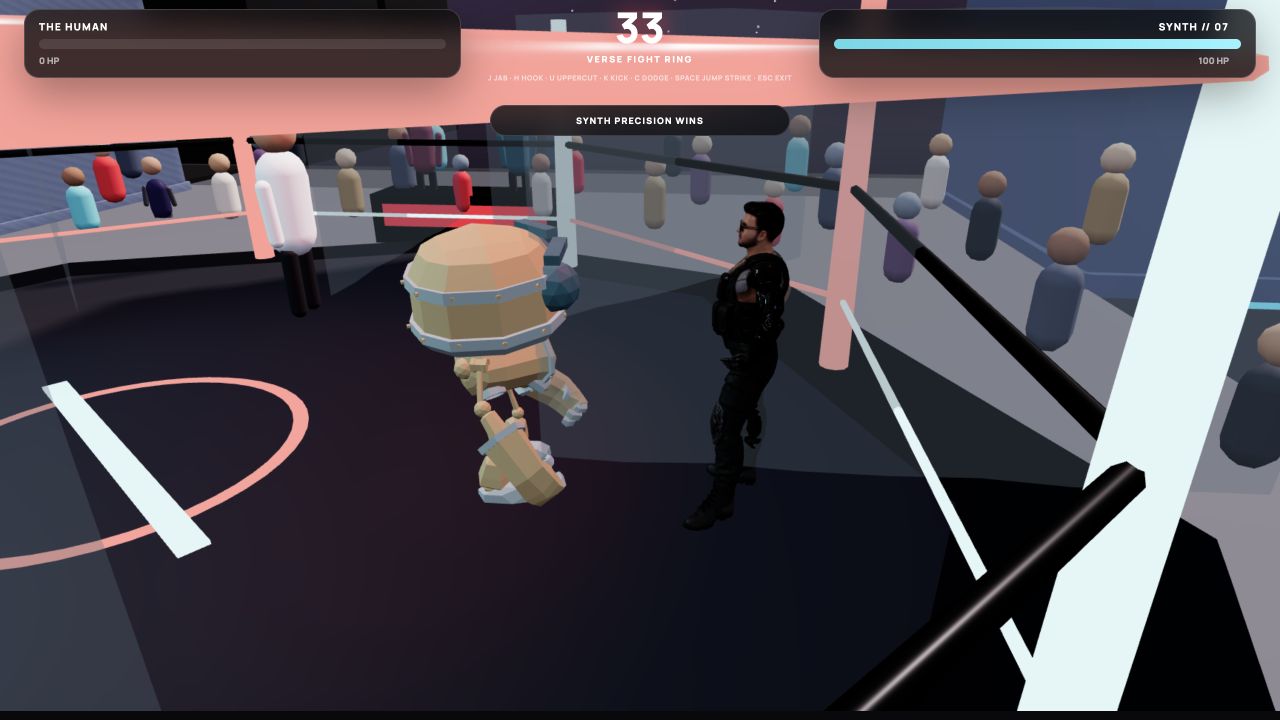
The prototype includes three visual learning spaces: a ChatGPT Skill Shop for model routing, context selection and repair loops; a Claude Artifact Studio for synthesis, evidence and verification; and an upGrad Skill Shop with short visual missions inspired by Data Science, Full Stack Development and Digital Marketing. It also includes city traffic, flying vehicles, an elevated metro, a fight ring, atmospheric audio, and a same-Wi-Fi phone controller.
How I built it
I directed the product concept, learning model, visual taste, controller feel, and rapid play-test feedback. OpenAI Codex running GPT-5.6 Sol with high reasoning was my primary engineering collaborator. It translated feedback into scoped implementation work, coordinated parallel fixes, integrated Three.js and GLB systems, debugged animation and vehicle physics, built the Skill Shops and multi-input layer, ran production builds, and verified the final deployment.
The stack is Three.js, Vite, modern JavaScript, HTML/CSS, the Gamepad and Web Audio APIs, GLTFLoader, local WebSocket relay logic for the phone controller, and Vercel hosting. The current executable does not call the OpenAI API at runtime; GPT-5.6 was the reasoning and engineering layer used to create the product.
Challenges
The hardest part was turning a fast grey-box into a coherent playable world under an extreme deadline while keeping character animation, camera scale, vehicle handling, DualSense haptics, phone input, 3D combat, and multiple Skill Shops working together. Late regressions in jump clips, traffic steering and arena grounding were fixed by tracing the exact GLB animation tracks and separating locomotion, traffic and combat state.
Accomplishments
I registered only a day before submission and completed the meaningful Build Week extension in roughly two focused days while balancing other live work. The result is not a concept film: it is a deployed, controller-tested 3D product with a scalable educational architecture, six playable characters, three Skill Shops, multiple vehicles, a phone gamepad, licensed assets with attribution, a narrated 60fps demo, and a complete public source repository.
What I learned
The strongest human-AI workflow is a tight feedback loop: human taste and physical play-testing set the bar, while Codex turns concrete observations into implementation, diagnostics and verification. I also learned that gamified learning becomes much clearer when every lesson is a visual decision with immediate consequences instead of a long quiz.
What's next
Connect Skill Shops to live OpenAI models, structured evaluations and personalized feedback; add persistent skill passports and shareable outcomes; let educators publish versioned Skill Shops; and expand the city into a multiplayer learning world.
Built With
- api
- audio
- codex
- css3
- gamepad
- gltf
- gpt-5.6
- html5
- javascript
- node.js
- openai
- three.js
- vercel
- vite
- web
- webgl
- websockets


Log in or sign up for Devpost to join the conversation.