-
-
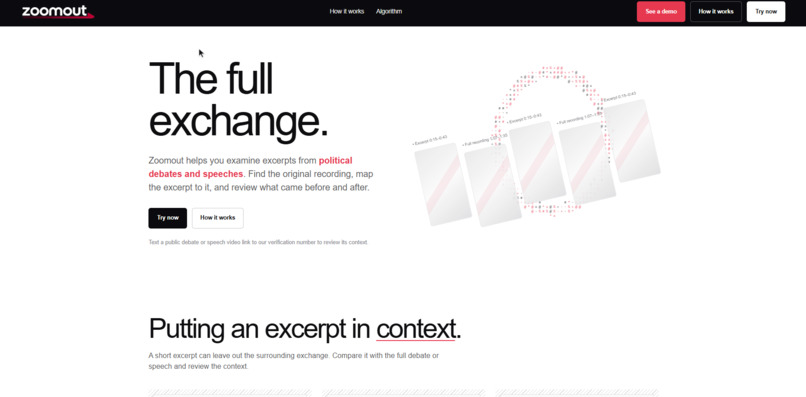
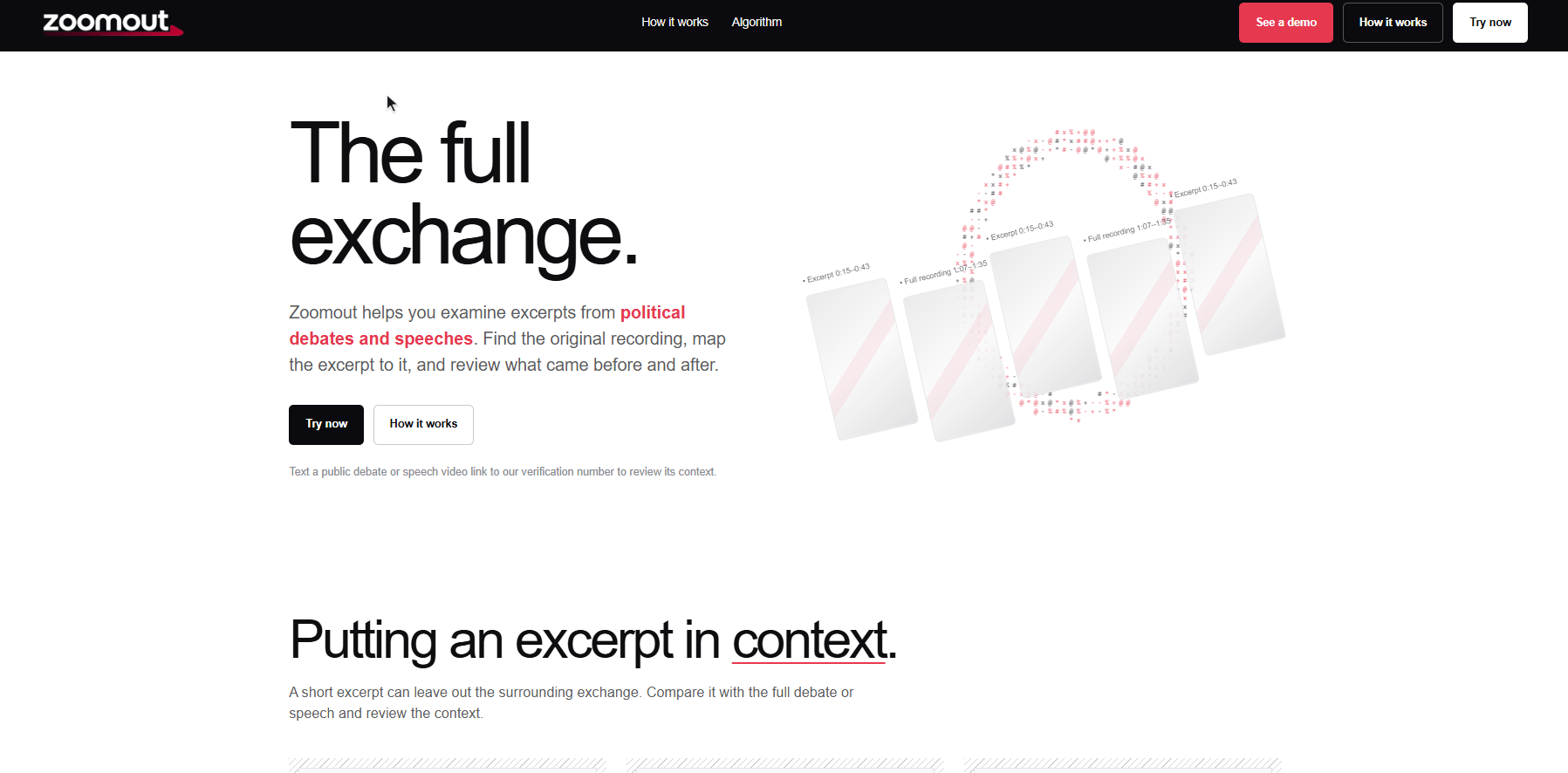
landing page
-
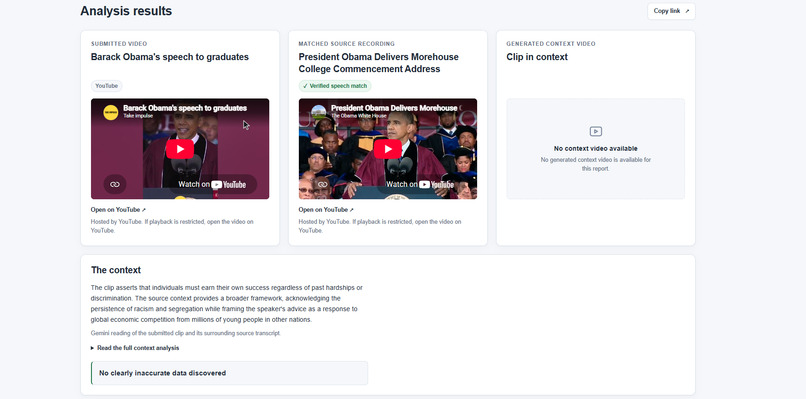
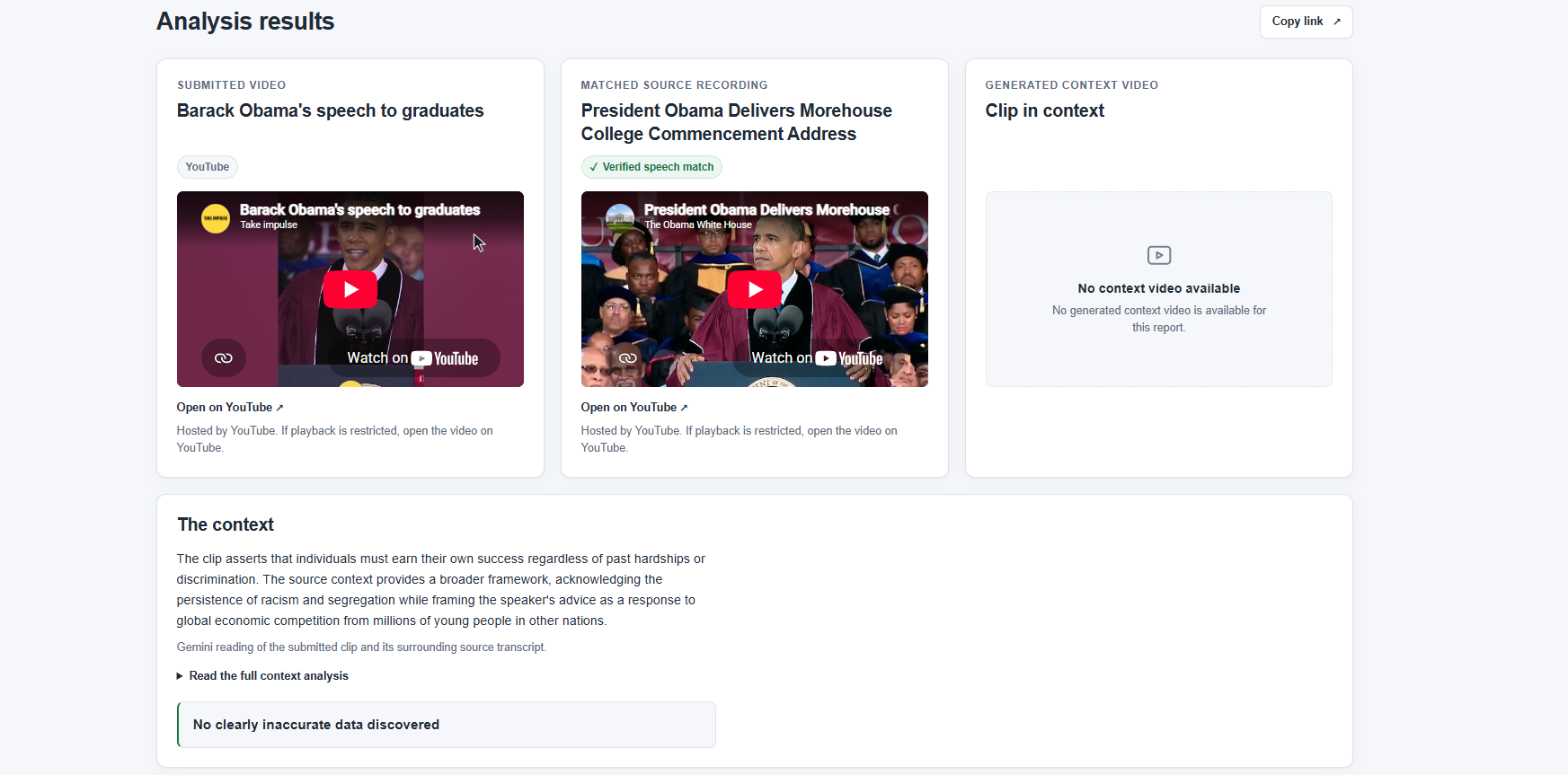
analysis page
-
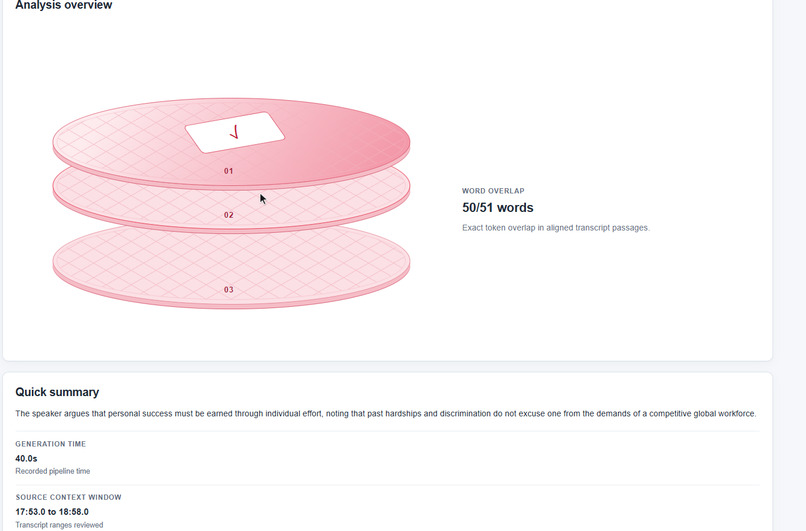
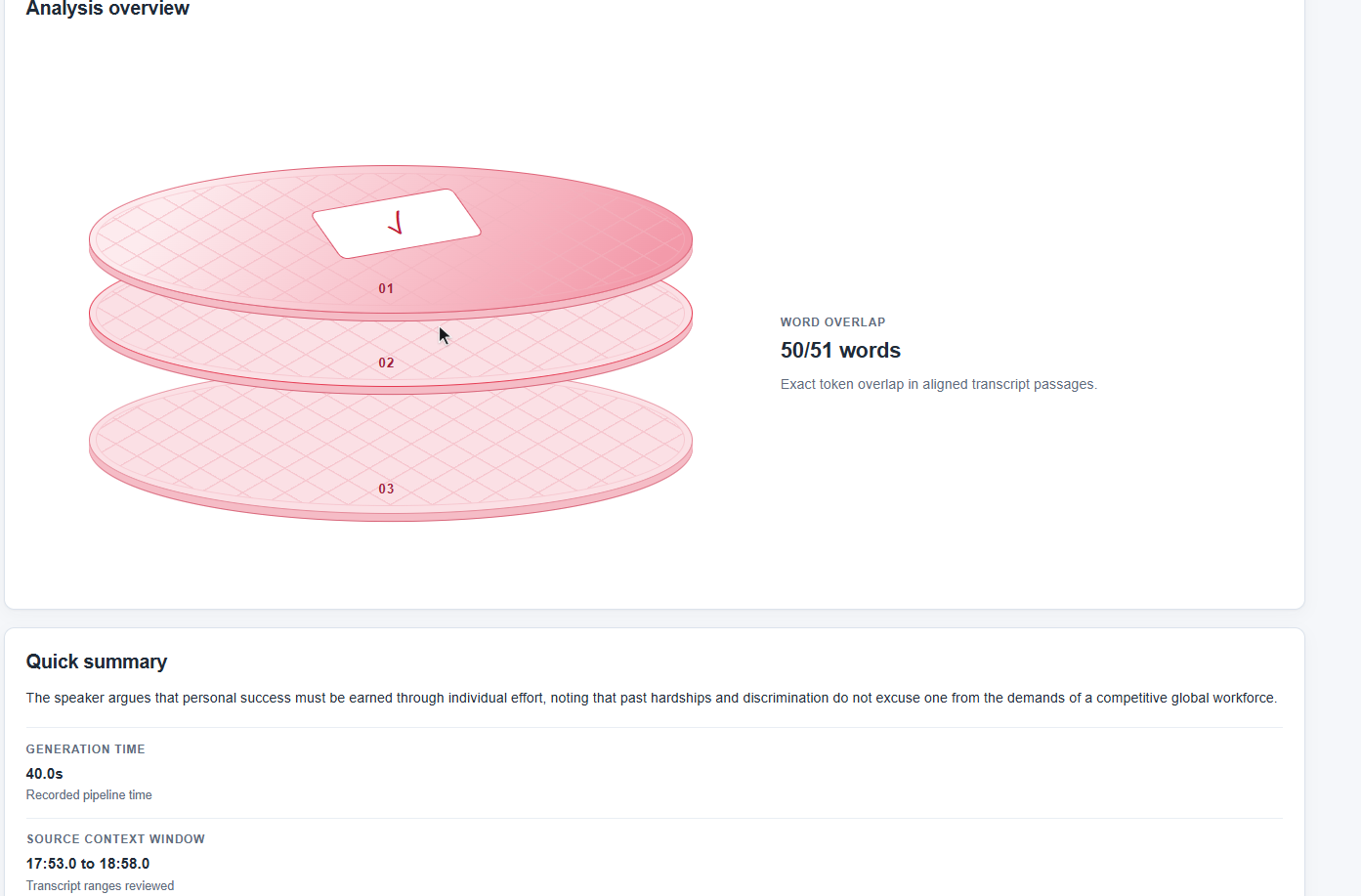
more analysis
-
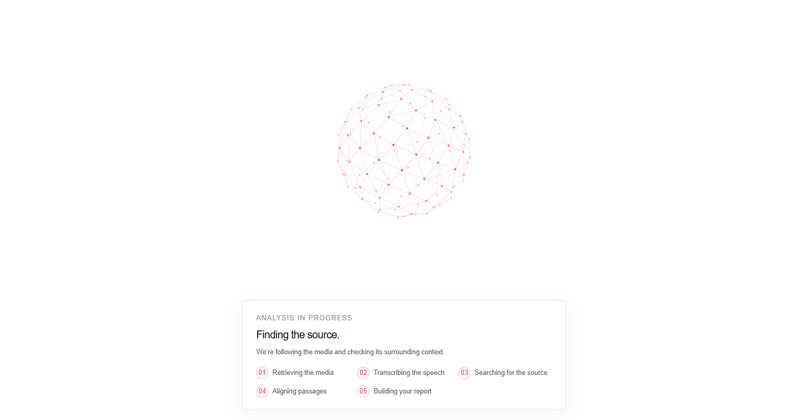
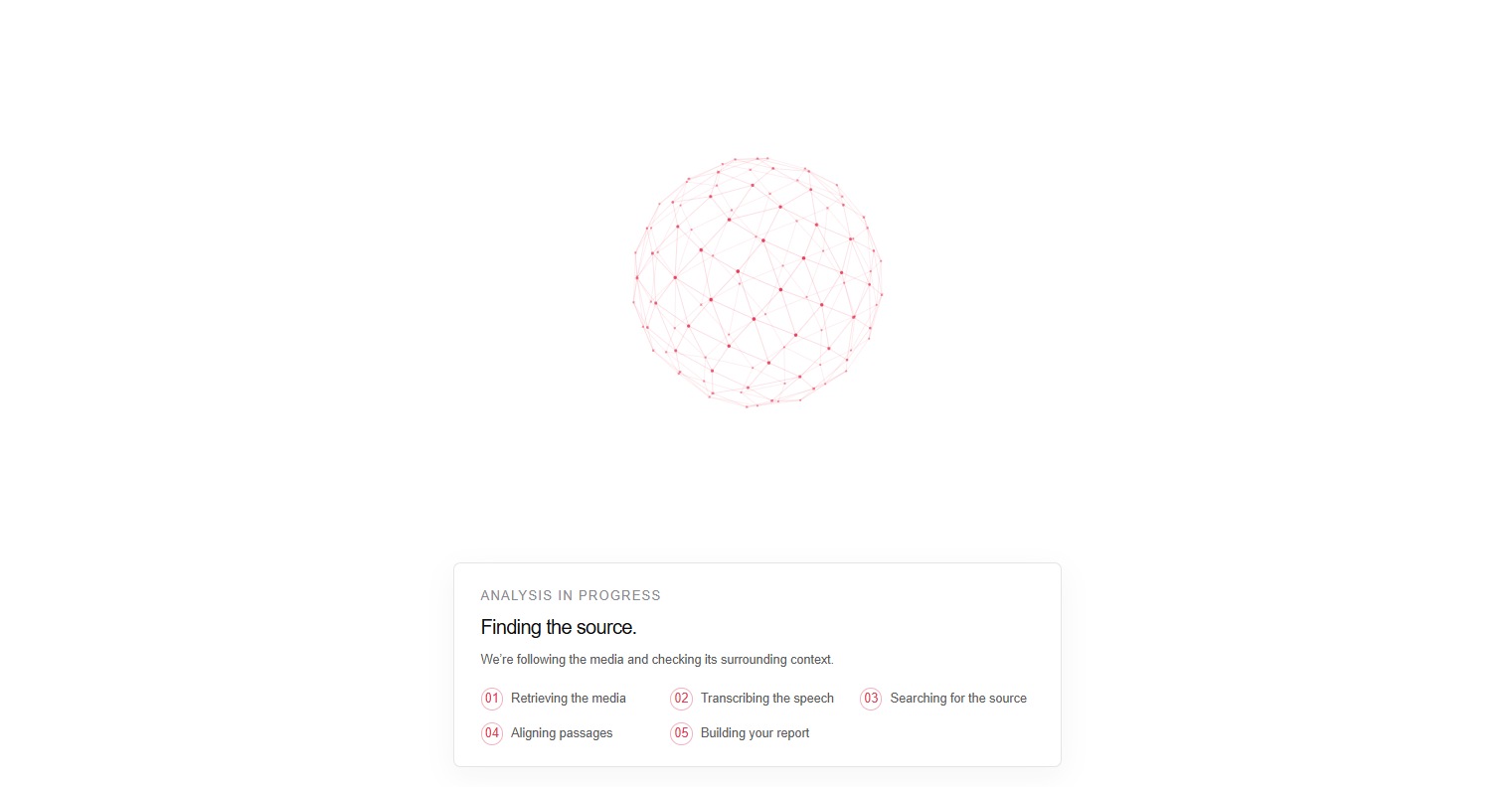
Loading screen
Inspiration: These days the ease of distortion of a whole story using AI and other internet tools through short video clips was the inspiration behind our project. On social media apps, a 20 second political video clip can spread rapidly and affect a lot of people’s views before any background information or clarification. It usually takes a lot of effort and manual internet scraping to find the original source to verify such clips. Our goal was to simplify this process by ZoomOut: it makes verifying media clips as simple as posting your clip and asking some questions.
What it does: ZoomOut allows individuals to check suspicious or false videos through our website or theiMessage app that uses Photon technology. It first transcripts the submitted videos, looks for possible sources of the video, matches the parts where both seem similar, and analyzes their surroundings with the help of Gemini API. Sources, relevant information, and rule-based confidence score is provided in the final report. Instead of classifying the video as fake, ZoomOut differentiates between verified facts and possibilities and explains the uncertainties.
How we build it: We developed ZoomOut with Next.js, React, TypeScript, and Tailwind CSS on the frontend hosted via Vercel, while the backend was coded using FastAPI and hosted on Render. The pipeline starts with the uploaded media files, processes media with the help of FFmpeg, and performs transcription and contextual analysis with the help of Gemini API. We use Exa and keyword searches on YouTube to find possible source videos and use transcript snippets to find the exact matches. While the context factor is analyzed with the help of Gemini, our evidence rules rate the evidence with low, medium, and high confidence instead of probabilities. Tiger Data provides us with PostgreSQL database to store reports and provide media analysis capabilities. Additionally, we integrated Photon interface to allow users to submit their clips and obtain report links through iMessage to make it more convenient for users to interact with it when using social media apps. This workflow allows us to separate inputting, analyzing, keeping track of the status, and displaying reports for the frontend and backend to run interdependently in an efficient way.
Challenges we Ran into: The primary problem that we had was getting good source material to work with in time. We first thought about downloading different candidates' videos and frame comparisons, but it had a high time complexity, required a lot of resources, and hard to scale. So, we moved to matching transcripts, which helped us identify matching text blocks faster. Also, there were limitations on downloading YouTube content on our the backend we were hosting due to bot blocking restrictions, and we had to think about how to handle the media which wasn't available and use additional evidence where needed. This iterative debugging process helped us realize that developing a verification tool involves more than just a good AI model.
Accomplishments we're proud of: We're proud of the end-to-end media investigation workflow we have developed, which includes a web application, a backend for analyzing the content, working storage, and an iMessage agent using Photon. Instead of creating just a chatbot that makes an evaluation of the video, ZoomOut finds a possible source, by matching transcript lines, assessing the surrounding context, and giving structured proof in a report. The other thing we're really happy about is that we have created a trustworthy AI in ZoomOut. Along with a verification system that marks something as fake, ZoomOut clearly separates between evidence and unverified lead, has explicit confidence levels, and states limitations instead of giving uncertain findings as facts. Also, we were able to integrate several different technologies and APIs for specific tasks: Gemini for transcription and contextual analysis, Groq and keyword search for source discovery, Tiger Data for persistent report storage, and Photon Spectrum for an iMessage interface. This integration was the first step on which are architecture worked for this hackathon.
What we learned: It was obvious from this experience that the evidence behind trustworthy AI matters equally to the capabilities of the AI itself. A complex AI cannot generate a good verification report if the source data is lost or if the alignment is inaccurate. We also learnt that changing plans should be flexible decision if the cost of the original idea doesn’t work out. Finally, we realized the importance of communication and discussing uncertainty so that systems don’t break after being built 80%.
What's Next for ZoomOut: For ZoomOut , we want to improve the source discovery and alignment process between source materials and transcripts through other platforms and languages, as well as harder clips and edge cases. We look forward to introducing visual alignments that can help detect important edits or overlays whenever the source material exists. Also, we would like to establish a strong referencing subprocess to link clips to previous reporting and events. Finally, we'd want to enhance the iMessage experience, making the reports faster and more efficient while maintaining the same structure of evidence, transparency, and not misrepresenting facts.
Built With
- geminiapi
- groq
- photon
- python
- render
- tailwind
- tigerdata
- typescript
- vercel
- whisper

Log in or sign up for Devpost to join the conversation.