Inspiration
When emergencies strike—fires, natural disasters, or security threats—traditional infrastructure often fails. Power grids go down, Wi-Fi disconnects, and panic ensues. We noticed that hotels and large hospitality venues are particularly vulnerable due to complex, multi-level floor plans and high volumes of guests who are completely unfamiliar with the building's layout.
We were inspired to build Vanguard-Total to answer a critical, life-saving question: How can we guarantee zero-failure guidance to safety when every second counts and the internet is dead? We wanted to build a system where safety is a universal right, ensuring that anyone—regardless of mobility, language, or visual impairment—can find their way out.
What it does 🛡️
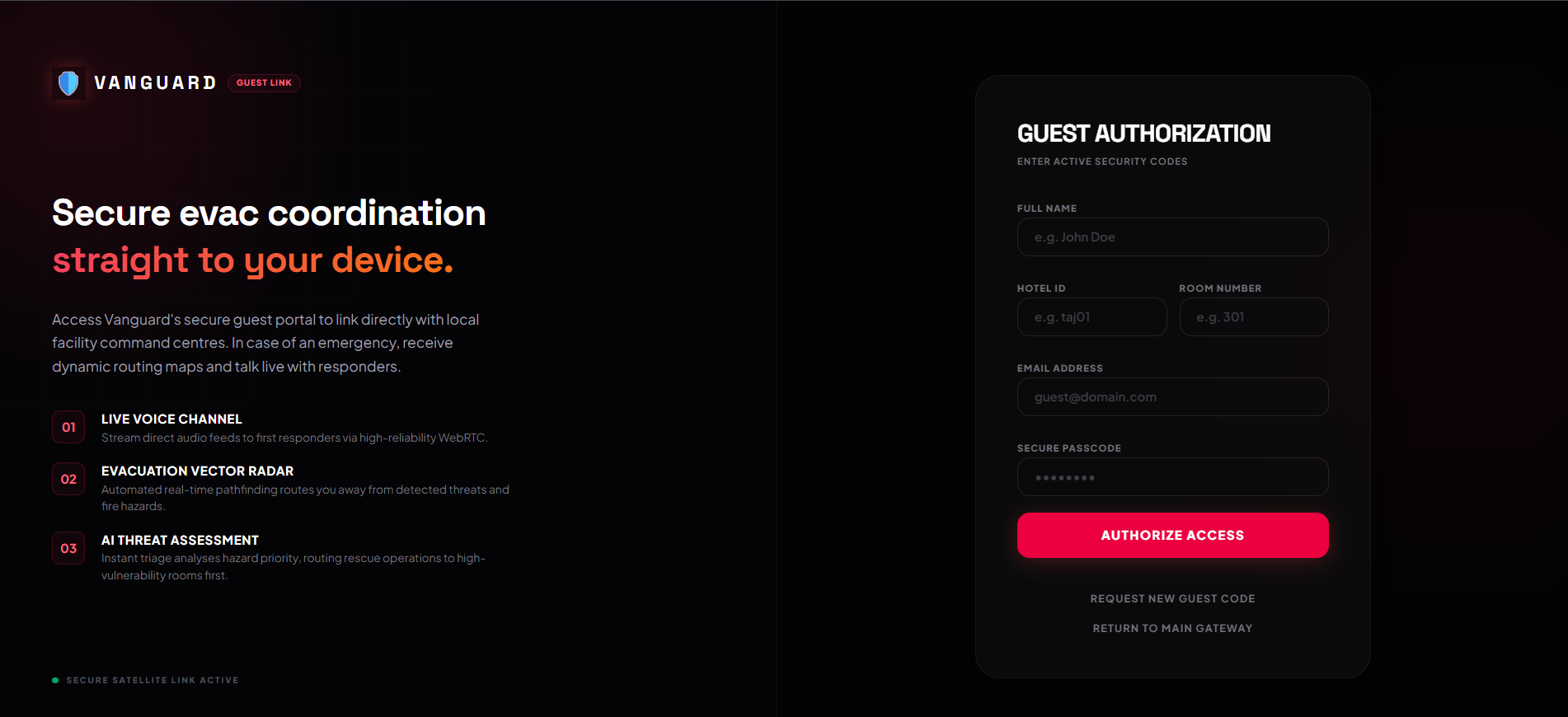
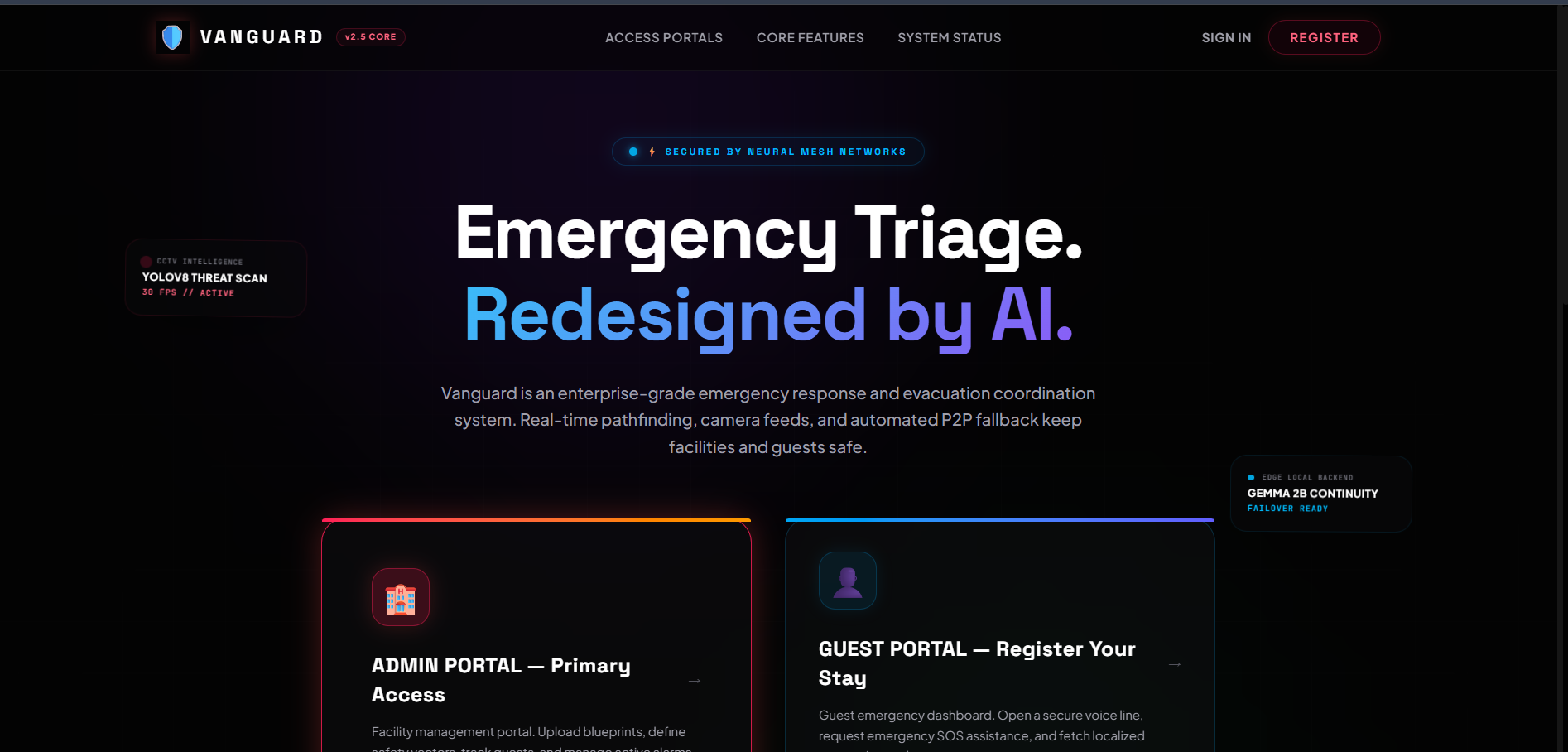
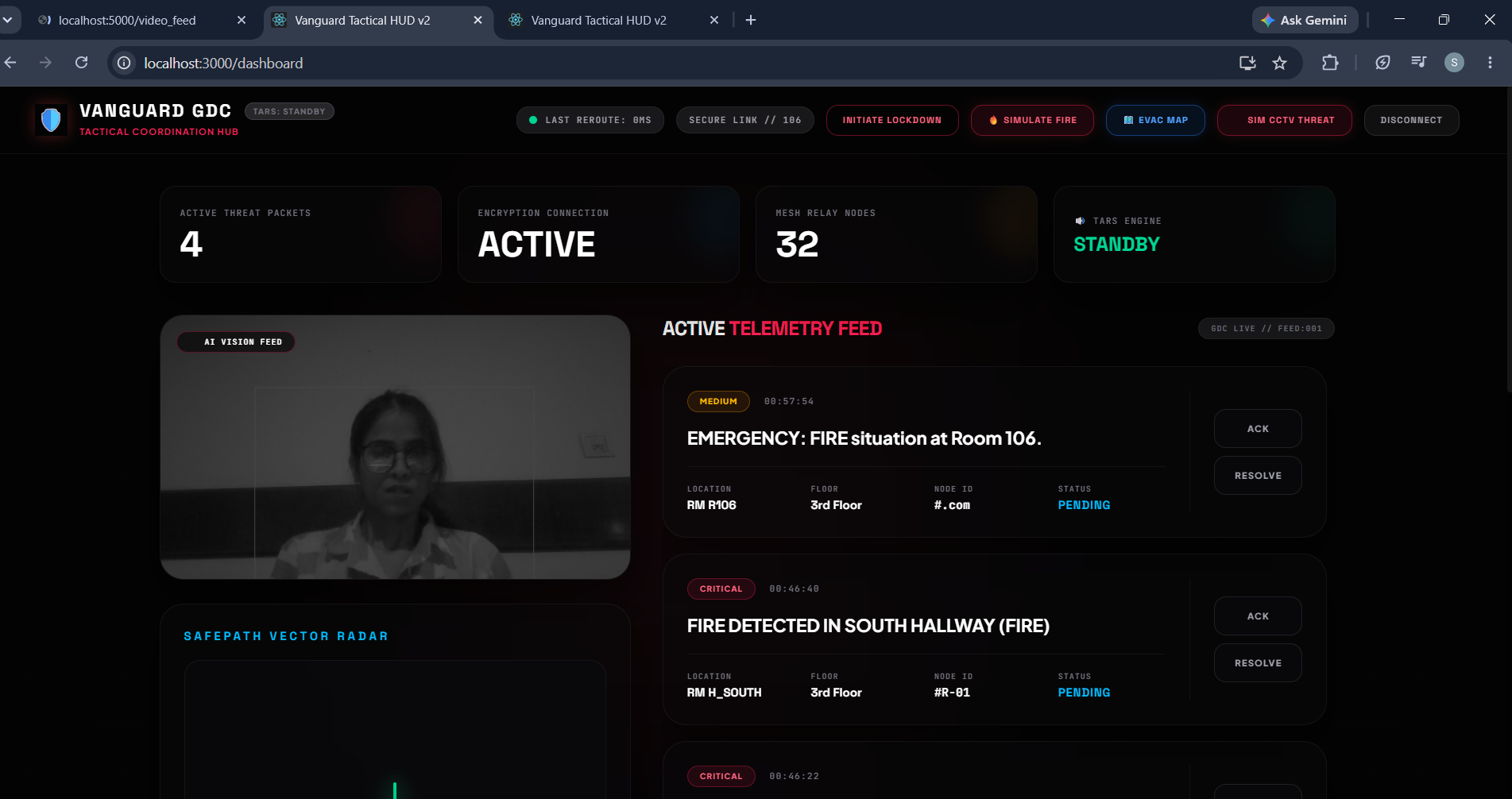
Vanguard-Total is a high-level emergency response platform designed specifically for the hospitality sector. It acts as an autonomous safety net that takes over when traditional infrastructure fails.
Key Features
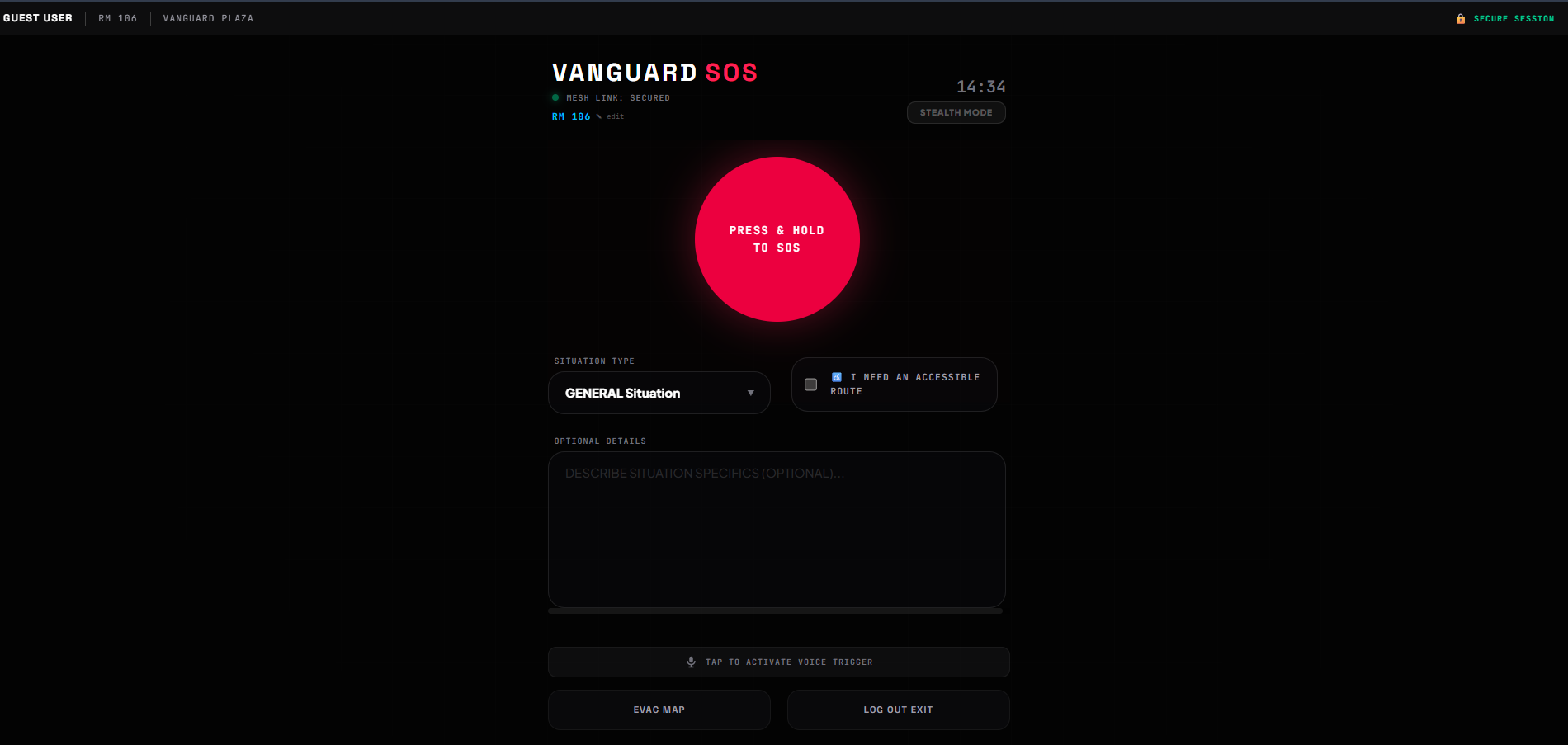
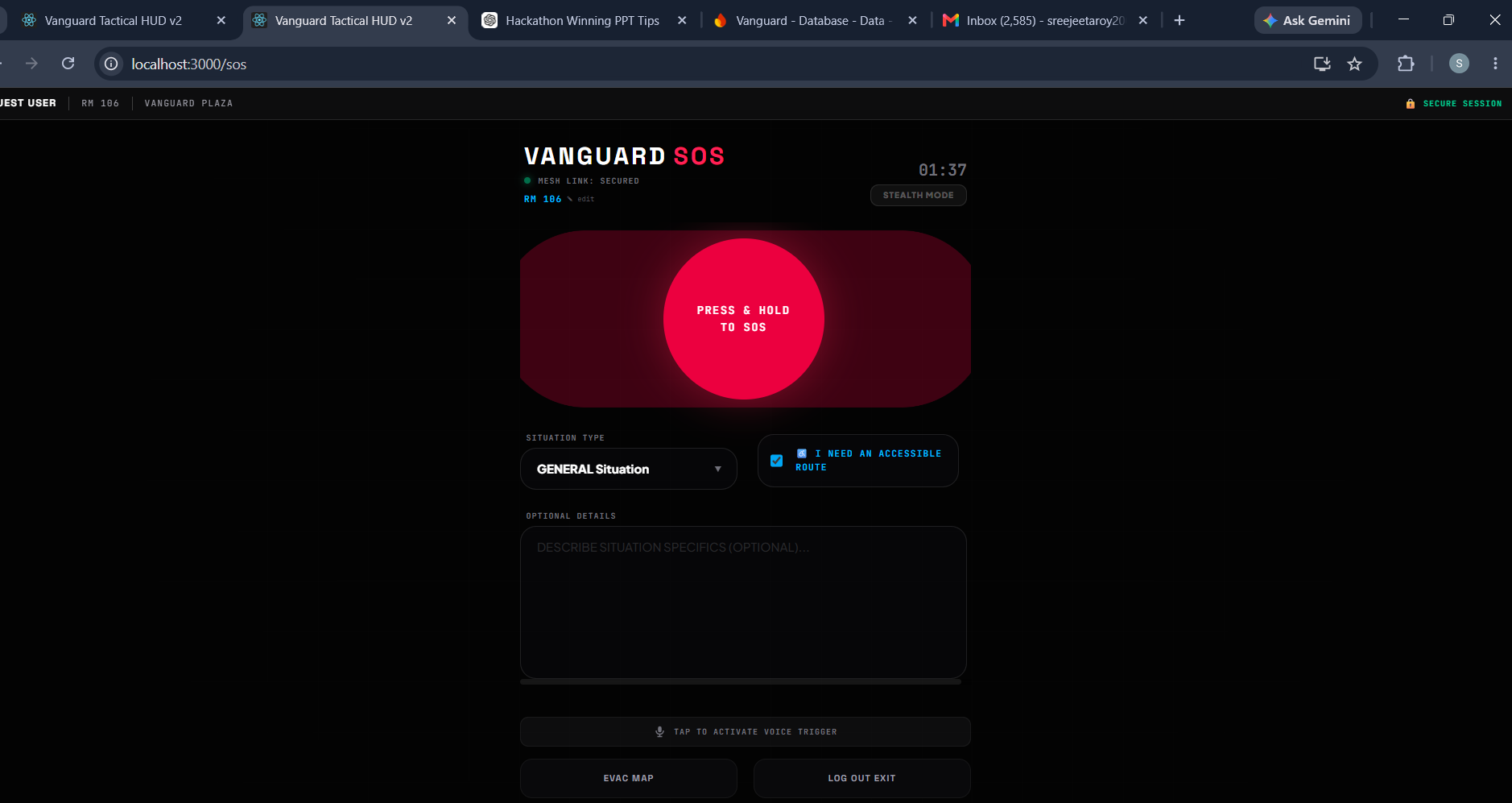
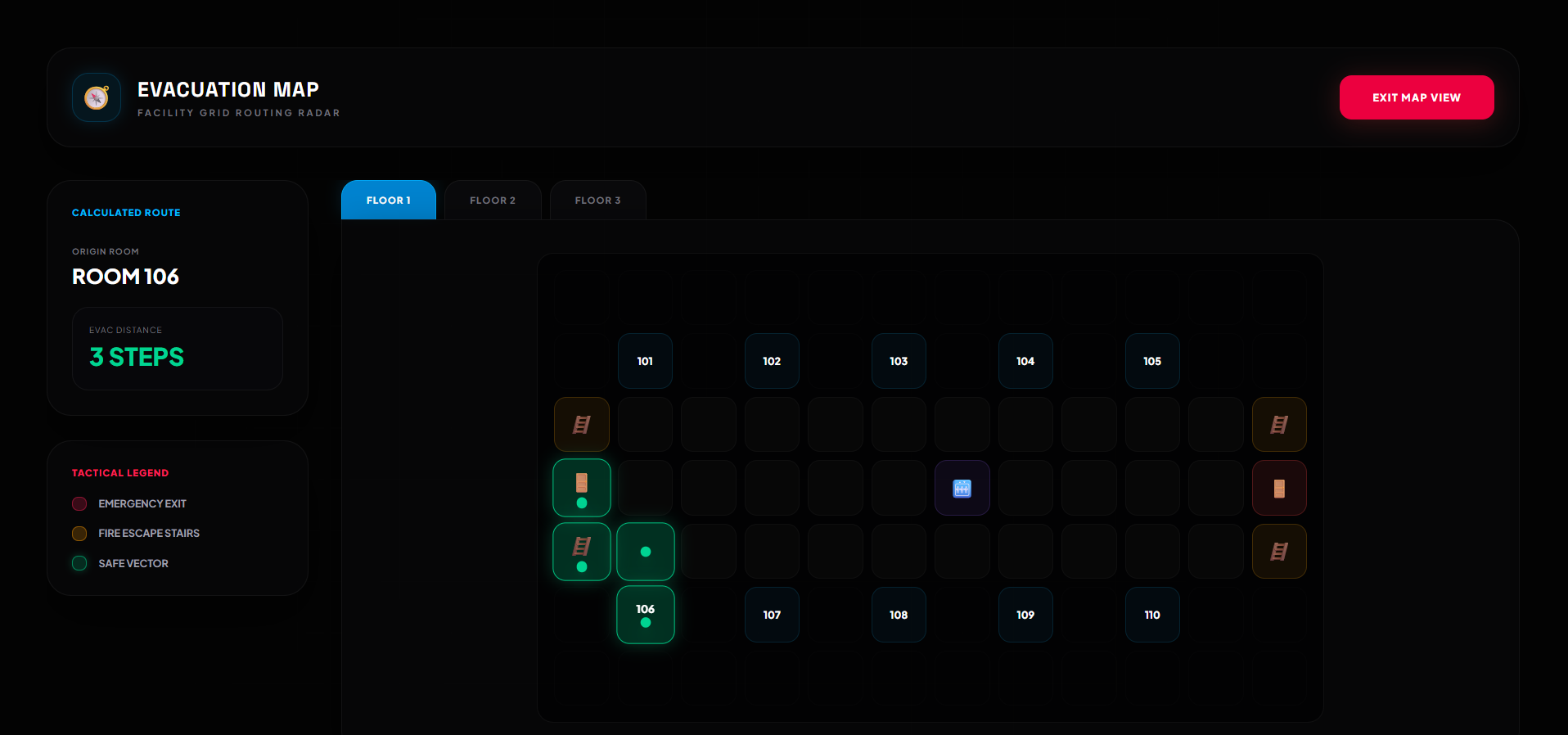
-Hazard-Aware Pathfinder It doesn't just find the shortest path; it finds the safest. If a fire or threat is detected, it dynamically recalculates evacuation routes and directs guests via a 3D AR compass. -Hybrid AI Brain It uses Gemini 2.5 Flash for high-speed cloud intelligence, with a seamless, zero-dependency failover to a locally hosted Gemma 2B model if the building loses internet access. -ML CCTV Threat Detection Local YOLOv8 edge models analyze camera feeds to detect weapons, physical altercations, and dangerous crowd density, triggering automated alerts to the backend. -Accessibility-Native Routing The system automatically bypasses stairs for wheelchair users and provides tactile “Safety Heartbeat” vibrations for visually impaired guests.
How we built it ⚙️
Vanguard is built as a highly resilient, multi-layered system designed to operate autonomously at the edge.
-The Brain (Hybrid AI)
We leveraged Gemini 2.5 Flash (via the Google AI Studio SDK) for high-speed, cloud-based triage and live translation. If the internet connection is severed, the system instantly fails over to a local Gemma 2B model running on the building's edge server.
-The Eyes (Computer Vision)
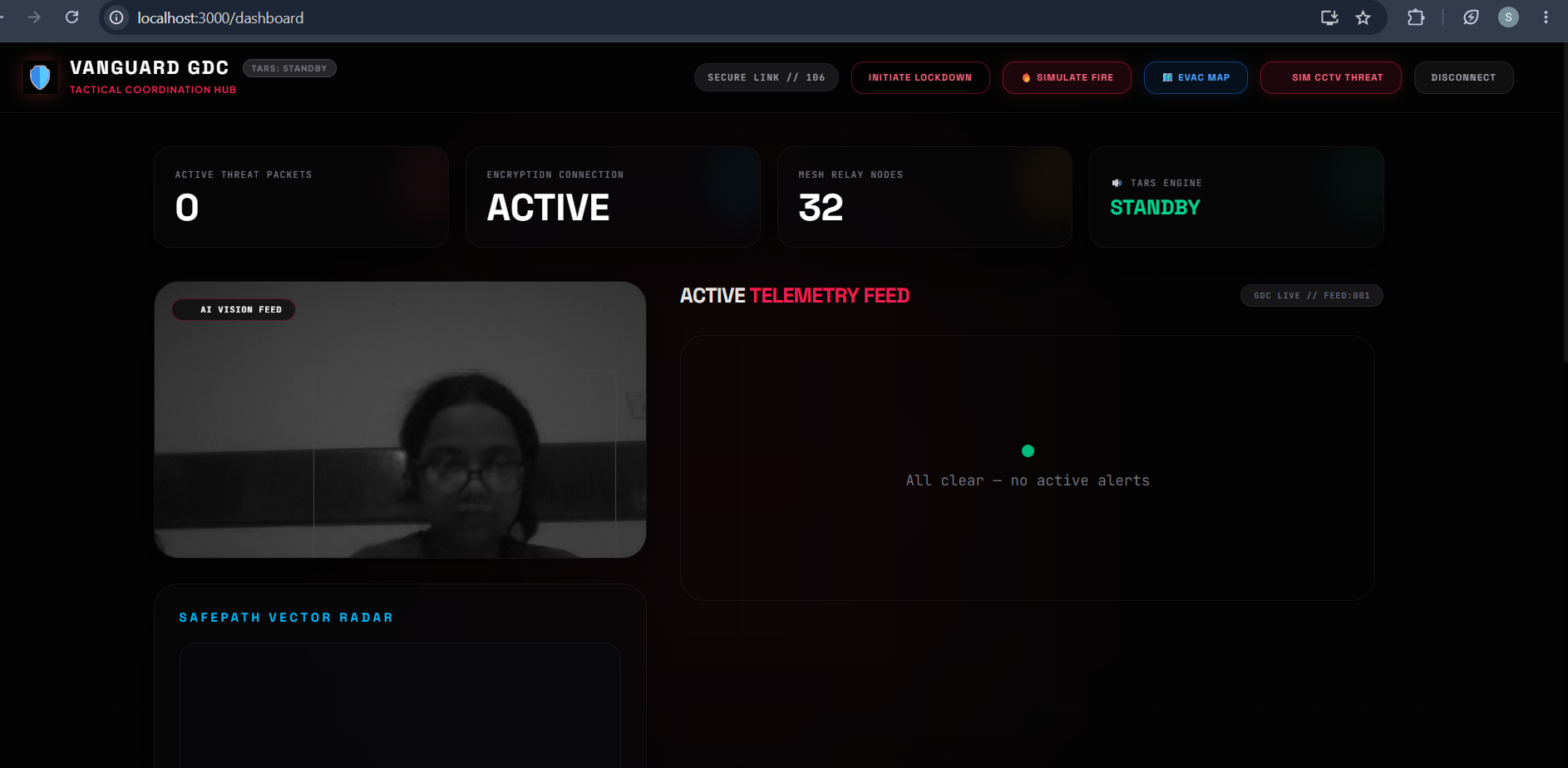
We deployed locally running YOLOv8 models for ML CCTV Threat Detection to automatically identify hazards.
-The Nervous System (Backend & Networking)
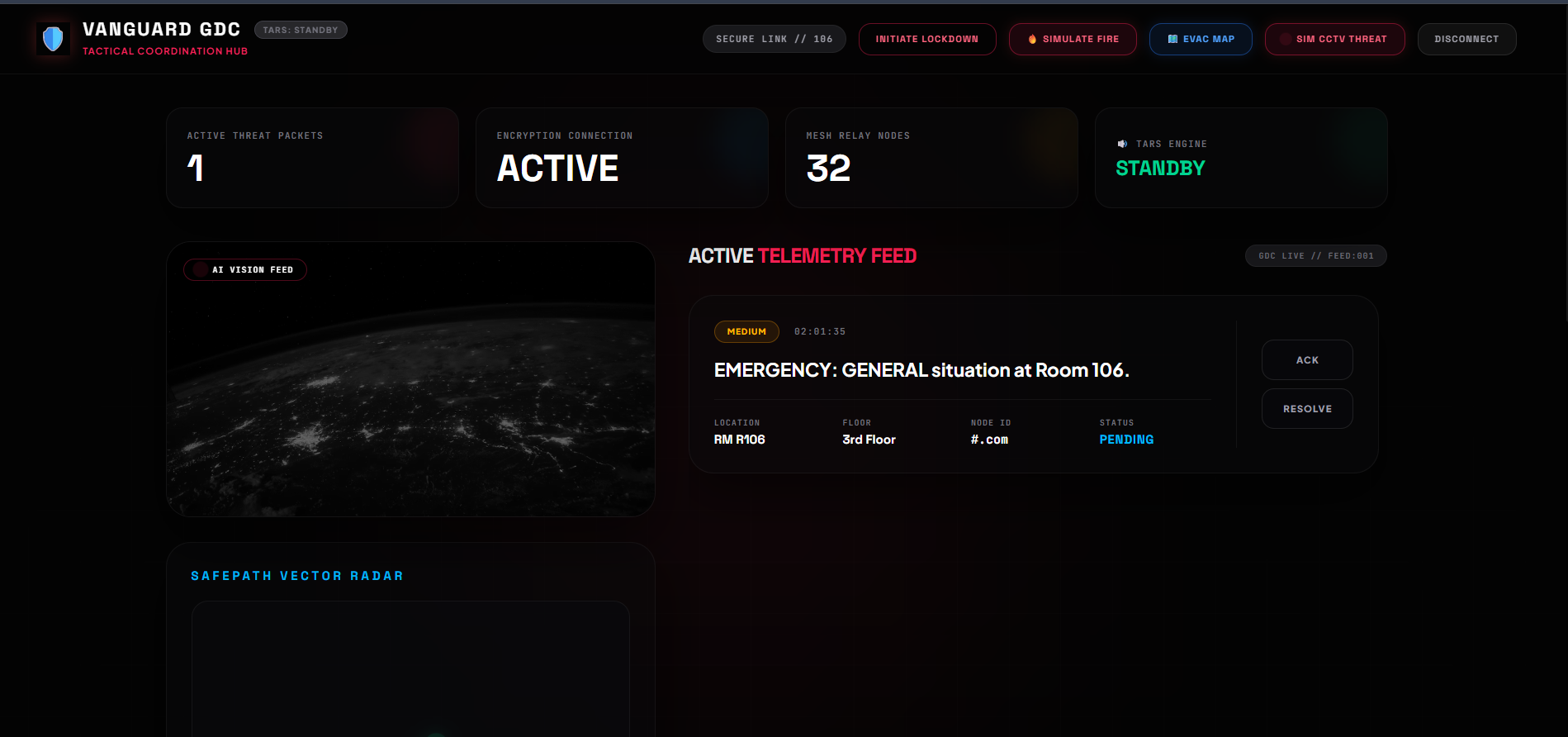
The core routing engine is a Java 21 (Spring Boot) backend. Communication to devices is handled via Server-Sent Events (SSE) and Android Nearby API for P2P Mesh Networking, ensuring emergency packets reach guests without central Wi-Fi.
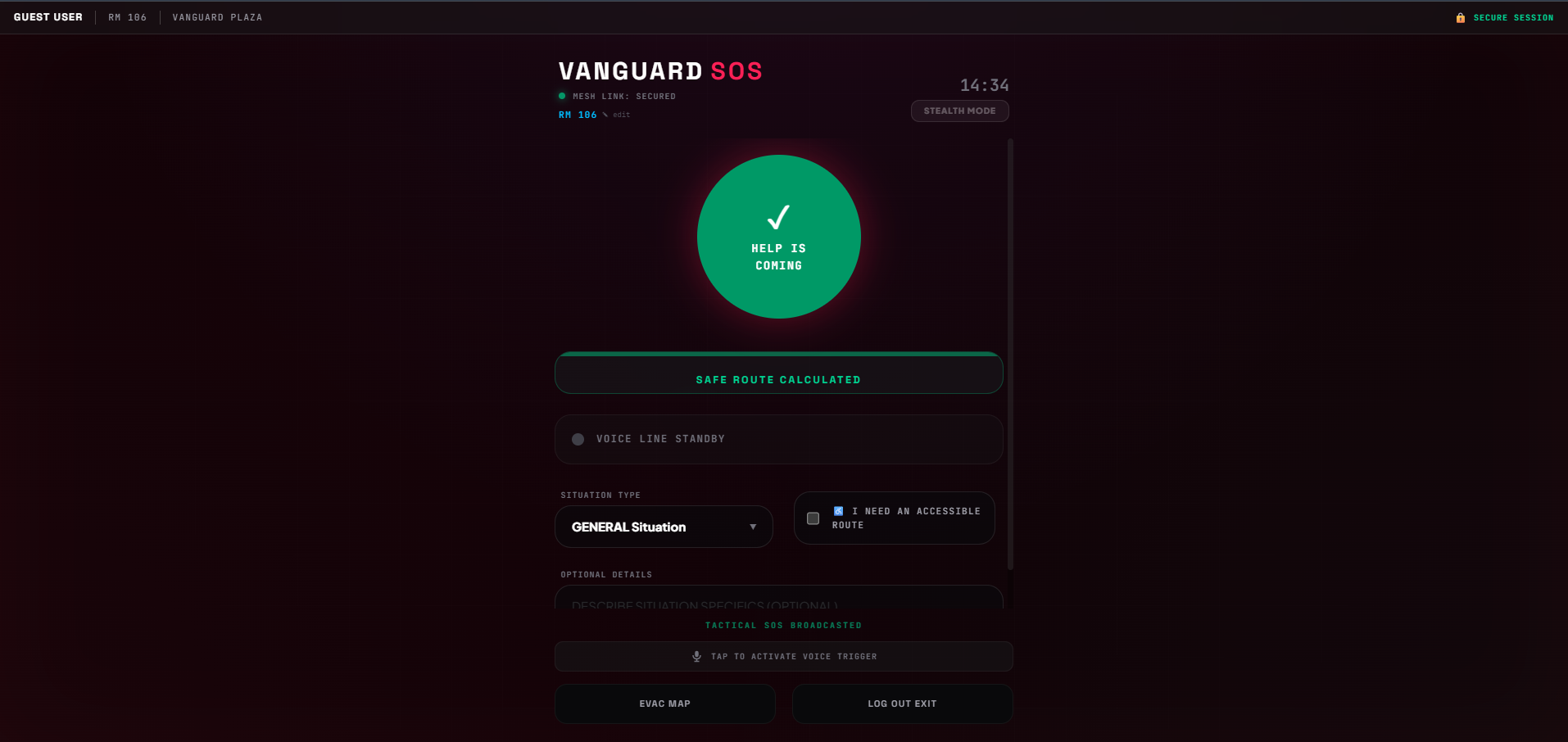
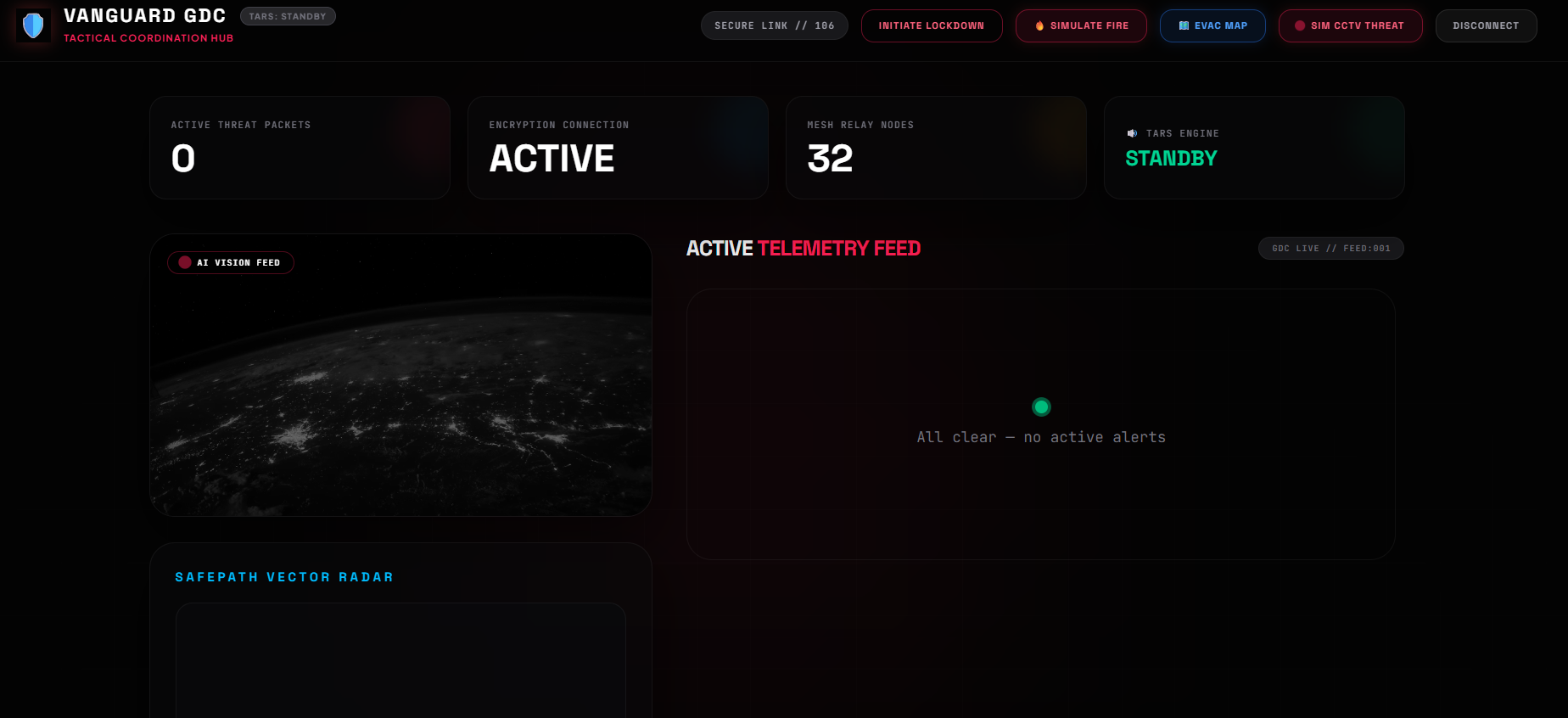
The Interface (Frontend) We built a tactical, glassmorphic HUD using React and Tailwind 4, featuring a biometric SOS trigger and a 3D AR guidance compass.
The Math Behind Hazard-Aware Routing 🧮 At the core of our dynamic rerouting is an edge-weighted graph representation of the building's floor plan. Let the building be a graph: G=(V,E) When our ML vision detects a hazard at a node v_h, we dynamically update the weight of all adjacent edges to infinity so the danger zone becomes an impenetrable wall: d(v) = min(d(u) + w'(u,v))otherwise Our Java backend then instantly re-runs Dijkstra's algorithm to find the minimum-cost path from the user's current node s to the nearest safe exit node.
Challenges we ran into 🚧
-Zero-Dependency Resilience Ensuring the system remained fully functional without internet access was our most daunting hurdle. Implementing a seamless, sub-second failover from cloud-based Gemini 2.5 Flash to the local Gemma edge model required rigorous state management and edge-server optimization.
-Dynamic Pathfinding at Scale Handling simultaneous path recalculations for hundreds of guests during a simulated hazard event—like a fire suddenly blocking a main hallway—initially caused CPU bottlenecks. We had to heavily optimize our Java graph traversal structures to achieve sub-10ms rerouting times.
-Translating Data to Action Converting complex geometric routing data into simple, panic-proof UI elements was difficult. Designing the “Safety Heartbeat” (haptic feedback) and an intuitive AR compass required rigorous UX iteration.
Accomplishments that we're proud of 🏆 -True Zero-Dependency Successfully engineering the failover system between Gemini 2.5 Flash and the local Gemma model. Knowing the system can guide people to safety even if the building's fiber optic cables are severed is our proudest technical achievement. -Inclusive Safety Architecture Developing the Automatic Stair-Bypass and Haptic Safety Heartbeat. We're proud to have built a platform where accessibility is a core architectural pillar, not just an afterthought. -Sub-10ms Dynamic Rerouting Optimizing our Java-based Dijkstra implementation to process edge-weight updates and recalculate escape paths for hundreds of nodes in under 10 milliseconds.
What we learned 🧠
-The Life-Saving Power of Edge AI We learned that running robust ML models locally at the edge is an absolute necessity for mission-critical applications where latency and connectivity are literally life-or-death factors.
-Accessible Design Cannot Be an Afterthought True safety technology must be inherently inclusive. Multi-modal inclusivity protects guests who are deaf, blind, or mobility-impaired, proving that safety is a universal right.
-Hybrid AI is the Enterprise Future Combining the vast, generalized intelligence of cloud-based Gemini 2.5 with the localized reliability of Gemma provided us with a powerful blueprint for how resilient systems should be architected.
What's next for Vanguard 🚀
-Swarm Intelligence for First Responders We plan to integrate a dedicated tactical view for firefighters and police, allowing the Vanguard edge server to securely broadcast the building's real-time hazard map directly to their tablets as they arrive on the scene.
-Wearable Integration Expanding the biometric SOS and haptic feedback systems to smartwatches (Apple Watch/WearOS) to provide completely hands-free evacuation guidance.
-Predictive Hazard Modeling Training our models on historical building data and thermodynamics to not just detect hazards, but predict the likely spread of a fire based on the building's HVAC and architectural layout.