Inspiration
We were inspired by the application of high performance computing in fields like motorsports/automotive technology, and we wanted to be challenged by the problem of interpreting massive amounts of granular data in an efficient and timely way. Our group coming into this did not have much previous knowledge about the logistics of an F1 race, nor did we know what were the keys to success for one driver to win over another. We created SnapTrack as a way for anyone without detailed knowledge of the workings of an F1 race to be able to get a grasp of the mass amounts of data they collect and analyze how split second decisions can affect the outcome by using a chatbot and by analyzing a race step-by-step.
What it does
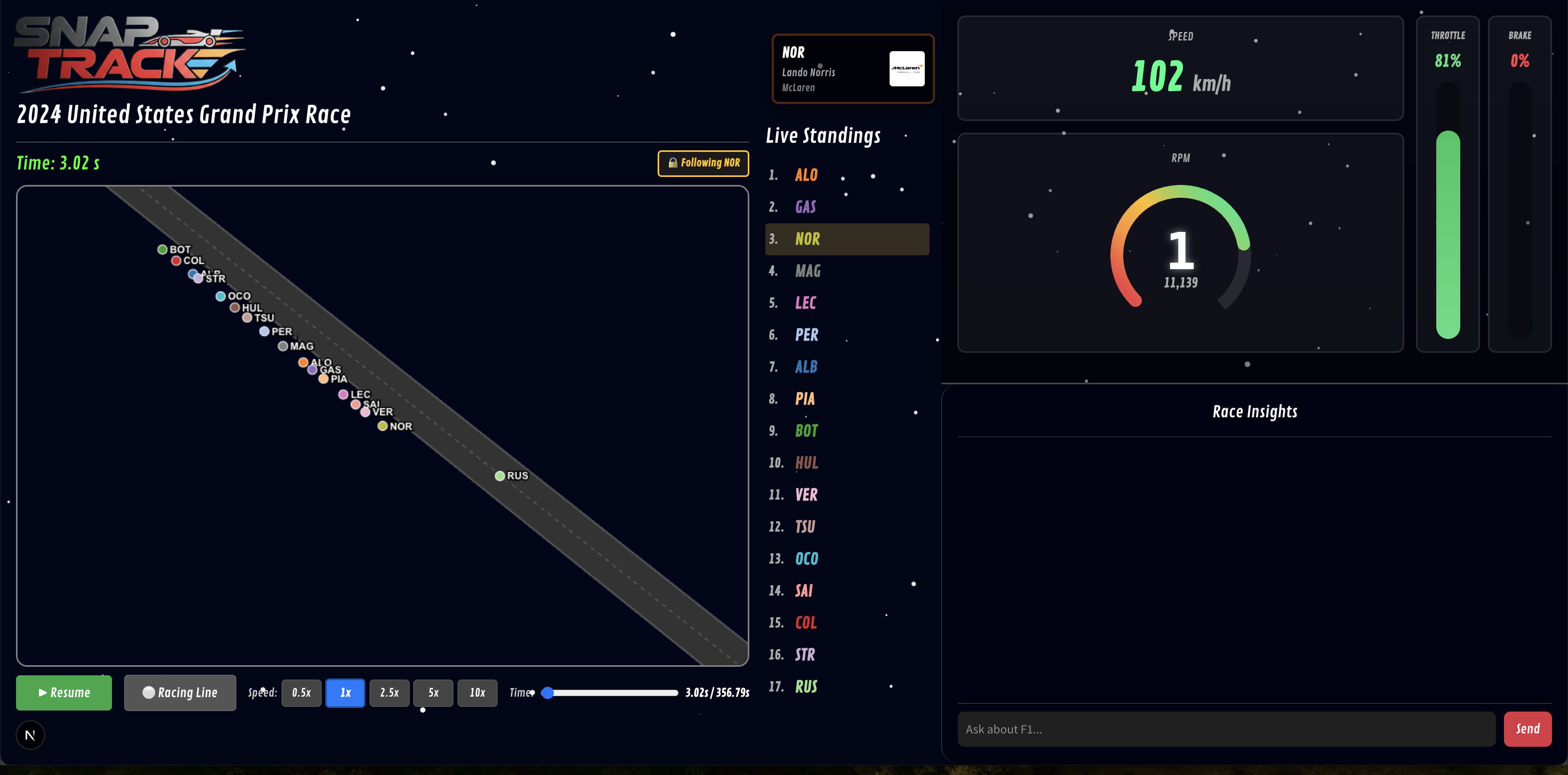
We created a virtual simulation of a past race using real, historical data. At any point in time, you can see the current leaderboard and by following a driver, you'll get a better view of their grid spot and telemetry data at that point. You can also pause the race and ask the chatbot any questions you have about the specific drivers such as "who took this turn the best?" and "why did this certain driver start later in the beginning?"
How we built it
SnapTrack is a React + Next.js web app that replays historical F1 telemetry compiled from FastF1 API. We render the circuit and cars on an HTML5 canvas with D3 for coordinate transforms, and run a lightweight replay engine so users can pause, seek, and lock the camera on drivers. When the user pauses, SnapTrack fetches a compact set of ranked strategy options for that exact race state and surfaces them in a concise UI. We added a chat-style assistant (DRIVIS) that combines the paused telemetry snapshot with the top HPC scenarios with Cerebras.
Challenges we ran into
We ran into problems with the coordinate system alignment because the track data was in meters relative to the circuit while the FastF1 telemetry used a difference reference, we had to use custom D3 transformation scales. Also making the data standardized for all drivers was a challenge because the data is recorded at irregular intervals for each driver.
Accomplishments that we're proud of
We're proud of the snapshot pause-and-inspect aspect of the simulation where users can freeze the race, see exact telemetry data of historical data, and ask about scenarios for that moment. We're also proud of the chatbot assistant that uses the appropriate context to make fast recommendations.
What we learned
We learned numerous technical skills such as canvas manipulation and optimization for the graphics as well as integrating the AI to answer domain-specific questions. We also learned a lot of domain knowledge about F1 and what factors professional racing teams have to take into account every race day and after the events.
What's next for SnapTrack
We would like the option to choose more tracks and more races and also add stats about tire degradation and how that affects the decision for the best time to pit.


Log in or sign up for Devpost to join the conversation.