Inspiration
We started with one question: what is something almost every human does, and enjoys, regardless of where they grew up?
Our answer was getting a good deal. Nobody can walk away from one, and no deal feels better than one you worked for. A discount handed to you is nice. A price you talked down yourself is a story you tell later.
That led us to haggling. Our goal became simulating the satisfaction of earning a good deal, then following it with a second universal reward: solving a puzzle to find out what you actually bought.
What it does
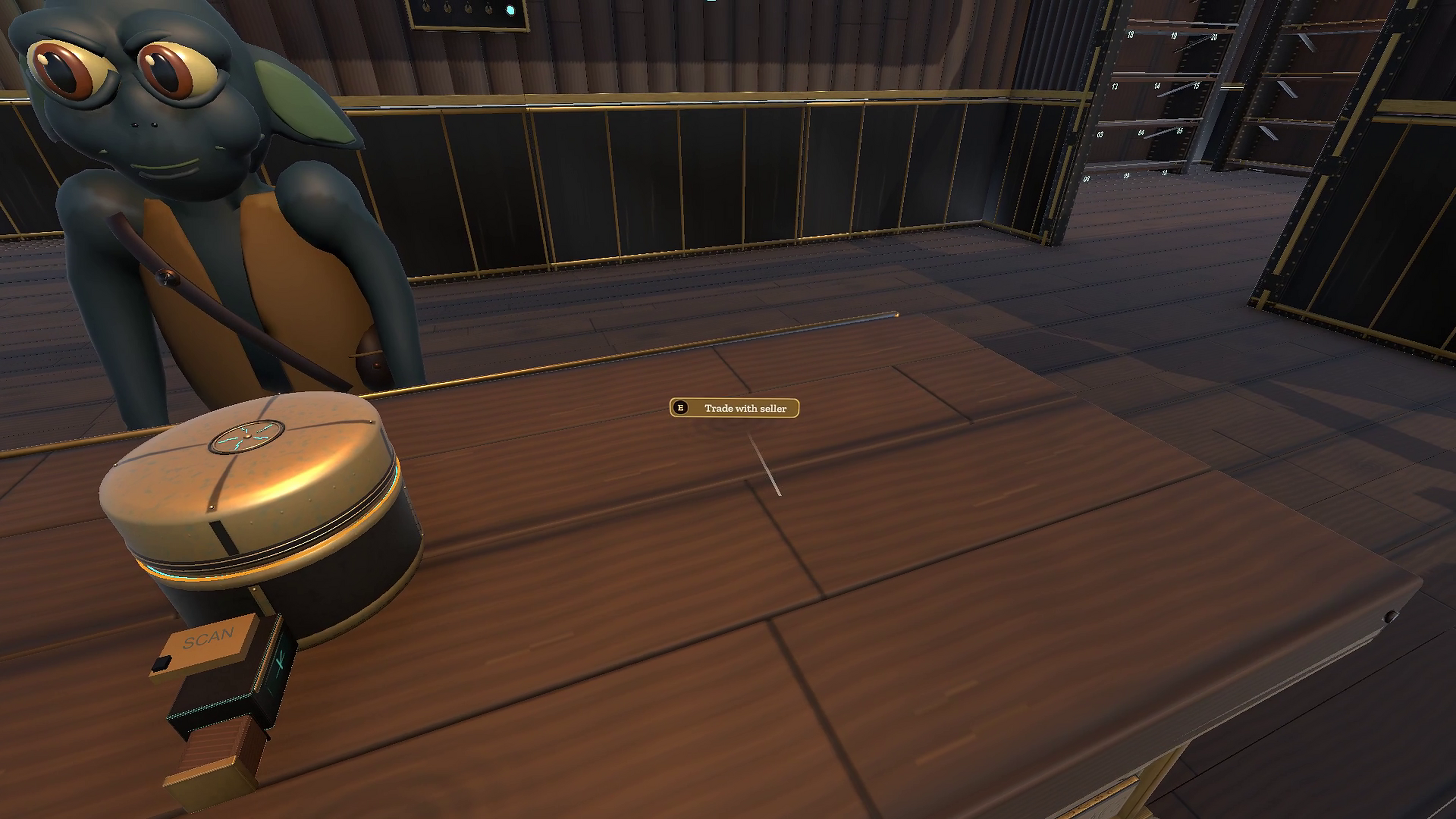
You run a small salvage shop that trades in alien artifacts.
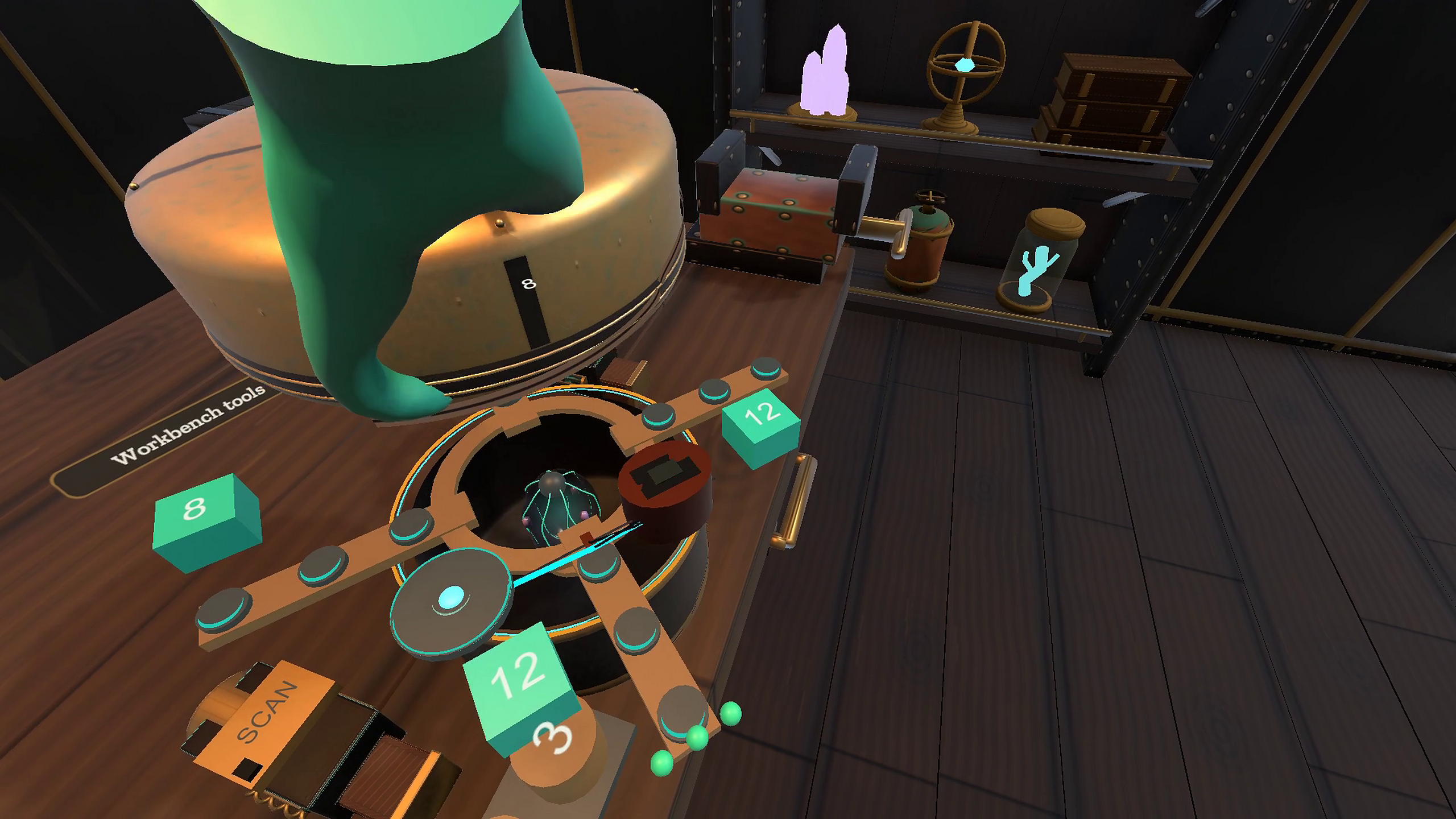
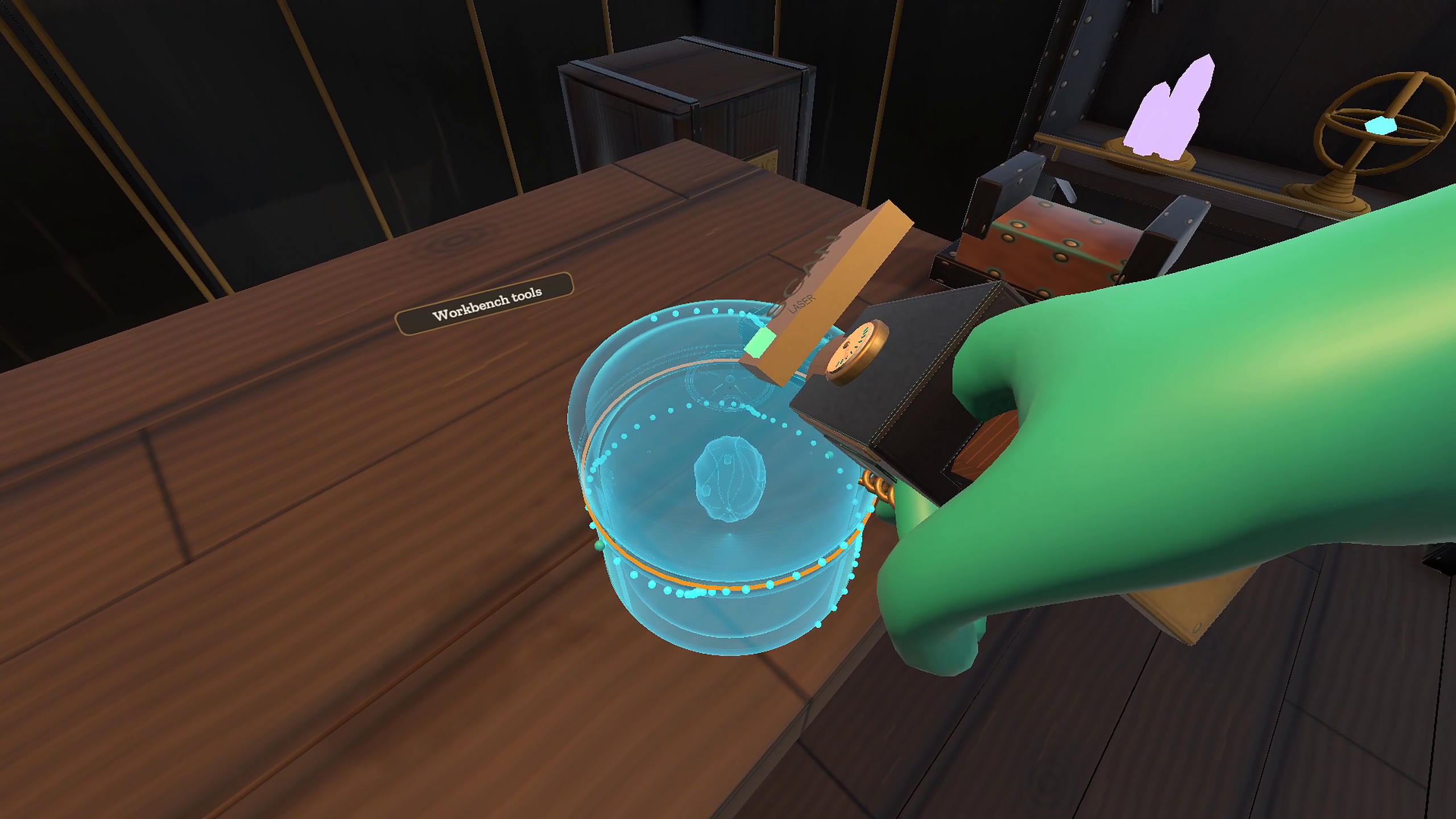
- Assess: a seller brings in an unfamiliar object, and a quick scan gives you a rough idea of its quality and whether something valuable is inside.
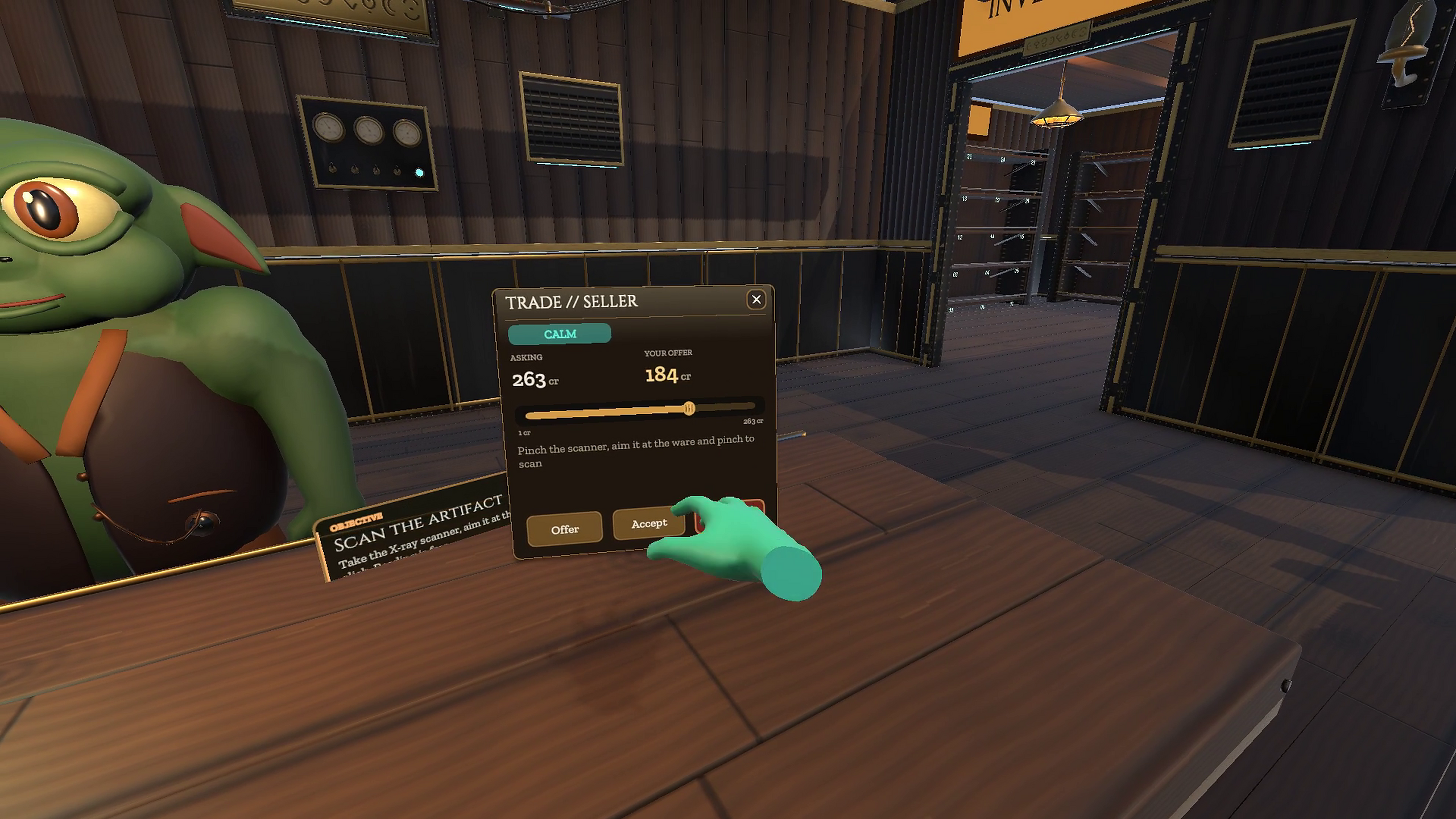
- Haggle: you set your offer with a hand-operated slider and commit to it, while the seller's patience runs down.
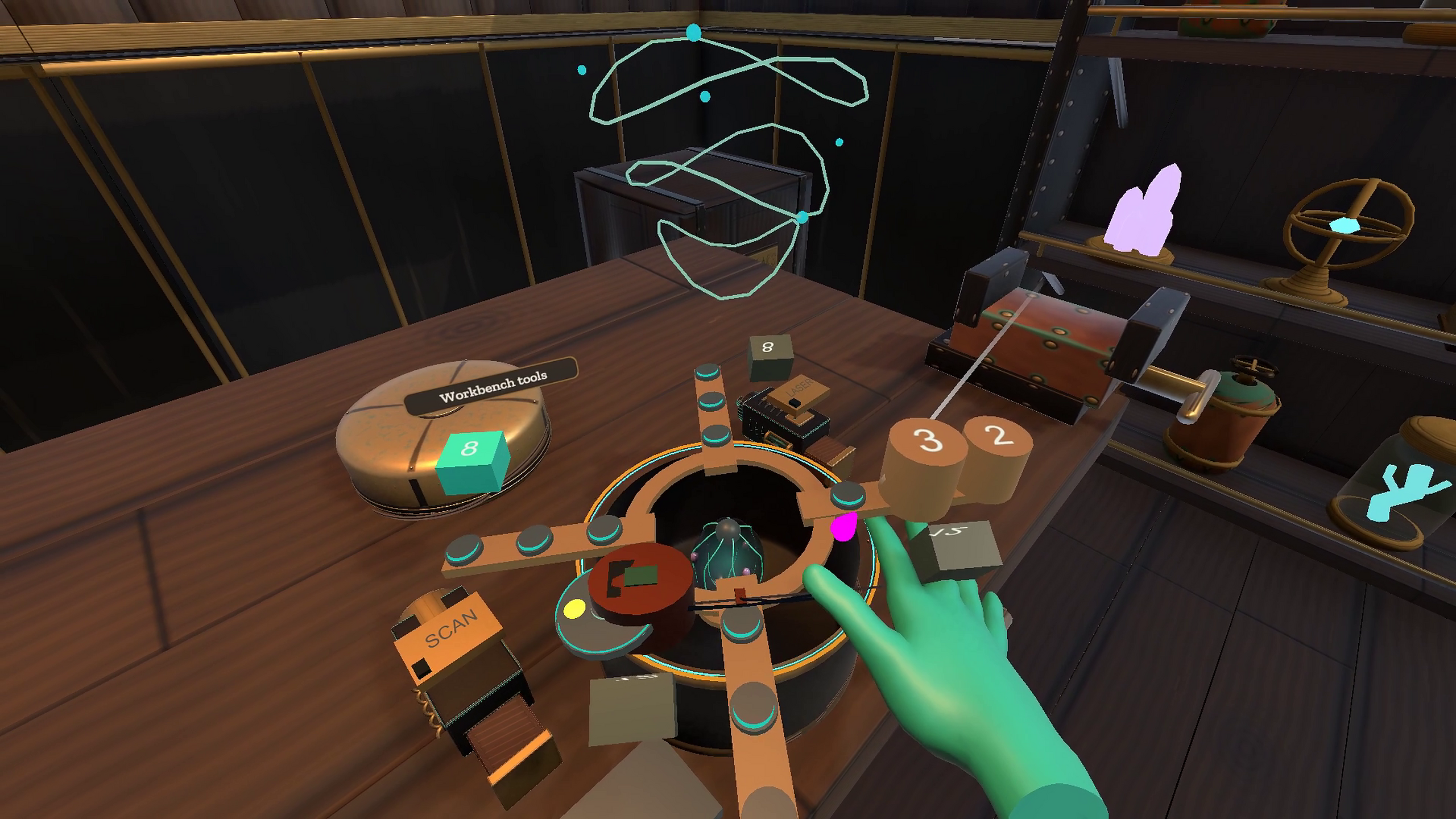
- Open it: once the artifact is yours, you work out by hand how it opens. Our first artifact, the Breathing Coil, is a closed metal seed with independently moving parts.
- Price and sell: you put it on display at a price you choose, and buyers take it or leave it.
- Repeat: the profit funds the next day.
The whole game is seated and hands-first, with no controllers.
The deal you worked for is measured as
$$\text{margin} = \frac{P_{\text{sell}} - P_{\text{buy}} - C_{\text{repair}}}{P_{\text{buy}}}$$
and every part of the loop is a way for the player to push that number up through their own judgment.
How we built it
- Unity 6 with the XR Interaction Toolkit and XR Hands, targeting a standalone Horizon OS build.
- Two developers on two operating systems (Linux and Windows) sharing one local gameplay package. One owned artifacts, tools and physical interaction; the other owned customers, negotiation, money and the daily business loop.
- A typed trade contract between the two halves, so the artifact side reports condition and placement while the commerce side decides prices and transactions. There is one artifact registry and one wallet.
- Blender for the artifact and the modular workshop environment, with a reusable PBR material library.
- Webcam hand tracking as a stand-in for a headset. We had no access to a Quest, so we built a desktop adapter that feeds camera hand landmarks into the same grab, press and pull interactions the XR hands use. This let us test hands-first play every day.
Challenges we ran into
Designing the artifacts. They had to be interesting without being complicated, and intuitive without being obvious. An alien object can't come with instructions, so the shape itself has to suggest where to grip, what turns and what pulls. We went through several prototypes before settling on the Breathing Coil.
Making haggling feel earned. If the seller always folds, the deal is meaningless. If the seller is unpredictable, it feels like a slot machine. We needed sellers the player can read, a risk of pushing too far, and an input simple enough to use with one hand.
No headset. Everything was designed and tested through desktop previews, simulated hands and a webcam. Physical tracking, comfort and on-device performance are still unverified.
What we learned
- The satisfaction comes from the effort before the reward, more than from the reward's size. Both haggling and the puzzle work because the player can point to what they did.
- Hands-first design removes a lot of options. An interaction that can't be explained by the object's shape usually had to be cut.
- A strict contract between two workstreams let us build in parallel without breaking each other's work.
- Keeping input adapters separate from gameplay rules meant the webcam, mouse and XR hands could all drive the same game.
What's next
- Testing on a physical headset.
- More artifacts, each with its own way of opening.
- Daily rent, shop capacity upgrades and a wider cast of sellers and buyers.
