-
-
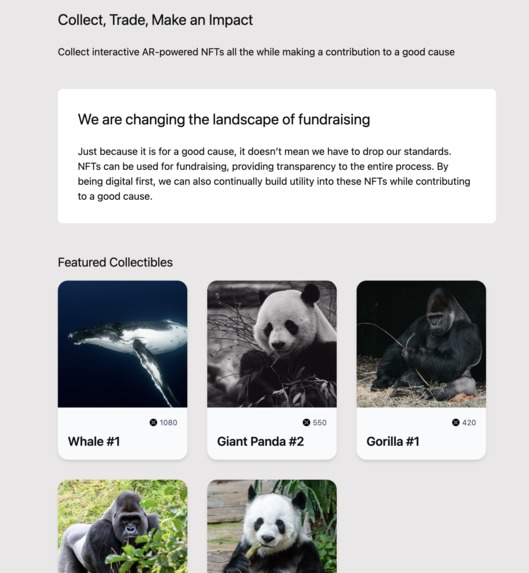
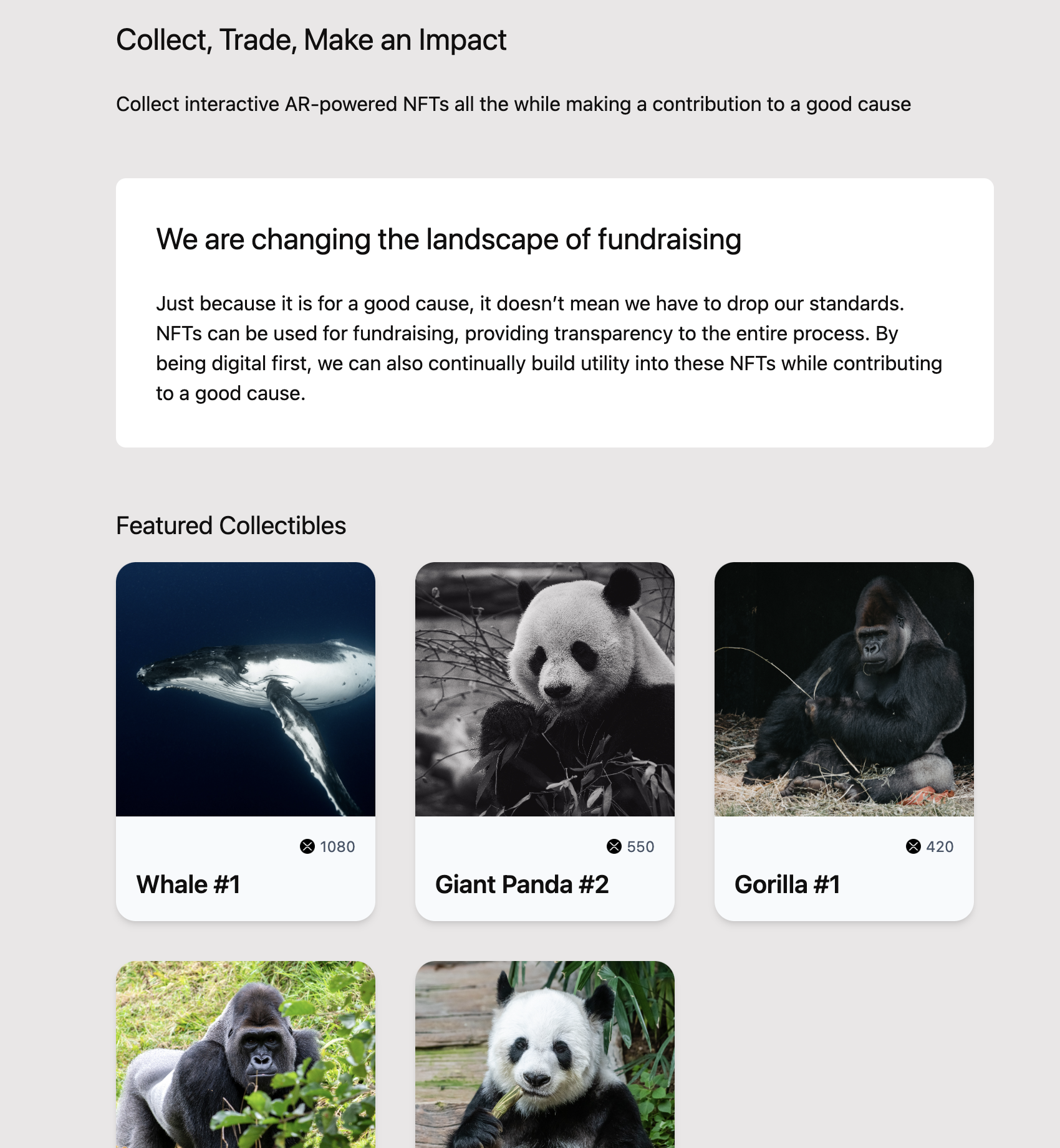
A minimalistic marketplace
This was initially built for another hackathon, but also qualified for SBS Boston Virtual Hackathon because we used Filecoin underneath. Unfortunately nft.storage is in an awkward data migration period, so our initial plans of adding deal provider transparency via the frontend had to be scrapped.
Inspiration
People are becoming increasingly more conscious about their impact on the world around them. Well known initiatives like the 17 global Sustainable Development Goals (SDGs) have influenced current and future generations to take conscious action to make a positive impact on the world. Gen Z, when compared to previous generations, are more careful of their choices and research the impacts on the environment and also ethical sourcing of materials. We can also say the same for endangered species. However there is a problem with the way we can save endangered species today: the main approach will be to make some sort of donation to a cause, however the entire process is out-dated and impersonal. We don’t really understand the impact of our contribution or how our money was spent. Let’s say you made a donation today to support the polar bears, after the conversation with the nice lady promoting the cause, how could you keep track of the impact you made? This is a broken system and we intend to fix it.
What it does
As a first step to solve this problem, we created a proof of concept where we generated a number of NFTs using dummy data for charities/NGOs supporting a good cause. The whole process works as follows:
- Use a number of scripts to generate the NFTs based on a simple folder structure, this will make it easy to work with non-technical groups so they can provide assets in an effective and simple format
- The scripts will generate accounts for the organisation and also a wallet which will be managed by the platform. This was done to simplify the onboarding of non-technical organisations
- The web app will automatically pick up the changes and will display the NFTs in a very simple web experience
How we built it
The primary tech stack is TypeScript based. We used React/Next.js for the frontend and ran the scripts in a Node environment. Since XRPL offers a well supported TypeScript library, this made the integration with the blockchain library much more fluid.
Challenges we ran into
The challenge was primarily time constraints. This entire project was done in less than 3 days, which meant many features were left undone (such as the lackluster set of features for the marketplace)
Accomplishments that we're proud of
- We created the entire process of minting NFTs using a novel directory-based approach
- Every NFT has been painstakingly embedded with information about the original authors and licensing information for every asset on IPFS
What we learned
This was our first time using XRPL. We were pleasantly surprised how easy it was to work with the blockchain, there was plenty of documentation along with useful and up-to-date quickstart projects which meant it was very easy to work on the project
What's next for Noah’s ARk
For this project we need a lot more features to make it shine:
- A complete and automated payment rail between FIAT and XRP
- Improved UX for users visiting the marketplace (we ran out of time)
- Show the demo to charities/NGOs and try to get our first fundraising done on the platform
- More cool AR features such as interactivity using gestures on any mobile device (current AR preview only works with iOS)
- AI-powered personalities for each NFT, so they can almost work like companions
Closing thoughts
Overall we are proud of our achievements with the project despite the short time scale. We surprised ourselves with how versatile the idea was, and we see potential in applying it for any project even beyond fundraising. However we’d like to give back to the world instead of always taking from it, so that’s why we decided to focus on the greater good for this project.


Log in or sign up for Devpost to join the conversation.