-
-
Kaia Logo
-
Algorithm (Figure 1.)
Inspiration
Industries like fast fashion and food carry a heavy environmental toll. For example, clothing accounts for a fifth of global plastic pollution, and producing polyester requires 1.3 billion barrels of oil yearly. Fashion's carbon footprint is substantial, exceeding emissions from shipping and flights combined. Additionally, food production accounts for over a quarter (26 percent) of global greenhouse gas emissions.
76% of consumers would like to shop sustainably but do not have the resources to determine what is sustainable. Kaia aims to change that.
What it does
Kaia is a Google Chrome extension that helps online shoppers understand the sustainability ratings of products they are interested in purchasing. In this hack, we have focused on addressing the clothing and food industries.
Kaia helps users identify sustainable clothing by looking past the greenwashing that several companies do to make their clothes more popular among consumers. One of the factors this Google Chrome extension looks at is the country the item is produced in, specifically the laws in that country, to determine if the workers have fair wages and safe working conditions.
Kaia also looks at the material composition, biodegradability and/or recyclability, and sustainable fibers to determine its carbon footprint and addition to greenhouse gas emissions; brand, longevity of a product, and if it’s organic, to determine if the company is a contributor to fast fashion.
Along with checking if a product is a contributing factor of fast fashion, our chrome extension checks if a product is resource intensive to evaluate another component of a product’s sustainability. A product being resource intensive, requiring several resources to make and maintain, is another way that a product can be unsustainable and add to a carbon footprint and/or greenhouse gas emission.
In addition, Kaia can be used to find sustainability ratings across industries including the food industry. A similar algorithm will be used with added factors such as seasonality to determine the sustainability rating for food.
Kaia additionally also has a feature for users to input any allergens they want to avoid and the extension will populate an alert label on any products which contain allergens. The goal is to draw in another market segment who may be interested in Kaia for allergy information but ultimately stay interested with our product because of the sustainability aspect.
How we built it
As this was our team’s first attempt making a chrome extension, we opted to .json, javascript and html/css in order to make our extension. In our current version of the hack, we have four different components:
manifest.json: This is where we hold the version chrome extension details of Kaia. This includes the name, description, and what permission the extension has access to. Ideally, this would be the entire web, but due to time and testing constraints, we chose to focus on Amazon.com. This is also where we call to action our content, style, and popup scripts for extension.
popup.html: This is the script for our extension pop-up (the description or panel that shows up when you use the extension icon). In the popup, we talk about what Kaia is and its mission. In addition, users can also type in allergens that they would like to avoid. In the future with more development time, we’d like to make it interactive to support a wider range of allergens and include eco preferences which brings added functionality to the hack.
style.css: This script is in charge of making sure our labels/badges show up on the product containers on each shopping website (in this case, Amazon). ‘Eco Score’ badges show up in green on the right and ‘Contains Allergens’ on the left in orange.
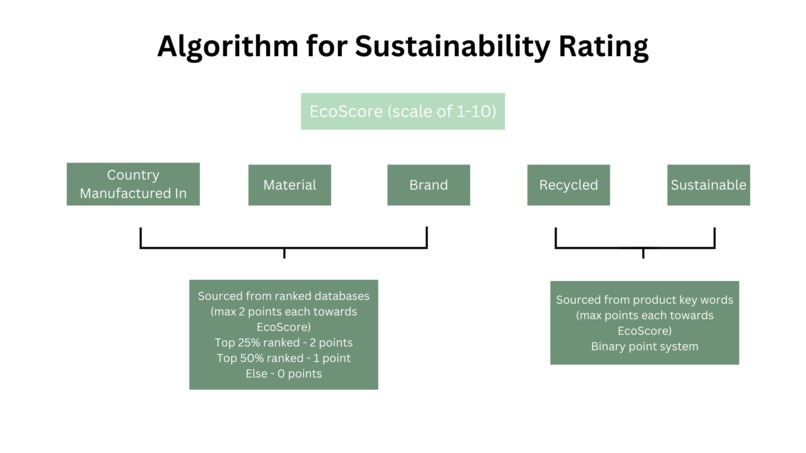
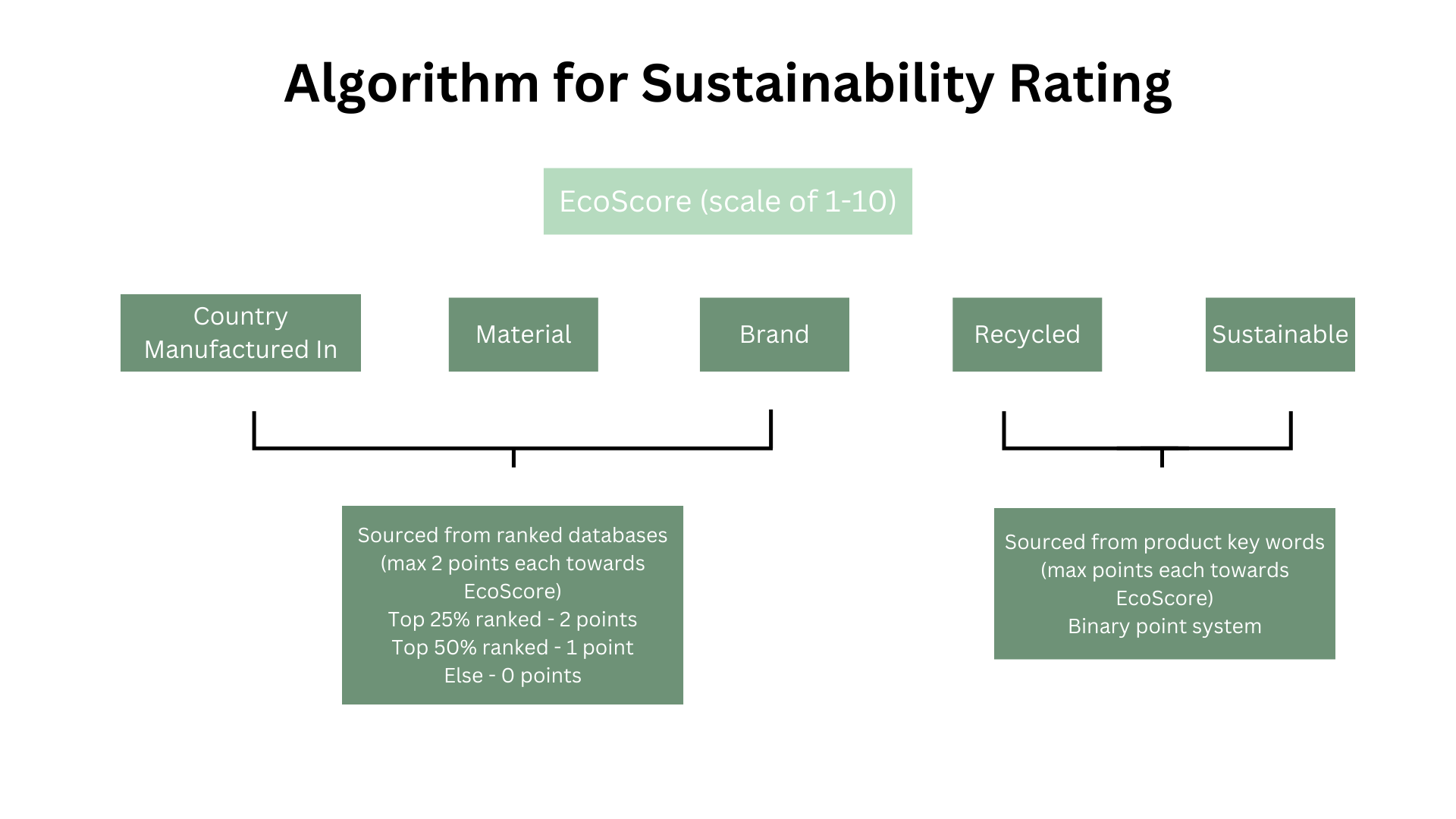
script.js: This is where all the backend for Kaia occurs. In the backend, we have code to allow the user to input their allergies and using the developer tools on Amazon’s website, we wrote an algorithm to check if the product name or description has those words. We also have another functionality, which outputs an EcoScore for any product that the user hovers over. The EcoScore algorithm (see Figure 1) is based on factors scraped from the product title and description. Factors include the country product was manufactured in, sustainability keywords, and brand.
Kaia 1.0 is just a prototype and we are still working on implementing all the features.
Challenges we ran into
We faced some challenges with implementing our algorithm for EcoScores. Initially, the brand and country of manufacturing ratings which contribute to the overall EcoScore were based on values in a CSV file. However, we had to adapt it to a dictionary format for parsing purposes.
Another challenge was implementing the allergen check functionality. Initially, we allowed the user to just check off common allergens but we had to adapt it to text entry format to make it more inclusive for rarer allergies.
Accomplishments that we're proud of
We are proud of building an inclusive and accessible Chrome extension which allows users to make eco-conscious choices. Kaia is intuitive and can be easily integrated into existing consumer habits. Particularly, our algorithm which scrapes product data to output an EcoScore is unique compared to similar alternatives on the market. Kaia accounts for a variety of factors to determine sustainability ratings for every product on the website while competitors give generic ratings based on a singular factor like the brand. We are also proud that we were able to develop a minimum viable product within the 36 hour time period given that none of us had much prior experience with coding JavaScript and had never worked on a Chrome extension before.
What we learned
We learned the basic format for developing Chrome extensions as well as the process for testing and debugging them. We also gained experience with deciding which technical features would best encapsulate the Kaia vision and prioritize those given the time constraint. From a team management perspective, we learned how to divide the deliverables to be time efficient.
What's next for Kaia 1.0
We plan to implement this extension to browsers beyond Google Chrome including Safari & Firefox, allowing for a wider segment of customers and prioritizing inclusivity. While we currently address the apparel and food industries, we hope to expand beyond. We also plan to add pricing comparison and cost benefit analysis within the algorithm comparing sustainable products to more commonly bought alternatives. We can also add more factors to determine the sustainability score. In addition, the extension should be implemented beyond Amazon to other retailers with an online store or app.
Built With
- css
- html
- javascript
- json
- visual-studio-code


Log in or sign up for Devpost to join the conversation.