-
-
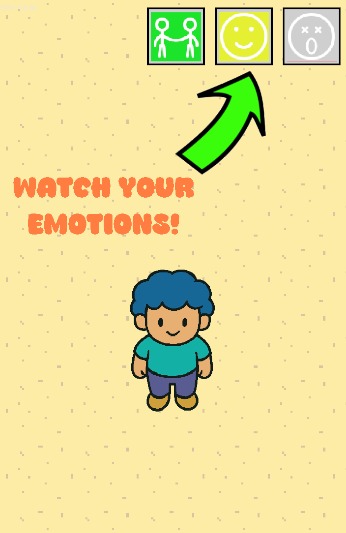
Emotion status
-
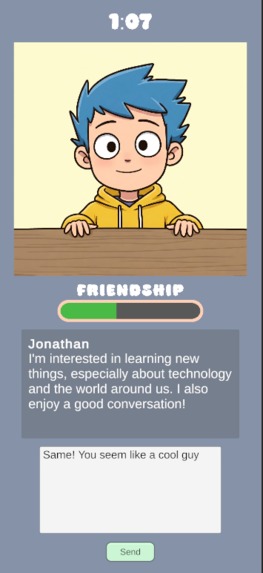
Ping Pong Thoughts Minigame
-
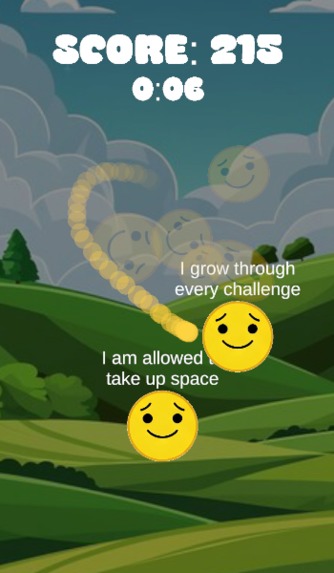
Vibe Slicer
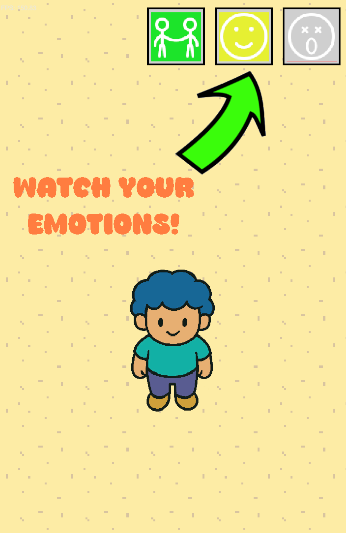
Inspiration
We were inspired by the rising mental health challenges among students and young adults, and the lack of accessible tools that make emotional awareness feel engaging. Our goal was to make mental health check-ins feel as easy and enjoyable as playing a casual game. We wanted to combine fast gameplay with meaningful emotional interaction—without being too serious or clinical.
What it does
Always Good Vibes is a mental wellness game that features two quick, engaging mini-games:
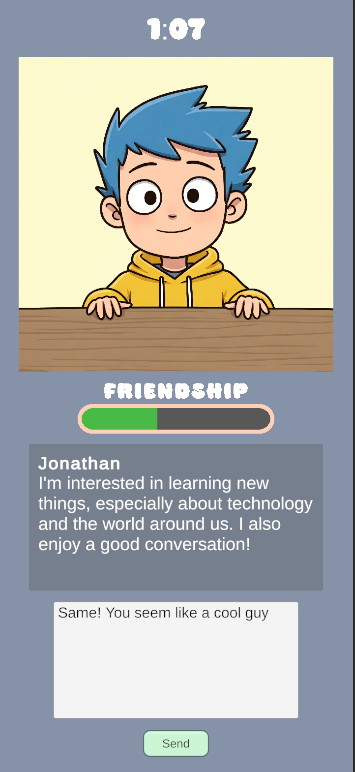
Ping Pong Thoughts: A chatbot-style game where players engage in emotional conversations with a customizable AI buddy. Each thoughtful response increases a Friendship Meter, promoting self-reflection and empathy.
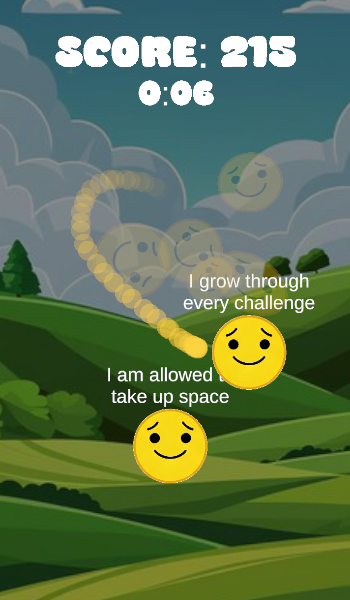
Vibe Slicer: A reflex-based game where emotion emojis fly across the screen. Players slice or avoid them based on their emotional value (happy = +5, anxious = –5, sad = –3, angry = –10). At the end, players receive personalized feedback based on their score.
Both games aim to build emotional intelligence through lightweight, repeatable play.
How we built it
Using the Unity game engine, we organized game logic using Object-Oriented Design, enabling modularity and scalability across both mini-games. For interactive and dynamic feedback, we integrated a Python Flask API connected to LLMs (Large Language Models). This setup allowed real-time emotional response evaluation and personalized content delivery from the AI chatbot and feedback system.
Challenges we ran into
Crafting emotionally relevant AI responses without sounding robotic or repetitive
Balancing game mechanics to keep both fun and purpose aligned
Determining the proper difficulty that is challenging whilst not too difficult.
Ensuring gameplay remained light while still encouraging emotional engagement
Accomplishments that we're proud of
Built and connected two distinct, working mini-games that support mental health through active gameplay
Successfully implemented LLM-powered AI feedback for personalized player interaction
Made emotional awareness feel intuitive and accessible through game design
Created an experience that people enjoyed and found meaningful, even in early testing
What we learned
We learned that AI can be a powerful ally in emotional gameplay, providing thoughtful, real-time responses and feedback. Unity's structure made it easy to manage multiple game states, and integrating with Flask gave us flexibility for dynamic backend logic. Most importantly, we learned that simple games can spark self-awareness if designed with empathy and clarity.
What's next for Always Good Vibes
Launch a mobile version for broader accessibility
Add more nuanced emotion categories and feedback models
Include daily challenges, mood tracking, and reflective journals
Collaborate with wellness professionals to validate emotional design and outcomes
Enhance UI/UX with visual polish and accessibility features

Log in or sign up for Devpost to join the conversation.