
Inspiration
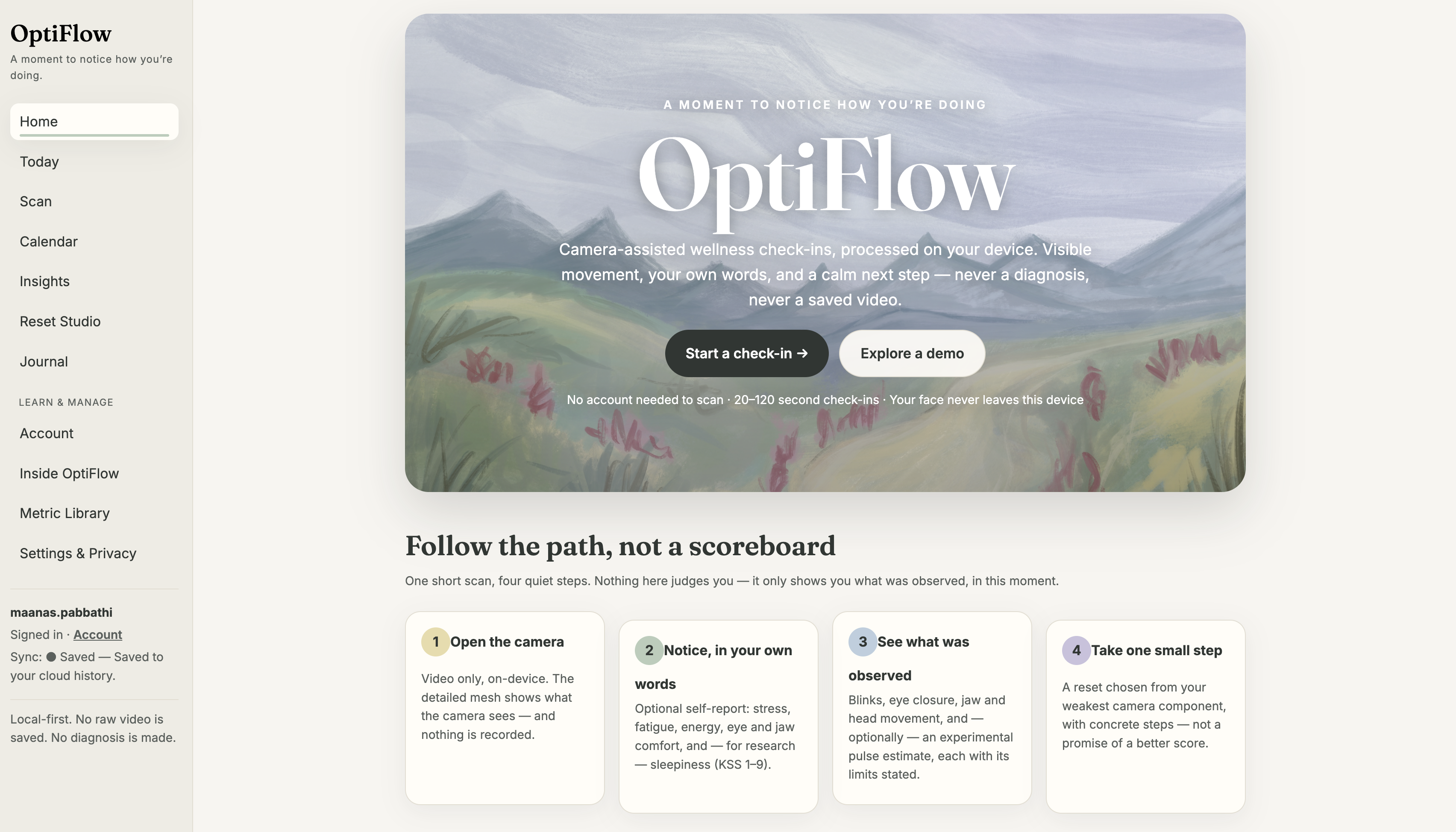
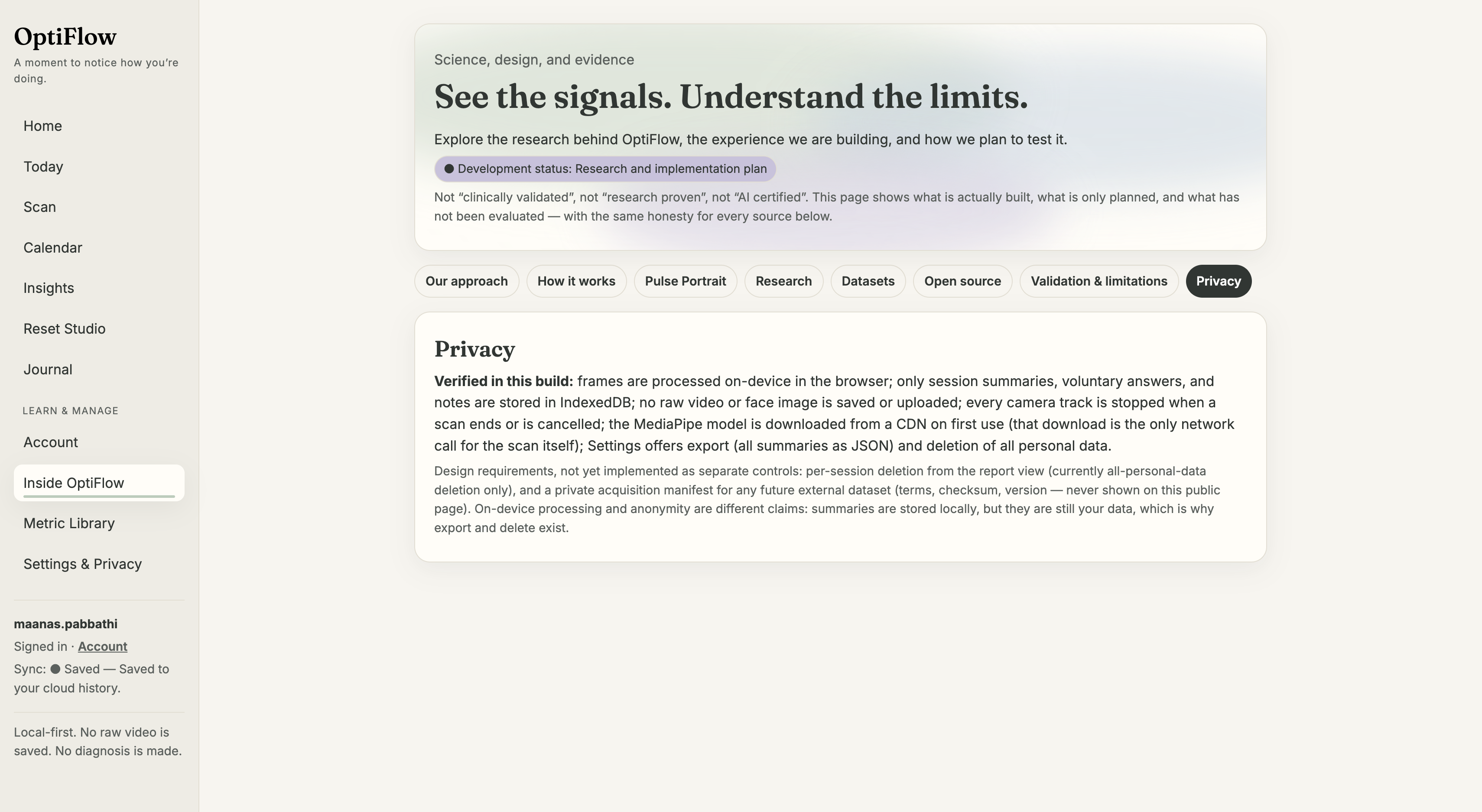
Our inspiration primarily came from mental health issues we faced during exams, we wanted to help other students encounter and solve their own mental health problems. We wanted to make these signals tangible through an ambient biofeedback system that helps people become more aware of their mental state.
What it does
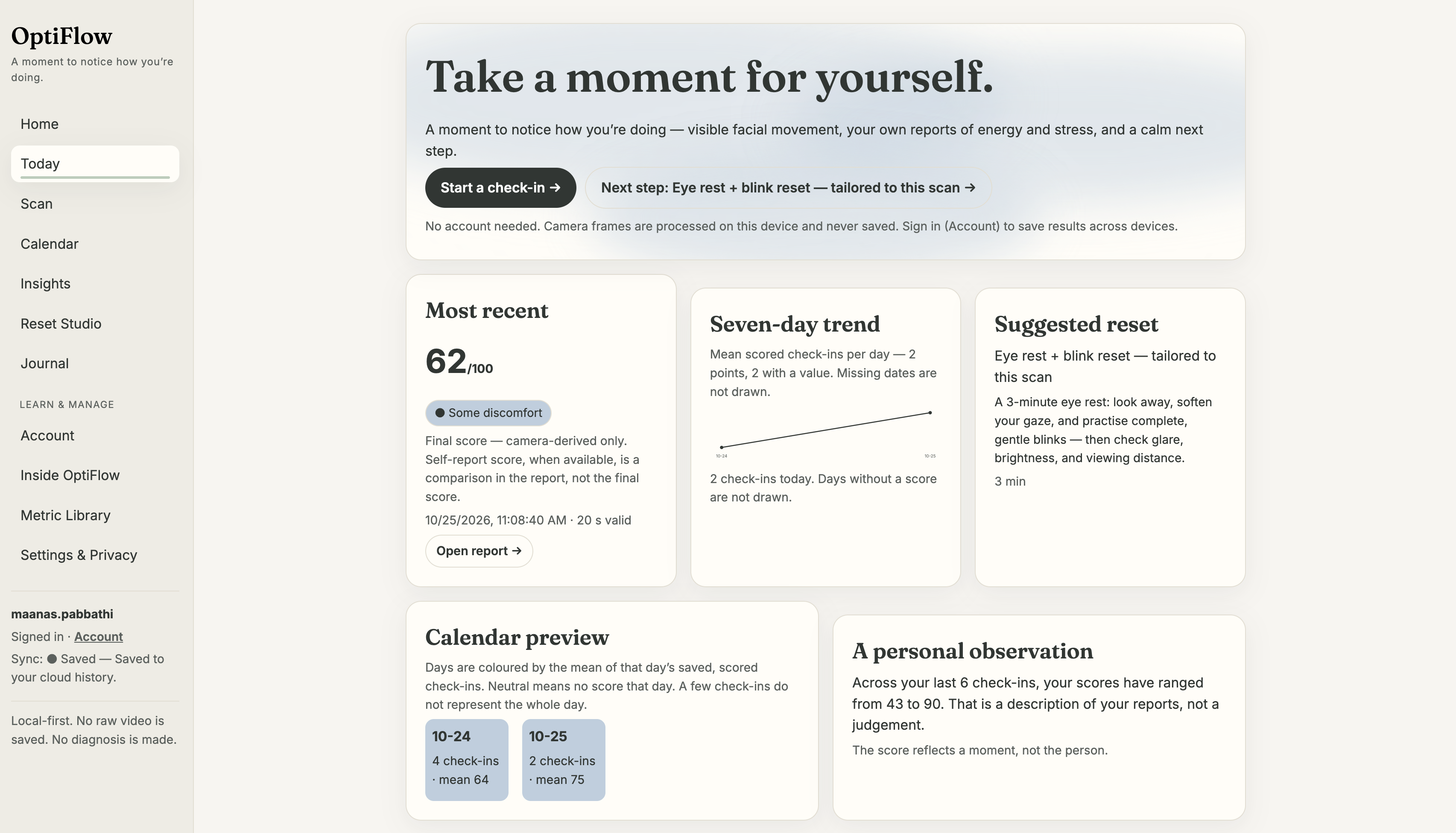
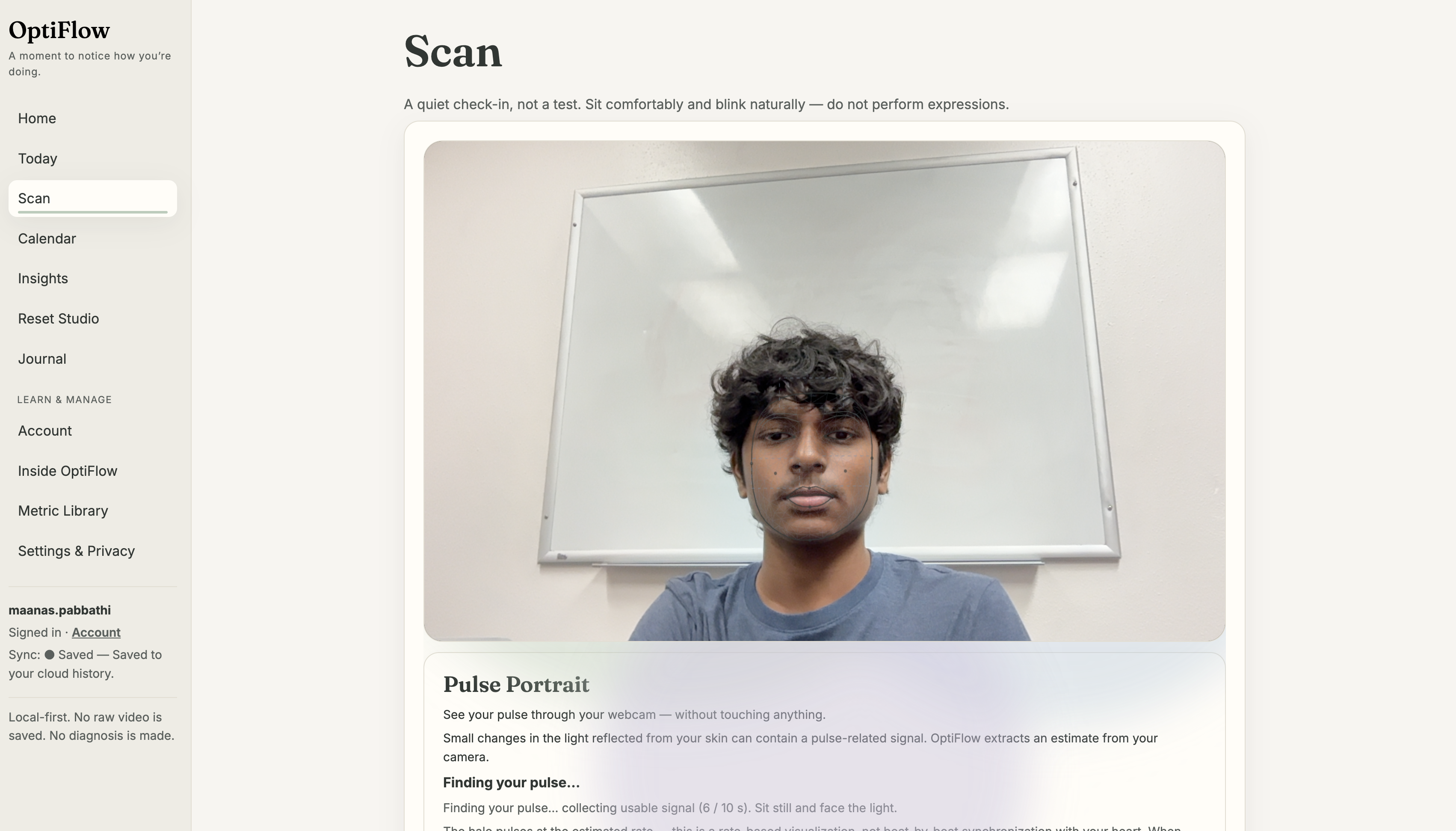
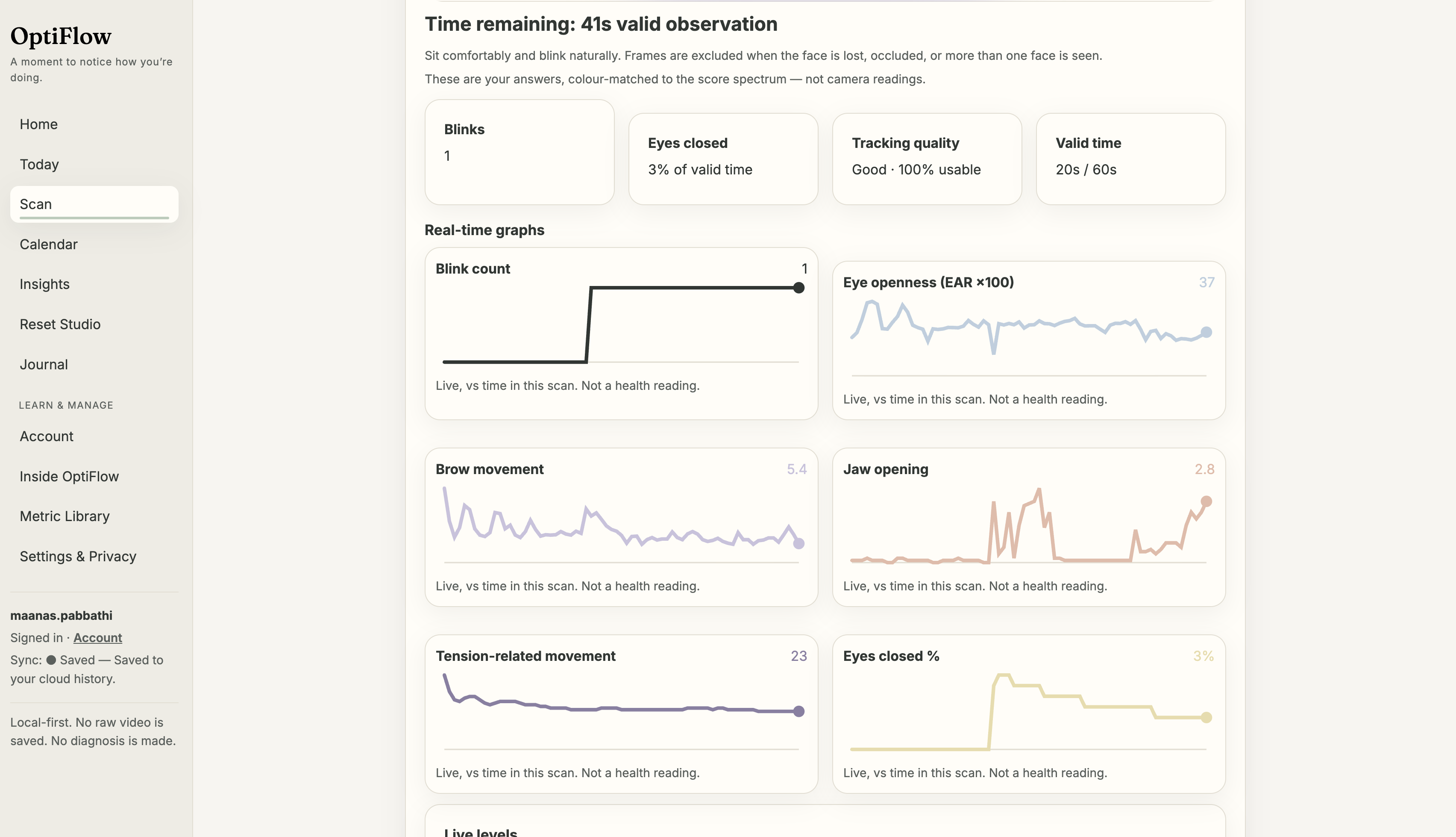
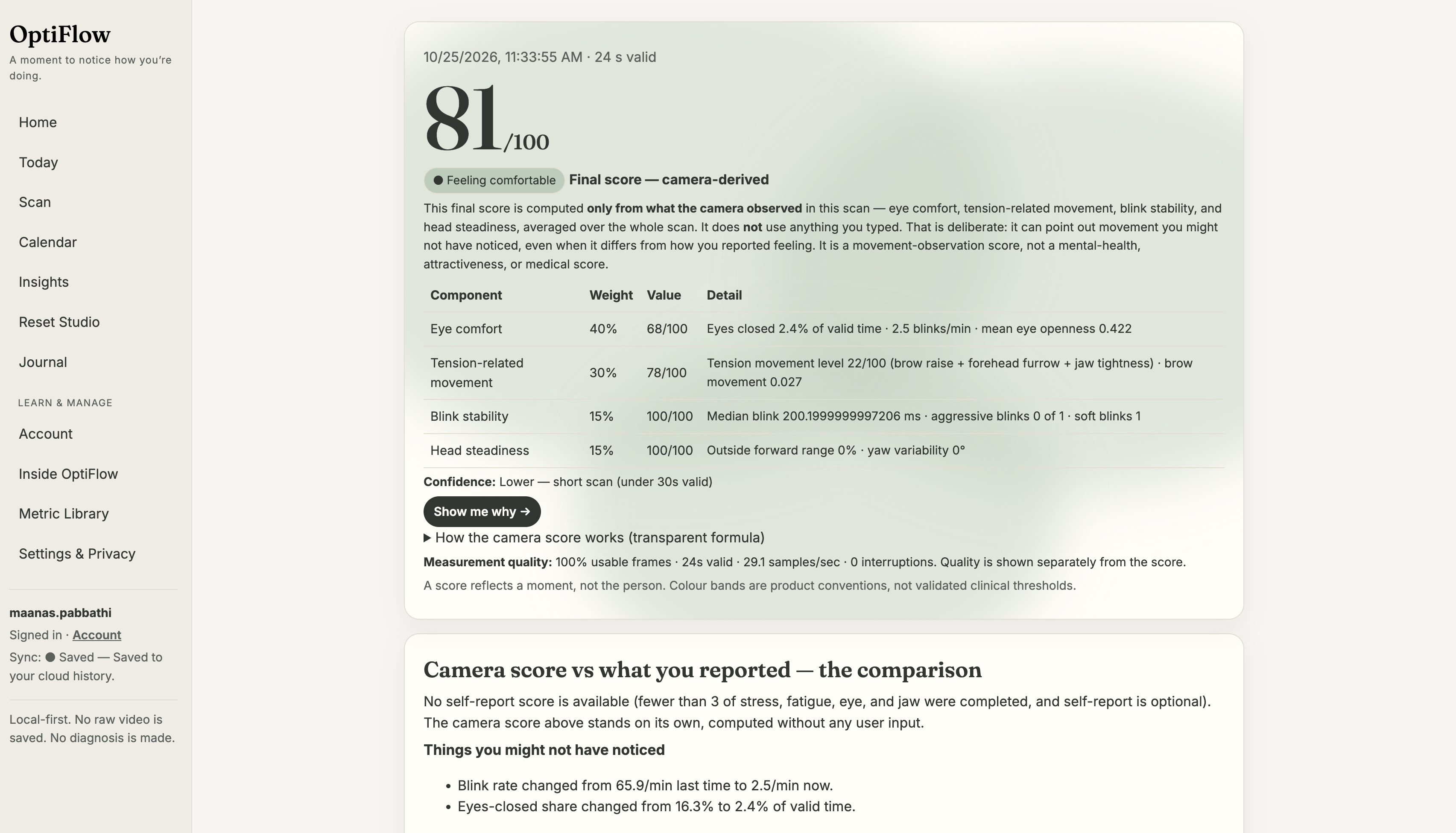
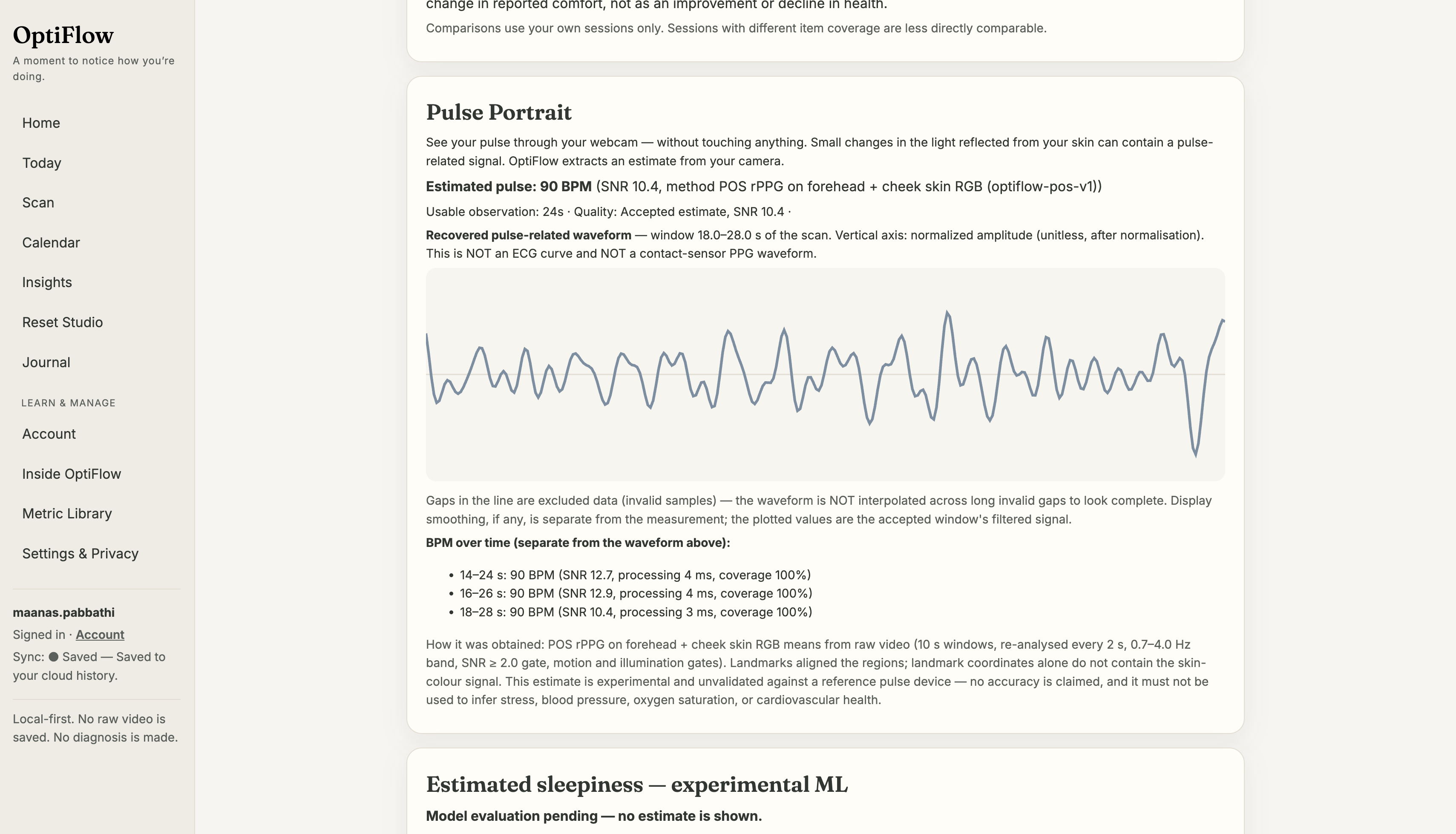
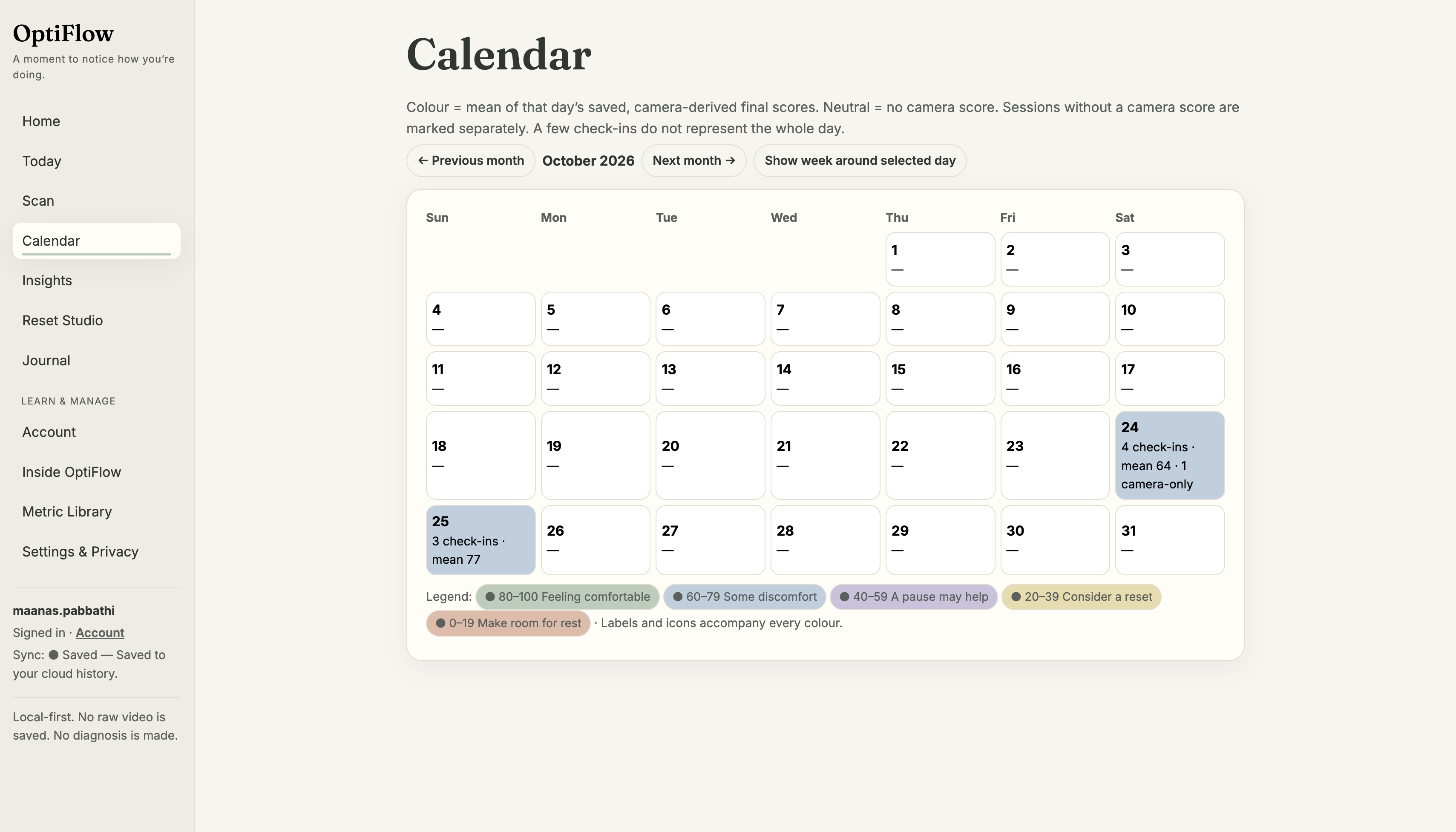
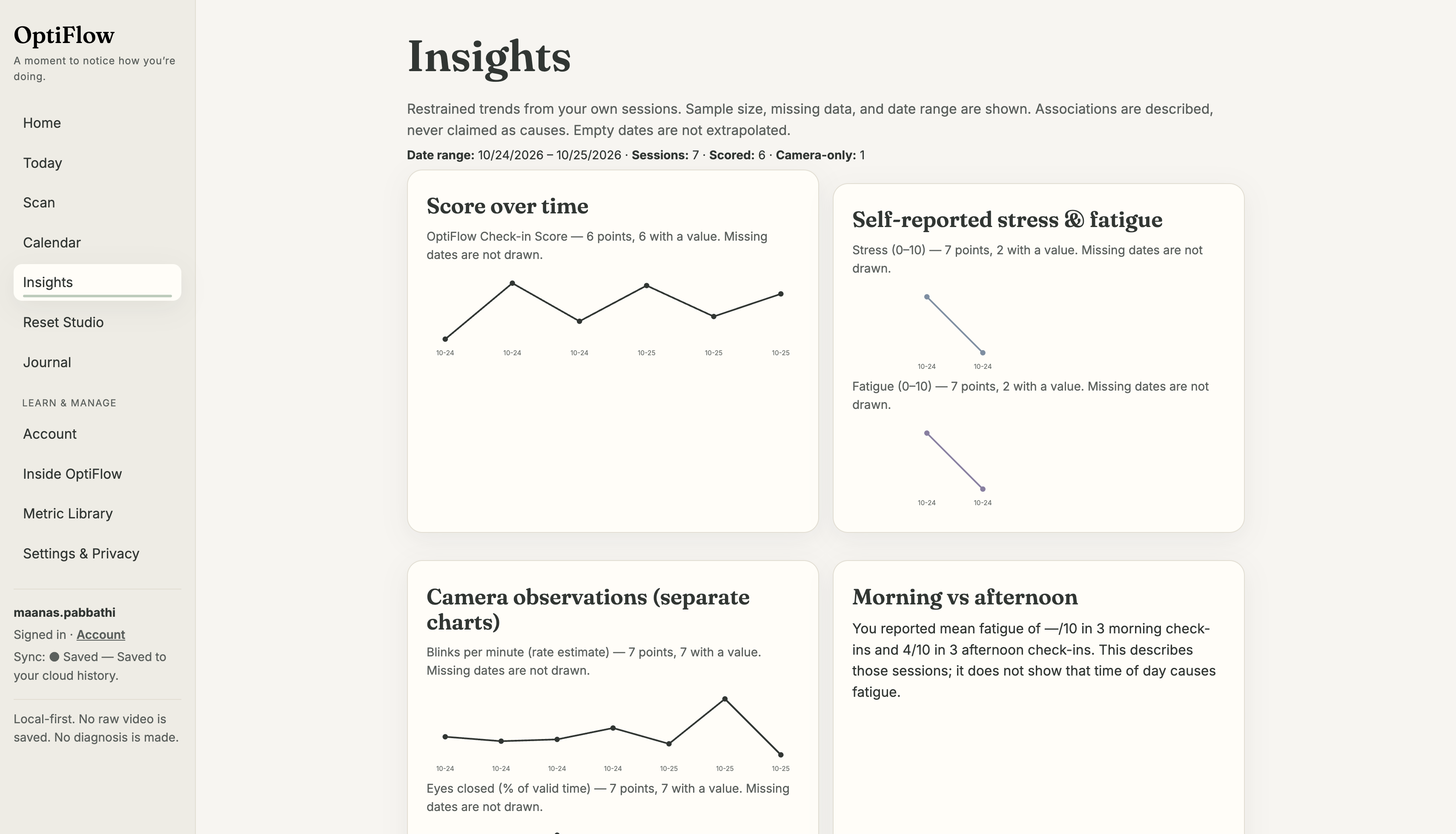
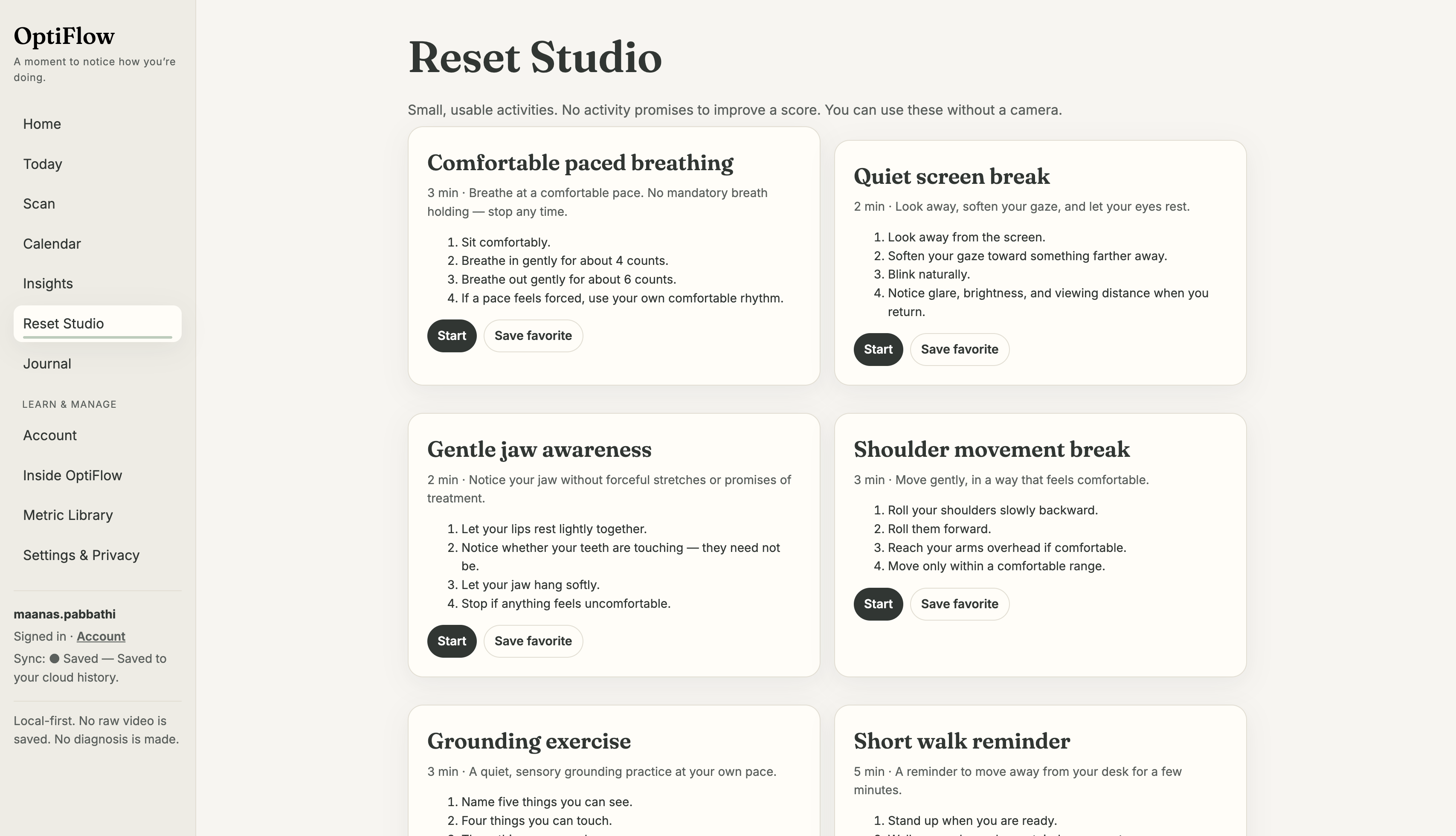
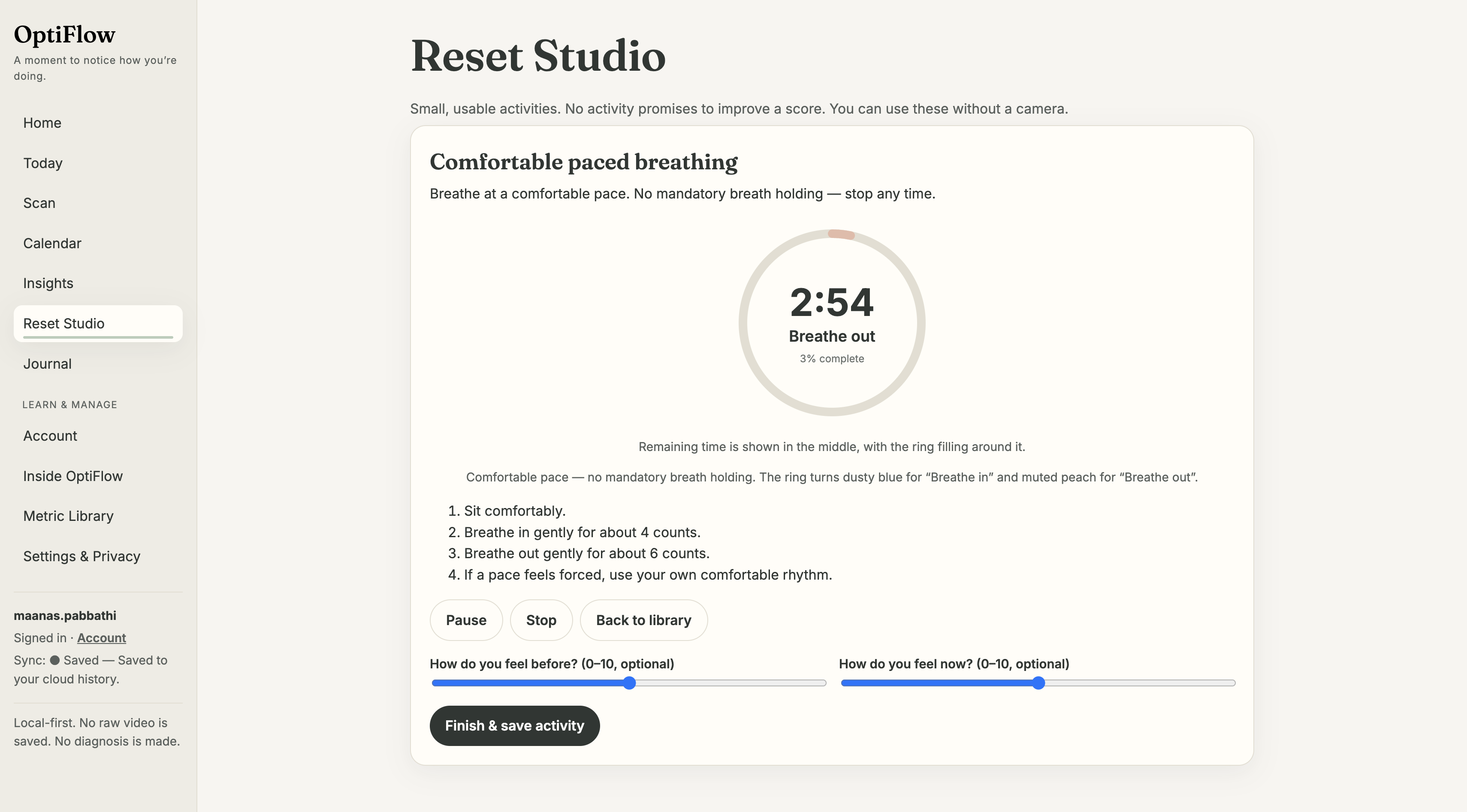
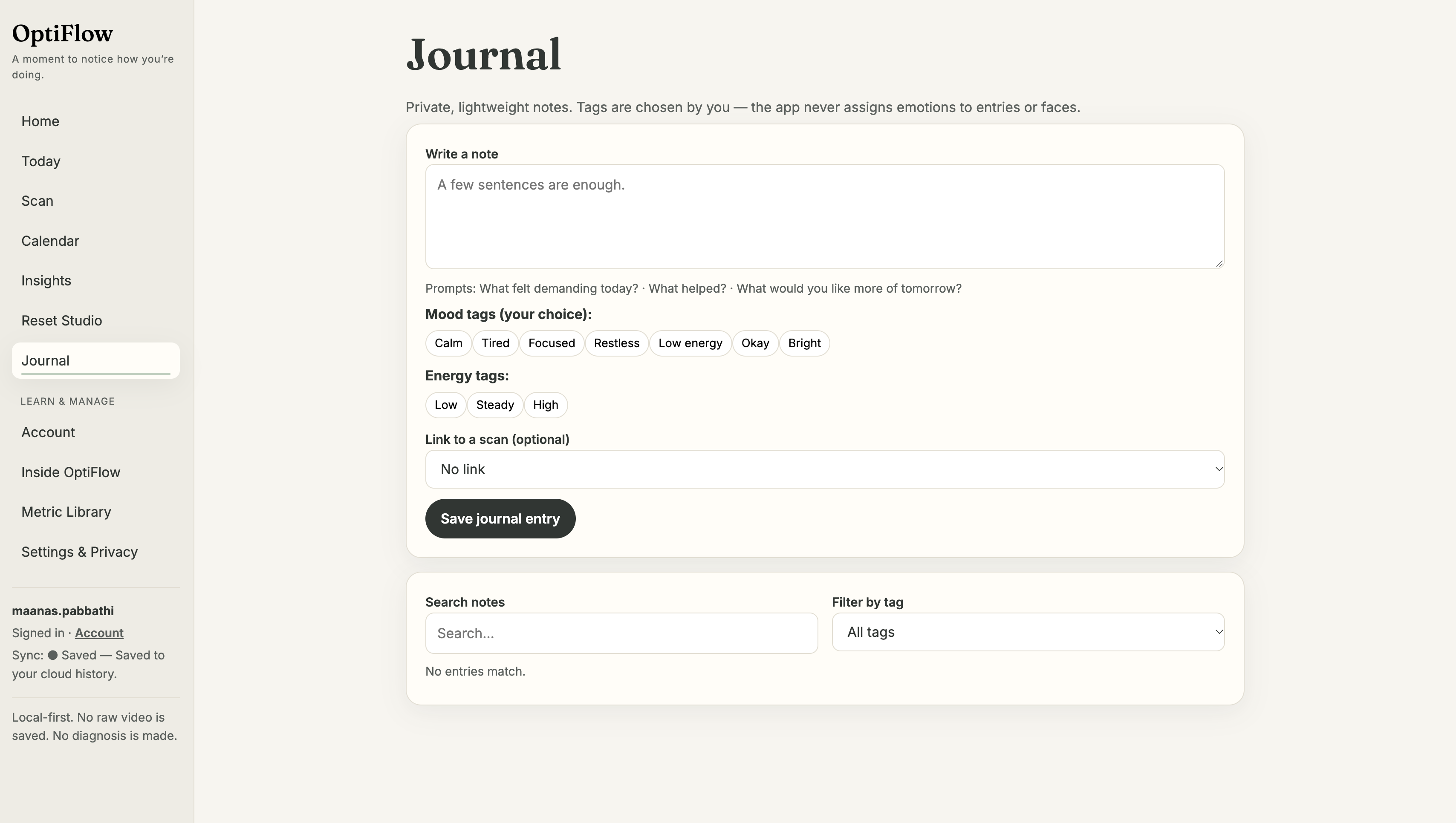
OptiFlow uses real-time facial landmark tracking to analyze behavioral cues such as blinking, eye closure, and facial movements over time. It translates these signals into a visual strain indicator and a dynamic mesh display, for the user to gain data on their wellness.
How we built it
We built OptiFlow using Python, computer vision, and MediaPipe to track facial landmarks and extract features over time. We used Supabase in order to keep the login data stored safely for all users.
Challenges we ran into
One of our biggest challenges was distinguishing meaningful behavioral patterns from normal facial movements, since the same cues can reflect different states depending on the person and context. We also had to coordinate real-time computer vision while keeping the feedback responsive.
Accomplishments that we're proud of
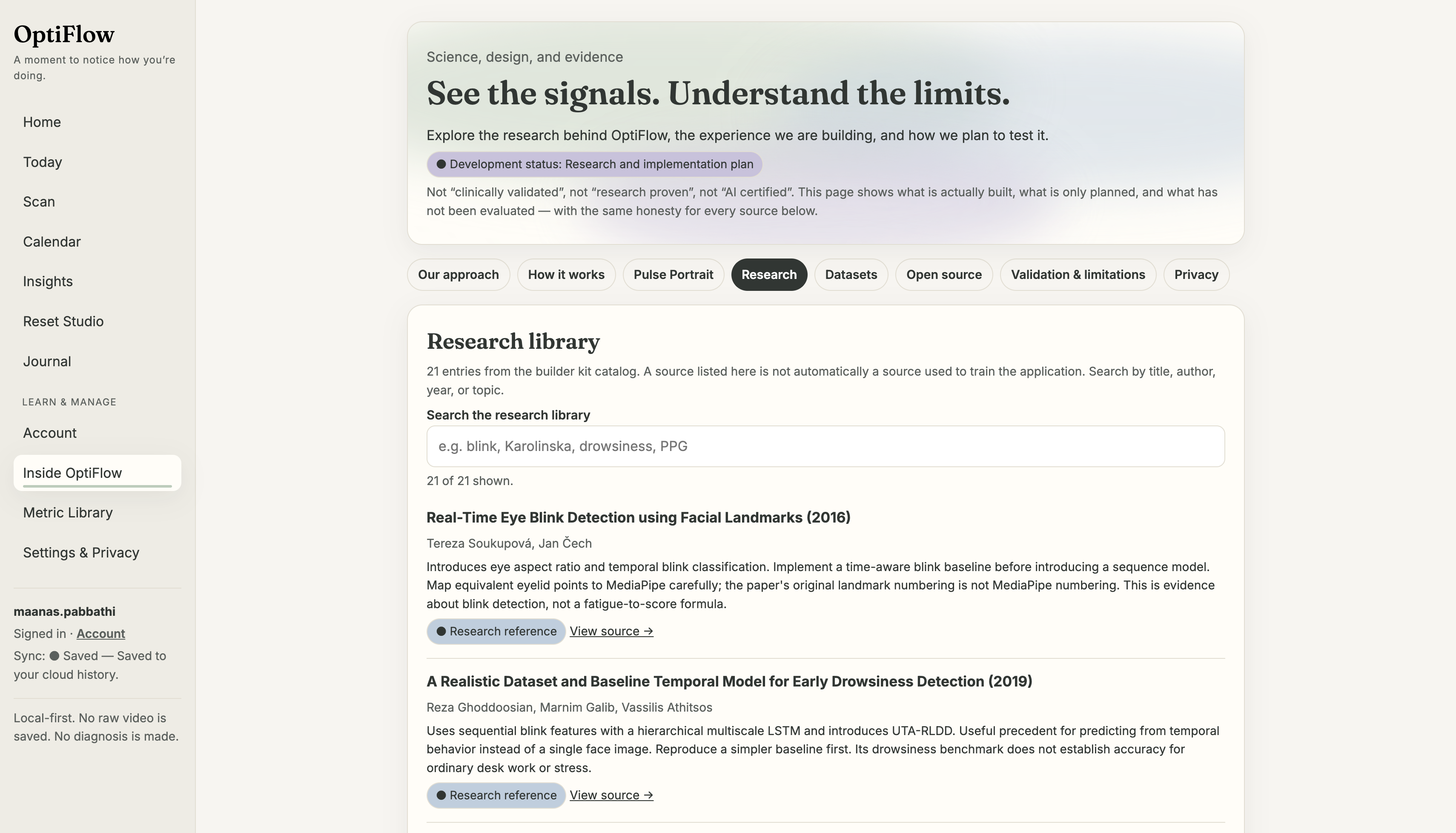
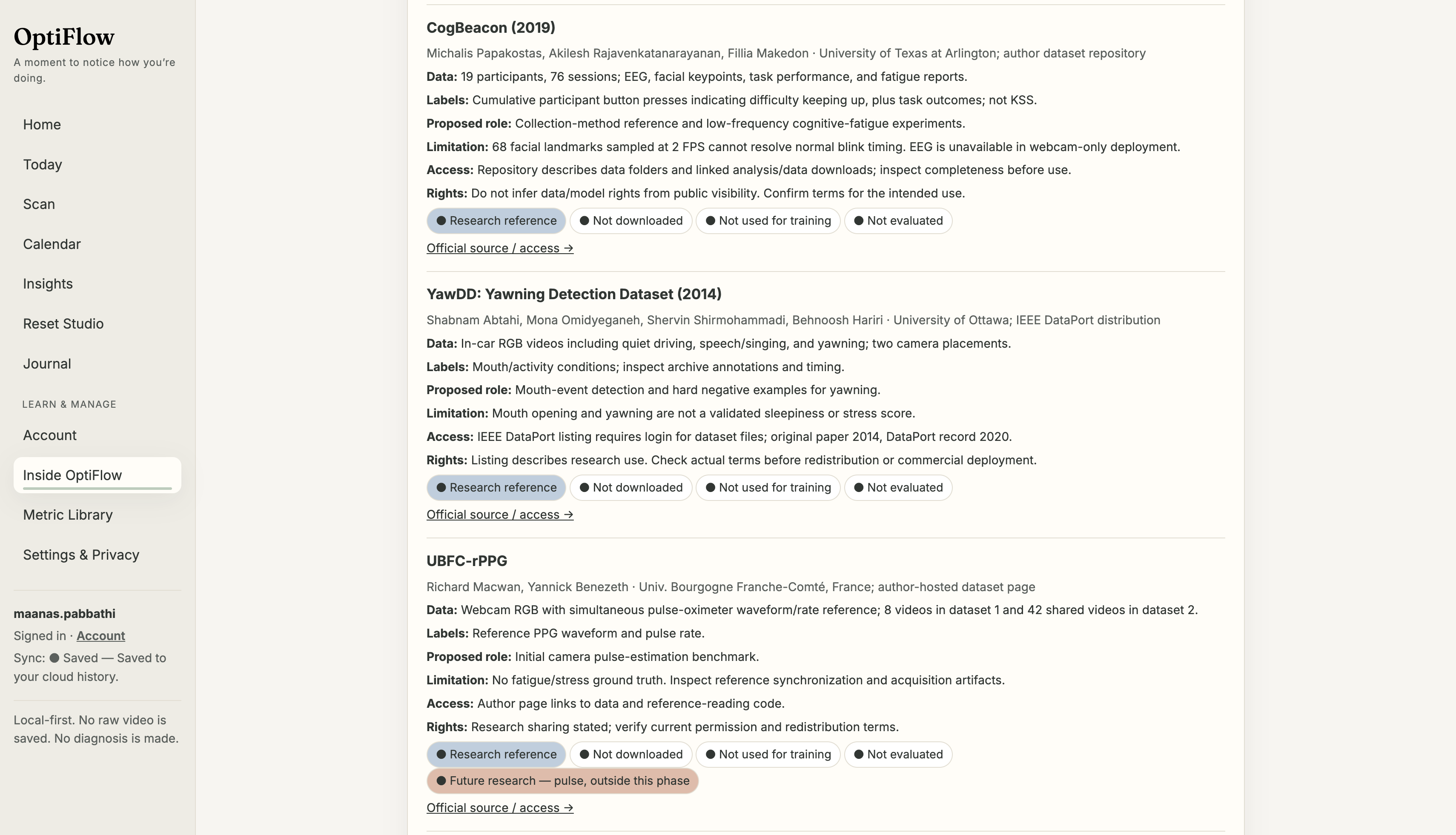
We're proud of bringing together AI and computer vision to create an interactive biofeedback experience. Rather than simply displaying data on a screen, OptiFlow connects facial signal analysis to a tangible, real-time response, powered by a machine learning model we built and trained, informed by published research, existing repositories, and 3,225 synthetic tests.
What we learned
We learned how to connect real-time facial tracking and signal processing into one integrated system. We also learned that behavioral indicators must be interpreted carefully and that personalized baselines are important when estimating cognitive strain and fatigue.
What's next for OptiFlow
We plan to improve the accuracy of our facial feature analysis, personalize the system to each user, and validate its outputs against self-reported stress, workload, and fatigue. We also aim to develop custom hardware that inputs and translates these signals into tangible, real-time biofeedback, bridging computer vision and physical interaction. Ultimately, we want to explore adaptive feedback that helps users recognize changes in their mental workload while preserving privacy through on-device processing.
Built With
- javascript
- mediapipe
- python
- supabase
- typescript


Log in or sign up for Devpost to join the conversation.