Inspiration
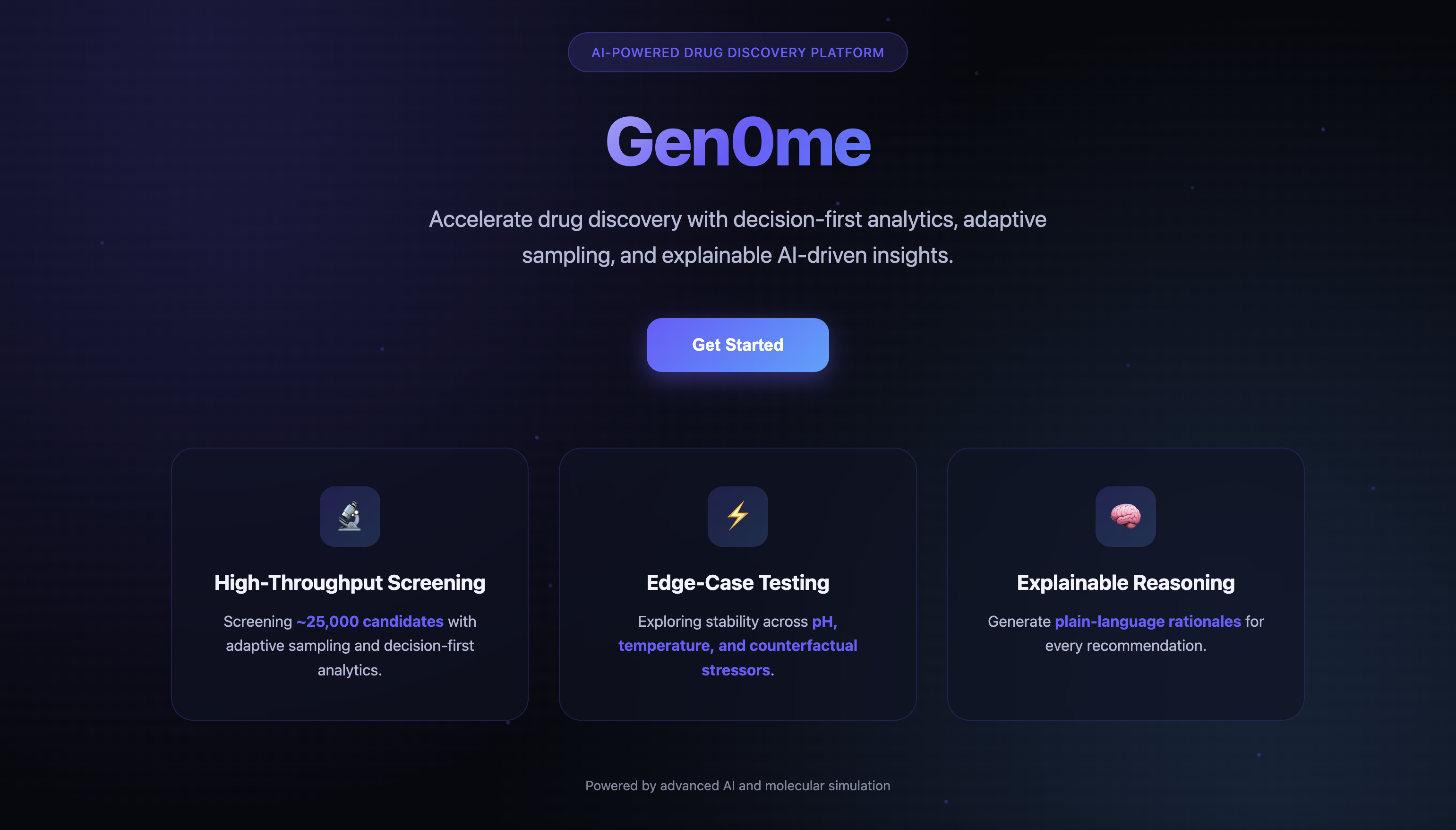
Pharmaceutical drug discovery requires massive computational power to screen thousands of molecular candidates, but the scientists making critical synthesis decisions such as biologists and chemists aren't HPC experts. They need clear, actionable insights, not raw compute outputs. We asked: what if discovering potentially life-saving molecular structures was as simple as asking a question? Gen0me was born from the vision that breakthrough science shouldn't require a PhD in parallel computing.
What it does
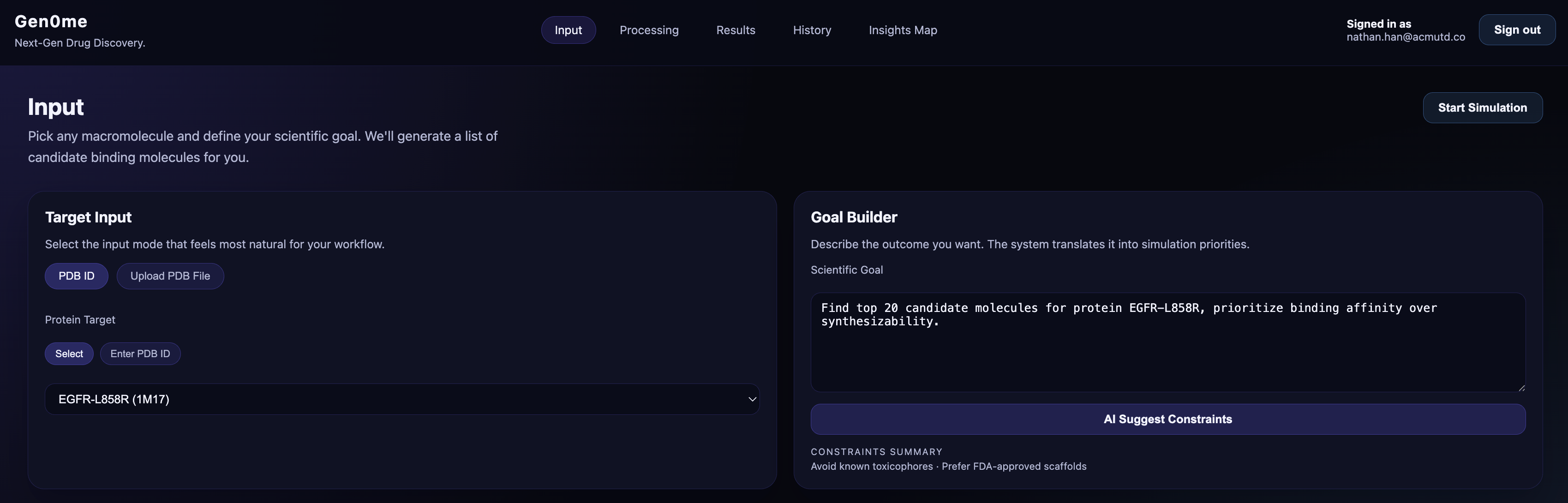
Gen0me is an intelligent drug discovery platform that abstracts away all HPC complexity. Scientists simply input a target protein and describe their goals in plain language, like "Find the top 20 candidates prioritizing binding affinity" and Gen0me handles the rest.
Key Features:
- Zero HPC Knowledge Required: Users interact through goals and trade-offs, never cores or nodes
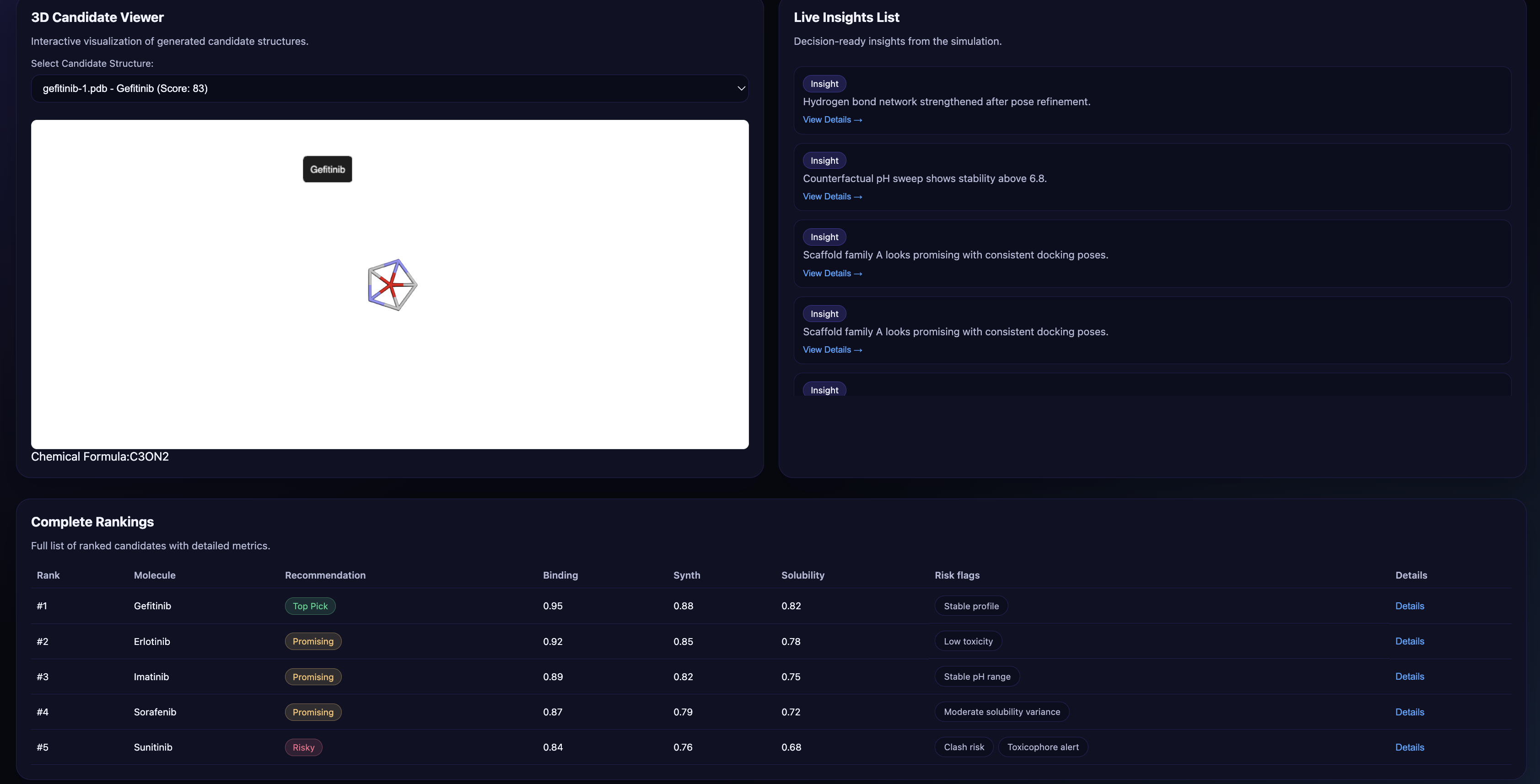
- Interactive 3D Visualization: Explore protein-ligand binding sites with labeled key interactions in layman's terms
- Decision-First Outputs: Ranked candidates with risk scores, confidence levels, and clear trade-offs
- Agentic Refinement: Mid-run recommendations let users adjust priorities on the fly
- Counterfactual Analysis: Explore "what-if" scenarios to test edge cases before expensive lab work
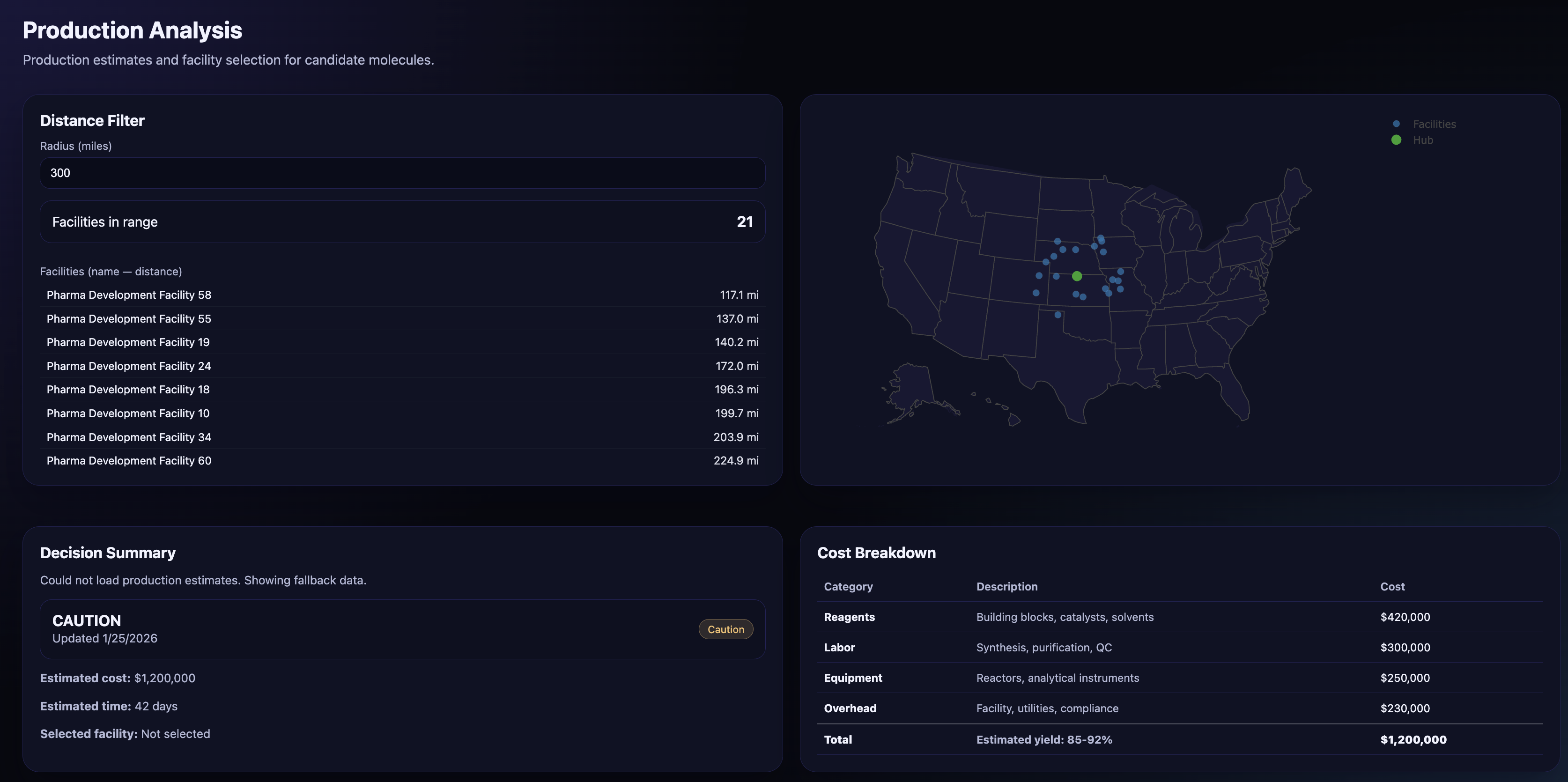
- Cost Intelligence: Integrated distribution facility recommendations and development cost estimates
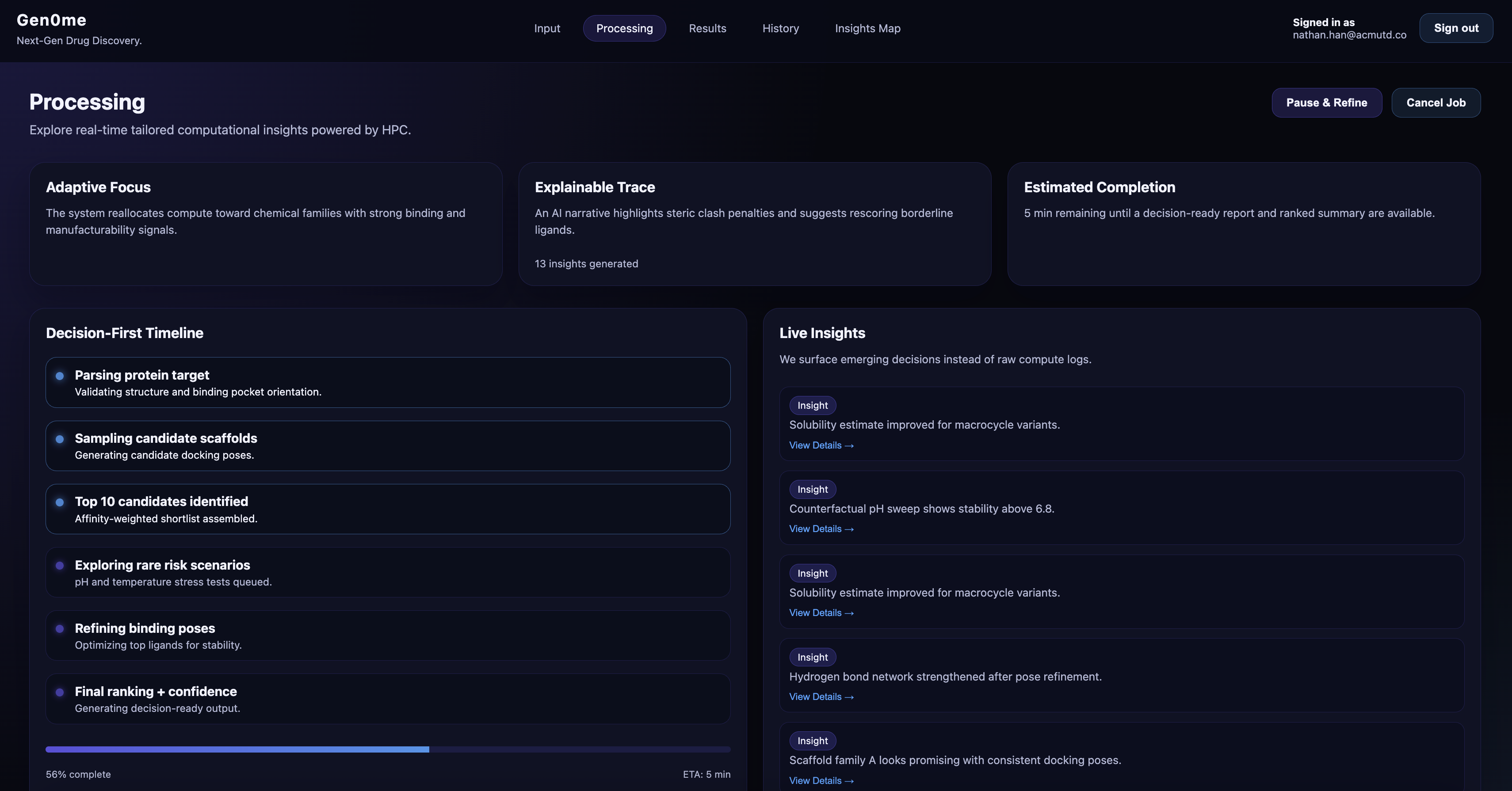
Instead of "Job submitted to 128 cores," users see "Top 10 candidates identified, exploring rare risk scenarios."
How we built it
Frontend: React + TypeScript with a tab-based interface (Job Setup, Processing, Results, History)
Visualization: 3Dmol.js and Three.js for interactive molecular structures with color-coded binding affinity and annotated interaction points
HPC Backend: We developed scientifically-backed mathematical computation of docking calculations across thousands of molecular candidates, including binding and stability score using Python. It also determines edge cases such as pH changes, along with environmental factors.
AI Layer: Nvidia Nemotron API powers natural language goal interpretation, automated counterfactual generation, and explainable reasoning traces
Cost Analysis: AI-powered blockchain integration for transparent development and distribution cost modeling
Authentication: Auth0 for secure user management
The system translates scientific goals into compute tasks automatically, dynamically prioritizes high-interest molecules, and provides real-time decision-relevant updates while keeping the underlying HPC completely invisible.
Challenges we ran into
Abstracting Complexity Without Losing Power: Finding the right level of abstraction where non-experts stay empowered but experts don't feel limited was tricky. We solved this with progressive disclosure with detailed explanations available on demand.
Real-Time Interactivity: Allowing mid-simulation adjustments required rethinking traditional batch HPC workflows. We implemented dynamic task reprioritization that feels collaborative rather than rigid.
Meaningful Progress Indicators: Generic progress bars don't help scientists make decisions. We created semantic milestones like "Exploring alternative scaffolds" that communicate scientific progress, not just compute status.
3D Visualization Performance: Rendering thousands of molecular structures smoothly required optimization. We implemented clustering and on demand loading to keep the interface responsive.
Accomplishments that we're proud of
- True HPC Abstraction: Not just hiding complexity, but reimagining the entire interaction model around scientific decisions
- Explainable AI Integration: Every recommendation comes with clear reasoning that builds trust
- Interactive 3D Experience: Scientists can intuitively explore molecular binding without technical visualization training
- Agentic Collaboration: The system actively participates in the discovery process, not just processes requests
What we learned
- Domain expertise is everything. Talking to actual medicinal chemists revealed that they care more about synthesis feasibility than raw binding scores
- Abstraction done right feels like magic; abstraction done wrong feels limiting
- Real-time collaboration between humans and compute changes how scientists approach discovery
- Great UX in technical domains means showing the right information at the right time, not all information all the time
What's next for Gen0me
- Expanded Chemical Libraries: Integrate larger molecular databases and custom synthesis suggestions
- Multi-Target Screening: Simultaneous docking against protein families for broader drug repurposing
- Lab Integration: Direct export to lab management systems and synthesis protocols
- Collaborative Features: Team workspaces where multiple scientists can refine searches together
- Predictive Synthesis Pathways: AI-generated synthesis routes with cost and time estimates
Gen0me isn't just making HPC accessible, it's making drug discovery faster, smarter, and more intuitive. Zero complexity. Infinite molecule discovery.
Built With
- 3dmol-js
- auth0
- figma
- javascript
- nvidia
- python
- react
- three-js
- typescript


Log in or sign up for Devpost to join the conversation.