Inspiration
AI agents can now drive real engineering terminals (such as Unterm, our Rust + wgpu terminal kernel exposing 152 MCP methods). The missing link for production software teams is governance: how do you let an AI incident responder propose terminal diagnostics while blocking destructive commands, enforcing Jira human approval for mutations, and preventing secrets from leaking into ticket comments?
What it does
Unterm Action Gateway for Jira brings governed AI terminal execution directly into Jira Cloud (Runs on Atlassian eligible):
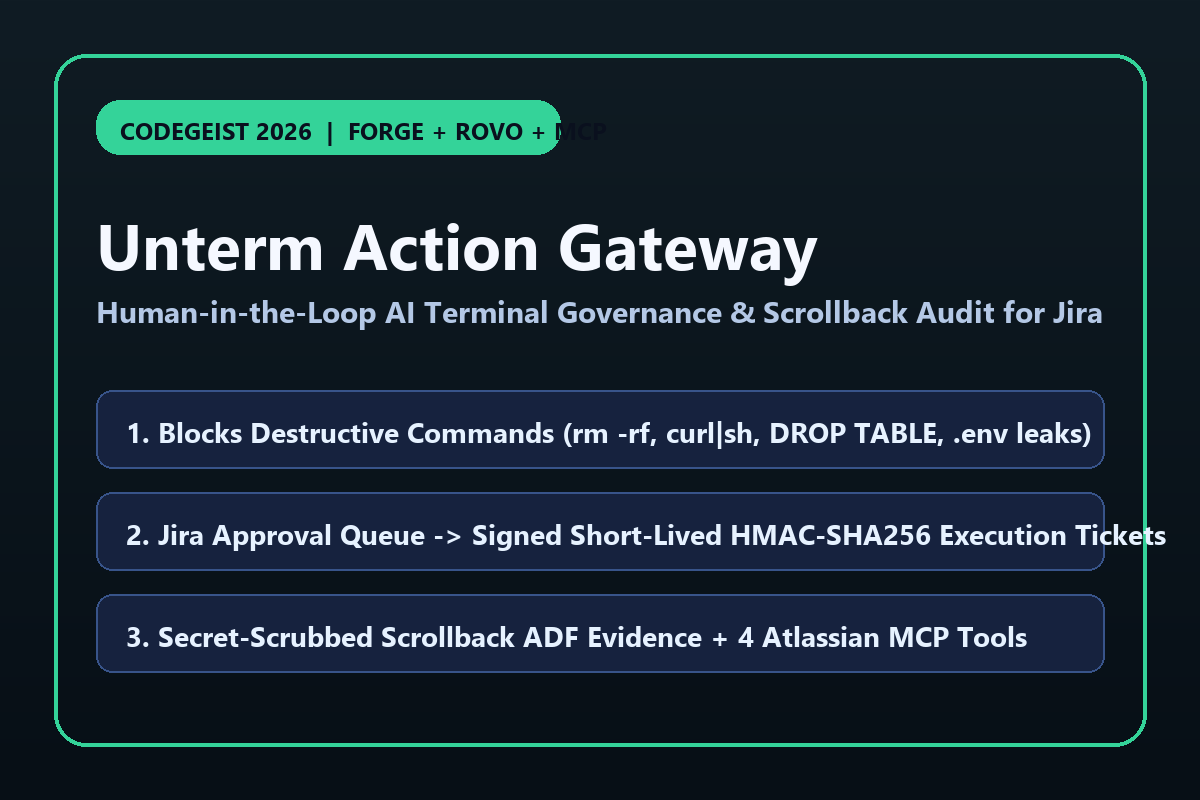
- Deterministic Action Gateway Risk Classifier: Classifies every proposed command into
BLOCKED_DESTRUCTIVE(blocksrm -rf,curl | bash,DROP TABLE,.envexfiltration),READ_ONLY_SAFE(auto-approved observability allowlist), orREQUIRES_HUMAN_APPROVAL(queued in Jira). - Cryptographic Execution Tickets: Approving a mutating command inside the Jira Issue Panel issues a short-lived HMAC-SHA256 execution ticket (
UNT-...) bound to the Jira issue, target pane ID, command, and approver. - Fail-Closed Scrollback Secret Scrubber: Automatically redacts private keys, Bearer tokens, API keys, and passwords before archiving audit trails in Forge Storage and posting formatted ADF code-block evidence to Jira comments.
- Rovo Agent (
Unterm Terminal Responder) + Atlassian MCP (rovo:mcp): Exposes 4 governed Forge actions (propose-safe-terminal-command,approve-and-sign-command,record-terminal-audit-log,inspect-incident-terminal-audit) directly to Rovo Studio and external MCP clients.
How we built it
Built from scratch for Codegeist 2026 on Atlassian Forge (nodejs22.x) with Forge UI Kit 2 (@forge/react), Jira REST API v3, Forge Storage, rovo:agent, and rovo:mcp. Core risk engine, secret scrubber, and HMAC signer in src/gateway-core.js verified via automated Node tests (npm test 3/3 pass) and forge lint (0 errors).
