-
-
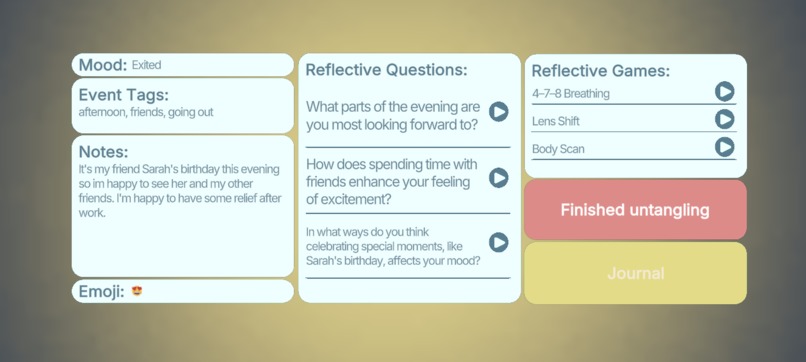
Experience overview
-
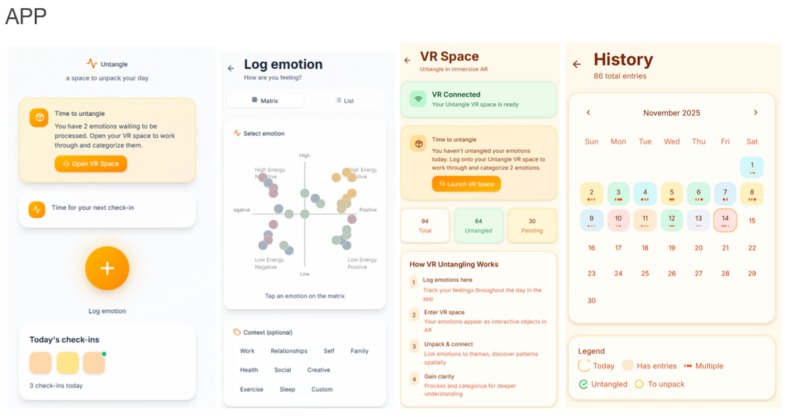
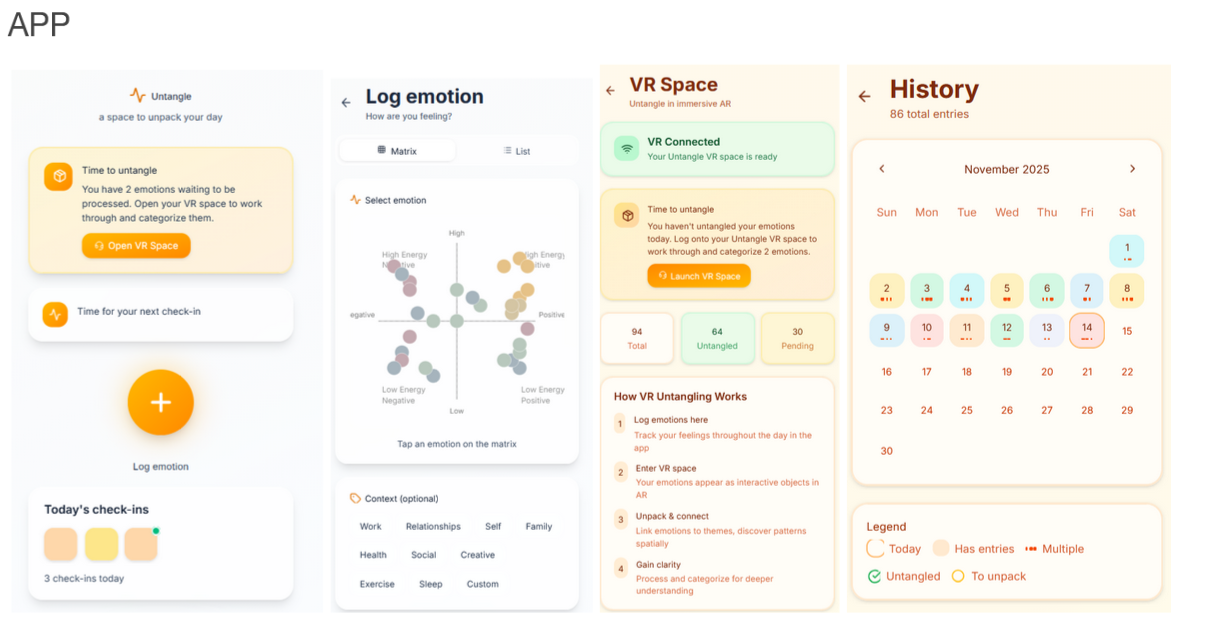
App mockup
-

Logo
-
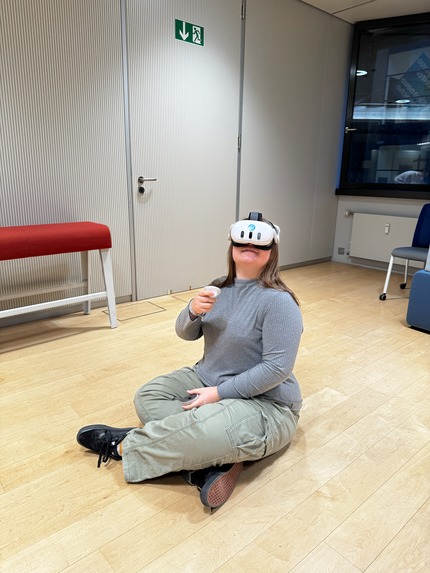
Using the application
-
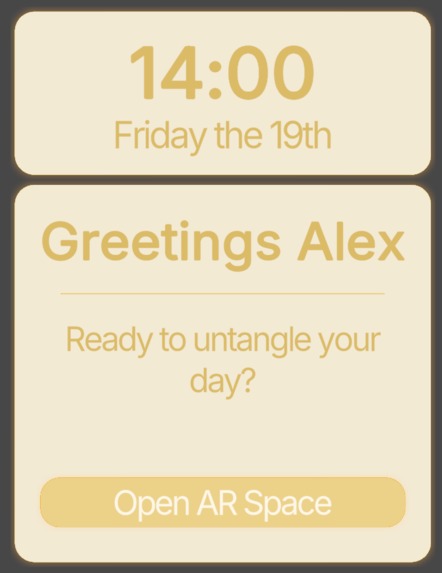
Main menu in the daytime
-
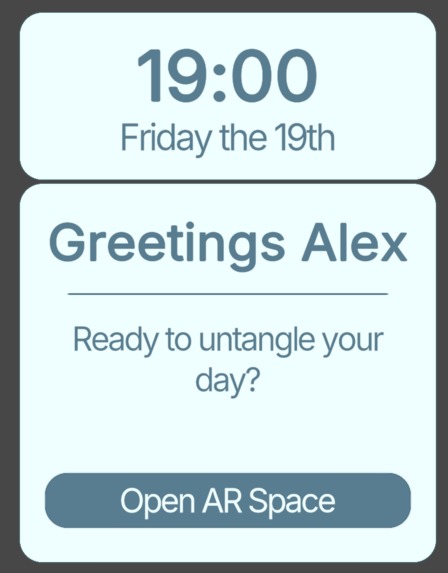
Main menu in the nighttime
-
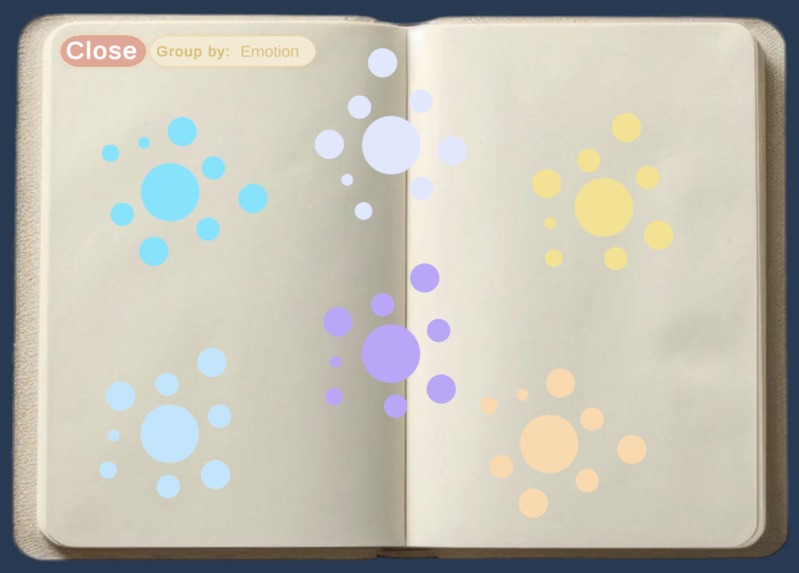
Journal

To read more about our project, click here.
What is Untangle?
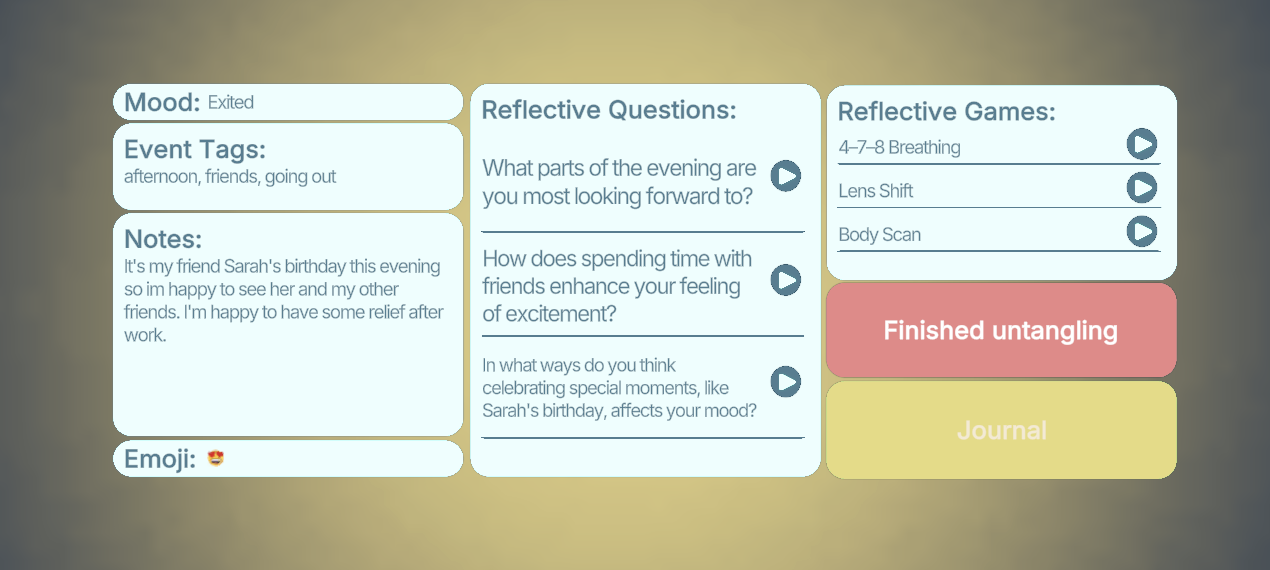
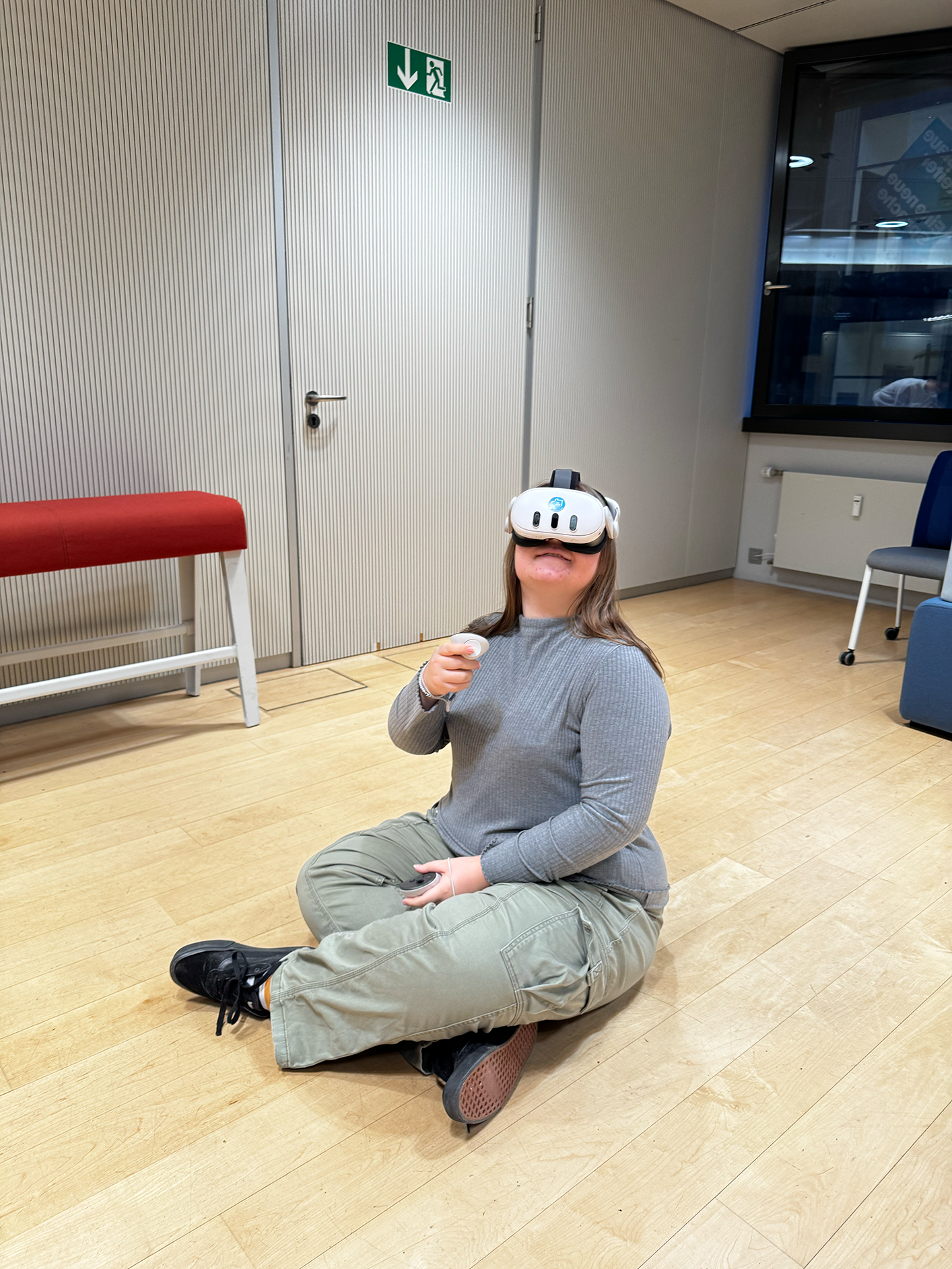
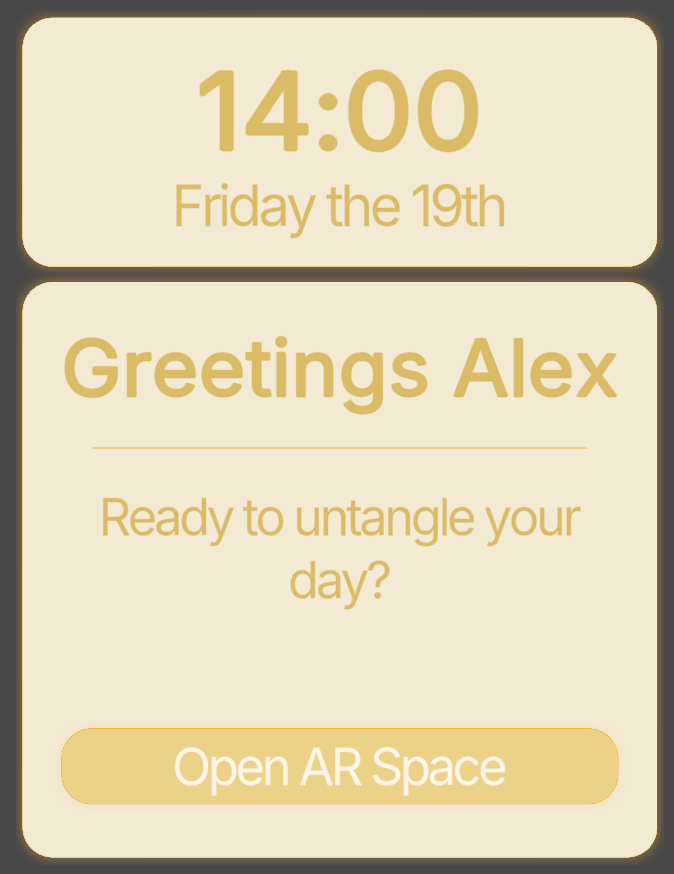
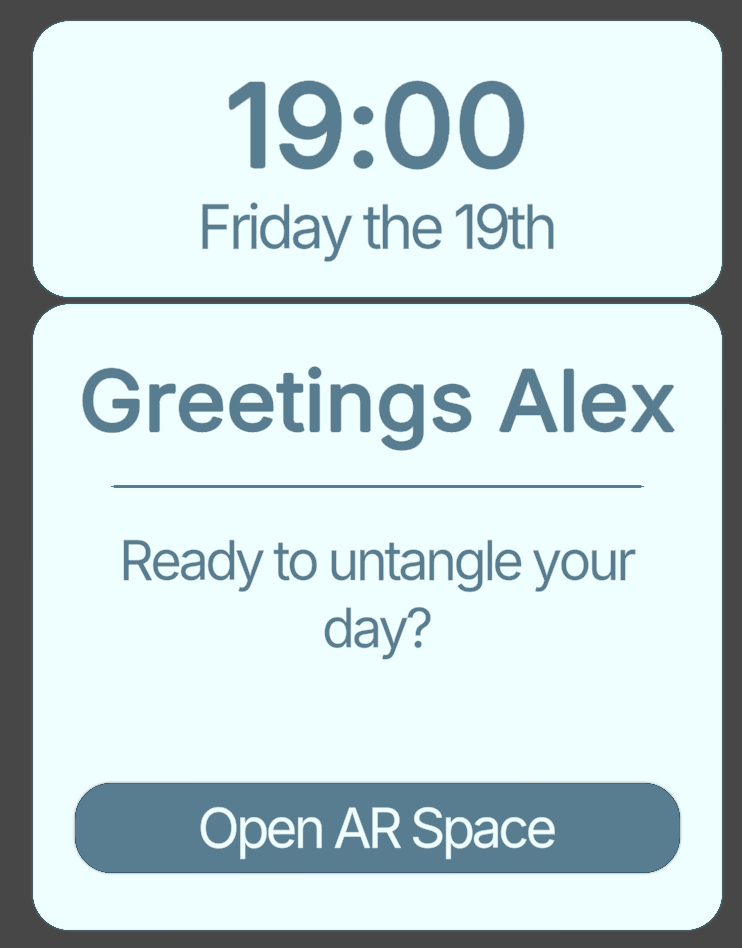
Untangle is an XR experience that guides people through ‘untangling’ and understanding their emotions and events, transforming emotional check-ins into a soft, embodied ritual backed by evidence from affective and positive psychology research. Users track their emotions through a companion mobile app, built around a valence–arousal model, or the ‘Mood Meter’, to identify their emotions (Barrett, 1998), and at the end of the day, each emotional entry becomes a “package” that appears in the user’s environment, ready to unpack, process, and reflect on. Each package reveals the tangled emotion, fuzzy until the user goes through each reflective prompt and shapes it into something manageable and understandable. Users can interact with, shape, and sort their emotional objects, and link and categorise them with strings and tags, helping to form larger themes and clusters in three-dimensional space, which is warmly coloured and adaptive to the day-night cycle for comfortable use. The emotional objects help to externalise emotions and allow for embodied regulation (Niedenthal, 2007), helping users to self-reflect in a structured, interactive way, and improving emotional granularity both through the practice of identifying their emotions, as well as linking them together and clustering them in three-dimensional space, giving a better understanding of broader themes and events in users’ lives. The companion AI assistant identifies key words in the user’s emotion and event reports and offers guidance by helping users refine labels or notice patterns, prompting with reflective questions to get deeper at what is causing certain emotions, and will offer from a repository of psychologically backed exercises to help users relax and regulate their emotions. Over time, Untangle helps the user to build a personal emotional landscape, a spatial, evolving record of the user’s emotional life. This offers the player a break from the constant digital optimisation of everyday life, instead bringing in a gentle ritual that cultivates emotional literacy and regulation, a protective factor against mental-health difficulties (Barrett, 2017; Gross, 2015). By merging daily tracking, embodied interaction, and a cosy, warm aesthetic, Untangle restores the materiality of emotion in a digital age that often strips it away.
Psychological backing
As daily life shifts into digital spaces designed to capture attention and disembody experience, many people lose focus of the subtle bodily cues that generally help them to recognise and describe what they feel, disrupting effective regulation of their emotions (Barrett & Lindquist, 2008). Affective science research shows that people with higher emotional granularity have better daily functioning and lower risk of mood disorders because precise labelling supports more adaptive regulation strategies, making them less overwhelming and easier to work with (e.g. Kashdan & Barrett, 2015) . The foundation of Untangle, from the mapping of emotions on the ‘Mood Matrix’ grid to the structure of our reflective prompts, is built on empirical research in affective science, emotional regulation, and mindfulness and wellbeing-based exercises and resources. This is done to ensure that the game does not rely on generic wellness rhetoric or cliche advice but instead implements mechanisms that are shown to support emotional granularity and regulation, and encourage our users to self-reflect and better understand their etional world. Our design goal is to create a system that helps users notice patterns, understand what their feelings are responding to, and interact with those feelings in a way that is sensory, structured, and grounded in evidence rather than advice. The idea of rendering emotions as physical objects came from research on externalisation techniques in clinical and experimental psychology. When feelings are represented materially, users can interact with these emotions and see the links between them in a much clearer and embodied way, and take a psychological distance to evaluate them more clearly. The cosy aesthetic of popular games like ‘Unpacking’ and ‘LoFi Sessions’ demonstrate how soft spaces can encourage players to engage patiently with small tasks while staying emotionally regulated. We wanted to bring these insights together in a format that feels warm, safe, and grounded in evidence-based principles.
What's next for Untangle
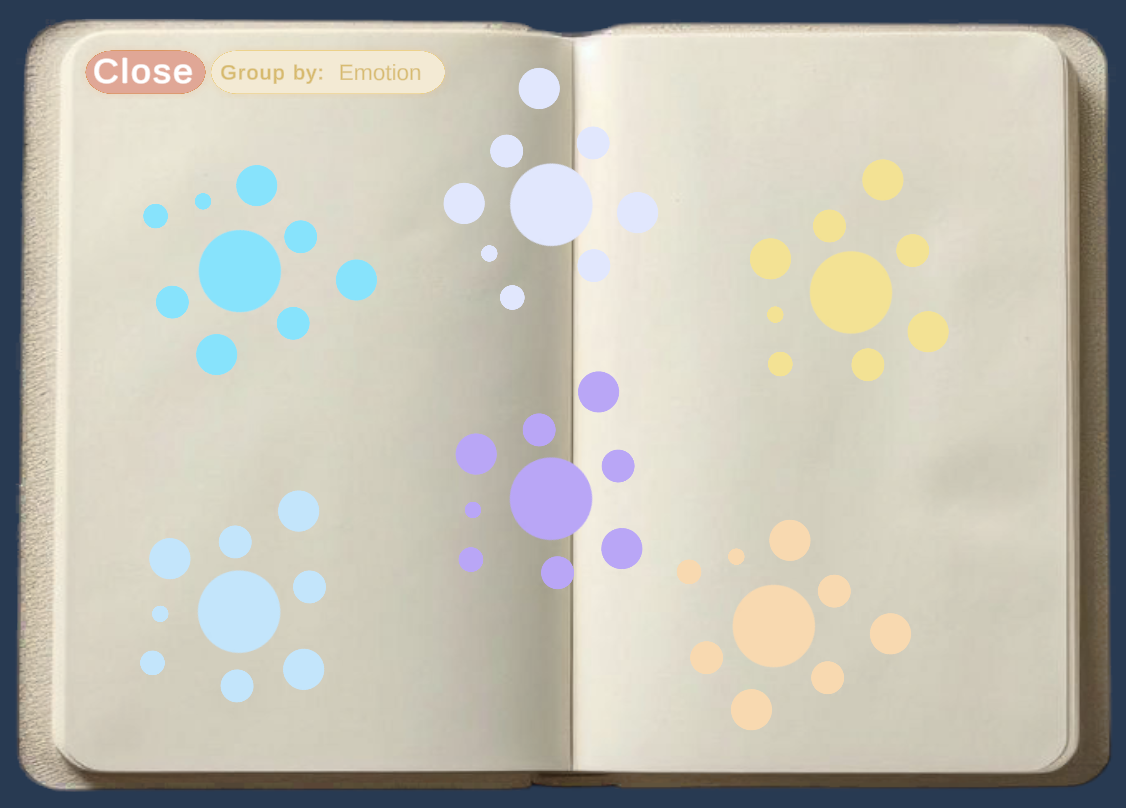
Our prototype currently shows how the user logs emotions and events through the mobile companion app and how these entries reappear as interactive emotional objects in the AR Untangle space. The system demonstrates how daily tracking will translate into embodied interaction and processing of emotions and events through the AR space, and our system of reflective questioning based on the emotional prompt and tagging. The next stage of development would expand on the program’s features and design, to improve the user’s experience by providing a richer, more customisable and connective emotional world. As users process emotions in VR, their emotions will take their place in a developing “emotion scape.” This environment, or the user’s ‘journal’ will visualise links between events and feelings by clustering objects according to shared tags, emotional similarity, or time - these filters and sorting options will be easily selected and edited by the user. Users will be able to reorganise this space to explore themes that recur in their daily life, or particular themes that correspond to different emotions. Over time, the journal system will aggregate emotions and events into day-by-day summaries for emotional analysis, offering a growing record of emotional clustering, prevalence and themes which play a big role in users’ lives. The ‘untangled’ emotion-scape will then sync back to the companion app, giving users access to these clusters and patterns on their phone, which will allow players to track their progress and reflect on how their emotional landscape evolves. The app and VR environment will be able to sync not only with each other but also with Health Connect, mapping information such as user caffeine/alcohol levels, activity, and amount of sleep to help users to understand how their external environment and health may also be playing into their emotional chages. The VR space will also be more customisable, allowing users to tailor the reflective space with adjustable ambient lighting, backgrounds, and a range of soundscapes such as rain, crackling fire, forest ambience, and soft music, to increase calm and immersion. There will be a larger repository of evidence-based exercises that appear in response to the emotions logged during the day, including guided grounding tasks, breathing exercises, perspective-shifting prompts, and short reframing activities informed by research on emotion regulation and positive psychology. As Untangle grows, all regulatory exercises, reframing cues, and reflective tasks will continue to draw on affective-science research and established psychological principles, and the development process will follow standards relevant to digital wellbeing and mental-health technologies. The system will remain non-clinical, responsible, and equipped with clear pathways to external resources for users who may need additional support.

Log in or sign up for Devpost to join the conversation.