-
-
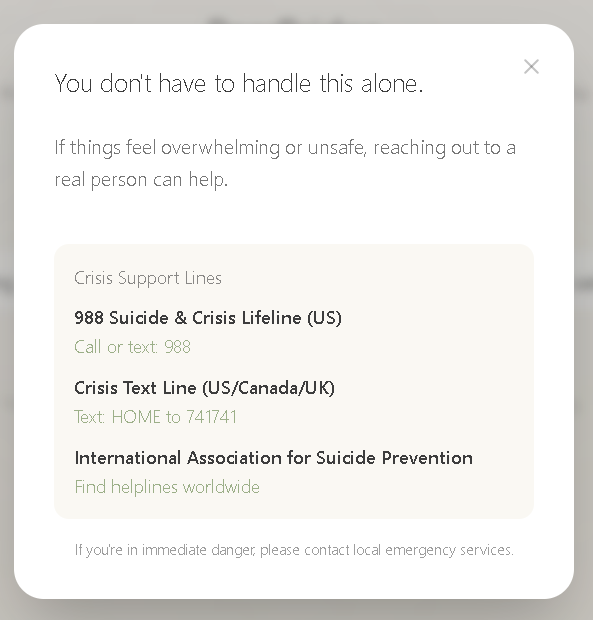
SOS Page
-
PeerBridge
-
Feedback
-
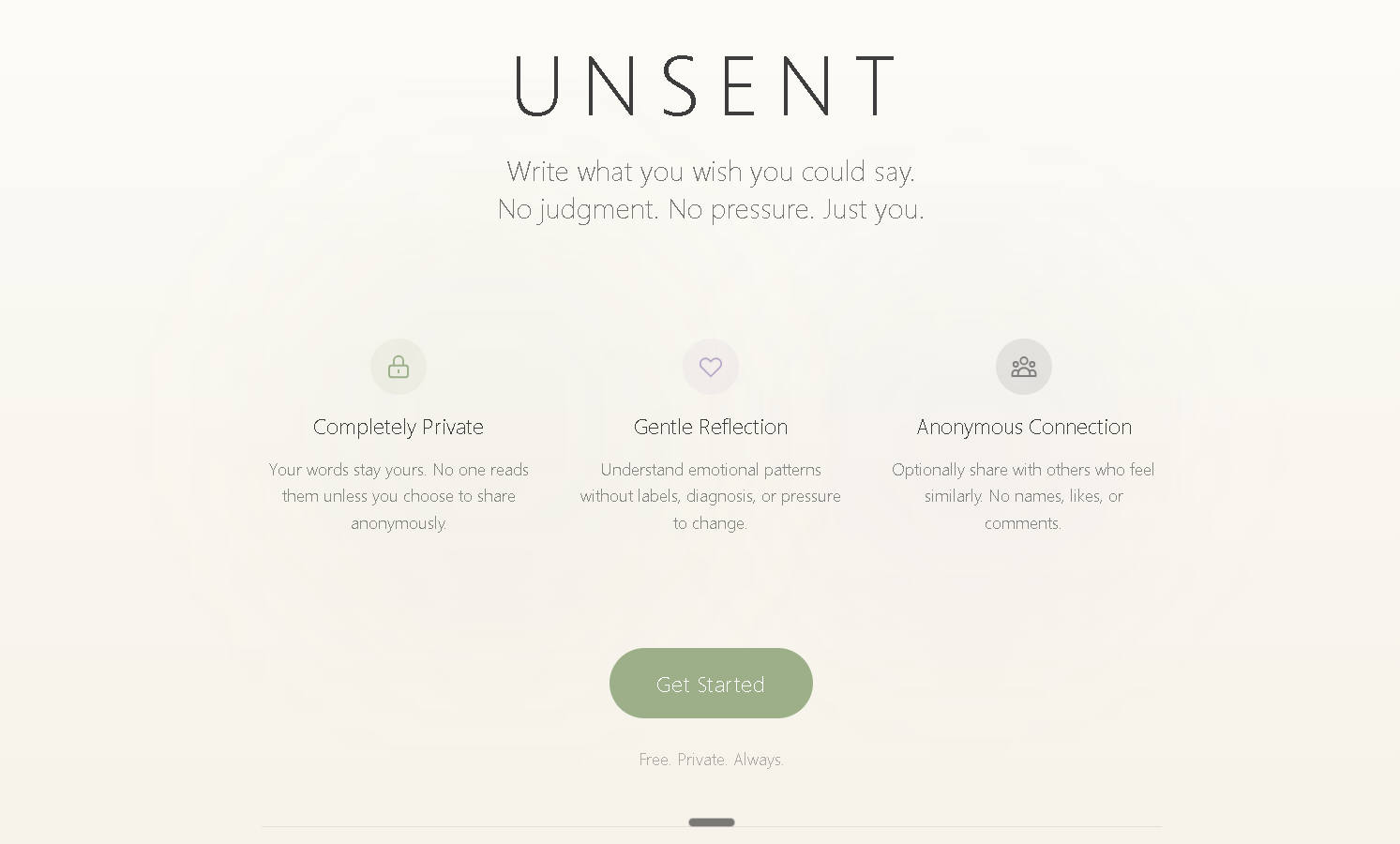
Landing Page
-
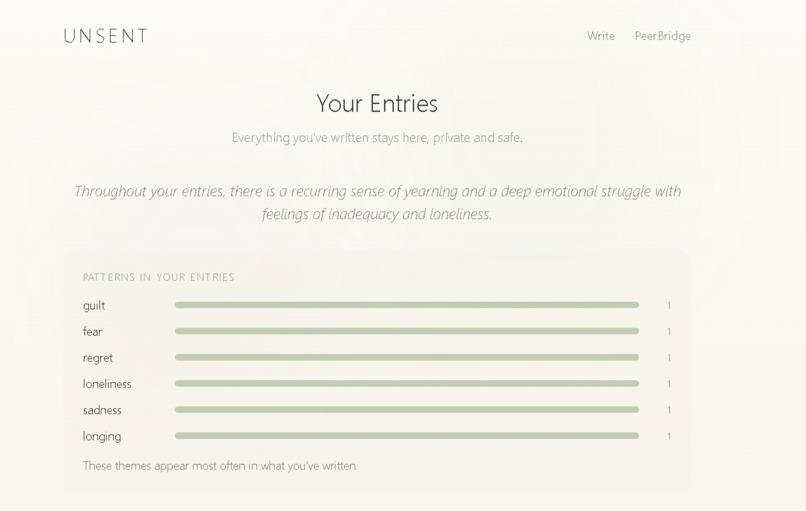
Entries Page


Inspiration
Emotional honesty is often silent. Most mental health tools assume people will talk, chat, or list feelings — but in real life, many thoughts are never spoken or shared. We were inspired by the idea that unexpressed words hold meaning, and that simply holding space for those words — privately — can be deeply validating.
UNSENT was built to honor that emotional truth: a place to say what you never say, to see patterns in what you feel, and to realize that others silently share similar experiences.
What it does
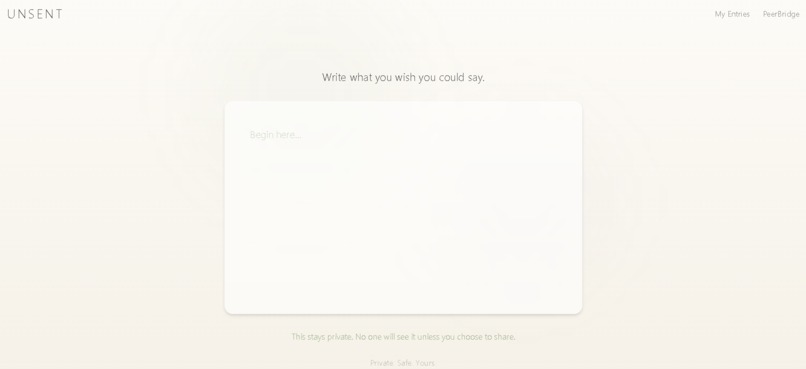
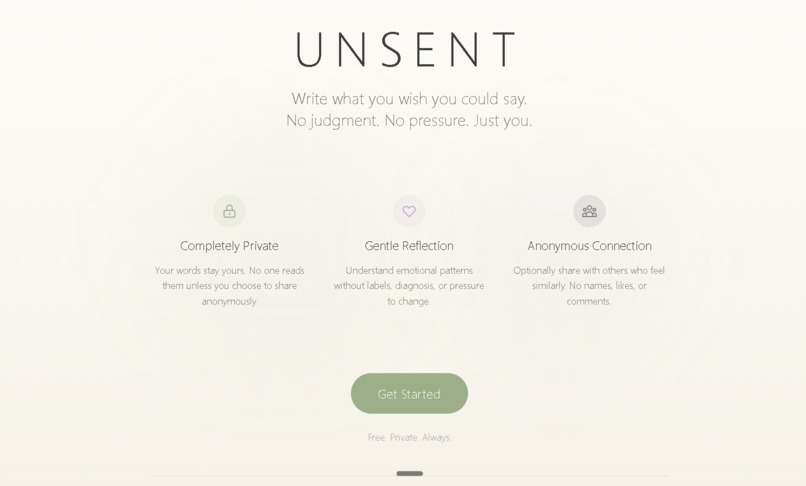
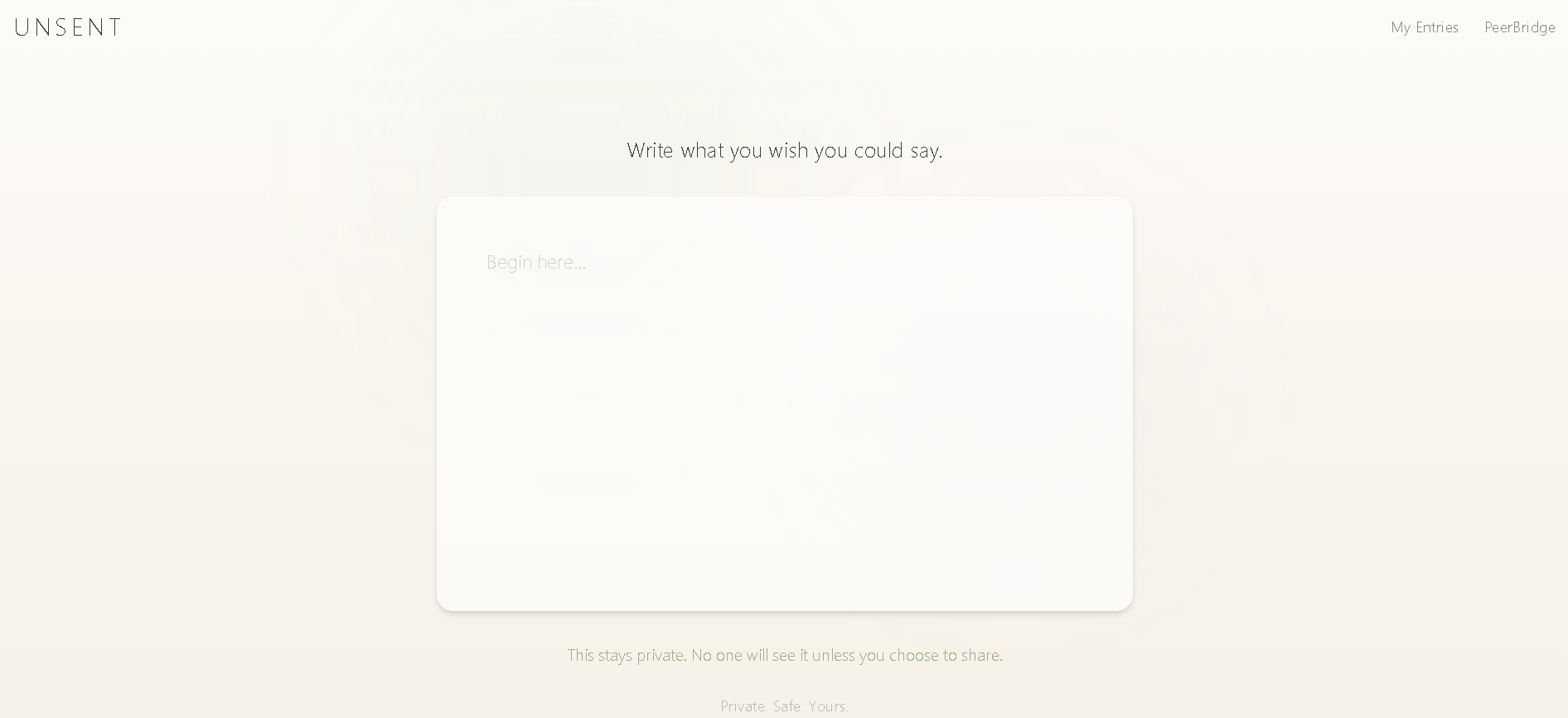
UNSENT lets users write the messages they wish they could send. There’s no pressure to share, no social feedback, and no assumptions about intent. Instead, the app:
- Provides a private space to write unsent thoughts
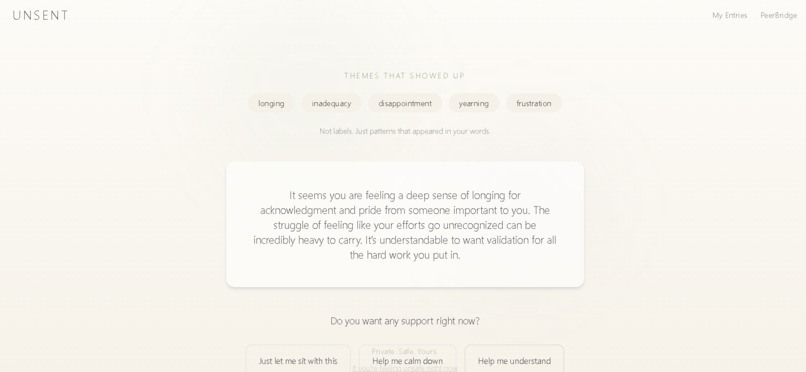
- Reflects emotional themes without clinical labels
- Offers optional, gentle support if the user wants it
- Connects users silently through shared emotional themes
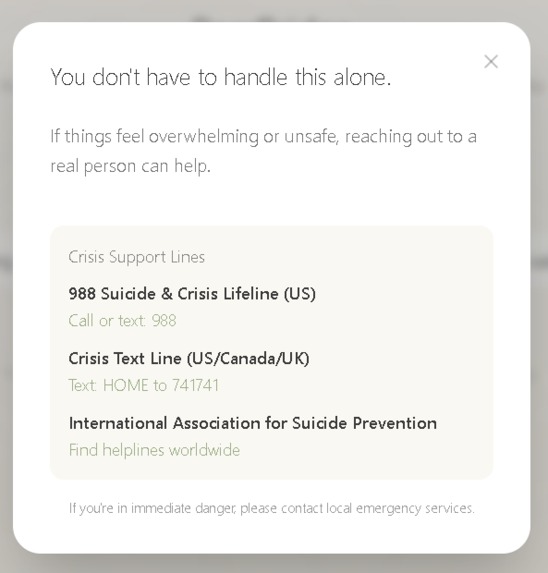
- Includes a quiet safety panel with optional crisis-support resources
This transforms private expression into self-understanding — without judgment or noise.
How we built it
We focused the design around empathy and agency. The app captures user text and uses pattern analysis to extract recurring emotional themes, presented back in simple, neutral language. Support options are always optional and delivered only at the user’s request.
The PeerBridge section matches anonymous entries by shared emotional themes, emphasizing connection without social pressure.
Everything in the interface — from wording to spacing to button choices — was crafted to maintain calmness, emotional safety, and user control.
Challenges we ran into
- Balancing support and intrusion: We wanted to offer help without assuming distress or triggering anxiety. The solution was to make support user-initiated, never automatic.
- Non-clinical language: Translating emotional pattern analysis into language that is both accurate and gentle took careful iteration.
- Peer connection without social media pitfalls: Creating shared space without likes, comments, or profiles required thoughtful design to keep the experience safe and respectful.
Accomplishments that we’re proud of
- A unique mental health interaction model that respects emotional boundaries
- A minimal, elegant UI that enhances comfort and safety
- An ethical safety layer that makes help available without pressure
- A silent peer connection that discourages comparison and performance
Judges and users alike have noted that UNSENT feels different — not a tool that tries to fix people, but one that listens without judgment.
What we learned
We learned that technology doesn’t need to be loud to be helpful. Support doesn’t always mean advice or intervention — sometimes it means holding space, recognizing patterns, and offering help only when asked.
We also learned the value of ethical restraint: every feature was examined for its emotional impact, not just its technical feasibility.
What’s next for UNSENT
- Multilingual support to broaden emotional accessibility
- Longitudinal insights that help users explore changes over time
- Research partnerships to validate emotional pattern reflections
- Mobile experience enhancements for wider reach
We envision UNSENT becoming a resource for people to explore their inner world with gentleness and dignity.

Log in or sign up for Devpost to join the conversation.