-
-
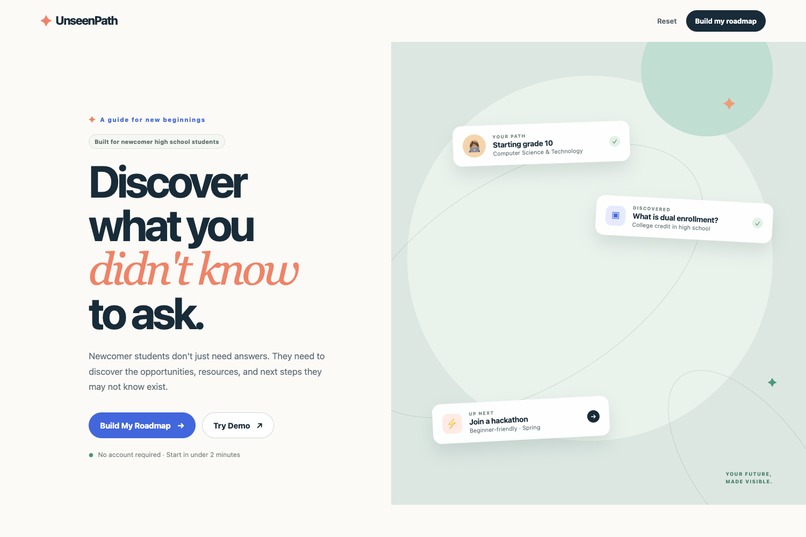
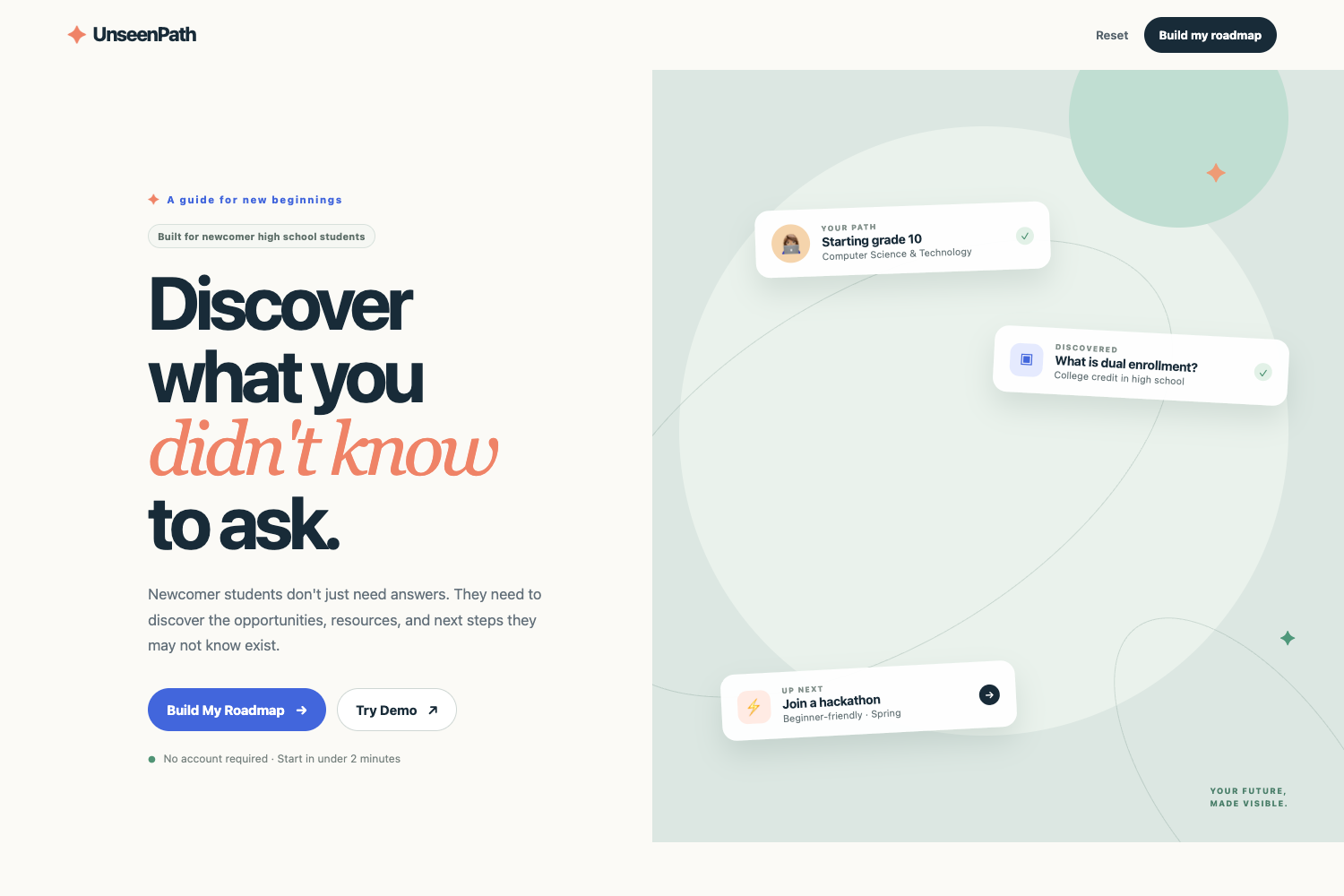
landing
-
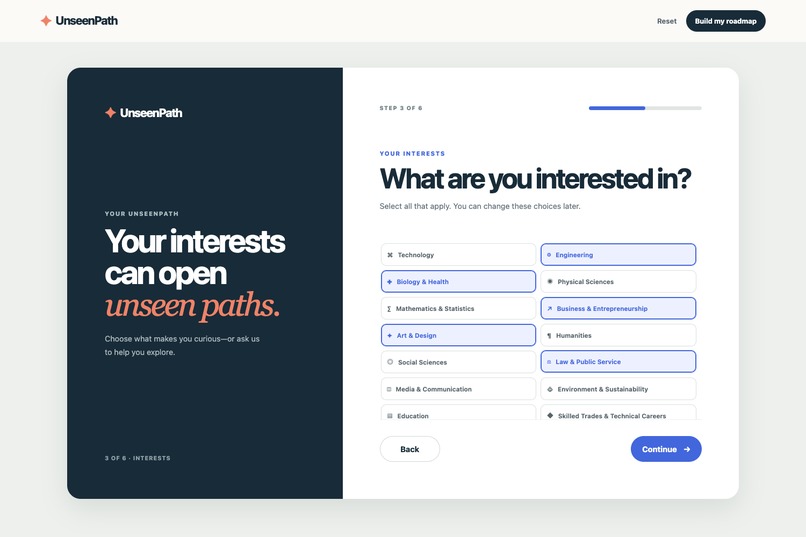
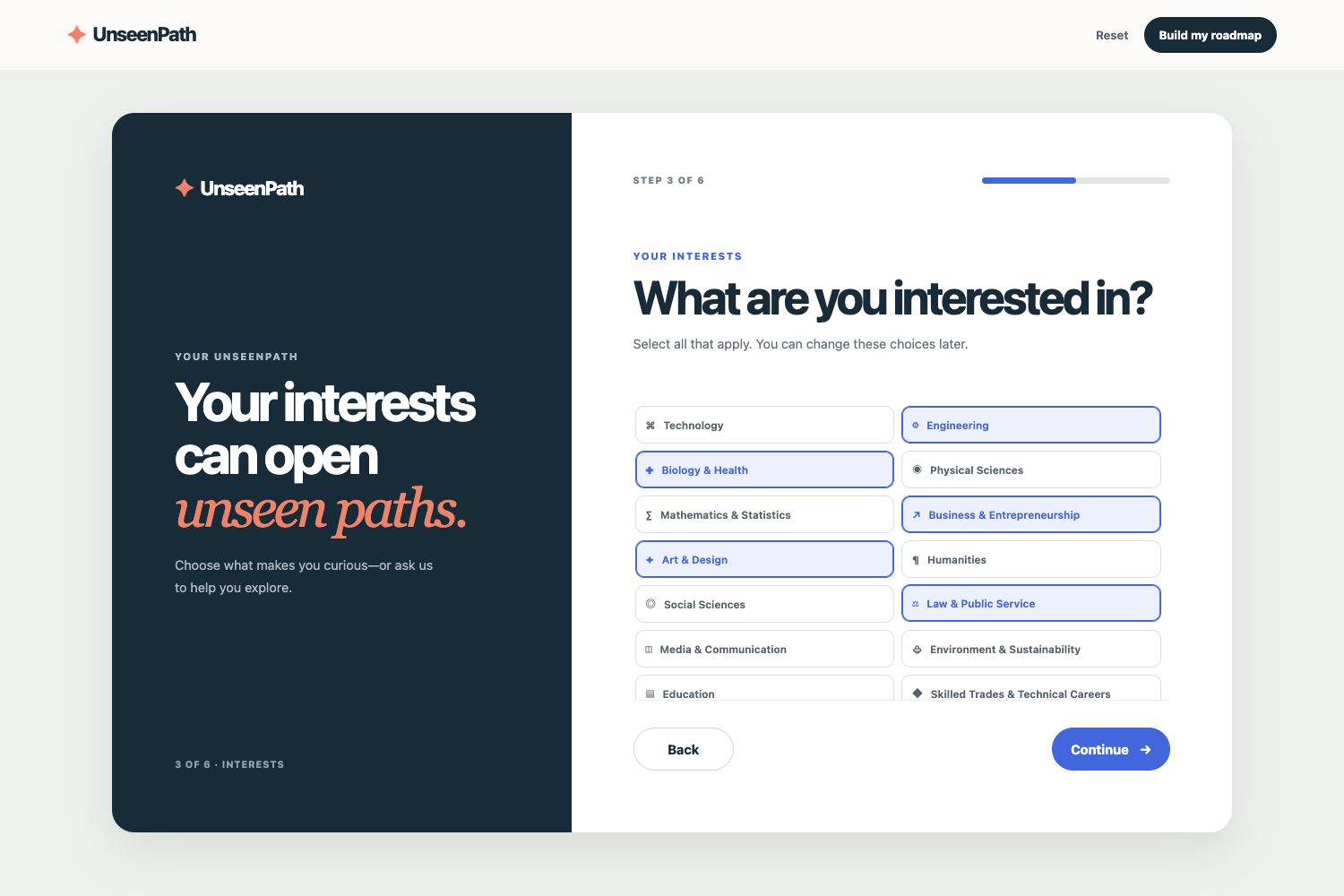
onboarding
-
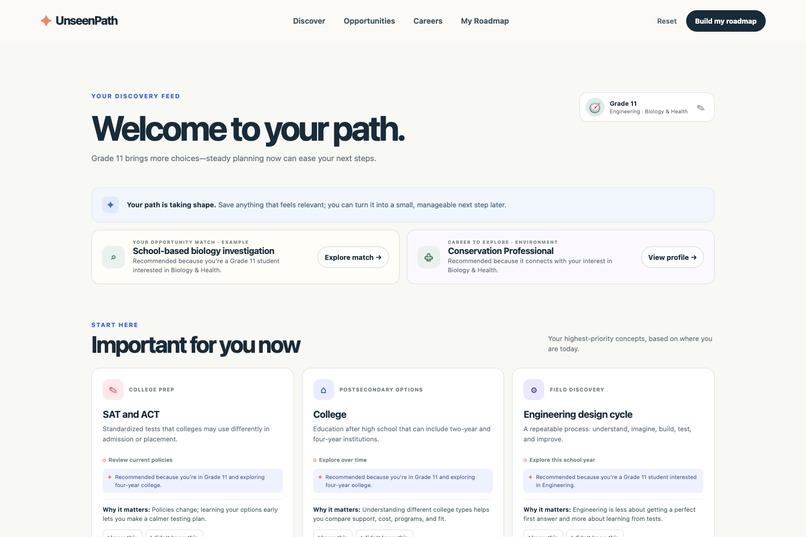
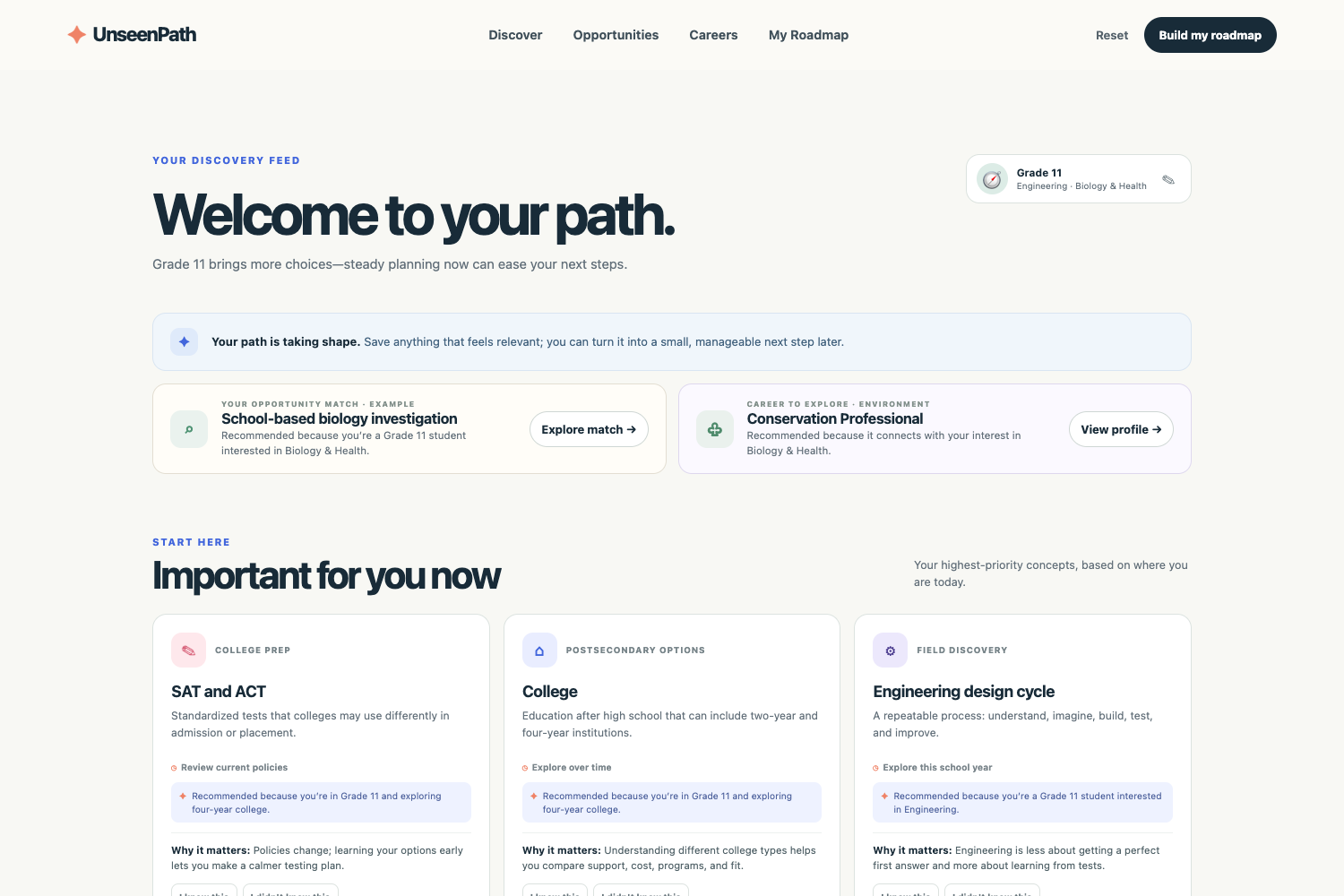
dashboard
-
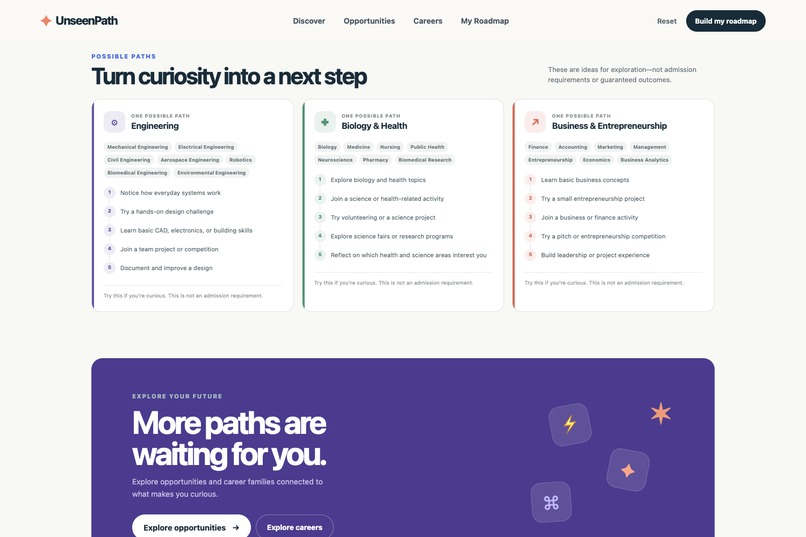
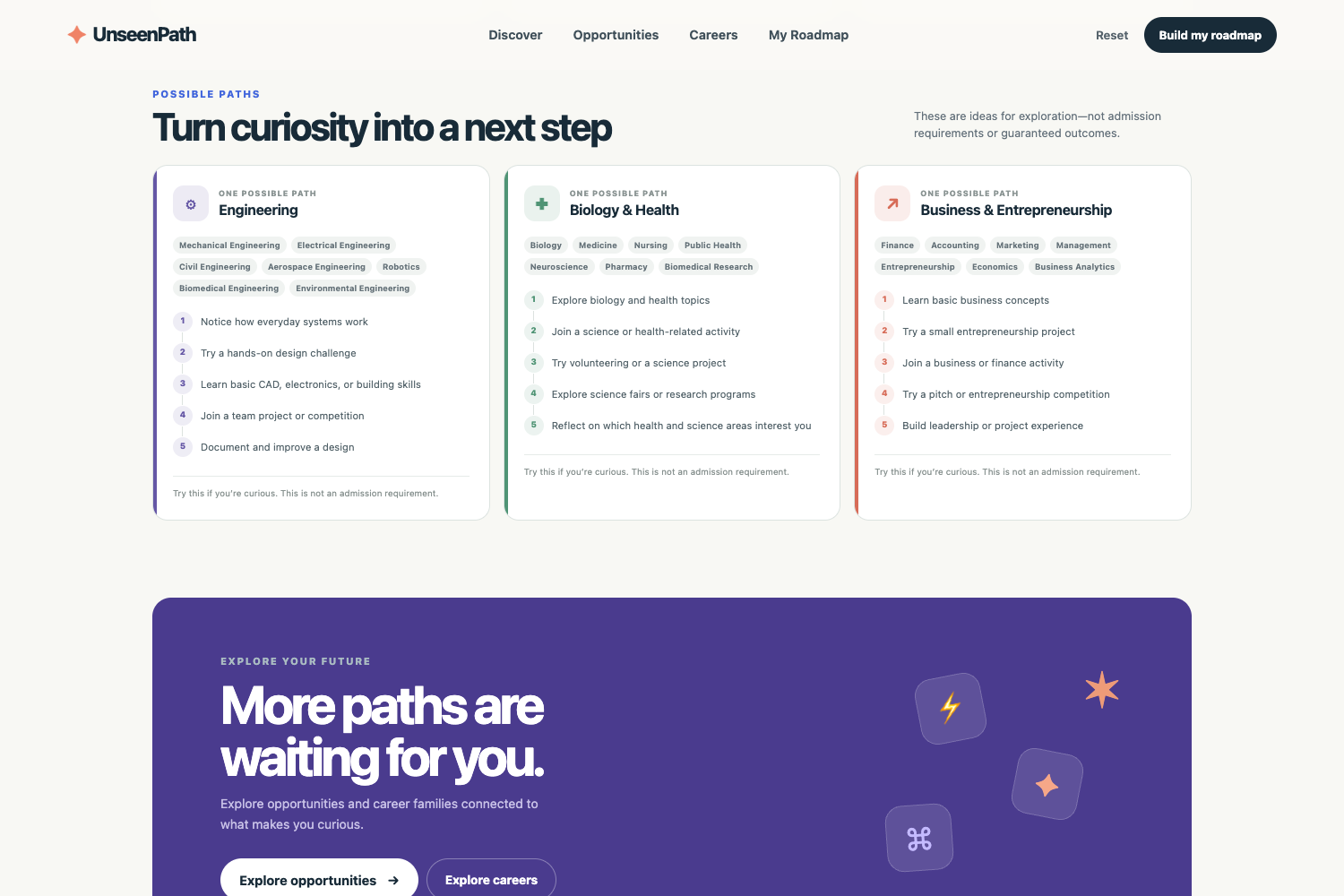
explore
-
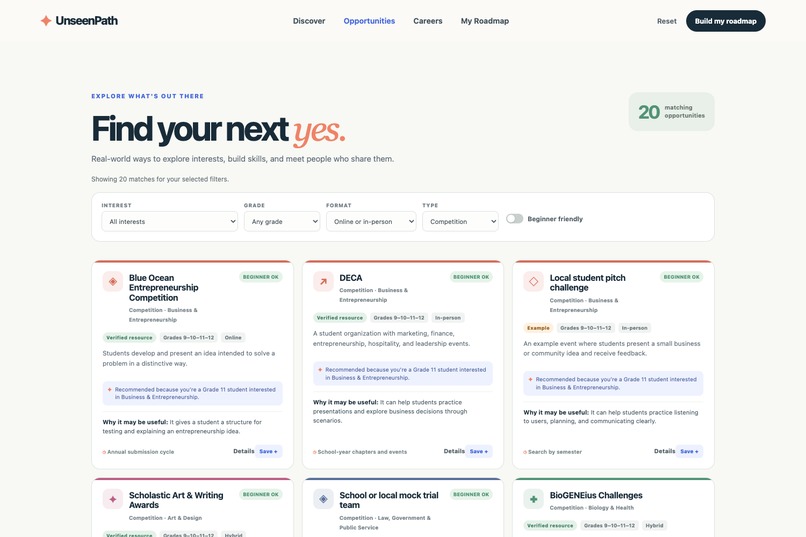
opportunities
-
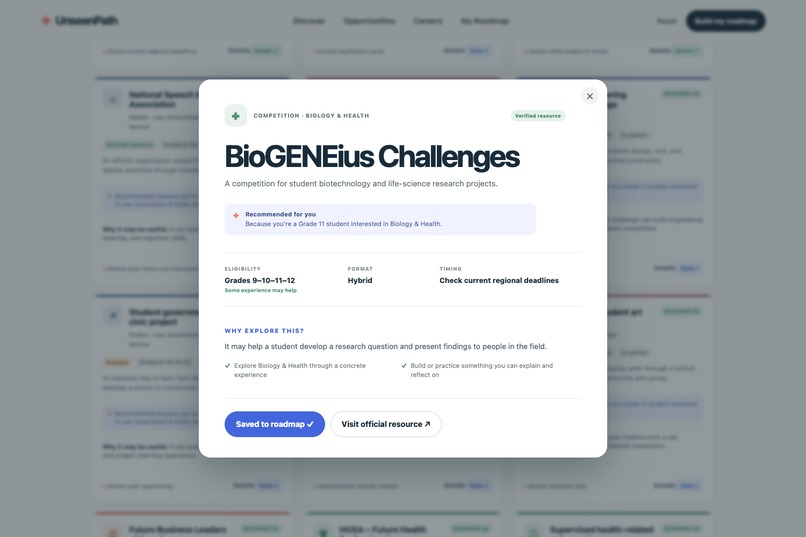
opportunity-details
-
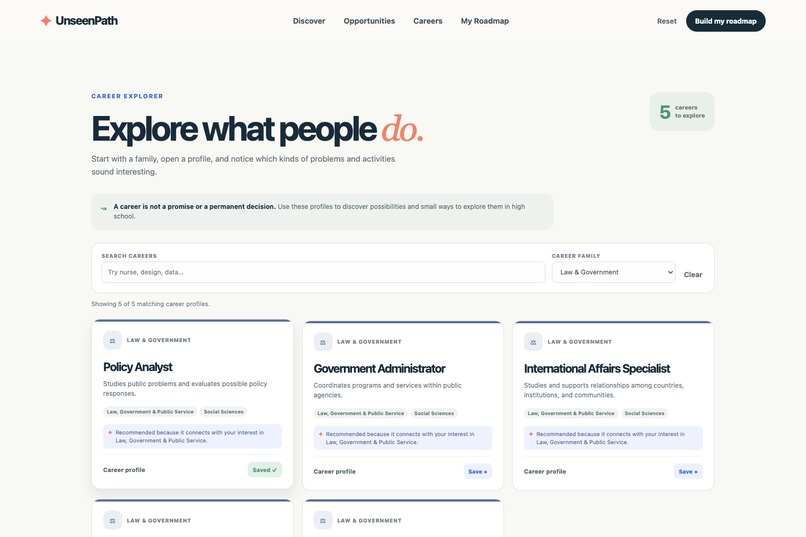
career-explorer
-
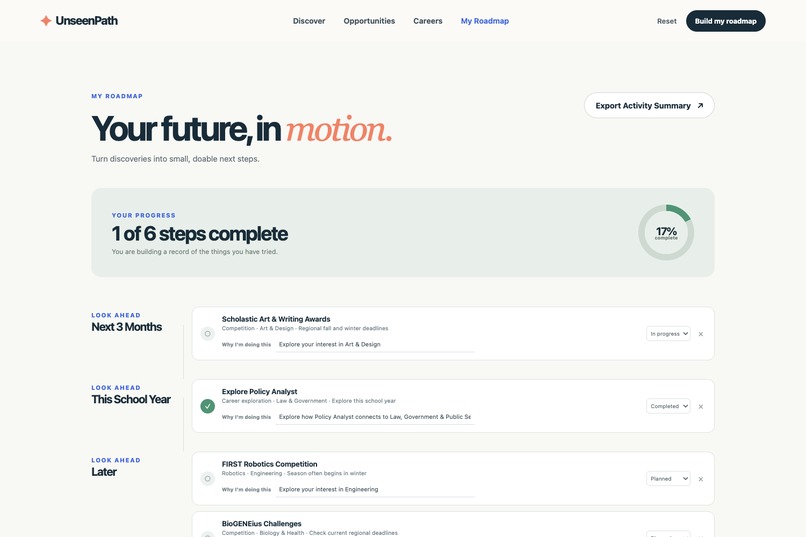
roadmap
Inspiration
I am a high school student who came to the United States three years ago. As I prepare to enter 12th grade and begin the college application process, I have realized something I wish I had understood much earlier: there were many important things I didn’t discover until 11th grade. When I first came to the U.S. from China, I focused mostly on classes, homework, and grades. I thought doing well academically was what I needed to focus on in high school. Because of that, I didn’t realize how many things existed outside the classroom—extracurricular activities, competitions, personal projects, the SAT, internships, volunteering, and other opportunities. It wasn’t until 11th grade, when I became friends with some 12th-grade students and started learning more about college applications, that I began discovering many of these things. The problem wasn’t that I didn’t want to look for opportunities. I simply didn’t know what I was supposed to look for. By the time I learned about them, I felt that I had already missed time that I could have used to explore my interests and gain new experiences. That made me wonder how many other students who are new to the U.S. education system face the same information gap. If you don’t know an opportunity exists, how would you know to search for it? That’s why I created UnseenPath: to help high school students who are new to the U.S. education system discover resources, opportunities, and possible paths earlier, so they can make informed choices about what they want to explore.
What it does
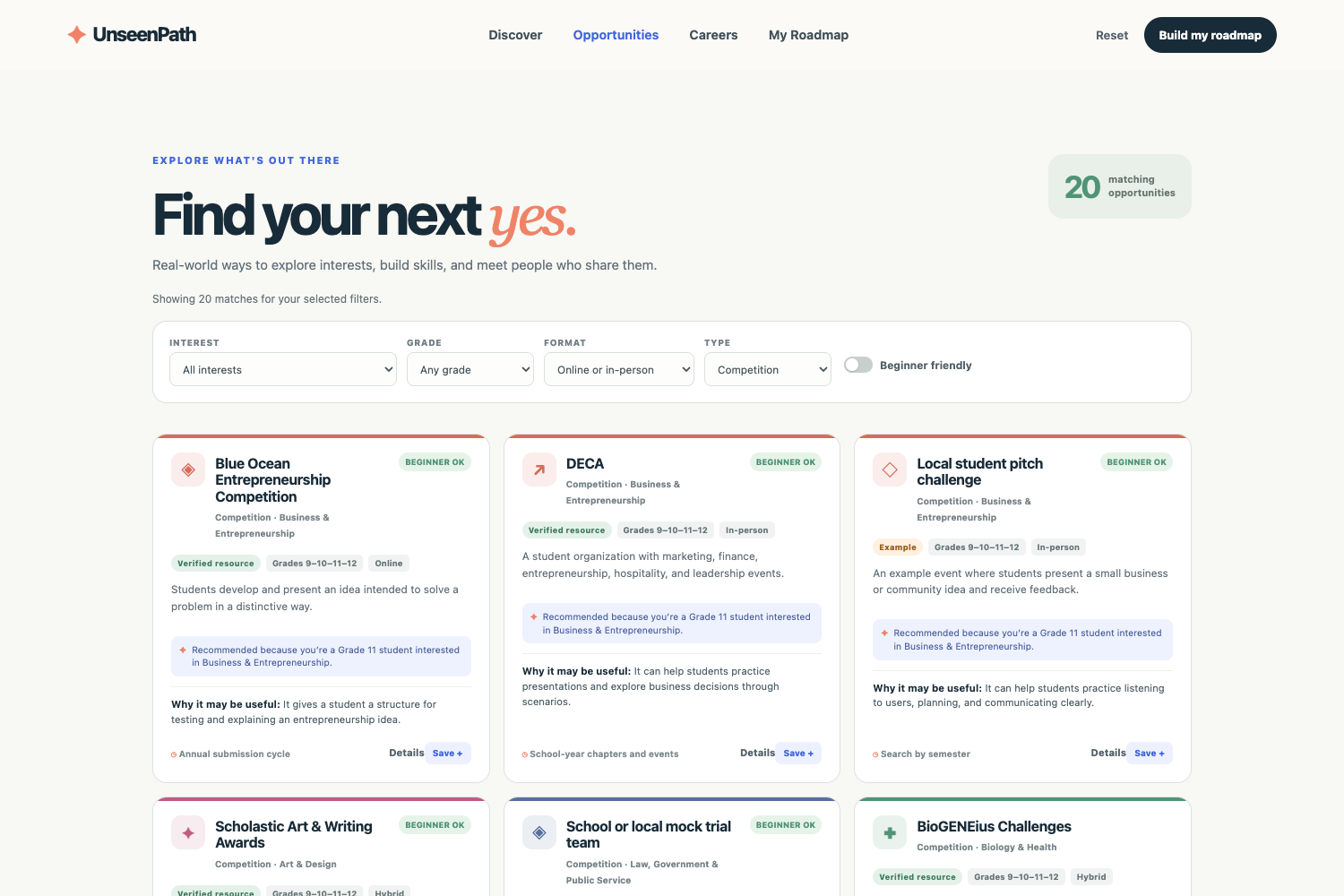
Students begin by sharing information such as their grade level, interests, college plans, and what they want help discovering. UnseenPath then helps them:
- Discover school concepts, resources, and opportunities they may not know about
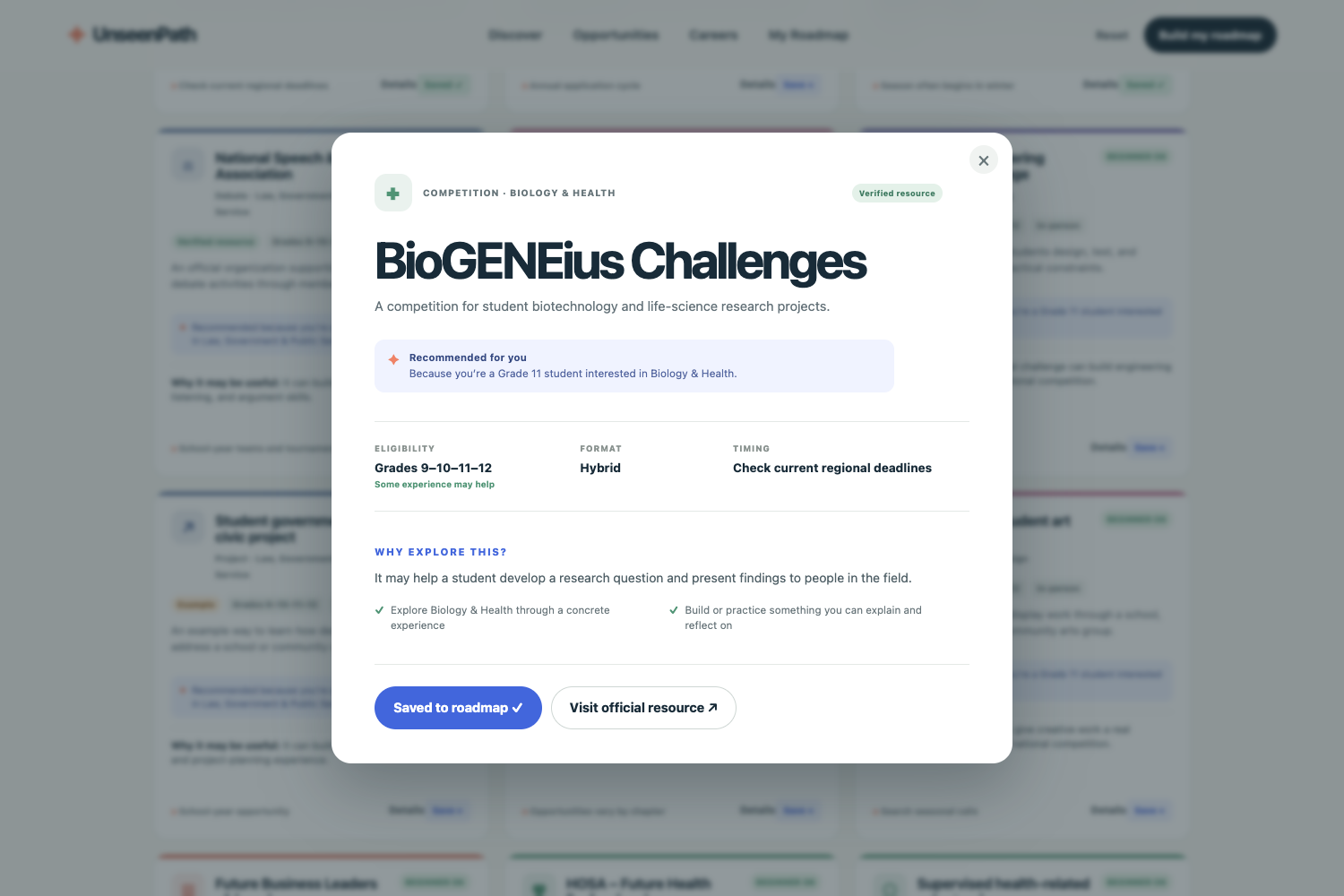
- Understand why each topic may matter and when it may be useful to explore
- Explore opportunities related to different academic and career interests
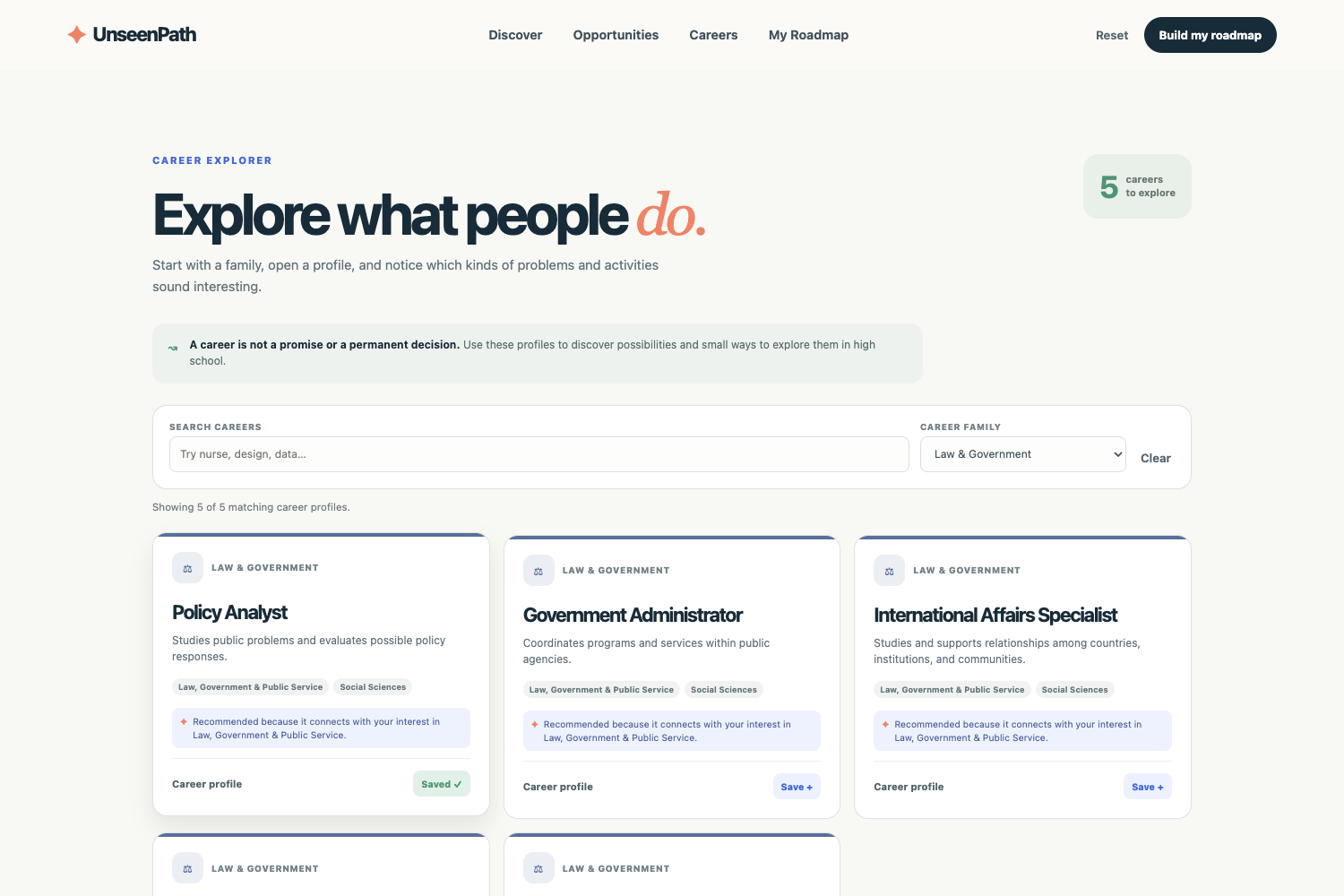
- Discover possible career and interest pathways
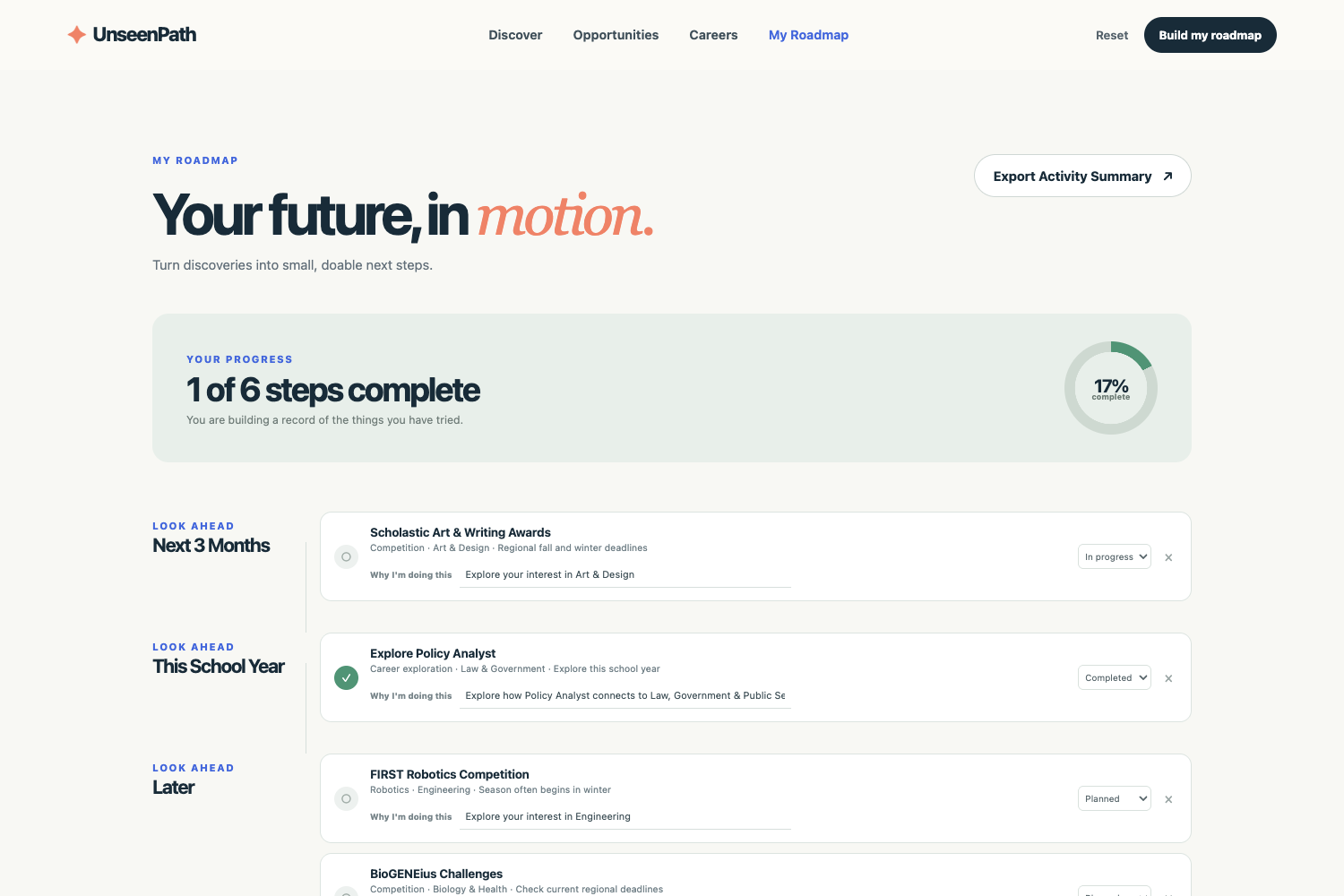
- Save useful discoveries to a personalized roadmap
- Track activities and next steps over time The core experience follows: Unknown → Discovery → Understanding → Planning → Action
How we built it
I used OpenAI Codex as my primary coding assistant to turn my ideas and requirements into a working website. I provided detailed instructions about the features, interface, recommendation logic, and changes I wanted. After each implementation, I tested the website in the browser, identified problems or parts that did not match my vision, and continued improving the project through multiple rounds of feedback and iteration. Because UnseenPath covers many academic fields and career paths, I also used ChatGPT as a research and brainstorming assistant. I am not familiar with every field represented on the platform, so ChatGPT helped me think through possible academic interests, career paths, opportunities, and ways students could explore different fields. I reviewed and adapted these suggestions to fit the purpose and structure of UnseenPath. The current prototype is built with HTML, CSS, and JavaScript and deployed through GitHub Pages. It uses rule-based personalization to adjust content based on information such as a student’s grade level and interests. Browser storage is used to preserve parts of the student’s profile, discoveries, and roadmap without requiring a backend.
Challenges we ran into
One of the biggest challenges was deciding what information UnseenPath should include. Education systems vary across the U.S. For example, New York has Regents exams, while other states may have different requirements. Because of this, I decided to focus the current version mainly on New York, the system I am most familiar with. Another challenge was balancing different interests. Since I am more familiar with technology and computer science, early versions had much more CS-related content. I later expanded UnseenPath to include more paths and opportunities in biology, business, art, engineering, law, and other fields.
Accomplishments that we're proud of
I’m most proud of turning a problem I personally experienced into a working project. UnseenPath grew from a simple idea into a platform that helps students discover unfamiliar school information, opportunities, academic fields, and career paths, and organize them into a personalized roadmap. I’m also proud that I was able to build and continuously improve the project despite having limited web development experience, using AI tools to help turn my ideas into a functional website.
What we learned
I learned that organizing information for students with different backgrounds and interests was much more difficult than I expected. I had to consider many more fields, paths, and types of information than I originally planned.Building UnseenPath also taught me that solving an information gap is not simply about providing more information. What matters more is helping each student discover the information that is useful to them at the right time.
What's next for UnseenPath
I want to continue expanding UnseenPath with more accurate information, opportunities, academic fields, and career paths. Since the current version focuses mainly on New York, I hope to gradually add information for students in other states as well. I also don’t want UnseenPath to stop at high school. When I enter college, I hope to add what I learn from my own experience and expand the platform to include college life and other stages in the future. My goal is for UnseenPath to grow with me and continue helping students who may be walking a similar path.
Built With
- chatgpt
- codex
- css
- github
- html
- javascript
