Inspiration
Toronto has so much to offer beyond its busiest attractions, but visitors often end up concentrated in the same well known areas as well as the crowded TTC rides. Streets can make getting around feel overwhelming not only for tourists but for locals as well. Especially recently, traffic has been a concern for many Torontonians. I wanted to help visitors discover a more local side of Toronto while encouraging them to spread their plans across a wider range of places and not just Downtown Toronto.
What it does
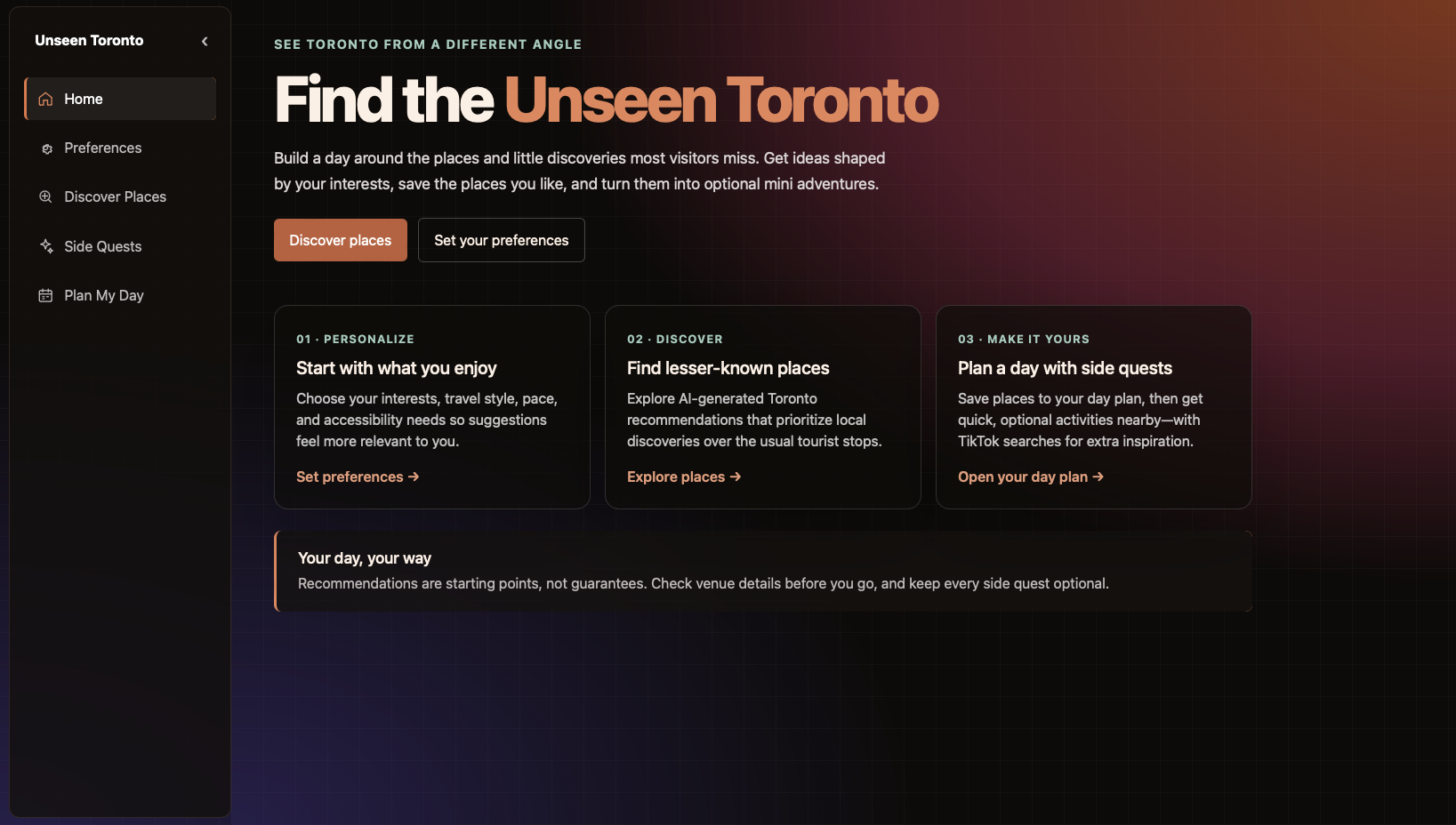
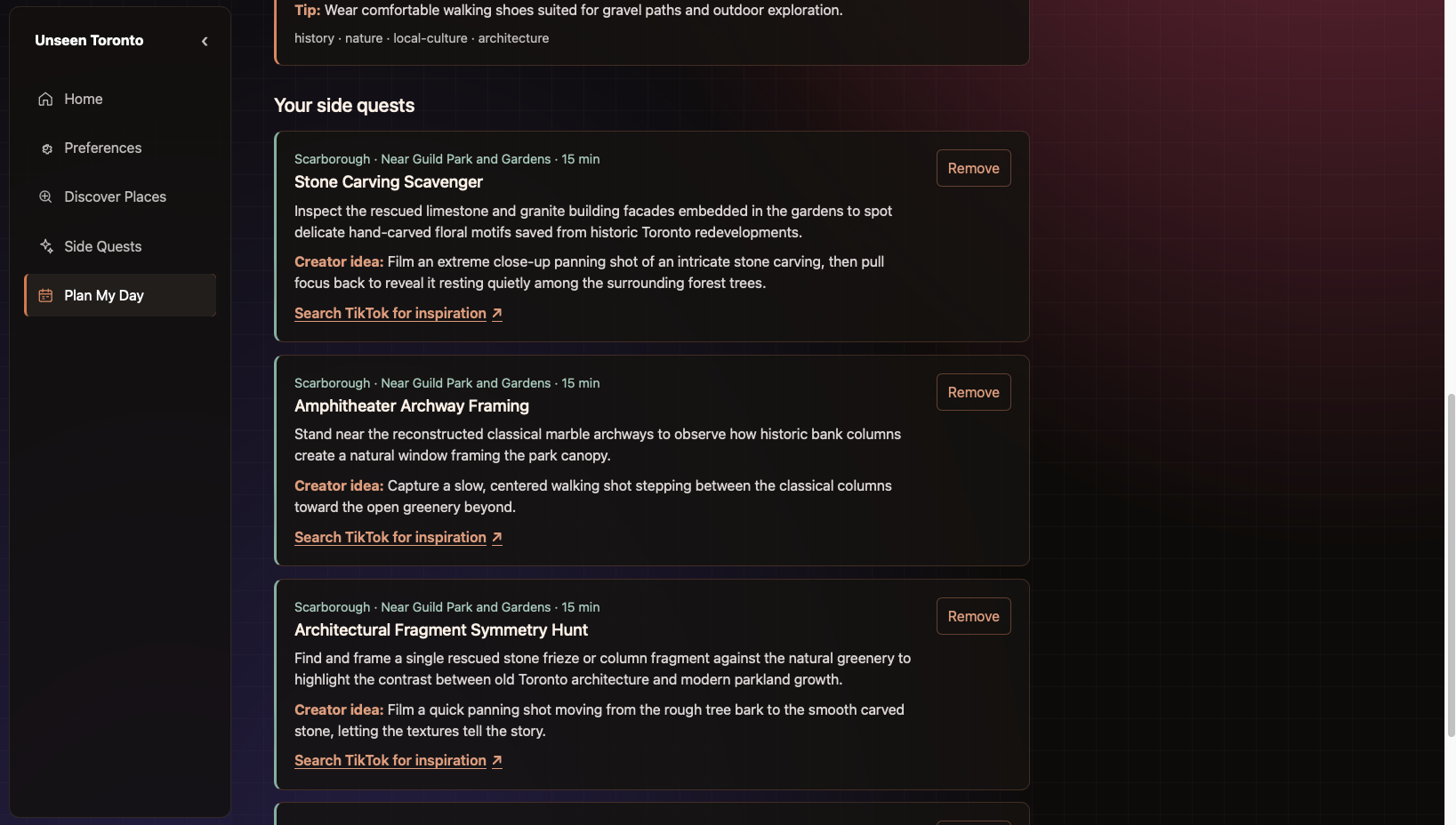
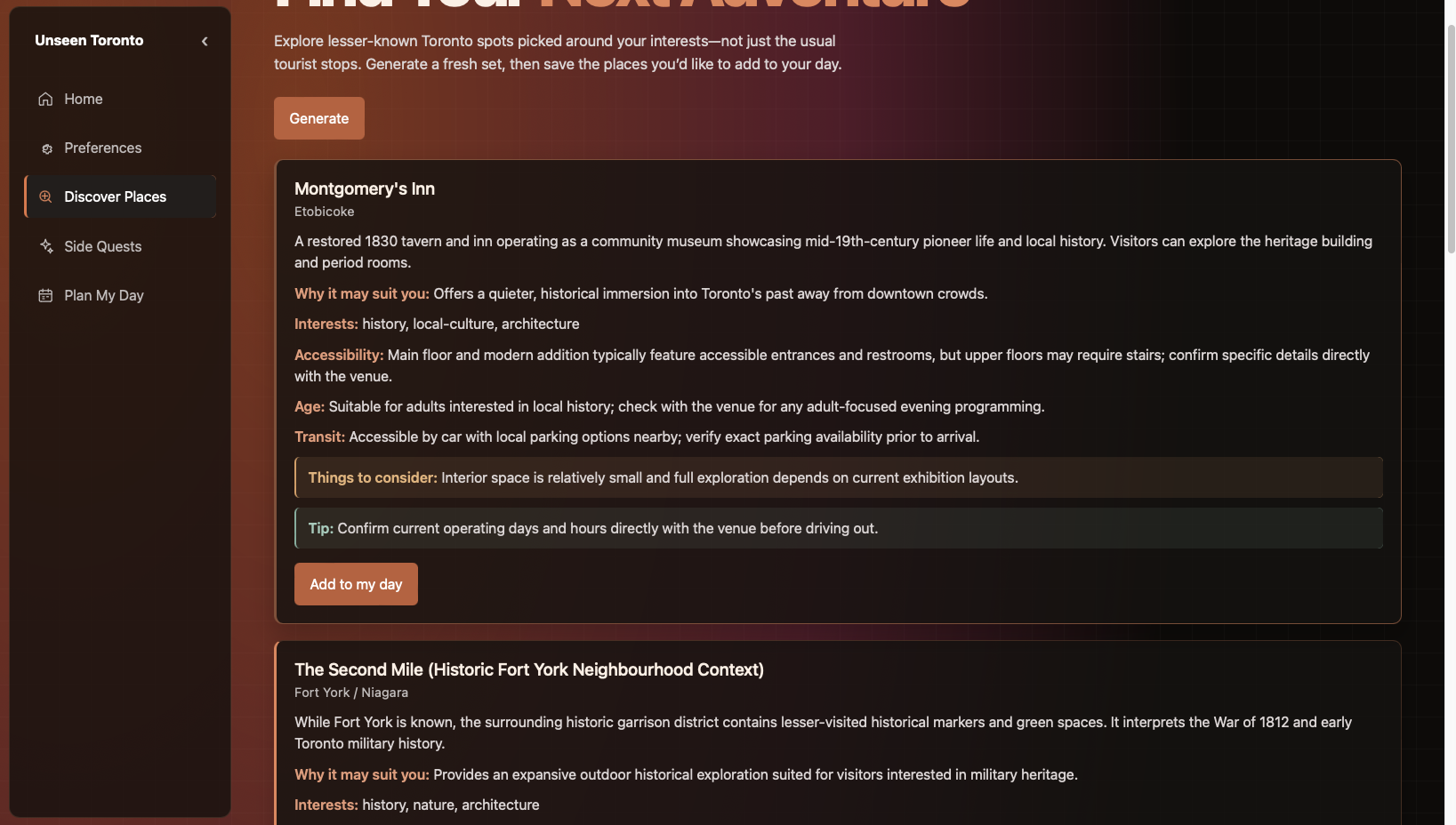
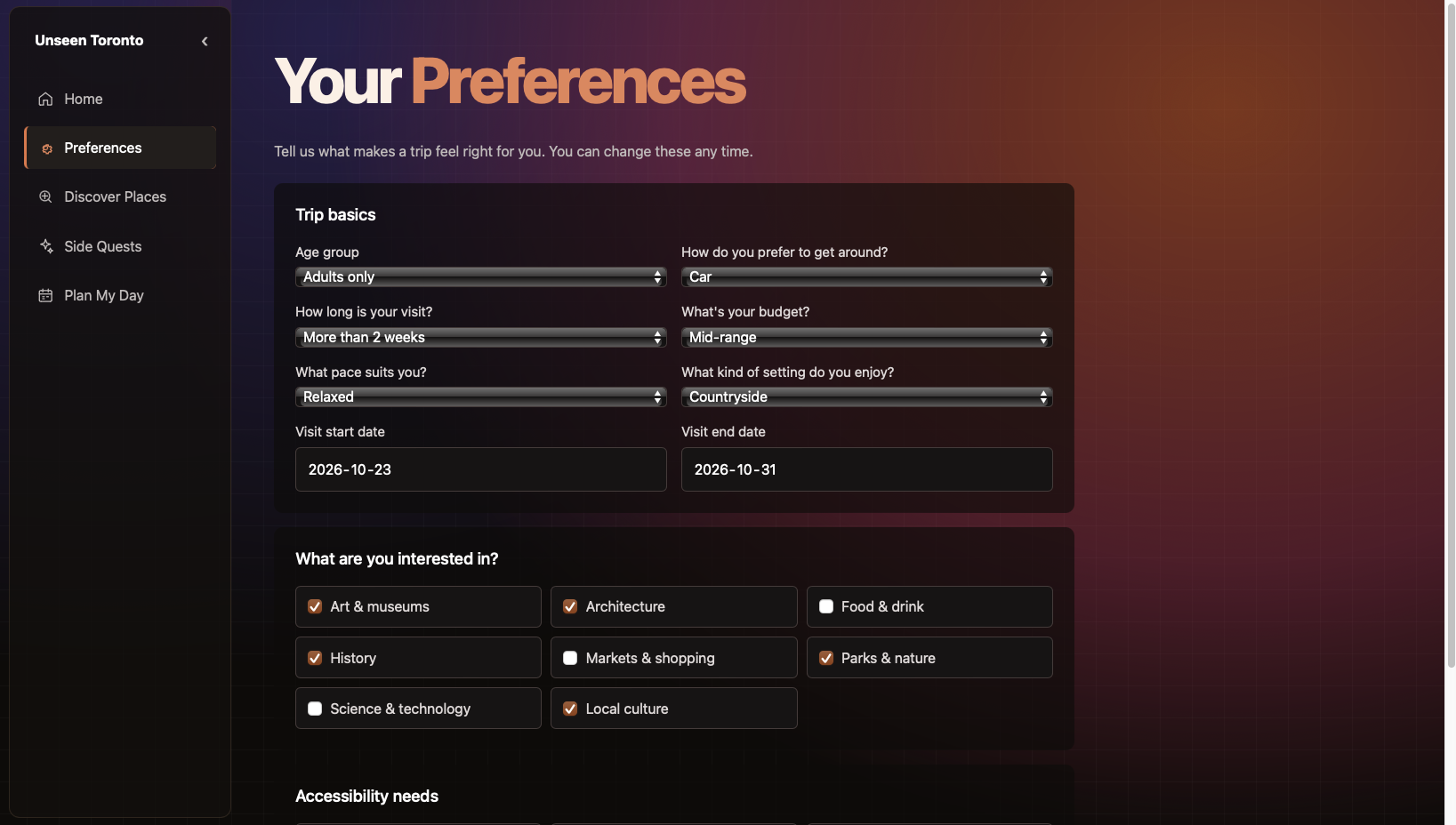
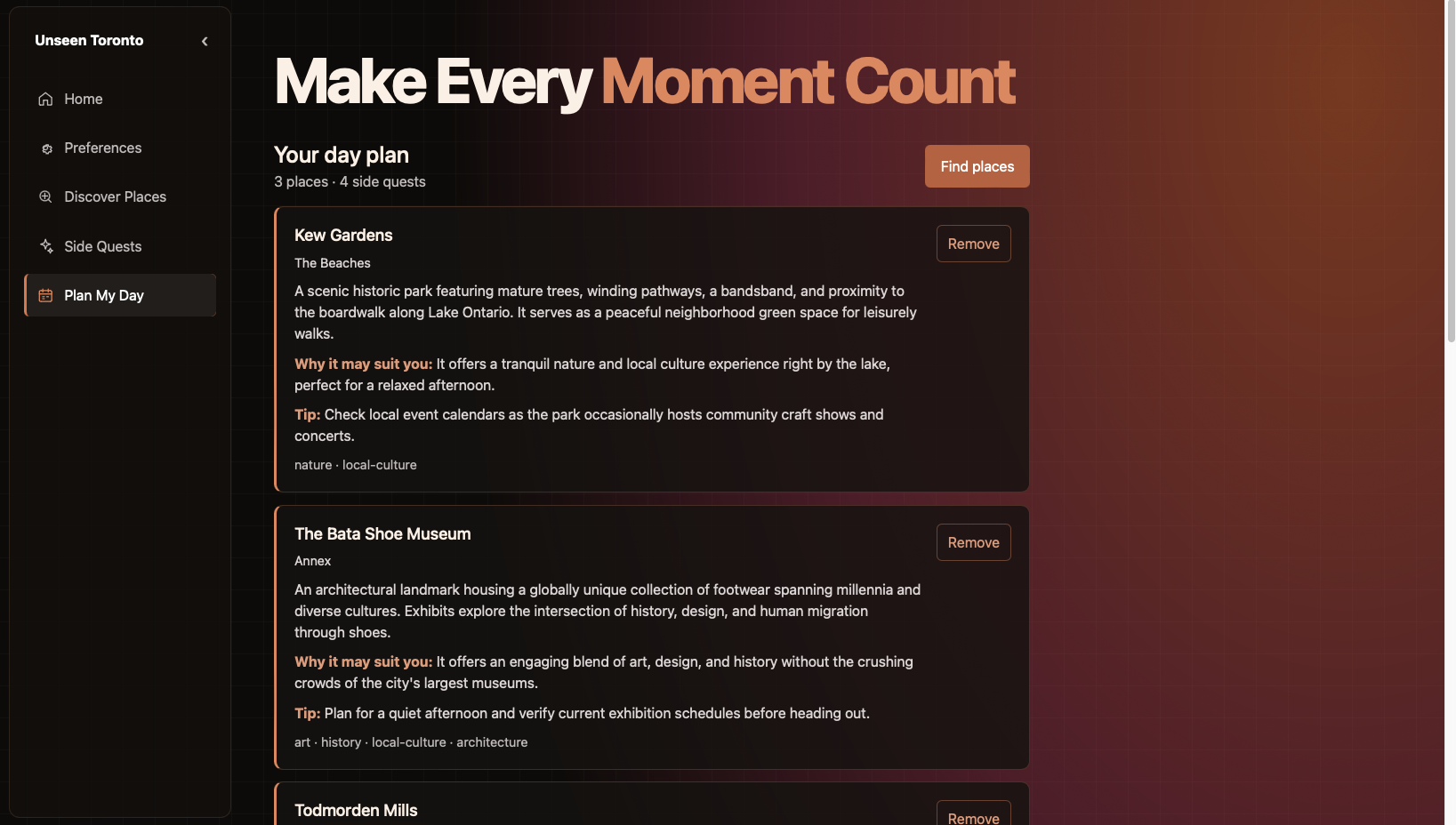
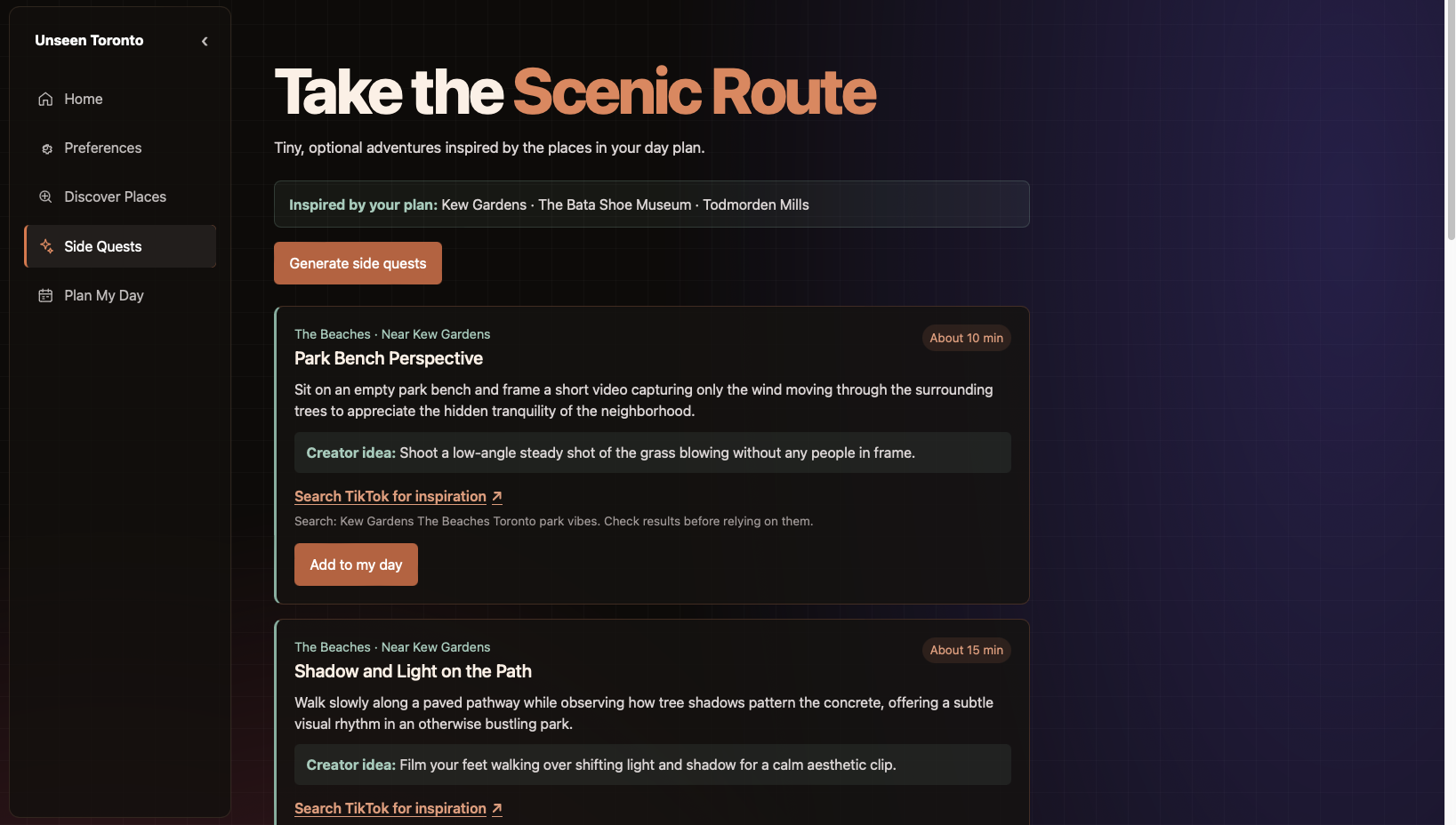
Unseen Toronto uses AI to suggest places based on a visitor’s interests and preferences, with an emphasis on lesser known local discoveries. Users can save places to a day plan and generate short, optional "side quests" (10-30 min activities) connected to those areas. TikTok search links offer another way to find inspiration for the activities.
The idea is to make discovering Toronto more personal while helping visitors consider alternatives to the most crowded spots.
How we built it
I built Unseen Toronto as a .NET Blazor web app. It uses Gemini to generate personalized place recommendations and side quests, and Supabase to manage user preferences and saved plans. Users can discover places, add them to their day plan, and save or remove side quests.
Challenges we ran into
Time was my biggest challenge. I had a lot of more features in mind but ended up having to simplify the features I already had. This is my first solo hack so I may have underestimated how much time it would take.
Accomplishments that we're proud of
Considering this was a solo hack, I am proud of having a finished product that doesn't have any major bugs. I am also proud of the idea I came up with as I strongly believe it will lead to a more sustainable city as the theme requests. I am also proud that the project’s focus is on helping visitors look beyond the usual tourist recommendations while also keeping locals in mind.
What we learned
I learned how to integrate an AI API into a Blazor app, connect user data through Supabase, and build features that work together across multiple pages. I also learned that a good AI feature needs more than a prompt and needs clear limits, useful context, and a good amount of repetition.
What's next for Unseen Toronto
Next, I would like to have a list of recommendations that the user is not interested in so that the AI does not suggest it again. I would also include a history of all previous recommendations. Adding a way to organize and reorder a day plan, and help users choose walkable or transit-friendly options. Since this isn't only a problem Toronto is facing, I would also make the app able to do the same for other cities and countries. I think this web app has a lot of potential for different features and I would definitely like to work more on it in the future.
