-
-
App icon
-
-
-
-
-
-
-
Inspiration
I’m a Flutter developer, and I started building Unscrolly mainly for myself. I wanted to improve my own digital life and have more control over the time I spend on social media.
At first, it was just a personal idea. But after sharing it with friends and people around me, I realized that the problem is very common. You open a social app “just for five minutes,” and somehow you disappear into scrolling. Suddenly, a whole evening is gone.
In September, a friend told me about this hackathon, and that gave me an extra push to build faster and finish more than I probably would have without a deadline. So thank you for that motivation.
The goal of Unscrolly is not to make people completely quit their phones. The idea is much more realistic: help users set limits for the apps that take too much attention, stay within those limits, and slowly take back control of their time.
What it does
Unscrolly is a digital detox and social media blocker for Android.
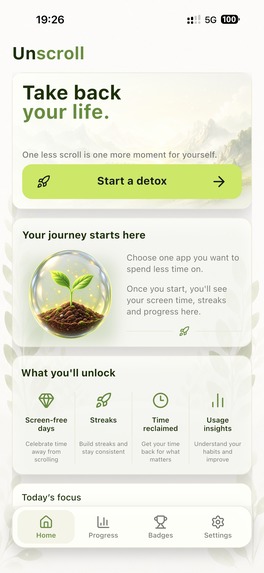
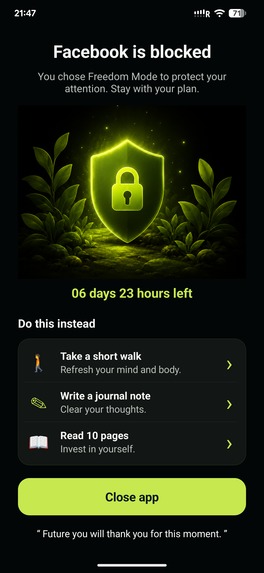
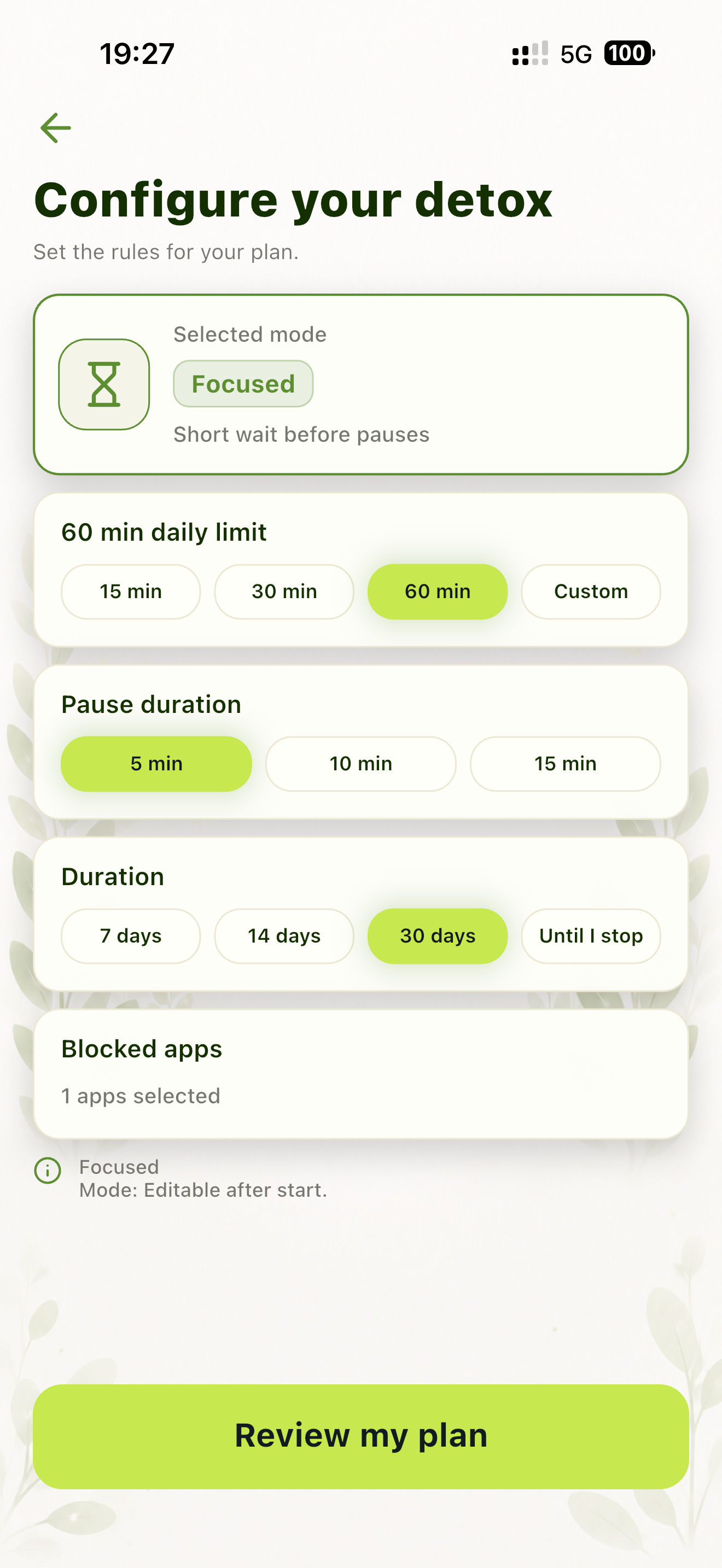
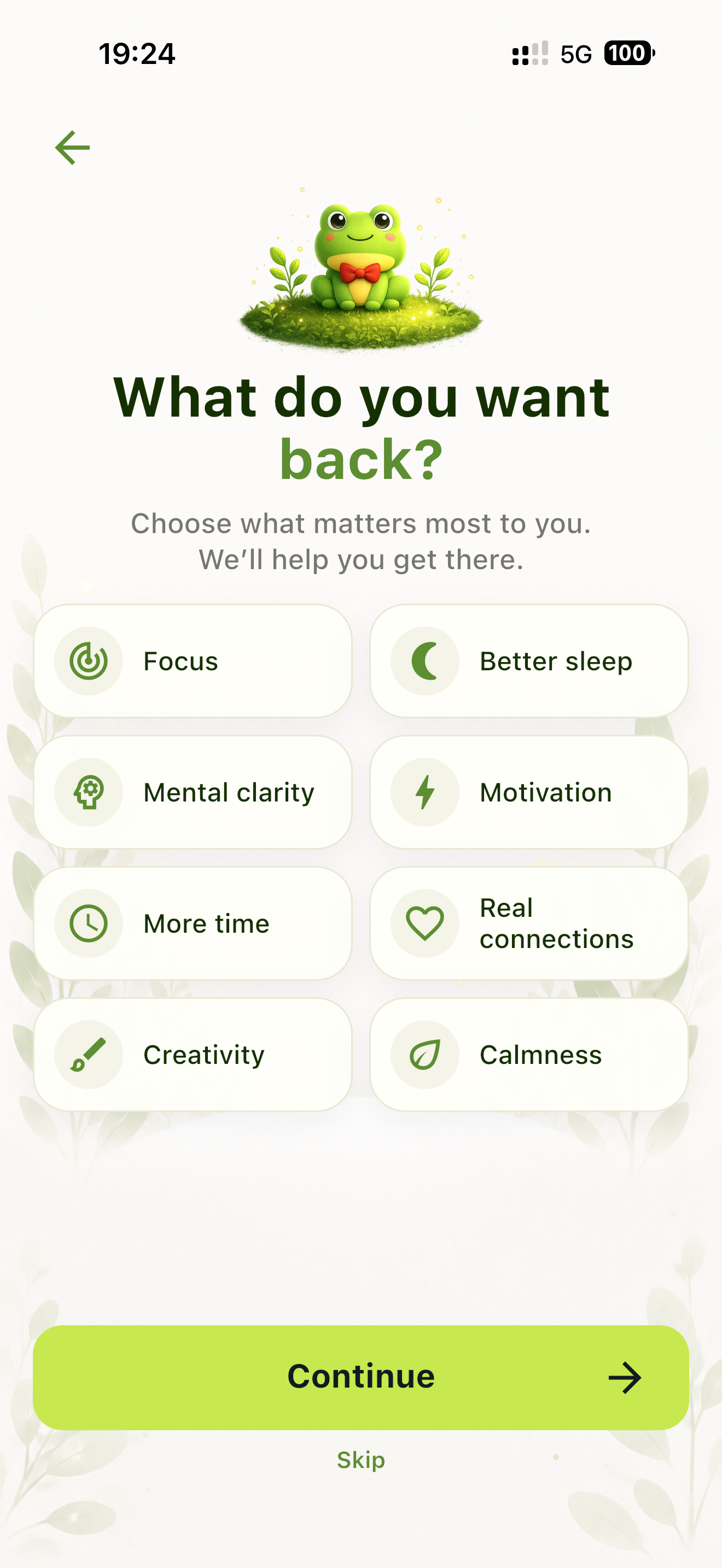
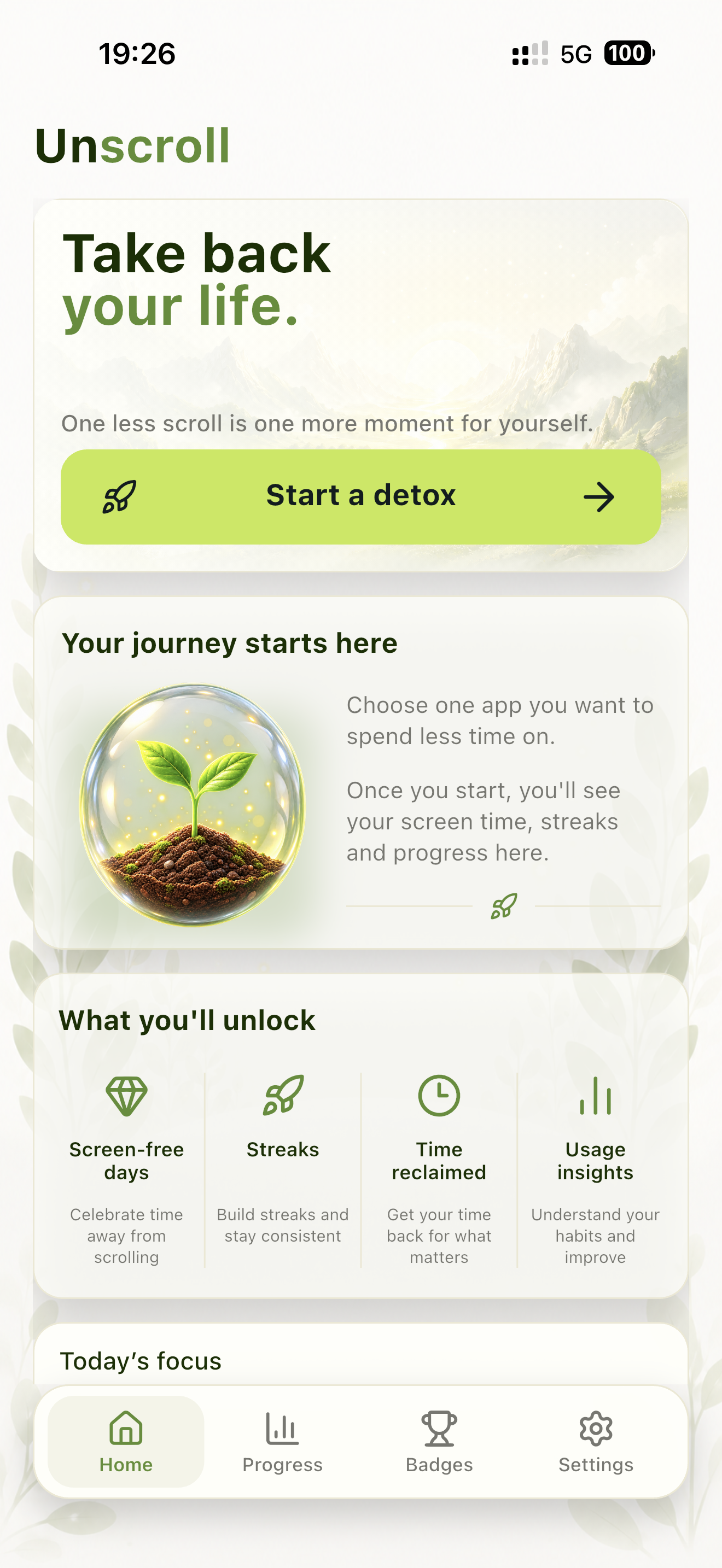
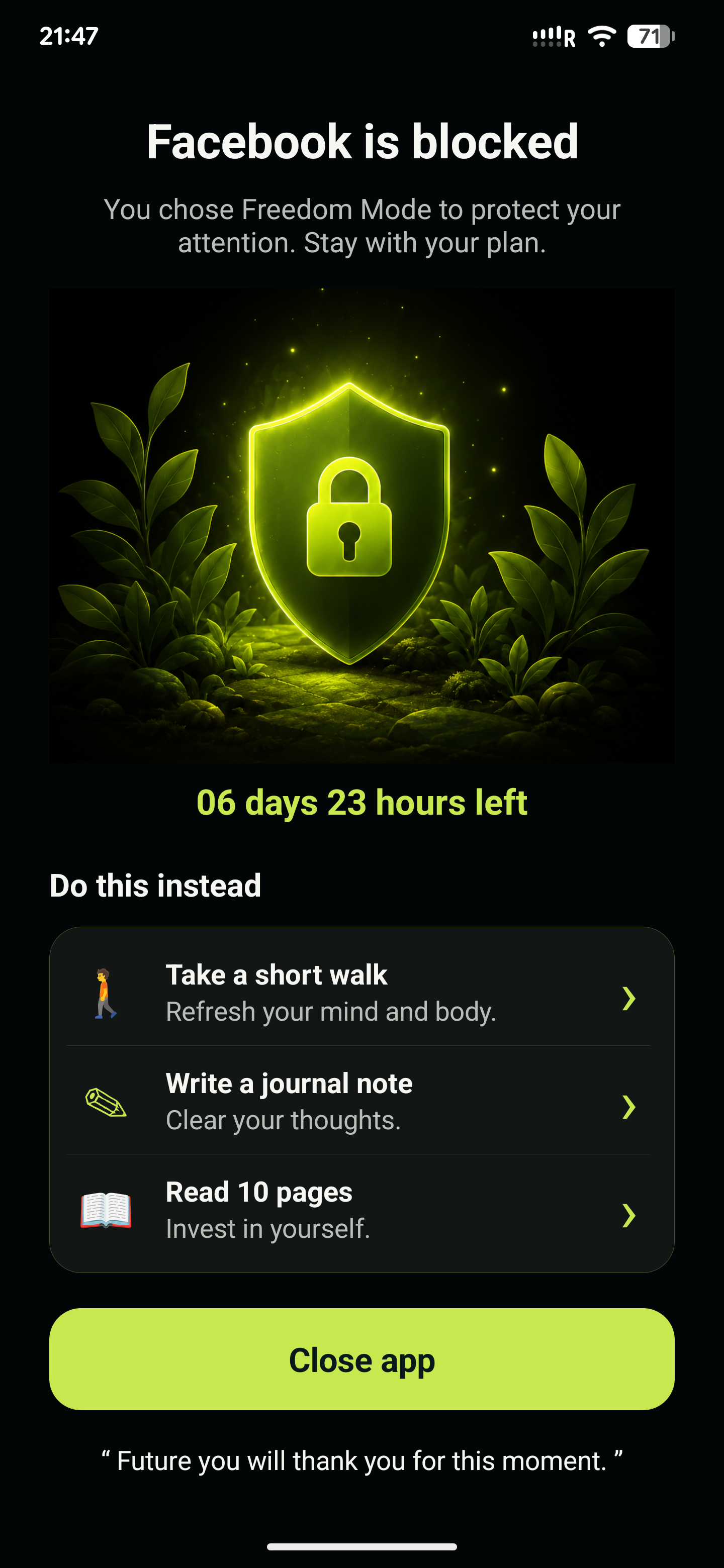
Users can choose distracting apps, set daily limits, and start a detox mode. When the limit is reached, Unscrolly can block selected apps and encourage the user to return to something more meaningful.
The app includes:
- app blocking for selected social apps
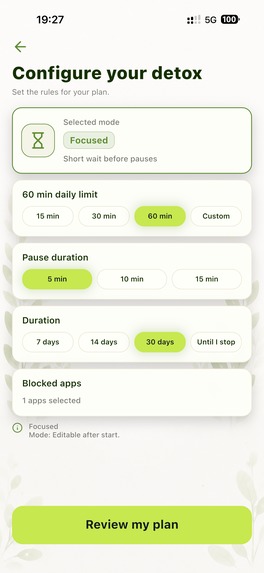
- daily screen time limits
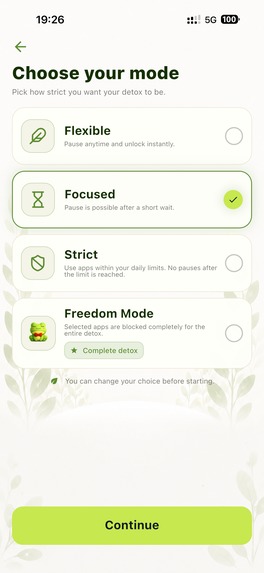
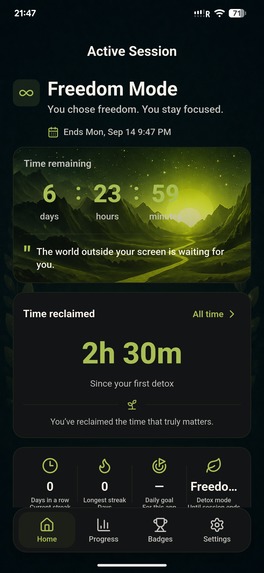
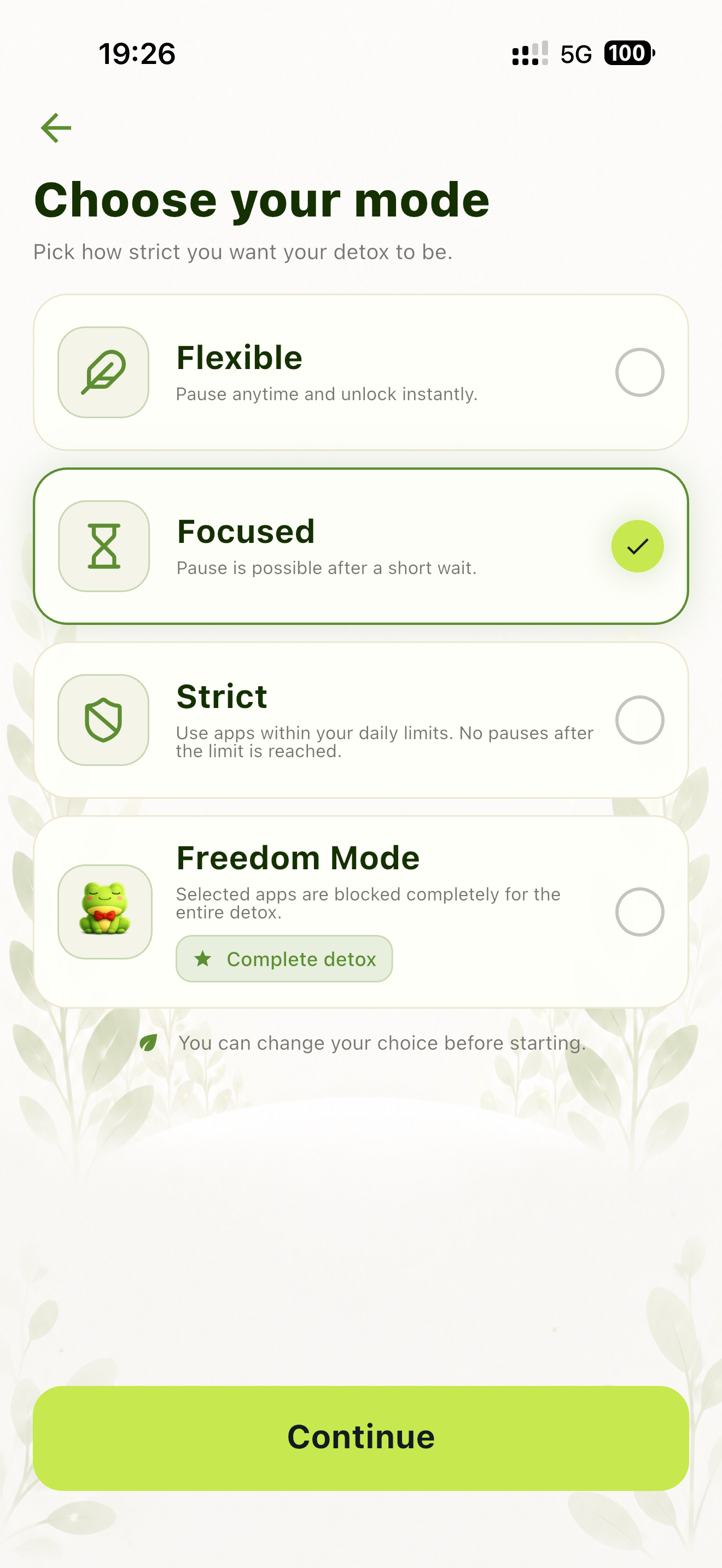
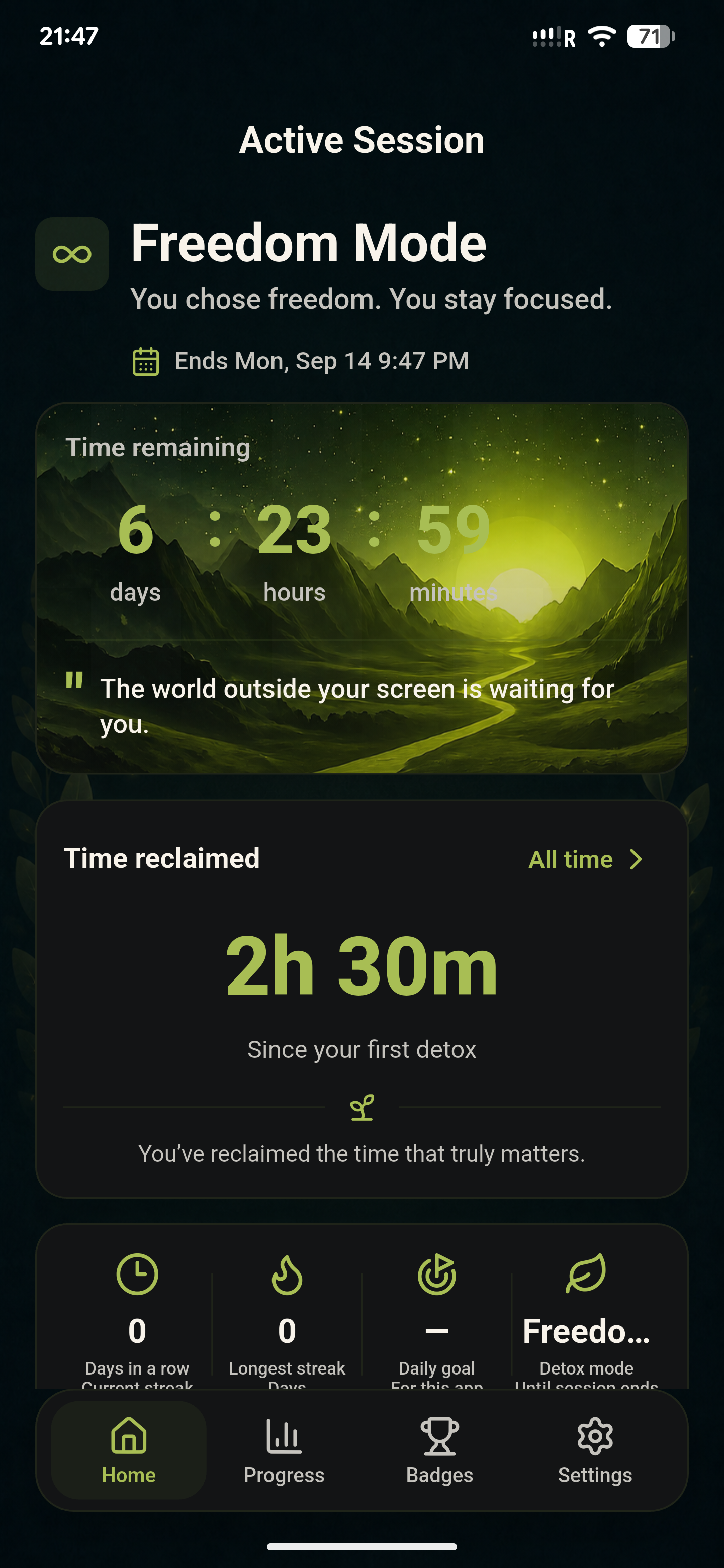
- detox modes with different levels of strictness
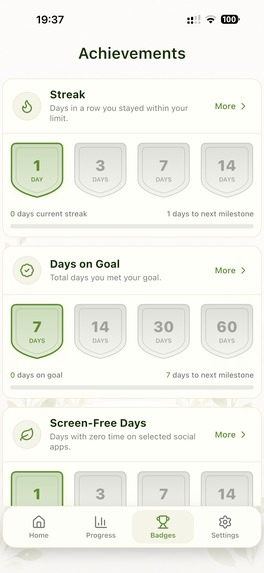
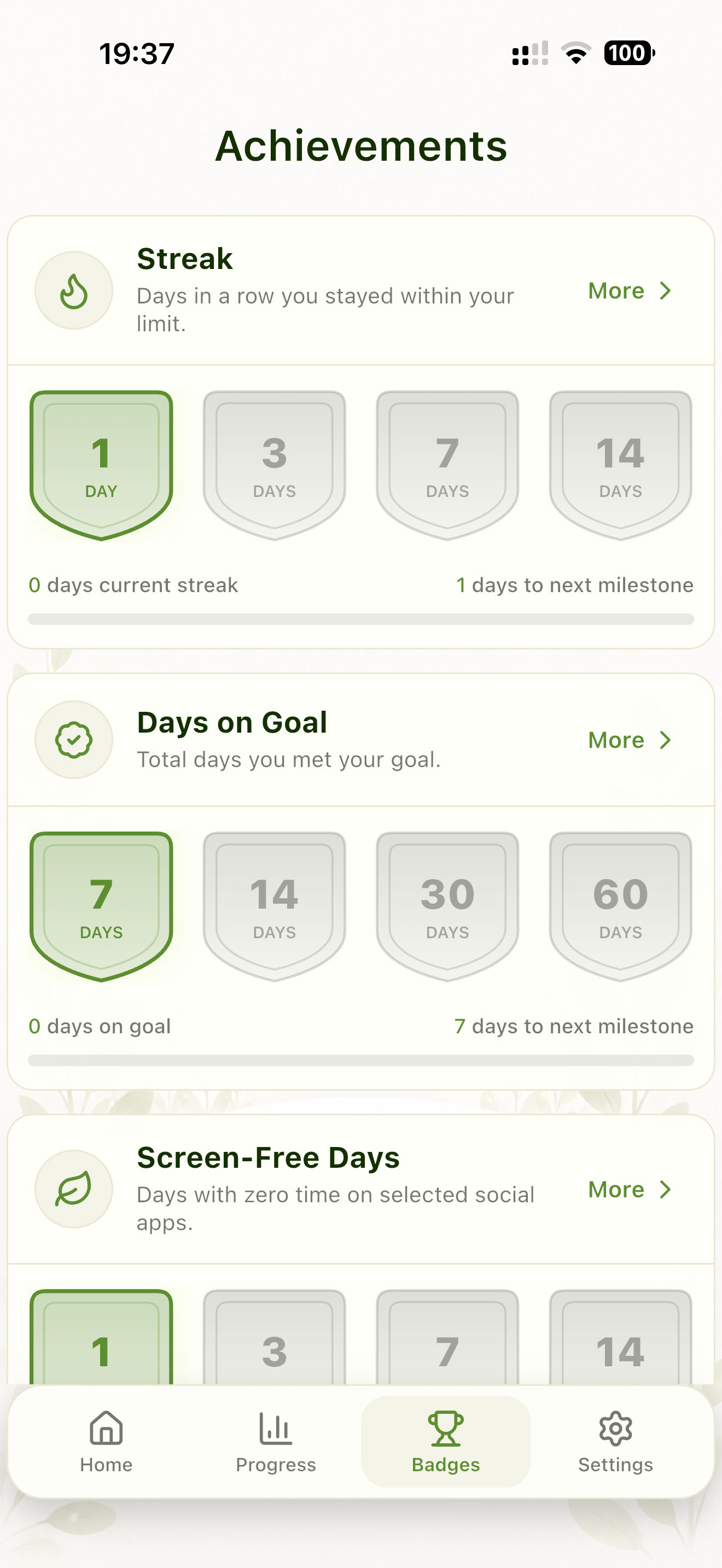
- streaks and achievements
- screen-free days
- time reclaimed tracking
- progress statistics
- light and dark themes
- localization in 10 languages
- multilingual store assets
- Android subscriptions
Unscrolly is built around a simple idea: less scrolling means more time for real life.
How we built it
I built the project completely by myself.
Since I’m a Flutter developer, I chose Flutter as the main technology so I could build the app for both Android and iOS from one codebase. The Android version is the main version for this hackathon because it already includes subscriptions and is available on Google Play. The iOS version also exists, but subscriptions are not enabled there yet.
The app was built step by step: first the core detox logic, then app selection, daily limits, blocking behavior, progress tracking, achievements, onboarding, themes, localization, store assets, and finally Android subscriptions.
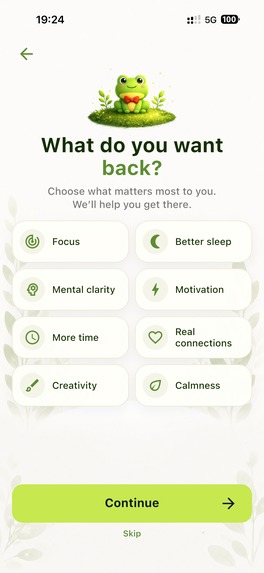
A big part of the work was not only writing code, but also shaping the product experience. I wanted Unscrolly to feel calm and supportive, not aggressive or judgmental. That influenced the visual style, wording, detox modes, onboarding, and the blocked screen.
Challenges we ran into
One of the biggest challenges was working more deeply with system-level usage data on Android and iOS. I had to understand how to read and process information about how much time a user spent in different apps on different days, and then turn that into something useful inside the app.
Another challenge was making the blocking logic feel reliable and clear for the user. A digital detox app has to be strict enough to help, but not so confusing or harsh that people stop using it.
Localization was also a challenge. The app and store materials support 10 languages, which meant a lot of work with texts, screenshots, layouts, and making sure the interface still looked good in different languages.
Preparing the app for release was also a serious part of the project: Google Play requirements, privacy policy, screenshots, app metadata, subscriptions, and testing.
Accomplishments that we're proud of
I’m proud that in a relatively short amount of time, I built Unscrolly from scratch and brought it to a real release.
The app is already live, has received its first installs, and I’ve started getting good feedback from real users. So far, I have not had crashes, and the app works stable.
I’m also proud that Unscrolly looks and feels more polished than a typical MVP. It has a complete onboarding flow, calm visual identity, light and dark themes, achievements, progress tracking, localization, and subscriptions on Android.
For me, the biggest accomplishment is that this is not just a demo or an idea anymore. It is a real product that people can install and use.
What we learned
This hackathon reminded me how powerful a clear deadline can be.
Because there was a time limit, I somehow managed to do much more than usual. The deadline helped me focus, make faster decisions, and avoid endlessly polishing small details before shipping.
I also learned a lot more about working with system usage data on Android and iOS: how app activity information is provided by the system, how to process it, and how to turn it into meaningful insights for the user.
Another lesson was that product feeling matters a lot. For an app like Unscrolly, it is not enough to simply block apps. The tone, design, wording, and flow all matter because the user should feel supported, not punished.
What's next for Unscrolly: Social Media Detox
Next, I want to keep improving Unscrolly based on real user feedback.
Planned improvements include:
- multi-app selection
- more themes
- more mascots and visual customization
- deeper progress insights
- better statistics
- more premium features
- improvements to the iOS version
- subscriptions on iOS
- more polished localization
The long-term goal is to make Unscrolly a calm, friendly, and useful companion for people who want to spend less time scrolling and more time living.

Log in or sign up for Devpost to join the conversation.