Inspiration
We wanted to learn more about our cycles and be able to use it to help us during our daily lives, and found that there weren't many apps that supported this, so we were inspired to build one ourselves. We wanted to make a period tracker that doesn’t just track your period. It tracks all your cycles and helps you understand your body’s rhythm.
What it does
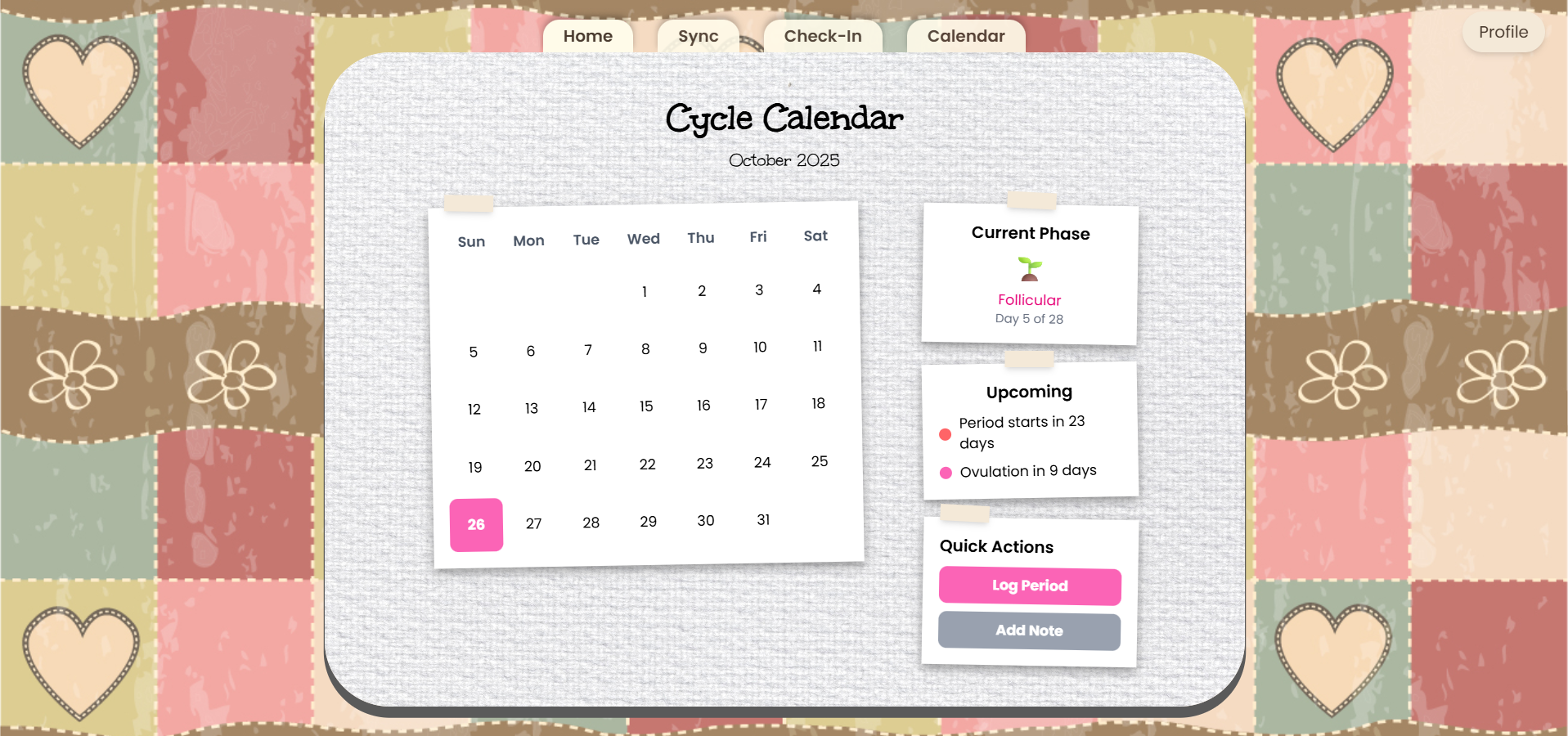
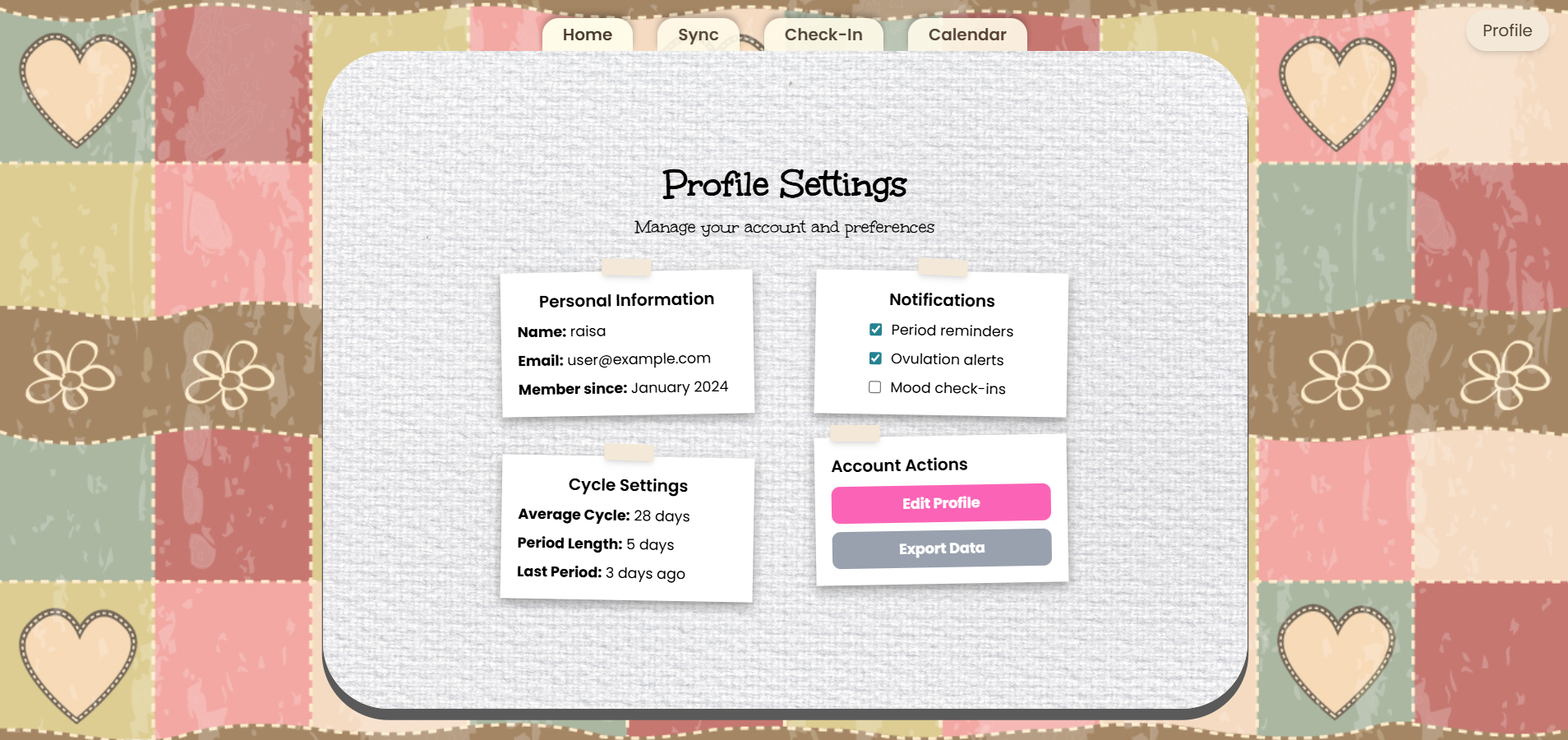
The purpose of our website is to erase the stigma and trepidation surrounding menstruation by gaining a better understanding of yourself and your cycle through bulletin board-esque interactions.
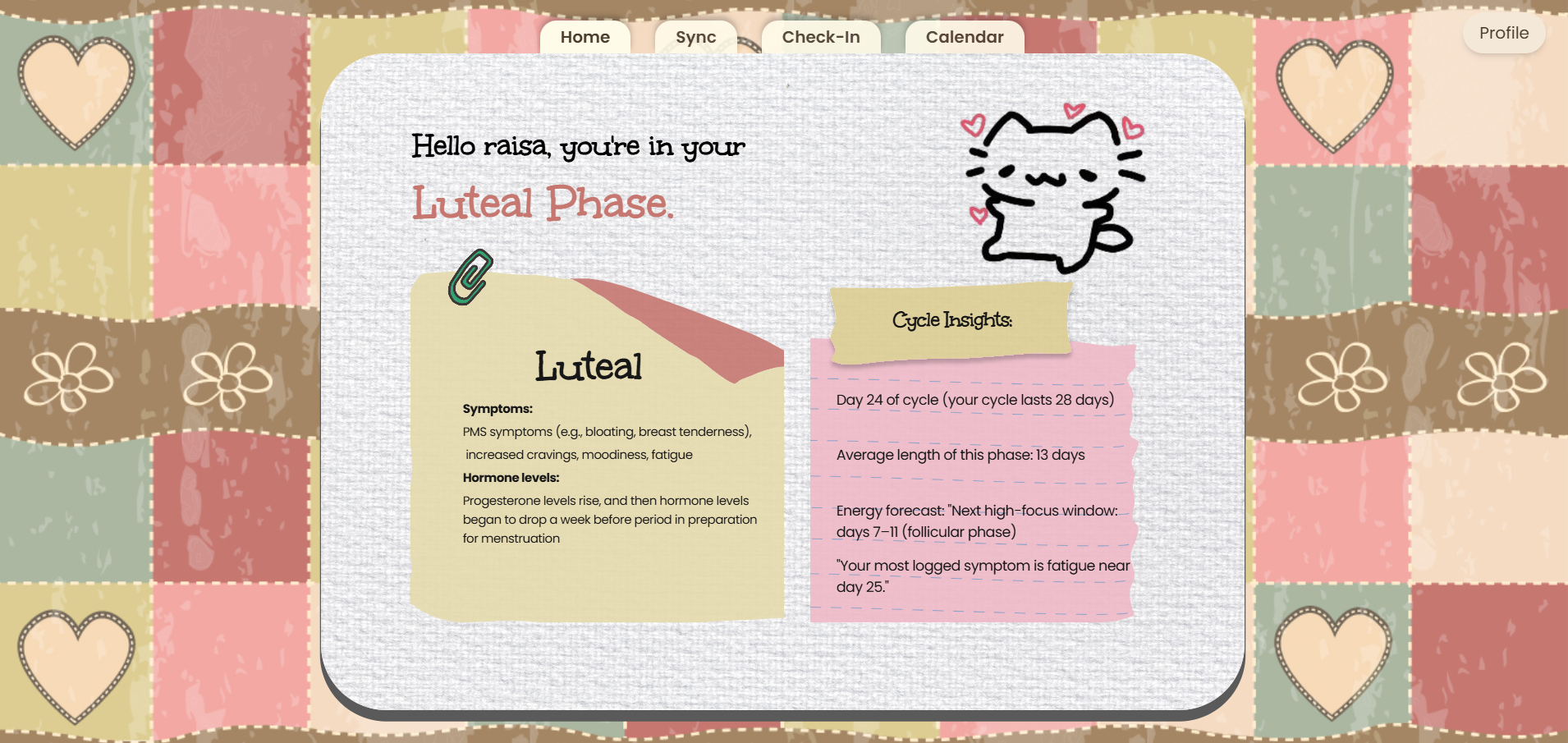
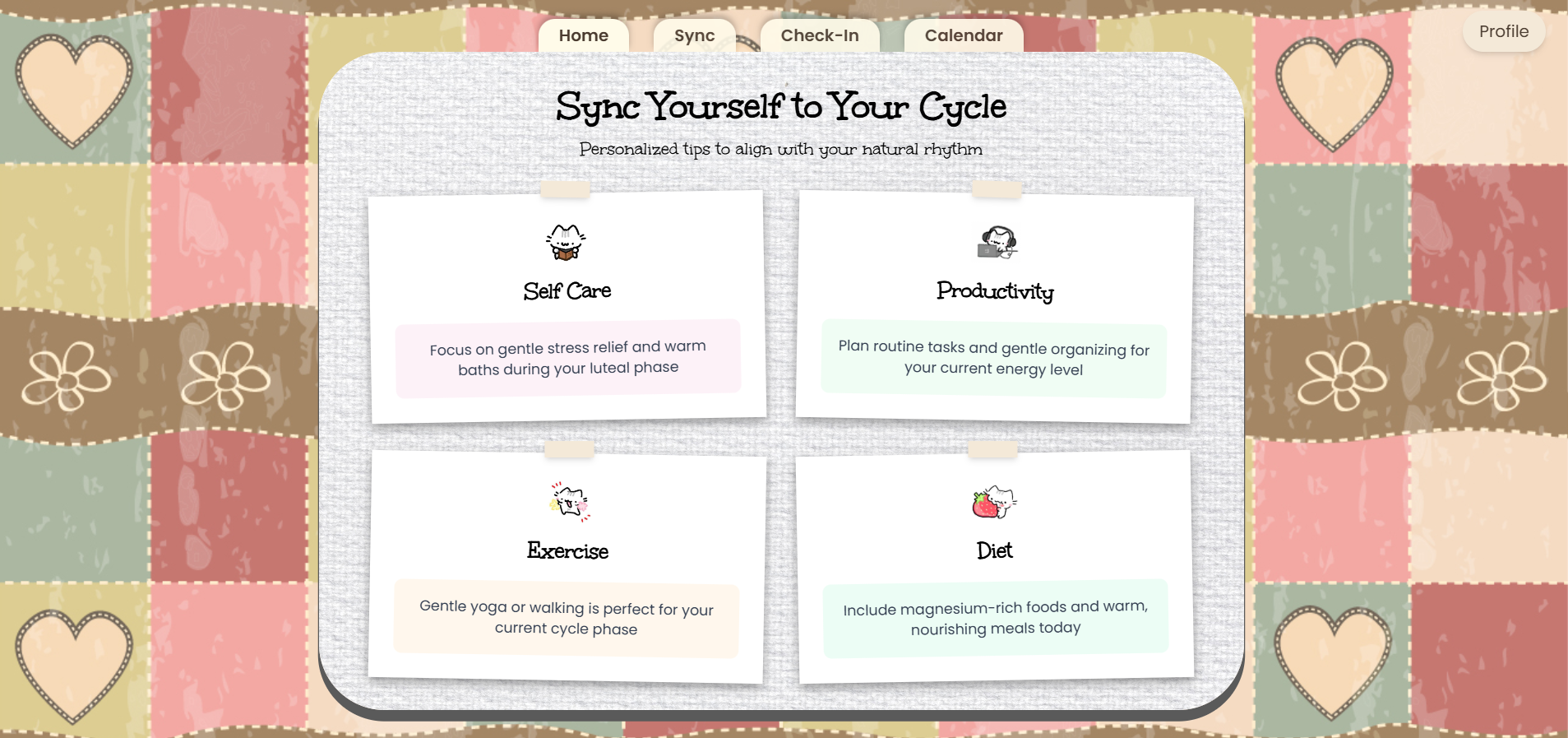
It allows you to find out what activities and diet is best for you during your different phases and track your hormonal levels, cycle insights, productivity levels to help you understand your body and become your best self.
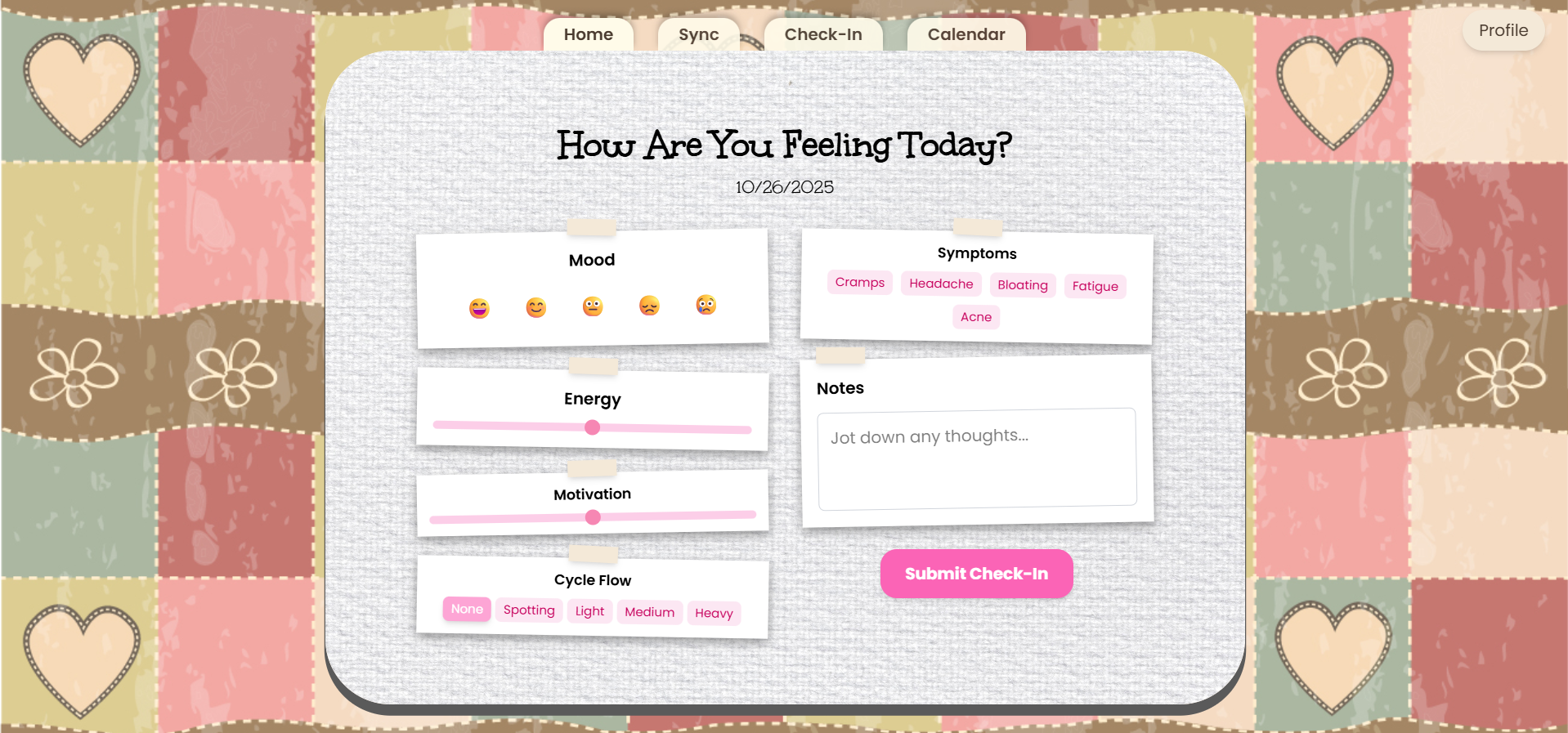
It acts as a daily check-in, guiding you on when to take things light or go heavy, when to plan intense workouts or schedule more demanding tasks, so you can align your lifestyle with your natural energy flow.
How we built it
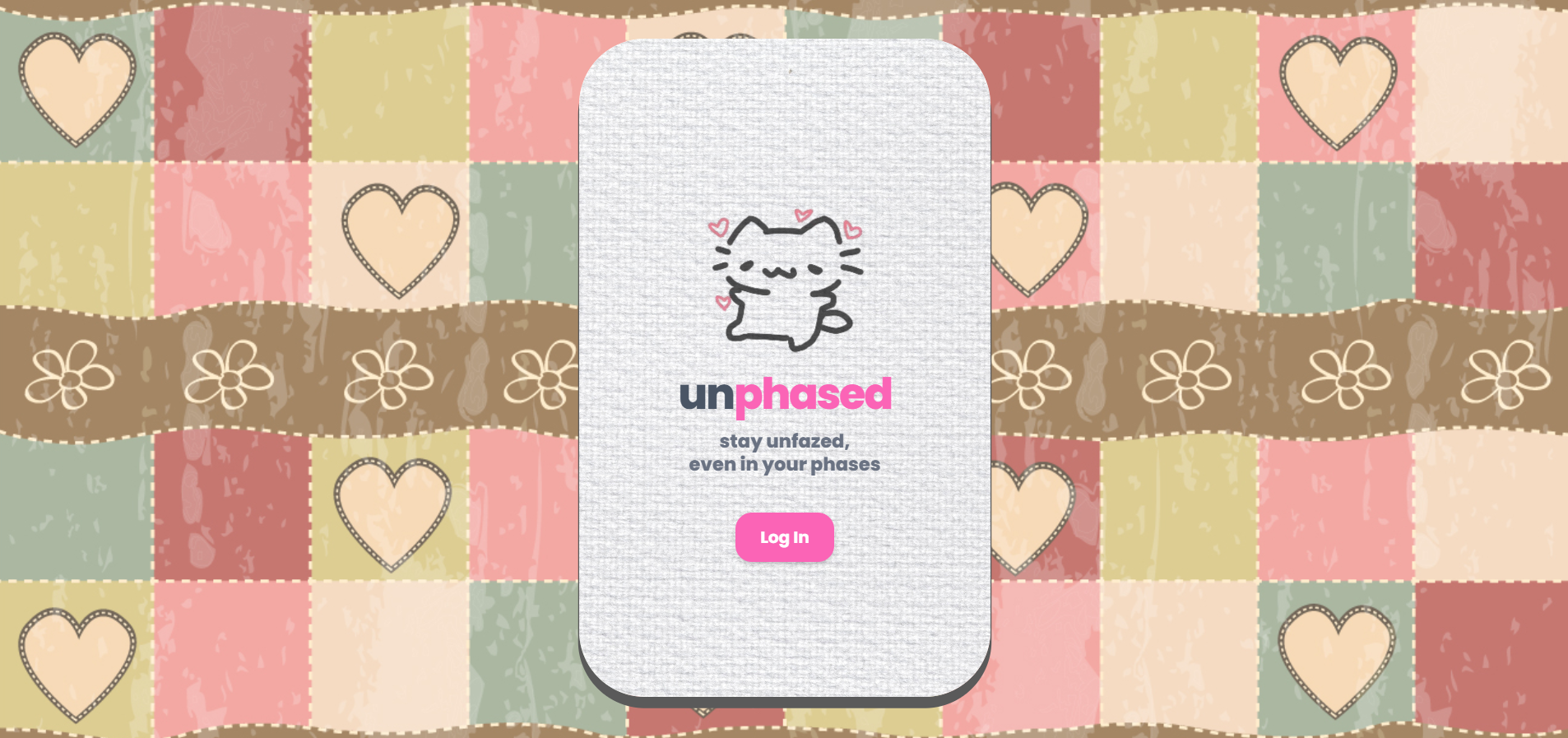
We built it using react as the front end, node.js as the backend, figma to design and collaborate with members, postgres as our database, using cloud service from aws, auth0 for user authentication to log in and save your information.
Challenges we ran into
Integrating the database with our front end elements
Accomplishments that we're proud of
Exploring different frameworks and using them all together into one project, being able to put them together in the limited time frame in the hackathon.
What we learned
For some of us it was out first time working with the new frameworks, so we learnt a lot of information and how to work with teammates.
Built With
- amazon-web-services
- auth0
- authentication
- figma
- figma-to-design-and-collaborate-with-members
- node.js
- node.js-as-the-backend
- postgres-as-our-database
- postgresql
- react
- react-as-the-front-end
- user
- using-cloud-service-from-aws


Log in or sign up for Devpost to join the conversation.