Inspiration
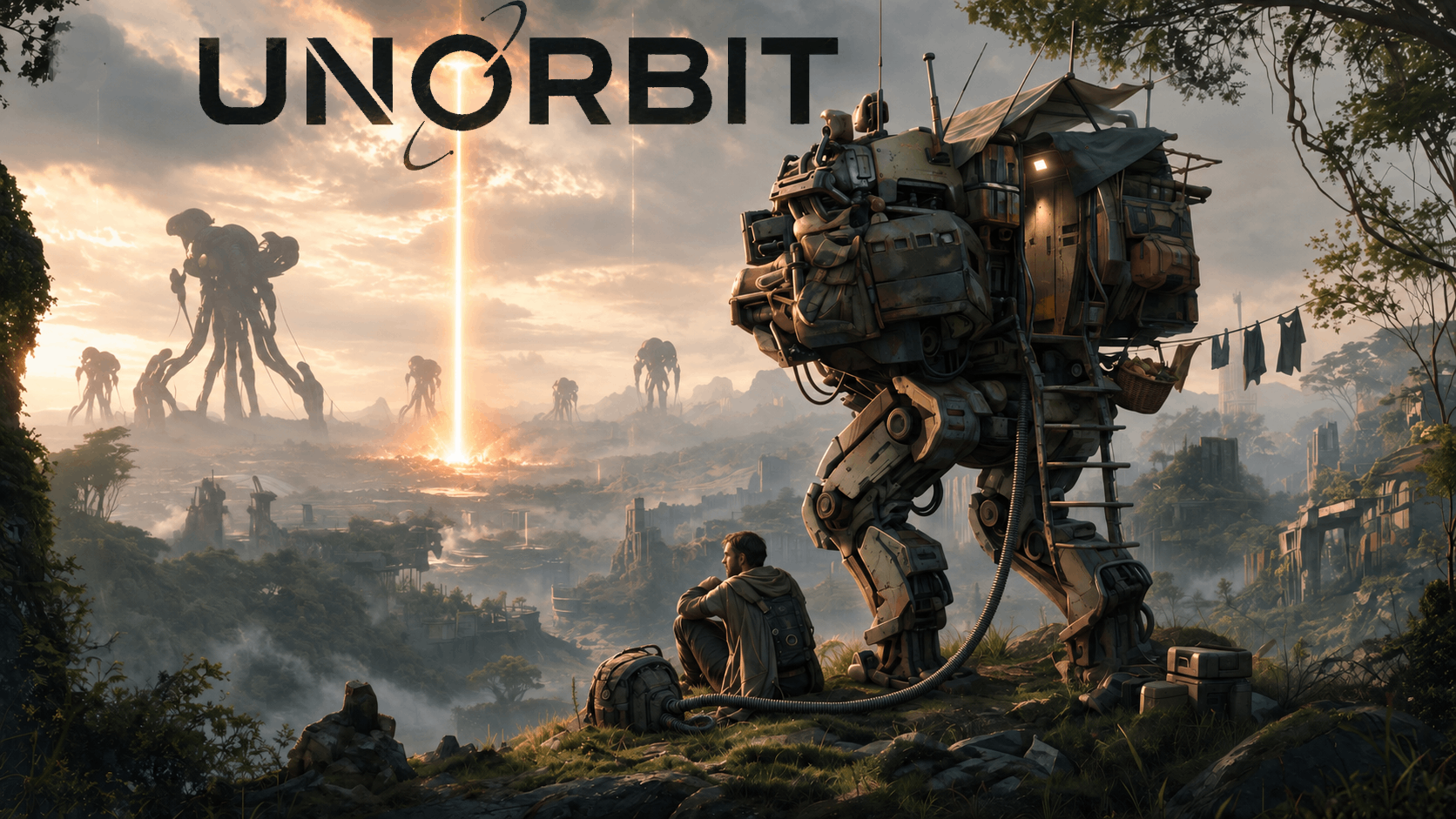
A rogue orbital laser has been burning the ground for longer than anyone remembers. It answers to no one, and it has burned away almost everything that used to matter. Whoever is left keeps their head down. We wanted to make a survival game about the one pilot who decided not to hide: someone who drags a dead machine out of the rubble and rebuilds it, not as a weapon, but as a home on legs, and walks out under that sky to switch it off.
Two ideas held the whole thing together. First, that progress and danger should be the same gesture: the antenna you carry sings louder the closer you get to where it belongs, and everything that hunts by sound comes to the song. Second, that the thing you are trying to fix should also be the thing that forces you under a roof every few minutes. Make noise on purpose. Get home before the sky does.
What it does
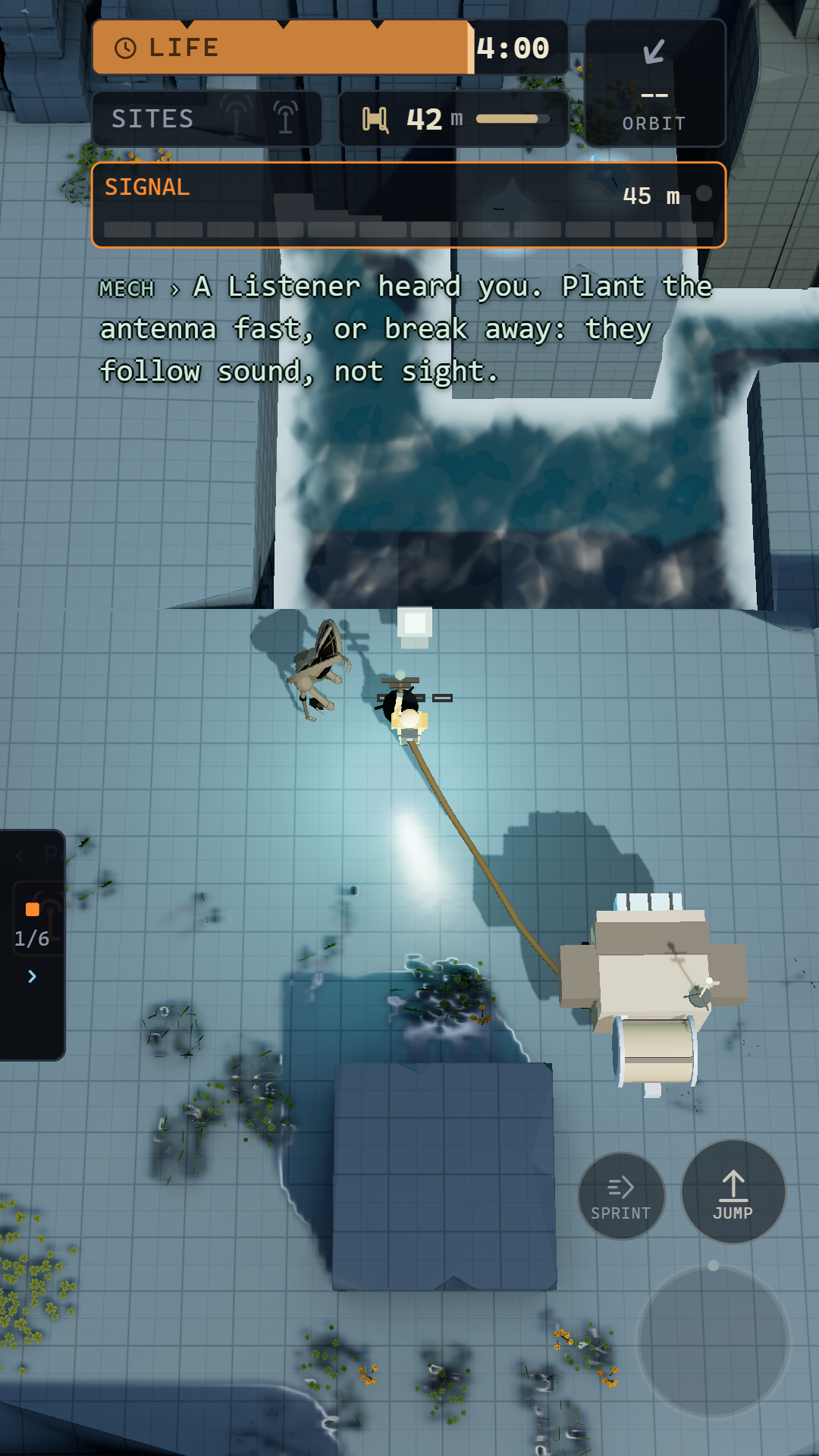
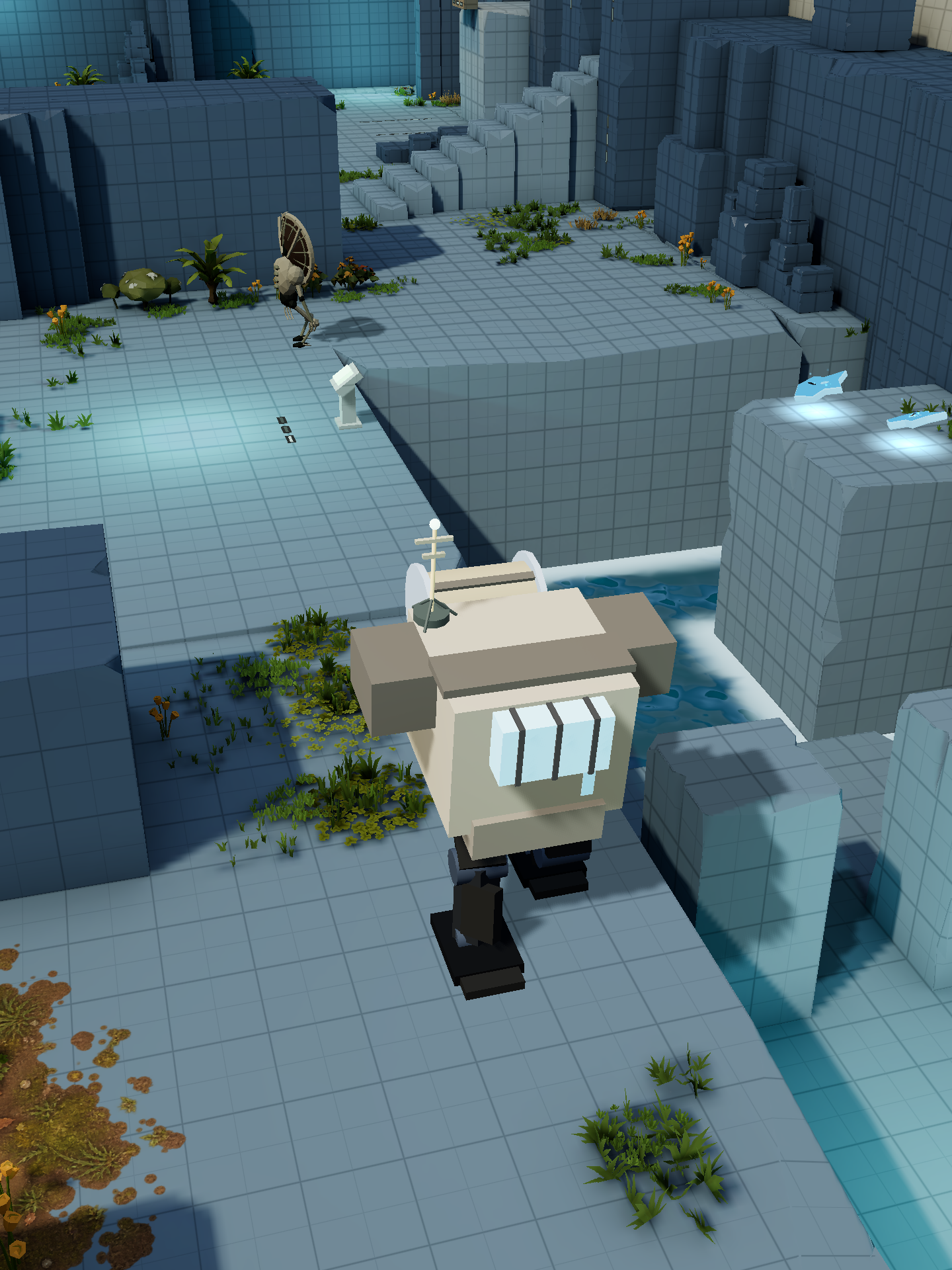
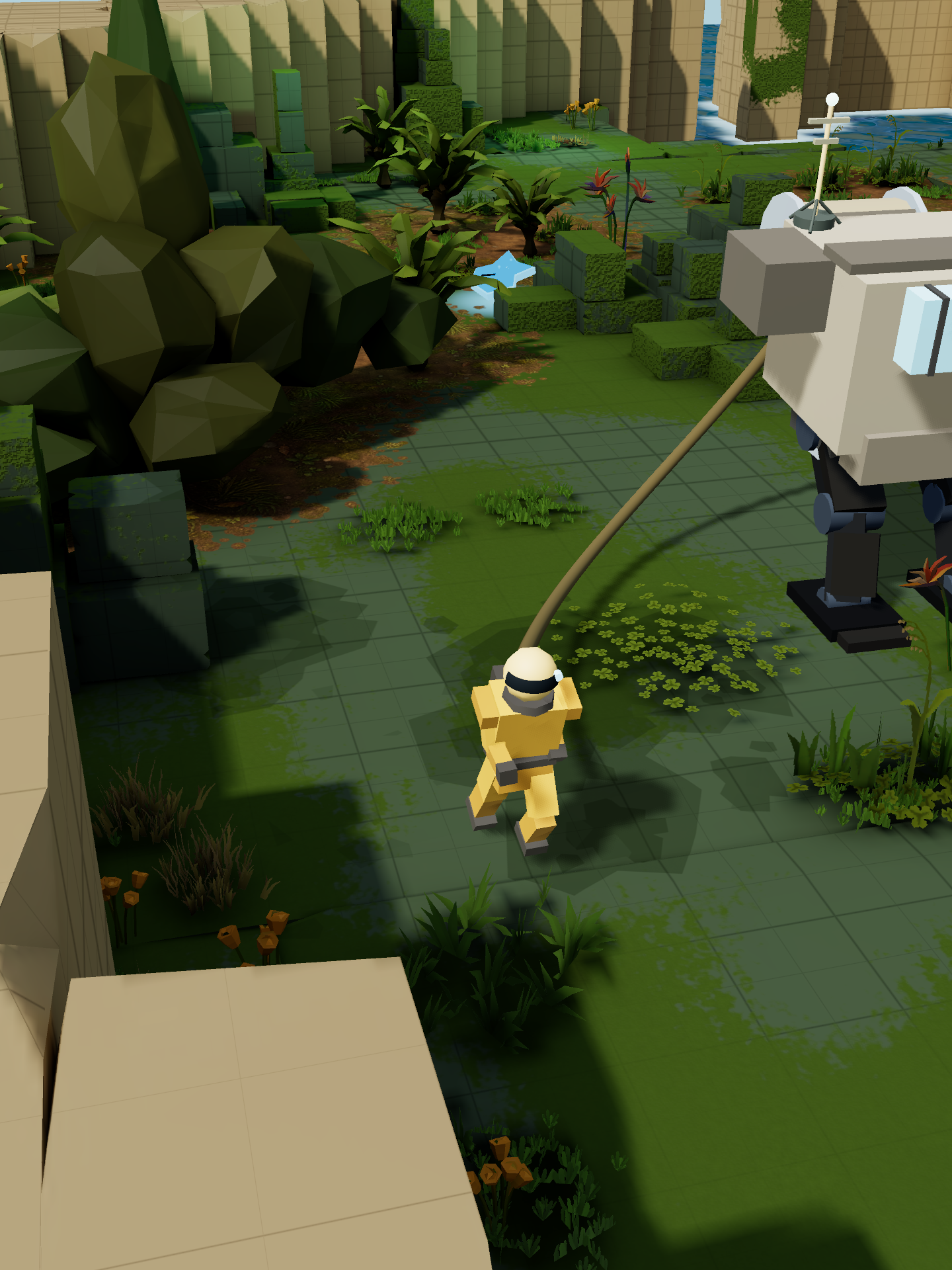
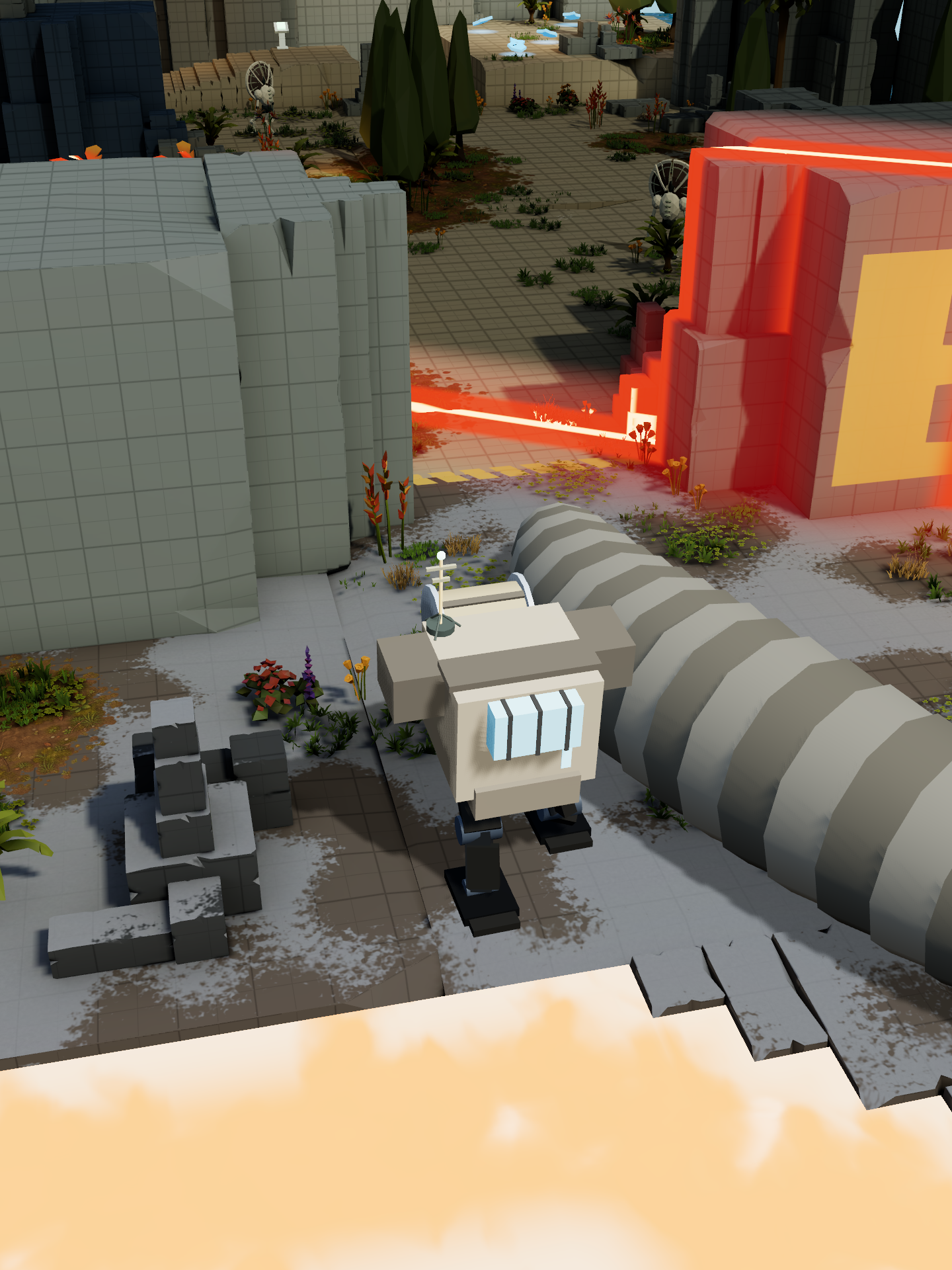
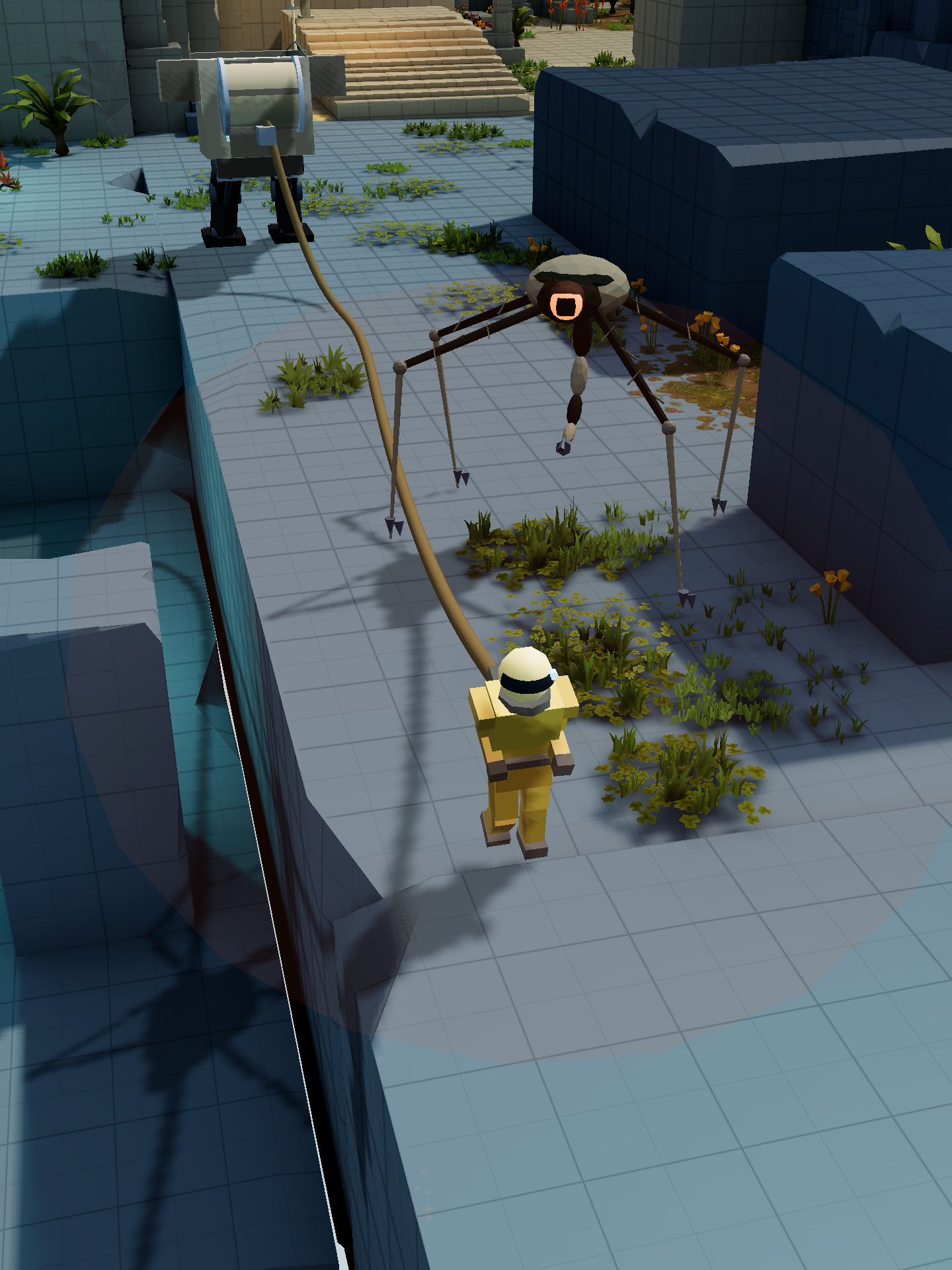
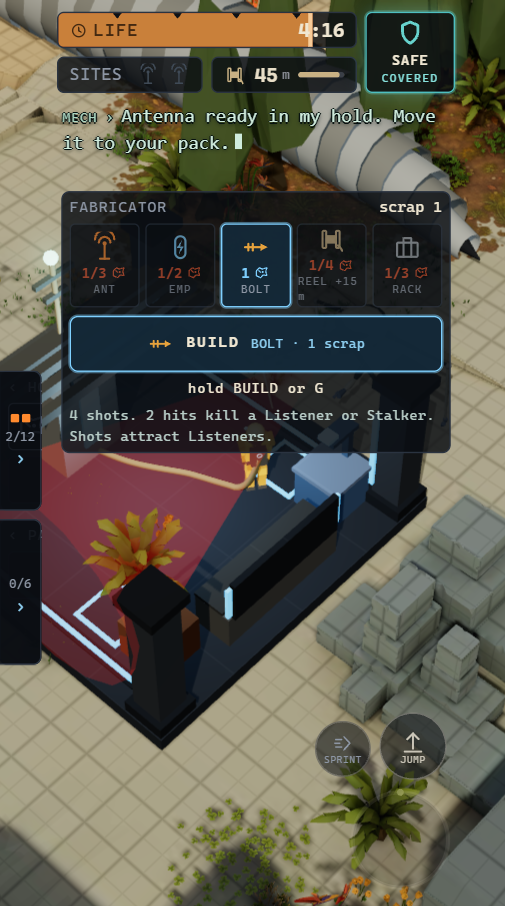
Unorbit is a short, single-player survival session in portrait. Your mech is vehicle and base at once: fold it and drive, deploy it and it becomes shelter, cooker, workshop and hold. From there you go out on foot, tied to it by a cord, to gather biomass and scrap, cook, build and plan the next expedition.
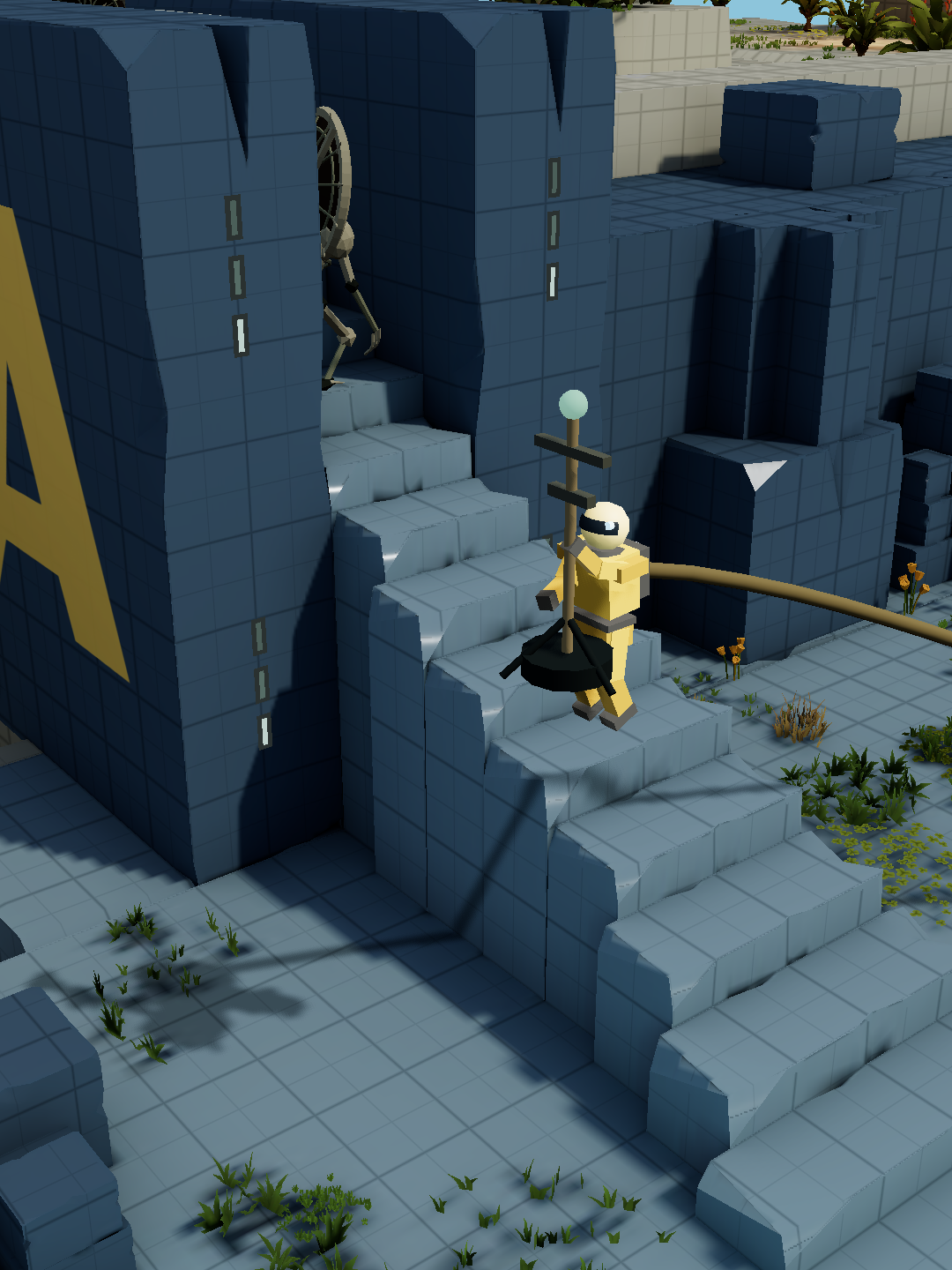
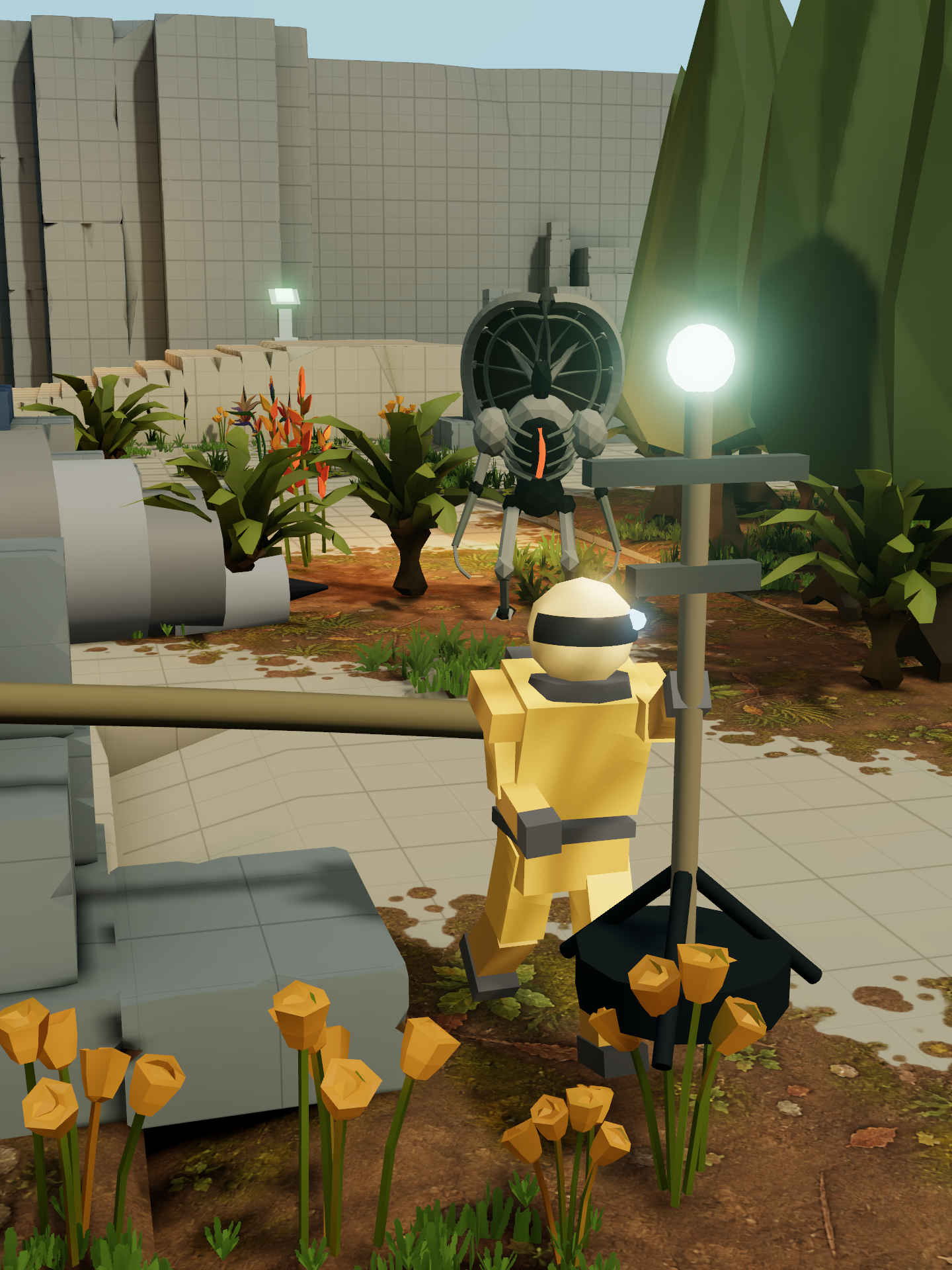
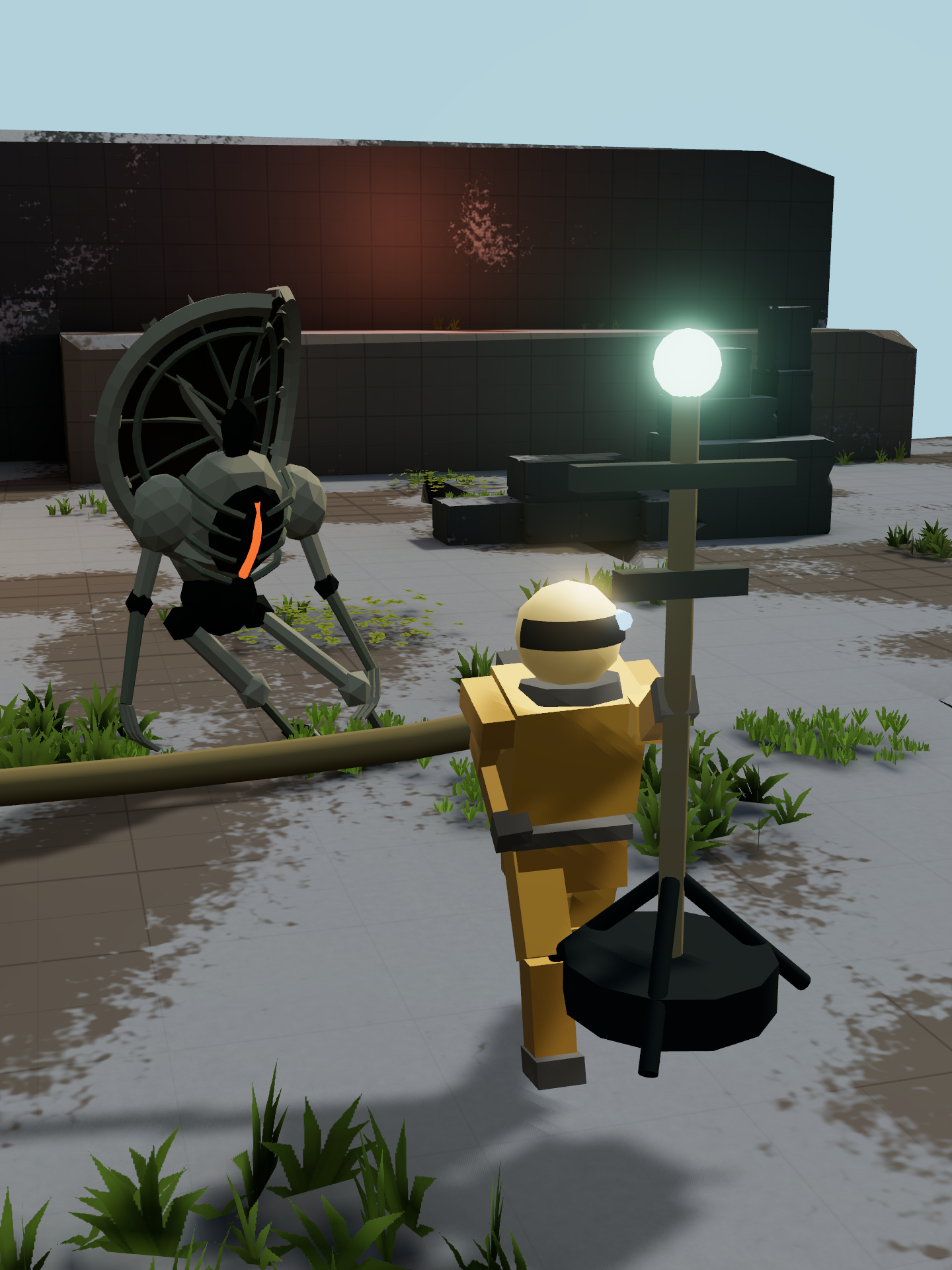
Each region hides a gate that only appears when three antennas triangulate it: two you build and carry to their sites, and the one on your roof. Carrying an antenna is the core of the game. Its ping is your compass, your clock and your lure, all rising together as you close in. Planting it silences it. Then you bring the house itself to the third site, link all three, hold out while everything you woke converges, and drive through the gate. Life is a countdown that food refills and hits drain; when the sky warns, you find cover.
How we built it
We wrote the design first, as a short specification that ruled over everything else, and then built the prototype by prompting an AI in small, verifiable passes: one system at a time, measured in the browser before moving on. The whole game ships as a single readable file, with the 3D library alongside it, exactly as the competition asks.
The world was blocked out and lit in a level editor and exported to the web build: geometry, light and collision, all of it baked. The blockout look is deliberate. Clear first, fun second, pretty third, and every choice about what to make prettier came after the loop already worked. Along the way we built a suite of automated checks that play the game headlessly, so that every decision about movement, sound, rope or interface could be tested against the real level rather than argued about.
Challenges we ran into
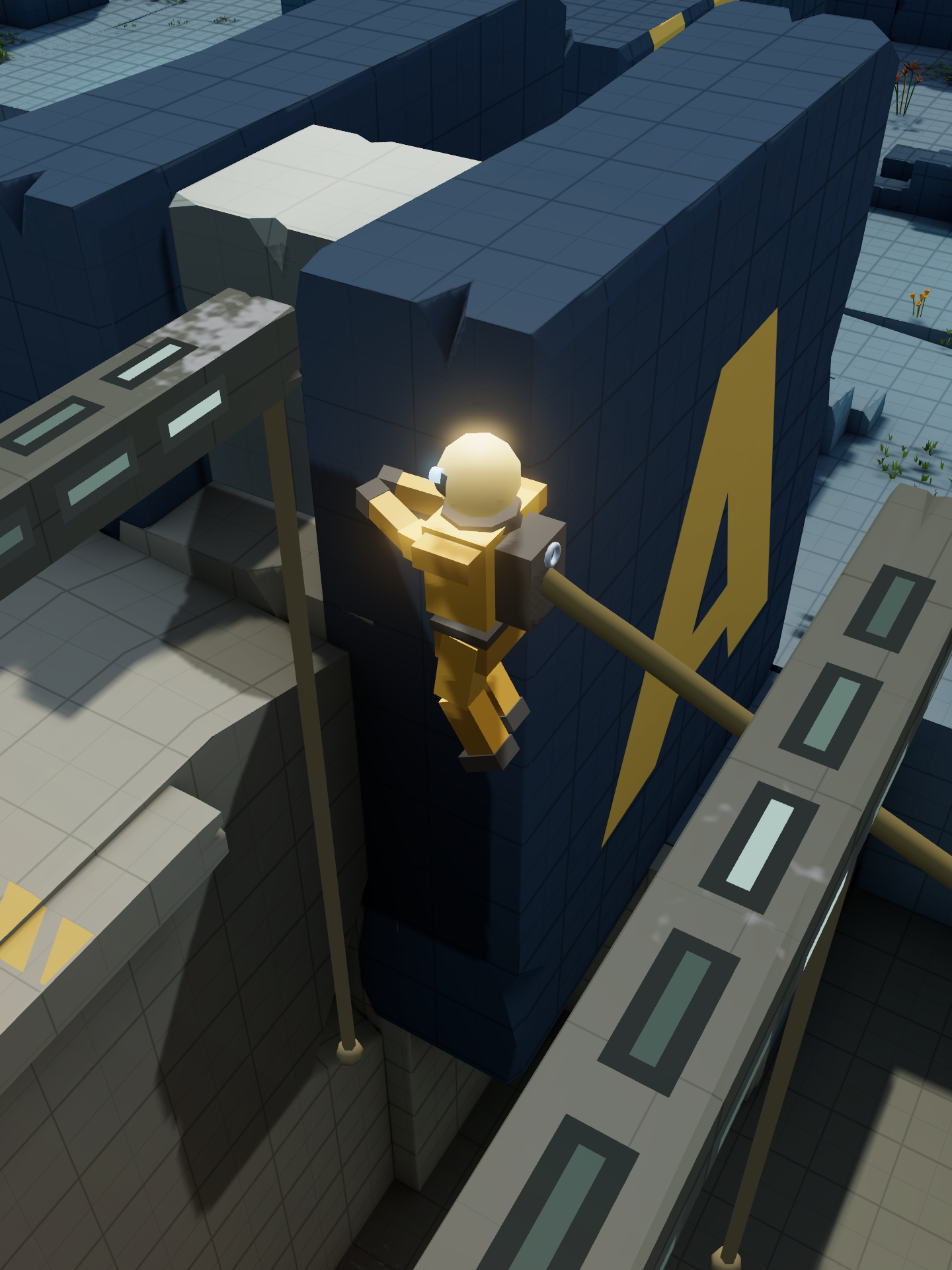
The tether. A physical cord between you and your house sounds simple and is not: it has to wrap around real geometry, slide off corners, let you climb it, and never, ever trap the player. Most of the project's hardest days went into making that rope trustworthy.
Sound as a rule. Creatures that hunt by hearing only work if the player can read what makes noise and how far it carries, so the loudness of every action had to become a visible, legible rule rather than a mood.
And the phone. Portrait, one thumb, a small screen and a strict size limit for the whole package meant compressing a large baked world and constantly cutting what did not serve the loop.
Accomplishments that we're proud of
One object that does three jobs. The antenna is compass, clock and lure in a single thing, and the tension of every expedition comes from that alone.
A house that walks. The mech converts between vehicle and base without becoming a tank, and the tether turns the map into a series of bets on how far you dare to go.
A complete loop you can win and lose, with a beginning that teaches itself, a machine that talks you through what to do next, and a finale where the whole map comes for you at once.
What we learned
That depth on one loop beats breadth every time. We cut drones, extra regions and a manual rope release, and the game got better each time.
That a specification the AI has to obey is worth more than any prompt. When the rules were written down and measured, the AI built faster and broke less.
That a prototype is not the place for guesses: measuring frame time, pixels and playthroughs in the real level settled arguments that would otherwise have eaten days.
What's next for Unorbit
More regions, each adding rather than taking away: a new material, a new need, a new creature and terrain that asks more of the pilot, until the last piece of the transmission silences the laser. Drones drawn to the antennas during triangulation. A campaign that carries the house, and what it has learned, from one gate to the next.



Log in or sign up for Devpost to join the conversation.