-
-
Landing page
-
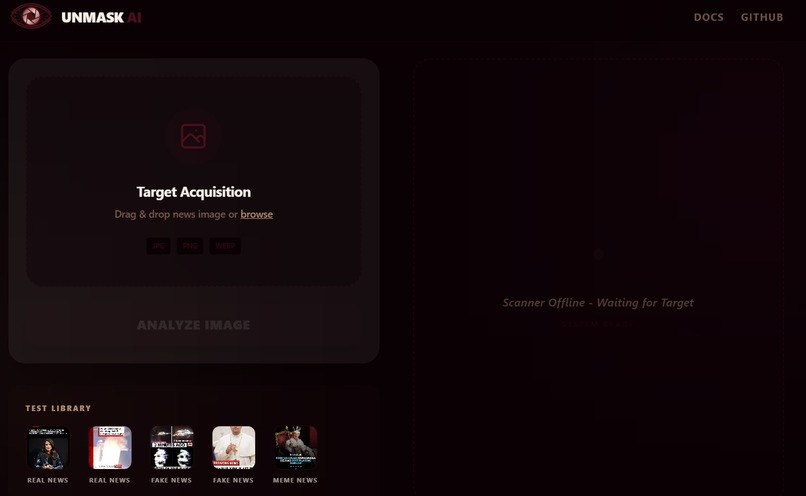
Photo 1
-
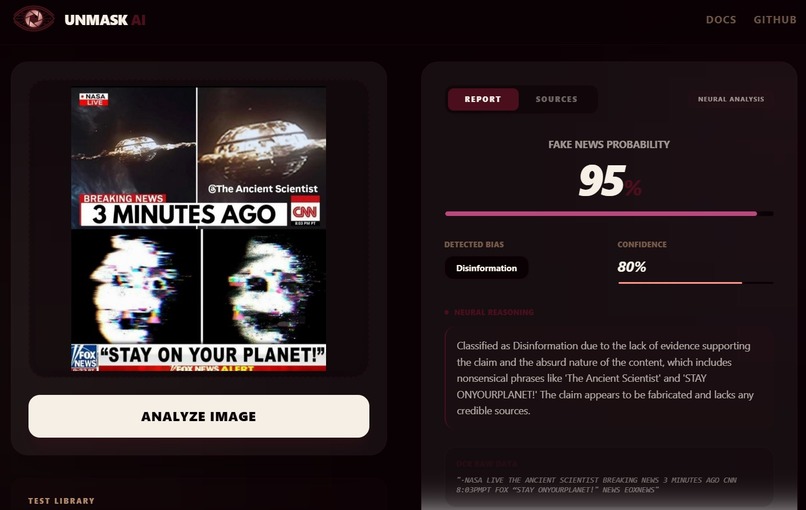
Photo2
-
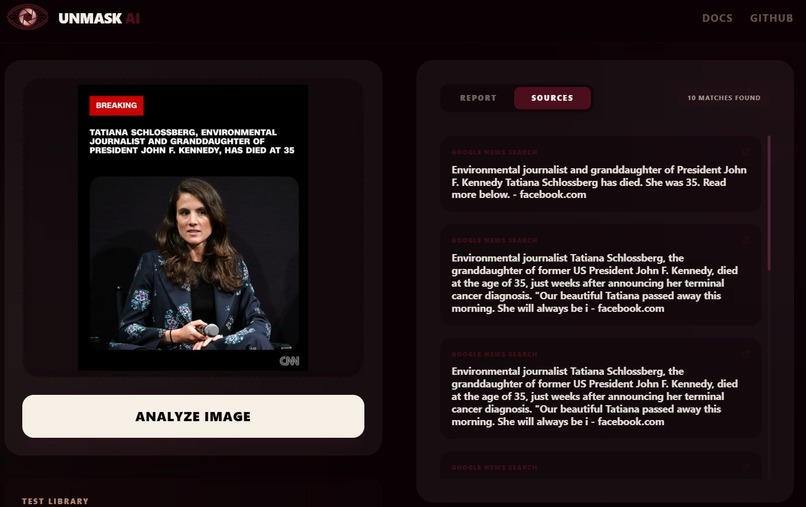
Photo 3
Inspiration
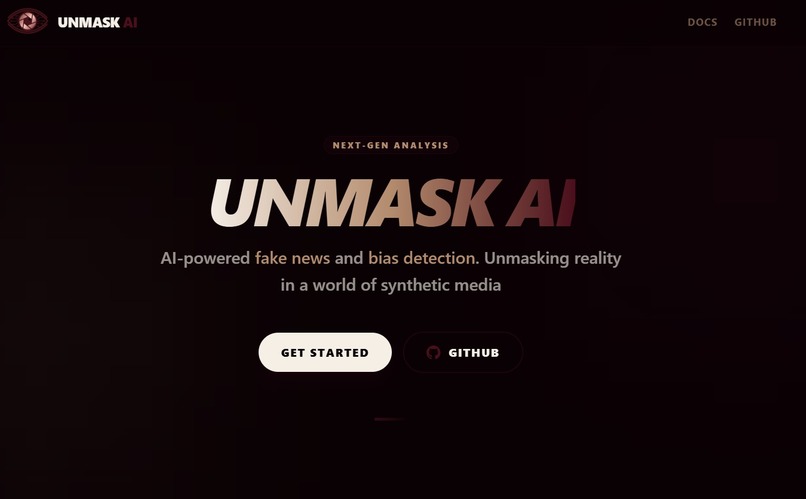
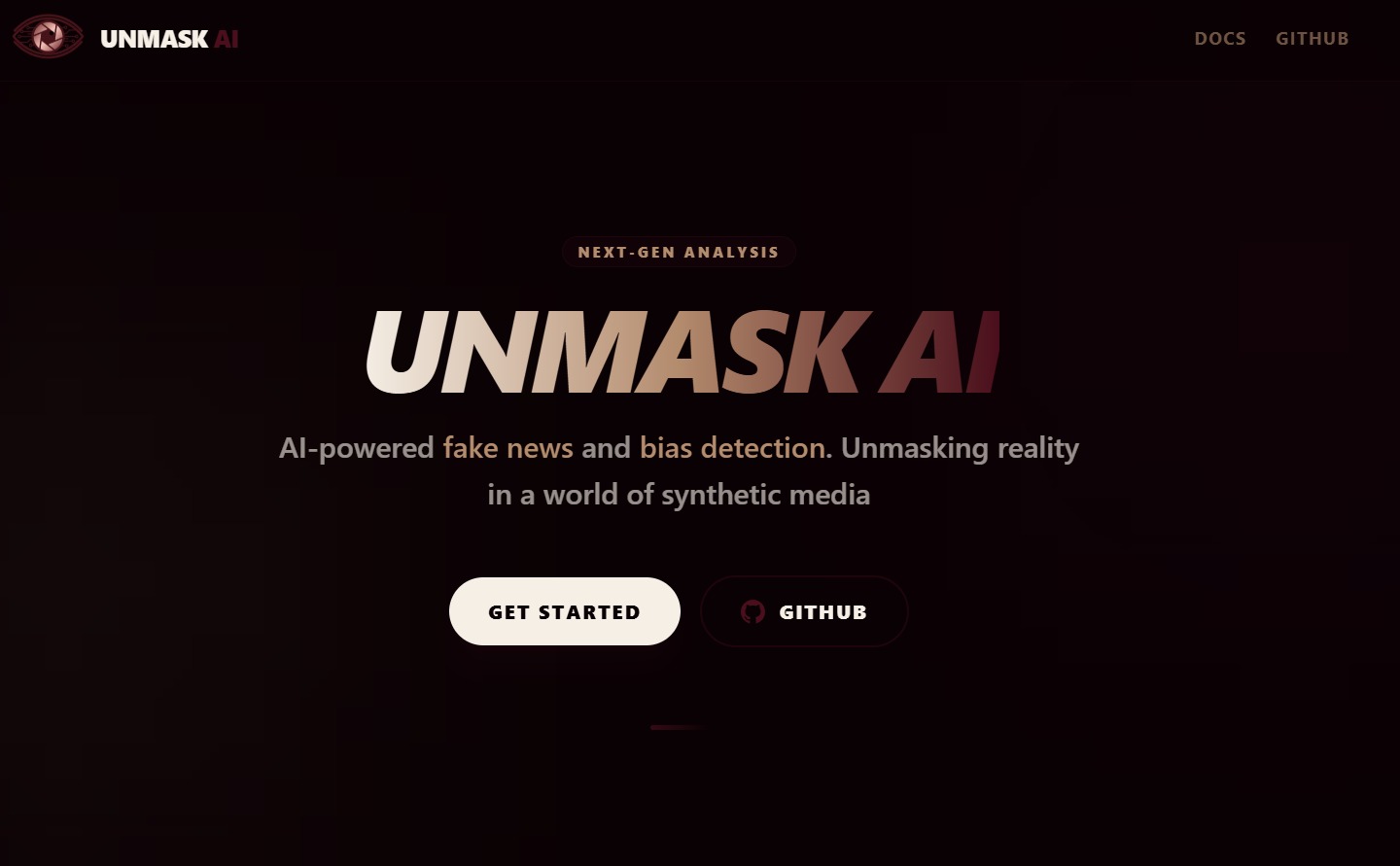
Misinformation spreads faster than ever, especially through images and short-form content where context is lost. News screenshots, manipulated headlines, and biased narratives are shared widely without verification. Unmask AI was inspired by the need for a fast, accessible tool that helps people understand whether a piece of information is likely fake and what ideological bias it may carry, instead of blindly trusting or rejecting it.
What it does
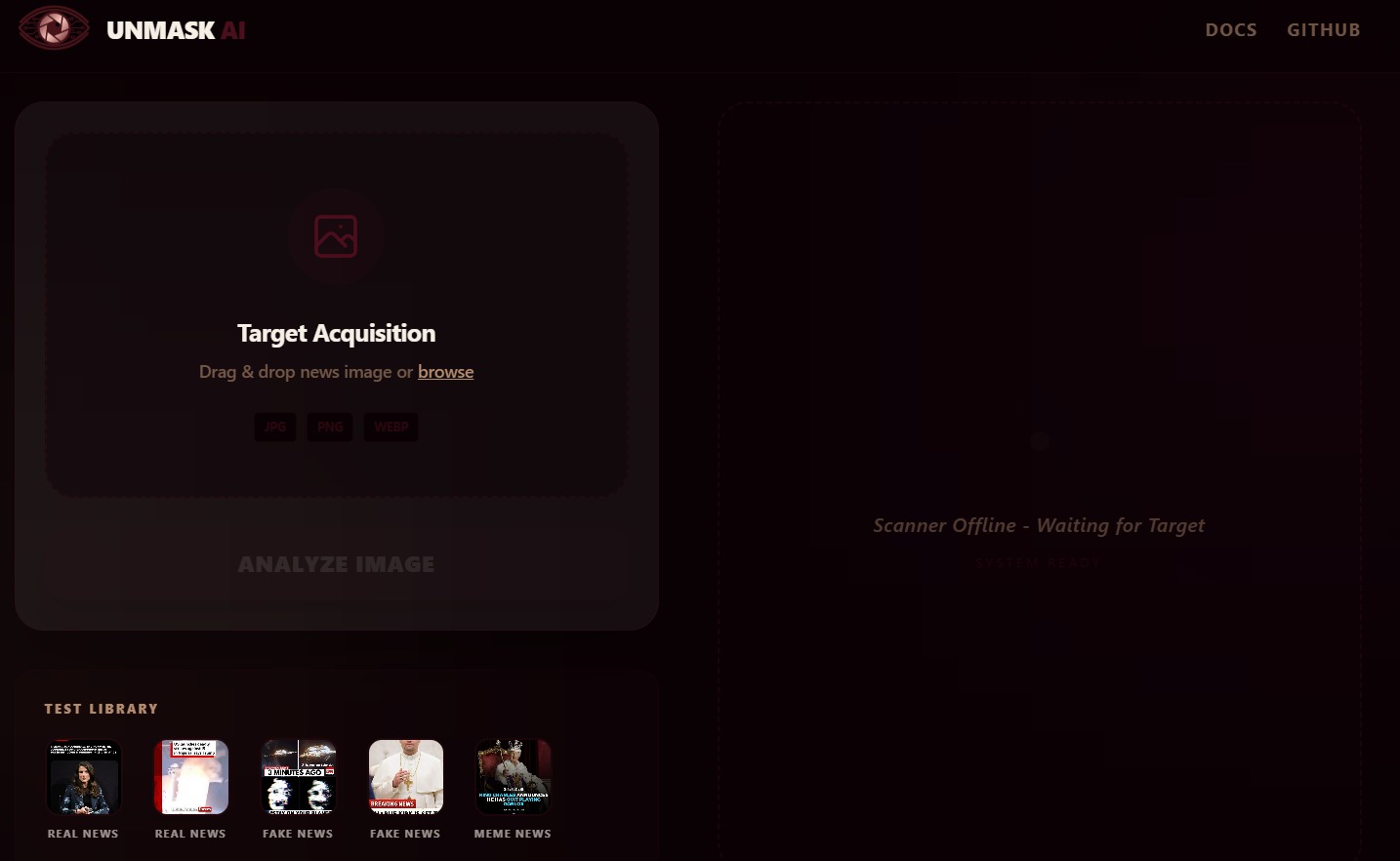
Unmask AI analyzes images or text containing news-related content and:
Extracts text using Optical Character Recognition (OCR)
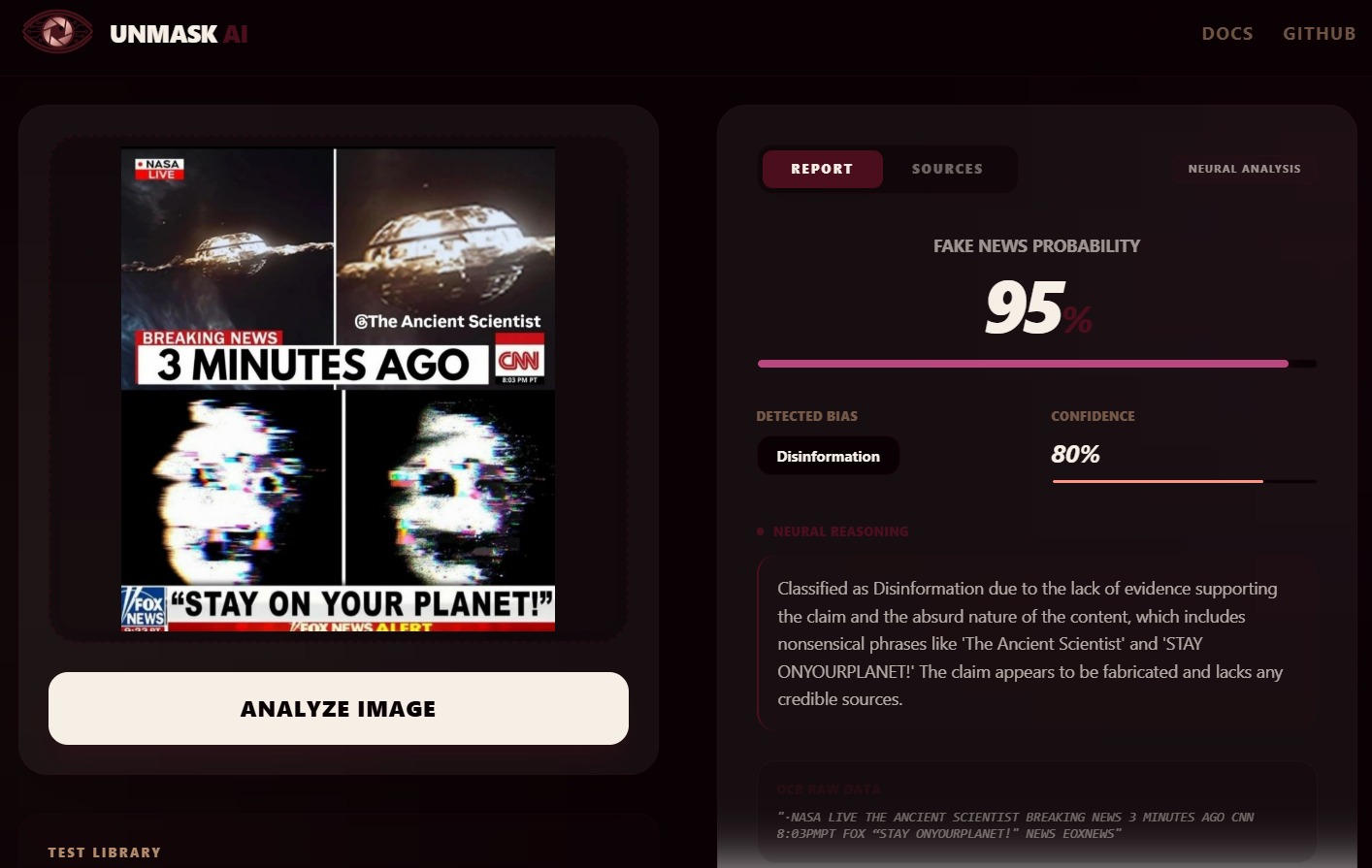
Analyzes the content with AI to estimate:
- The probability of being fake or misleading
- The presence and direction of ideological bias (e.g. conservative, liberal, neutral)
Provides a structured explanation to help users understand why the content may be unreliable
The goal is not censorship, but critical thinking and transparency.
How we built it
Unmask AI was built as a modular AI pipeline:
Image text extraction using OCR (PaddleOCR)
Text cleaning and normalization
AI-based content analysis using a language model fine-tuned or prompted for misinformation detection
Backend logic developed in Node.js
Clear JSON-based outputs to make results explainable and easy to integrate into future platforms
The system was designed to be scalable and adaptable to different datasets and languages.
Challenges we ran into
Handling noisy or low-quality text extracted from images
Differentiating fake news vs. biased but factual content
Designing prompts and outputs that are explainable, not just binary decisions
Limited access to high-quality labeled datasets for ideological bias classification
Accomplishments that we're proud of
Building a complete end-to-end system in a limited time
Successfully integrating OCR with AI-based misinformation analysis
Designing outputs that prioritize transparency and reasoning
Creating a project with real-world relevance and social impact
What we learned
Fake news detection is more about context and framing than simple keywords
Bias exists on a spectrum and must be handled carefully
Explainability is essential for trust in AI systems
Clean data and preprocessing are as important as the model itself
What's next for Unmask AI
Expanding multilingual support
Improving fine-tuning with larger, more diverse datasets
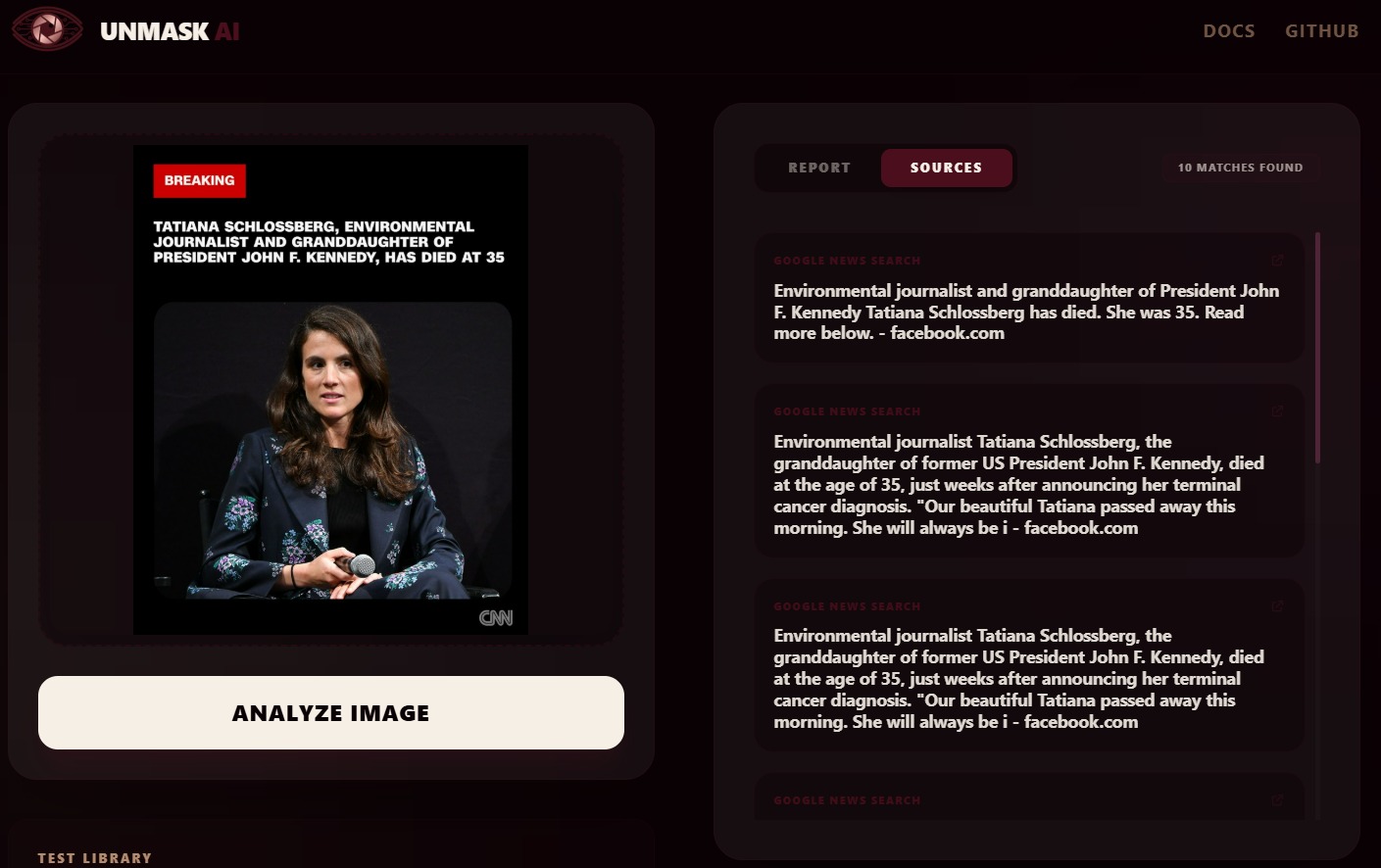
Adding source verification and cross-referencing with trusted media
Deploying Unmask AI as a web and mobile application
Exploring partnerships with educators, journalists, and fact-checking organizations
Built With
- ernie
- express.js
- javascript
- node.js
- paddleocr
- react


Log in or sign up for Devpost to join the conversation.