-
-
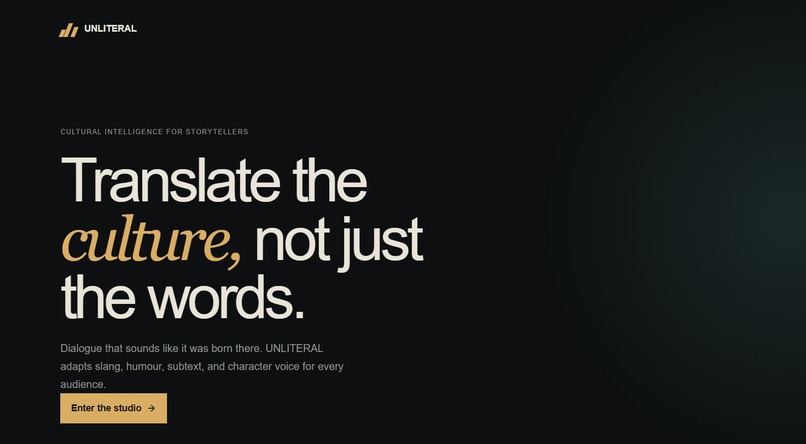
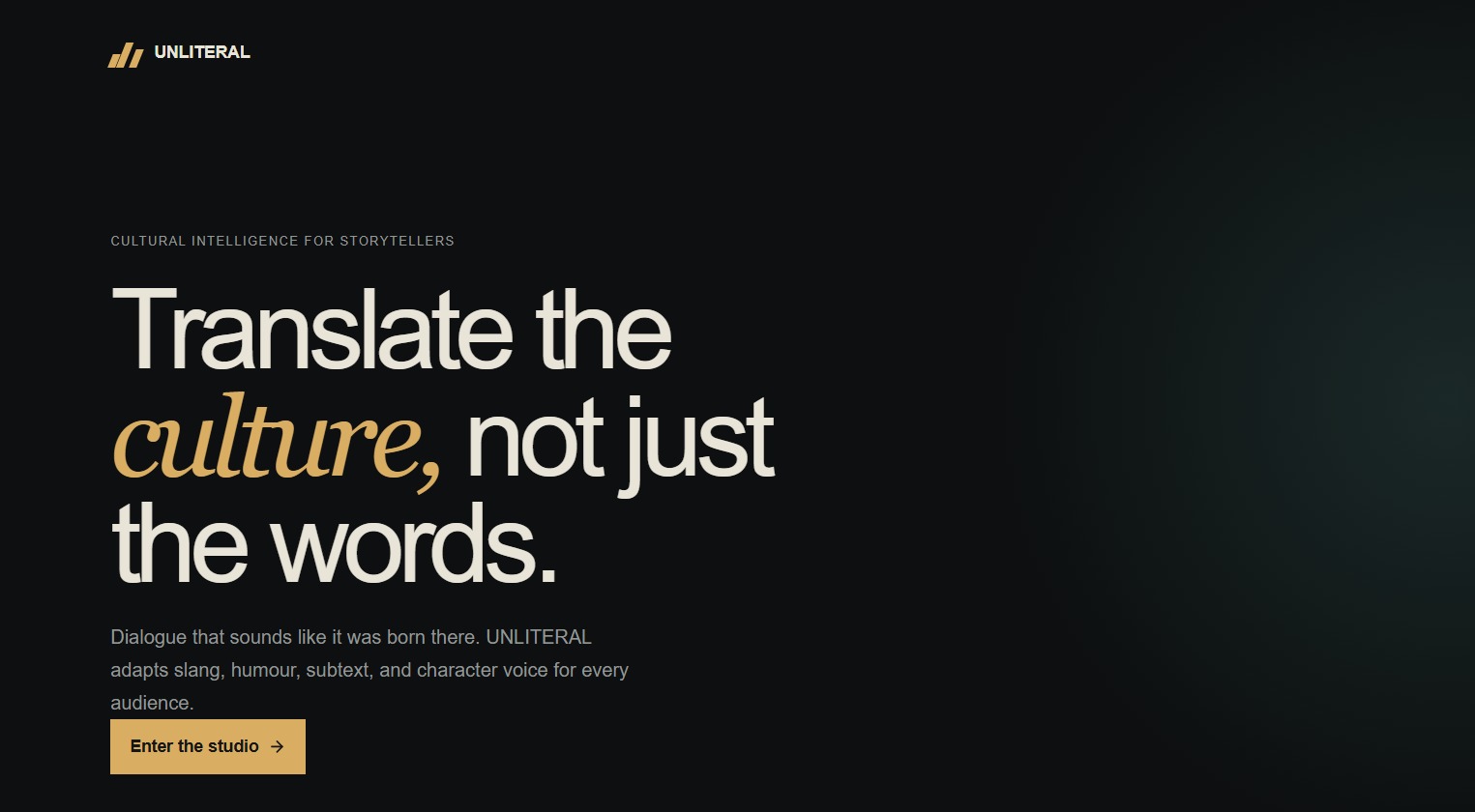
Landing Page 1
-
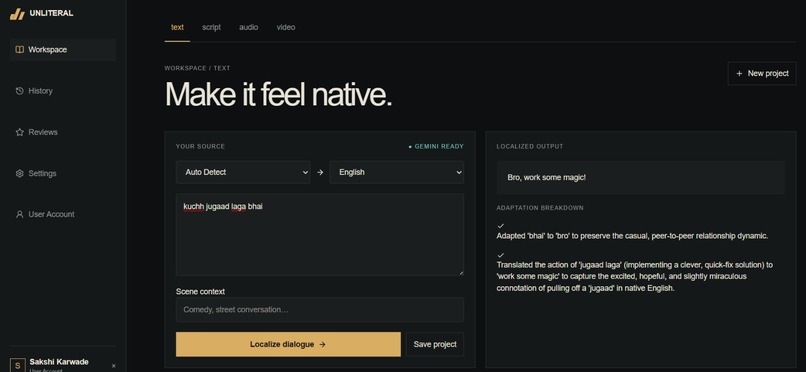
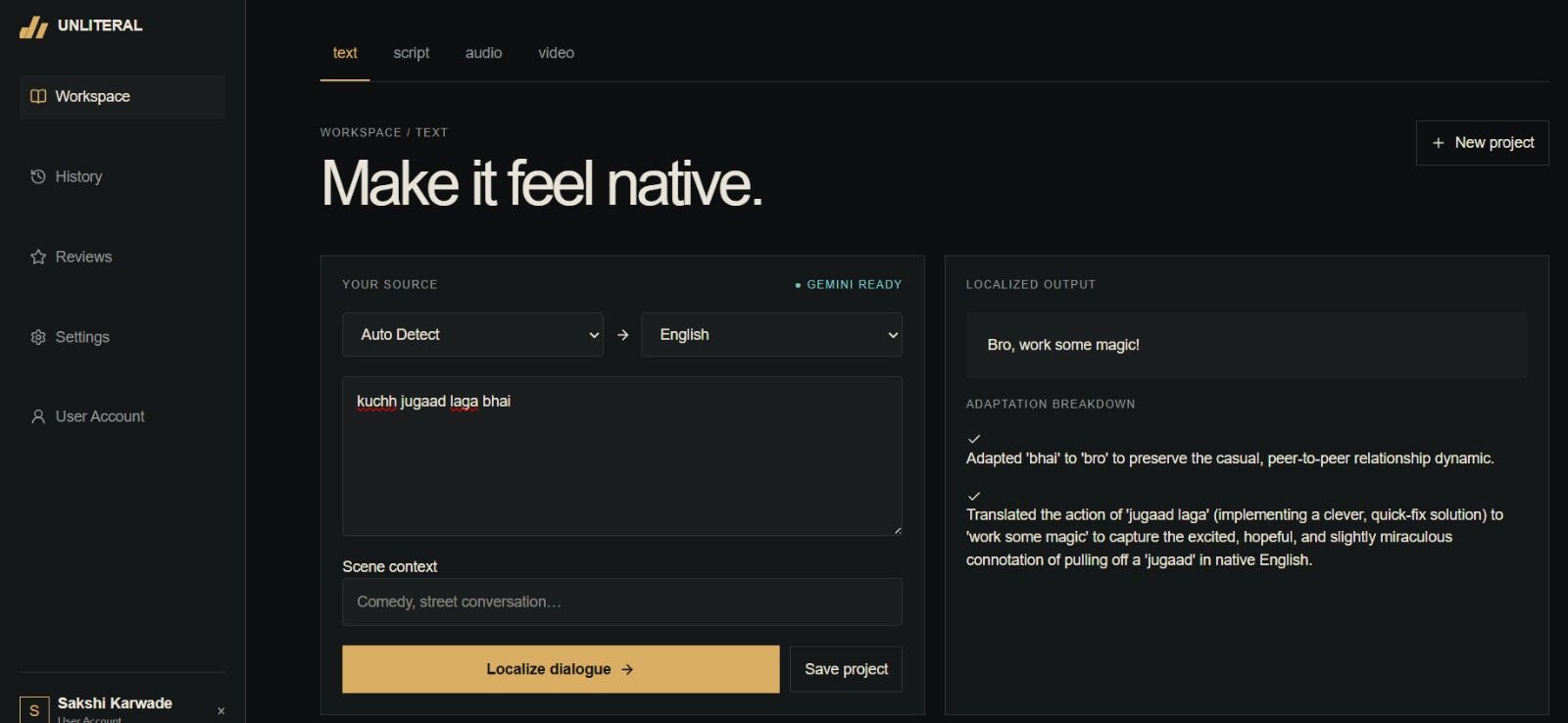
Dashboard
-
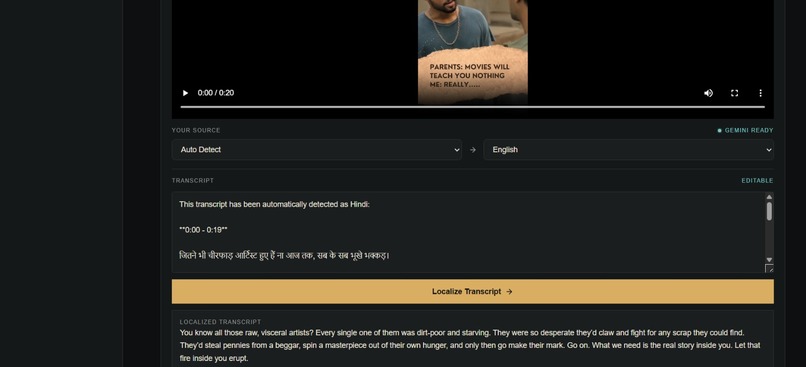
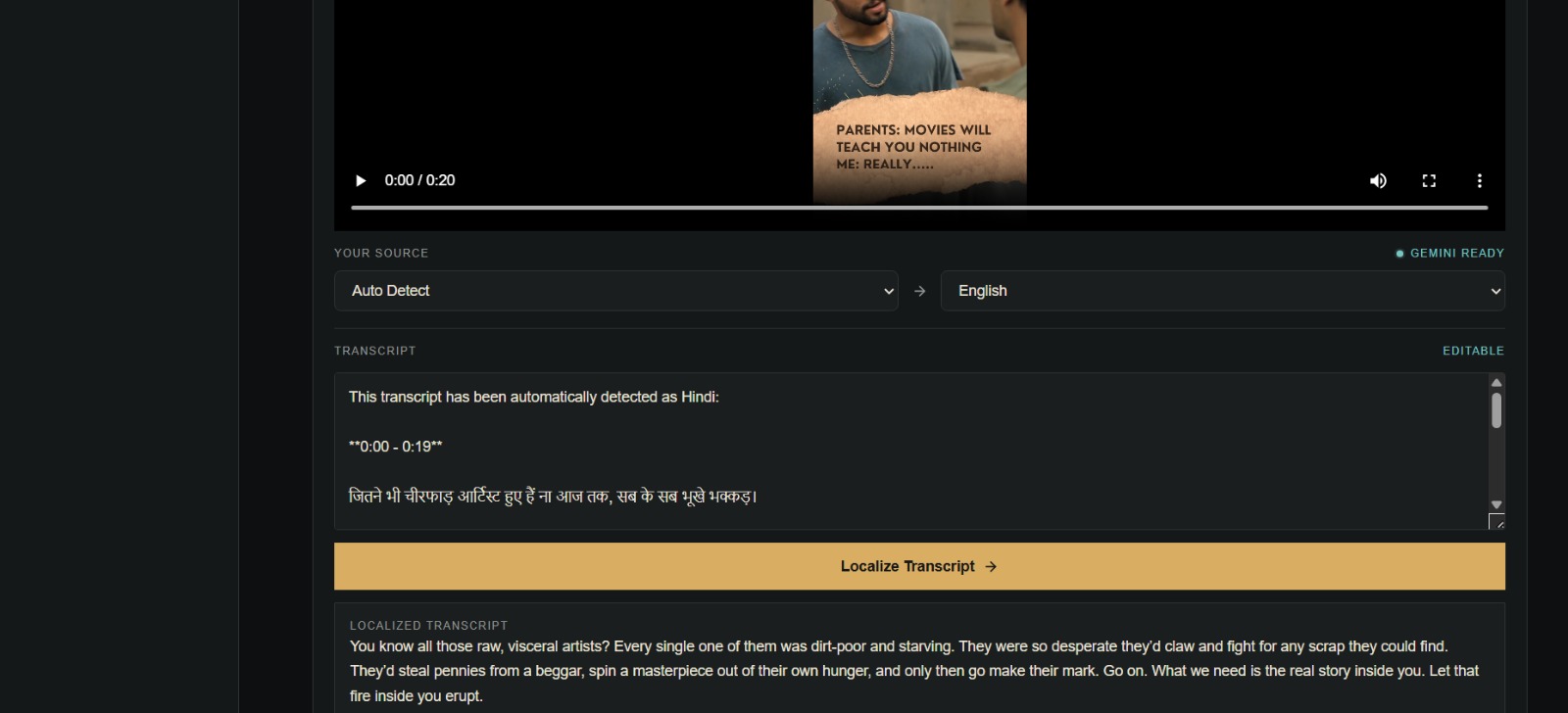
Vedio demo
-
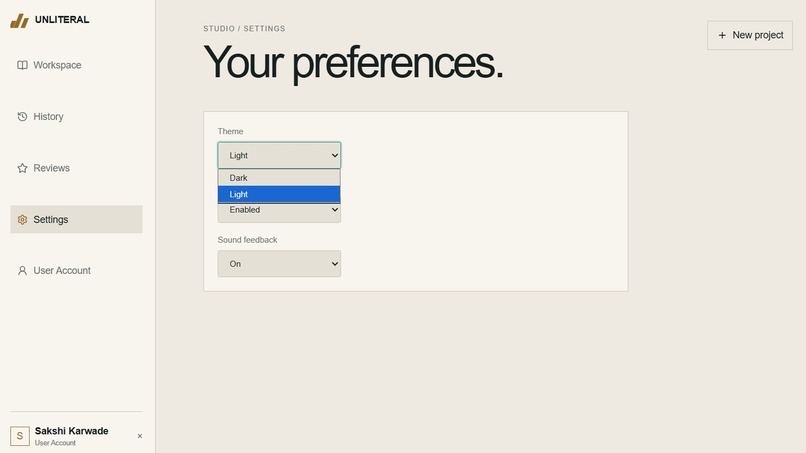
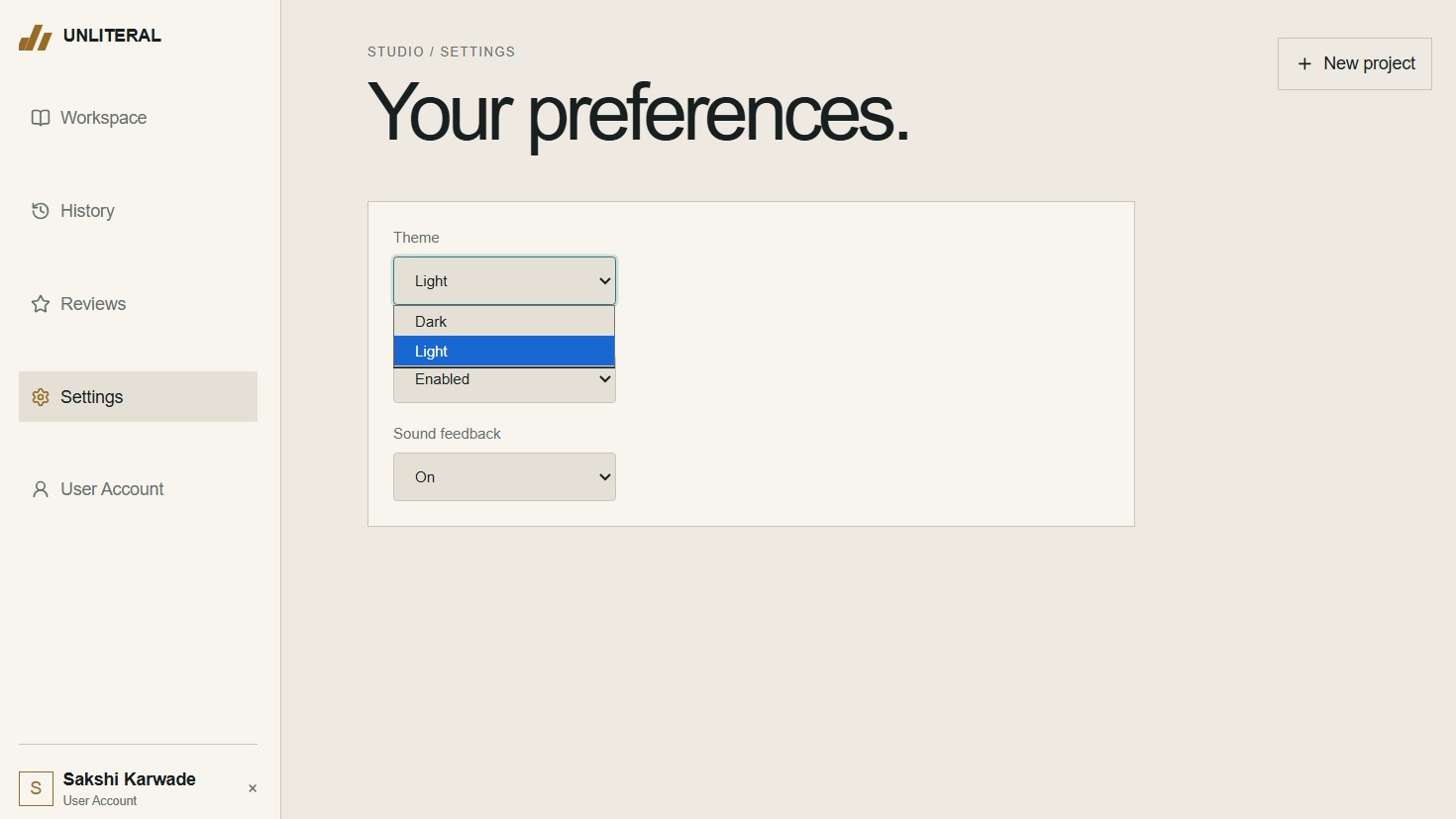
Customize theme
-
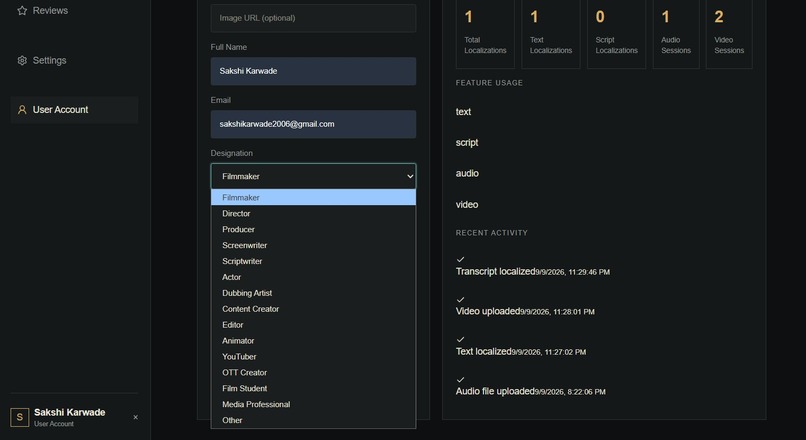
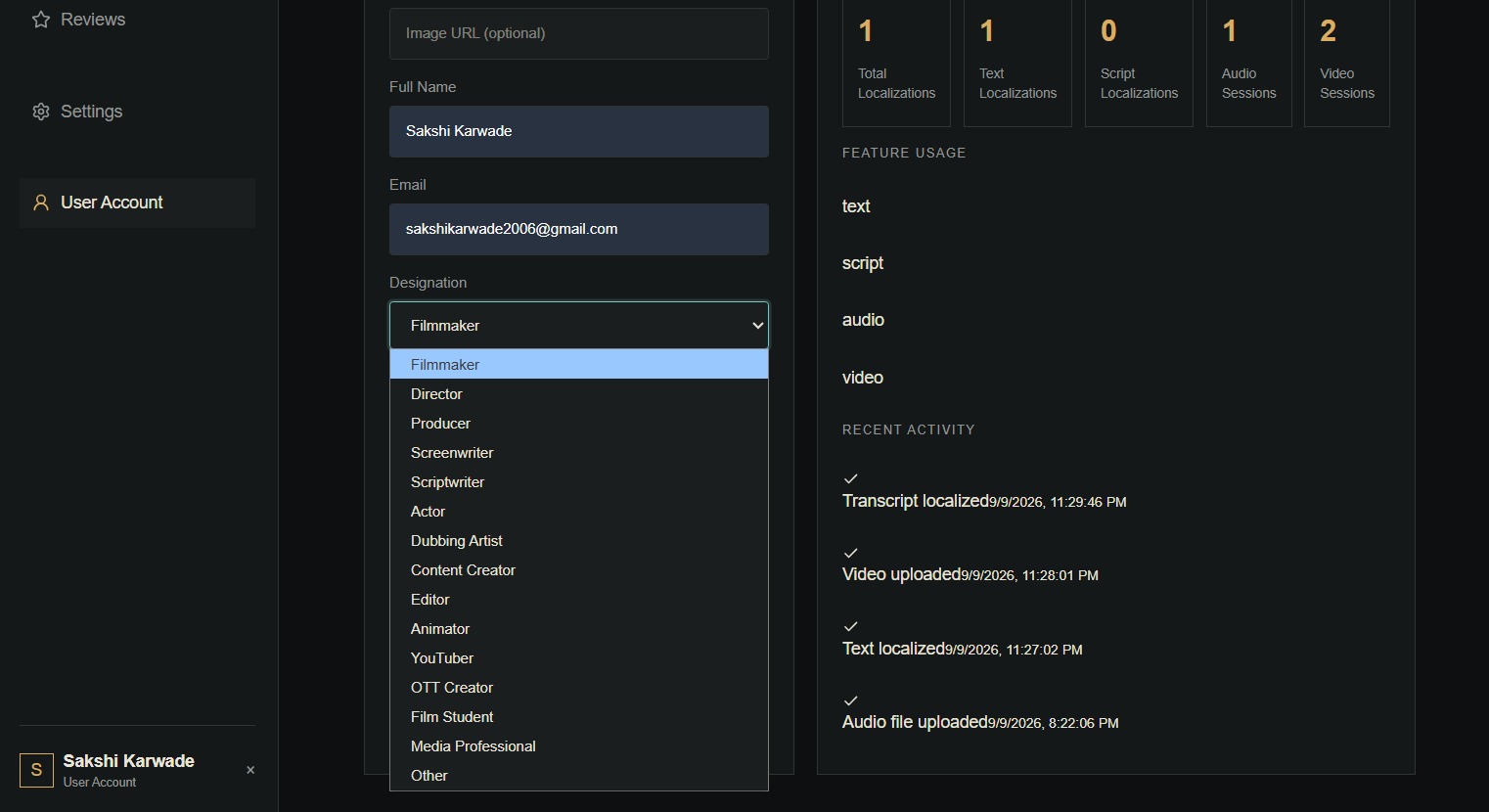
Multiple designation options in the drop down
Inspiration
Translation is often treated as replacing words from one language with words from another. But in cinema, dialogue carries much more than words. Slang, humour, cultural references, context, and character intent can easily get lost in literal translation.
We were inspired by the idea of making translated dialogue feel natural to the audience it is meant for, while preserving the meaning and intent of the original story. This led us to build UNLITERAL — Translate the culture, not just the words.
What it does
UNLITERAL is an AI-powered cultural translation platform for storytellers.
It uses Google Gemini to understand dialogue in context and generate culturally adapted translations rather than simple word-for-word translations.
The platform currently supports:
- Text-based translation and cultural adaptation
- Audio and video upload workflows
- Transcript generation from supported media
- Context-aware dialogue understanding
- Slang, humour, cultural reference, and subtext adaptation
- Source and target language selection
- Natural translated dialogue generation
- A studio-style workspace for working with media and translations
- Parallel Search integration for retrieving relevant information when required by the workflow
How we built it
We built UNLITERAL as a web application using Next.js, React, TypeScript, and Tailwind CSS.
Google Gemini powers the core AI functionality. The Gemini integration analyzes the source content, understands its context and intent, and generates culturally appropriate translated dialogue.
For media workflows, we built separate audio and video processing paths for transcript generation and subsequent translation.
We also integrated Parallel Search API to provide search capabilities within the project workflow.
The application is deployed using Vercel, with the source code maintained on GitHub.
Challenges we ran into
One of our biggest challenges was making the system handle more than literal translation. Understanding whether a phrase is slang, humour, a cultural reference, or simply part of a character's speaking style requires contextual reasoning.
Media processing was another challenge. Audio and video files have different formats, MIME types, and processing requirements, so building reliable upload and transcription workflows required extensive debugging.
We also had to integrate multiple services while keeping the application stable and ensuring that errors from the AI and media-processing pipeline were properly surfaced to the user.
Accomplishments that we're proud of
We are proud of building a functional AI-powered translation workspace rather than limiting the project to a simple translation interface.
Our key accomplishments include:
- Building an end-to-end cultural translation workflow
- Integrating Google Gemini into the application
- Implementing transcript generation for supported audio and video workflows
- Creating a dedicated studio-style interface
- Integrating Parallel Search
- Deploying the project as a working web application
- Building the project collaboratively as a four-member team
What we learned
We learned that building an AI application is not only about connecting an AI model to a frontend. Reliable AI products require careful handling of context, inputs, errors, APIs, media formats, and user workflows.
We also learned how important prompt design and structured AI outputs are when building applications where the quality of the final result depends on understanding context rather than simply generating text.
Most importantly, we learned how to combine AI capabilities with a practical product workflow and iterate quickly under hackathon constraints.
What's next for Unliteral
The next step for UNLITERAL is to expand its capabilities for storytellers and make cultural adaptation more comprehensive across different types of content.
We want to continue improving contextual understanding, translation quality, and media workflows so that UNLITERAL can become a more complete platform for adapting stories for audiences across languages and cultures.

Log in or sign up for Devpost to join the conversation.