-
-

Tinta
Inspiration
I live with chronic pain and I spent more than five years going through the loop every chronic pain patient knows: another specialist, another scan, another "everything looks normal (it's in your head, just try to relax)" Neurologist, orthopedist, physiotherapist, psychotherapist, CBT, medication, meditation, etc.. Every doctor had his own view and saw only a fragment of the story. Nobody saw the whole picture and none of the doctors talked to each other. It was very tough to say the least. I've did my own research for years in hopes to get a proper diagnose and cure. And then I stumbled upon a term of nociplastic pain (pain from altered nociception in the central nervous system, without tissue or nerve damage). How it's learned by brain and how it's hard (but still possible!) to unlearn it. I was astonished that based on the research an estimated 5% to 15% of the general population suffers from nociplastic pain. So I decided to help myself and chronic pain sufferers by building a product that consolidates and uses all the research done by neuroscience in this field up to date for rewiring the brain (unlearning the pain).
What it does
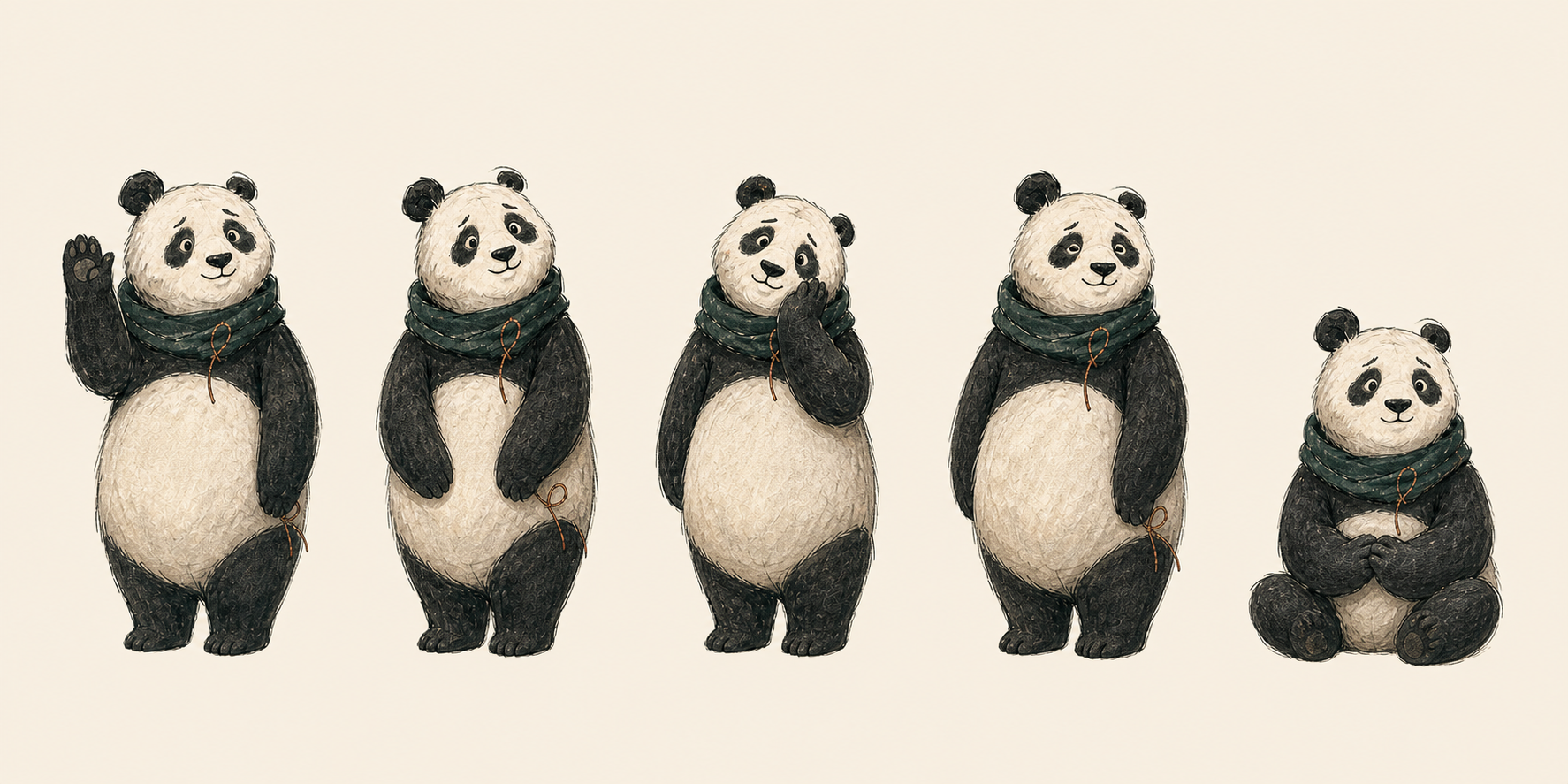
Unlearnpain.ai basically helps those affected by chronic pain condition to "unlearn" their pain by rewiring the brain (using brain's neuroplasticity function). The main thing is to convince the brain not to perceive pain as a risk or danger. To achieve it, it's very important to journal your condition many times per day and notice even slight improvements. Such journaling historically is a big challenge for humans, so I have created an empathetic companion in a form of a Panda, called Tinta.
Here's what Tinta helps with on a daily basis:
Check-ins that listen (daily journalling) Chat or live voice. Tinta keeps your exact words never paraphrased interpretations and preserves uncertainty and alternative explanations instead of jumping to conclusions. Help in the moment When a flare hits, Tinta responds now a calm voice and a guided practice, not an appointment in three weeks. Evidence, proactively Tinta reflects your own history back at the right moment ("your last flare passed in 14 minutes"). Fear fades on evidence and when fear fades, pain pathways quiet down. Progress you can see The unlearning itself is tracked: pain intensity, fear of movement, flare recovery drawn from your own journal. One picture for the whole care team A shareable report so your physio, therapist, and doctor finally look at the same timeline.
How we built it
I built it solo with Codex as a genuine collaborator the Codex app, Codex CLI, and the mobile app, working through written product and engineering contracts that Codex reviewed and challenged. A skill stack (gstack) handled recurring workflows: design review, plan review, QA, shipping. Under the hood:
- GPT-5.6 with strict Structured Outputs (
store: false) for bounded coaching and exact-source evidence extraction - gpt-realtime-2.1 over WebRTC for live voice — with a server-side sideband controller that authorizes every reply, so the browser can never speak for the coach
- Next.js 16 + React 19 + TypeScript on Vercel, Supabase Postgres with row-level security
- Deterministic input-safety gates, a fail-closed output-policy check, visible retention and deletion, and a strictly ephemeral public lane
Challenges we ran into
- Model work distribution. The most powerful reasoning models, given freedom, gravitate toward security hardening and edge-case safety genuinely important, but not what a hackathon sprint needs. They are also slower. Deciding which model gets which job became the real engineering discipline of the week.
- Cross-device session sync. I moved constantly between laptop and phone; sessions didn't sync perfectly, so the laptop would resume unaware of decisions made on mobile. I lost real time reconciling state by hand.
- Skill overhead. Agent-driven verification loops re-check things a deterministic script proves in seconds. Skills are powerful, but they aren't free.
- Solo scope under a hard deadline. Voice, safety gates, privacy boundaries, and a judge-ready public path all competing for the same days.
Accomplishments that we're proud of
- I am genuinely proud of the fact that I have shipped a real, live product not a mocked demo: genuine GPT-5.6 conversations and genuine speech-to-speech voice, on a public URL, working on desktop and mobile. This has very good potential to help people if I will keep pushing it forward. I see a lot of opportunities to collaborate in a healthcare domain and bring a lot of trusted evidence into the product + integrations.
- A voice architecture with real trust boundaries: the browser streams audio but can never authorize a reply; a server-side controller checks every finalized transcript first.
- Privacy as a product feature: an ephemeral public lane that stores nothing, exact-words evidence that requires explicit user approval, and retention/deletion shown as visible product states.
- The repo keeps the receipts: 234 unit tests, SQL migration-contract tests, pgTAP trust-boundary assertions, multi-connection race tests, and Playwright journeys on desktop and mobile.
- Tinta a companion people instantly warm to, with a visual identity (warm paper, ink, watercolor panda) that feels hand-made, not clinical.
What we learned
- Route models like you route work. Fast models for scaffolding and iteration; heavy reasoning reserved for contracts, trust boundaries, and review passes where it actually pays.
- Replace agent verification with deterministic checks wherever possible. Every time "an agent verifies X" became a test or a typed contract, the build got faster and more trustworthy.
- Pain science is a product insight. Preserving a user's exact words, resisting premature interpretation, and rewarding curiosity instead of pain scores are what makes the product credibl to the people it serves.
- Learn what not to build really becomes a moat with such great capabilities of frontier models you still steer and decide on the ideas, they will not come up with anything novel. And they can easily go into wrong direction and build a lot of unnecessary stuff. Human decides what NOT to build.
What's next for unlearnpain.ai
- The unlearning dashboard pain intensity, fear of movement, and flare-recovery trends drawn from the journal, so progress is visible week by week.
- Proactive evidence sharing Tinta reaching out at the right moment with the user's own calming evidence, not waiting to be asked (Like a OpenClaw for pain management)
- Care-team reports one-tap shareable timelines so physio, therapist, and doctor finally see the same picture.
- Clinician-reviewed practice content and a content-review gate before any broader personal-lane rollout.
- Native iOS and Android apps, richer voice practices, and longitudinal pattern exploration always user-approved, always sourced from exact words.
Built With
- cli
- codex
- gpt-5.6
- gpt-image
- gpt-realtime
- gstack
- next.js
- react
- supabase


Log in or sign up for Devpost to join the conversation.