Inspiration
Universities are stuck between banning AI and pretending it isn't there. AI detectors just guess, and a wrong guess turns into an accusation. We wanted a third option: don't police the tool, check that the student actually understands what they handed in. This is our entry for Reply's AI on Campus challenge.
What it does
Socratic gives every submission a 5-minute viva.
For students
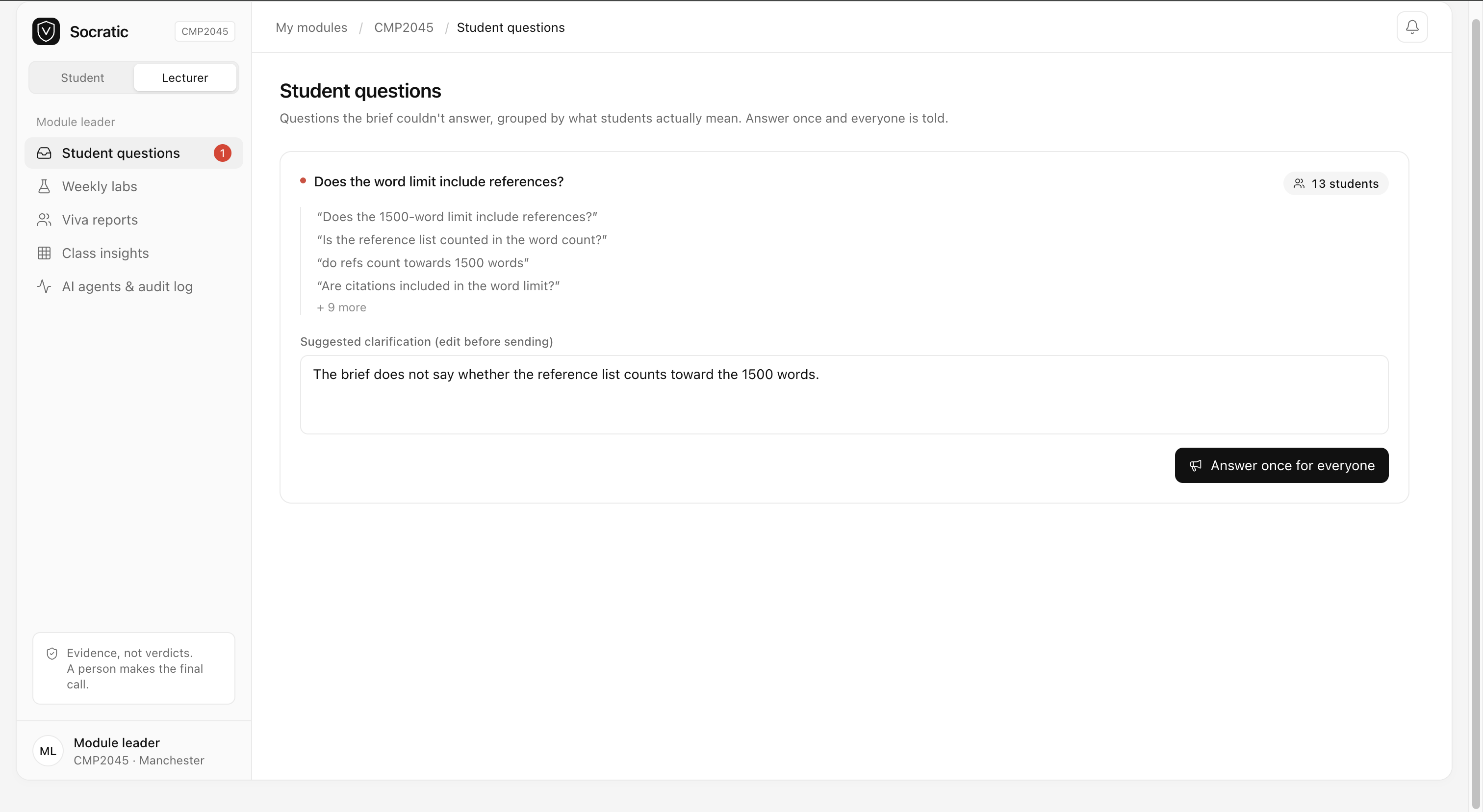
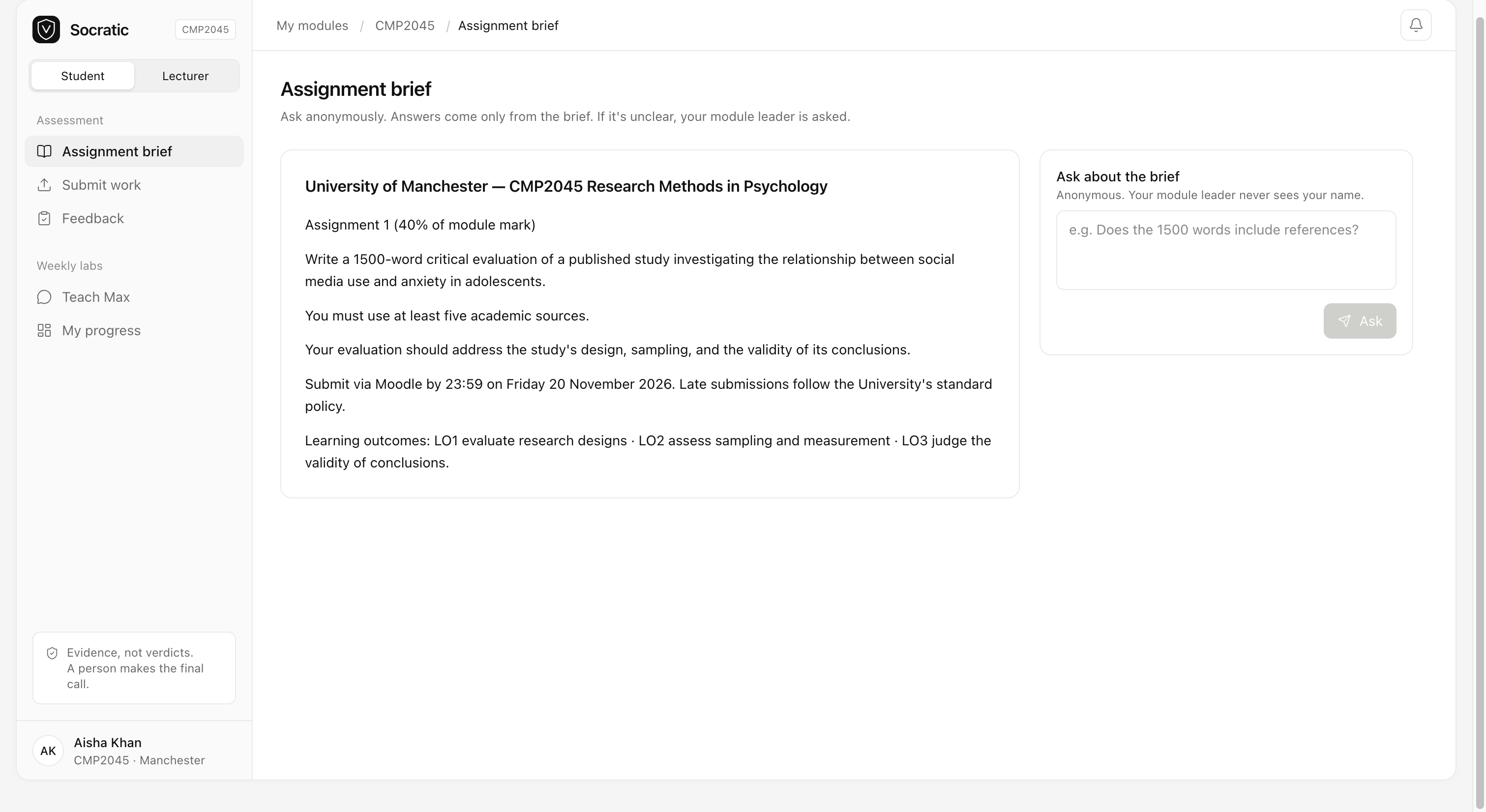
- Brief: ask questions about the assignment. Anything unclear gets escalated to the lecturer and clustered with similar questions, so it only has to be answered once.
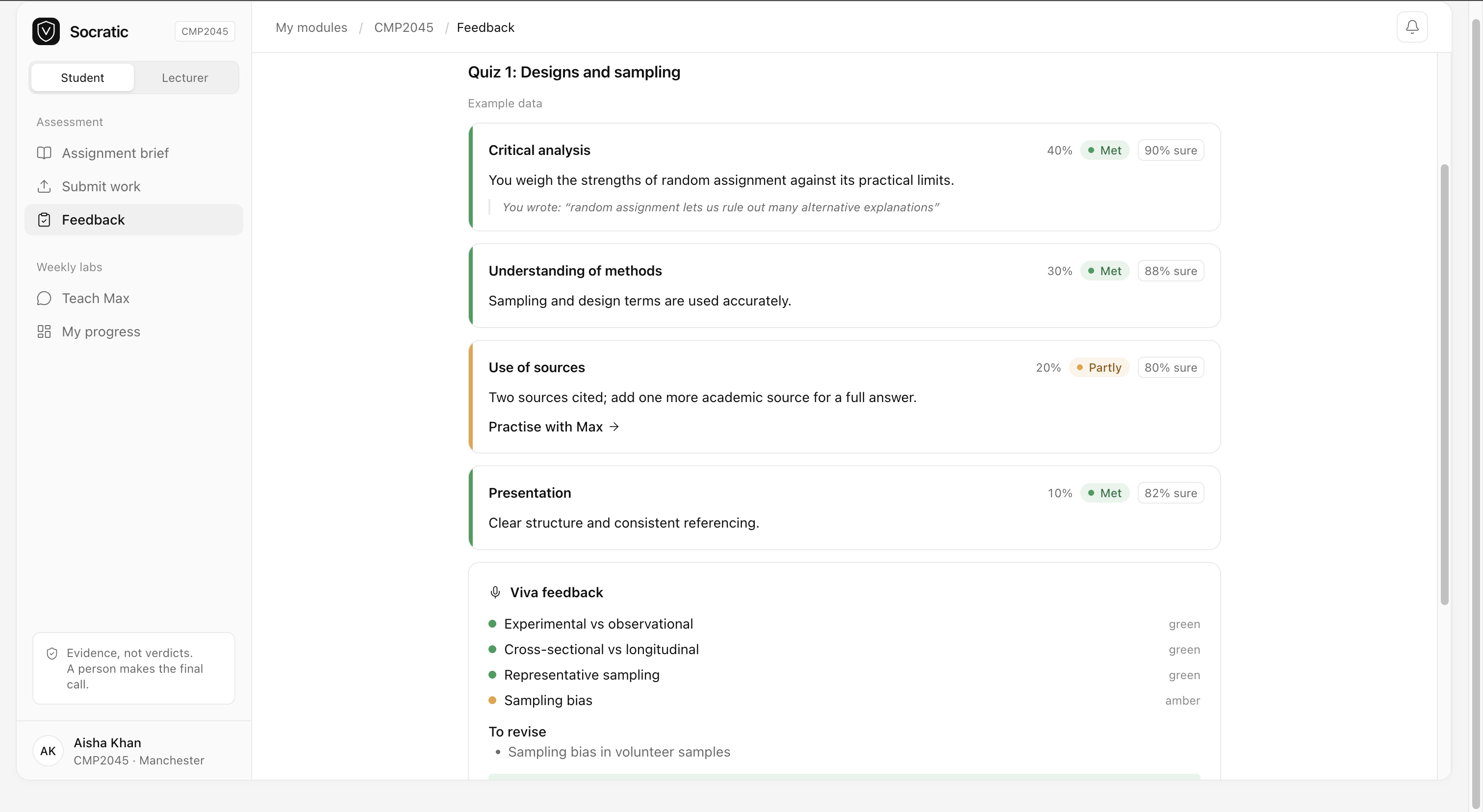
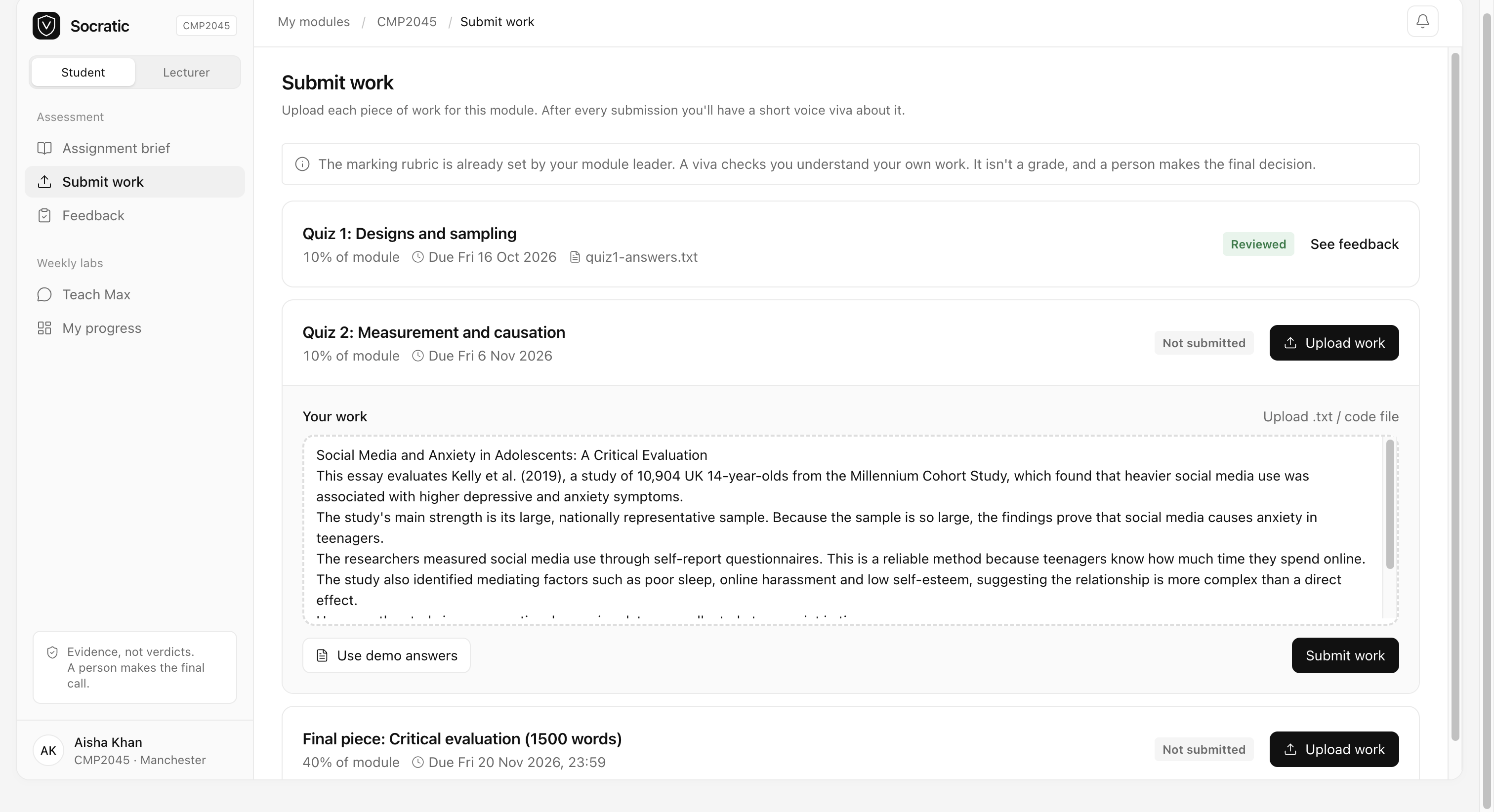
- Rubric Check: submit your work and get red, amber or green for each criterion in the rubric.
- Teach Max: Max is an AI classmate who holds your misconception until you correct him. If you can explain it back to him properly, you probably get it.
- Viva: a short oral exam on your own work, spoken or typed. Vague answers get a follow-up question.
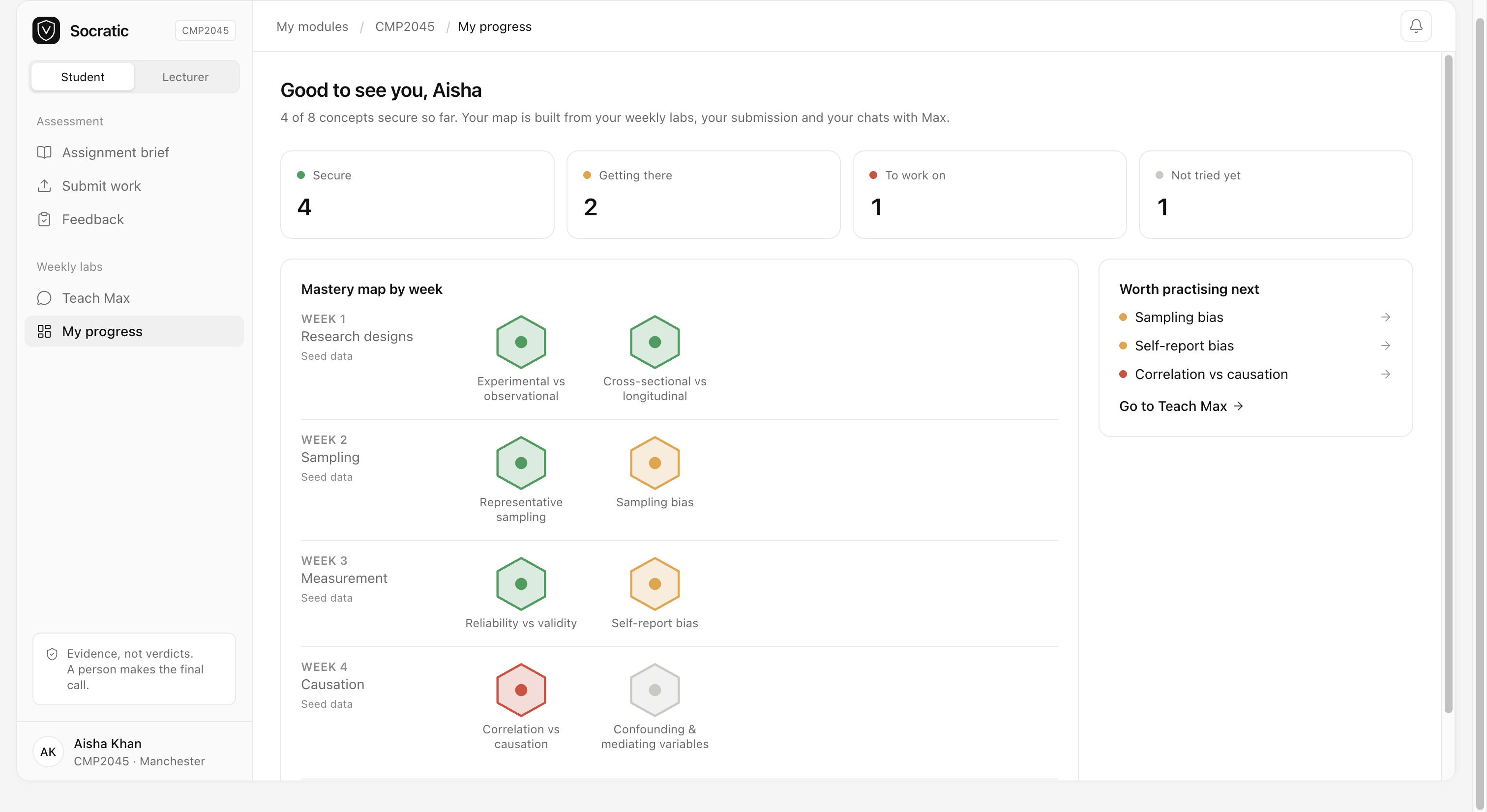
- My progress: a mastery map of what you know and what's still shaky.
For lecturers
- Student questions, with the clusters already grouped
- Weekly labs
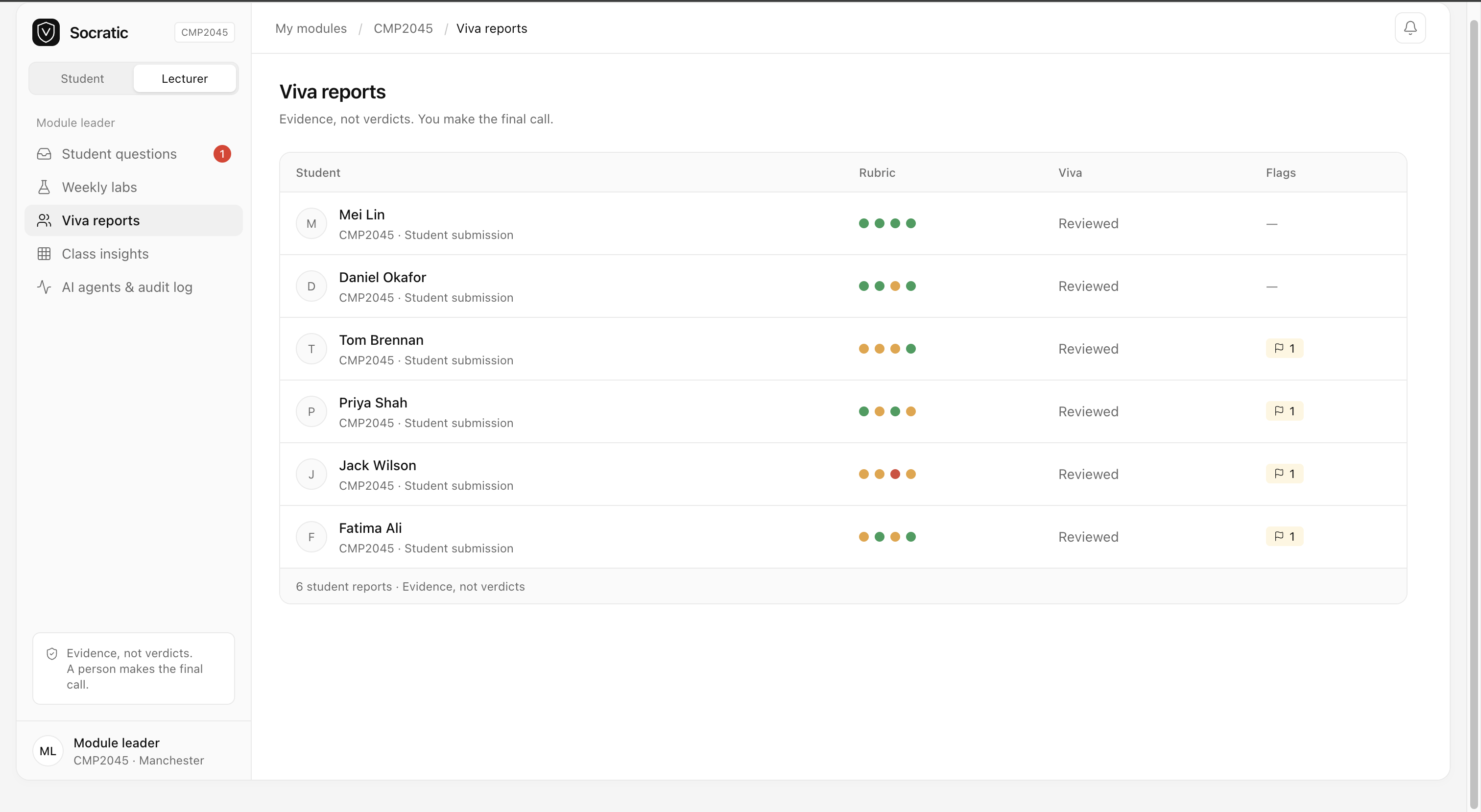
- Viva reports for each student
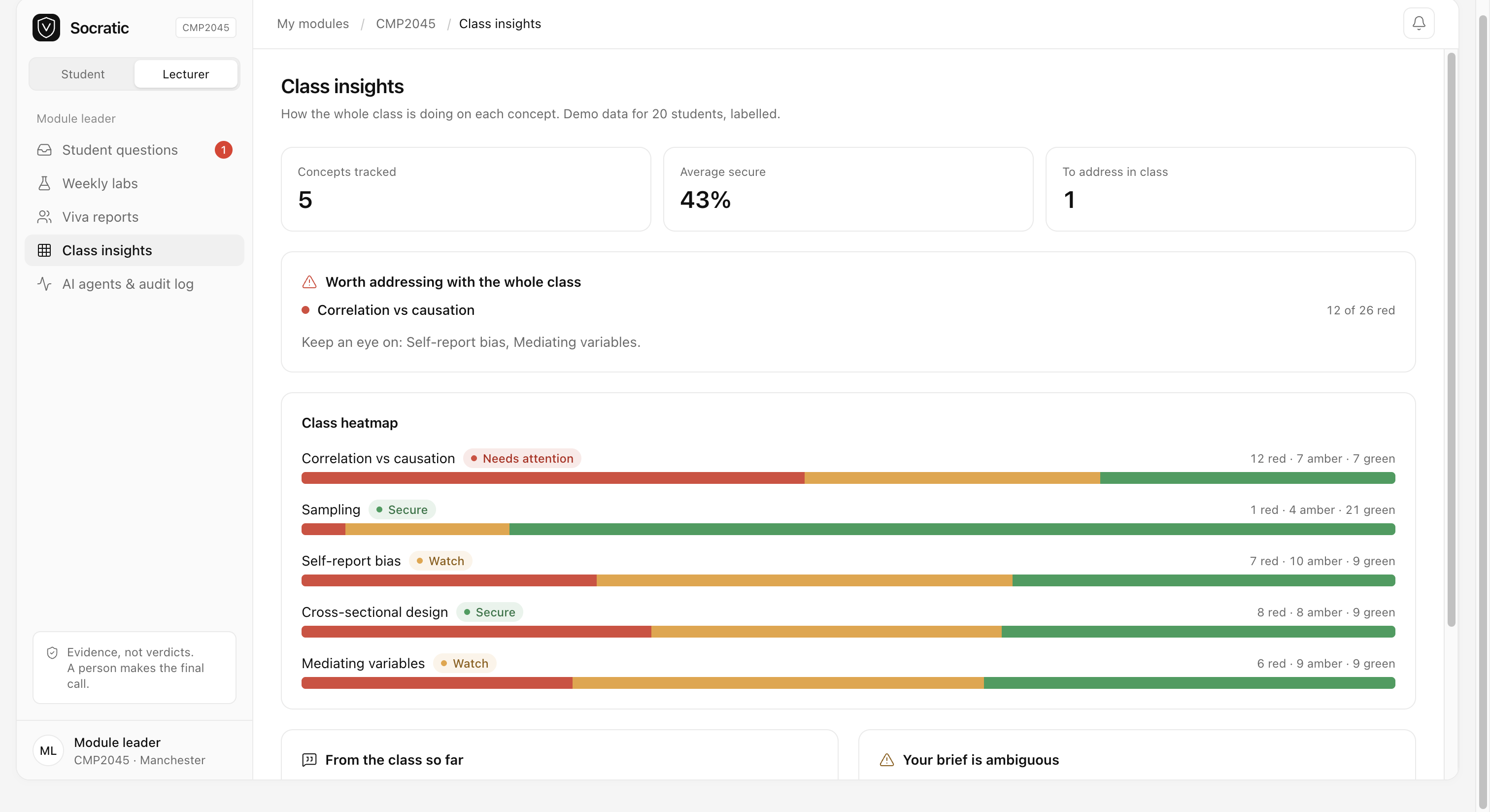
- Class insights, as a heatmap of where the class is struggling
- An AI agents page with a full audit log of every agent call
One rule we stuck to: Socratic is not a cheating detector. Flags are evidence, not verdicts, and a human always makes the call.
How we built it
Five Claude agents sit behind it: Reader, Checker, Examiner, Marker and Guardian. The Examiner runs the viva, Max and the recap. Guardian watches for prompt injection and writes the audit log. Our demo essay has an injection hidden in it on purpose, so you can see Guardian catch it. ElevenLabs gives the Examiner its voice.
The frontend is Next.js and TypeScript, and the backend is Python with FastAPI. We used Claude Code, OpenAI Codex and Cursor as coding assistants while we built it.
Built With
- claude
- elevenlabs
- fastapi
- next.js
- python
- typescript


