UniversityOnline Project Overview
Inspiration
This year, Peking University's archaeology program surprisingly had insufficient initial applicants. Many people cannot pursue their favorite majors due to practical reasons (e.g., employment concerns, economic constraints). To bridge this gap and practice the concept of educational inclusion, I was inspired to build UniversityOnline—an online platform enabling anyone to learn any desired major.
What it does
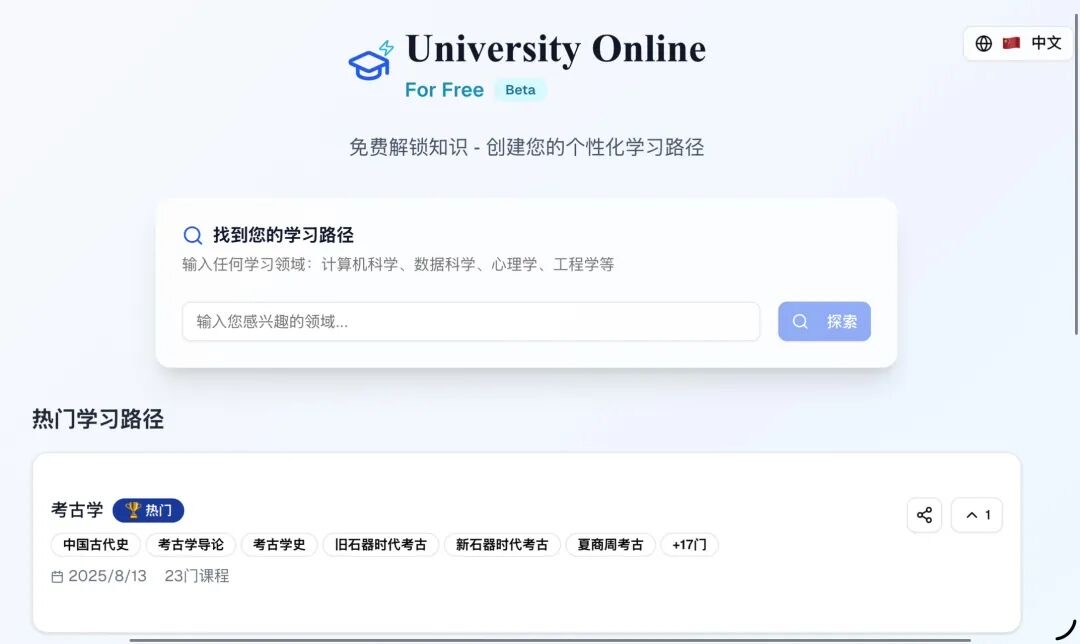
UniversityOnline is an inclusive online university platform breaking barriers to accessing preferred majors, with 3 core features:
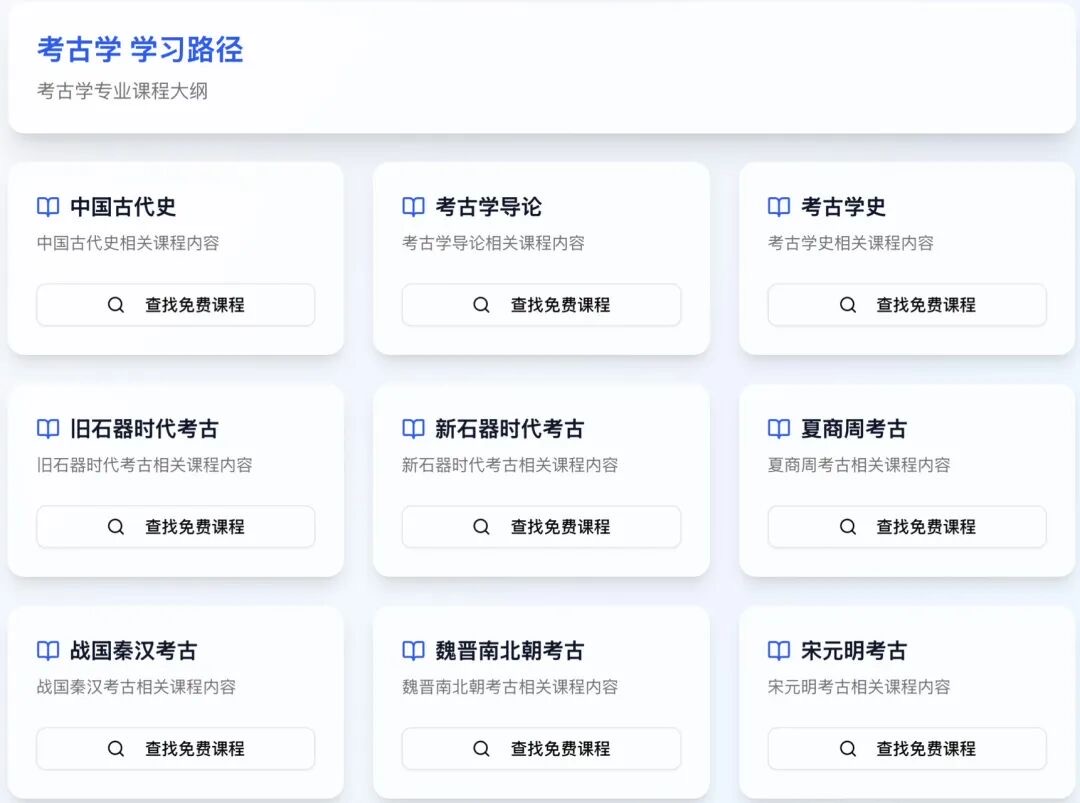
- Generate learning paths: Users input any field (e.g., archaeology), and the platform retrieves the corresponding professional syllabus and extracts a systematic course list.
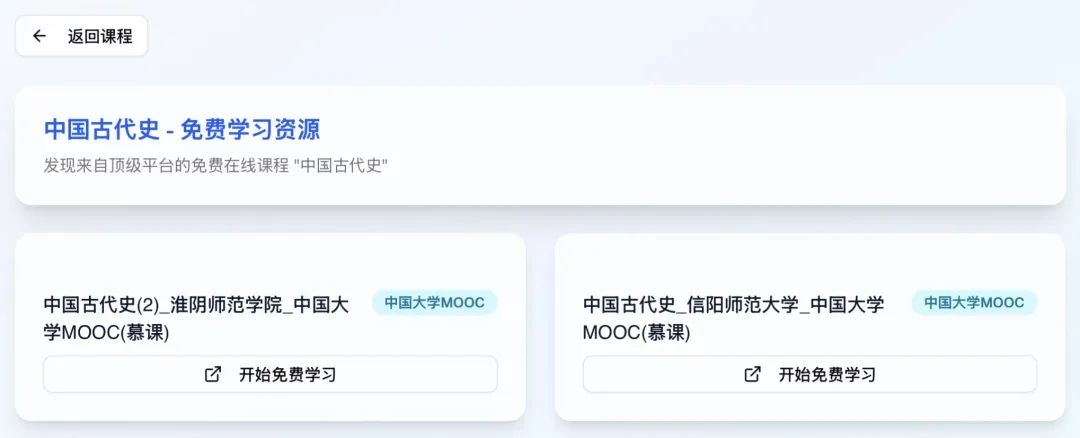
- Search for online courses: For each course in the list, it matches and displays relevant MOOC resources, supporting one-click jump to the learning page.
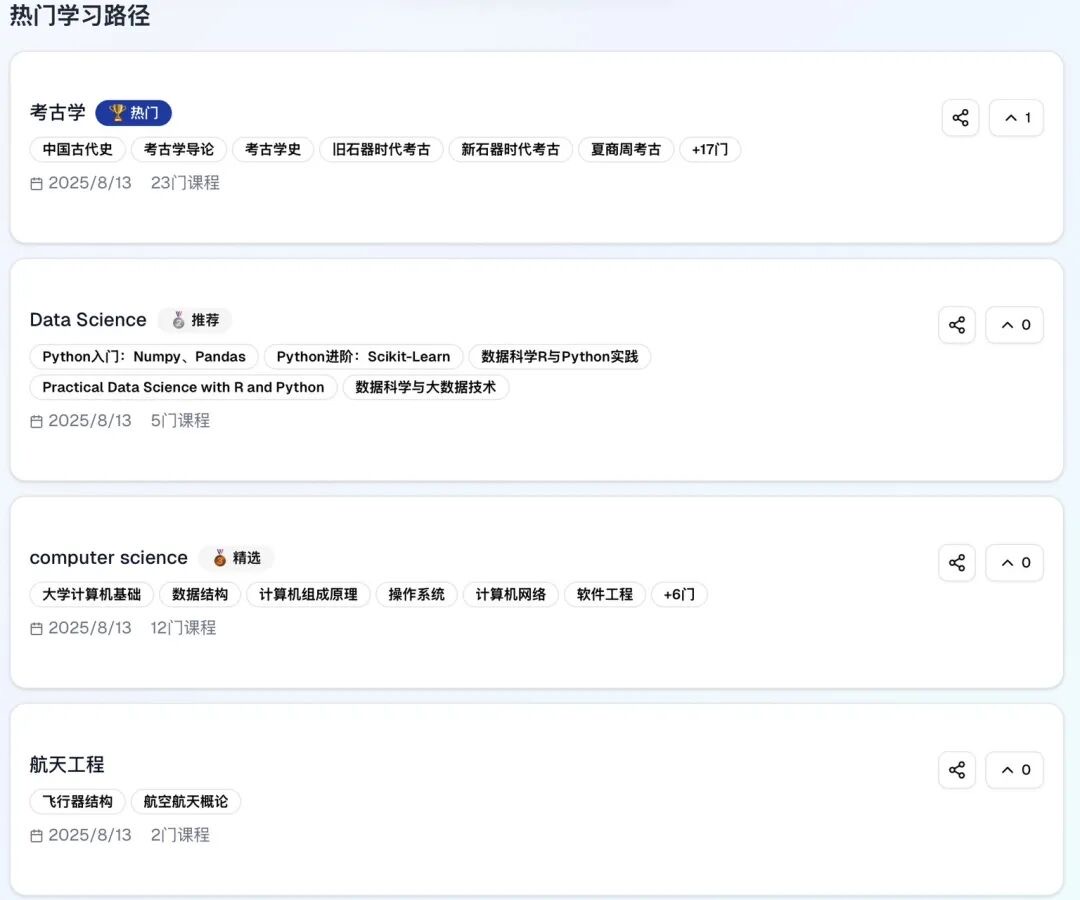
- Popular learning paths: It aggregates and shows trending paths, allowing users to like and rank them for mutual reference.
How we built it
- Demand analysis & framework design: First, I sorted out user pain points (being unable to learn favorite majors due to practical factors) and defined core functions, then designed the platform’s technical framework and UI logic.
- Data integration & development: I collected professional syllabuses of multiple disciplines, established access to mainstream MOOC platforms to build a course resource database, and used web development technologies to implement functions like learning path generation, course matching, and user interaction (like/ranking).
- Testing & optimization: I conducted internal tests to verify the accuracy of learning paths and smoothness of course jumps, then optimized the interface based on feedback to enhance user experience.
Challenges we ran into
- Resource integration difficulty: Different disciplines have diverse syllabuses, and MOOC platforms have inconsistent data interfaces, making it hard for me to standardize and integrate course resources efficiently.
- Learning path accuracy: Ensuring generated course lists follow disciplinary logic (e.g., basic courses before advanced ones) required me to conduct in-depth research on multiple fields and refer to authoritative professional materials.
- Web access stability: During testing, the platform URL showed the error "Failed to parse the webpage. It may be an unsupported webpage type. Please check the webpage or try again later", which required me to repeatedly debug the server and access configuration alone.
Accomplishments that I'm proud of
- Cross-discipline resource coverage: The platform now supports learning path generation for multiple majors, effectively connecting users with desired disciplinary resources through my independent development.
- Seamless learning connection: The one-click jump between course lists and MOOCs saves users from manual course searching, greatly improving learning efficiency—an outcome I achieved through repeated function debugging.
- Educational inclusion practice: The platform has truly broken practical constraints, enabling free/low-cost access to favorite majors for users, and received positive feedback in internal tests, which confirms the value of my solo work.
What I learned
- Independent problem-solving capability: Tackling issues like resource integration and technical debugging alone enhanced my ability to analyze problems systematically and find solutions independently.
- Resource integration skills: I mastered methods to standardize heterogeneous data from multiple platforms and solve interface adaptation issues, significantly improving my data processing and technical implementation capabilities.
- User-centric optimization: Tester feedback taught me that functional completeness must be matched with operational smoothness—even small issues like web access errors can affect user trust, prompting me to adopt a more rigorous attitude toward testing and optimization.
What's next for UniversityOnline
- Expand resource coverage: I plan to add more disciplines (e.g., liberal arts, engineering, art) and establish connections with more MOOC platforms/universities to enrich course types (including live courses and practical projects).
- Optimize personalized experience: I will introduce user portrait functions to recommend learning paths and courses based on individual interests and progress, further upgrading the platform’s usability.
- Fix technical issues: I will focus on resolving the "webpage parsing failure" error of the current URL to ensure stable access for all users.
- Build a learning community: I intend to add discussion forums and study group functions to let users communicate and share learning experiences around specific majors/courses, making the platform more interactive.
Built With
- backend
- frontend
- llmprompts
- searchengineapi
- siliconflow
- vercel

Log in or sign up for Devpost to join the conversation.