-
-
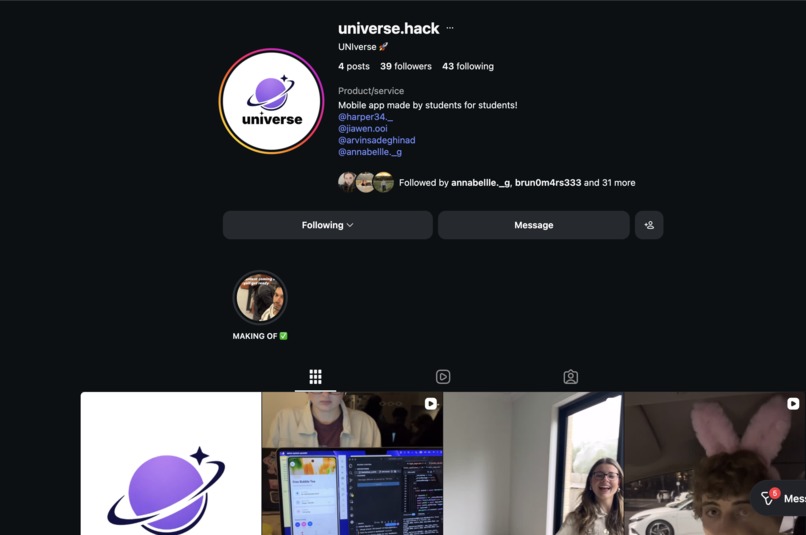
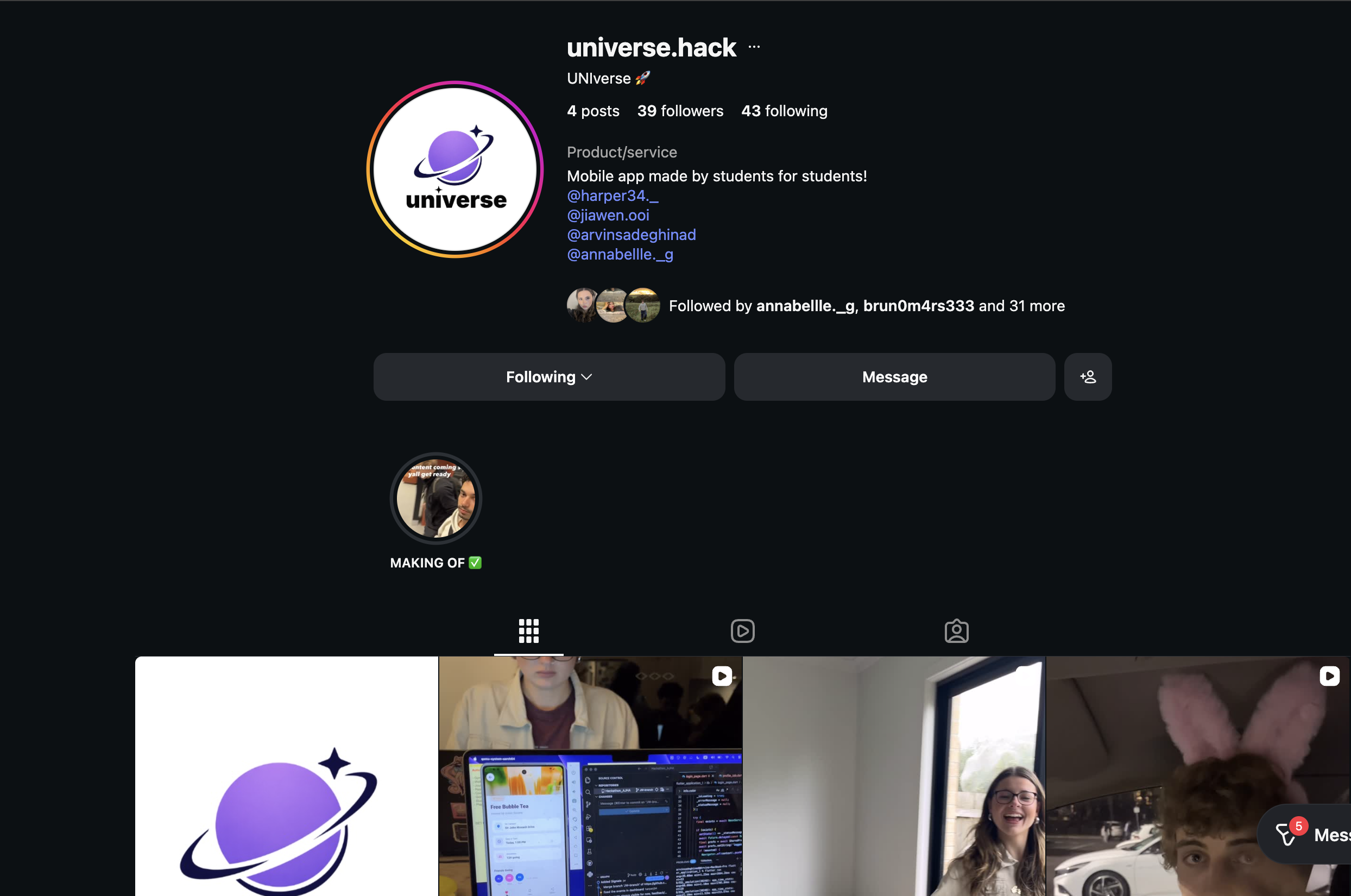
Our social media page! Refer to this page for all Project Media regarding the process of creating this application
Problem
The core problem we set out to solve was that of information fragmentation with respect to student integration into campus culture. Students want a dynamic, real-time sense of what’s happening around them, but nothing currently provides that in a unified, engaging way. So, our goal was to specifically solve the following sub-problems: Students feel disconnected from campus culture.
They know events exist, but not when or where. They often attend campus without ever discovering clubs, activities, deals, study spots, or communities they would genuinely enjoy.
They aren’t getting the uni experience they were promised.
Clubs and societies, despite being eager to grow, lack an effective way to reach students.
Their communication depends on fragmented platforms, inconsistent posting habits, and algorithms that bury important information.
Tools, technologies, approach
As far as organisation of our process, we focussed on enjoying the process more than on being too structured. However, we did make sure to keep track of tasks in a KANBAN table, which allowed us to stay on track. We primarily used the Flutter framework to develop our app, and the Neon database service to manage our databases (logins and events).
Challenges
The main challenge we faced along the way was that of the scope of the app. We had to be discerning about which elements we should or shouldn’t add. We approached this problem by narrowing down our features list using two factors: a) concordance with the problem we aimed to solve and b) uniqueness/ singularity.
With reference to b), we eliminated ideas that could relatively directly be found in other apps. Although we did want the app to be a “one-stop” spot for student life, limited time meant for instance that we chose not to include pins for restaurants on campus because such a feature was readily found in a more developed form on Google Maps.


Log in or sign up for Devpost to join the conversation.