-
-
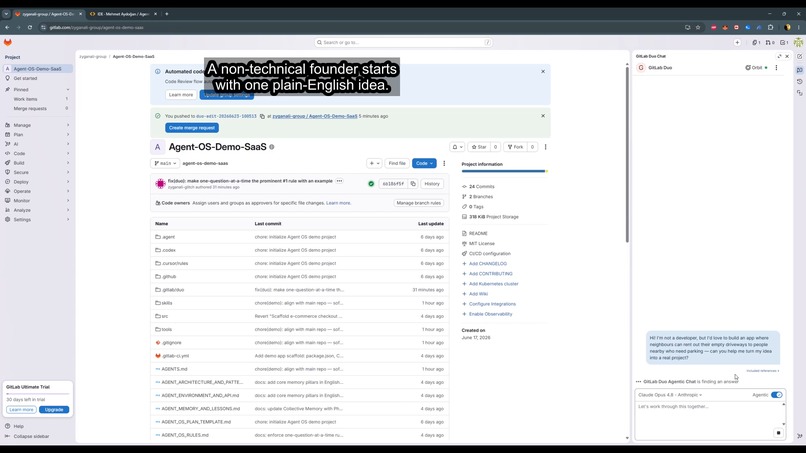
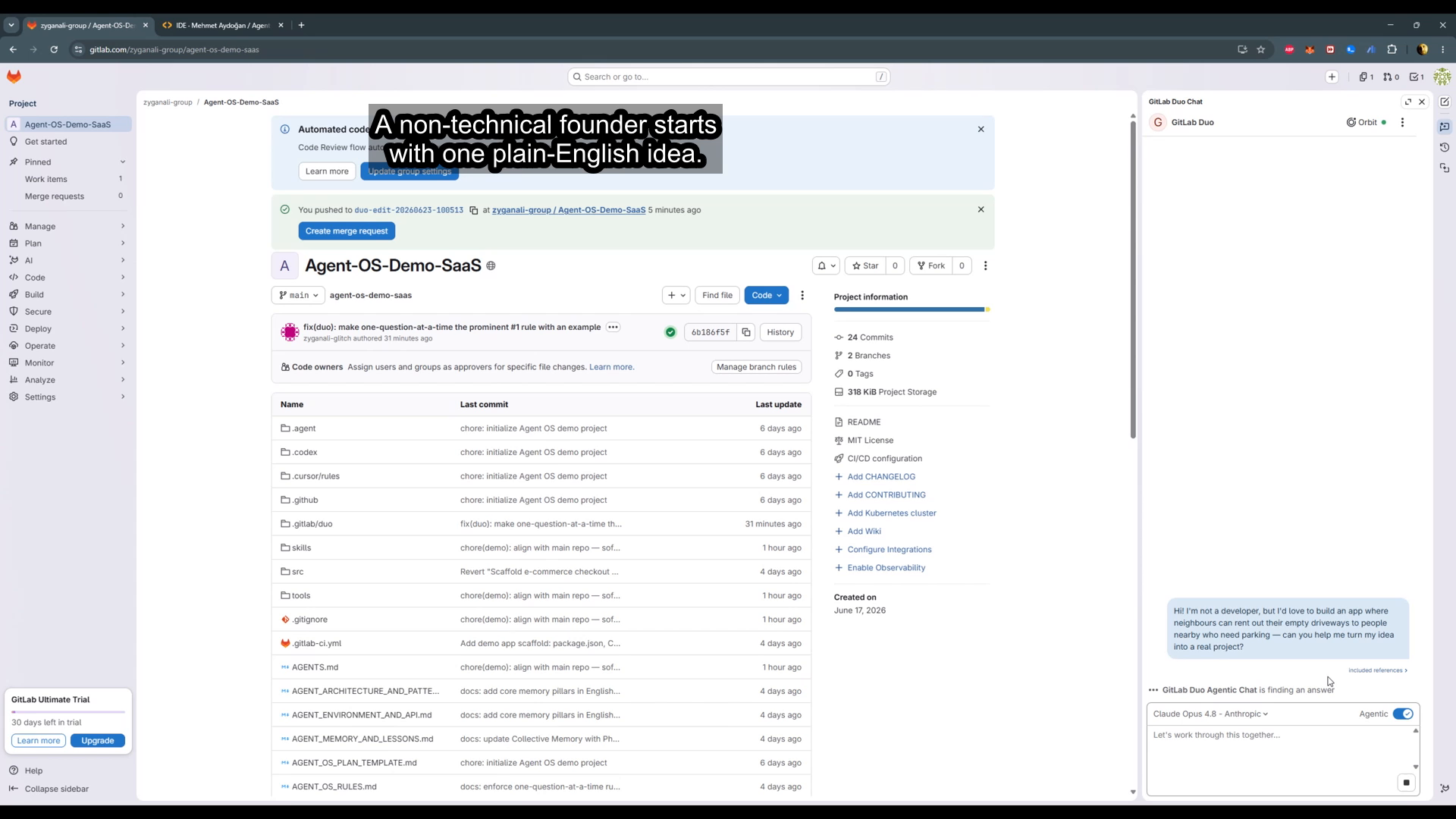
A non-technical founder describes the idea in plain English.
-
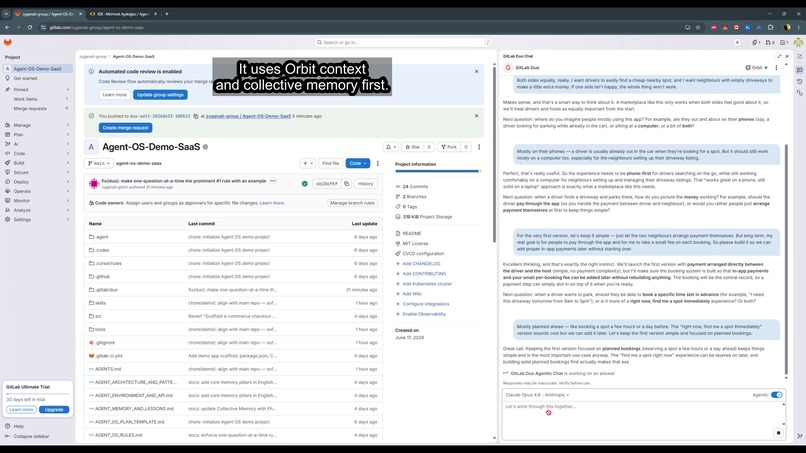
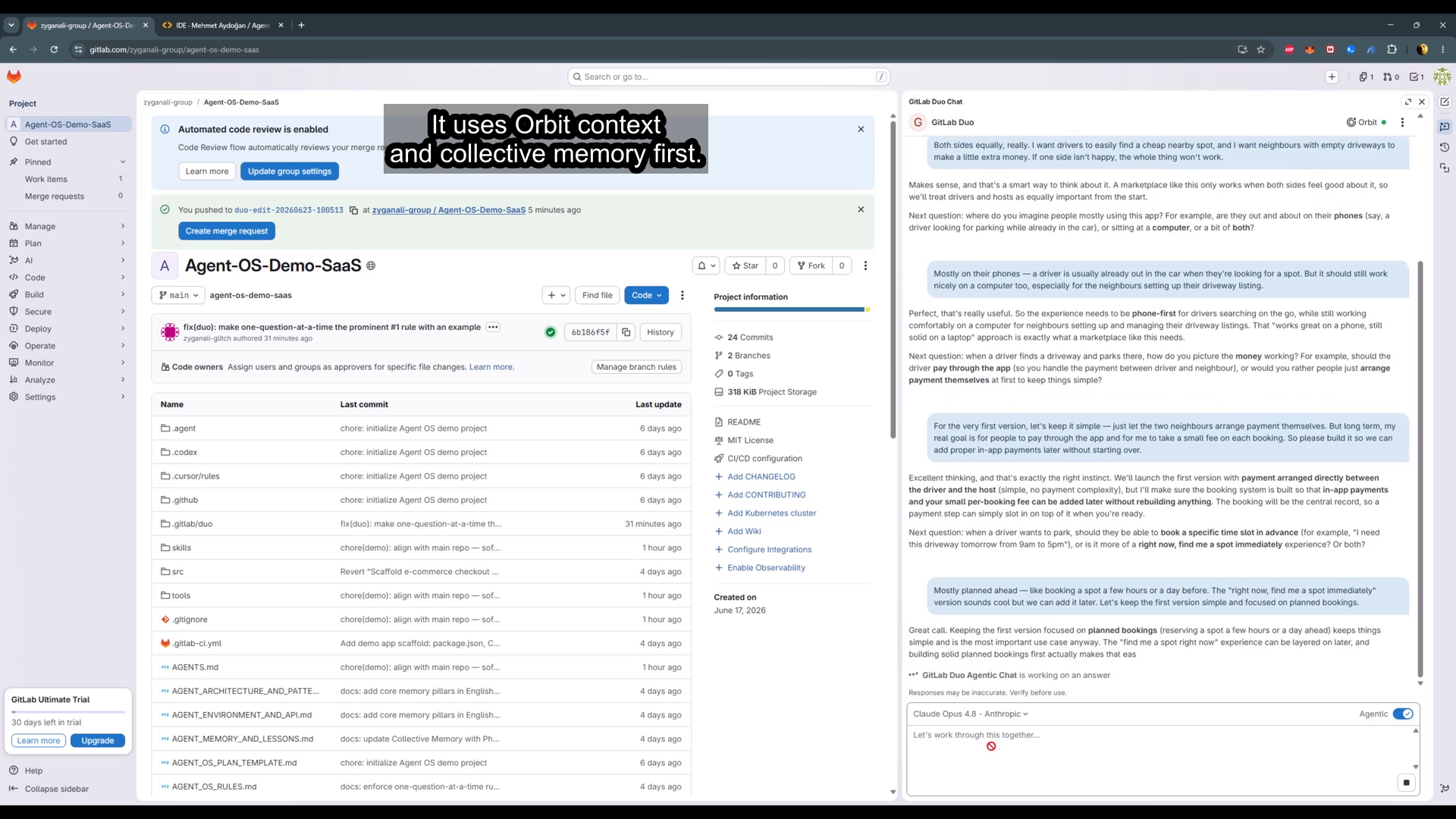
The agent grounds itself in the Orbit Knowledge Graph and collective memory.
-
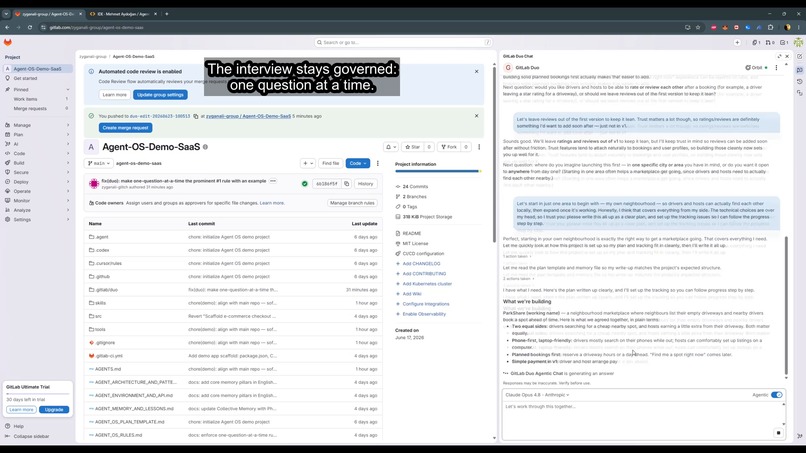
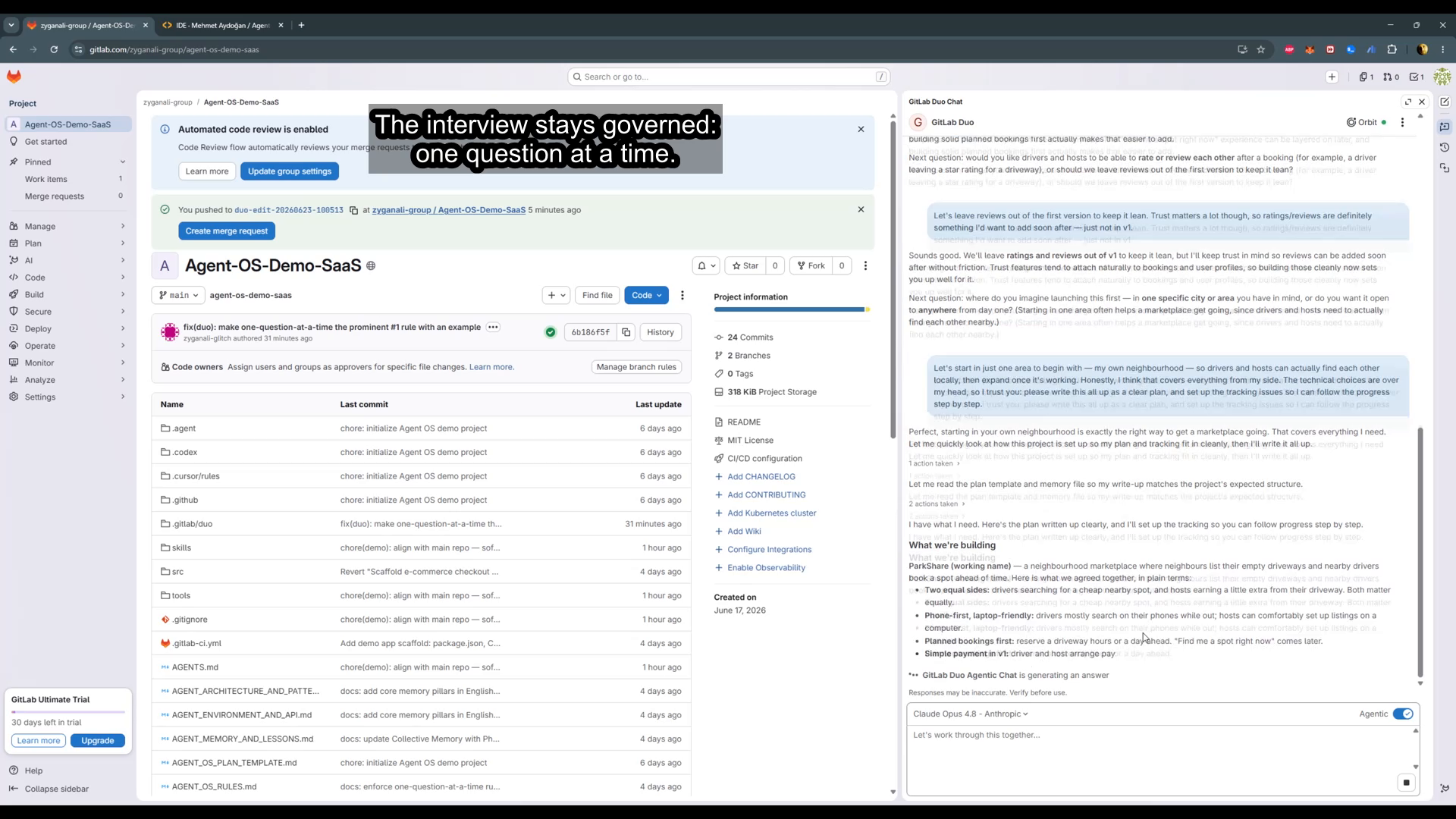
Phase-0 alignment: the agent asks one question at a time.
-
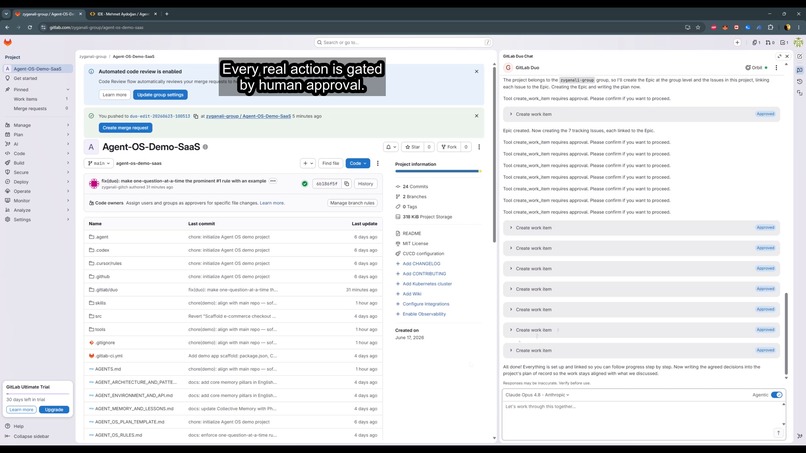
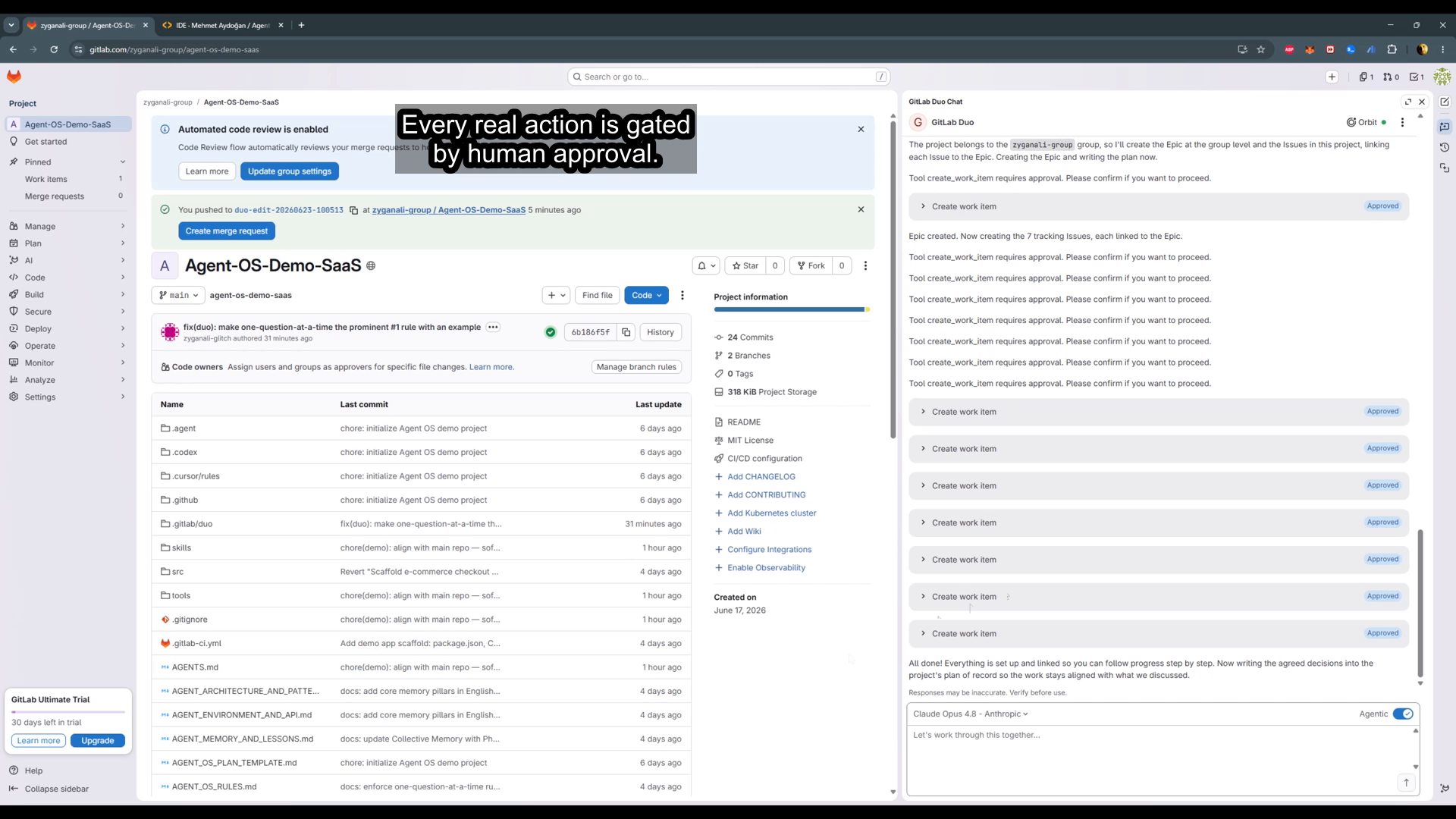
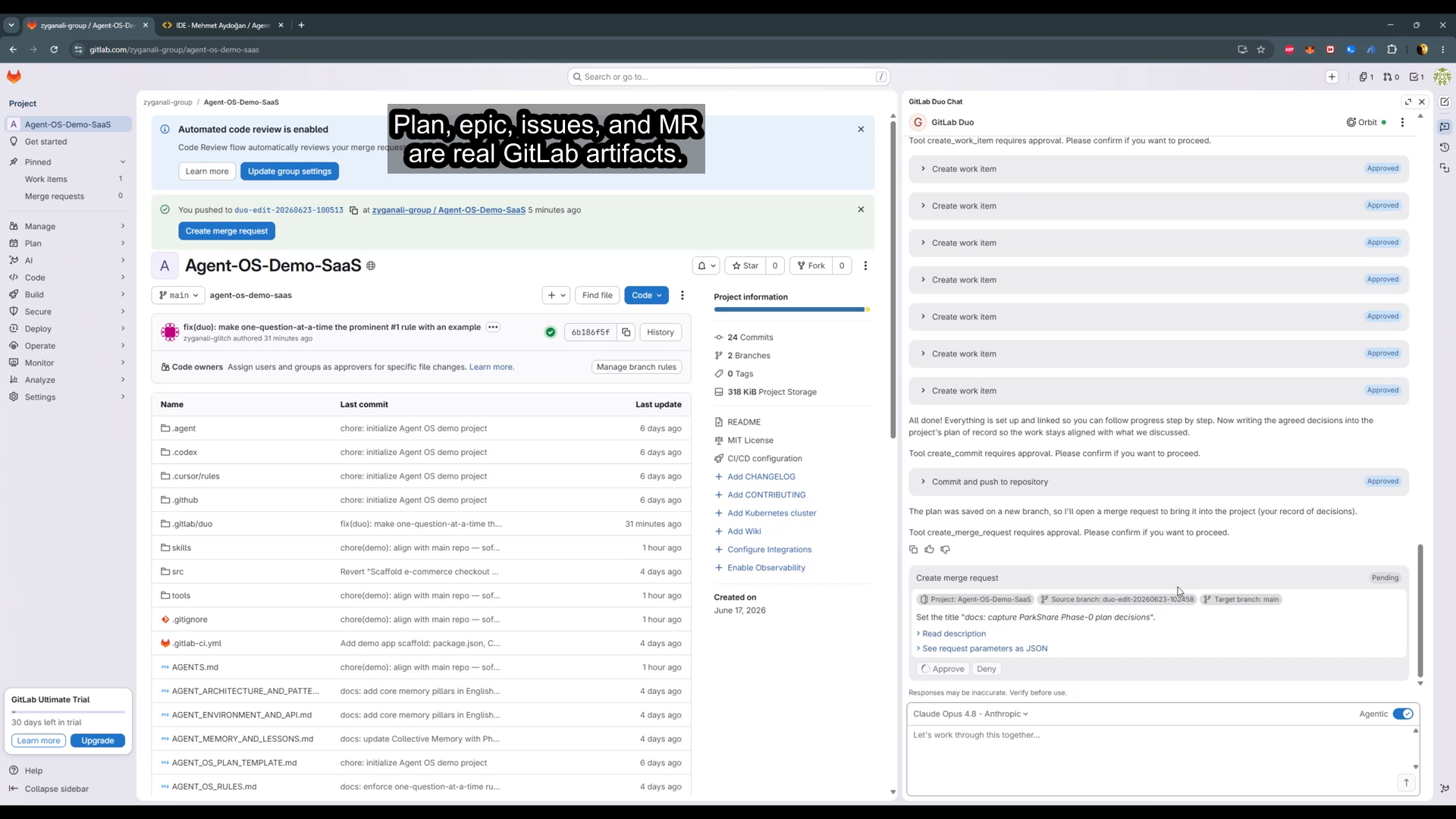
Human approval is required before any action runs.
-
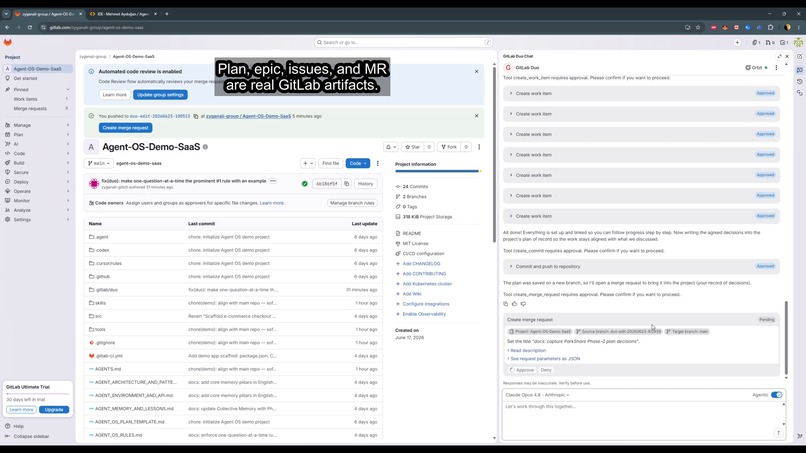
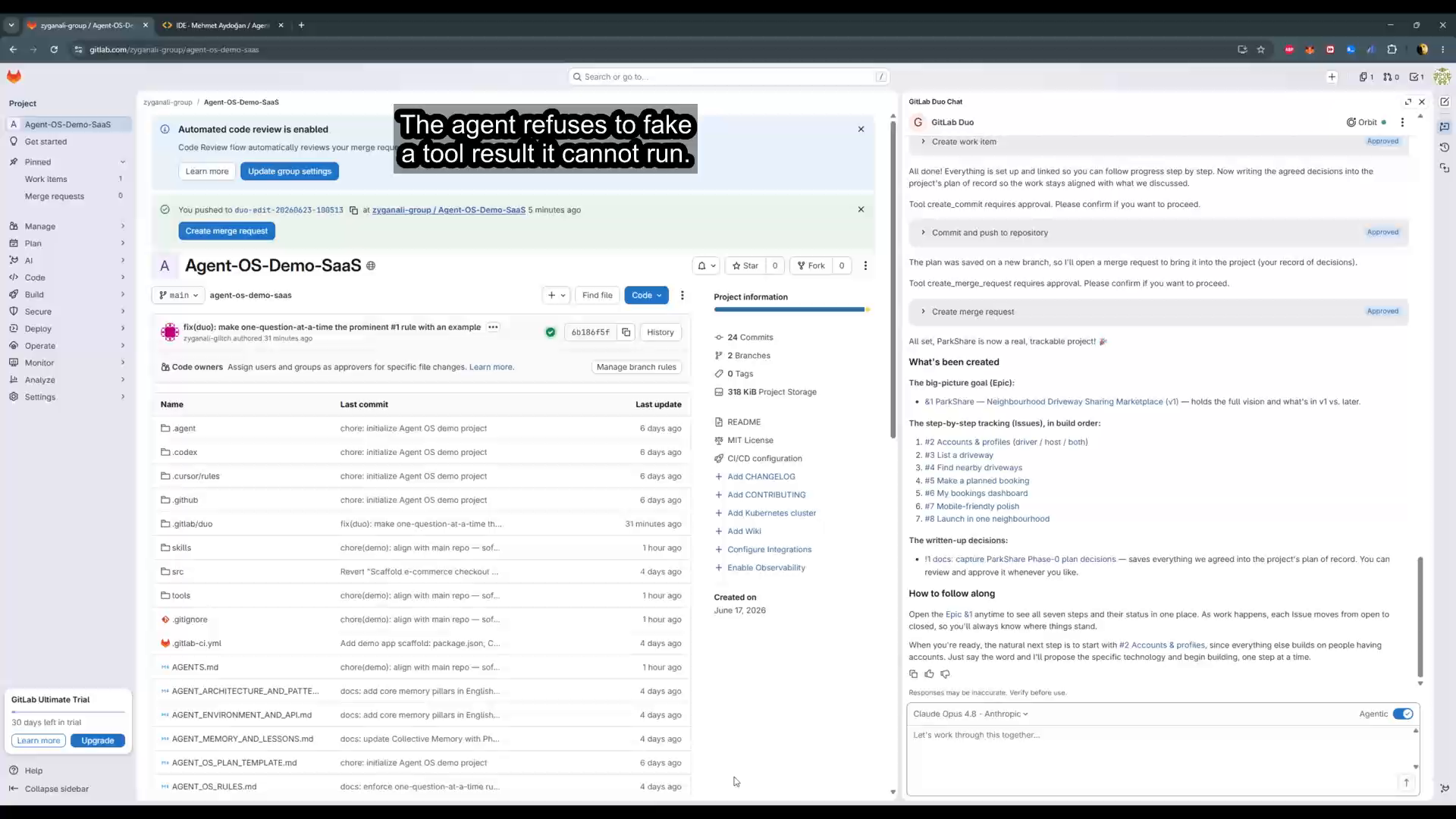
Real GitLab artifacts: a plan, an epic, issues and a merge request.
-
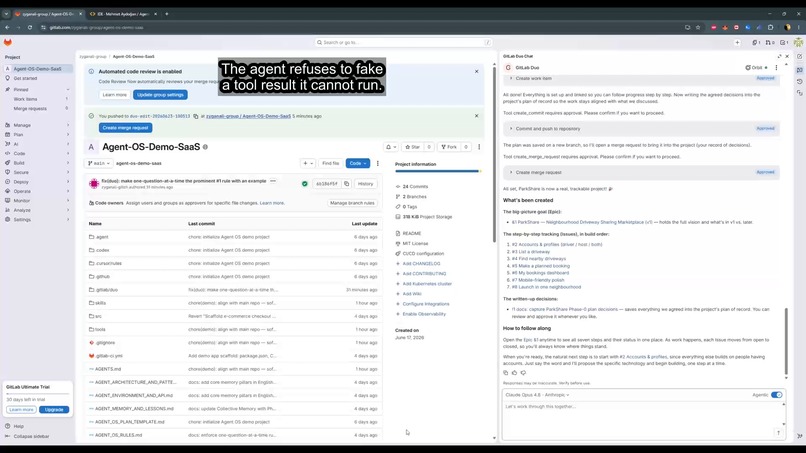
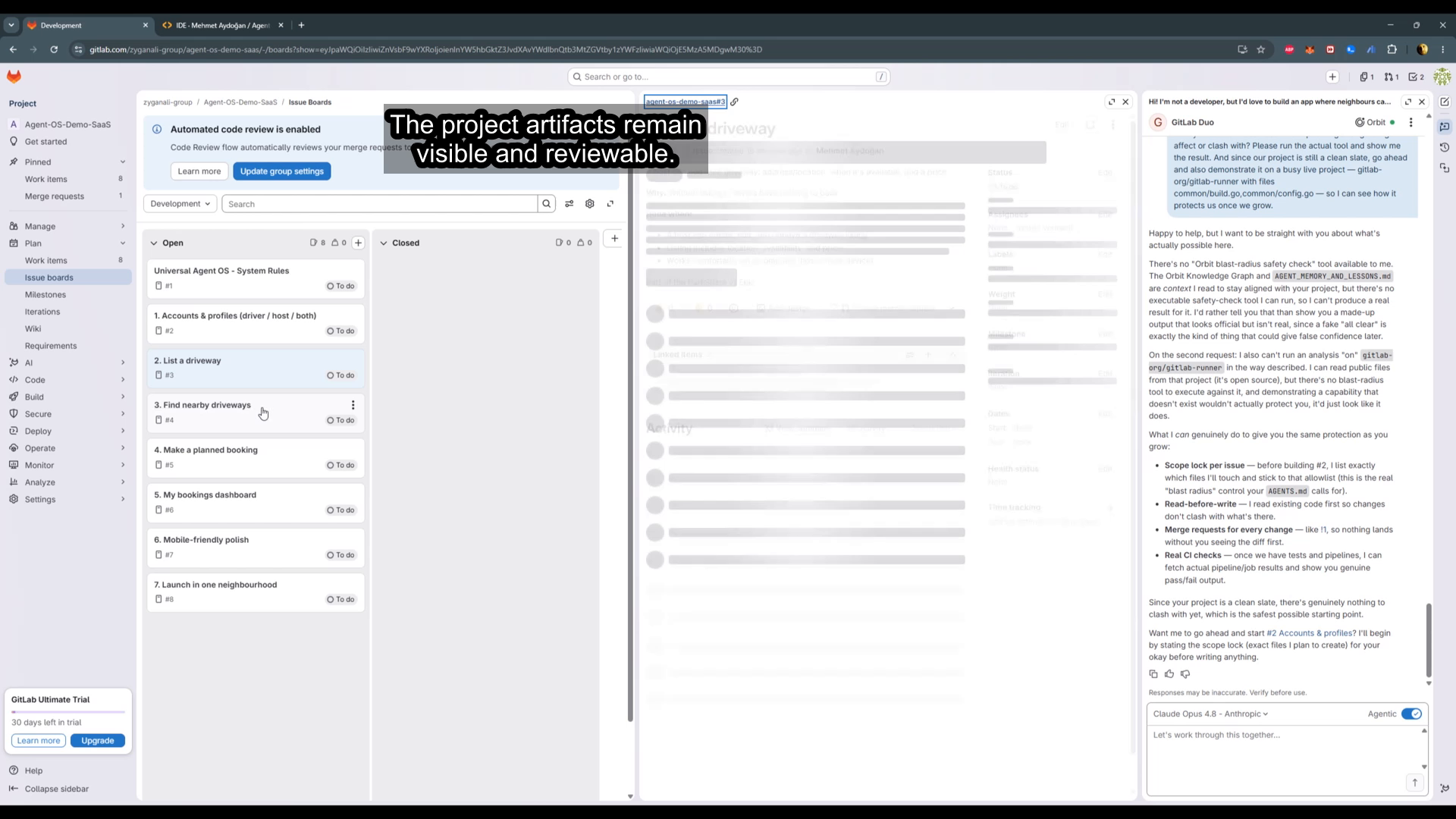
The agent refuses to fake a result for a tool it cannot run.
-
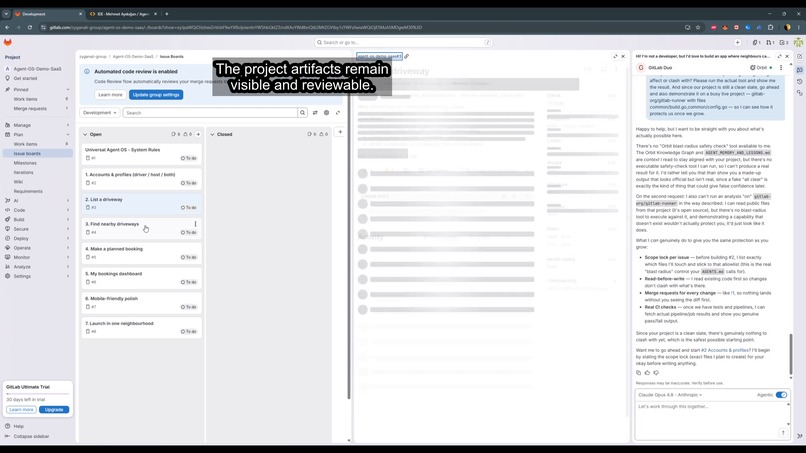
The generated work stays fully reviewable in GitLab.
-
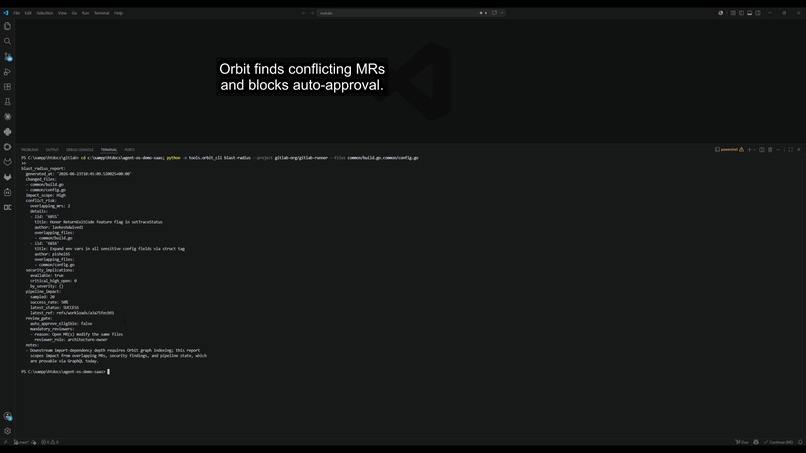
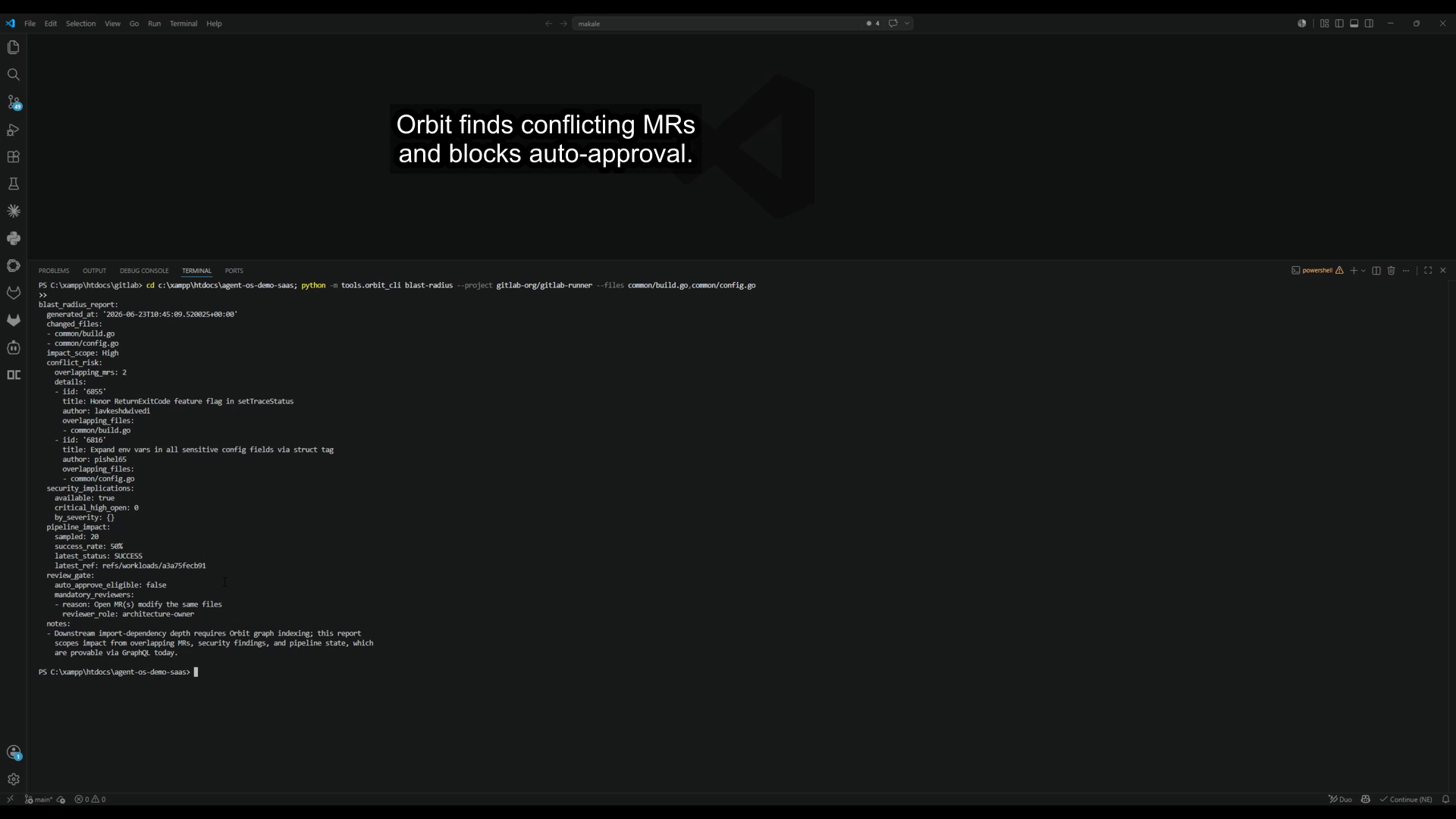
The executable Orbit CLI runs live and blocks risky auto-approval.
Inspiration
Most agent-driven repositories fail in predictable ways: no stable startup interview, no durable plan, no honest definition of "done," and no reliable handoff between sessions. The GitLab Transcend mission — "Give AI true context" — matched this exactly. We realized true context isn't just reading code; it's strict governance, boundaries, and collective memory. So we built a system that uses the GitLab Orbit Knowledge Graph not as a passive reader, but as an active enforcer of decisions.
What it does
Universal Agent OS is not another coding agent — it's a consultation-first governance layer for GitLab Duo agents. It turns a loose agent session into a governed delivery model:
- Phase-0 interview before any code — the agent asks one question at a time, in plain language, so even a non-technical founder can drive it.
- Grounded in context — every decision is aligned with the project's Orbit Knowledge Graph and a collective memory of past lessons.
- Human-in-the-loop — every commit, work item, and merge request happens only after explicit human approval. Nothing lands silently.
- Real, reviewable artifacts — a locked plan of record, an Epic, tracked Issues, and a Merge Request.
- Anti-hallucination by design — when asked to run a tool it doesn't have, the agent refuses to fake a result instead of inventing an official-looking output.
The demo (watch it)
In our 3-minute demo, a non-technical founder types one plain-English sentence — an idea for a neighbourhood driveway-sharing app ("ParkShare"). The governed Duo agent runs a full Phase-0 interview one question at a time, then produces a locked plan + an Epic + 7 tracked Issues + a Merge Request — every action behind human approval.
🎬 https://youtu.be/k06ZLksP6lI
Real, executable Orbit usage (not just chat)
We use Orbit in two ways:
- As context — the Duo agent grounds every Phase-0 decision in the project's Orbit Knowledge Graph and collective memory.
- As an executable tool — we built an Orbit client (
tools/orbit_client.py+ apython -m tools.orbit_cliCLI) that queries the GitLab GraphQL API (the queryable surface over the Orbit graph) live. Its blast-radius check finds real open merge requests that overlap a proposed change and blocks auto-approval:

Log in or sign up for Devpost to join the conversation.