-
-
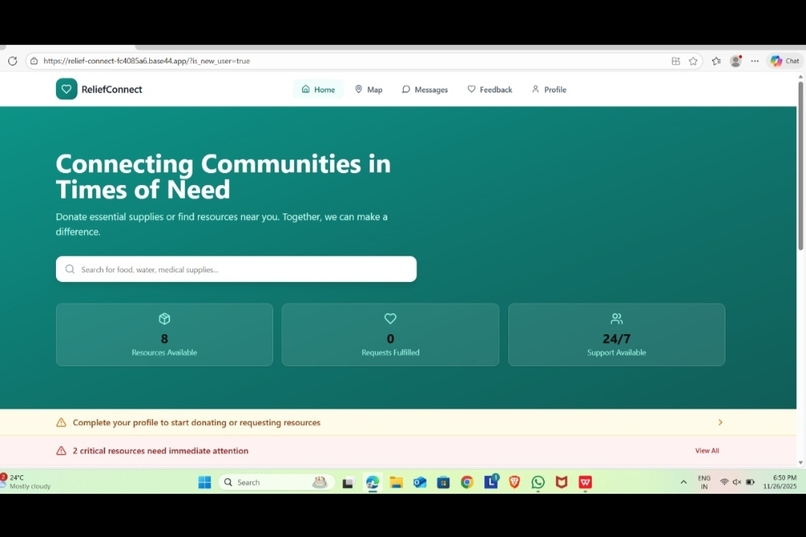
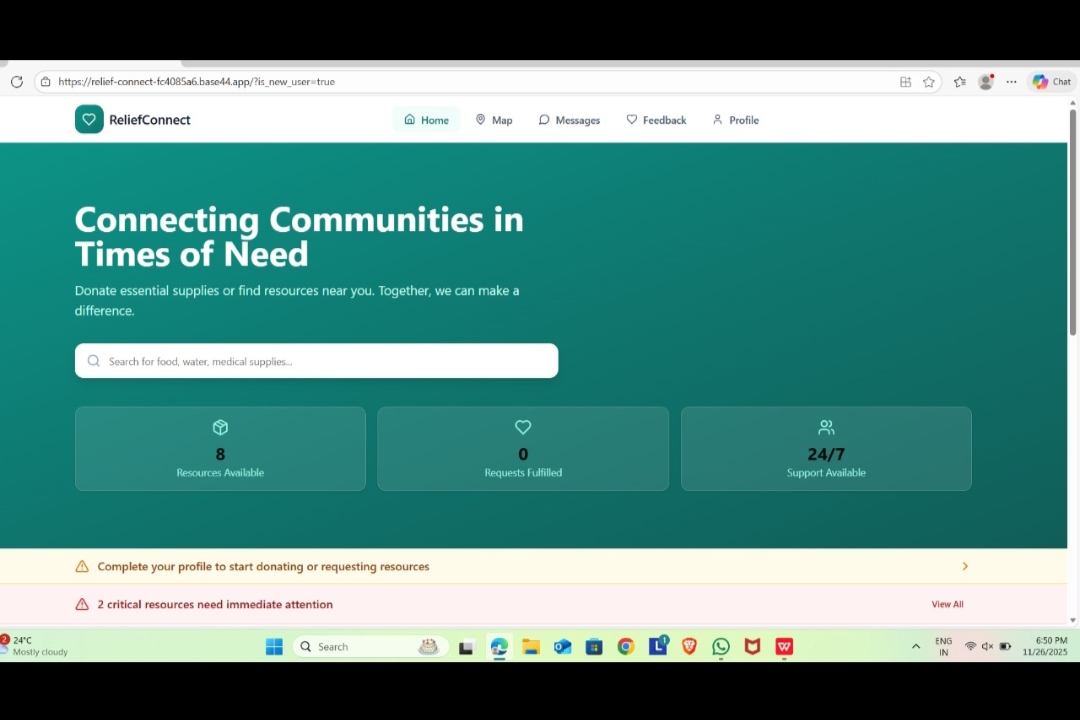
Homepage of our website
-
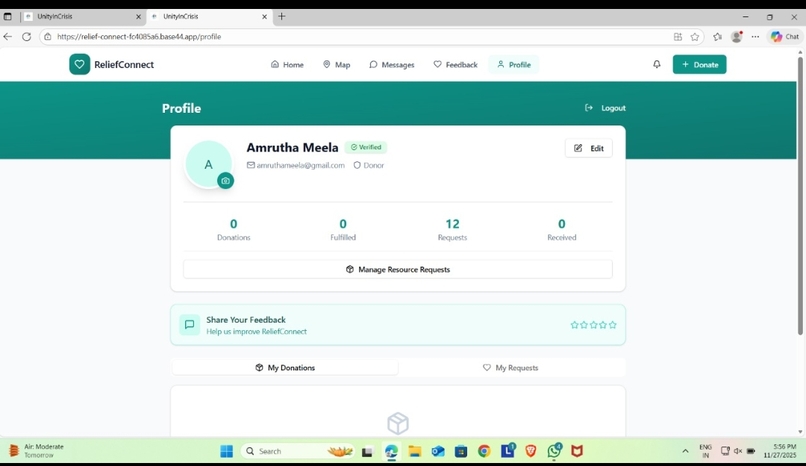
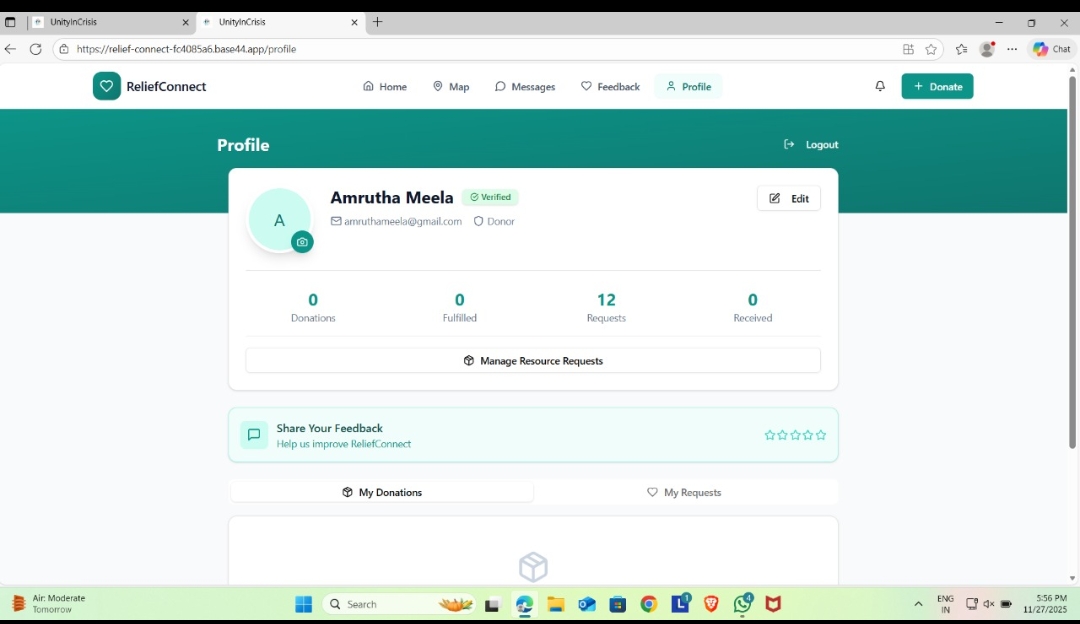
Profile page
-
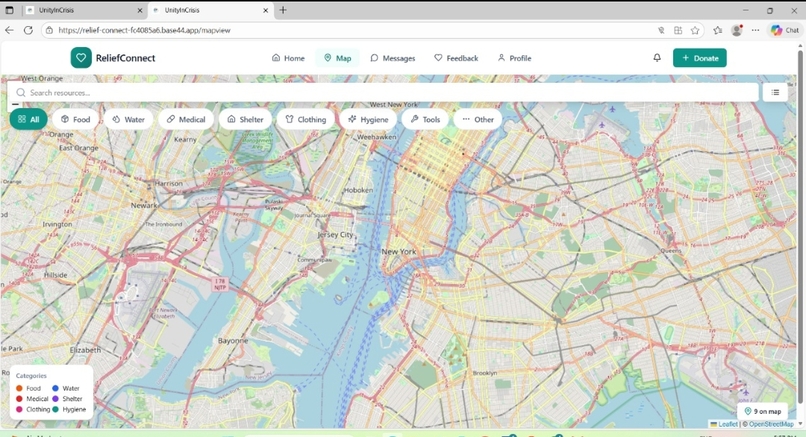
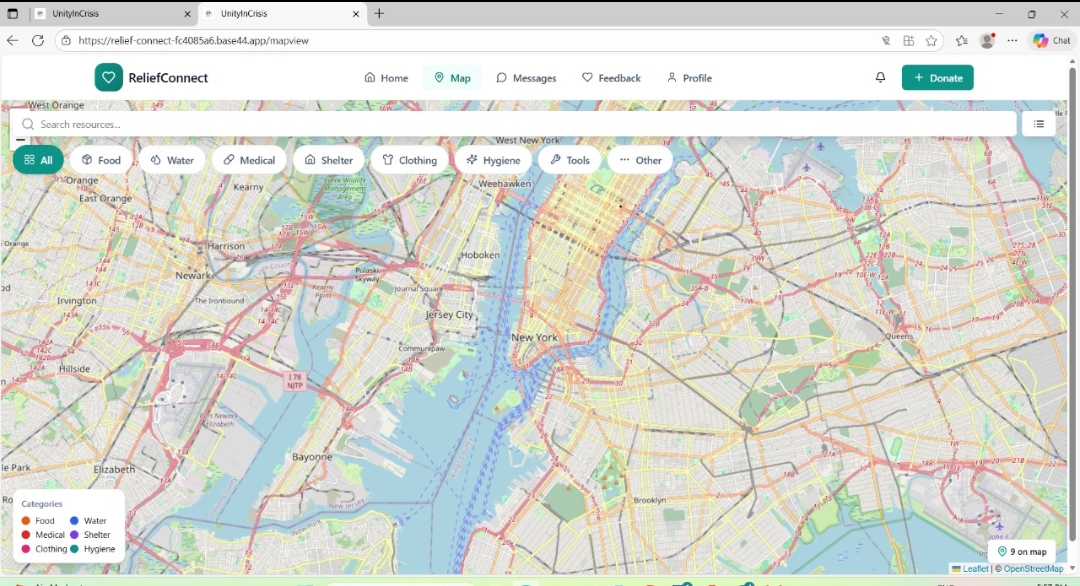
Map
-
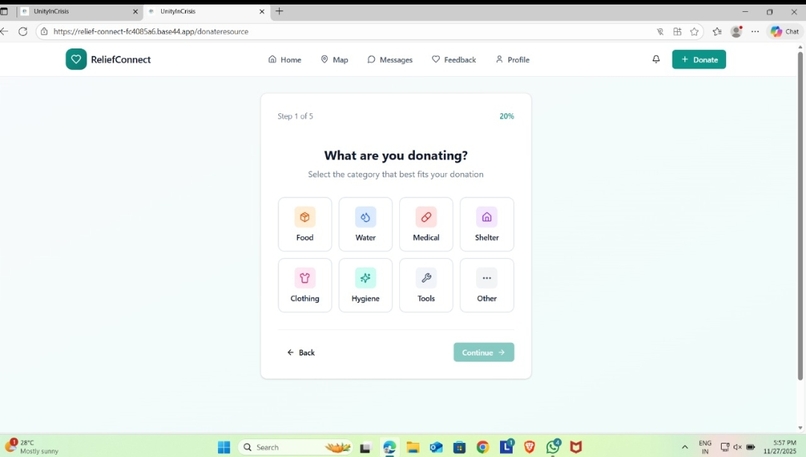
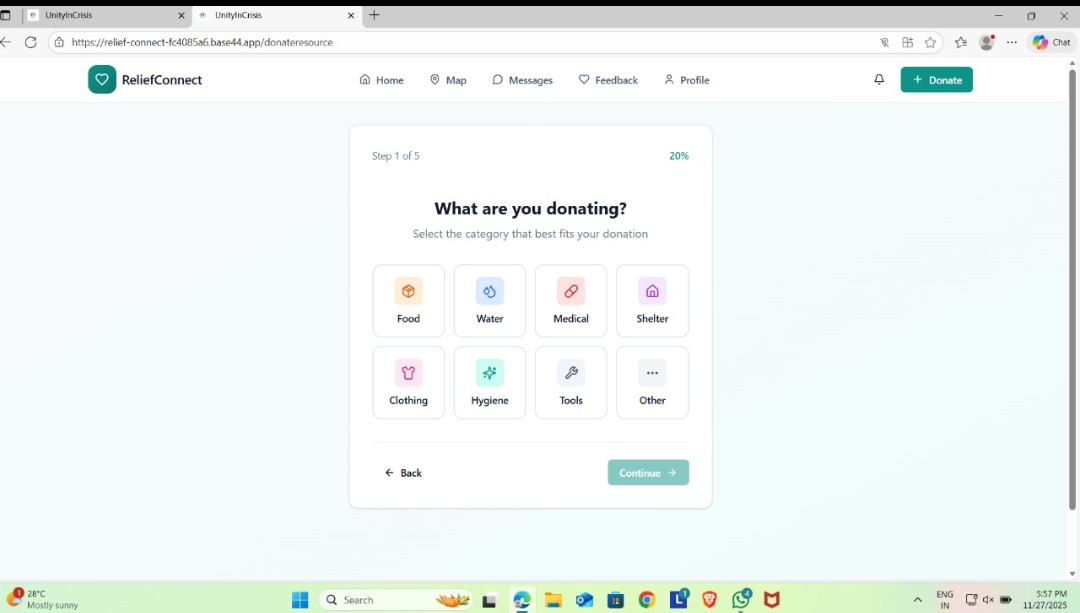
Donors page
Inspiration
Disasters strike instantly, but supply chains move slowly. We noticed that in the critical first 72 hours, families are often left stranded without basics while waiting for large-scale aid to mobilize. Our inspiration comes from the 'Last Mile Problem'—the need to get immediate, tangible relief to victims' hands when the clock is ticking
What it does
It bridges the gap between the donor and the reciever by donating the resources the reciever needs when they are stranded somewhere in a disaster.
How we built it
We built this by reverse-engineering the supply chain of standard relief camp. 1.Needs Assessment: We conducted user research to identify the most common 'gap items(essential resources)'
- Sourcing strategy: We designed a donor framework.
- Distribution Logic: Victim recieves their essential needs as per the urgency of their need. ## Challenges we ran into Siloed Data. A standalone app isn't enough; we needed to notify volunteers in real-time. The challenge was that our no-code builder didn't natively talk to SMS gateways or mapping services effectively. ## Accomplishments that we're proud of Frictionless 'One-Hand' Interface: We successfully designed a 'Panic-Proof' UI. We are proud of our simplified 3-step request flow (Select Need -> Add Location -> Submit), which ensures that even a user with high stress and low technical literacy can request aid in under 30 seconds ## What we learned We learned the art of the workaround. While no-code allowed us to deploy instantly, we hit walls with complex logic (like inventory tracking). We learned how to restructure our database schema to make the platform do things it wasn't natively designed to do, teaching us that architecture matters more than code syntax. ## What's next for Unity in crisis We want to take our app futher by making it more accessible and adding a voice mode for illiterates and making it accessible in different native languages.
Built With
- base44


Log in or sign up for Devpost to join the conversation.