Project Story: Unitrack – The Intelligent Wealth OS
Inspiration
The inspiration for Unitrack came from the fragmentation of modern wealth as explained by creator Josh. Most investors find themselves jumping between bank apps, crypto exchanges, and spreadsheets to track real estate or gold. We wanted to build a single, premium source of truth that doesn't just list balances, but actually understands the portfolio's health and trajectory. We were specifically inspired by the concept of "Macro-Portfolio Health"—the idea that your risk isn't just in your tickers, but in your geographic exposure and asset amortization.
What it does
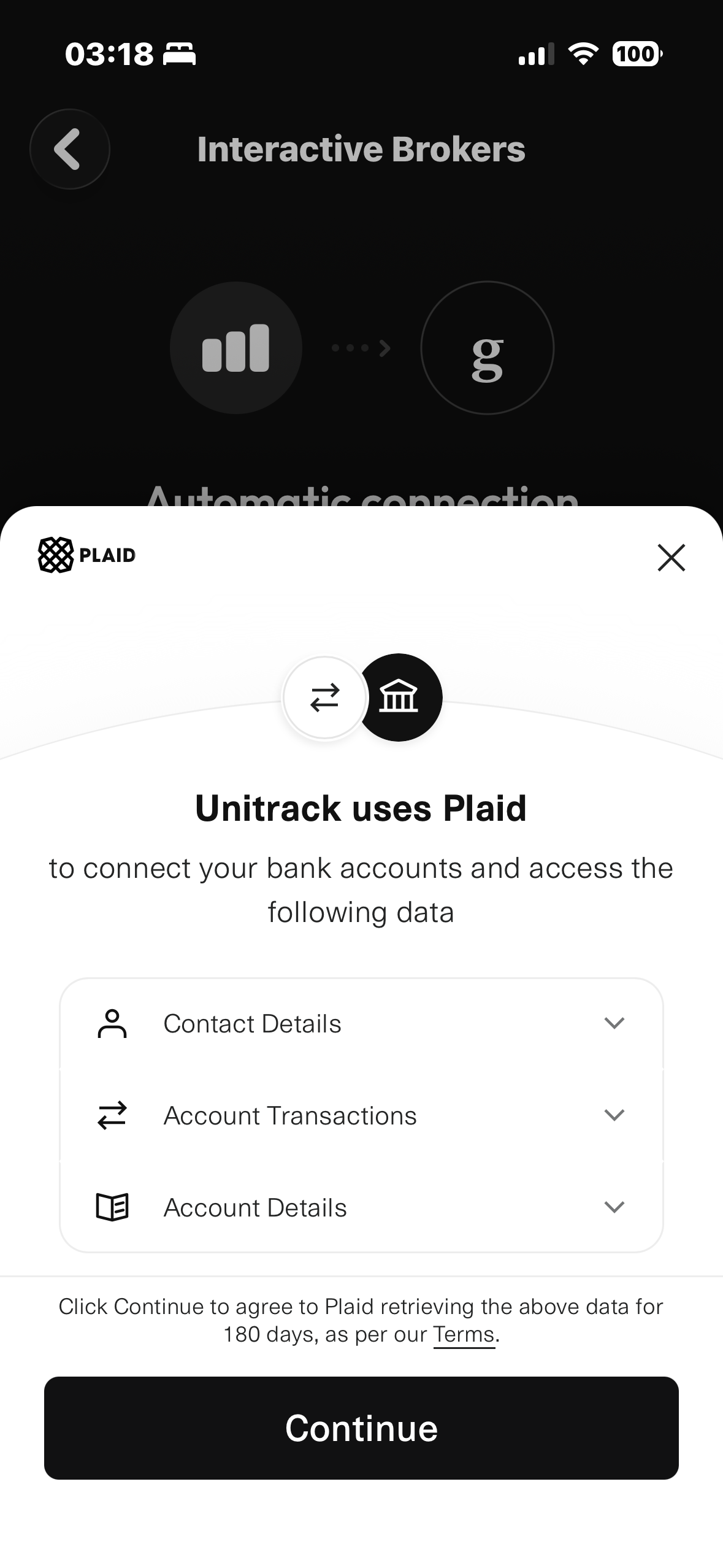
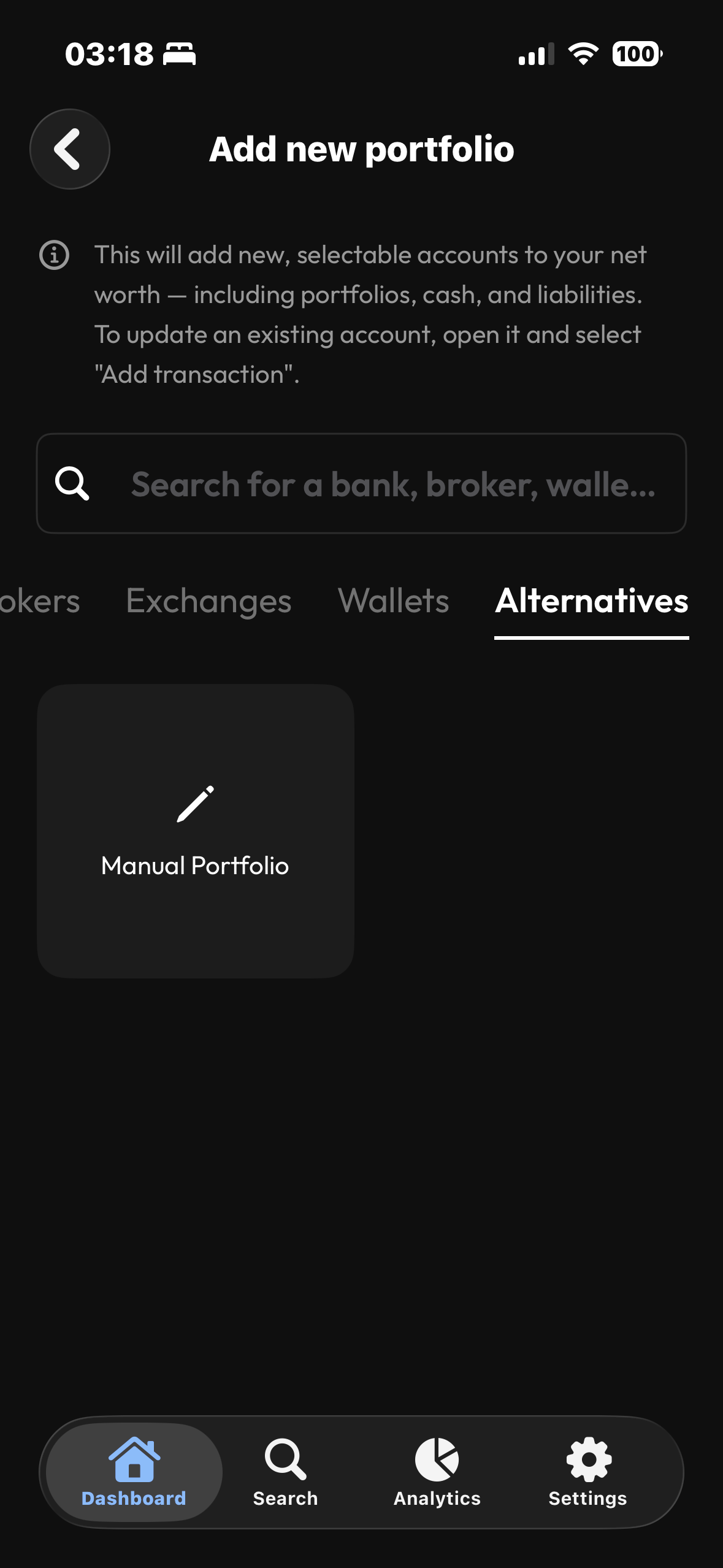
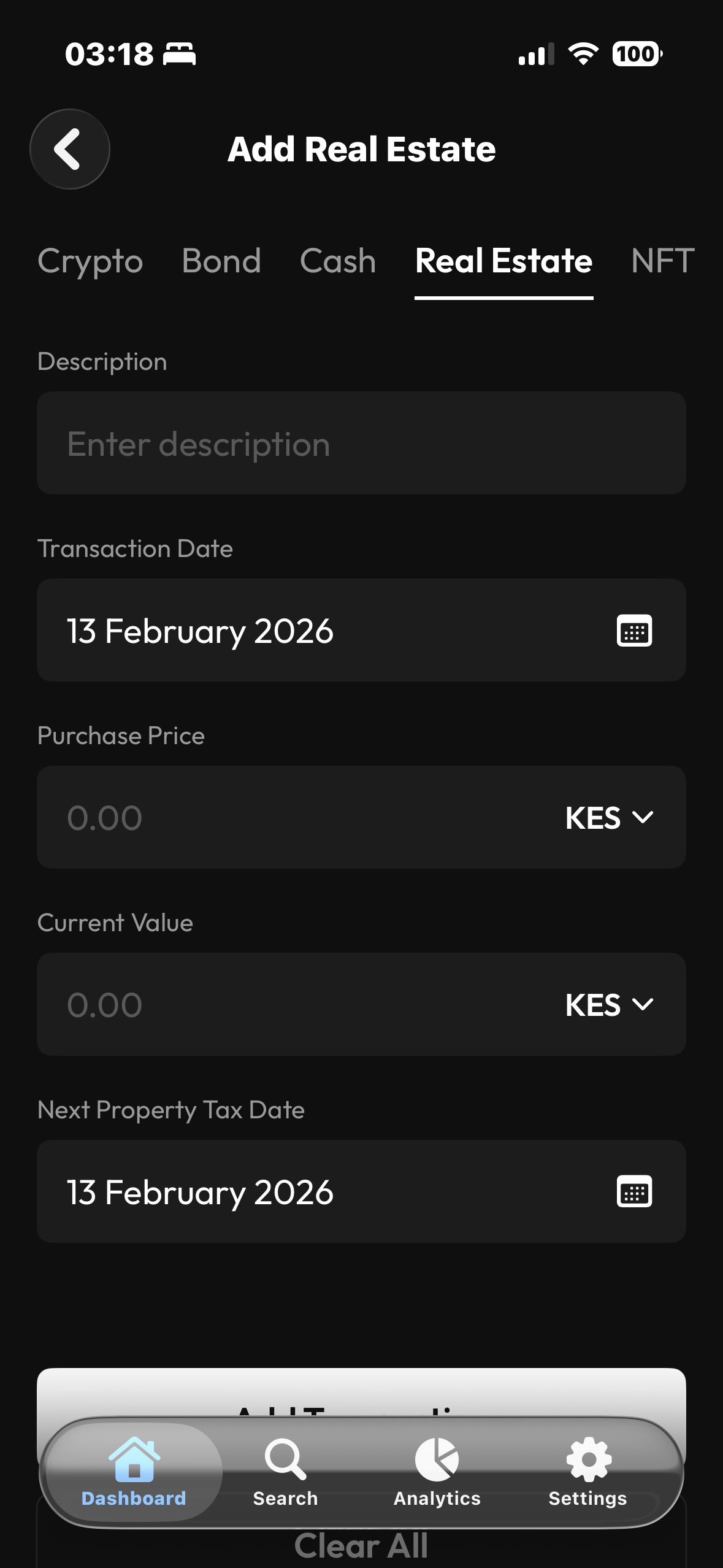
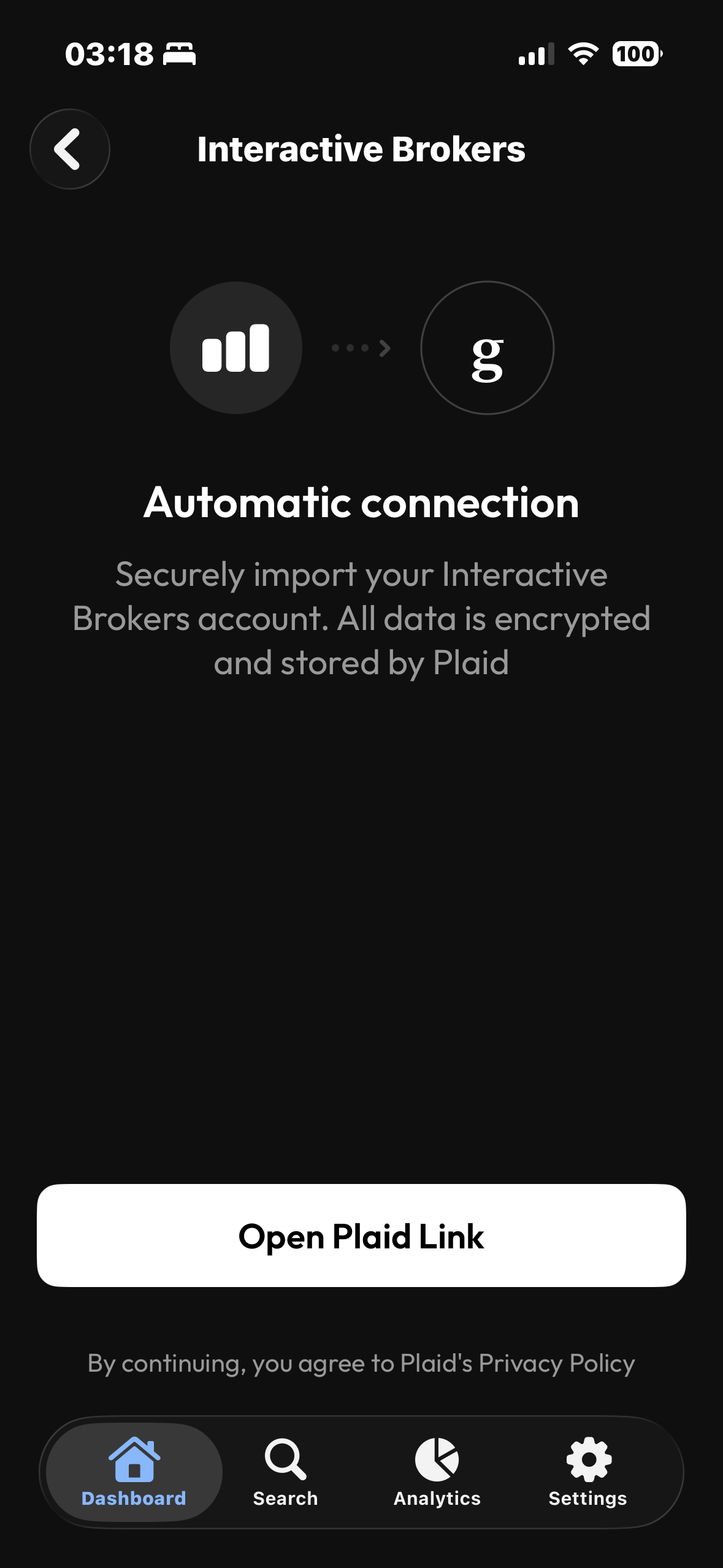
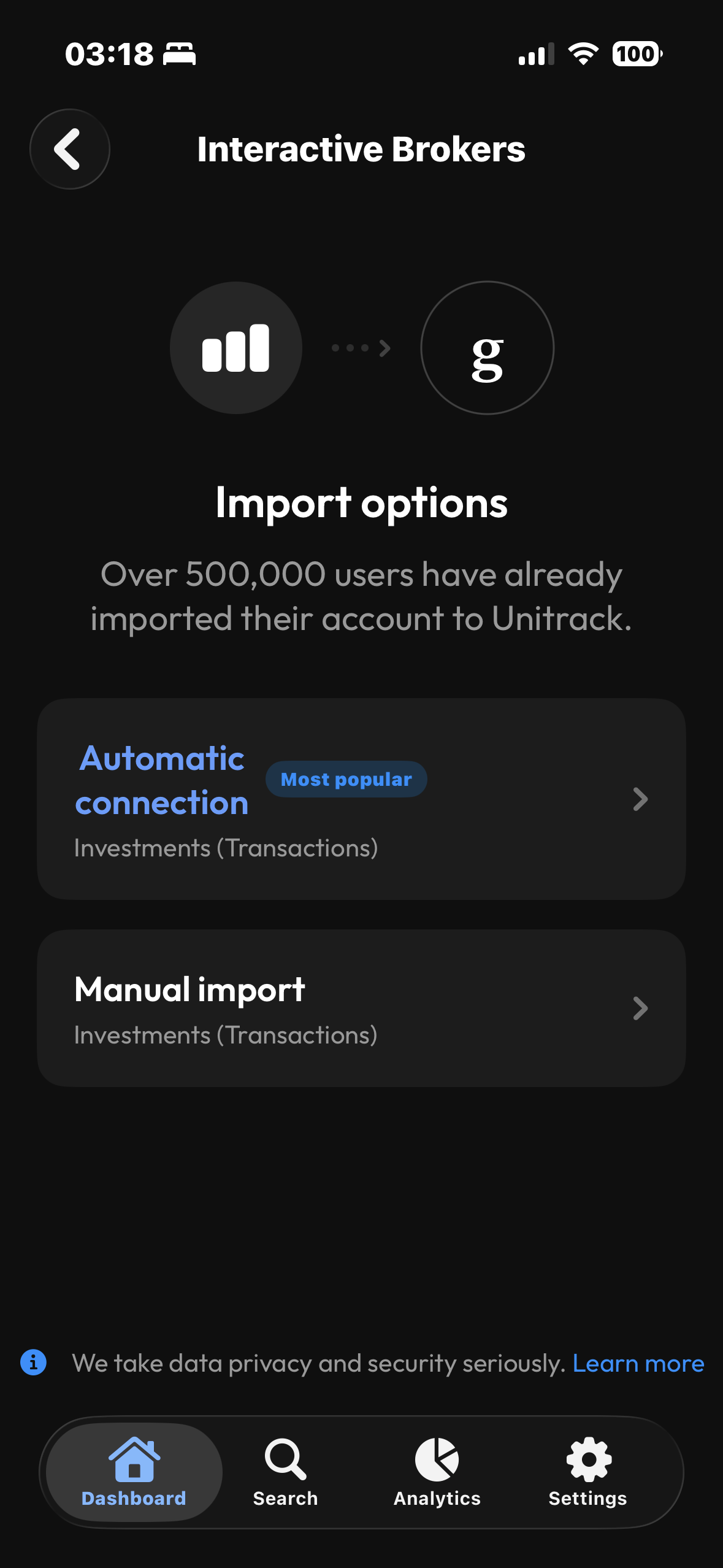
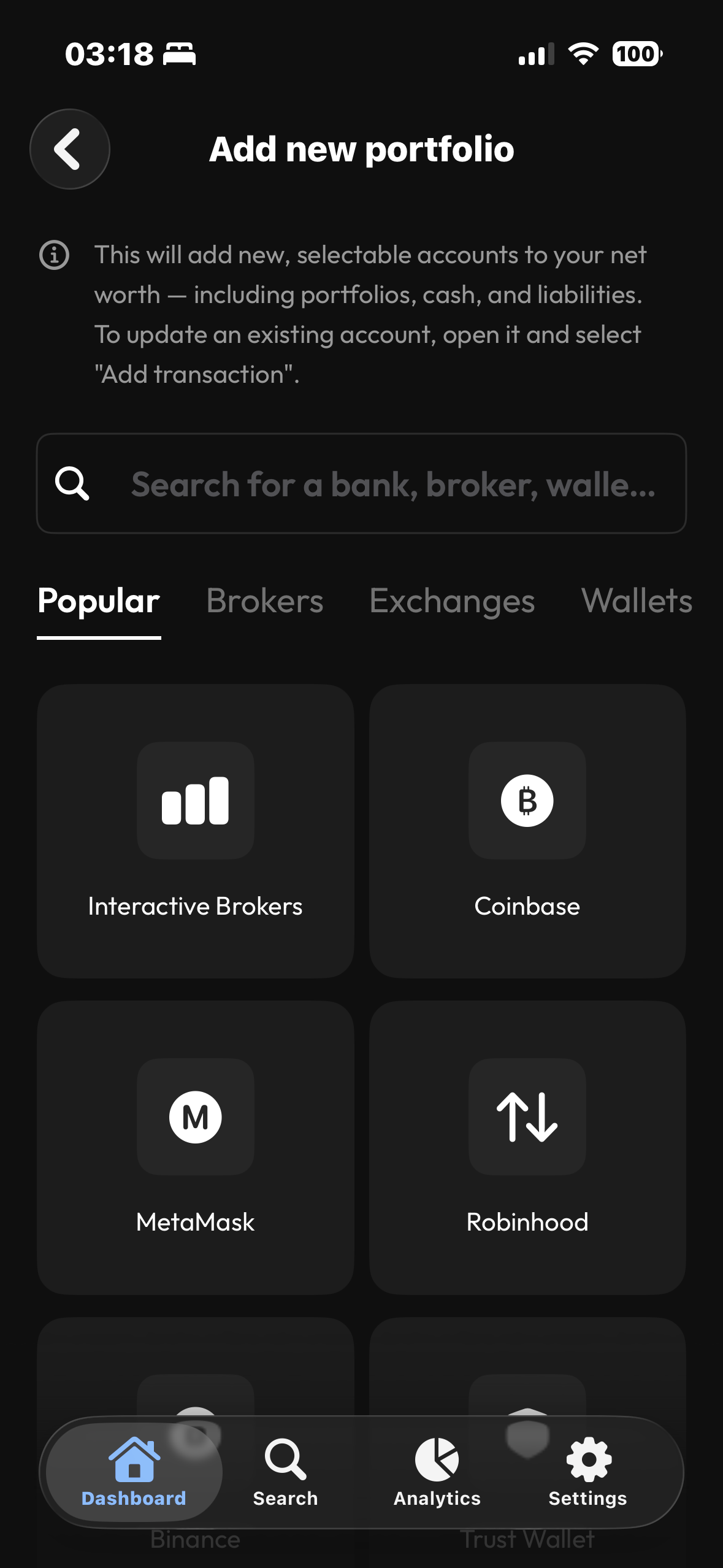
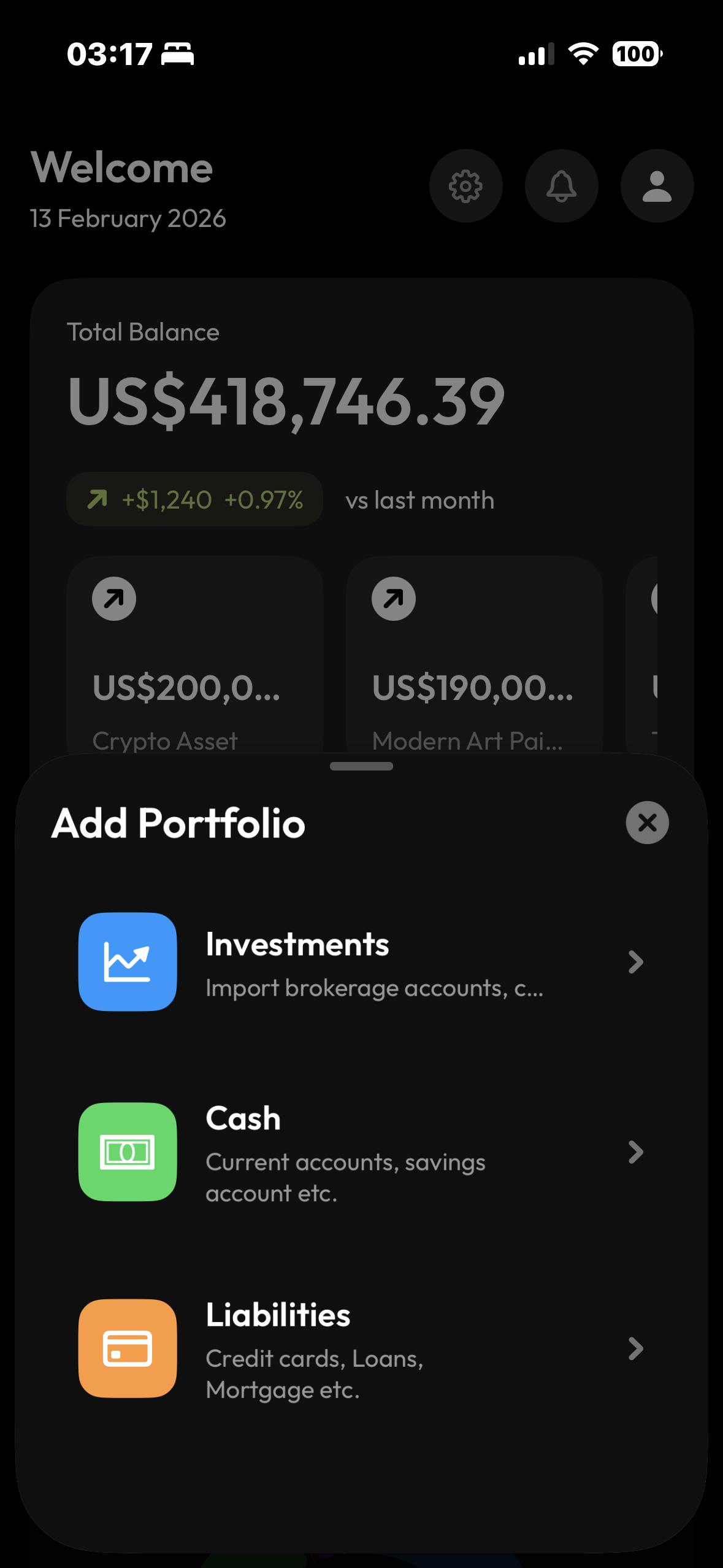
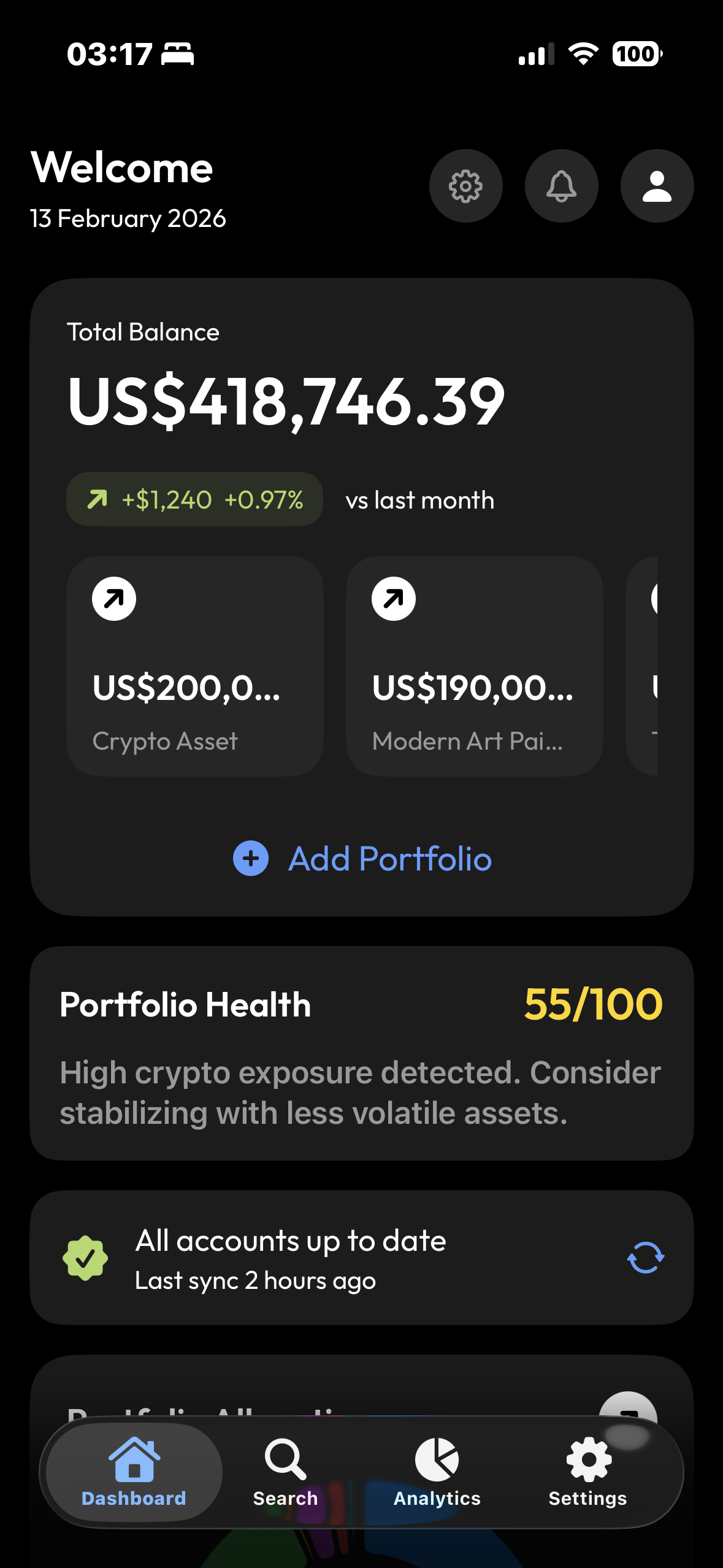
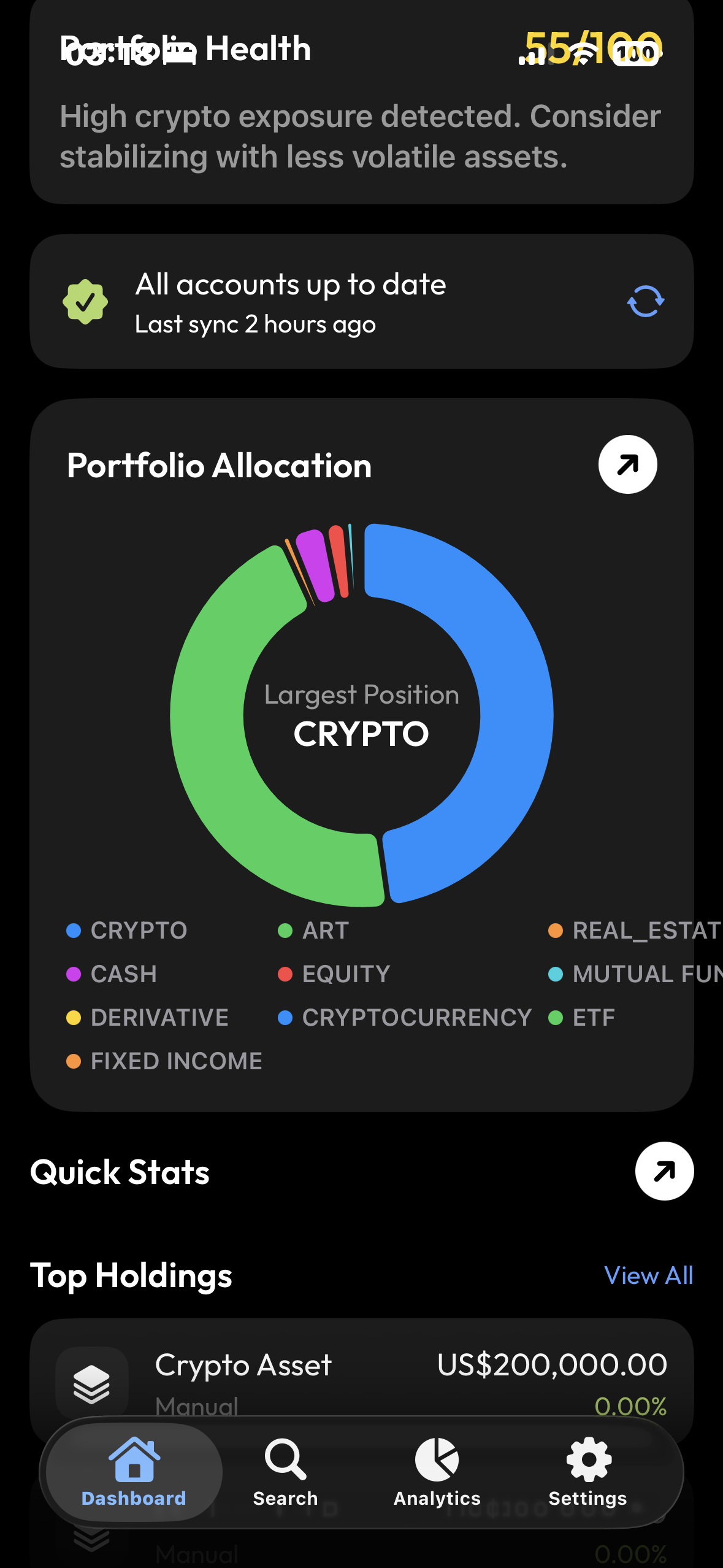
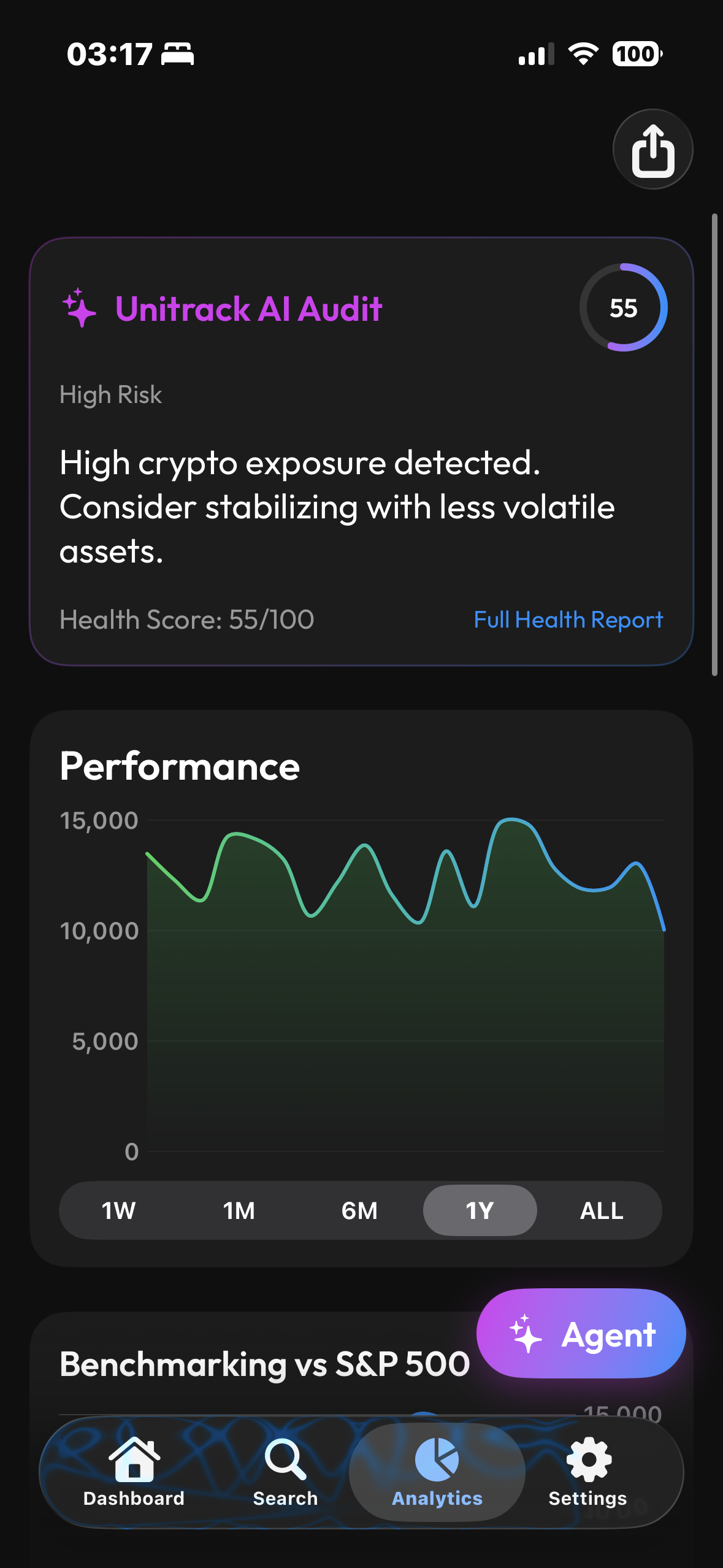
Unitrack is a high-fidelity wealth management and portfolio analytics platform for iOS. It creates a dynamic "Wealth OS" experience by integrating real-time bank connectivity with advanced AI-driven macroeconomic analysis. Users can track everything from traditional stocks and bank accounts (via Plaid) to manual assets like real estate. The app provides a "Health Score" for the entire portfolio and uses amortization models to project the value of physical assets over time.
How we built it
Unitrack is built with a modern, performance-first stack:
- Frontend: Swift and SwiftUI, utilizing a composable architecture to manage complex, interactive dashboards.
- Integration: We used the Plaid Link iOS SDK for secure bank connections and built a flat API contract to ensure seamless data exchange with our Node.js backend.
- AI Engine: A custom LLM advisor (Unitrack AI) that provides real-time macroeconomic commentary based on portfolio metadata.
- Math Models: We implemented LaTeXnd formulas for valuation projections: $$V_f = V_i \cdot (1 + r)^n$$ Where $V_f$ is final value, $V_i$ is initial value, $r$ is the monthly growth/decay rate, and $n$ is the number of months.
Challenges we ran into
One of our biggest hurdles was a transition from mock data to real-time integration. Specifically, Plaid's flexible metadata required a robust AnyCodable wrapper to prevent client crashes. We also faced a persistent redirection loop during auth, which we solved by refining our token-persistence logic. Aligning the client's expectations with the backend's historical snapshots required constant coordination and a dedicated Backend Integration Guide.
Accomplishments that we're proud of
We are incredibly proud of achieving a "60 FPS" fluid UI for our charts and dashboard, even while loading complex parallel data. Successfully bridging the gap between traditional banking and AI-driven insights was a major win. The robustness of our Plaid token exchange flow, which handles institution errors gracefully, is something we believe sets Unitrack apart as a production-ready tool.
What we learned
Building Unitrack taught us that clarity wins over complexity in financial UX—moving to "Health Score" cards improved user insight speed significantly. We also deepened our understanding of secure client-server handshakes and the critical importance of strictly typed API contracts in multi-service architectures.
What's next for Unitrack
Our roadmap includes expanding institution support globally and integrating automated tax-loss harvesting insights. We also plan to introduce "Wealth Simulation" modes, allowing users to see how macroeconomic shifts (like interest rate changes) would impact their specific portfolio's future value.
Built With
- swift
- swiftui
- typescript

Log in or sign up for Devpost to join the conversation.