Project: UniTongue
Tagline: "Harnessing the power of AI to break language barriers and enable seamless global communication."
Inspiration
The world is more connected than ever, but language differences still prevent from truly understanding each other. We were inspired by the idea of a tool that could instantly translate text into different languages, allowing individuals from diverse backgrounds to communicate smoothly. The rapid growth of AI-powered large language models gave us the opportunity to turn this vision into reality. Our goal with UniTongue was to build a translator that is simple, smart, and accessible for everyone.
What We Learned
Working on UniTongue taught us how powerful and versatile modern AI models can be. We explored the integration of LLaMA 3.1 through Ollama, and understood how LangChain simplifies prompt engineering and response handling. We learned about:
- Structuring prompts for consistent results across multiple languages.
- Handling and parsing outputs from large language models.
- Building intuitive, real-time applications with Streamlit.
- The importance of user experience when designing AI-based tools. These lessons gave us both technical knowledge and problem-solving experience in applying AI to real-world use cases.
How We Built It
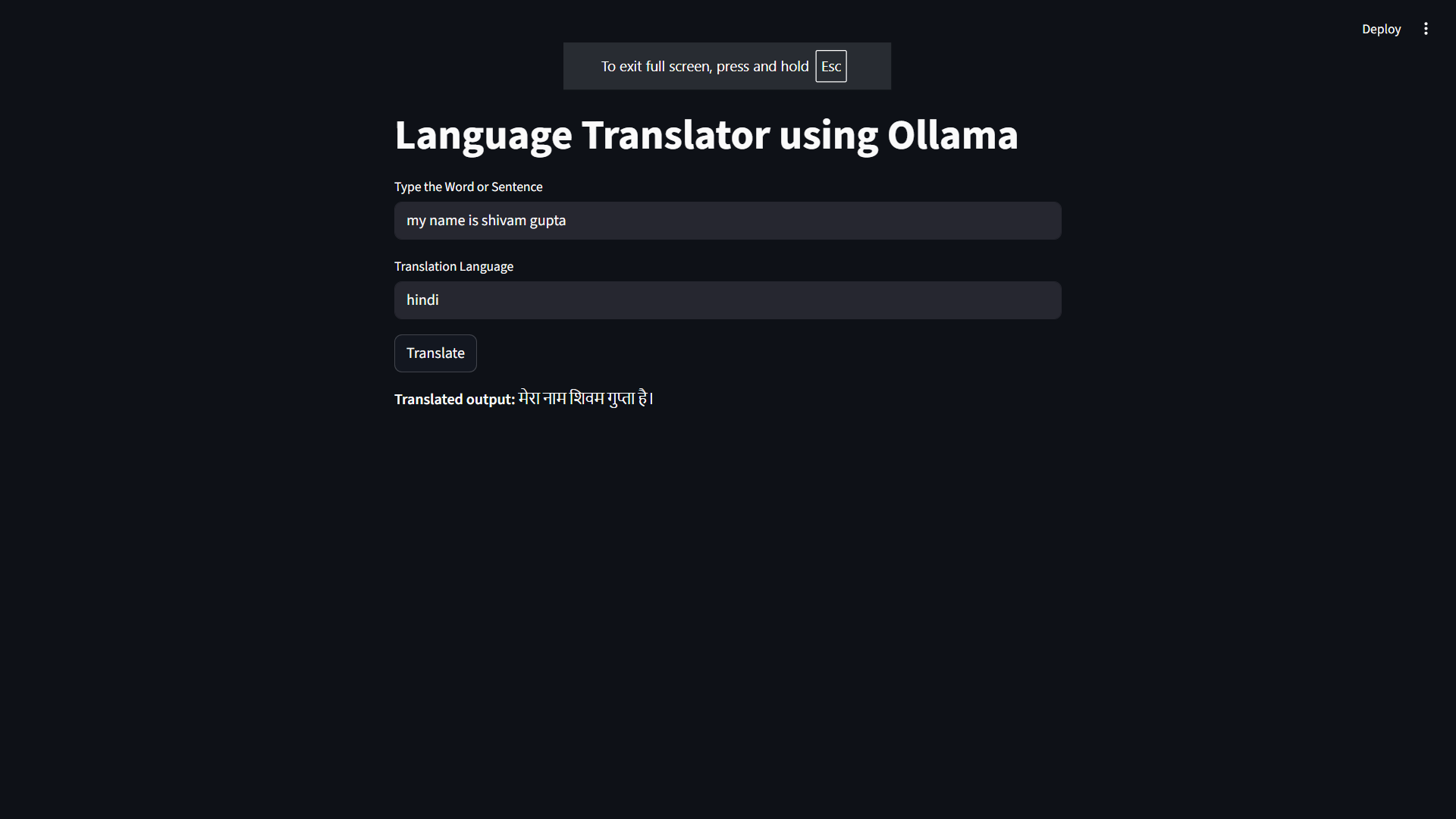
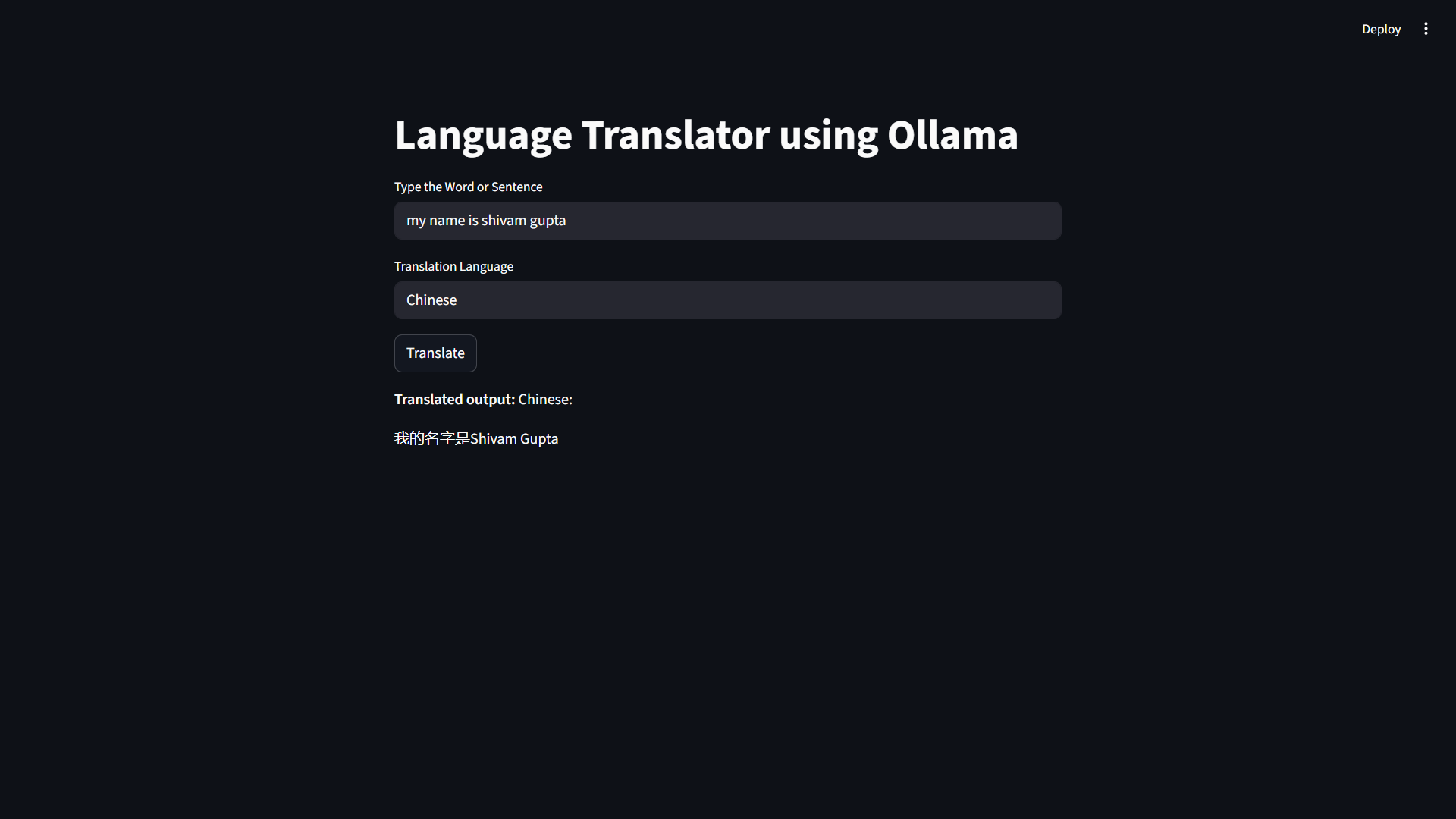
- Frontend: We used Streamlit to design a clean and interactive interface where users can input text and select the target translation language.
- Prompt Engineering: With LangChain’s ChatPromptTemplate, we crafted a reusable translation template to guide the AI model.
- AI Model Integration: We used Ollama to run LLaMA 3.1 (8B parameters) locally, enabling accurate and context-aware translations.
- Parsing & Display: The responses were processed with StrOutputParser to ensure clean outputs, which were then displayed back to the user instantly. This modular approach allowed us to combine cutting-edge AI with a user-friendly design.
Challenges We Faced
Like any AI-driven project, UniTongue had its share of hurdles:
- Model Setup: Running a large model locally required careful optimization and setup.
- Translation Accuracy: We had to refine prompts to avoid overly literal translations and make results more context-sensitive.
- Error Handling: Unexpected errors, such as missing responses or invalid inputs, required building in fallback mechanisms.
- Performance Trade-offs: Balancing translation accuracy with response speed was a constant challenge. Overcoming these difficulties not only improved our technical skills but also gave us insights into the practical aspects of building real-world AI tools.
In short, UniTongue is more than just a translator — it’s our attempt to show how AI can bring the world closer by eliminating language barriers.
Built With
- langchain
- ollama
- python
- streamlit
- stroutputparser

Log in or sign up for Devpost to join the conversation.