-
-
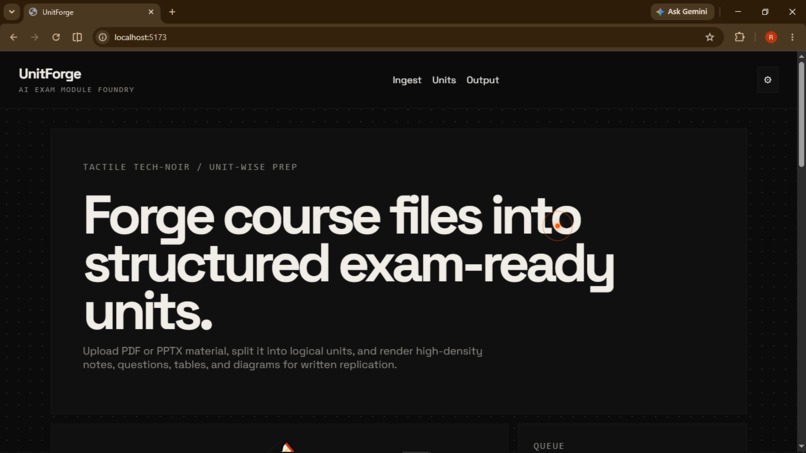
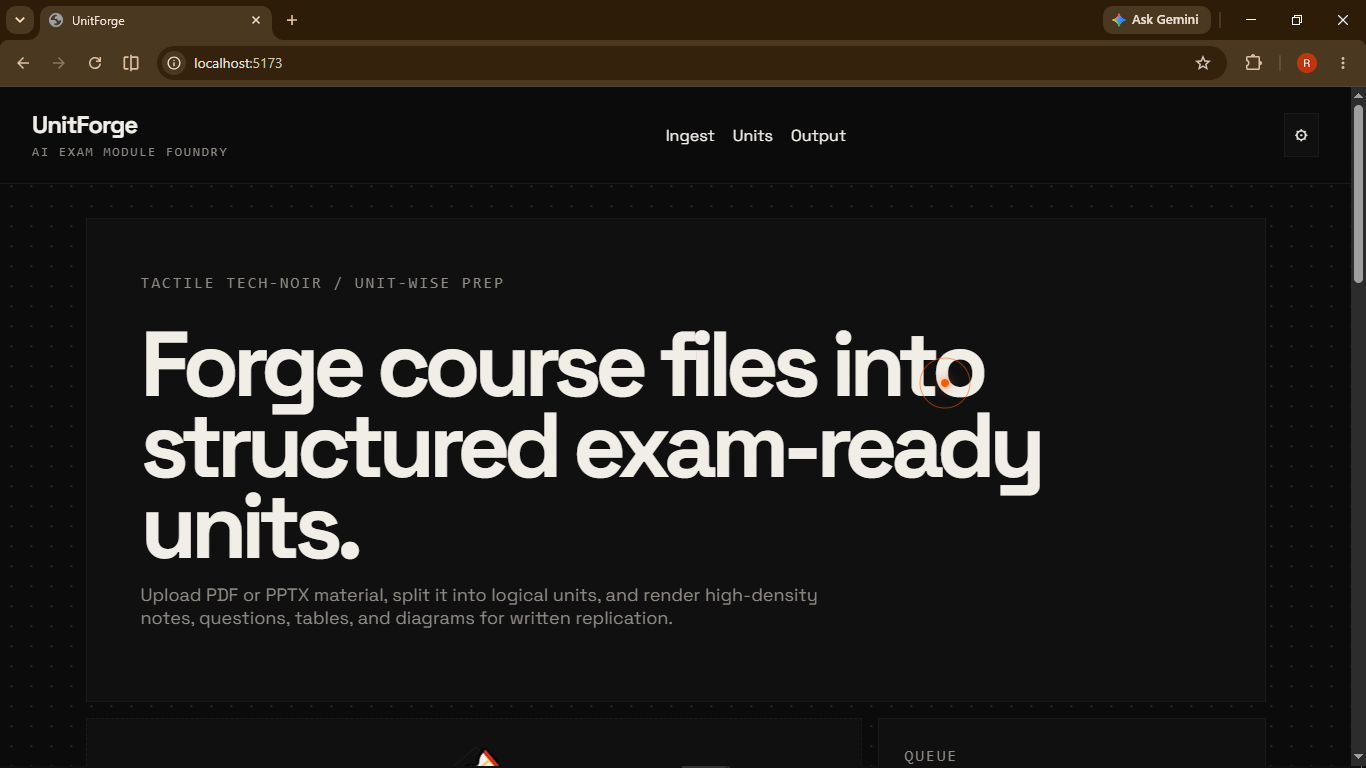
Home
-
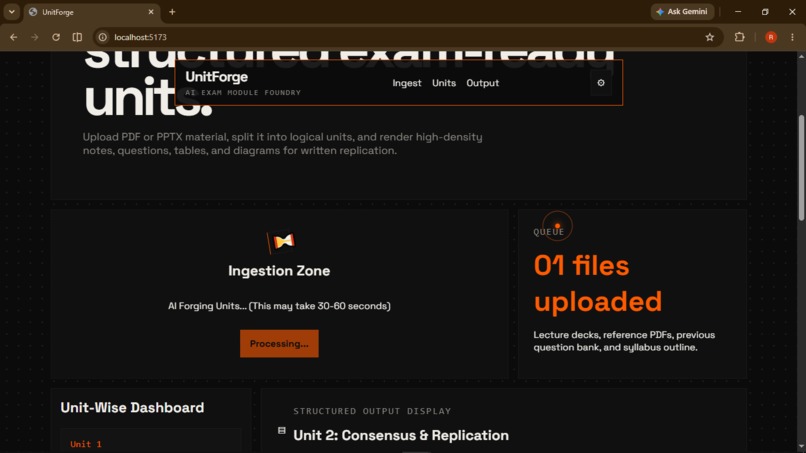
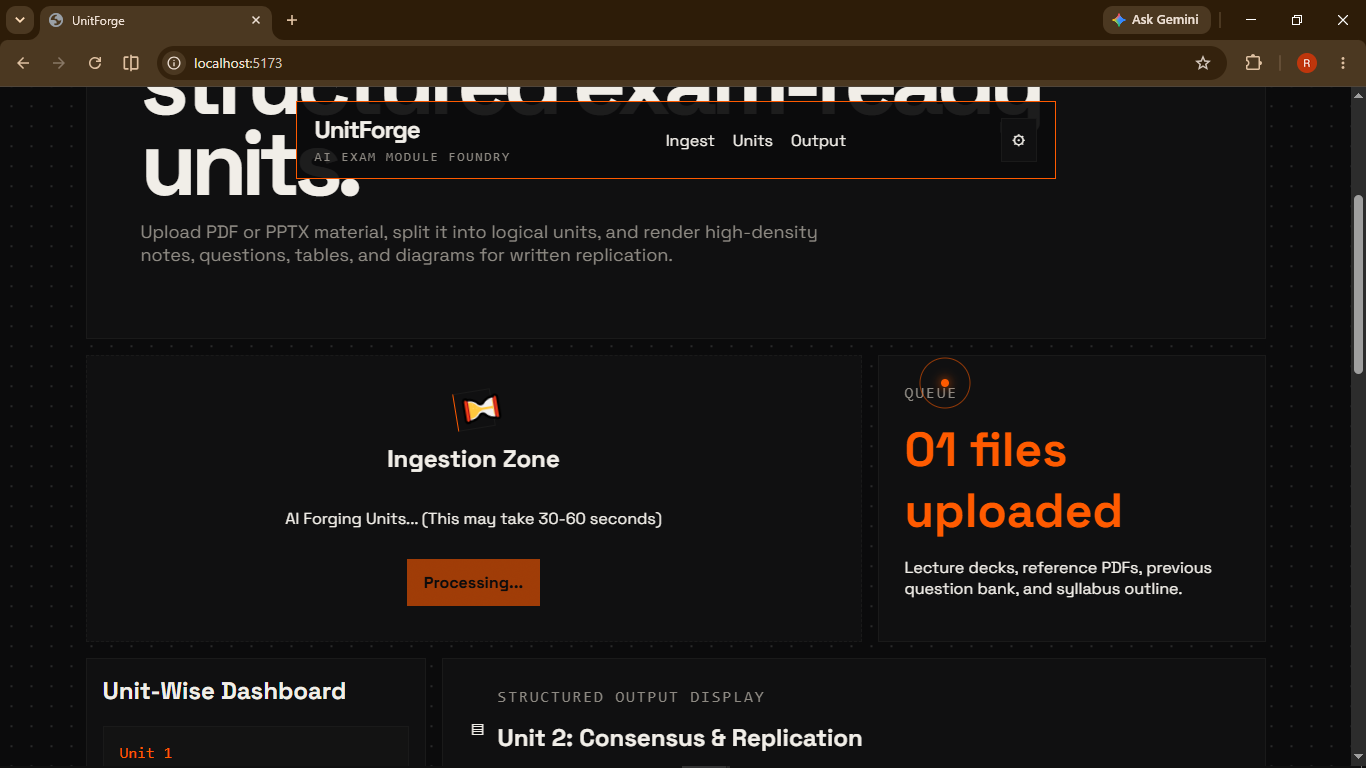
Browsing through while file is loading
-
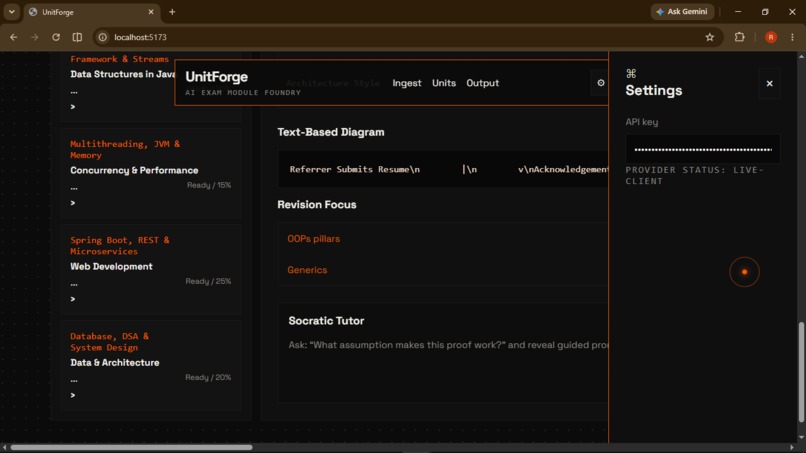
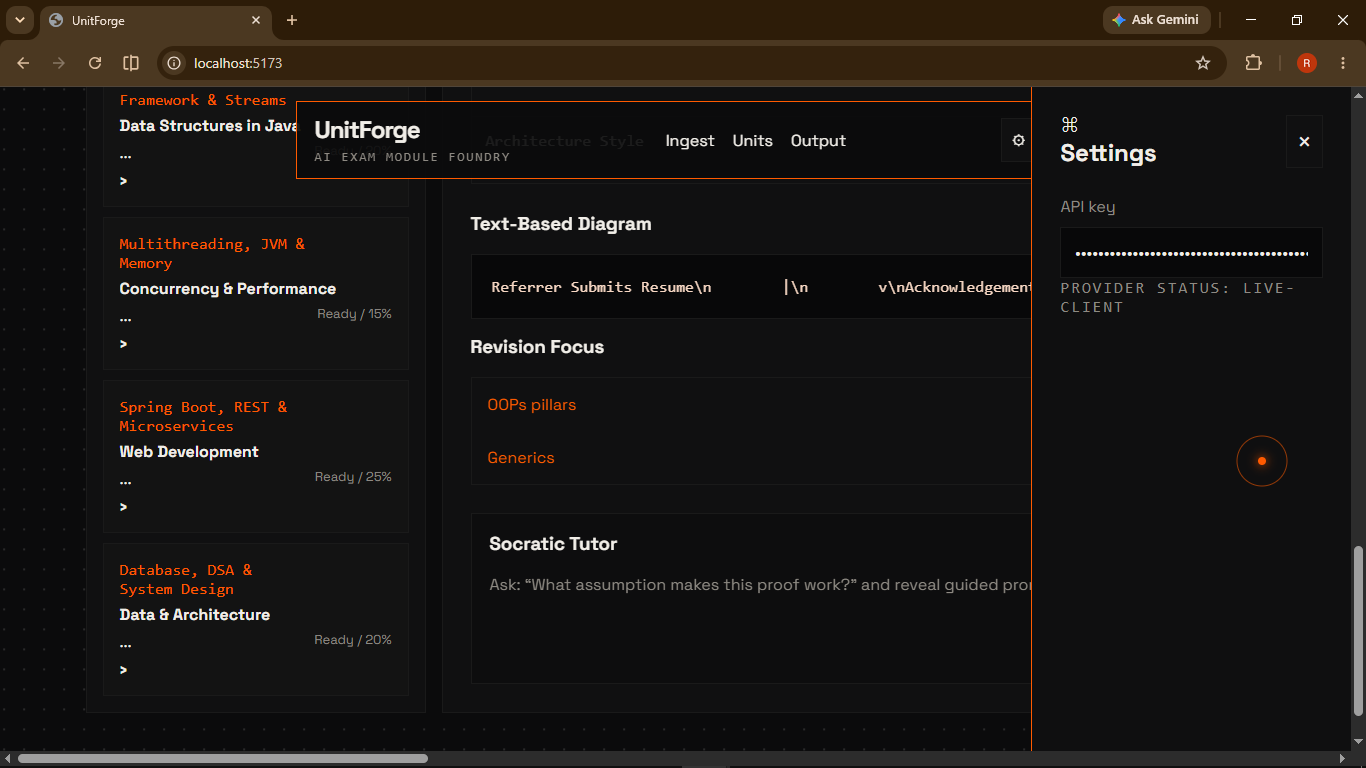
api key input in settings
-
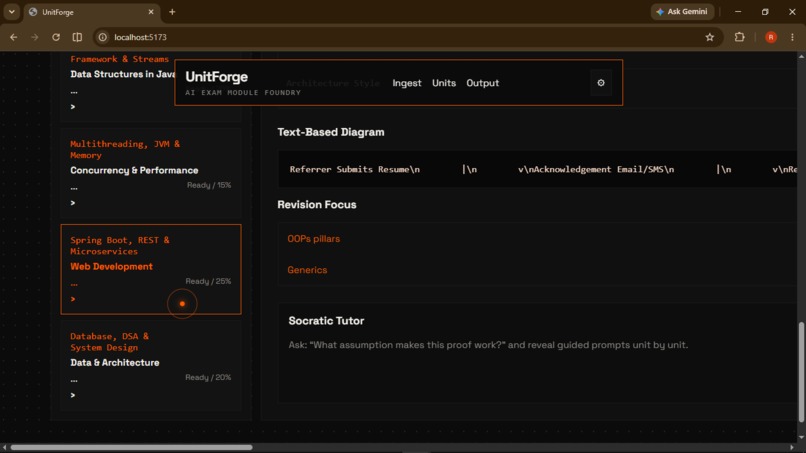
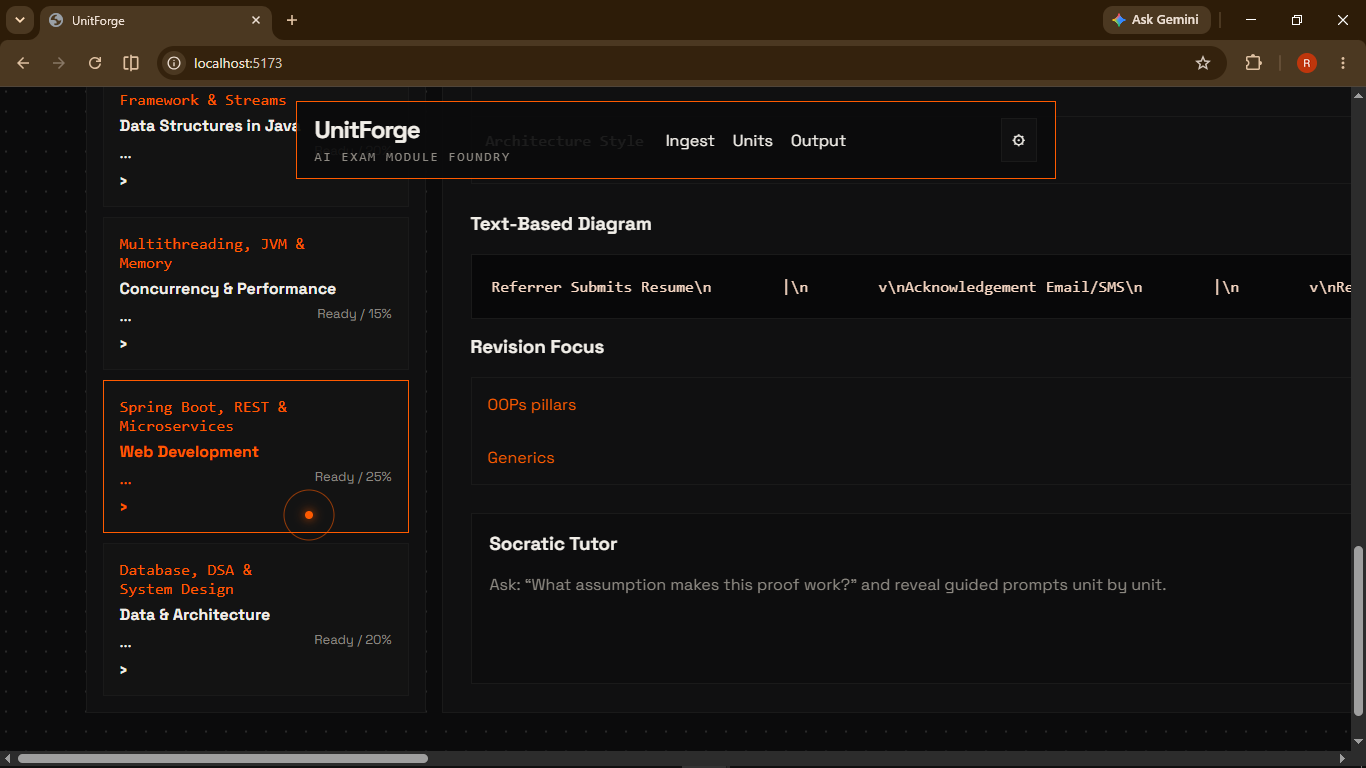
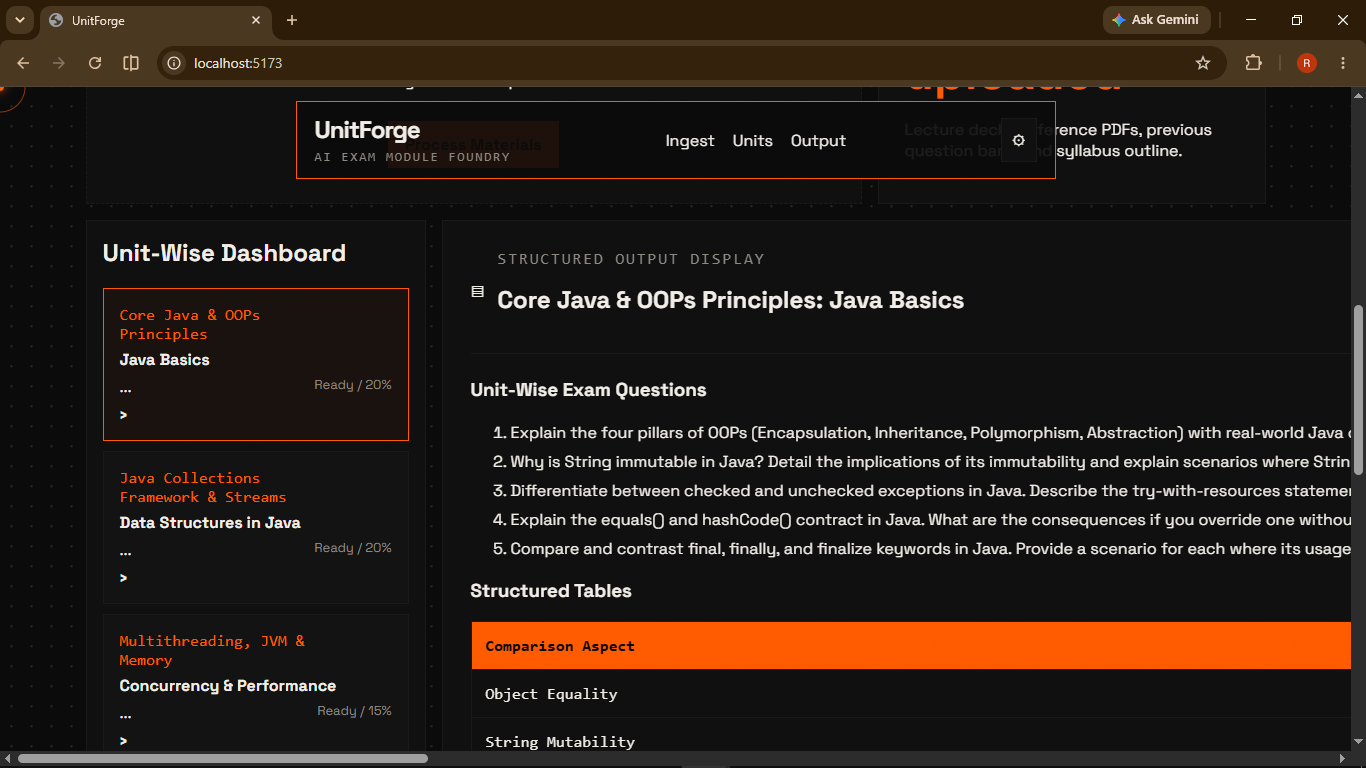
more info on synthesis
-
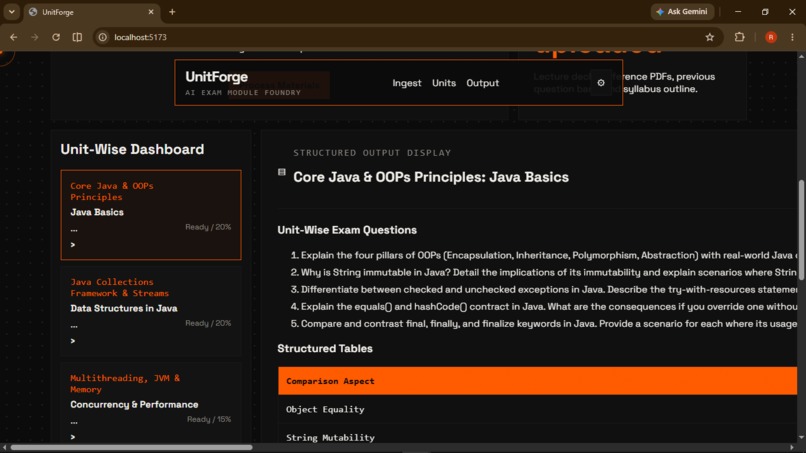
uploaded file synthesis
Inspiration
I was an engineering student preparing for exams and was always drowning in hundreds of unorganized lecture slides, disorganized professor notes and massive reference PDFs. In a physical exam write-up, you can’t get away with general summaries – you need structured data, like 3-column comparative tables and exact block diagrams that you can memorize visually and replicate on a test paper. I created UnitForge to turn messy course files into dense, structured blueprint study modules instantly.
What it does
UnitForge is a course material foundry powered by AI. A user can drag and drop lecture decks or reference PDFs into a tech-noir tactile interface. The engine reads the raw files and breaks down the entire curriculum into separate units that are ready for exams. For each unit it automatically generates core syllabus focus points, targeted long-form exam questions, high-density comparative tables and text-based ASCII architectural diagrams for easy reproduction in writing.
How we built it
The app is fully built on clean frontend architecture, with vanilla JavaScript (ES6+) and Vite for highly responsive DOM updates. I used thread-isolated browser workers to incorporate PDF.js for file ingestion in order to extract massive textual assets locally. We use the OpenAI API for the intelligence engine . We use the strict json_schema response format on gpt-4o-mini to keep the payload within our strict visual constraints with no unstructured text spill.
Challenges we ran into
One big challenge was handling large, messy document text buffers without crashing the API payload structure. The early versions would often result in severe network failures (400 Bad Requests) from minor trailing format variations or bad schema nesting. Moreover, it required extensive system prompting and strict temperature tuning to force a language model to reliably output standard text characters that form an aligned, visually accurate ASCII architectural diagram.
Accomplishments that we're proud of
I’m really proud of building a fully functional structured compilation engine running entirely client-side, without the need for a heavy backend database layer.” It is a pleasure to get deterministic JSON data straight from an LLM stream, and not have to deal with the headaches of structural parsing. Using a study utility that is actually fun to use, by having a coherent, responsive tech-noir visual theme.
What we learned
Building UnitForge provided me with an intimate, hands-on understanding of implementing Structured Outputs from OpenAI and writing clean, object-level JSON validations. I also became good at browser-side text parsing constraints, binary data array buffers, and learned how important deterministic data pipelines are when designing interfaces that rely solely on machine-generated output schemas.
What's next for UnitForge
Next, I want to extend our client-side file pipeline so that it can directly process .pptx files, rather than having to rely on structural placeholders. I also intend to turn on the interactive modules embedded in the UI canvas: a fully functional Socratic tutor loop to probe particular points within a generated unit, and a localized vector index to enable contextual semantic search over historical course data.
Built With
- architecture
- automation
- client-side
- devtools
- frontend
- gpt-4o-mini
- javascript
- layout
- learning
- openai
- parser
- productivity
- productivity-tool
- school
- software-engineering
- structured-data
- ui-design
- vanilla-js
- vite
- web
- web-development
- webworkers


Log in or sign up for Devpost to join the conversation.