-
-
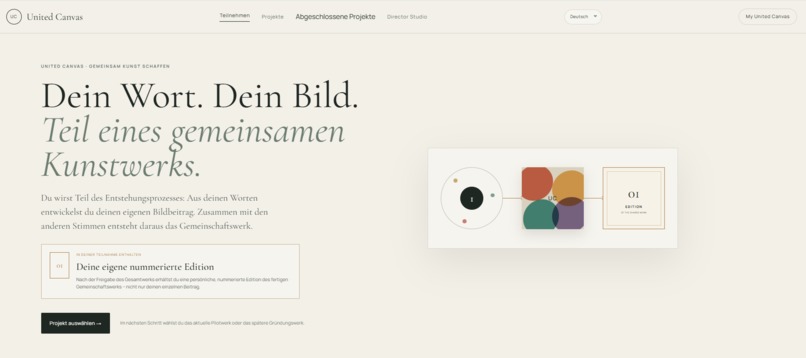
United Canvas turns one personal idea into part of a shared AI-supported artwork.
-
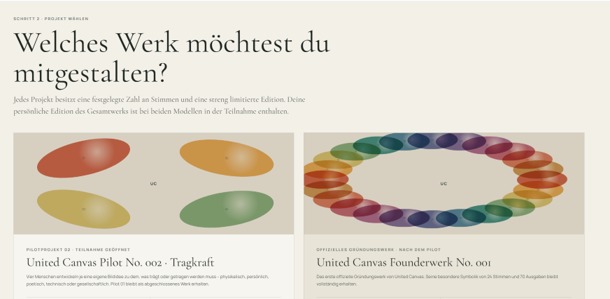
Participants choose a collaborative project and join its limited creative and edition structure.
-
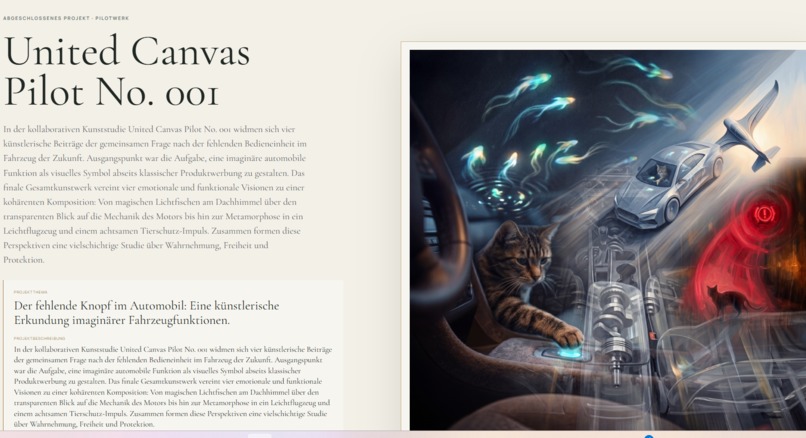
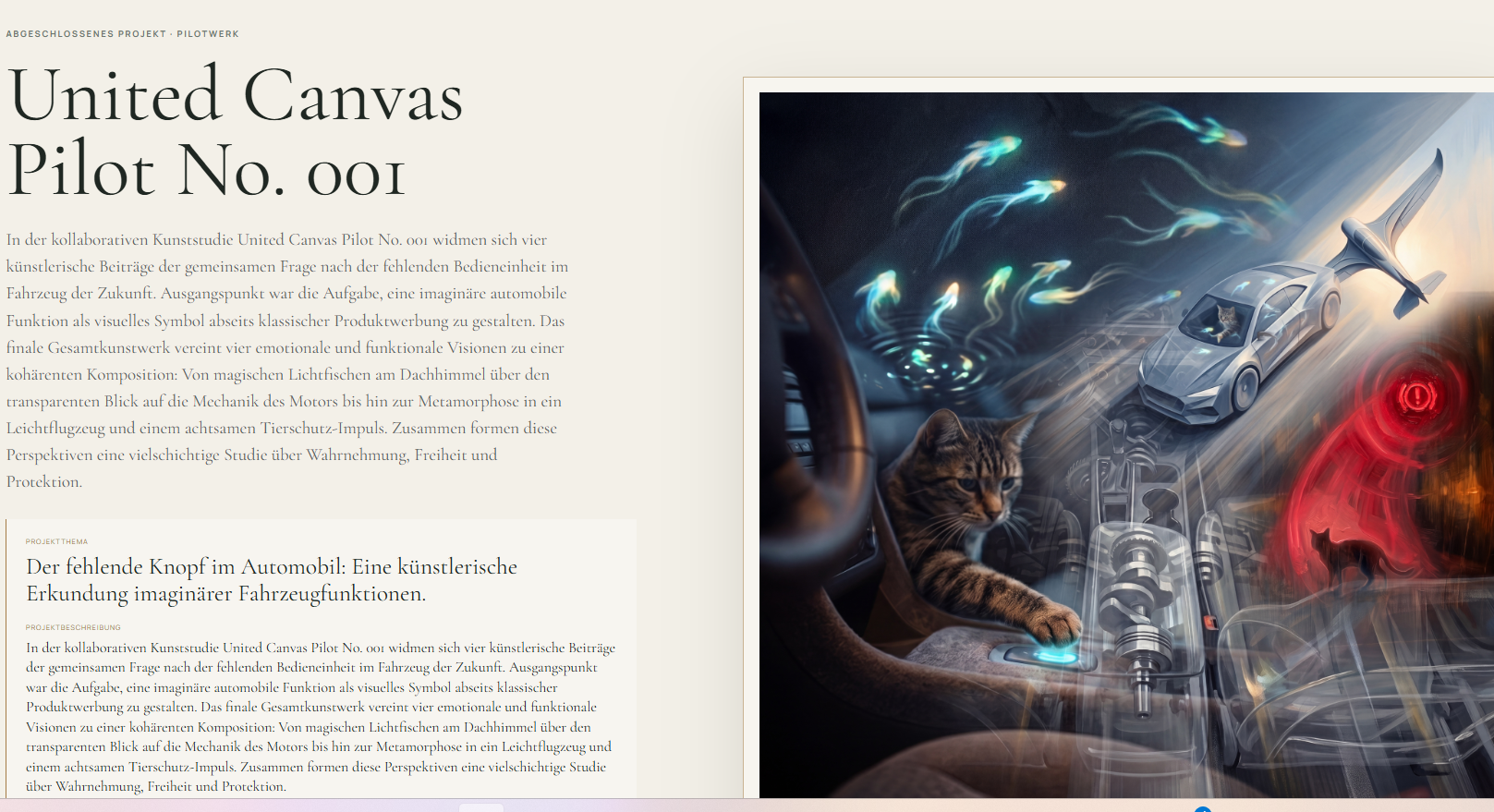
Pilot No. 001 presents four visual contributions combined into one approved collaborative master artwork.
-
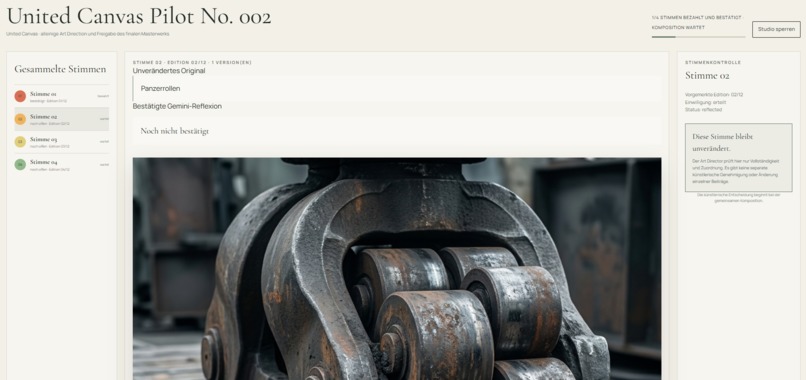
Pilot No. 001 presents four visual contributions combined into one approved collaborative master artwork.
-
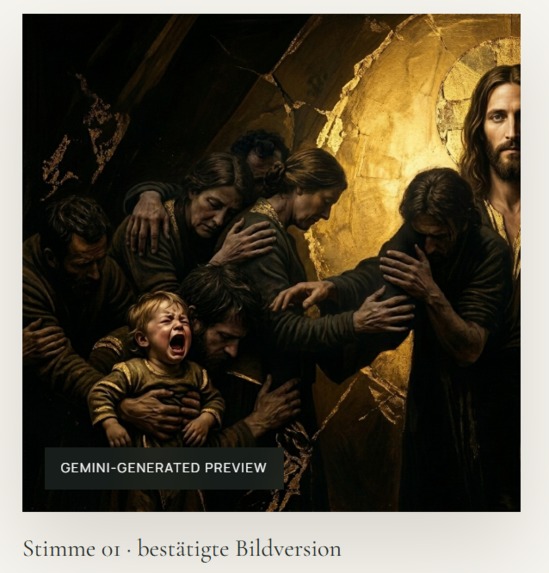
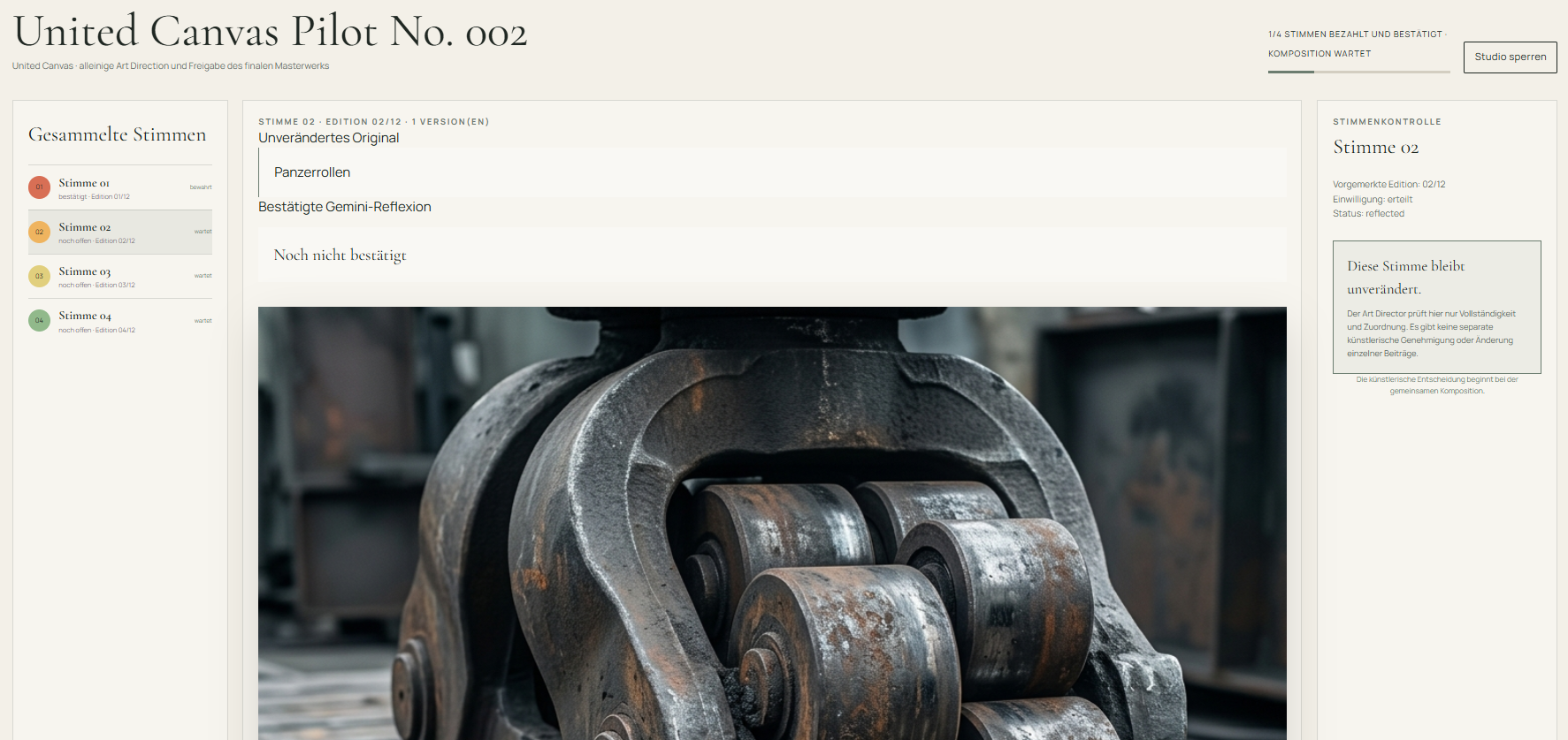
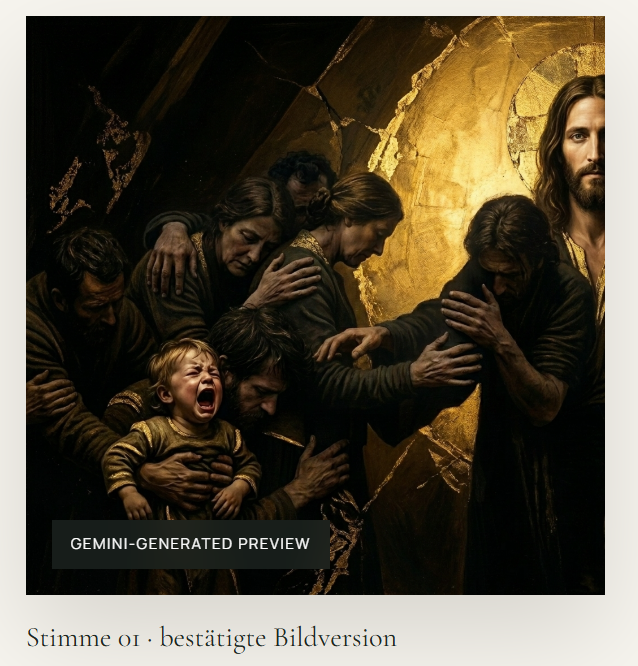
Pilot No. 002 “Carrying Capacity”: a participant depicts Jesus as the sustaining force who carries people through hardship.
Inspiration
The practical development of United Canvas began on August 10, 2026. Within only seven days, the project grew from an initial concept into a publicly accessible platform, a registered business, a completed paid pilot, and a second project in live production.
During this short development period, I registered a sole proprietorship in Germany to operate United Canvas as a real commercial business. From the beginning, its operating model was designed to combine sustainable art production with transparent, project-specific support for nonprofit organisations. Social impact is therefore not an additional marketing feature. It is part of the purpose of the business.
United Canvas began with a simple belief: creativity should not be limited to professional artists, and an individual contribution can become more meaningful when it becomes part of something larger.
Most AI image tools create isolated images for isolated users. United Canvas takes a different approach. Gemini helps several people develop individual visual contributions and bring them together as one limited collaborative artwork. Participants do not need artistic training. They contribute an idea, memory, feeling, or personal interpretation while retaining meaningful creative choices.
Our guiding idea is:
Many people. Many ideas. One canvas. One cause.
What United Canvas does
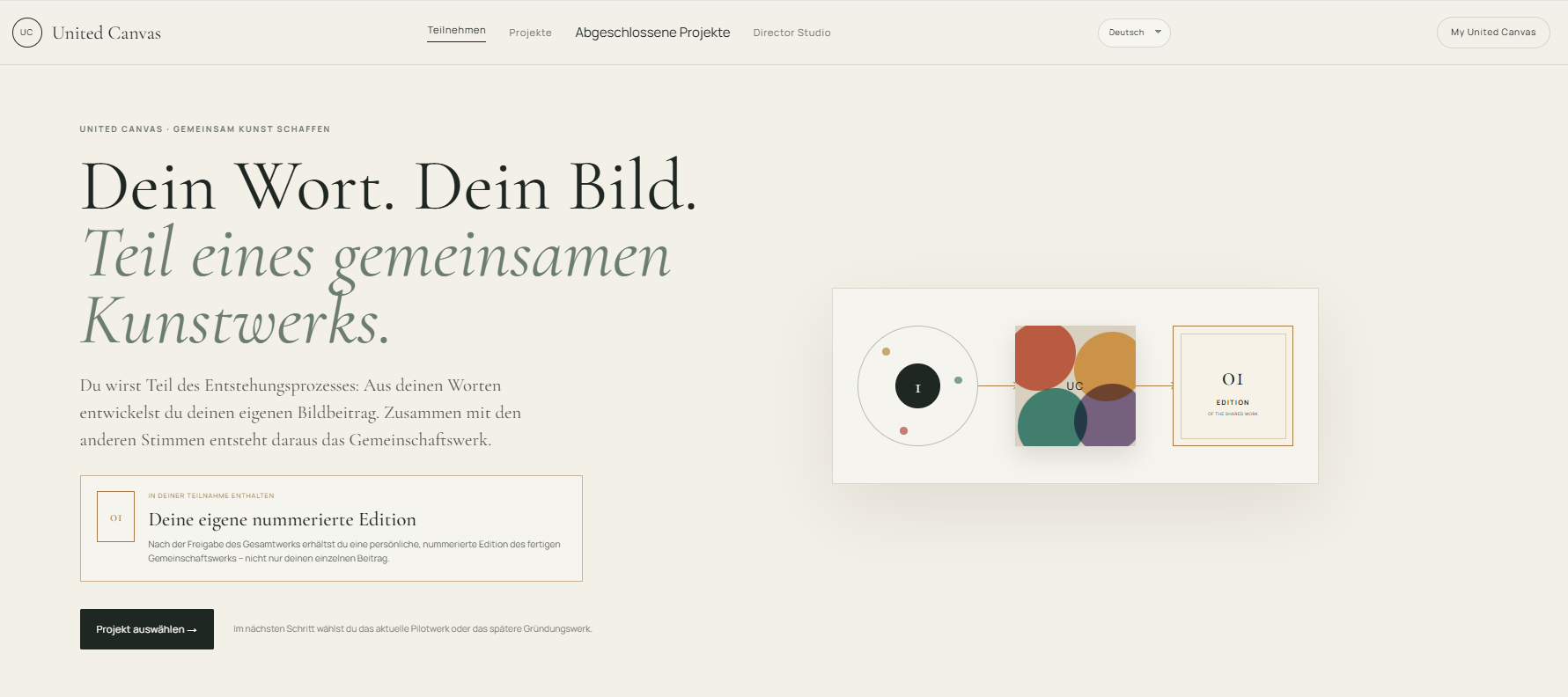
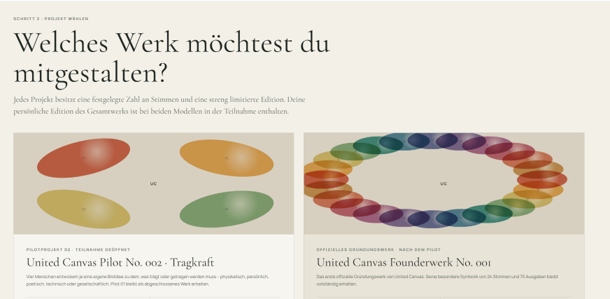
Each project defines a shared theme, a limited number of participant places, and a fixed edition size.
A participant registers, purchases a place, and enters a personal creative idea. Gemini interprets that input and transforms it into visual possibilities. The participant can review the results, request revisions, compare versions, and select a preferred contribution.
The live production flow supports:
- user registration and authentication;
- online payment before the creative process begins;
- Gemini-supported image creation;
- up to four generated image variants;
- up to three guided revision rounds;
- a personal gallery for comparing versions;
- participant selection and confirmation;
- composition of individual contributions into a shared artwork;
- final approval by United Canvas Art Direction;
- numbered participant and collector editions;
- documentation of the completed collaborative work.
The first completed pilot combined four participant voices in a limited edition of twelve. Four participant places were purchased at €10 each. Collector Edition 05/12 was subsequently sold for another €10. The pilot therefore generated five paid transactions and €50 in gross revenue. Related-party status is disclosed transparently in the submitted financial evidence.
The second pilot, “Carrying Capacity,” is now in live production with four voices and twelve editions. Participants interpret what carries us when life becomes heavy—physically, personally, spiritually, technically, or socially. United Canvas publicly commits 90% of this project’s profit to Sonnenkatzen e.V., a nonprofit animal-welfare organisation.
How Gemini operates in production
Gemini is not an ornamental chatbot added to a conventional art shop. It is part of the live production process.
Gemini helps to:
- interpret a participant’s idea in relation to the shared theme;
- translate language into visual directions;
- generate multiple image possibilities;
- respond to revision requests;
- maintain continuity between an original idea and later versions;
- support the composition of separate contributions;
- assist with descriptions and project documentation.
This makes small collaborative art productions possible without requiring a large creative studio for every project.
United Canvas nevertheless preserves human responsibility. Participants determine what their contribution should express and select their preferred version. United Canvas Art Direction makes the final aesthetic approval. Payments, rights, edition rules, charitable allocations, and publication remain human decisions.
The principle is not “AI replaces the artist.” It is:
AI enables more people to participate in a structured artistic process.
How we built it
United Canvas is built with Next.js, React, and TypeScript. It runs on Cloudflare infrastructure, using D1 for structured data and R2 for media storage. Supabase provides authentication, Stripe processes payments, and the Google Gemini API powers the server-side creative workflow.
In the seven days following August 10, payment, participation, generation, revision, selection, composition, edition management, and public presentation were connected into one operating product. Automated tests and real pilot use were essential because United Canvas had to function as a business, not merely as a visual prototype.
The live product is available at:
Challenges and learning
The greatest creative challenge was balancing individual expression with a coherent collective result. Too much system control would weaken participant authorship; too little would make the final artwork visually disconnected. The revision and selection process preserves personal agency while enabling a unified composition.
The second challenge was connecting creative experimentation to a reliable commercial workflow. Authentication, payments, generation limits, storage, confirmations, edition numbering, and final approval all had to work together.
We learned that an AI-generated image alone is not a sufficient product. People value the structured experience, their documented place in a shared work, and the numbered edition resulting from their participation.
For the MVP, we deliberately focused on paid participation and digital editions instead of adding NFT complexity. This allowed us to test the real creative and commercial value first.
Economic opportunity and nonprofit impact
The registered business model can generate revenue through participation places, collector editions, commissioned collaborative projects, and partnerships. At the same time, each project can define a transparent share of profit for a nonprofit organisation.
Future projects can create opportunities for independent artists, human art directors, community organisers, nonprofit partners, print partners, exhibition spaces, translators, and creative educators.
United Canvas is intended to prove that commercial sustainability and charitable purpose do not have to compete. A functioning creative business can fund its continued development while directing clearly defined project proceeds toward organisations helping people, animals, or other social causes.
What comes next
The next steps are to expand multilingual participation, strengthen composition support, improve certificates and provenance documentation, acquire independent public customers, and build long-term partnerships with artists and nonprofit organisations.
United Canvas demonstrates a different use of generative AI: not producing more isolated content, but helping people create something together—and turning that shared creativity into measurable social impact.
Built With
- api
- cloud
- cloudflare
- d1
- gemini
- ionos
- next.js
- r2
- react
- stripe
- supabase
- typescript
- workers


Log in or sign up for Devpost to join the conversation.